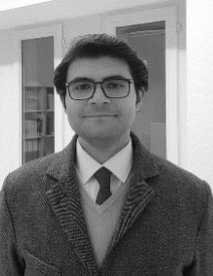
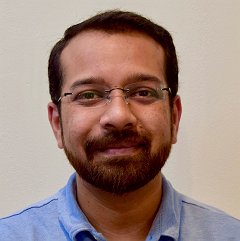
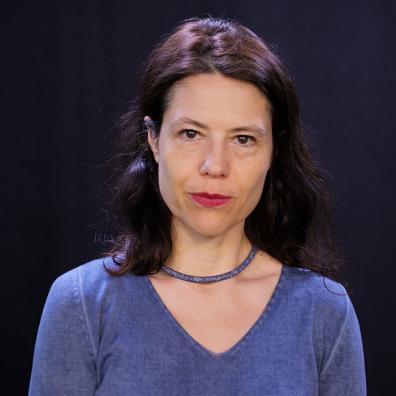
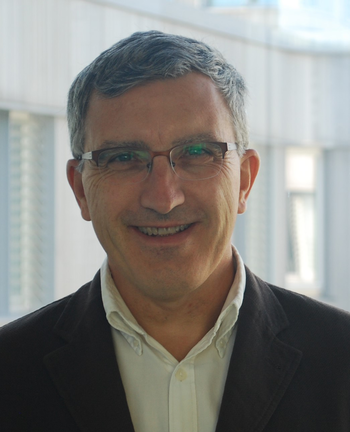
François Déroche is a Professor at the Collège de France since 2015, holding the History of the Qurʾān, Text and Transmission chair. A renowned specialist in Arabic manuscripts, his work bridges codicology, Quranic textual history, and Islamic archaeology. Research focuses on Quranic manuscript transmission from Late Antiquity to the Umayyad dynasty Member of the Académie des inscriptions et belles-lettres (Institut de France) Expert in Arabic paleography and early Islamic book culture His recent lecture series The Medinese Koran (2025-2026) explores Quranic textual evolution through historical manuscripts. Publications emphasize material analysis of early Quranic codices and their socio-political contexts. Scientific Awards : Member of the Académie des inscriptions et belles-lettres Scientific Member of the Institut français d'études anatoliennes
Milad Abedi is a PhD candidate in Linguistics at the University of Zurich and Institut national des langues et civilisations orientales (INALCO), Paris, focusing on the cultural history of Sino-Iranian lexical contacts. He has taught Zoroastrian Middle Persian and Middle Iranian languages at the University of Zurich while conducting research on topics including language contact mechanisms and historical Persian grammar. PhD in Linguistics (2020–Present), University of Zurich & INALCO, Paris MA in Ancient Languages and Cultures of Iran (2015–2019), Allameh Tabataba'i University (Highest Distinction) BSc in Cellular-Molecular Biology (2010–2015), Islamic Azad University His research spans ancient Iranian language contact (Elamite-Iranian, Sino-Iranian, Arabic-Iranian), historical grammar of Persian, and Classical Persian literature. He has published on topics such as kinship term evolution, cuneiform epigraphy, and metonymic phrases in Achaemenid Elamite. Recent publications highlight his focus on lexical diffusion across Eurasia, with key works on donkey terminology in cross-cultural contexts and the origins of felt words in Iranian languages. His collaborative research with Wolfgang Behr and Samira Müller demonstrates interdisciplinary approaches combining linguistics and archaeology. 2021 Travel grant, University of Zurich 2016 Travel grant, Allameh Tabataba'i University 2016 Top student award, Allameh Tabataba'i University As a Lecturer at the University of Zurich, he has taught courses on Zoroastrian Middle Persian and historical linguistics. His digital humanities expertise includes ELAN software, GIS, and SQL for language documentation.
Dr. Chutima Boonthum-Denecke is a Professor in the Department of Computer Science at Hampton University's School of Science. She joined Hampton University in 2006 as an Assistant Professor and now serves as Director of the Information Assurance and Cyber Security Center (IAC@HU). She leads the NSF CyberCorps Scholarship for Service program and has contributed to NSF initiatives like ARTSI and STARS Alliances. Her educational background includes a Ph.D. in Computer Science from Old Dominion University (2007), an MS in Applied Computer Science from Illinois State University (2000), and a BS in Computer Science from Srinakharinwirot University (1997). Dr. Boonthum-Denecke's research integrates artificial intelligence, natural language processing, and cybersecurity. Key interests include: Developing intelligent tutoring systems and educational games Secure coding practices for software engineering NLP applications in information retrieval and assessment tools Cyber-physical security for IoT and robotics Her recent publications (2016-2021) focus on machine learning applications in cybersecurity, including sentiment analysis for threat detection, blockchain-enhanced IoT security, and vulnerability assessments of emerging technologies. Collaborative work with students frequently addresses privacy ethics in AI assistants, RFID implants, and cloud systems. She mentors students through the IAC@HU lab, resulting in award-winning conference presentations on cybersecurity topics. As Principal Investigator of NSF CyberCorps, she oversees scholarship programs that bridge academic research with national security needs.
Muhammad Ali Gulzar is an Assistant Professor in the Computer Science Department at Virginia Tech and an Amazon Scholar at Amazon Web Services. His research focuses on improving developer productivity through automated debugging and testing for applications in emerging domains, including data-intensive software such as dataflow programs, ML/AI applications, and computational notebooks. Education Ph.D. in Computer Science from University of California, Los Angeles (Google Ph.D. Fellow 2017-2020) Research Interests Gulzar's research spans three primary areas: (1) automated tracking-code localization techniques in web applications, (2) re-engineering testing and debugging for data-intensive applications, and (3) advancing current testing and debugging practices in Federated Learning Applications. His work addresses the challenges of debugging in complex systems where traditional approaches fail due to the scale and distributed nature of modern applications. His research has significant implications for improving software quality, developer productivity, and accessibility in web applications. Research Trends Recent publications demonstrate a strong focus on debugging and testing challenges in emerging application domains. His work bridges traditional software engineering with machine learning, data-intensive systems, and web technologies. Notably, he has made significant contributions to Federated Learning debugging (FedDebug), accessibility challenges in ad-driven web applications, and semantic caching for Large Language Models. His approach often combines novel algorithmic insights with practical implementations that address real-world challenges in software development and maintenance. Scientific Awards Google Ph.D. Fellow (2017-2020) $1.1 million NSF award for Federated Learning research ACM CCS 2024 Distinguished Artifact Award Advising and Grants Gulzar leads a productive research group with multiple students contributing to publications in top-tier venues. His NSF-funded research on Federated Learning demonstrates his ability to secure competitive funding for innovative projects. His advising style appears to emphasize practical impact alongside theoretical contributions, with students often taking lead roles in publications. Current research directions include debugging techniques for Large Language Models, accessibility challenges in modern web applications, and novel testing approaches for distributed data processing systems.
Steven T. Brown is a Professor of Comparative Literature at the University of Oregon, affiliated with the Schnitzer School of Global Studies and Languages within the College of Arts and Sciences. His scholarship examines Japanese visual culture through transnational frameworks, with expertise in horror cinema, posthumanism, and critical theory. His academic credentials include: B.A. in East Asian Studies and Classics, University of Illinois (1987, Summa Cum Laude) M.A. in East Asian Studies, Stanford University (1988) Ph.D. in Comparative Literature, Stanford University (1994) Brown's research investigates sensory dimensions of Japanese cinema—particularly sound design in J-horror and slow-burn aesthetics—while exploring anime's engagement with posthuman identity. His work bridges Surrealist film theory, transnational cultural flows, and Japanese popular media, revealing how visual narratives interrogate human-machine boundaries in digital societies. Key contributions include analyzing Kurosawa Kiyoshi's sonic landscapes and Ghost in the Shell's technological uncanny. His publication trajectory from Noh theater studies (1990s) to contemporary anime/horror analysis (2000s-2010s) demonstrates evolving focus on sensory experience in visual media. Articles consistently address transnational cultural exchange, with recurring themes of gender representation, technological embodiment, and Japanese-Western artistic dialogues across 27 years of scholarship. Scientific awards: No awards listed in source material While the text doesn't specify current advisees or grants, Brown's extensive publication record—including three monographs with Palgrave Macmillan and Stanford University Press—suggests significant research impact. His editorial work on special journal issues indicates scholarly leadership in Japanese performance studies and anime criticism. No dedicated research labs or collaborative teams are mentioned, though his transnational approach implies cross-institutional academic networks.
Guibourg Delamotte is a tenured Full Professor of Political Science and head of the Japanese Studies Department at the French Institute of Oriental Studies (Inalco), where she has been affiliated since 2006. She also teaches at Sciences Po Paris and holds international research fellowships at the University of Tokyo’s Research Center for Advanced Science and Technology (RCAST), Temple University Japan, and the Japan Forum on International Relations (Tokyo). Her career spans Japanese defense policy, domestic politics, parliamentary institutions, and Indo-Pacific security dynamics. Education: Law, University of Paris Panthéon Assas Law, University of Oxford Japanese (BA, MA), Inalco Political Science, Sciences Po Paris PhD in Political Studies, EHESS (2007, Highest Honours, Shibusawa-Claudel Award) Habilitation à Diriger des Recherches, Sciences Po Paris (2022) Her research focuses on Japanese domestic and foreign policy, parliamentary governance, defense modernization, and Indo-Pacific security. She has authored/co-edited eight books, including Le Japon, un leader discret (Eyrolles, 2023) and La Démocratie au Japon, singulière et universelle (ENS Ed., 2022), and over 20 journal articles and book chapters. Recent publications emphasize Japan's strategic evolution in the Indo-Pacific, AUKUS implications, and democratic governance challenges. She examines security policy intersections with domestic politics, legal frameworks, and international alliances. Scientific Awards: Shibusawa-Claudel Award for PhD dissertation Highest Honours (PhD, EHESS) Delamotte leads the French Research Institute on East Asia (IFRAE)’s program on Contemporary East Asia's trajectory. She serves on the National Academic Council’s Political Science Section (CNU, Section 4) and contributes to policy debates through academic and governmental institutions.
Satoshi Miyazaki is a Professor at Waseda University's Graduate School of Japanese Applied Linguistics and affiliated with the Faculty of International Research and Education . With a Ph.D. from Monash University, his work bridges Japanese language education, second language acquisition, and cross-cultural communication. Education Background: Doctor of Philosophy (Japanese Applied Linguistics) - Monash University (1997) Graduate School of Japanese Applied Linguistics - Waseda University (1982) Research Interests focus on Japanese language pedagogy, natural acquisition mechanisms, and interactional strategies for non-native learners. His innovative use of Eye Mark Recorders (EMR) and Event-Related Potentials (ERP) has advanced understanding of cognitive processes in language learning. Recent Articles (2011-2001) reveal trends in Japanese language education reform, cross-cultural learning challenges, and technology-enhanced teaching methods. Key themes include correctional language programs for foreign inmates, immersion environments, and brain processing studies using advanced neuro-linguistic techniques. Research Projects have received continuous funding from Japan Society for the Promotion of Science, including prison language education programs, foreign care worker competence frameworks, and EMR-based lecture comprehension analysis. His work extends to international collaborations with institutions in Australia, the U.S., and Europe.
Natalia Molina is a Distinguished Professor and Dean’s Professor of American Studies and Ethnicity at the University of Southern California, where she is a leading scholar in U.S. history, Latinx studies, immigration, race, and public health. She is Vice President and President-Elect (2028) of the Organization of American Historians and a 2020 MacArthur Fellow, recognized for her transformative work on racial formation. Her education includes a B.A. in History and Women’s Studies from UCLA, and an M.A. and Ph.D. in U.S. History from the University of Michigan, Ann Arbor. Molina’s research centers on the interconnected histories of race, place, gender, and citizenship. She is best known for her theory of racial scripts , which explains how racial categories are constructed relationally across groups and time. Her work spans public health history, foodways, and immigrant placemaking, with a deep commitment to community-centered storytelling and public engagement. Her recent publications explore Latinx cultural identity through food, sports, and media, reflecting a shift toward personal and public narratives that connect historical scholarship with contemporary life. Her books have received numerous accolades, including a James Beard Award nomination and the PROSE Award finalist status. MacArthur Fellowship (2020) James Beard Award Media Nominee (2023) PROSE Awards Finalist (2023) Pacific Coast Branch of the AHA’s Norris & Carol Hundley Award Susanne M. Glasscock Humanities Book Prize LA Times Essential Book New York Times Best Books About California Molina is a dedicated mentor and public intellectual, having advised university diversity initiatives and served on the boards of the Huntington Library and the Library of Congress Scholars Council. She has held leadership roles at UC San Diego, including Associate Vice Chancellor for Faculty Diversity and Equity. Her current research focuses on the immigrant workers who built and sustained the Huntington Library, reclaiming their overlooked contributions. She is also a Distinguished Lecturer for the Organization of American Historians and has been a fellow at the Huntington Library and the National Endowment for the Humanities. Her public writing in outlets like the Los Angeles Times , Washington Post , and Inside Higher Ed demonstrates her commitment to bridging academic scholarship with broader societal conversations.
Alberto Cantera Glera is a Professor at the Institute of Iranian Studies within the Department of History and Cultural Studies at Freie Universität Berlin. His research focuses on Zoroastrian studies, Avestan language and literature, Iranian linguistics, and manuscript studies. He teaches courses on Young Avestan, Pahlavi, Zoroastrian rituals, and Iranian literature, with office hours held on Thursdays from 3-5 p.m. Professor Cantera Glera's research interests center on Zoroastrian religious practices, particularly the Long Liturgy, Avestan textual criticism, and the transmission of Zoroastrian texts through manuscript traditions. His work bridges linguistic analysis with religious studies, examining how ritual practices evolved from ancient to medieval Iran. He has made significant contributions to understanding the relationship between oral performance and written transmission in Zoroastrian traditions, as well as the linguistic features of Avestan and Middle Persian texts. His recent publications reveal a consistent focus on Zoroastrian ritual structures, particularly the Long Liturgy, with increasing attention to the relationship between textual manuscripts and ritual performance. The articles show progression from linguistic analysis of Avestan texts toward broader studies of ritual practice, sacred geography, and the historical development of Zoroastrian religious authority. His work demonstrates sophisticated integration of manuscript evidence with ritual theory and historical linguistics. PRIX ROMAN ET TANIA GHIRSHMAN 2021 Professor Cantera has supervised numerous PhD students including Nils Purwins, Stefan Härtel, Yusef Saadat, Jaime Porro, Soheil Delshad, and Xue Li. His research has been supported through various academic projects related to Zoroastrian manuscript studies and Avestan textual criticism, contributing significantly to the field of Iranian studies at Freie Universität Berlin.
Elise Kleivane is an Associate Professor in Written Culture at the Department of Norse and Celtic Philology, Faculty of Humanities, University of Oslo. She has served as Head of Teaching at ILN (Institute of Language and Literature) from 2021 to 2024 and maintains an active research and teaching profile in Norse philology and related fields. Dr. Kleivane earned her PhD in Norse Philology from the University of Oslo in autumn 2011, following a Master of Arts in Norse Philology completed in spring 2003. Her academic journey has positioned her as a leading scholar in medieval Scandinavian writing culture. Her research focuses on epigraphy, runology, and medieval literacy, with particular emphasis on the intersection of written and material culture in medieval Norway. Kleivane examines how writing functioned in both public and private spheres, analyzing inscriptions in runes and Roman script as evidence of medieval communication practices. Her work bridges philology, archaeology, and cultural history to reconstruct literacy patterns in pre-modern Scandinavia. Recent projects have explored religious texts, biblical translations, and the role of writing in ecclesiastical contexts. Analysis of her publication record reveals a consistent trajectory through medieval epigraphy and literacy studies. Her work demonstrates increasing sophistication in connecting material evidence with textual analysis, moving from specific inscription studies to broader questions about writing culture. The pattern shows strong engagement with interdisciplinary approaches, combining philological expertise with archaeological and historical methodologies. Her research increasingly addresses questions of religious practice, vernacular literacy, and the transmission of knowledge in medieval Scandinavia. Among her significant appointments, she has been appointed to the Language Council's expert council for standardization and language observation (2023-2026) and to the Sources Commission (2023-2026), serving on the editorial board for the National Archives' scientific publication channels. Dr. Kleivane has secured substantial research funding, most notably leading the Norwegian Research Council-funded project 'Letters between runes and manuscripts' (2017-2021) and participating in the NORDCORP-funded 'Retracing the Reformation' project (2013-2017). She currently contributes to the Riksbanken Jubileumsfond-funded research program 'Modes of Modification' (2018-2025) as a member of its steering committee, where her research focuses on 'Texts in the Open and Out of Sight: Public and Private Communication in Epigraphy.' She teaches across multiple institutions including the University of Oslo and Stockholm University, covering subjects ranging from Norse literature and mythology to runology and medieval manuscript culture. Her teaching reflects her research interests in written culture across the medieval Scandinavian world.
Dr. Karsten Kenklies is a Senior Lecturer in the Institute of Education at the University of Strathclyde, UK, and a member of the research group 'Advanced Pedagogical Theory (APT)'. Previously, he served as Junior-Professor (Chair for Comparative Education) at Friedrich-Schiller University of Jena, Germany. His work bridges European, Asian, and North American educational theories through hermeneutic and comparative approaches, focusing on German Bildung , Japanese cultural practices, and queer pedagogy. Research interests include intercultural education, queer theory integration, and historical/systematic pedagogical analysis. He co-founded ExET - Experiments in Education Theory , promoting conceptual research globally. Currently leads the MSc Education Studies program and supervises PhD projects in conceptual/historical research areas like queer education and martial arts pedagogy. Notable awards include the 2023 Research & Conference Fellowship and the 2007 Award for Fundamental Research. Engaged in projects such as the PESGB Summer School and the Influence of Japanese Thinking on German Education (JSPS-funded). Active in international collaborations, including visits to Tamagawa University (Japan) and UiT The Arctic University of Norway.
Yepang Liu is a tenured Associate Professor in the Department of Computer Science and Engineering at Southern University of Science and Technology (SUSTech) in Shenzhen, China. He leads the Software Quality Lab and serves as director of the Trustworthy Software Research Center within the Research Institute of Trustworthy Autonomous Systems. His educational background includes a B.Sc. with honors from Nanjing University (2010) and a Ph.D. from the Hong Kong University of Science and Technology (2015), where he was supervised by Prof. Shing-Chi Cheung. Prior to joining SUSTech, he worked as a postdoc at HKUST's CASTLE Lab and Cybersecurity Lab. Liu's research primarily focuses on software testing and analysis, empirical software engineering, AI for SE, software security, and trustworthy AI. His work bridges traditional software engineering with cutting-edge AI technologies, particularly in automated testing, security analysis, and quality assurance for mobile, blockchain, and extended reality applications. Recent projects explore how large language models can enhance bug detection, improve testing automation, and address fairness issues in machine learning systems. His contributions have been recognized with three ACM SIGSOFT Distinguished Paper awards (ICSE 2021, ASE 2016, ICSE 2014) and one Distinguished Artifact award (ICSE 2019). He has also received the ACM SIGSOFT Service Award and Distinguished Reviewer Award for his extensive service to the software engineering community. Top-10 Most Active Early-Stage Software Engineering Researcher (2013-2020) Top-10 Most Popular Instructor Among 2024 Undergraduate Graduates at SUSTech Junior Faculty of the Year (2021) SUSTech Teaching Excellence Award (2021) Outstanding Mentor Award (2020, 2024) Liu actively serves on the editorial boards of Empirical Software Engineering (EMSE) and Journal of Computer Science and Technology (JCST). He has participated in over 80 conference committees including leadership roles in ICSE, FSE, ASE, and ISSTA. His research is supported by the National Natural Science Foundation of China, National Key Research and Development Program, and leading Chinese IT companies. He regularly mentors PhD and MSc students and has guided multiple national competition award-winning teams. The Software Quality Lab under Liu's direction focuses on innovative approaches to software testing, security analysis, and quality assurance across various platforms including mobile, blockchain, and extended reality applications. Current projects emphasize the integration of AI techniques with traditional software engineering practices to address emerging challenges in software quality.
Prof. Dr. Clarissa Vierke is a specialist in Swahili Language and Literature at the University of Bayreuth , with a focus on literary connections across the Indian Ocean and African continent. She was awarded the German National Merit Foundation scholarship during her studies in African Languages, Social Anthropology, and Literatures in African Languages at Bayreuth and Leiden. Academic Degrees : Doctorate in African Studies (2010, Bayreuth), Studies in African Studies (1999-2005, Bayreuth/Leiden) Her research spans historical Swahili manuscripts (18th-19th century), contemporary poetry (hiphop, newspaper poetry), and aesthetic practices that examine how poetic form shapes lifeworlds. She leads the project Poetry as Aesthetic Practice (Madagascar/Tanzania) and contributes to manuscript studies and decolonial aesthetics . Recent publications include co-edited volumes on African Artistic Practices (2024), Decolonial Aesthetics (2023), and Travelling Texts (2020). She serves on editorial boards for journals like Matatu and Swahili Forum . Scientific Awards : Wissenschaftspreis (University of Bayreuth, 2012), Heinz-Maier-Leibnitz-Prize (DFG, 2012) Prof. Vierke is Chairperson of the Afrophone Caucus of the African Literature Association (2015–present) and organizes the annual Swahili Colloquium . Her work bridges precolonial and contemporary Swahili traditions, emphasizing textual mobility and multilingual contexts .
Dr. Tyll Robin Lemke is a researcher at Saarland University in the Department of Modern German Linguistics (Neuere deutsche Sprachwissenschaft). He serves as a scientific staff member in Project B3 of the Collaborative Research Center SFB 1102. His academic focus includes experimental linguistics, syntax, and psycholinguistics, with specialized expertise in ellipsis phenomena and fragment analysis. Lemke's research explores the cognitive underpinnings of language production and comprehension, particularly investigating how predictability, context, and information theory shape linguistic structures. His work employs diverse methodologies including corpus analysis, psycholinguistic experiments, computational modeling, and gamified experimental paradigms to examine ellipsis, fragments, and syntactic phenomena in German. Analysis of Lemke's recent publications reveals consistent themes: the role of predictability in language production, constraints on ellipsis resolution, information-theoretic approaches to language efficiency, and experimental validation of syntactic theories. His research bridges theoretical linguistics with cognitive science through innovative experimental designs. In the upcoming 2025/26 winter semester, Lemke is teaching courses on Experimental Linguistics and Ellipsis in Theory and Experiment. He maintains an active research program within the SFB 1102 collaborative framework and regularly presents at international linguistics conferences.
Dr. Rathna Ramanathan is a leading academic and practitioner in intercultural communication and alternative publishing. Currently serving as Provost of Central Saint Martins and UAL Executive Dean for Global Affairs , she has previously held deanships at Central Saint Martins and the Royal College of Art. Based in London but originally from Chennai, India, her work bridges South Asian and global design practices. University of Reading - PhD in Typography and Graphic Communication Central Saint Martins - MA in Communication Design University of Madras - BA Fine Art Her research focuses on intercultural communication and alternative publishing in the Global South, examining how marginalized voices can be amplified through design. She explores the tension between tangible/intangible heritages and contemporary design, and investigates how form, media, and content interact in addressing social/political issues. Recent publications highlight her design research trends in decolonial publishing, critical typography, and intercultural book design. As a design educator , she emphasizes listening, cross-cultural learning, and sustainable practices. Her supervision includes postgraduate research students working on topics like female printers in India, exhibition design, and architectural lettering. Key scientific collaborations include major projects with Tara Books (international design awards), British Council-funded initiatives (Crafting Futures, Going Global Partnership), and the Murty Classical Library of India (Harvard University Press partnership). She consults on Indic typeface design with Adobe and Monotype. Her design lab at Central Saint Martins (M9Design) works with international networks of editors, translators, and type designers. Current team projects focus on digital/print transitions, bilingual typography, and preserving endangered typographic practices through innovative publishing formats.