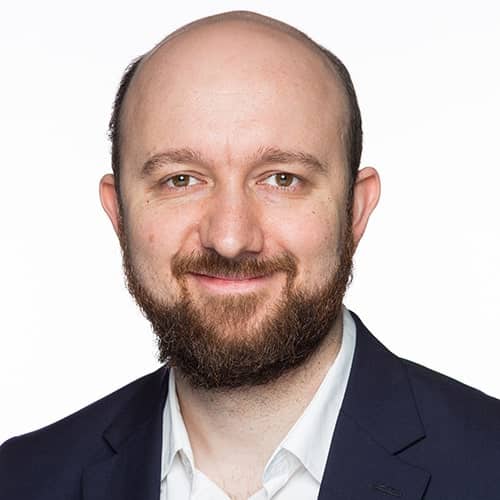
Dr. Chris Tighe is an Associate Professor in the Department of Chemical Engineering at Imperial College London, where he leads the Process Safety & Intensification (PSI) research group. His work focuses on high-pressure chemical processes, catalyst deactivation mechanisms, and industrial safety engineering. He teaches Safety & Loss Prevention , integrating his research insights into pedagogy. Dr. Tighe's research spans 25 years across academia and industry, emphasizing scalable nanomaterial synthesis via continuous hydrothermal methods, energy storage systems (e.g., Li-ion batteries), and reaction safety analytics. His group develops process intensification technologies to enhance safety and efficiency in chemical manufacturing. Recent work includes studies on CO₂ permeability in polymers at extreme pressures, catalyst deactivation pathways in asymmetric reactions, and blue hydrogen production via novel reactor designs. His team collaborates with industry on pilot-scale implementations of nanostructured materials for catalysis and photocatalysis. He actively mentors doctoral researchers through UKRI DTP programs and oversees Imperial’s PhD admissions for energy and process engineering specializations. His lab facilities include advanced high-pressure reactors and in situ characterization tools for nanomaterial analysis.
Dr Sarah Voss is a Professor of Emergency Care at the University of the West of England (UWE), affiliated with the Faculty of Health and Applied Sciences (HAS). She holds a BSc (Hons) in Psychology and a PhD in neuropsychology of dementia, with expertise in emergency care research, workforce development, and end-of-life care. Her research focuses on optimizing emergency care systems, including paramedic roles in primary care, nursing associate implementation, and Advance Care Planning protocols. Professor Voss leads the workforce research pillar of REACH (Research in Emergency Care, Avon Collaborative Hub), collaborating with the University of Bristol to enhance regional healthcare delivery. Her work integrates mixed-methods evaluations and realist synthesis to assess cost-effectiveness and staff/patient satisfaction in innovative care models. Key research areas include improving dementia care in emergency settings, optimizing paramedic decision-making for pediatric trauma, and analyzing occupational stress in ambulance staff. Her recent studies explore cross-cultural adaptation of emergency care protocols and barriers to tranexamic acid use in trauma patients. Professor Voss has contributed to large-scale trials like the AIRWAYS-2 RCT evaluating advanced airway management during cardiac arrest. Her publications span emergency department interventions, health promotion in urgent care, and the implementation of Additional Roles Reimbursement Schemes in primary care.
Dr. Sezen Kayhan is a researcher at the Institute for Film, Theatre, Media and Cultural Studies at Johannes Gutenberg University Mainz since April 2022. She earned her joint doctorate in Film Studies and Visual Culture from the University of Antwerp and Koç University in 2020, focusing on Istanbul's screen production and urban transformation. She supervises the IMACS International Master in Cinema Studies program and leads the research project Against Screen's Extractivism: Slow Production and Spectatorship . University of Antwerp (PhD in Film Studies, 2020) Koç University (PhD in Visual Culture, 2020) Her research explores Production Studies, Cinematic Spaces, Urban Media, Turkish Cinema, and Speculative Fiction. She analyzes how media production intersects with urban change, international co-productions, outdoor cinemas, and the political dimensions of television series and documentaries. Her 15 most recent articles span Ecocinema, Urban Media, Turkish Television, and Media Theory. Topics include Istanbul's screen spaces, cross-cultural film reception, ecological dystopias, and the political economy of media industries. These works reflect her expertise in Production Studies and Urban Cinematic Landscapes. Kayhan is affiliated with the European Network for Cinema and Media Studies (NECS), Society for Cinema and Media Studies (SCMS), and Women in Film. She teaches PrS. Film Practice: Urban Narratives and Media Imaginaries in the Summer 2025 semester. Contact: skayhanm@uni-mainz.de | Office: Media House, Wallstr. 11, Mainz | Office hours: Thursdays 12-1pm (Room 00-236) or by email appointment
Dr. Ciarán Ó Catháin is a Lecturer in the Department of Sport and Health Science within the Faculty of Science and Health. He is actively engaged in research at the intersection of sports science, exercise physiology, and nutritional health, with a strong emphasis on athlete performance and well-being. His research interests include: Sports Science and Exercise Physiology Nutritional Science in Athletics Female Athlete Health, particularly menstrual cycle and hormonal contraceptive tracking Dietary intake and culinary nutrition among athletes Resisted sprint training and performance monitoring Systematic reviews and meta-analyses in sports interventions Application of machine learning and wearable technology in sports Dr. Ó Catháin’s recent publications demonstrate a trend toward evidence synthesis (systematic reviews and meta-analyses), interdisciplinary methodologies, and a growing focus on gender-specific considerations in sports performance. His work integrates engineering concepts such as gait analysis and phase velocity with health sciences, reflecting a cross-disciplinary approach. He also explores emerging technologies like augmented reality and synthetic data generation for performance prediction. While no formal scientific awards are listed, his research has contributed to high-impact journals including Sports Medicine , Frontiers in Sports and Active Living , and Nutrition Bulletin . His h-index of 10 and 254 citations reflect a solid and growing academic influence. There is no available information regarding student supervision, grant funding, laboratory affiliations, or collaborative teams. However, his frequent co-authorship suggests active research collaboration, particularly with researchers in sports physiology and nutrition.
Ben Wagner is a leading academic in digital rights and technology governance, holding multiple prestigious positions: University Professor of Human Rights & Technology at IT:U, Director of the AI Futures Lab on Rights and Justice at TU Delft, and Professor of Media, Technology and Society at Inholland University of Applied Sciences. He leads the Digital Rights Research Team (DRRT) and co-founded the Sustainable Media Lab (SML) in The Hague, contributing to bridging research and education. He is also a visiting researcher at Oxford University's Human Centred Computing Group and serves on the advisory board of the journal Patterns . Inholland University of Applied Sciences – Professor, Media, Technology & Society (since 2021) TU Delft – Director, AI Futures Lab on Rights and Justice IT:U – University Professor, Human Rights & Technology European University Viadrina – Founding Director, Center for Internet & Human Rights Vienna University of Economics – Director, Sustainable Computing Lab ENISA – Advisory Group Member Ben Wagner earned his PhD in Political and Social Sciences from the European University Institute in Florence in 2013, with a dissertation on freedom of expression and online content regulation. He has held research positions at Cambridge University, University of Pennsylvania, Technical University of Berlin, and European University Viadrina. His research centers on digital rights, AI governance, freedom of expression online, and the societal impact of technology. He investigates how digital infrastructures shape human rights and advocates for sustainable, accountable systems. His work spans legal, technical, and social dimensions, focusing on public sector data practices, content moderation, ethical AI, and digital inclusion. He actively promotes citizen control over technological change and interdisciplinary collaboration. The recent publications reflect a strong focus on the ethical and governance challenges of AI and data science, digital rights frameworks, and platform accountability. Themes include the gap between policy and practice in public data use, global AI ethics, content governance on social media, and co-designing digital rights labels. His work emphasizes systemic accountability, hybrid digital-physical spaces, and embedding rights into technological design. Ben Wagner is an expert advisor to the European Parliament, European Commission, OSCE, Council of Europe, and UNESCO. He is a member of the policy advisory board for ECHOES (European Cloud for Heritage OpEn Science) and contributes to high-impact publications and international discourse. His research is widely covered in global media including CNN, The Guardian, Bloomberg TV, Der Spiegel, ORF, and SWR2. He advises on and contributes to major research initiatives such as ReSocial and fabricated. He is involved in developing a new Master’s program in Data-Driven Business at Inholland and leads efforts to integrate digital rights into education and innovation. His inaugural lecture, 'The Ground Beneath our Feet,' highlights the instability of digital infrastructures and the urgent need to embed digital rights at their core. Ben co-founded the Digital Rights Research Team and the Sustainable Media Lab at Inholland, fostering collaboration across faculties and sectors. These labs focus on creating a digitally responsible society through interdisciplinary research in design, policy, and technology. The AI Futures Lab at TU Delft explores justice-oriented futures for AI, while his work at IT:U advances human rights in digital contexts.
Nicole Kalms is a Professor in the Department of Design at Monash University’s Faculty of Art, Design and Architecture, where she also serves as Associate Dean of Research. She is the founding director of the XYX Lab, a pioneering research group focused on Gender and Place, leading national and international projects on gender equity in urban environments. PhD in Architecture, Monash University (2017) Masters in Landscape Architecture, RMIT University (2006) Bachelor of Architecture (Honours), RMIT University (1998) Nicole Kalms’ research lies at the intersection of urbanism, feminism, spatial practice, and media. Her work critically examines how gender, sexuality, and power shape urban spaces, advocating for design as a tool for social justice. She emphasizes interdisciplinary and co-design approaches to address systemic inequities in cities, particularly for women and marginalized communities. Her recent publications and projects reveal a strong thematic focus on gender-sensitive urban design, digital interventions for public engagement, and inclusive mobility. The 15 most recent works include books, chapters, and research outputs centered on feminist urbanism, crowd-sourced safety mapping, visual communication of gender inequality, and participatory design. These contributions reflect a consistent commitment to translating academic research into public discourse and policy impact. Dean's Award for Research Impact (2018) Premier's Design Awards Finalist – 'SHEcity' (2019) Good Design Award Gold Winner – 'Yours, Mine, Ours' (2020) AGDA Award Distinction – 'HyperSext City' (2021) Designers Australia Award Winner – 'HyperSext City' (2021) Nicole Kalms actively supervises research and leads externally funded projects such as the Safer Cities Crowd Mapping Project and PETAL: Pedalling Towards Active Living. She has secured grants from government bodies and international partners, and her work informs public policy on urban safety, transport, and inclusivity. She regularly serves on advisory boards and contributes to public discourse through media and lectures. She leads the XYX Lab, a dynamic research team dedicated to gender and place, which produces innovative design-led research, public exhibitions, and policy recommendations. The lab fosters collaboration across disciplines and with community stakeholders to co-create equitable urban futures.
Lei Zhang is a Professor (Research) and Head of the Artificial Intelligence and Modelling in Epidemiology Program at the School of Translational Medicine, Monash University, Australia. He holds adjunct roles at institutions like Tsinghua University and is a consultant to the WHO Western Pacific Region. His expertise spans HIV/STI epidemiology, mathematical modelling, and AI-driven healthcare solutions. Education: Bachelor of Advanced Science in Mathematics (University of Sydney, 2001) Master of Science in Applied Mathematics (University of Sydney, 2003) PhD in Medicine (UNSW, 2006) Master of Public Health (Hamburg University of Applied Sciences, 2009) Research Interests: Prof. Zhang focuses on cross-disciplinary research in HIV/STI epidemiology, AI applications for disease modeling and diagnostics, health economics, and global health policy. His work integrates mathematical models with clinical data to optimize interventions and inform policy. Key Projects: HOPE: Optimizing HIV Pre-Exposure Prophylaxis (PrEP) in East Asia WHO Collaborations: Supporting global STI programs and policy development China-Australia Joint Research Center for Infectious Diseases Awards: 2021 ASRHA Innovation Award for HIV/STI research contributions Advising & Grants: Supervised 21 students (6 PhD, 15 MSc) and currently co-supervises 24 students (11 PhD, 13 MSc). Leader of 5+ major research grants, including NHMRC-funded projects on STI control and diabetes research. Labs/Teams: Leads the AI & Modelling in Epidemiology Program and collaborates with global networks like UNAIDS, the World Bank, and ministries of health across the Western Pacific region.
EUNKYENG BAEK is an Associate Professor in the Department of Educational Psychology at Texas A&M University. She specializes in multilevel modeling (MLM) for analyzing educational and psychological data, with a focus on longitudinal and time-series data such as single-case experimental design (SCED) data. Her research bridges methodological advancements and applied studies, addressing gaps in data analysis techniques for SCED and educational datasets. **Education**: Ph.D., Educational Research, Measurement and Statistics, University of South Florida (2015) M.A., Psychometrics, Korea University (2006) B.A., Psychology, Sungshin Women University (2003) **Research Interests**: Dr. Baek’s work centers on Bayesian analysis, meta-analysis of single-case studies, and the integration of machine learning techniques in educational contexts. She explores statistical methods to handle autocorrelation, heterogeneity, and variance in SCED datasets, contributing to robust methodologies for synthesizing research findings. **Grants & Leadership**: She has led or co-led multiple grants, including projects on developing effect size toolkits for SCED meta-analyses and studying online learning readiness. She serves as an Action Editor for Behavior Research Methods and holds leadership roles in academic organizations like EREL. **Teaching**: She teaches courses in educational measurement, statistical analysis, and SCED data techniques, such as EPSY622 and EPSY661.
Jonathan A. Jensen is an Associate Professor and Associate Director of the Center for Sport Management Research and Education (CSMRE) at Texas A&M University’s College of Education and Human Development. He holds a B.A. from the University of Notre Dame, an M.S. from the University of Massachusetts-Amherst, and a Ph.D. with a Quantitative Research Methods specialization from The Ohio State University. His research bridges data science and sport marketing, focusing on predictive analytics, sponsorship strategy, and advanced statistical models. Dr. Jensen has authored over 50 peer-reviewed articles in journals such as the Journal of Sport Management and Journal of International Marketing , with notable works on sponsorship retention models, Formula One sponsorship dynamics, and gender equity in sport marketing. His awards include the NASSM Research Fellow, SMA Research Fellow, and multiple "Paper of the Year" accolades from the American Marketing Association. His research emphasizes practical applications of analytics, including survival models for sponsorship longevity and multilevel frameworks for brand equity. He has advised industry leaders in NFL/MLB marketing and currently serves on editorial boards for Journal of Advertising Research and Journal of Global Sport Management . Prior to academia, he worked in global sport marketing agencies within Omnicom and Publicis Groupe. Grants & Awards : IOC PhD Research Grant, IBM Junior Faculty Award, Jimmy & Judy Cox Asia Initiative Award. Industry Experience : Executive roles at Omnicom Group (GMR), Publicis Groupe (Relay Worldwide), and NFL/MLB teams. Labs/Teams : Leads the CSMRE at Texas A&M, focusing on sport analytics and management innovation.
Nicole Magaldi is a Professor in the Department of Communication Sciences and Disorders at Long Island University, School of Health Professions. With over 20 years of clinical experience in hospitals, early intervention, schools, and private practice, she brings a strong applied perspective to her academic work. Her expertise centers on child language disorders, particularly Developmental Language Disorder and Autism Spectrum Disorder. Educational Background: B.S., Cortland University M.A., Kean University Ph.D., New York University Dr. Magaldi's research focuses on evidence-based practice in child language disorders, clinical education methods, and the impact of reproductive factors on neurodevelopmental outcomes. She has published extensively on terminology navigation, pedagogical tools like problem-based learning, and early identification of autism. Her work bridges clinical practice and academic training, emphasizing practical solutions for clinicians and educators. The recent publications highlight a growing interest in integrating educational strategies with clinical rigor, particularly in training future speech-language pathologists. Her research also explores environmental and reproductive risk factors associated with Autism Spectrum Disorder, contributing to broader public health understanding. Scientific Awards: Dissertation of the Year, New York University Dr. Magaldi is actively involved in professional development through her membership in the American Speech-Language-Hearing Association (ASHA) and service on the Professional Development Committee for ASHA’s Special Interest Group 1 (SIG 1). While specific grant details are not listed, her sustained research output suggests ongoing scholarly and possibly funded activity. She mentors graduate students through research collaboration and clinical supervision, though no named advisees are listed. She is affiliated with the Department of Communication Sciences and Disorders, which operates under the School of Health Professions at LIU. Her work contributes to both clinical innovation and academic advancement in speech-language pathology.
Kim Dell'Angela, Ph.D., is a Full Professor in the Department of Clinical Psychology at The Chicago School's College of Professional Psychology, Chicago Campus. With 17 years at Loyola Stritch School of Medicine and leadership roles at Harper Community College, she brings extensive expertise in clinical psychology, integrated healthcare systems, and academic administration across medical, educational, and community settings. Education: Ph.D. in Clinical Psychology, Loyola University Chicago (1991) MA in Clinical Psychology, Loyola University Chicago (1987) M.L.S in Legal Studies, Santa Barbara/Ventura School of Law (2015) B.A. in Psychology, Rutgers University (1983) Dr. Dell'Angela's research centers on integrated healthcare delivery with emphases on autism spectrum disorders, developmental disabilities, chronic pain management, and child protection systems. Her work bridges clinical practice and policy advocacy, particularly in primary care integration, underserved population access, and trauma-informed care. She actively mentors students in neuropsychology, health psychology, and technology applications while teaching courses in Social Justice Advocacy, Primary Care, and Divorce/Custody. Her publication history (1990-2016) reveals consistent focus on practical clinical applications across pediatric settings, emergency medicine, and medical education. Key themes include trauma response protocols, developmental screening tools, and interdisciplinary collaboration models. The 2016 monograph "Towards a Healthier Nation" established her framework for mental health as foundational to public health policy. Advising and Grants: Dr. Dell'Angela mentors students in neuropsychology, health psychology, and autism research. She secured $265,000 for Loyola's child sexual abuse intervention program and served as PI for a $1.8 million federal scholarship grant supporting students committed to primary care in underserved communities at The Chicago School. Leadership and Teams: She established Harper Community College's Early Alert/Threat Assessment team and All Hazards emergency response system. At Loyola, she led interdisciplinary Child Death Review Teams for 12 years and created community-health partnerships extending care to 20,000+ students and underserved populations.
Dr. Binny Chokshi serves as an Associate Professor in the Department of Pediatrics at the Uniformed Services University of the Health Sciences (USUHS) School of Medicine, Bethesda, MD, with a primary appointment in the Division of Military and Child Family Research. As a general pediatrician specializing in adolescent and young adult health, her work integrates clinical practice with research on childhood adversity and trauma-informed systems. Her educational journey includes a BA in Community Health from Brown University (2006), an MD from Albert Einstein College of Medicine (2011), and an MEd from George Washington University (2020). She completed her Pediatrics Residency and served as Chief Resident at Children's National Hospital in Washington DC (2011-2015). Dr. Chokshi's research centers on the science of childhood adversity and trauma-informed care implementation, with recent work examining military-specific health determinants like food security through WIC program analysis. She has developed nationally recognized e-modules for pediatric trauma-informed training and served on hospital-wide implementation teams. Her scholarship bridges military medicine and pediatrics, emphasizing practical applications for vulnerable populations. Her 9 publications (2019-2024) reveal consistent focus on trauma-informed care frameworks, with expanding scope into military family health systems and pandemic impacts. Key themes include educational tool development, social determinant analysis, and adapting care models for military-connected youth. As an active educator, she trains medical students and residents through symposia and curricular development. She contributes nationally as a member of the American Academy of Pediatrics Expert Leadership Team for 'Building Capacity for Trauma-Informed Pediatric Care,' influencing practice standards beyond her institution. Within USUHS, Dr. Chokshi collaborates with the Division of Military and Child Family Research on projects addressing military lifestyle impacts on child development, particularly examining how deployment cycles and military healthcare systems affect family health outcomes.
Kalle Åström is a Professor at Lund University's Centre for Mathematical Sciences within the Faculty of Engineering. He coordinates Lund University's Natural and Artificial Cognition profile area and the AI Lund network. His affiliations include ELLIIT (Linköping-Lund IT initiative), eSSENCE (e-Science Collaboration), Stroke Imaging Research group, and Computer Vision and Machine Learning research groups. His research spans computer vision, machine learning, and mathematical modeling with applications in medical imaging, autonomous systems, and cognitive vision. Key interests include geometry of multiple views, structure from motion using heterogeneous sensors, medical image analysis, and handwriting recognition. His work contributes to UN Sustainable Development Goals through AI applications in healthcare and engineering. Recent publications (2025) demonstrate strong trends in medical AI (Alzheimer's diagnostics, breast cancer classification) and autonomous systems (safety testing, sensor fusion). His work bridges theoretical mathematics with practical applications across healthcare and robotics domains. Best Nordic Ph.D. Thesis in Pattern Recognition (1995-1996) Innovation Cup 1991 for Autonomous Guided Vehicles EU IST Grand Prize 2003 (Decuma startup) Åström supervises graduate students and leads multiple active research projects including machine learning for Parkinson's disease analysis, audiovisual drone detection (Vinnova-funded), and Alzheimer's disease modeling. He co-founded startups Decuma (1999), Cognimatics (2003), Spiideo (2012), and Neuromathics (2015), and serves on boards of the Royal Swedish Physiographic Society and Swedish AI Society (SAIS). His research integrates mathematical rigor with real-world AI applications through extensive industry-academia collaborations.
Jennifer S. Clark is a Professor in the Department of Communication and Media Studies at Fordham University. Her research and teaching focus on television history, production cultures, and gendered representations in media. Education: PhD in Critical Studies, Cinema-Television, from the University of Southern California. Her research interests include television production cultures , gender studies , female stardom and celebrity , and representations of masculinity and emotion . She has published extensively on topics such as feminist media, gender dynamics in 1970s television, and the intersection of labor and celebrity in historical contexts. Her upcoming book, Producing Feminism: Television Work in the Age of Women’s Liberation , explores institutional reforms and feminist practices in television during the 1970s. Clark has authored articles in leading journals like the Journal of Cinema and Media Studies and Feminist Media Histories . Her work spans subfields including feminist theory, historical broadcasting, and adaptation in media. She teaches courses such as Understanding Film , Understanding Television , and British Heritage Cinema , integrating critical analysis of gender, media aesthetics, and cultural production.
Ryan Townley, MD is an Associate Professor of Neurology at the University of Kansas Medical Center's School of Medicine. He serves as Fellowship Program Director for the Neurology department and is the Medical Director of the Memory Clinic at The University of Kansas Health System. Dr. Townley actively advances Alzheimer's research as co-Principal Investigator of the Alzheimer's Clinical Trials Consortium and leads multiple clinical studies at the University of Kansas Alzheimer's Disease Research Center. Education: BS in Neurobiology, University of Kansas, Lawrence, KS MD, University of Kansas School of Medicine, Kansas City, KS Neurology Residency, Mayo School of Graduate Medical Education, Rochester, MN Cognitive and Behavioral Neurology Fellowship, Mayo School of Graduate Medical Education, Rochester, MN Dr. Townley's research focuses on Alzheimer's disease variants including posterior cortical atrophy and dysexecutive Alzheimer's, dementia with Lewy bodies, normal pressure hydrocephalus, and frontotemporal lobar degeneration. His work combines clinical practice with cutting-edge research to improve diagnosis and treatment of neurodegenerative conditions. He is particularly interested in the intersection of behavioral neurology and neuropsychiatry, leveraging his dual certification in Psychiatry and Neurology to provide comprehensive patient care. Dr. Townley's published research demonstrates a strong focus on neuroimaging techniques for diagnosing and characterizing various dementia subtypes. His work spans from basic neuropathological studies of Alzheimer's disease to clinical trials evaluating new therapeutic approaches. A significant portion of his research examines the heterogeneity of dementia presentations and seeks to refine diagnostic criteria for various neurodegenerative conditions. Scientific Awards: Dewey K. Ziegler Award for Excellence in Neurology American Academy of Neurology's Outstanding Neurology Medical Student Award As Fellowship Program Director, Dr. Townley mentors the next generation of cognitive and behavioral neurologists. He has secured multiple research grants from the National Institute on Aging to investigate Alzheimer's disease and related dementias. His current projects include the AHEAD 3-45 Study, a study evaluating CT1812 for Dementia With Lewy Bodies, and the Alzheimer's Plasma Extension Study, all serving as Site Principal Investigator. Dr. Townley is actively involved with the University of Kansas Alzheimer's Disease Research Center, contributing to both clinical care and research initiatives. He serves on the Clinical Education Task Force of the Lewy Body Disease Association and is a member of the International Society to Advance Alzheimer's Research and Treatment, demonstrating his commitment to advancing knowledge and care for patients with neurodegenerative conditions.