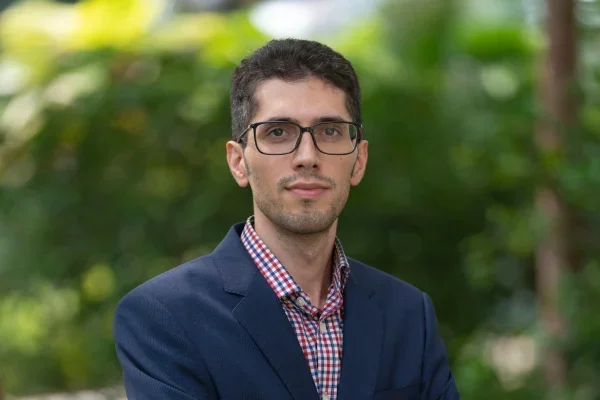
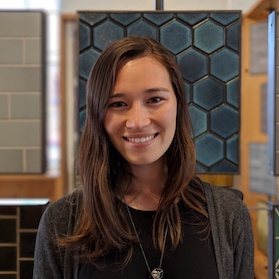
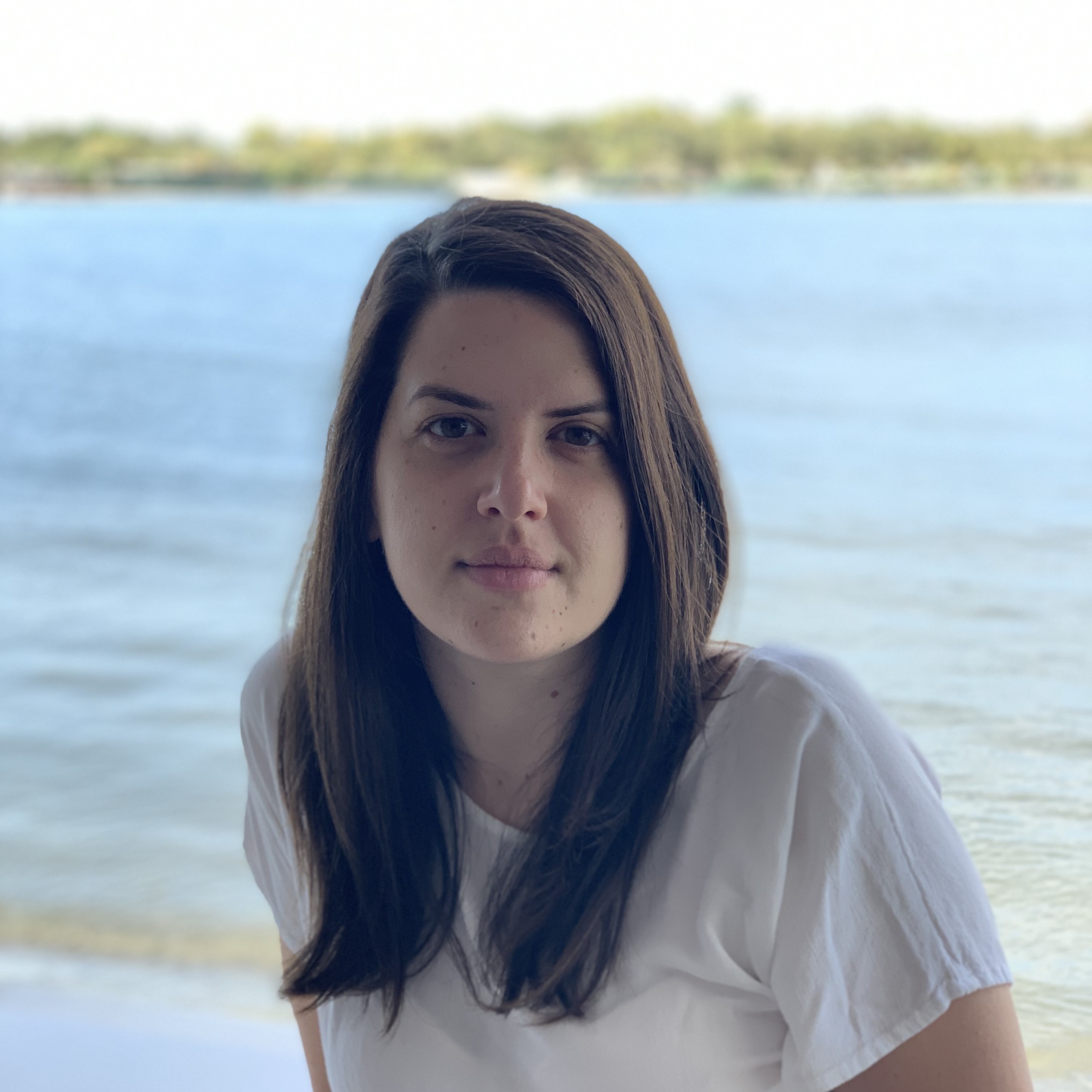
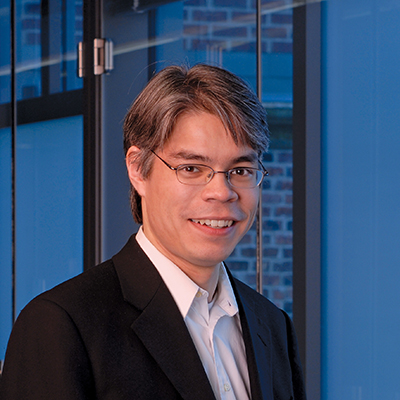
Jonathan T. Barron is a Researcher at Google DeepMind in San Francisco, specializing in Computer Vision , Neural Rendering , and 3D Scene Reconstruction . He earned his PhD at UC Berkeley under Jitendra Malik and has pioneered advancements in NeRF (Neural Radiance Fields) and diffusion-based 3D generation. Research Interests : Computer Vision, Deep Learning, Generative AI, Image Processing, and 3D Reconstruction via Radiance Fields. His work includes Bolt3D for rapid 3D scene generation, CAT3D/CAT4D for text-to-3D/4D, and Zip-NeRF for anti-aliased radiance fields. He has also developed real-time rendering frameworks like SMERF and NeRF-Casting for reflections. Scientific awards: PAMI Young Researcher Award He has served as Area Chair for CVPR, ICCV, and NeurIPS, and his research is widely adopted in applications like Google's Lens Blur , Portrait Mode , and Jump VR .
Andreas Geiger is a Professor and Head of the Department of Computer Science at the University of Tübingen, Germany. He leads the Autonomous Vision Group (AVG) within CyberValley and is a core faculty member of the Tübingen AI Center. His roles also include PI in the ML in Science Excellence Cluster and the CRC Robust Vision, as well as ELLIS Fellow and coordinator of the ELLIS PhD program. He specializes in machine learning models for computer vision, robotics, and autonomous systems, with applications in self-driving cars, VR/AR, and scientific document analysis. Educational background: While not explicitly detailed, his positions imply a Ph.D. in Computer Science or related field. His work spans interdisciplinary collaborations with institutions like ETH Zürich, Microsoft, and the University of Bonn. Research focuses on 3D scene understanding, Gaussian splatting, generative models, and reliable autonomous systems. Notable contributions include the KITTI dataset and foundational work in neural radiance fields. Awards include the Sage 10-Year Impact Award (2024), ERC Starting Grant (2019), and IEEE PAMI Young Researcher Award (2018). Key projects include the Scholar Inbox paper recommender platform, ReSim (reliable world simulation), and advancements in 3D scene generation (e.g., UrbanCAD, PrITTI). His lab maintains a strong focus on open-source tools and datasets, such as the CARLA Route Generator. Grants and funding include support from Vector Stiftung (MINT innovation program) and EU initiatives like the ML in Science Cluster. His team collaborates internationally, with recent work presented at CVPR, SIGGRAPH, and NeurIPS.
Yonatan Bisk is an Assistant Professor at Carnegie Mellon University within the Language Technologies Institute (with courtesy appointment in Robotics Institute). His research bridges Natural Language Processing , Robotics , and Embodied AI , focusing on language grounding, theory of mind, and multimodal interaction. Education : Ph.D. in Computer Science from University of Illinois at Urbana-Champaign Postdoctoral Experience : USC ISI, University of Washington, Allen Institute for AI Industry Appointments : Microsoft Research, Meta AI His research emphasizes embodied language systems and social intelligence in AI . Recent projects include WebArena for autonomous agents, SOTOPIA for social reasoning, and HomeRobot for open-vocabulary manipulation. He leads the REAL Center (Robotics, Embodied AI, and Learning) to foster interdisciplinary collaboration. Key scientific awards include selection for the DARPA ISAT Study Group (2024). He teaches courses like "Talking to Robots" and "Multimodal Machine Learning" while serving as area chair/editor across NLP, Robotics, and ML communities.
Tengyu Ma is an Assistant Professor of Computer Science at Stanford University. His research focuses on machine learning, deep learning, optimization, and theoretical computer science. He is particularly known for work on neural networks, reinforcement learning, and algorithmic guarantees in AI systems. His email is tengyuma@stanford.edu . Ma's research interests span foundational aspects of machine learning, including generalization theory, optimization algorithms, and the theoretical underpinnings of deep learning. He has contributed to areas such as self-play theorem provers, learning rate schedules, and robustness in low-light vision tasks. His work often bridges theoretical insights with practical algorithm design. His recent publications emphasize advancements in large language models (LLMs), theorem proving via self-play, and understanding training dynamics in deep networks. Despite prolific output, no specific scientific awards are explicitly mentioned in the provided texts. Ongoing work includes exploring in-context learning mechanisms, formal verification of AI systems, and efficient pretraining techniques. His research has implications for both theoretical understanding and real-world applications of AI.
Pepa Kostadinova Atanasova is a Tenure Track Assistant Professor in the Natural Language Processing Section of the Department of Computer Science , University of Copenhagen. She co-leads the CopeNLU group with Isabelle Augenstein and has special teaching duties for industry practitioners. Research Interests: Interpretability of Language Models Explainability Methods Factuality in Language Models Parametric Knowledge Analysis Human-AI Alignment Trustworthy AI Scientific Awards: Marie Skłodowska-Curie Fellowship ELLIS Best PhD Thesis Award Informatics Europe Best PhD Thesis Award Collaborations: Active in interdisciplinary research, including partnerships with Meta and Google, and a postdoctoral project combining language model explanations with trading behavior analysis.
Reza Shokri is a Dean's Chair Associate Professor in the Department of Computer Science at the National University of Singapore (NUS), School of Computing. His research lies at the intersection of data privacy, security, and trustworthy machine learning, with a focus on quantifying privacy risks and developing robust, fair, and interpretable models. PhD in Computer Science, EPFL His research interests center on data privacy and trustworthy machine learning , particularly in the context of deep learning and federated systems. He investigates how machine learning models memorize training data, leading to privacy leakage, and designs frameworks to audit and mitigate such risks. His work bridges theoretical guarantees with practical applications, emphasizing the trade-offs among privacy, fairness, robustness, and utility. His recent publications (2023–2025) reveal a strong trend in analyzing privacy in large language models (LLMs), membership inference attacks, federated learning, and fairness. These works are published in top venues such as NeurIPS, ICML, ICLR, CCS, and FAccT, highlighting his leadership in both AI and security communities. Notable scientific awards include: Asian Young Scientist Fellowship (2023) Intel Outstanding Researcher Award (2023) Best Paper Award, ACM FAccT (2023) IEEE S&P Test-of-Time Award (2021) Caspar Bowden Award for Privacy Enhancing Technologies (2018) NUS Presidential Young Professorship (2019–2023) VMware Early Career Faculty Award (2021) He has advised numerous PhD and Master’s students, many of whom have contributed to high-impact publications. He has also received research grants from major industry partners including Meta, Google, Intel, and VMware. He leads the Data Privacy and Trustworthy Machine Learning Lab at NUS and has served on program committees for top conferences such as IEEE S&P, ACM CCS, and FAccT, including co-chairing roles at HotPETs and Shadow PC of IEEE S&P. He has delivered tutorials at ICML and CCS on privacy auditing in machine learning. His lab focuses on developing tools and frameworks—such as the ML Privacy Meter—for assessing and improving the privacy properties of machine learning models, with applications in regulatory compliance and secure AI deployment.
Allison Koenecke is an Assistant Professor of Information Science at Cornell Tech and a field faculty member in Computer Science at Cornell University. Previously, she was a postdoctoral researcher at Microsoft Research New England and completed her PhD at Stanford University’s Institute for Computational & Mathematical Engineering. Her research focuses on algorithmic fairness, computational social science, and causal inference in public health, addressing disparities in automated systems like speech recognition and policy decision-making. Education : PhD, Stanford Institute for Computational & Mathematical Engineering MA/MS, Stanford University BA/BS, Massachusetts Institute of Technology Research Interests : Dr. Koenecke’s work bridges economics and computer science, emphasizing equity in AI systems. Key areas include: Algorithmic bias in speech recognition (e.g., racial disparities in voice assistants) Fairness in policy tools like environmental justice data systems Causal analysis in public health interventions Ethical implications of large language models in education Media & Impact : Her research has been featured in outlets like New York Times , Science , and Scientific American . Notable studies include exposing racial gaps in speech-to-text systems and advocating for inclusive dataset development. She also explores societal impacts of AI in education and governance. Awards : Sloan Research Fellow in Computer Science Forbes 30 Under 30 in Science NSF Awards Cornell CIS Teaching Excellence Award (2024) Teaching & Outreach : She teaches courses like Designing Fair Algorithms and Data Science for Global Development , emphasizing interdisciplinary collaboration. Her PhD Professionalization course addresses hidden curricula in academia. She advises on AI ethics for nonprofits, tech companies, and government agencies.
Georgia Gkioxari is an Assistant Professor in the Division of Computing and Mathematical Sciences at Caltech , with a part-time affiliation at Meta AI . Her work focuses on extending visual perception models through advanced 2D and 3D representation learning, spatial reasoning, and generative models. Education: Not explicitly mentioned in the text Research interests span 3D perception , spatial reasoning , and vision-language integration , with projects like Visual Agentic AI for Spatial Reasoning and Token-by-Token Multimodal Alignment . Her publications emphasize 3D object detection , reconstruction , and generative modeling techniques including diffusion models and transformers . Scientific recognition includes the Meta LLM Evaluation Research Grant , Okawa Research Grant , Google Faculty Scholar Award 2024 , and Amazon Research Award . She teaches courses like Large Language & Vision Models (EE/CS 148) and Learning & 3D (CS 101) at Caltech. Labs & Teams: Leads Glab with members including Ilona Demler, Ziqi Ma, and Damiano Marsili
Fabian Suchanek is a full professor at Institut Polytechnique de Paris, specifically affiliated with Télécom Paris. He leads research in the Data, Intelligence, and Graphs (DIG) team within the Computer Science department. His academic career focuses on bridging artificial intelligence with structured knowledge representations. Suchanek's research interests span artificial intelligence, knowledge bases, and natural language processing, with particular emphasis on knowledge graph construction , rule mining , knowledge-based language models , and explainable AI . His work demonstrates how structured knowledge can enhance machine learning systems, particularly large language models, by providing factual grounding and interpretability. The research group he leads develops practical systems that address real-world knowledge management challenges. His recent publications showcase a strong trajectory in knowledge-intensive AI, with notable contributions to knowledge graph completion, rule mining techniques, and neural approaches to knowledge base validation. The research demonstrates increasing integration between symbolic and neural approaches to AI. Best Student Paper Award at KR 2024 for work on contextual reasoning Best Demo Award of IJCAI 2024 for rule mining in knowledge graphs French Open Research Award for the YAGO project Best Paper Award of ESWC 2021 for Neural Knowledge Base Repairs Suchanek has secured significant research funding, evidenced by his active recruitment of PhD students for knowledge-based language model research. He has held visiting positions, including at Nanyang Technological University (June-September 2023), and is recognized internationally through keynote invitations such as the Singapore ACM SIGKDD Symposium 2023. He has deliberately stepped back from administrative duties at Institut Polytechnique de Paris to focus on research. His laboratory maintains strong industry connections through open-source software projects including the YAGO knowledge base, AMIE for rule mining, STACI for explainable AI, and several other tools that have become standard in knowledge representation research.
Zachary Ives is the Adani President's Distinguished Professor and Department Chair of the Computer and Information Science Department at the University of Pennsylvania. He holds affiliations with the ASSET Center for Safe, Explainable and Trustworthy AI, the Warren Center for Network and Data Science, the Center for Neuroengineering and Therapeutics, and serves as a Distinguished Research Fellow at the Annenberg Center for Public Policy. His research focuses on data integration and sharing, data provenance and trustworthiness, and machine learning systems. He develops data science platforms at the intersection of databases, machine learning, and distributed systems, with applications in Web question answering and scientific domains like genetics and neuroscience. His work addresses fundamental challenges in integrating heterogeneous data, ensuring trustworthy results, and facilitating collaborative data science. His recent publications demonstrate a strong focus on data lakes, learned database systems, fine-grained provenance, and question answering systems. These works span top conferences including SIGMOD (where his paper was selected as Best Paper in 2024), VLDB, ACL, and PODS, showing the breadth of his contributions across database systems, natural language processing, and data management. NSF CAREER award recipient Fellow of the ACM Christian R. and Mary F. Lindback Foundation Award for Distinguished Teaching IEEE Technical Committee on Data Engineering Education Award SIGMOD Best Paper Award ICDE 2013 ten-year Most Influential Paper award As Department Chair, Ives has overseen significant departmental growth, hiring 25 new faculty since 2018. He advises numerous PhD students and postdocs, and maintains extensive collaborations across Penn and with external institutions. His research has been funded by NSF, NIH, DARPA, Google, Amazon, and other organizations. He has developed courses including NETS 212 'Scalable and Cloud Computing' and teaches Big Data Analytics. His research group, the Penn Database Group, works on projects including data lake management, data provenance, and collaborative data science platforms. His work with neuroscientists on seizure prediction has received significant attention, including a competition with 504 teams achieving 82% accuracy.
Dr. Ly Fie Sugianto is an Associate Professor in the Department of Accounting at Monash Business School, Monash University. Her research focuses on the integration of data analytics, artificial intelligence, and machine learning in accounting and business systems, with applications in the energy sector and organizational behavior. Monash Business School, Monash University Department of Accounting Specialization: Accounting Information Systems, Data Analytics, AI Her research interests span Accounting Information Systems , Agent-Based Simulation , Decision Support Systems , and Technology Adoption . She applies computational methods to study competitive dynamics in deregulated electricity markets and the impact of digital tools on employee well-being and organizational resilience. The recent publications reflect a strong trend in using AI and simulation to analyze complex socio-technical systems, particularly in energy markets and leadership dynamics. Keywords across her work include agent-based modeling , data analytics , servant leadership , and enterprise social media , indicating interdisciplinary research at the intersection of information systems, management, and public policy. Her scientific awards include competitive grants from the ARC (SPIRT/Linkage) , the Australia Indonesia Governance Research Partnership (AIGRP) , and the Sumitomo Foundation . ARC Grant: Dispatch Optimisation in the Australian National Electricity Market Sumitomo Foundation: Technology Use and Employee Well-Being AIGRP: Governance and MSME Resilience during Pandemic Dr. Sugianto has advised research projects and collaborated with industry partners such as Western Power , Ecogen Energy , and AEMO . She is currently accepting PhD students and leads externally funded research initiatives. Her work contributes to UN Sustainable Development Goals related to industry innovation and responsible consumption. She is affiliated with research teams focusing on intelligent decision support systems and digital transformation in business , with active collaborations in Australia and Indonesia.
Andreas Rietbrock is Professor and Director of the Geophysical Institute (GPI) at the Karlsruhe Institute of Technology (KIT) , Germany, where he also serves as Dean of Studies for Geophysics . He is a leading expert in earthquake seismology, seismic tomography, and subduction zone dynamics, with a strong focus on integrating advanced observational techniques and computational methods. Education: While specific degrees are not listed in the provided text, his extensive publication record and leadership roles indicate advanced academic training in geophysics and seismology. Research Interests: His work spans a wide range of topics including: Seismic imaging of subduction zones (e.g., Nazca, Lesser Antilles) Earthquake rupture dynamics and fault mechanics Volcanic seismology and magma transport Full waveform inversion and AI-enhanced seismic analysis Distributed Acoustic Sensing (DAS) applications Induced seismicity and reservoir monitoring Research Trends: His recent publications (2022–2025) emphasize the use of dense seismic arrays, AI-based data processing, and multi-method tomography to study complex tectonic environments. Key themes include high-resolution imaging of slab structures, fluid migration in subduction zones, and the integration of DAS and machine learning for seismic monitoring. Scientific Contributions: Andreas has led major international projects such as the ANTICS Large-N deployment in Albania and the VoiLA project in the Lesser Antilles. He has published extensively in top-tier journals like Nature , Geophysical Research Letters , and Journal of Geophysical Research , with over 200 peer-reviewed articles. Teaching and Supervision: He teaches courses such as "Introduction to Geophysics II", "Seismology", and "Current Topics in Seismology and Risk". While specific student names are not listed, his role as Dean and principal investigator on numerous projects indicates active supervision of graduate students and postdocs. Labs and Teams: He leads the seismology group at GPI, coordinating large-scale deployments of seismic instruments, including ocean-bottom seismometers and fiber-optic DAS systems. His team collaborates globally with institutions in Europe, South America, and Asia.
Sascha van Schendel is an Assistant Professor in Data Protection & Cybersecurity at the Department of Law & Markets, Erasmus School of Law, Erasmus University Rotterdam. She is affiliated with the Erasmus Centre of Law and Digitalization and contributes to the Sectorplan SSH-Breed research initiative on the influence of digitalization on work, prosperity, and entrepreneurship. Her research lies at the intersection of law, technology, and fundamental rights, with a focus on data protection, privacy, algorithmic governance, and the regulation of emerging technologies in public and environmental domains. She has published widely on topics including GDPR compliance, privacy by design, smart energy systems, AI in criminal justice, and the legal implications of predictive policing. The recent publications reflect a strong trend toward the regulation of data in public infrastructure (e.g., energy grids), algorithmic accountability in law enforcement, and the integration of legal and technical perspectives in privacy-preserving systems. Her work spans environmental law, criminal procedure, and digital constitutionalism, demonstrating interdisciplinary reach. Scientific Awards: No awards explicitly mentioned in the provided text. Advising and Grants: While no formal PhD or Master’s students are listed, Dr. van Schendel has been involved in significant research projects such as the NWO-funded Megamind project on smart energy grids, indicating experience with competitive grant funding. She actively collaborates with legal scholars and contributes to public policy debates, including responses to national legislation like the Dutch Cybersecurity Bill. Labs and Teams: She is a core member of the Erasmus Centre of Law and Digitalization, a research hub focusing on the legal challenges of digital transformation. Her work is embedded in interdisciplinary collaborations involving law, technology, and public policy experts.
Gordon Wetzstein is an Associate Professor of Electrical Engineering and, by courtesy, Computer Science at Stanford University. He leads the Stanford Computational Imaging Lab and co-directs the Stanford Center for Image Systems Engineering (SCIEN). His research focuses on computational imaging, wearable computing, and neural rendering, blending computer graphics, vision, AI, and optics. Education: Ph.D., Computer Science, University of British Columbia (2011) Diploma, Media Systems Science, Bauhaus University (2006) Research Interests: His work spans computational displays , holography , non-line-of-sight imaging , and AI-driven optical systems . Key projects include Autofocals (gaze-contingent eyeglasses) and neural holography systems. He explores applications in AR/VR, medical imaging, and scientific visualization. Publications: Recent work includes advances in 3D holography, gaze-tracking systems, and AI-optics integration. His papers address challenges in display efficiency, light-field processing, and real-time imaging. Awards: Fellow of Optica NSF CAREER Award (2016) PECASE (2019) ACM SIGGRAPH Significant New Researcher Award (2018) Advising & Grants: He advises over 20 doctoral and postdoctoral students. His lab collaborates with industry (e.g., Raxium, Google) and has secured grants from NSF, DARPA, and private foundations. Labs & Teams: His lab develops cutting-edge systems like neural holography and non-line-of-sight imaging. The SCIEN center fosters interdisciplinary image systems research.
Zhiyong Huang is an Associate Professor at the National University of Singapore (NUS) School of Computing. He holds multiple leadership roles, including Deputy Director of the NUS Business Analytics Centre, Director of the Computing Translational Research & Development (C-TReND) Centre, and Assistant Dean (Industry Relations). He is also a Senior Principal Investigator at the NUS Chongqing Research Institute. Education: PhD in Computer Science from École Polytechnique Fédérale de Lausanne (EPFL), MEng and BEng in Computer Engineering from Tsinghua University. Leadership: Senior Member of ACM and IEEE, Pioneer Member of ACM SIGGRAPH, and Chair of the Singapore ACM SIGGRAPH Chapter. Research Interests: His work spans Data Analytics, Machine Learning, Computer Vision, Human-Robot Interaction, and Computer Graphics. Key projects include the NUS Digital Twin initiative and secure data analytics pipelines. Article Trends: Recent publications focus on time series generation, cryptocurrency benchmarks, medical image registration, and phishing detection. These works integrate machine learning, computer vision, and multimodal systems. Scientific Awards: Finalist, World Technology Summit & Awards (Entertainment, 2010) Bronze, National Science and Technology Progress Award (1992) Tsinghua 12.9 Distinguished Young Teacher Award (1989) Grants & Service: Extensive involvement in Singapore's IT Standards Committee, review panels for EDB SIIRD projects, and editorial roles. He has served as PC co-chair, local chair, and reviewer for numerous conferences and journals.