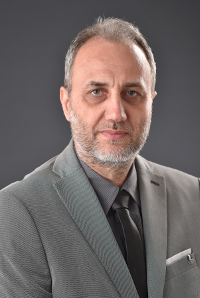
Professor Steven J. Murdoch is a faculty member at the University College London (UCL) in the Department of Computer Science . He holds a Royal Society University Research Fellow position and leads the Information Security Research Group . He is affiliated with Christ’s College as a bye-fellow, and is a Fellow of the Institution of Engineering and Technology (IET) and the BCS . His work bridges security engineering , privacy-enhancing technologies , and legal-technical intersections . Academic Leadership : Program chair and general chair for major conferences like Privacy Enhancing Technologies Symposium and Financial Cryptography . Research Contributions : Notable for exposing vulnerabilities in EMV protocols , designing blockchain-based fair exchange protocols , and analyzing malware delivery ecosystems . Scientific Awards : Received the IRTF Applied Networking Research Prize 2020 for internet-wide scanning methodologies. Professional Impact : Active in Tor Project and critical infrastructure analysis, including the Post Office Horizon scandal . Email: s.murdoch@ucl.ac.uk .
Dr. Joshua M. Pearce is a Professor at Western University, holding appointments in the Department of Electrical & Computer Engineering and the Ivey Business School. He is the John M. Thompson Chair in Information Technology and Innovation at the Thompson Centre for Engineering Leadership & Innovation and a Fellow of the Canadian Academy of Engineering. His research focuses on open-source appropriate technology for sustainability and poverty reduction, spanning solar photovoltaics, 3D printing, distributed recycling, and policy analysis. Ph.D. in Materials Engineering from Pennsylvania State University Former Richard Witte Professor at Michigan Tech Editor-in-Chief of HardwareX Author of multiple open-source sustainability books His work integrates engineering, economics, and policy to solve global sustainability challenges. Recent projects include agrivoltaic systems, open-source medical devices, and climate-resilient food production frameworks. He leads the Free Appropriate Sustainability Technology (FAST) research group, which has produced over 200 open-access publications cited in top-tier journals like Renewable and Sustainable Energy Reviews (IF=16.3) and HardwareX (IF=2). Dr. Pearce's scientific contributions include: Fulbright-Aalto University Distinguished Chair Top 0.06% most cited scientist (Elsevier metrics) Leading open-source hardware certification frameworks Developing low-cost scientific instruments His research team includes cross-disciplinary collaborators from Mechanical Engineering, Environmental Science, and Policy Studies. The FAST group emphasizes practical open-source solutions for energy, water, and food security in both developed and low-resource contexts.
Mingda Li is an Associate Professor in the Department of Nuclear Science and Engineering at the Massachusetts Institute of Technology (MIT), holding the Class of 1947 Career Development Professorship. His research spans quantum materials, nanoscale energy transport, and AI-driven materials discovery, utilizing neutron/X-ray scattering techniques and machine learning to address challenges in quantum computing, thermal management, and energy conversion. He leads the Quantum Measurement Group and teaches graduate courses including Quantum Theory of Materials Characterization. Education: Bachelor of Science in Engineering Physics, Tsinghua University, 2009 Doctor of Philosophy in Nuclear Science and Engineering, MIT, 2015 Postdoctoral Research, MIT Mechanical Engineering Department Research Interests: Dr. Li's quantum research develops theoretical frameworks for topological order and defect-engineered quantum materials, with applications in microelectronics and quantum computing. His energy transport studies investigate phonon/electron dynamics at interfaces under non-equilibrium conditions to design materials for thermal management in electronics. The AI program creates symmetry-aware generative models that integrate ab initio calculations with experimental data, enabling closed-loop materials discovery for quantum and energy technologies. Publication Trends: Analysis of 15 recent 2025 publications reveals dominant themes in quantum materials (topological semimetals, 2D magnets), AI-driven design (generative models, symmetry-equivariant networks), and advanced characterization (neutron/X-ray spectroscopy). Key innovations include defect engineering for thermal transport, machine learning for spectroscopic data interpretation, and quantum phenomenon discovery in complex materials, reflecting strong interdisciplinary integration. Scientific Awards: No scientific awards were mentioned in the provided text. Advising and Grants: Dr. Li mentors graduate students in the Quantum Measurement Group, guiding research in quantum materials characterization and AI applications. He has taught core courses including Applied Nuclear Physics and Machine Learning in Nuclear Science and Engineering. His research is supported by grants focused on quantum engineering and nuclear materials, with collaborations spanning national laboratories and industry partners for quantum computing and energy applications. Labs and Teams: The Quantum Measurement Group operates at the intersection of experimental physics and computational science, utilizing neutron scattering facilities (including Spallation Neutron Source) and ultrafast X-ray techniques. The team develops custom software for data analysis and collaborates with institutions like MIT.nano for materials synthesis, maintaining a pipeline from theoretical prediction to device-level validation for quantum and thermoelectric materials.
Willis Lang is a Researcher at Microsoft , focusing on Database Systems , Cloud Computing , and Data Management . His work bridges academic research with industrial applications in cloud databases. Education: PhD in Computer Sciences - Databases (University of Wisconsin-Madison, 2012) MS in Computer Science and Engineering - Databases (University of Michigan, 2008) BMath in Honours Computer Science - Bioinformatics (University of Waterloo, 2006) Research Interests: Willis’s research spans Database Systems , Cloud Computing , and Energy Efficiency , with a focus on scalability, tenant management, and predictive provisioning. His work addresses real-world challenges in cloud database optimization, multi-tenancy, and power-aware systems. Recent Publications highlight trends in Cloud Database Efficiency , including auto-scaling, tenant placement, and energy-conscious cluster design. His contributions often involve collaboration with industry leaders like Microsoft and Jignesh M. Patel. Scientific Awards: Best Paper Award, DaMoN 2010 Best Presented Award, Midwest Database Research Symposium 2007 Service: Willis has served as a reviewer for conferences like SIGMOD, VLDB, and journals including VLDBJ and JPDC. His expertise is sought in cloud and database research communities.
Dong Li is an Associate Professor at the University of California, Merced , where he directs the Parallel Architecture, System, and Algorithm Lab (PASA) and co-directs the High Performance Computing Systems and Architecture Group . He co-founded Yotta Labs Inc. and previously held research roles at Oak Ridge National Laboratory (2011-2014) and a PhD from Virginia Tech. Research Interests: Dong's work focuses on High performance computing (HPC) Memory heterogeneity and non-volatile memory Systems for machine learning and AI Fault tolerance in large-scale systems His innovations include heterogeneous memory optimization for recommendation models and GNNs, CXL memory integration, and persistent memory debugging tools. Recent Publications highlight advancements in CXL-based inter-node communication Memory tiering for laminography reconstruction ML-guided memory optimization for DLRM and GNN Fault tolerance benchmarks and error analysis Awards & Recognition: NSF CAREER Award (2016) Oracle Research Award (2022) ASPLOS Distinguished Artifact Award (2021) Virginia Tech Early Career Alumni Award (2023) Advising & Funding: Dong has mentored 22 students (8 PhD, 6 Master’s, 8 undergraduates) and secured grants from NSF, NVIDIA, Meta, and national labs (Argonne, Lawrence Berkeley, Lawrence Livermore). Collaborations include Microsoft (DeepSpeed, Intel PMDK), AMD, SK Hynix, and Intel/MICRON hardware donations.
Eilis Hannon is an Associate Professor in Bioinformatics at the University of Exeter Medical School and leads the Complex Disease Epigenetics Group. She holds a prestigious 5-year EPSRC Research Software Engineering Fellowship and serves as Assistant Director for Education in the Institute of Data Science and Artificial Intelligence, driving initiatives in reproducible research and data science education. Education: BSc in Mathematics, Cardiff University (2010) PhD in Bioinformatics, Cardiff University Centre for Psychological Medicine and Clinical Neurosciences (2014) Her research integrates statistical genetics, epigenomics, and bioinformatics to investigate molecular mechanisms in schizophrenia, bipolar disorder, and neurodegenerative diseases. She develops novel computational methods for analyzing DNA methylation dynamics across the lifespan and cell-type-specific epigenetic changes in brain disorders, with strong emphasis on open science and reproducible research practices. Recent publications demonstrate her leadership in multi-omics integration, particularly in cell-type-specific epigenetic epidemiology, biomarker development for neurological conditions, and methodological advances in long-read sequencing. Her work spans psychiatric disorders, Alzheimer's disease, and ALS, consistently linking genetic risk variants to functional epigenetic consequences through innovative analytical frameworks. Scientific Awards: EPSRC Research Software Engineering Fellowship NARSAD Young Investigator Award Alan Turing Pilot Project award Alzheimer's Society PhD studentship Software Sustainability Institute fellowship Alan Turing Institute Skills Policy Award As an educator, she directs the Coding for Reproducible Research training programme and mentors over 20 PhD students. She has secured substantial funding from MRC, NIA, ARUK, and the Brain and Behaviour Research Foundation, serving as PI on the EPSRC Fellowship and co-applicant on multiple international grants. Her leadership extends to the MRC GW4 Biomed DTP and the MSc module Statistics for Health and Life Sciences. She co-leads the Exeter Brain Health Analytics network within the NIHR Exeter Biomedical Research Centre and the Institute for Data Science and Artificial Intelligence, fostering cross-disciplinary collaborations in neurogenetics and computational biology.
Sia Valentinova Tsolova serves as an Assistant Professor in the Department of Software Technologies at Sofia University's Faculty of Mathematics and Informatics. Based in Room 309, Building 2, she maintains active research and teaching responsibilities with contact email siyat@fmi.uni-sofia.bg and phone +359 2 9710400. Her research focuses on strategic management frameworks for technology startups, e-government systems, and business process modeling. She has pioneered algorithmic approaches for strategic modeling e-systems (SIAMC/SIAMS), developing simulated learning environments and classification frameworks specifically for technology new ventures. Her work bridges business administration and information systems to address entrepreneurial challenges in digital transformation. Analysis of her publication trends (2009-2016) reveals consistent output in strategy modeling algorithms, with peak productivity in 2014. Her work consistently targets technology venture commercialization, demonstrating strong interdisciplinary connections between management science and software engineering applications. Scientific Awards: No awards documented in available information Regarding academic advising and research grants, no specific details are provided in current records. Similarly, no formal labs, research teams, or collaborative initiatives are mentioned in the source material.
Peter Sewell is Professor of Computer Science at the University of Cambridge Computer Laboratory, where he builds rigorous foundations for real-world computer systems to enhance robustness, security, and formal verification of hardware-software interactions. His educational background includes undergraduate studies at the University of Cambridge and University of Oxford, followed by a PhD from the University of Edinburgh in 1995 under Robin Milner's supervision. Professor Sewell's research focuses on concurrency models (x86, ARM, Power, C/C++11), verified compilation, formal semantics for C/linking/filesystems/TLS, and applied semantics tools. He pioneers executable ISA specifications through projects like Sail and Cerberus, addressing relaxed-memory concurrency and capability-based security architectures. His 2020-2026 publications reveal a clear trajectory toward formal verification of hardware security properties, with increasing emphasis on capability systems (Arm Morello, CHERI) and real-world applicability of concurrency models across ARM, RISC-V, and MIPS architectures. Scientific recognition: Royal Society University Research Fellowship (1999-2007) He leads major research initiatives in systems security formalization, supported by Cambridge positions and collaborative projects with industry partners. His work bridges theoretical formal methods and practical systems engineering through executable semantics frameworks. As a core member of Cambridge's Systems Research Group, he directs projects including Sail (ISA semantics), Cerberus (C semantics), and verification frameworks for capability architectures, fostering interdisciplinary collaboration across hardware and software security domains.
Miloš Racković serves as a full Professor in the Department of Mathematics and Informatics at the University of Novi Sad, Serbia. He maintains active academic engagement through the Laboratory for the development of information systems, with his office located in the Information technologies and systems office (DMI&DF) on the second floor, room 49. Contact is available via telephone (485)-2868 or email rackovic@dmi.uns.ac.rs, and his personal website (http://www.is.pmf.uns.ac.rs/rackovicm/) provides additional resources. His research spans foundational and applied computer science, with seminal contributions in fuzzy database systems including PFSQL query language development and prioritized fuzzy logic for relational databases and XML. He has pioneered deep learning methodologies through innovative classification techniques using negative and missing features in convolutional neural networks. Additional expertise includes high-performance computing implementations of Lattice Boltzmann methods using OpenCL, robotics (symbolic modeling and trajectory planning), and blockchain applications for Industry 4.0 production processes. His sports analytics work applies neural networks to basketball player and referee movement analysis. Analysis of his 2012-2025 publications reveals a strategic evolution toward interdisciplinary applications, particularly in industrial transformation (blockchain-enabled traceability) and sports analytics. His work consistently bridges theoretical computer science with practical implementations, demonstrating increasing focus on real-world problem solving while maintaining strong foundations in database theory and computational methods. Professor Racković leads the Laboratory for the development of information systems, which focuses on advancing information system methodologies through formal modeling extensions (including Petri net innovations) and practical implementations for uncertainty management. The laboratory's work spans from foundational research in fuzzy logic systems to applied projects in high-performance computing and blockchain integration, fostering innovation in information technology development.
Eva Blomqvist serves as an Assistant Professor in the Department of Computer and Information Science (IDA) at Linköping University, Sweden. She is actively affiliated with the MDA laboratory within the Human-Centered Systems (HCS) division, focusing on critical-domain decision support systems. Her research centers on Semantic Web technologies and ontology engineering, with specialized expertise in ontology design patterns for security and crisis management applications. She pioneered the eXtreme Design methodology for agile ontology development and contributed foundational work on ontology testing frameworks, bridging theoretical knowledge representation with real-world operational systems. Analysis of her 2009-2016 publications reveals a progressive research trajectory from foundational pattern formalization to practical engineering methodologies. Her work consistently emphasizes reusable design patterns, validation techniques, and human-centered implementation within semantic technologies, establishing her as a key contributor to ontology engineering standards. No scientific awards were documented in the source material. While student advising and grant details remain unspecified in available records, her collaborative projects indicate active research leadership in ontology development. As a core member of IDA's MDA lab (HCS division), she contributes to human-centered decision analytics research, particularly developing ontology-driven support systems for high-stakes security and crisis scenarios through projects like Networked Ontologies.
Prof. Dr.-Ing. Richard Membarth is a Research Professor for System-on-a-Chip and AI at the Edge Computing at Technische Hochschule Ingolstadt (THI). He is affiliated with the Hardware-Software Co-Design group and holds a secondary position at the German Research Center for Artificial Intelligence (DFKI) Saarbrücken. Co-creator of DSL frameworks like AnyDSL and Hipacc Key contributor to MetaDL (AI metaprogramming) and PRIME (predictive rendering) His research bridges GPU computing , domain-specific languages , and compiler technology , with recent work on Vulkan SPIR-V compilation and device-driven SpMV algorithms . Notable awards include the HiPEAC Paper Award (2018) and multiple Best Paper Awards for his compiler frameworks.
Dr. Shabnam Sadeghi Esfahlani is an Associate Professor in Robotics at the School of Engineering and the Built Environment, Anglia Ruskin University , where she serves as Deputy Leader of the BORI research group and leads the Automation & Robotics MSc program. Her interdisciplinary expertise spans mechatronics, artificial intelligence, virtual reality, and serious games , with a focus on applications for rehabilitation, medical training, and autonomous systems . As a Chartered Engineer and Senior Fellow of the Higher Education Academy , she has secured significant funding from Innovate UK, Horizon 2020, and GCRF , with grants exceeding £3 million. Education PhD in Mechanical Engineering, Anglia Ruskin University BSc (First Class) in Statistics & Mathematical Science, Shahid Beheshty University Her research integrates AI with robotics for societal impact, exemplified by the open-source SROBO ground robot and projects like Rehabgame and the Assistive Feeding Robot . She has published over 45 peer-reviewed articles and contributes to academic communities as a journal guest editor and conference organizer . Key collaborations include IET, IMechE, and the Nuffield Foundation as a mentor for young students. Scientific Awards & Recognitions: Chartered Engineer (CEng), Engineering Council UK Senior Fellow (SFHEA), Higher Education Academy Student-Voted 'Made a Difference Award' (2018) Post-Graduate Certificate in Higher Education
Daniel Livingstone is a researcher at The Glasgow School of Art (GSA) specializing in the application of games and 3D technologies to enhance learning and public engagement. His work spans medical visualization, heritage interpretation, and broader educational technology domains. Current PGR supervisee: Shaojie Ni (AR & Gamification in Museums) Email: D.Livingstone@gsa.ac.uk Research Themes : Serious games, virtual reality, 3D anatomical modeling, disease education, digital heritage preservation, and AI-driven simulations. Highlights include AR tools for rheumatology engagement, VR applications in diabetes management, and digital reconstructions of historical surgical instruments. Article Trends : Focus on merging immersive technologies with healthcare education, heritage storytelling, and interdisciplinary applications of game engines. Recurring keywords: Augmented Reality , 3D Visualization , Medical Education , Public Health , Virtual Environments .
Matias D. Cattaneo is a Professor in the Department of Operations Research and Financial Engineering at Princeton University , with affiliated roles in the School of Public and International Affairs , Economics Department , Latin American Studies Program , Data-Driven Social Science , AI at Princeton , and Center for Statistics and Machine Learning . He serves as an Amazon Scholar and collaborates with global organizations. Education : Ph.D. in Economics (2008) and M.A. in Statistics (2005) from UC Berkeley, Master in Economics (2003) from Universidad Torcuato Di Tella, Licentiate in Economics (2000) from Universidad de Buenos Aires. Research focuses on interdisciplinary challenges in social, behavioral, and biomedical sciences, combining econometrics, statistics, data science, and causal inference. His methodological work includes regression discontinuity designs, synthetic control methods, and local polynomial estimation, with applications to decision-making under uncertainty. Scientific recognition : Elected Fellow of the American Statistical Association Elected Fellow of the Institute of Mathematical Statistics Elected Fellow of the International Association for Applied Econometrics Elected Member of the International Statistical Institute Software contributions include R packages rdhte , scpi , and lpcde , freely available on GitHub. His GitHub activity includes 344 contributions in the last year, with active repositories on regression discontinuity and synthetic control methods.
Dr. Jaswinder Lota is a Reader in Engineering at the University of East London , School of Architecture, Computing and Engineering, Department of Engineering & Construction. He is also a Visiting Academic at University College London’s Department of Electronic and Electrical Engineering, and a Chartered Engineer with extensive industry and academic experience. Education: BSc BEng MEng PGCert HE PhD Research Interests: Dr. Lota specializes in signal processing, circuits and systems, wireless communication, and their applications in radar systems (weather/military), low-power sustainable networks beyond 5G/6G (robotics, automation, healthcare), and electronic technologies for hydrogen propulsion. His work integrates AI-driven channel modeling and impulsive noise analysis. Scientific Awards: IEEE CAS Society Certificate of Appreciation (2019) Grants and Collaborations: He has secured significant funding, including a £2.5K International Research Collaboration Award (2016), £2.5K Research Internship Award (2015), £76K Impact Grant (2014), and a £7M MoD-funded project (1999-2004). Collaborators include UCL and NYU. Leadership: Dr. Lota leads the Smart Cities Research group at UEL and contributed to the REF 2021 submission. He has served as Associate Editor for IEEE TCAS I and Guest Editor for multiple IEEE journals.