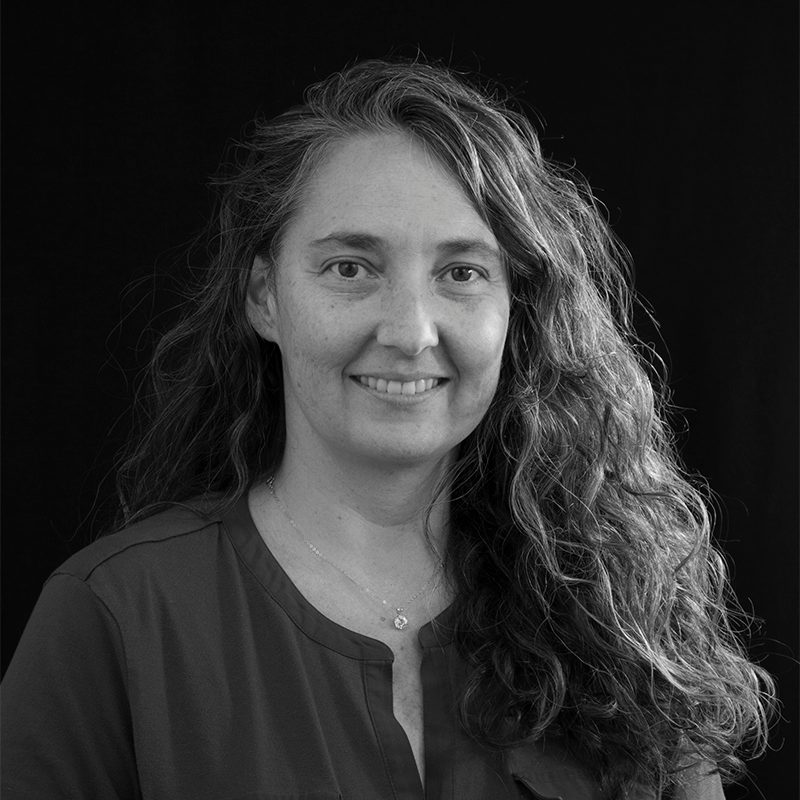
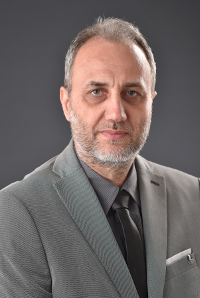
Matti Minkkinen is a Docent at the Turku School of Economics (University of Turku) and a Postdoctoral Researcher in Information Systems Science at the Department of Management and Entrepreneurship. His work bridges futures studies with ethics, privacy, and socio-technical systems in digital transformation. Recent roles focus on responsible AI governance and foresight methodologies. University: University of Turku School: Turku School of Economics Department: Department of Management and Entrepreneurship His research explores how digital technologies reshape organizational practices, emphasizing Futures Consciousness as a human capacity. Key themes include responsible AI , privacy protection , and causal layered analysis in scenario planning. Publications highlight ethical governance frameworks and EU policy debates. Recent articles address generative AI ethics , ML system integration , and AI auditing across journals like Communications of the Association for Information Systems and Information and Management . Topics cluster around socio-technical systems, digital ethics, and institutional adaptation to AI. Teaching and editorial roles include co-curating student research collections at Finland Futures Research Centre. No explicit scientific awards are listed, but his work contributes to foresight theory and practice.
Dr. Summer Han serves as Associate Professor of Medicine, Neurosurgery, and Epidemiology at Stanford University School of Medicine. She leads research through the Quantitative Sciences Unit (QSU) in the Biomedical Informatics Research Division of the Department of Medicine and maintains joint appointments in the Department of Neurosurgery. Her work bridges statistical methodology development with clinical applications in cancer screening and neuroscience. Her research program focuses on statistical genetics, molecular epidemiology, and risk prediction modeling for complex diseases. Key areas include developing novel methods for analyzing high-dimensional genomic data, creating dynamic risk prediction models under competing risks, and establishing evidence-based cancer screening strategies. Her team integrates genetic, environmental, and clinical factors to improve early detection of lung cancer and second primary malignancies, with particular attention to reducing racial disparities in screening outcomes. Dr. Han's scientific contributions have been recognized through prestigious awards including the NCI R37 MERIT Award for Early-Stage Investigators and the Department of Medicine Teaching Award in Biomedical Informatics Research. Her team has developed impactful tools such as the SPLC-RAT for second primary lung cancer risk assessment and RAMBO for brain metastasis prediction in lung cancer patients. She actively mentors PhD students and postdoctoral fellows, with several former trainees securing faculty positions at institutions including Cornell University and IIT Roorkee. Current research initiatives include the Oncoshare-Lung database integrating EHRs from Stanford Health Care and 23+ Sutter Health sites across Northern California, and the Cancer Data Science Shared Resources Core which she co-directs at the Stanford Cancer Institute. NCI R37 MERIT Award (Early-Stage Investigator) 2022 Department of Medicine Teaching Award in Biomedical Informatics 2024 SCI Equity Impact Research Grant 2024 Neurosurgery Research Seed Grant Award Multiple NCI R01 grants (CA226081, CA282793) Her laboratory collaborates extensively across Stanford Medicine, working with thoracic oncologists, neurosurgeons, and epidemiologists to translate statistical innovations into clinical practice. Current projects address socioeconomic factors in cancer risk stratification, real-time physical activity monitoring in spine surgery recovery, and machine learning approaches for genomic data analysis.
Philip Brunner is a Professor of Hydrogeology at the University of Neuchâtel's Faculty of Science since 2012. He is based at the Center for Hydrogeology and Geothermics (CHYN), leading the Laboratory of Hydrogeological Processes. His work centers on sustainable water resource management through quantitative tools. He earned his PhD from ETH Zurich, focusing on sustainable salt and water management in Western China's agricultural basins. Post-PhD, he conducted three years of postdoctoral research in Australia, developing new approaches for simulating river-aquifer interactions. Brunner's research spans surface water-groundwater interactions, numerical modeling, and remote sensing. He integrates methods from numerical modeling, remote sensing, scientific computing, and isotopic chemistry. His interdisciplinary collaborations with mathematicians, biologists, and physicists address challenges in agriculture, ecohydrology, engineering, and sustainable resource management. Recent publications highlight innovative tracer techniques (noble gases, microbes), low-cost monitoring systems, and advanced numerical models. His work tackles climate change impacts on ecosystems, groundwater in conflict zones, and sustainable practices in diverse environments including mountains and agricultural regions. He teaches courses such as Introduction to Hydrological Processes (Master), Numerical Modeling (Master), Remote Sensing (Master), and Introduction to Soil Physics (Bachelor, in French). His laboratory serves as a center for experimental and computational hydrogeological research.
Martha Sullivan serves as the Department Chair and Associate Professor of Practice in the Industrial Design program at Virginia Polytechnic Institute and State University. Her work bridges ceramics , product design , wellness , and community development , with a focus on interdisciplinary collaboration and contemplative practices in design education. Education : M.S.Arch in Industrial Design and B.S. in Geology, both from Virginia Tech Research interests span ceramic arts , mindful design , digital fabrication , and sustainable material practices . Her scholarly outputs include ceramic installations , pedagogical research , and international collaborations in Norway and China. Recent publications highlight subliminal material experiences (2023), student learning assessment (2022), and biomimetic design methodologies (2020). Sullivan’s work emphasizes the intersection of craft and technology , with consistent recognition for teaching excellence and community engagement . Scientific Awards School of Architecture + Design Outreach Award (2022) Excellence in Teaching Award (2022) New River Valley Leading Light Award for service (2019) Tau Sigma Delta National Honor Society (2006) Teaching responsibilities include courses in Handbuilding Clay , Molded Ceramics , and Needs Identification in Healthcare , alongside directing Study Abroad programs.
Neil Lawrence is the inaugural DeepMind Professor of Machine Learning at the University of Cambridge's Department of Computer Science and Technology. He also holds positions as a Senior AI Fellow at The Alan Turing Institute and a Visiting Professor of Machine Learning at the University of Sheffield. After three years as Director of Machine Learning at Amazon, Lawrence recently returned to academia, bringing extensive industry experience to his academic work. Lawrence's research focuses on the intersection of machine learning with the physical world, particularly in uncertainty quantification and end-to-end solutions for real-world applications. His work was initially inspired by deploying machine learning systems in African contexts, where comprehensive solutions are often required. His technical expertise spans over two decades in machine learning methods, with a growing interest in public understanding of machine learning, policy decisions, and data governance implications. His recent publications reveal a diverse research portfolio spanning climate science, healthcare applications, systems engineering for AI deployment, data governance, and theoretical machine learning. Lawrence's work demonstrates a consistent theme of bridging theoretical machine learning with practical applications across multiple domains, with particular attention to uncertainty quantification and the societal implications of AI systems. Lawrence serves on the board of the AISTATS conference and the ELLIS Foundation, and acts as the founding and series editor for the Proceedings of Machine Learning Research. He is also the co-host of the Talking Machines podcast, demonstrating his commitment to public engagement with machine learning concepts. At Cambridge, Lawrence teaches Advanced Data Science (Part II) and Machine Learning and the Physical World (MPhil ACS, Part III), contributing to both undergraduate and postgraduate education in computer science. His work with the Accelerate Programme for Scientific Discovery and the Data Trusts Initiative positions him at the forefront of developing frameworks for responsible and effective AI deployment in scientific and societal contexts.
Li Nguyen is an Assistant Professor of Linguistics and Multilingual Studies at Nanyang Technological University (NTU), Singapore . Their work bridges linguistics with computational approaches, focusing on language variation, contact phenomena, and multilingual NLP. Education: PhD in Linguistics (University of Cambridge), Master’s in General and Applied Linguistics (Australian National University) Research interests include: Language variation and change in multilingual/diasporic communities Computational sociolinguistics and NLP for low-resource varieties Syntax-pragmatic interface in bicultural contexts Code-switching and heritage language documentation Recent publications highlight collaborations on Vietnamese-English and other code-switched language pairs, with a focus on NLP applications and corpus-based analysis. Their work has gained recognition through grants like the NTU Start-up Grant and Cambridge Language Sciences funding . Scientific awards: Cambridge International Scholarship, Philological Society Fieldwork Grant Li Nguyen actively collaborates on projects involving sociolinguistically informed NLP and community-driven language documentation. They have contributed to the development of the CanVEC corpus for Vietnamese-English speech research.
Dr. Joshua M. Pearce is a Professor at Western University, holding appointments in the Department of Electrical & Computer Engineering and the Ivey Business School. He is the John M. Thompson Chair in Information Technology and Innovation at the Thompson Centre for Engineering Leadership & Innovation and a Fellow of the Canadian Academy of Engineering. His research focuses on open-source appropriate technology for sustainability and poverty reduction, spanning solar photovoltaics, 3D printing, distributed recycling, and policy analysis. Ph.D. in Materials Engineering from Pennsylvania State University Former Richard Witte Professor at Michigan Tech Editor-in-Chief of HardwareX Author of multiple open-source sustainability books His work integrates engineering, economics, and policy to solve global sustainability challenges. Recent projects include agrivoltaic systems, open-source medical devices, and climate-resilient food production frameworks. He leads the Free Appropriate Sustainability Technology (FAST) research group, which has produced over 200 open-access publications cited in top-tier journals like Renewable and Sustainable Energy Reviews (IF=16.3) and HardwareX (IF=2). Dr. Pearce's scientific contributions include: Fulbright-Aalto University Distinguished Chair Top 0.06% most cited scientist (Elsevier metrics) Leading open-source hardware certification frameworks Developing low-cost scientific instruments His research team includes cross-disciplinary collaborators from Mechanical Engineering, Environmental Science, and Policy Studies. The FAST group emphasizes practical open-source solutions for energy, water, and food security in both developed and low-resource contexts.
Mingda Li is an Associate Professor in the Department of Nuclear Science and Engineering at the Massachusetts Institute of Technology (MIT), holding the Class of 1947 Career Development Professorship. His research spans quantum materials, nanoscale energy transport, and AI-driven materials discovery, utilizing neutron/X-ray scattering techniques and machine learning to address challenges in quantum computing, thermal management, and energy conversion. He leads the Quantum Measurement Group and teaches graduate courses including Quantum Theory of Materials Characterization. Education: Bachelor of Science in Engineering Physics, Tsinghua University, 2009 Doctor of Philosophy in Nuclear Science and Engineering, MIT, 2015 Postdoctoral Research, MIT Mechanical Engineering Department Research Interests: Dr. Li's quantum research develops theoretical frameworks for topological order and defect-engineered quantum materials, with applications in microelectronics and quantum computing. His energy transport studies investigate phonon/electron dynamics at interfaces under non-equilibrium conditions to design materials for thermal management in electronics. The AI program creates symmetry-aware generative models that integrate ab initio calculations with experimental data, enabling closed-loop materials discovery for quantum and energy technologies. Publication Trends: Analysis of 15 recent 2025 publications reveals dominant themes in quantum materials (topological semimetals, 2D magnets), AI-driven design (generative models, symmetry-equivariant networks), and advanced characterization (neutron/X-ray spectroscopy). Key innovations include defect engineering for thermal transport, machine learning for spectroscopic data interpretation, and quantum phenomenon discovery in complex materials, reflecting strong interdisciplinary integration. Scientific Awards: No scientific awards were mentioned in the provided text. Advising and Grants: Dr. Li mentors graduate students in the Quantum Measurement Group, guiding research in quantum materials characterization and AI applications. He has taught core courses including Applied Nuclear Physics and Machine Learning in Nuclear Science and Engineering. His research is supported by grants focused on quantum engineering and nuclear materials, with collaborations spanning national laboratories and industry partners for quantum computing and energy applications. Labs and Teams: The Quantum Measurement Group operates at the intersection of experimental physics and computational science, utilizing neutron scattering facilities (including Spallation Neutron Source) and ultrafast X-ray techniques. The team develops custom software for data analysis and collaborates with institutions like MIT.nano for materials synthesis, maintaining a pipeline from theoretical prediction to device-level validation for quantum and thermoelectric materials.
Eilis Hannon is an Associate Professor in Bioinformatics at the University of Exeter Medical School and leads the Complex Disease Epigenetics Group. She holds a prestigious 5-year EPSRC Research Software Engineering Fellowship and serves as Assistant Director for Education in the Institute of Data Science and Artificial Intelligence, driving initiatives in reproducible research and data science education. Education: BSc in Mathematics, Cardiff University (2010) PhD in Bioinformatics, Cardiff University Centre for Psychological Medicine and Clinical Neurosciences (2014) Her research integrates statistical genetics, epigenomics, and bioinformatics to investigate molecular mechanisms in schizophrenia, bipolar disorder, and neurodegenerative diseases. She develops novel computational methods for analyzing DNA methylation dynamics across the lifespan and cell-type-specific epigenetic changes in brain disorders, with strong emphasis on open science and reproducible research practices. Recent publications demonstrate her leadership in multi-omics integration, particularly in cell-type-specific epigenetic epidemiology, biomarker development for neurological conditions, and methodological advances in long-read sequencing. Her work spans psychiatric disorders, Alzheimer's disease, and ALS, consistently linking genetic risk variants to functional epigenetic consequences through innovative analytical frameworks. Scientific Awards: EPSRC Research Software Engineering Fellowship NARSAD Young Investigator Award Alan Turing Pilot Project award Alzheimer's Society PhD studentship Software Sustainability Institute fellowship Alan Turing Institute Skills Policy Award As an educator, she directs the Coding for Reproducible Research training programme and mentors over 20 PhD students. She has secured substantial funding from MRC, NIA, ARUK, and the Brain and Behaviour Research Foundation, serving as PI on the EPSRC Fellowship and co-applicant on multiple international grants. Her leadership extends to the MRC GW4 Biomed DTP and the MSc module Statistics for Health and Life Sciences. She co-leads the Exeter Brain Health Analytics network within the NIHR Exeter Biomedical Research Centre and the Institute for Data Science and Artificial Intelligence, fostering cross-disciplinary collaborations in neurogenetics and computational biology.
Sia Valentinova Tsolova serves as an Assistant Professor in the Department of Software Technologies at Sofia University's Faculty of Mathematics and Informatics. Based in Room 309, Building 2, she maintains active research and teaching responsibilities with contact email siyat@fmi.uni-sofia.bg and phone +359 2 9710400. Her research focuses on strategic management frameworks for technology startups, e-government systems, and business process modeling. She has pioneered algorithmic approaches for strategic modeling e-systems (SIAMC/SIAMS), developing simulated learning environments and classification frameworks specifically for technology new ventures. Her work bridges business administration and information systems to address entrepreneurial challenges in digital transformation. Analysis of her publication trends (2009-2016) reveals consistent output in strategy modeling algorithms, with peak productivity in 2014. Her work consistently targets technology venture commercialization, demonstrating strong interdisciplinary connections between management science and software engineering applications. Scientific Awards: No awards documented in available information Regarding academic advising and research grants, no specific details are provided in current records. Similarly, no formal labs, research teams, or collaborative initiatives are mentioned in the source material.
Miloš Racković serves as a full Professor in the Department of Mathematics and Informatics at the University of Novi Sad, Serbia. He maintains active academic engagement through the Laboratory for the development of information systems, with his office located in the Information technologies and systems office (DMI&DF) on the second floor, room 49. Contact is available via telephone (485)-2868 or email rackovic@dmi.uns.ac.rs, and his personal website (http://www.is.pmf.uns.ac.rs/rackovicm/) provides additional resources. His research spans foundational and applied computer science, with seminal contributions in fuzzy database systems including PFSQL query language development and prioritized fuzzy logic for relational databases and XML. He has pioneered deep learning methodologies through innovative classification techniques using negative and missing features in convolutional neural networks. Additional expertise includes high-performance computing implementations of Lattice Boltzmann methods using OpenCL, robotics (symbolic modeling and trajectory planning), and blockchain applications for Industry 4.0 production processes. His sports analytics work applies neural networks to basketball player and referee movement analysis. Analysis of his 2012-2025 publications reveals a strategic evolution toward interdisciplinary applications, particularly in industrial transformation (blockchain-enabled traceability) and sports analytics. His work consistently bridges theoretical computer science with practical implementations, demonstrating increasing focus on real-world problem solving while maintaining strong foundations in database theory and computational methods. Professor Racković leads the Laboratory for the development of information systems, which focuses on advancing information system methodologies through formal modeling extensions (including Petri net innovations) and practical implementations for uncertainty management. The laboratory's work spans from foundational research in fuzzy logic systems to applied projects in high-performance computing and blockchain integration, fostering innovation in information technology development.
Eva Blomqvist serves as an Assistant Professor in the Department of Computer and Information Science (IDA) at Linköping University, Sweden. She is actively affiliated with the MDA laboratory within the Human-Centered Systems (HCS) division, focusing on critical-domain decision support systems. Her research centers on Semantic Web technologies and ontology engineering, with specialized expertise in ontology design patterns for security and crisis management applications. She pioneered the eXtreme Design methodology for agile ontology development and contributed foundational work on ontology testing frameworks, bridging theoretical knowledge representation with real-world operational systems. Analysis of her 2009-2016 publications reveals a progressive research trajectory from foundational pattern formalization to practical engineering methodologies. Her work consistently emphasizes reusable design patterns, validation techniques, and human-centered implementation within semantic technologies, establishing her as a key contributor to ontology engineering standards. No scientific awards were documented in the source material. While student advising and grant details remain unspecified in available records, her collaborative projects indicate active research leadership in ontology development. As a core member of IDA's MDA lab (HCS division), she contributes to human-centered decision analytics research, particularly developing ontology-driven support systems for high-stakes security and crisis scenarios through projects like Networked Ontologies.
Giorgio Ottonello is a tenure-track Assistant Professor of Finance at NOVA School of Business and Economics (NOVA SBE), part of NOVA University Lisbon in Portugal. His research focuses on empirical asset pricing in fixed-income markets, with emphasis on institutional investor behavior, OTC market dynamics, and credit-liquidity risk interactions. Education: PhD in Finance, Vienna Graduate School of Finance (2019) M.Sc. in Quantitative Finance, Vienna University of Economics and Business (2014) Bachelor of Business Administration, University of Genoa (2012) Research Focus: Ottonello's work employs large-scale empirical methods to investigate institutional investor behavior in fixed-income markets, particularly examining OTC market microstructure and the interplay between credit risk and liquidity risk . His research demonstrates how regulatory changes alter credit rating informativeness and how macroeconomic shocks create reverse causality in credit markets, revealing novel transmission channels between real economy developments and financial markets. Publication Trends: His 10 most recent publications (2019-2024) appear in top finance journals including the Journal of Finance and Review of Corporate Finance Studies, showing consistent focus on fixed-income market anomalies. Key themes include inventory constraints in underwriting, benchmarking effects, and cyber risk transmission, with methodology emphasizing causal identification through natural experiments and high-frequency data analysis. Scientific Recognition: RAPS Best Paper of the Year Award (2022) for groundbreaking work on underwriter inventory constraints Academic Leadership: Ottonello supervises Master's theses at NOVA SBE in empirical asset pricing and sustainable finance, while teaching core investments courses. His exceptional teaching evaluation (5.3/6) reflects effective pedagogy in quantitative finance, building on prior experience teaching at WU Vienna where he received perfect scores (1.0/6) for finance paper writing instruction. He actively contributes to academic discourse through frequent presentations at major finance conferences including FIRS, EFA, and SGF.
Prof. Dr.-Ing. Richard Membarth is a Research Professor for System-on-a-Chip and AI at the Edge Computing at Technische Hochschule Ingolstadt (THI). He is affiliated with the Hardware-Software Co-Design group and holds a secondary position at the German Research Center for Artificial Intelligence (DFKI) Saarbrücken. Co-creator of DSL frameworks like AnyDSL and Hipacc Key contributor to MetaDL (AI metaprogramming) and PRIME (predictive rendering) His research bridges GPU computing , domain-specific languages , and compiler technology , with recent work on Vulkan SPIR-V compilation and device-driven SpMV algorithms . Notable awards include the HiPEAC Paper Award (2018) and multiple Best Paper Awards for his compiler frameworks.
Arseny Moskvichev serves as a Research Fellow at the Santa Fe Institute, collaborating with Melanie Mitchell on measuring abstraction and analogy-making capabilities in AI systems. His work bridges Cognitive Science and Machine Learning to model how language and abstraction enable human knowledge sharing, with the goal of developing NLP systems capable of learning through natural dialogue beyond initial training phases. He holds a B.Sc. in Psychology and M.Sc. in Neuroscience from Saint Petersburg University, completed a two-year Machine Learning and Software Development program at the Computer Science Center, and earned an M.Sc. in Statistics and Ph.D. in Cognitive Science from UC Irvine under Mark Steyvers. Moskvichev employs behavioral studies, emergent communication simulations, and novel NLP architecture development to investigate language's role in knowledge transfer. His research specifically targets enabling AI systems to update long-term beliefs via conversation, reflecting his vision for "meaningful" human-AI interaction. He actively promotes mathematical skill development through self-study groups and created a Russian-language Neural Networks course on stepic.org. No scientific awards or current advising activities were documented in the source material. As a core member of the Santa Fe Institute's research community, Moskvichev contributes to interdisciplinary projects at the intersection of cognitive science, artificial intelligence, and complex systems theory, leveraging SFI's collaborative environment for foundational AI research.