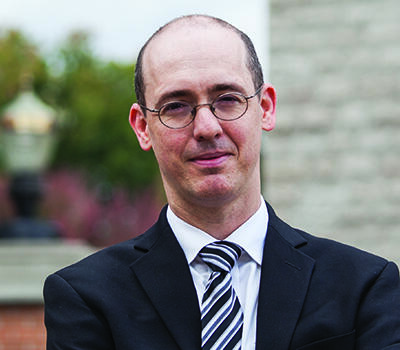
Julie Cailler is an Associate Professor at the University of Lorraine, affiliated with CNRS, Inria, and LORIA in Nancy, France. She is a member of the VeriDis Team and focuses on automated deduction, interactive proof systems, and logic in computer science. PhD in Theoretical Computer Science from the University of Montpellier (2023) Former Associate Professor at the University of Regensburg Her research interests include: Designing concurrent and parallel decision procedures for first-order logic Integration of automated and interactive theorem proving Proof system interoperability and formal verification Recent publications highlight her work on: SC-TPTP format extensions for sequent-based proofs (CADE-30, 2025) Graph Neural Networks for word equation solving (ATVA 2024, 2025) Deskolemization strategies in first-order logic (LPAR 25, 2024) Scientific recognition: Woody Bledsoe Award (2022) Best Newcomer Prover (CASCJ11, 2022) She supervises students in projects related to: Automated theorem prover development Logic programming and deduction modulo theory Formal verification and proof tool integration Julie is actively involved in academic service as: Co-head of GT LVP (Languages and Program Verification) working group PC member for major conferences like FMCAD, FSTTCS, and ITP
Yong Kiam Tan is a research scientist at the Institute for Infocomm Research (A*STAR, Singapore) and holds a joint appointment as a Nanyang Assistant Professor at the College of Computing and Data Science, Nanyang Technological University (NTU, Singapore). He earned his PhD in Computer Science (Pure and Applied Logic) from Carnegie Mellon University, supported by a National Science Scholarship (BS-PhD) from A*STAR, Singapore. His research focuses on Deductive verification and interactive theorem proving Applications in automated reasoning, compilers, formalized mathematics, hybrid systems, and cybersecurity (cryptography) Development of verified tools like the CakeML compiler and KeYmaera X for hybrid systems His recent work spans formal verification of machine learning models, cryptographic protocols, and hybrid systems, with a strong emphasis on tool development and practical applications. Notable trends include integrating theorem proving with SAT solving and model-counting techniques for security verification. Scientific awards include: CMU SCS Distinguished Dissertation Award 2022 Distinguished Paper Award at CAV 2024 Best Paper and Best Repeatability Evaluation Awards at HSCC 2022 Peter Landin Prize at IFL'15 Best Tool Paper Award at FM'19 He actively recruits students and postdocs for fully funded positions at NTU and A*STAR, and collaborates with researchers such as Wei-Lin Wu (A*STAR) Joe Watt (A*STAR) Ciaran McCreesh (University of Glasgow) Magnus Myreen (Chalmers University)
Michael Dickson is Professor of Philosophy at the University of South Carolina’s McCausland College of Arts and Sciences. His research has migrated from foundations of quantum physics to philosophy of music and psychiatry, reflecting a career that blends rigorous physics scholarship with humanistic and aesthetic inquiry. Education: PhD, University of Notre Dame, 1995 BA/BS, University of South Carolina, 1990 Research Interests: Dickson’s early work concentrated on interpretations of quantum mechanics, probability in physics, and the philosophy of science. Over the past decade he has turned to philosophy of music , investigating musical notation as instruction and the ontology of musical works, drawing on his own background as a classical pianist and French-horn player. He is also developing projects in philosophy of psychiatry , focusing on hallucination and self-understanding in schizophrenia. Publication Trends: His 40-plus articles range from technical analyses of quantum modal interpretations and probability to recent essays on musical ontology and psychiatric symptoms. The 2018–2015 output shows a pivot toward aesthetics and value theory, while earlier works remain staples in quantum-foundations literature. Presentations & Engagement: “Musical Notation and Musical Instructions” – American Society for Aesthetics, Philadelphia “Intellectual Humility” – Madpeople’s Coping Mechanisms, Oxford “Living with the ‘Paradox of Delusion’” – Too Mad to be True III, Ghent “Hallucination as a Memory of the Present” – Southern Society for Psychology and Psychiatry Teaching & Additional Interests: He periodically teaches medieval philosophy and game-theoretic models of signaling, rounding out a portfolio that bridges formal, historical, and applied philosophy.
Anne Cormier is a Full Professor at the School of Architecture within the Faculty of Planning at Université de Montréal, where she served as Director from 2007 to 2015. She is a founding member of Atelier Big City since 1987, an architectural studio focused on developing innovative intervention strategies and exploring the potential of public spaces through competitions, idea calls, exploratory studies, and direct commissions. Her work has earned numerous distinctions including the Prix de Rome from the Canada Council for the Arts and the Grand Prix d'Excellence from the Ordre des Architectes du Québec. She holds an architecture degree from McGill University and studied urban architecture under Jean-Louis Cohen at the Unité Pédagogique d'Architecture Paris-Villemin in France. Her professional experience includes teaching invitations at Cornell University, Rensselaer Polytechnic Institute, University of Toronto, and University of Calgary. She has served on the Bureau of the Ordre des Architectes du Quebec (1993-1995), editorial boards of journals ARQ (1993-present) and Trames (1990-95), and currently serves on the OAQ Competitions Committee (since 2009) and the Advisory Committee on Urban Planning, Design and Real Estate of the National Capital Commission (Ottawa) (since 2008). Cormier's research focuses on social housing as a space for creation, innovation, and criticism in Canadian city centers and contemporary architectural projects. Her work combines relevant thematic research with inventive use of materials and assemblies, guided by Atelier Big City's slogan 'Make architecture a public policy,' emphasizing architecture's public dimension. She is deeply involved in documenting and analyzing contemporary architectural design approaches, particularly in competition settings, with a focus on Canadian and Quebec cultural contexts. Her recent publications demonstrate consistent engagement with social housing, urban architecture, architectural competitions, and the relationship between architecture and public policy. The recurring themes across her work include the exploration of social housing as a creative space, the integration of architecture into urban environments, and the critical examination of architectural practice through competitions and design processes. Her publications span architectural theory, social housing, urban design, and architectural competitions, reflecting her commitment to making architecture a public policy. Her scientific recognition includes: Prix de Rome du Conseil de Arts du Canada Grand Prix d'excellence de l'Ordre des Architectes du Québec Prix Margolese National Design for Living (2017) Multiple Governor General's Medals Canadian Architect Excellence Awards Cormier has supervised PhD students including Shannon Pirie (2016) on 'Finding the idea of home,' and has secured significant research funding including SSHRC Partnership Grants for 'Quality in Canada's Built Environment: Roadmaps to Equity, Social Value and Sustainability' (2022-2028) and 'Potentiels de la qualité architecturale' (2022-2027). Her work bridges academic research, professional practice, and public engagement, contributing significantly to architectural discourse in Canada and internationally. She is actively involved with LEAP (Laboratoire d'étude de l'architecture potentielle), where her research focuses on social housing as a space for creation, innovation, and criticism in Canadian urban centers. The laboratory's work examines contemporary architectural projects through four research axes: reasoned digital documentation and analysis of architectural projects, critical history of contemporary Canadian architecture, development of research-creation works, and development of pedagogical devices for architectural design teaching and reflective practices in planning.
Shukla Sikder is a Senior Lecturer in Early Childhood Education at Charles Sturt University's Faculty of Arts and Education. With nearly 14 years of multicultural teaching and research experience across Australia, Singapore, and Bangladesh, she specializes in early childhood science, technology, and play-based pedagogy. Her academic credentials include a BEd (Hons) and MEd from University of Dhaka, and a PhD in Early Childhood Science Education from Monash University. Dr. Sikder's research focuses on science learning through play and everyday practices across home and educational settings, digital technology as an innovative teaching method, children's learning and development (birth to eight years), and STEM/STEAM education. Her work employs cultural-historical theory to examine how children develop scientific concepts through family practices and play-based experiences. Current projects include the Children Draw Talking Project and research on culturally valued play-based practices for STEAM education. Analysis of her 49 research outputs (2015-2025) reveals a strong emphasis on cultural-historical perspectives in early childhood STEM education, with increasing output in recent years (17 publications in 2024 alone). Her work spans diverse formats including peer-reviewed articles, creative storybooks, conference presentations, and commissioned reports, demonstrating interdisciplinary approaches that bridge theory, practice, and children's voices. Monash Education Research Community Publication Award (A$500) Monash University Postgraduate Research Travel Grant (A$3,000) Monash University Faculty Research Fund (A$1,000) Australian Endeavour Postgraduate Award (A$234,500) Little Scientists Program Evaluation Grant (A$82,771) Dr. Sikder actively supervises research students and collaborates internationally through the Children's Voices Centre and STEM Education Research Group. Her current projects include evaluating how digital visual observations establish inclusive practices in early childhood research and developing frameworks for enhancing inclusive STEAM pedagogy. She serves as a key researcher in the Machine Vision and Digital Health (MaViDH) Research Group, focusing on innovative approaches to document children's learning processes.
Alessandro Armando is an Associate Professor in the Department of Architecture and Design at Politecnico di Torino, specializing in architectural design theory and practice. His research explores the theoretical foundations of architectural projects as both bureaucratic document systems and symbolic representations within public discourse. With international collaborations across Manchester, Berlin, Belgrade and Rijeka, he contributes significantly to architectural theory through publications, editorial work, and academic leadership. Armando's research interests focus on architectural design theory, examining projects as integrated document systems within bureaucratic procedures and as symbolic components of collective representations. His work investigates project action development using methodological contributions from Actor-Network Theory and Science and Technology Studies, with particular attention to diagrams and maps as research tools. He founded the Class A journal 'Ardeth' in 2018, establishing an international platform for discussions on architectural design as scientific research and interdisciplinary intersection. His scholarly output demonstrates consistent engagement with architectural theory, design practice, and urban morphology, with recent publications exploring the relationship between architecture, philosophy, and political dimensions of urban form. The research trajectory shows increasing integration of digital technologies in architectural practice and deeper exploration of theoretical frameworks connecting design methodology with social and political contexts. Koos Bosma Prize in Planning History Innovation (2022) from International Planning History Society Scientific Committee member, Italian Institute for Advanced Studies in Torino 'Umberto Eco' - Scienza Nuova (2019-) Scientific Coordinator, Labont – Center for Ontology / Ontology of Architectural Design (2016-) Effective member, ProArch, National Coordination of Architectural Design Professors (2012-) As an academic advisor, Armando supervises multiple PhD candidates working on diverse topics including urban morphology, architectural criticism, and design theory. His teaching portfolio includes courses on architectural design theory, critical approaches to architectural reasoning, and practical strategies for architects. He has been actively involved in the PhD program 'Architettura. Storia e Progetto' at Politecnico di Torino since 2017. Armando leads research activities through tdpLAB (DAD) and collaborates internationally through networks such as Social Integration through Urban Growth Strategies – SINERGI and Memory & the City. His editorial work spans multiple publications including Ardeth (since 2017), where he helps shape contemporary discourse on architectural theory and practice.
Jeremy Blackburn is an Associate Professor at Binghamton University's School of Computing, where he joined in fall 2019. His research focuses on data science, large-scale measurements, and modeling of toxic online behavior, hate speech, and extremist web communities, with significant media coverage from The Washington Post, New York Times, and BBC. Education: PhD, University of South Florida MSc, University of South Florida BSc, University of South Florida Dr. Blackburn's work centers on computational analysis of social dynamics , specializing in fringe online communities and cyber social threats . His methodology combines large-scale data collection with advanced modeling to dissect hate speech evolution, platform migration effects, and disinformation campaigns. Key contributions include developing detection frameworks for coordinated aggression and analyzing ideological spaces across platforms like Reddit, Telegram, and Rumble. Recent publications (2023-2025) reveal expanding research into adaptive hate speech detection systems, LLM capabilities for counterfactual reasoning, and cross-platform extremism analysis. His work increasingly integrates vision-language models while maintaining focus on real-world applications for content moderation, with growing attention to emerging platforms like Lemmy and Rumble's podcast ecosystem. Scientific Awards: No major scientific awards were explicitly documented in source materials Dr. Blackburn secured two significant NSF SaTC grants: (1) a 2023 Medium grant for iDRAMA.cloud (measuring information manipulation), and (2) a 2021 Small grant for detecting influence campaign accounts. While specific advisees aren't listed, his active research profile suggests graduate student mentorship in data science and cybersecurity projects. His research infrastructure includes the Social Media Analysis Toolkit (SMAT) and datasets like pushshift reddit/telegram collections, supporting collaborative work on cyber social threats through his lab environment focused on computational social science and security.
Professor Naomi Sweller is a leading academic at Macquarie University's School of Psychological Sciences, specializing in cognitive development and gesture-based communication. She serves as Chair of the low-risk Human Sciences Research Ethics Committee and Co-Director of Research Training in her school. Research Interests: Cognitive development across infancy to adolescence Gesture use in learning and communication Concept learning mechanisms Impact of digital communication on empathy Developmental effects of screen time and technology use Teaching: She teaches research methods and statistics in the Honours program (PSYH4418 Design and Statistics IV). Scientific Awards: Macquarie University Vice-Chancellor's Learning and Teaching Student-nominated Award (2020) Her research collaborations span diverse areas including autism spectrum disorders, classroom dynamics, and behavioral impacts of media consumption.
Lauren Young is an Associate Professor in the Department of Political Science at the University of California, Davis, and Director of Graduate Studies. She co-directs the UC Davis Contentious Politics Lab with Juan Tellez. Her research focuses on political violence and collective action, particularly election violence dynamics in Zimbabwe and vigilante responses to crime in Mexico. Methodologically, she pioneers the use of WhatsApp for data collection in conflict zones and develops ethical research frameworks for violent contexts. Her work integrates experimental methods with field research, emphasizing reproducibility and transparency. Key affiliations include Evidence in Governance and Politics (EGAP), the Center for Effective Global Action (CEGA), and the Future of Democracy Initiative at UC IGCC. Recent research explores party strength’s role in election violence and citizen responses to crime through anger-driven mobilization. Her publications span 2021–2025, addressing topics like repressive governance, electoral clientelism, and conflict resolution strategies in authoritarian settings. She advocates for methodological innovation in politically sensitive environments while maintaining rigorous ethical standards.
Dr. Rod Lamberts is Associate Director of Science and Education at the Australian National Centre for the Public Awareness of Science (CPAS) at ANU. He holds a BA (Hons), Grad Dip App Psych, and PhD from ANU. His work spans over 20 years in science communication, including designing pioneering university courses and advising agencies like CSIRO and UNESCO. He is a frequent media commentator on science policy, appearing on ABC Radio and in publications like The Conversation . Lamberts' research focuses on science communication, public policy, ethics, and risk perception. He has led major projects like the Australian Beliefs and Attitudes Towards Science Survey and the Engaging Visions initiative, which integrates art and environmental science. His awards include the ANU Vice-Chancellor's Award for Public Policy (2015) and multiple Top Supervisor accolades. He has supervised over 40 research students across PhD, MPhil, and Honours levels. Notable grants include an ARC Linkage grant (2006–2011) for natural resource management. Lamberts has presented at global conferences, chaired national committees, and contributed to UNESCO's science communication frameworks in the Pacific.
Michelle Taub is an Associate Professor in the Department of Learning Sciences and Educational Research at the University of Central Florida's College of Community Innovation and Education. Her research focuses on multimodal data analytics to study emotional and motivational influences on self-regulated learning (SRL) in advanced technologies like game-based environments, intelligent tutoring systems (ITS), and immersive virtual reality. Education: Ph.D. in Psychology (Human Factors and Applied Cognition) from North Carolina State University; M.A. and B.A. in Psychology from McGill University. Her work integrates eye tracking, facial expression analysis, log files, and physiological sensors to model learning processes across diverse populations. Recent projects examine how student agency, prior knowledge, and contextual emotions affect SRL, scientific reasoning, and performance in digital environments. Key trends in her publications include: Development of dashboards for SRL scaffolding (2025) Game-based interventions for fraction learning and STEM engagement (2024) AI-driven personalized learning frameworks (2024) Emotion-cognition interactions in ITS and VR (2023-2024)
Dr. Stephanie Brock is a Professor in the Department of Chemistry at Wayne State University and an Adjunct Professor in the Department of Chemical Engineering and Materials Science. Her research focuses on the synthesis and characterization of novel inorganic solid-state materials, particularly nanomaterials, with applications in energy conversion, sensing, environmental remediation, and catalysis. She is known for her work on sol-gel nanoparticle assembly and hybrid materials. B.S., University of Washington, 1990 Ph.D., University of California, Davis, 1995 Postdoctoral Associate, University of Connecticut, 1995–1999 Dr. Brock's research spans the development of transition metal pnictides and chalcogenide aerogels , with an emphasis on tuning magnetic and electrochemical properties through nanoparticle size control. Her group's work on sol-gel strategies has enabled the creation of functional architectures for photovoltaics and sensing, while her studies on multimetallic phosphides address cost-effective catalysts for water splitting. Her recent publications highlight trends in quantum dot assembly , electrocatalytic materials , and energy applications such as hydrogen evolution and magnetic refrigeration. Collaborations include Prof. Jier Huang (Boston College), Prof. Zhenfei Liu (WSU), Prof. Boris Nadgorny (WSU), and Prof. Long Luo (University of Utah), among others. WSU Academy of Scholars (inducted 2020) WSU Outstanding Graduate Mentor Award (2019) ACS Fellow (elected 201) AAAS Fellow (2012) WSU Charles H. Gershenson Distinguished Faculty Fellowship (2013–2014) NSF CAREER Award (2001–2006) Dr. Brock also contributes to education through courses such as Descriptive Inorganic Chemistry (CHM7010) and Chemistry Skills and Reasoning (CHM1040), while her lab continues to explore the intersection of materials synthesis and applied technologies.
Stephen Ramsey, an Associate Professor at Oregon State University, holds dual appointments in the School of Electrical Engineering and Computer Science (College of Engineering) and the Department of Biomedical Sciences (Carlson College of Veterinary Medicine). With a PhD in Physics from the University of Maryland, his postdoctoral training in computational genomics at the University of Washington, and professional experience at the Institute for Systems Biology and Center for Infectious Disease Research, Ramsey bridges computational methods with biomedical applications. Education : Ph.D., Physics, University of Maryland; M.S., Physics, University of Maryland; Sc.B., Mathematical Physics, Brown University Ramsey specializes in computational systems biology , focusing on bioinformatics , biomedical knowledge graphs , and precision medicine . His research integrates machine learning , gene regulatory network modeling , and multi-omics data analysis to address challenges in rare disease diagnostics , drug monitoring , and inflammatory disease mechanisms . Current work includes AI-driven biomedical translation and electrochemical biosensor development for non-invasive diagnostics . Recent publications highlight knowledge graph applications in translational biomedicine , causal network inference in clinical-environmental data integration , and cross-species cancer transcriptomics . His team develops tools like RTX-KG2 and PloverDB to standardize biomedical data sharing and semantic reasoning . Scientific Awards : 2019 Zoetis Award (Carlson College of Veterinary Medicine) 2016 NSF CAREER Award 2016 PhRMA New Investigator Award 2010 NIH K25 Mentored Quantitative Research Award Ramsey advises in computational biology courses (CS 446/546) and contributes to biomedical AI through projects like mediKanren for rare disease diagnostics . His NSF-funded research explores gene expression noise and regulatory network dynamics , while NIH and PhRMA grants support his translational medicine initiatives. He leads the Ramsey Laboratory , which develops graph-based reasoning tools for biomedical data translation and multi-omics integration . The lab's work spans comparative oncology models, electrochemical biosensors , and knowledge graph infrastructure for clinical decision support .
Olivier Sartenaer is a Lecturer at the University of Namur, affiliated with the Department of Science and Philosophy. He holds a Doctor of Philosophy from UCLouvain (2013), focusing on 'Emergence and reduction: an epistemological analysis of the dynamics of natural systems'. His research emphasizes emergentism, metaphysics, and the philosophy of science, particularly addressing topics like non-reductive physicalism and scientific demarcation. He leads the 'Re-engineering Non-reductive Physicalism for the 21st Century' project (2023–2025), exploring interdisciplinary dimensions in biology and physics. Sartenaer has received prestigious fellowships including the Alexander von Humboldt (2017) and BAEF Francqui (2013). He actively engages in public discourse through media contributions (e.g., RTBF, podcasts) and academic activities, including over 150 participations in conferences, seminars, and lectures. His work contributes to Sustainable Development Goal 4 (Quality Education) through science communication initiatives. Education: PhD in Philosophy from UCLouvain (2013) Key Research Areas: Emergentism, philosophy of science, epistemology, metaphysics Awards: 13 fellowships including Alexander von Humboldt, BAEF/ Francqui, and FNRS Research Interests: Sartenaer’s work bridges philosophy with empirical sciences, focusing on emergence theory, scientific pluralism, and the critique of pseudoscience. His recent projects analyze the demarcation problem, the nature of scientific evidence, and the societal implications of AI like ChatGPT. He advocates for clear communication to counter anti-scientific narratives, as seen in his media engagements addressing topics like conspiracy theories and science literacy. Recent Article Trends: His 2024 publications address epistemic contextualism in demarcation, spatial philosophy, and science-antiscience dynamics. Earlier works (2019–2023) explore technological emergence, causal exclusion, and non-standard metaphysical frameworks. These contributions underscore his commitment to integrating philosophical rigor with contemporary scientific challenges. Grants & Projects: PI of the 2023–2025 project on non-reductive physicalism Public Engagement: Over 19 media contributions, including expert commentary on kinésiologie, AI ethics, and scientific communication Labs/Teams: Collaborates through the Namur Centre de Recherche Science & Philosophy and interdisciplinary networks like the Rome-Namur Workshop on Emergence. His work frequently intersects with institutions like the Archives Poincaré (University of Lorraine) and the Belgian Royal Academy.
Christian Dahlman is a Professor in the Department of Law at Lund University, serving as Research Coordinator for the Law, Evidence and Cognition (LEVIC) research group. His work focuses on legal evidence, cognitive biases in legal decision-making, and Bayesian models of evidence evaluation. He contributes to UN Sustainable Development Goals related to justice and governance. Dahlman is actively involved in interdisciplinary research at the intersection of law, psychology, and artificial intelligence. Research interests include probabilistic reasoning in legal contexts, cognitive biases affecting judicial fact-finding, and the application of Bayesian networks to forensic evidence analysis. His work critiques common legal fallacies and proposes methods to debias legal decision-making processes. Recent activities include organizing the NORTH SEA GROUP legal evidence seminars and delivering invited lectures on topics like 'Against Plausibility' (2024). He supervises doctoral research in areas such as decisional privacy and legal cognition. Dahlman's projects address preventing miscarriages of justice and improving evidence evaluation frameworks. He leads the long-running Law, Evidence and Cognition research initiative (2010–present) and has coordinated international collaborations across Europe. Dahlman's contributions span legal education, historical legal case analyses, and policy recommendations for judicial reform.