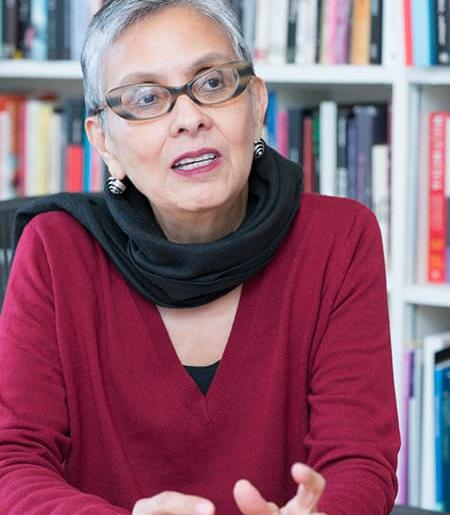
Carme Torras Genís is a Research Professor at the Spanish National Research Council (CSIC), affiliated with the Institute of Robotics and Industrial Informatics (IRI) in Barcelona and the Technical University of Catalonia (UPC). Her career spans over three decades, focusing on robotics, neurocomputing, and artificial intelligence with applications in healthcare and deformable object manipulation. M.Sc. in Mathematics (University of Barcelona, 1978) M.Sc. in Computer Science (University of Massachusetts, 11981) Ph.D. in Computer Science (UPC, 1984) Research Interests : Robotic manipulation of deformable objects (especially textiles) Neurocomputing and machine learning for robotic control Human-robot interaction and assistive robotics Computational topology for cloth state representation Ethics in social robotics and AI Medical applications of robotics for neuromuscular disease assessment Scientific Leadership : ERC Advanced Grant recipient (2016) IEEE and EurAI Fellow Coordinator of Horizon Europe project SoftEnable and former ERC project CLOTHILDE Editorial leadership in IEEE Transactions on Robotics and multiple journals Active in ethics committees and AI policy advisory boards Advisory Committee of Ethics in AI (Catalan Government) Vice-President of CSIC Ethics Committee Member of Royal Academy of Engineering (Spain)
Surya Ganguli is an Associate Professor in the Department of Applied Physics at Stanford University, with courtesy appointments in Neurobiology and Electrical Engineering. He serves as Senior Fellow at the Stanford Institute for Human-Centered AI and is affiliated with the Stanford Neuroscience Institute , Bio-X , and Wu Tsai Neurosciences Institute . His research spans theoretical neuroscience, machine learning, and statistical mechanics. Ph.D. , UC Berkeley, Theoretical Physics (2004) M.A. , UC Berkeley, Physics (2000) M.A. , UC Berkeley, Mathematics (2004) M.Eng. , MIT, Electrical Engineering and Computer Science (1998) B.S. , MIT, Physics (1998) B.S. , MIT, Mathematics (1998) B.S. , MIT, Electrical Engineering and Computer Science (1998) His lab explores how higher-level cognitive phenomena emerge from neural network dynamics, focusing on perception, memory, attention, and decision-making . Research themes include statistical mechanics of learning , neural representational geometry , and biologically plausible learning rules . Current work examines nonlinear interactions in neural networks through the Schmidt Science Polymath Award (2023). Key article trends reveal expertise in neural coding limits (2022 Nature), synaptic plasticity models (2022 Neural Computation), and deep learning theory (2022 NeurIPS publications). His 2019 Annual Review chapter on statistical mechanics of deep learning established foundational insights into network criticality. Scientific Awards : NSF Career Award (2019) Simons Foundation Investigator (2016) McKnight Scholar Award (2015) James S. McDonnell Foundation Scholar (2014) Sloan Research Fellow (2013) As advisor, he mentors 10+ doctoral students across Applied Physics, Neurosciences, and Computer Science, including Vamshi Balanaga and Mason Kamb. His lab collaborates with experimental teams at Stanford and beyond, supported by grants from NSF , Simons Foundation , and Swartz Foundation . The Neural Dynamics & Computation Lab unites physicists, mathematicians, and neuroscientists to decode cognition through interdisciplinary methods.
Bernhard Schölkopf is a Professor and director at the Max Planck Institute for Intelligent Systems in Tübingen. He previously served as a director at the Max Planck Institute for Biological Cybernetics (2001-2011) and held industrial positions at AT&T Bell Laboratories, Microsoft Research, and Biowulf Technologies. He is also an honorary professor at the Technical University of Berlin since 2002. Education : Studied physics, mathematics, and philosophy in Tübingen and London; received a doctorate in computer science from the Technical University of Berlin (1997). His research spans machine learning , artificial intelligence , and causal inference , with interdisciplinary applications in computational neuroscience and theoretical computer science . He has contributed to foundational work in kernel methods, support vector machines, and causal modeling. Scientific Awards : Körber Prize 2019
Gian Antonio Susto is an Associate Professor at the Department of Information Engineering , University of Padova . With a Ph.D. in Information Technology and post-doctoral experience at National University of Ireland, Maynooth, he leads research in Machine Learning , Semiconductor Manufacturing , and Industrial IoT . His work bridges Anomaly Detection , Continual Learning , and Algorithmic Fairness with applications in Hydroelectric Power Plants , Particle Accelerators , and Smart Mobility . B.Sc. and M.Sc. in Controls Engineering, University of Padova (cum laude) Ph.D. in Information Technology, University of Padova (2013) Post-Doc at National University of Ireland, Maynooth (2012-2013) Assistant Professor at University of Padova (2013-2021) His research focuses on Explainable AI , Virtual Metrology , and Deep Learning for manufacturing and infrastructure monitoring. Recent projects include the AIMS5.0 (AI for Manufacturing Sustainability) and MICS (Circular Economy in Italy) initiatives. His publications span Engineering Applications of Artificial Intelligence , IEEE Transactions , and Information Processing & Management , with 15+ recent papers on topics like Fault Diagnosis , Continual Learning , and Fair Ranking . Key scientific awards include: IEEE CCTA Best Student Paper Award (2021) IP&M 2020 Ph.D Paper Award Best Industry Paper Award, European Workshop on Advanced Control and Diagnosis (ACD 2019) He has supervised Ph.D. students on projects involving Particle Accelerators , Plant Behavior Modeling , and Explainable AI , with alumni now at institutions like Max Planck Institute , IBM , and Scripps Research . Current teaching includes Reinforcement Learning and Explainable Machine Learning at graduate and Ph.D. levels.
Thomas Bäck is a Professor at the Leiden Institute of Advanced Computer Science (LIACS) , Leiden University , Netherlands, and a member of the interdisciplinary programme Society, Artificial Intelligence and Life Sciences (SAILS) . His academic career spans roles at Leiden University (1996–present) and leadership positions at the Center for Applied Systems Analysis in Dortmund (1994–2000). Education : Diplom-Informatiker (Computer Science), Technische Universität Dortmund (1990) Dr. rer. nat. (Computer Science), Technische Universität Dortmund (1994) Research Interests : Dr. Bäck specializes in evolutionary computation , machine learning , and their applications in sustainable smart industry and healthcare . Recent work focuses on integrating large language models (LLMs) and quantum computing into optimization frameworks, with projects like CIMPLO (predictive maintenance), ECOLE (experience-based optimization), and SAPPAO (airline operations optimization). Scientific Contributions : His 526+ publications cover evolutionary algorithms, quantum optimization, and LLM-driven design, with recent trends including: Quantum computing (e.g., quantum approximate optimization, quantum advantage challenges) LLM integration (e.g., hyperparameter tuning, mutation control, code evolution graphs) Healthcare and industry (e.g., predictive maintenance, anomaly detection, melt quality prediction) Algorithm benchmarking (e.g., IOHprofiler, MA-BBOB, explainable benchmarking) Scientific Awards : IEEE Fellow (2022) Royal Netherlands Academy of Arts and Sciences (KNAW) member (2021) Academia Europaea member (2022) IEEE Computational Intelligence Society Evolutionary Computation Pioneer Award (2015) Fellow, International Society of Genetic and Evolutionary Computation (2003) Best Ph.D. thesis award, German Society of Computer Science (GI) (1995) Advising and Grants : He supervises Ph.D. candidates in evolutionary computation and machine learning and has secured 7 major grants from organizations like the Dutch Research Council , European Commission , and The Research Council of Norway . His editorial roles include Editor-in-Chief of the Evolutionary Computation Journal and associate editorships in leading AI journals.
Ximian Xu (preferred name: Simeon) is a Senior Research Associate in the Faculty of Divinity at the University of Cambridge , with a PhD in Systematic Theology from the University of Edinburgh (2020). His research bridges theology with technology, focusing on artificial intelligence (AI) ethics, Dutch Neo-Calvinism, Karl Barth, and contextual theology in mainland China. Xu’s work explores the intersection of AI and Christian ethics, the role of Reformed theology in contemporary Chinese Christianity, and the ontological implications of technology on human sustainability. Research Interests Theology and Technology (AI, Surveillance) Dutch Neo-Calvinism (Herman Bavinck) Karl Barth Contextual Theology (Reformed in China) Grants and Organisational Roles He received the CAHSS KE Grant for the workshop "Artificial Intelligence and the Christian Churches" and the Alan Turing Institute Postdoctoral Enrichment Award for research on AI in pastoral care. Xu co-founded the Studies in Dutch Neo-Calvinism Series (Chinese) and is a co-editor for its publications. Publications and Awards His recent works include studies on AI’s moral agency, technomoral futures, and Reformed theological frameworks. Xu’s book The Digitalised Image of God: Artificial Intelligence, Liturgy, and Ethics (2024) addresses AI’s theological challenges. He has contributed to journals like Perspectives on Science and Christian Faith and Modern Theology .
Alex Lombardi is an Assistant Professor of Computer Science at Princeton University, specializing in cryptography and theoretical computer science. His work explores cryptographic proof systems, post-quantum security, and quantum cryptography. Princeton University (Current) Simons-Berkeley Postdoctoral Fellow (Former) MIT (Graduate Training) Visiting Scientist, Cryptography 10 Years Later Program (2025) Education: PhD in Computer Science from MIT (advised by Vinod Vaikuntanathan) Master's Thesis on Provable Instantiations of Correlation Intractability and the Fiat-Shamir Heuristic Dr. Lombardi's research spans foundational cryptography, with a focus on indistinguishability obfuscation, worst-case assumptions, and quantum cryptographic protocols. His work on SNARGs and PPAD hardness has advanced cryptographic proof systems, while his recent projects address quantum verification and post-quantum security. He encourages prospective cryptography students to apply to Princeton's PhD program. His publications highlight advancements in LWE-based cryptography, quantum protocols, and complexity-theoretic foundations. Key themes include secure computation, hash function design, and cryptographic reductions under quantum assumptions. Scientific Awards: Simons-Berkeley Postdoctoral Fellowship Dr. Lombardi serves on program committees for STOC 2025, EUROCRYPT 2025, and other conferences. He has taught courses like COS 433/533 (Cryptography) and COS 533 (Advanced Cryptography) at Princeton.
LIN Meng is an Associate Professor at the Department of Mechanical and Energy Engineering , Southern University of Science and Technology (SUSTech) . He holds a Ph.D. in Mechanical Engineering from Swiss Federal Institute of Technology in Lausanne (EPFL) (2018) and has held postdoctoral positions at Caltech's Joint Center for Artificial Photosynthesis (2018-2019). Research Interests include solar thermal/thermochemical/(photo)electrochemical energy conversion devices , CO2 capture and utilization , and multi-scale modeling and simulation . His work focuses on optimizing energy systems through advanced computational models and cross-disciplinary integration of physics. Recent Publications highlight his contributions to solar fuel processing, CO2 conversion technologies, and hybrid electrochemical systems, with articles in Nature Communications , Joule , and Energy & Environmental Science . His research emphasizes scalable solutions for sustainable energy and carbon management. Scientific Awards ASME Graduate Student Award (2018) Outstanding Reviewer of Solar Energy (2018, 2015) Swiss National Science Foundation Postdoc Fellowship (2017) Shanghai Outstanding Master Thesis (2016) Shanghai Jiao Tong University Outstanding Graduate (2013)
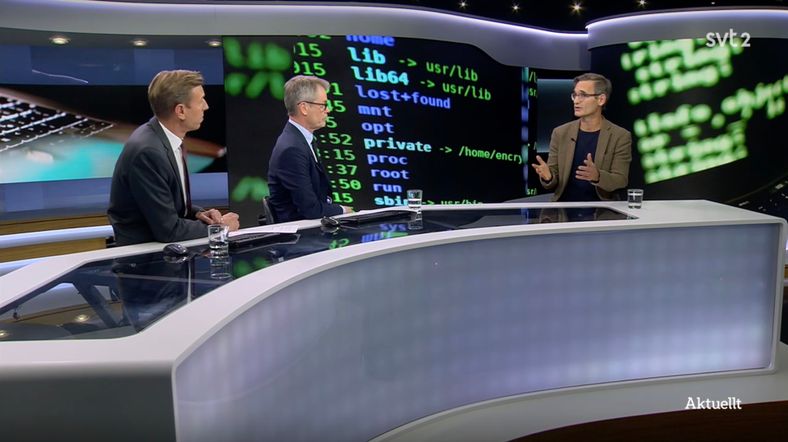
Pontus Johnson is a Professor at the KTH Royal Institute of Technology in Stockholm, Sweden. He leads the Center for Cyber Defense and Information Security (collaborating with Swedish Armed Forces, FRA, MSB, FOI, FHS) and serves as vice director of Cybercampus Sweden since 2024. His research focuses on cybersecurity , enterprise architecture analysis , and probabilistic threat modeling , particularly through his development of the Meta Attack Language (MAL) for simulating cyber attacks on networked systems. Education: MSc in Computer Science, Lund Institute of Technology (1997) PhD in Computer Science, KTH (2002) Docent title, KTH (2007) Leadership Roles: Director, Center for Cyber Defense and Information Security (2013–present) Vice Director, Cybercampus Sweden (2024–present) Board Member, Swedish Research Council (2025–present) Deputy Chair, Swedish Royal Academy of Engineering Sciences (IVA) Board (2024–present) His work spans cybersecurity research , attack simulation methodologies , and enterprise architecture frameworks . He has developed tools like securiCAD (acquired by Google) and pwnPr3d for probabilistic threat modeling. His 15 most recent publications highlight advancements in graph-based attack simulations , automated security assessments , and AI applications in cyber defense . Scientific recognition includes: Listed among Tech Awards Sweden's 50 Most Influential People in Swedish Tech (2022, 2023) Discovery of vulnerability in the Universal Turing Machine (2021) He supervises 16 PhD students and alumni (2005–2024), including Simon Gökstorp , Jakob Nyberg , and Sotirios Katsikeas . His academic service includes over 50 program committee roles and leadership positions in international conferences. He contributes to both academic and public domains through media appearances (SVT, Aftonbladet), courses in ethical hacking , and industry collaboration via his role at Google (20% of his time). His research group Software Systems Architecture and Security (SSAS) focuses on predictive security frameworks and system-of-systems analysis.
Jenny Y. Yang is a Professor in the Department of Chemistry at the University of California, Irvine. Her research focuses on the development of inorganic electrocatalysts for chemical fuel generation and utilization, emphasizing bio-inspired secondary coordination sphere effects and thermochemical property optimization. Institution: University of California, Irvine Department: Chemistry Research Interests: Oxygen activation mechanisms Hydrogen production and oxidation Carbon dioxide reduction for fuel synthesis Thermochemical property effects on catalysis Secondary coordination sphere engineering Electrochemical carbon capture systems Scientific Trends: Recent work spans from 2023–2025, covering CO2-to-methane conversion, quantum dot hybrid systems for hydrogen evolution, and computational approaches to CO2 capture agent design. Articles highlight interdisciplinary methods combining inorganic chemistry, electrochemistry, and sustainability-focused engineering. Contact: Office: 4080 ISEB | Phone: 949-824-1533 | Email: j.yang@uci.edu
Anna Battauz is an Associate Professor at Bocconi University, teaching undergraduate, graduate, and Ph.D. courses in Calculus, Quantitative Finance, Derivatives Pricing, Numerical Methods for Finance, and Continuous-Time Finance. She serves as Director of the MSc in Finance since 2022 and is a research fellow at IGIER (Innocenzo Gasparini Institute for Economic Research) and Baffi Carefin. Education: Ph.D. in Financial Mathematics from Scuola Normale Superiore in Pisa; Degree in Mathematics from the University of Udine. Research Interests: Anna specializes in Quantitative Finance, with a focus on asset/derivatives pricing, asset allocation, and optimal stopping. Her work bridges theoretical finance with practical applications in financial markets. Publications & Research Trends: Her recent articles explore American options, stochastic interest rates, quanto derivatives, and earnouts in M&A. Topics span mathematical finance, computational methods, and strategic corporate finance, emphasizing pricing models, optimization, and empirical analysis. Scientific Awards: Teaching Excellence Award, Bocconi University (2018) Research Excellence Award, Bocconi University (2014) Research Excellence Award, Bocconi University (2004) Refereeing & Affiliations: Anna acts as a referee for academic publications and contributes to research initiatives at IGIER and Baffi Carefin. Her expertise supports advanced financial modeling and policy development in dynamic market environments.
Risto Miikkulainen is a Professor of Computer Science and Neuroscience at the University of Texas at Austin and VP of AI Research at Cognizant AI Lab. He directs the UTCS Neural Networks Research Group and is currently on leave from UT, working on Evolutionary Computation and Deep Learning at Sentient Technologies, Inc. Education: Ph.D. in Computer Science, UCLA, 1990 M.S. in Applied Mathematics, Helsinki University of Technology (now Aalto University), 1986 Risto Miikkulainen's research focuses on biologically-inspired computation such as neural networks and evolutionary computation. His work spans three main areas: (1) Neuroevolution, evolving complex deep learning architectures and recurrent neural networks for sequential decision tasks in robotics, games, and artificial life; (2) Cognitive Science, developing models of natural language processing, memory, and learning that shed light on disorders such as schizophrenia and aphasia; and (3) Computational Neuroscience, studying the development, structure, and function of the visual cortex, episodic memory, and language processing. His research combines theoretical understanding of biological information processing with practical applications for developing intelligent artificial systems. His recent publications (2025) show a strong focus on evolutionary approaches to AI development, particularly in neural architecture search, loss function optimization, and explainable AI. Many papers explore the intersection of evolutionary computation with deep learning, creating more efficient and transparent AI systems. His work spans theoretical foundations and practical applications in areas ranging from environmental control systems to cognitive modeling. Scientific Awards: College of Fellows, International Neural Network Society, 2024 Best Pathway to Impact Award, NeurIPS Climate Change workshop, 2024 AAAI Fellow, 2023 IEEE CIS Evolutionary Computation Pioneer Award, 2020 Gabor Award, International Neural Network Society, 2017 Outstanding Paper of the Decade Award, International Society for Artificial Life, 2017 IEEE Fellow, 2016 Multiple Best Paper Awards at GECCO, CIG, and CEC conferences Deployed Application Award, AAAI/IAAI-2013, AAAI/IAAI-2018 Miikkulainen has extensive experience mentoring students through undergraduate research courses like CS378 Computational Intelligence in Game Design I and II, where students develop independent research projects on the OpenNERO research platform. He has received multiple awards for deployed applications, demonstrating the practical impact of his research. His work has led to the development of the NERO game platform, which serves as both an educational tool and research platform for AI. He directs the UTCS Neural Networks Research Group, which focuses on neuroevolution, cognitive science models, and computational neuroscience. The group has developed the NERO (Neuro-Evolving Robotic Operatives) platform, a machine learning game that allows users to train intelligent agents through evolutionary computation. The group's work spans theoretical research and practical applications in AI, with connections to both academic and industry partners.
Maria Fernandez is an Associate Professor at Cornell University's College of Arts and Sciences, Department of History of Art and Visual Studies. She holds a Ph.D. from Columbia University and specializes in the history and theory of digital art, cybernetics, feminist media arts, and posthumanism. Ph.D., Columbia University Research Focus : Maria's work bridges cybernetics, feminist media arts, posthumanism, new materialism, BioArt, and AI in art. She investigates how women artists in new media contribute to posthumanist and new materialist discourses, with a current book project on British cybernetician Gordon Pask. Publications span digital art history, Latin American modernism, and feminist cybernetics. Her articles appear in Leonardo , Art Journal , and Third Text , with a focus on interactivity, media theory, and technological aesthetics. Scientific Awards : Arvey Book Award by the Association for Latin American Art (2015) She co-edited Domain Errors: Cyberfeminist Practices (2002) and Latin American Modernisms and Technology (2018). Her advising policy emphasizes formal departmental application reviews.
Steven Kelts is a Lecturer at Princeton University, affiliated with the School of Public and International Affairs (SPIA) and the Department of Computer Science . He leads the Integrated Ethics in CS program and has served as Director of the non-profit All Tech Is Human. Research Focus: Kelts examines ethical frameworks in technology innovation, historical political economies, and the intersection of democratic theory with corporate responsibility. His work spans Measuring ethics education in computing Evolving corporate structures for ethical action Locke's economic justice theories Machiavelli's republican ideals Madison's institutional designs Publications reveal trends in: Utilitarian logic in Agile teams Roman censorship models 17th-century English economic debates Mill's social value legislation Scientific Recognition: Recipient of Princeton's Council on Science and Technology grants for Agile Ethics program Google seed grant for corporate ethics frameworks University-wide award for GradFutures AI ethics leadership Advisory Roles: Includes ethics advisor to the Responsible A.I. Institute and institutional design mentor for political theory projects.
Georg Martius is a Full Professor in the Department of Computer Science at the University of Tübingen's Faculty of Science and a Max Planck Research Group Leader at the MPI for Intelligent Systems. Since April 2023, he has been a core member of the DFG-funded Cluster of Excellence 'Machine Learning: New Perspectives for Science,' which received extended funding through 2032 for its mission to integrate machine learning into fundamental scientific discovery processes. His academic foundation includes a PhD from the University of Göttingen and Bernstein Center for Computational Neuroscience (2005), a Diploma in Computer Science from the University of Leipzig (2003), and a visiting research period at the University of Edinburgh's Division of Informatics. Postdoctoral positions followed at the Max Planck Institutes for Dynamics and Self-Organization (Göttingen, 2009), Mathematics in the Sciences (Leipzig, 2010), and IST Austria (2015). Professor Martius's research pioneers the intersection of reinforcement learning, robotics, and tactile sensing, with emphasis on developing autonomous systems capable of natural locomotion, dexterous manipulation, and physical-world understanding. His work bridges theoretical machine learning with practical hardware applications, particularly in creating differentiable simulators, superresolution tactile sensors, and biologically plausible learning frameworks for robotic control. Analysis of his 2024-2025 publications reveals dominant trends in offline reinforcement learning (especially goal-conditioned and diversity-maximization techniques), object-centric representation learning for video understanding, and tactile sensing innovations. A strong thread connects foundation models to world model construction, while his work on differentiable physics engines enables precise collision handling and contact dynamics for real-world robotic control. His leadership roles include directing the Distributed Intelligence research team at Tübingen and contributing to major collaborative initiatives like the Real Robot Challenge and Myochallenge 2022. The Cluster of Excellence appointment represents recognition of his contributions to transforming scientific methodology through machine learning, particularly in automating hypothesis generation and experimental design. Current projects focus on integrating large-scale machine learning with embodied intelligence, advancing tactile perception systems like the Minsight vision-based sensor, and developing neuroplasticity-inspired approaches for robust out-of-distribution detection. His work directly impacts fields requiring physical interaction intelligence, from autonomous navigation to medical robotics, with emphasis on sample-efficient learning from limited real-world data.