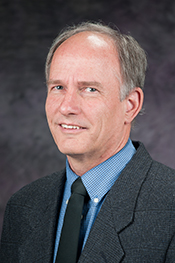
Michael Dine is a Professor of Physics at the University of California at Santa Cruz (UCSC) since at least 2004, with a B.A. from Johns Hopkins University (1974) and a Ph.D. from Yale University (1978) . He is renowned for his contributions to supersymmetry, string theory, and physics beyond the Standard Model , including co-developing the Invisible Axion model and pioneering work in dynamical supersymmetry breaking. His textbook Supersymmetry and String Theory: Beyond the Standard Model (Cambridge University Press) is a key resource in the field. Research Focus: Addressing unanswered Standard Model questions (hierarchy problem, strong CP problem, dark matter) via supersymmetry, string theory, and effective field theory. Teaching: Courses like Advanced Quantum Field Theory (Physics 222), General Relativity (Physics 171), and independent studies on quantum field theory. Scientific Awards: Inducted into the American Academy in 2010. Key Trends in Research: Dine's work bridges theoretical particle physics with cosmology, focusing on supersymmetry breaking mechanisms, axion cosmology, and the string theory landscape's implications for LHC experiments. His publications and lectures emphasize robust predictions of string theory and the interplay between high-energy physics and early universe phenomena.
Dr. Gloria Roberts is a Research Fellow at the Black Dog Institute, affiliated with the University of New South Wales' Faculty of Medicine, School of Psychiatry. Her research focuses on identifying predictors of bipolar disorder development in high-risk populations, with particular emphasis on neural mechanisms of executive functioning and emotional processing. Location: Black Dog Institute, Hospital Road, Prince of Wales Hospital, Randwick NSW 2031 Contact: +61 2 9382 8324 | ORCID: https://orcid.org/0000-0002-1966-5120 Education Background: B.Sc in Applied Psychology (University College Cork, Ireland, 2002) M.Sc in Neuropharmacology (National University of Ireland Galway, Ireland, 2003) Diploma in Statistics (Trinity College Dublin, Ireland, 2006) PhD in Neuroscience (Trinity College Dublin, Ireland, 2008) Dr. Roberts' research program centers on the neural basis of emotional dysregulation characteristic of mood disorders, employing structural and functional Magnetic Resonance Imaging as her primary research tool. Her work integrates advanced neuroimaging analysis techniques including diffusion tensor imaging tractography, dynamic causal modeling, graph theory, and machine learning approaches. She maintains active collaborations with Queensland Institute of Medical Research (Brisbane), Neuroscience Research Australia (Sydney), and the Centre for Healthy Brain Ageing (Sydney). Analysis of Dr. Roberts' publication record (94 journal articles, 2 book chapters, 25 conference papers) reveals a consistent research trajectory focused on neurocognitive patterns in bipolar disorder. Her recent work increasingly incorporates machine learning techniques to identify predictive biomarkers, with a growing emphasis on longitudinal studies tracking high-risk populations. The interdisciplinary nature of her research bridges neuroscience, psychiatry, and computational methods to address fundamental questions about mood disorder development. Scientific Contributions: Extensive publication record across multiple formats (journal articles, book chapters, conference presentations) Development of innovative neuroimaging analysis techniques for bipolar disorder research Establishment of multi-institutional collaborations across Australia Integration of machine learning approaches with traditional neuroimaging methods Dr. Roberts actively mentors junior researchers and contributes to the broader scientific community through peer review activities and participation in research networks focused on mood disorders. Her work has significant implications for early intervention strategies and the development of novel therapeutic approaches for bipolar disorder.
Prof. Dr. Rupa Viswanath is a Professor of Indian Religions at the Centre for Modern Indian Studies (CeMIS) at the University of Göttingen. She also holds an Honorary Professorship in History at the Asian University for Women in Bangladesh and is a Fellow at Lucy Cavendish College , University of Cambridge. Currently (2022–2024), she serves as Director of the MS Merian International Center for Advanced Studies in New Delhi. Lead interdisciplinary research cluster on inequality and diversity Co-leader of Historical Sociology specialization in CeMIS Master's program Former faculty at University of Pennsylvania's Department of South Asian Studies Her research interrogates the history of caste-as-slavery in South Asia, focusing on agrarian control, religious neutrality policies, and postcolonial caste-state entanglements. Key areas include: Caste-based violence and welfare systems Comparative racialization frameworks Mechanisms of social control in South/Southeast Asia Class power and state structure dynamics Contemporary governance of religious offense The Roundtable on The Pariah Problem (Modern Asian Studies, 2021) and her 2014 monograph demonstrate how colonial governance reframed caste as a religious issue to avoid state intervention in agrarian exploitation. Her 2023 review of Rule of the Commoner extends this analysis to post-independence Dravidian politics, revealing tensions between caste reform rhetoric and structural continuities. Scientific recognition includes: 2014 Choice Outstanding Academic Title for The Pariah Problem Contributions to major journals like International Review of Social History and Comparative Studies in Society and History Academic book blurbs and policy-oriented writings Her work connects Dalit struggles across regions through missionary-colonial archives and non-state actor analysis , while advocating for methodological rigor in studying subaltern histories without ventriloquism.
Maria Rasmussen serves as Senior Lecturer in Criminal Law at Uppsala University's Department of Law since 2024, holding a Doctor of Criminal Law from Stockholm University (2023). Her academic profile centers on Nordic criminal jurisprudence with historical and theoretical dimensions. Educational background: Doctor of Criminal Law, Stockholm University, 2023 Research Focus: Rasmussen's scholarship critically examines provocation doctrines and diminished capacity frameworks within Nordic criminal systems. Her work traces the historical evolution of mitigating circumstances in violent crimes from 1734–2019, analyzing how emotional states like 'heat of passion' influence criminal responsibility. She investigates guilt factors in crime classification and contributes to legal pedagogy through scientific writing methodologies for law students. Her research bridges historical analysis with contemporary sentencing challenges in Scandinavian jurisdictions. Publication Trends: Recent works reveal consistent specialization in Nordic criminal law's treatment of emotional states during violent acts. Her scholarship demonstrates methodological continuity between historical legal evolution (18th–21st century) and modern theoretical frameworks, with particular emphasis on provocation as both mitigating and aggravating factor across Scandinavian legal traditions. Scientific Awards: No awards documented in available materials Advising & Grants: Current information does not indicate active PhD/Master's student supervision or externally funded research projects. Her scholarly output appears institutionally supported through Uppsala University's academic framework without mention of competitive grant funding. Research Infrastructure: No dedicated laboratories, research teams, or collaborative networks are referenced in the provided documentation. Her publications suggest independent scholarship within Uppsala University's Department of Law structure.
Professor Dingxuan Zhou is a distinguished academic serving as Professor and Head of School of Mathematics and Statistics at The University of Sydney, joining the institution on August 29, 2022. He is also a member of The Net Zero Institute and has held significant editorial positions, including editor-in-chief of the journal "Analysis and Application" of "Mathematical Foundations of Computing" and serving on the editorial boards of over ten international journals. Educational Background: BSc in Mathematics from Zhejiang University, China (1988) PhD in Mathematics from Zhejiang University, China (1991) Professor Zhou's research spans learning theory, neural networks, wavelet analysis, and approximation theory, with his current focus on the theory of deep learning. His work aligns with the Faculty of Science Research Strengths in Complex Systems, Precision and Digital Health, Data and Decisions, and National Security. His research demonstrates a consistent progression from foundational mathematical theory to cutting-edge applications in machine learning and artificial intelligence, with particular emphasis on understanding the theoretical underpinnings of neural networks and deep learning systems. His extensive publication record reveals a strong trend toward distributed learning frameworks, approximation theory for neural networks, and the mathematical foundations of deep learning. Recent work focuses on federated learning, transformers, physics-informed neural networks, and the theoretical analysis of over-parameterized networks, reflecting the evolving landscape of machine learning research with increasing emphasis on theoretical guarantees and practical applications. Scientific Awards: Humboldt Research Fellowship (1993) Fund for Distinguished Young Scholars from the National Science Foundation of China (2005) Highly-cited Researcher by Thomson Reuters/Clarivate Analytics (2014-17) World's Top 2% Scientist by Stanford University (2021, 2022, 2023) Professor Zhou has demonstrated exceptional leadership in research and mentorship, having conducted over 40 research grants as Principal Investigator, supervised more than 20 PhD students, and co-organized over 20 international conferences. His collaborative approach is evident in his extensive co-authorship network across multiple institutions globally. He has also served in significant administrative roles including Head of Department of Mathematics (2006-12), Associate Dean of School of Data Science (2018-22), and Director of the Liu Bie Ju Centre for Mathematical Sciences (2019-22) at City University of Hong Kong.
Shantanu Jadhav is a Professor of Psychology at Brandeis University, with affiliations to the Neuroscience Program, the Volen National Center for Complex Systems, and the Sloan-Swartz Center for Theoretical Neurobiology. He earned his B.Tech. from IIT Bombay, Ph.D. from UC San Diego, and completed postdoctoral training at UCSF and UC Berkeley. Research Focus: Neural mechanisms of learning, memory, and decision-making in rodent models Investigation of hippocampal-prefrontal interactions via multielectrode recordings, optogenetics, and computational analysis Role of neural oscillations (theta, gamma, sharp-wave ripples) in memory consolidation and cognitive flexibility Implications for neurological disorders like Alzheimer’s, autism, and schizophrenia Recent work highlights the coordination of dopamine activity with rule representations in the prefrontal cortex and hippocampus, the role of prefrontal ripples in suppressing hippocampal reactivation during sleep, and geometric transformations in cognitive maps enabling cross-environment generalization. His lab has shown that awake sharp-wave ripples are critical for spatial memory and that cross-region neural synchronization underpins memory-guided decisions. Scientific Recognition: Peter and Patricia Gruber International Research Award (2013) Sloan Research Fellow (2015-2017) NARSAD Young Investigator Award (2015-2018) Whitehall Foundation Award (2016-2020) SFARI Core Member (2022-2025) The Jadhav Lab at Brandeis trains postdoctoral fellows, graduate students (via the Neuroscience and Psychology Graduate Programs), and research assistants. Current studies explore hippocampal-prefrontal network dynamics, dopamine signaling in cognitive flexibility, and geometric representations in memory abstraction.
Professor Ian Simpson is a faculty member at the University of Edinburgh's School of Informatics , holding the Chair in Biomedical Informatics and serving as Director of the UKRI Artificial Intelligence CDT in Biomedical Innovation . He teaches courses including Foundations in Biomedical Artificial Intelligence Research and supervises PhD students across multiple programs. Current Supervision: Aidan Marnane, Antoine Lain, Barry Ryan, Tariro Chatiza, Sebestyén Kamp, Maria Dolak, Hanane Issa, Juliana Rodriguez Cubillos Past Supervision: Xin He (2017), Maciej Pajak (2018), Emilia Wysocka (2019), Samuel Heron (2019), Alba Crespi (2022), Magdalena Navarro (2022), Michael Yates (2023), Jamie Campbell (2023), Nicholas Moir (2024) Research Focus: Developing computational and machine learning methodologies for biological systems analysis, particularly brain development and neurological diseases. Key interests include high-throughput brain data analysis, graph-based biological modeling, molecular phylogenetics, and brain disease molecular modeling. Publication Trends: Recent work emphasizes multi-omic data integration through graph neural networks (MOGDx), batch correction challenges in breast cancer datasets, and longitudinal stratification approaches for Parkinson's disease. His articles demonstrate applications of AI in heterogeneous disease diagnosis while preserving biological validity. Scientific Recognition: Fellow of the Alan Turing Institute (2021-) Member of RSE Young Academy of Scotland BBSRC Pool of Experts member (2021-) STEM Ambassador Laboratory Affiliations: Leads the Biomedical Informatics group within the Institute for Adaptive & Neural Computation, with affiliations to Edinburgh Neuroscience, Patrick Wild Centre, and the Simons Initiative for the Developing Brain.
Tya Collins serves as Assistant Professor in the Faculty of Education at the University of Ottawa, leveraging 20 years of multifaceted experience across preschool, elementary, secondary, ESL/FSL, special education, and university contexts. Her interdisciplinary work bridges education, sociology, critical youth studies, Black studies, and disability studies to dismantle systemic barriers in educational pathways for marginalized youth. Her academic credentials include: PhD in Education from Université de Montréal SSHRC Postdoctoral Fellowship at McGill University Professor Collins' research investigates critical intersections of Blackness, disability, language, and systemic trauma through Black-affirming theories and methodologies. She positions youth as knowledge producers while examining special education placement processes, postsecondary outcomes, and resistance to structural inequalities. Her francophone-anglophone bilingual research uniquely addresses Quebec's linguistic minority context, emphasizing racial justice and decolonial approaches in educational spaces. Analysis of her 2021-2025 publications reveals consistent application of Disability Critical Race Theory (DisCrit) to expose how special education systems perpetuate anti-Black racism and ableism. Her work demonstrates increasing focus on immigrant student experiences, postsecondary transitions, and methodological innovation through counter-narrative and ethnographic approaches. These contributions advance critical scholarship in educational equity, disability justice, and community-centered research within North American minority contexts. Her scientific recognition includes: SSHRC Postdoctoral Fellowship Professor Collins actively partners with community organizations including the Observatoire des communautés noires du Québec, Réseau de recherche sur les communautés québécoises d’expression anglaise, Avenues (supporting minority youth transitions), and serves as Ontario representative on Desjardins Foundation’s Research Advisory Council. Recent institutional announcements confirm her involvement in nationally funded projects as reported by the University of Ottawa in August 2024. She advises graduate students while teaching core courses including Introduction to Research in Education (EDU 5190), Inclusive and Special Education (EDU 5113), and Equity in Education: Theory and Practice (PED 3124).
Hans-Joachim Hof is a Professor and Vice President for Teaching and Students at Technische Hochschule Ingolstadt (THI), where he has been employed since 2016. He serves as Head of Bachelor Cybersecurity (since 2022), Project Manager for THIsuccessAI (since 2021), and Head of the Research Group 'Security in Mobility' at the CARISSMA Institute of Electric, Connected and Secure Mobility. Additionally, he chairs the Scientific Board of the Center of Entrepreneurship and serves on the Supervisory Board of AININ. Professor, Head of INSecurity - Ingolstadt Applied IT Security Research Group (since WS 2016) Professor of Secure Software Systems, Head of MuSe - Munich IT Security Research Group at HAW Munich (2011-2016) Research Scientist at University of Karlsruhe (2008-2011) Research Assistant at Institute for Telematics, University of Karlsruhe (TH) (2003-2007) Professor Hof holds a doctorate in engineering and completed studies in computer science with a specialization in telematics and reliability architectures of systems, with a minor in law. His research spans automotive security, network security, and IT security, with recent focus on security in the Internet of Things, development processes for Secure Automotive Software, Automotive Blockchains, and Future Automotive Security Architectures. His work bridges theoretical security frameworks with practical automotive applications, particularly in electric vehicle security and battery management systems. Hof's recent publications reveal a strong trend toward automotive cybersecurity, with particular emphasis on electric vehicle infrastructure security, battery management systems, and vehicle security operations centers. His research increasingly addresses the security challenges of connected and autonomous vehicles, with growing attention to trust management systems and the security implications of AI in automotive contexts. The interdisciplinary nature of his work connects computer security with automotive engineering, energy systems, and digital forensics. Professor Hof has received numerous prestigious awards for his research contributions: Multiple Best Paper Awards at SECURWARE (2015, 2016, 2017) Best Paper Awards at CENTRIC (2010, 2012) Best Speaker Award at ESE Congress 2015 IARIA Fellow recognition Best Paper Award at ICIW 2010 As Editor-in-Chief of the International Journal on Advances in Security and Chairman of the German Chapter of the ACM, Hof plays a significant role in shaping security research discourse. His leadership extends to the German Informatics Society where he serves on the Executive Board. His research group INSicherheit (http://insi.science) actively collaborates with industry partners on real-world security challenges. Professor Hof leads the INSecurity research group at THI, which focuses on applied IT security with particular expertise in automotive contexts. The group maintains strong industry connections and operates within the CARISSMA research institute, which specializes in electric, connected, and secure mobility. Their work includes practical security testing, development of security architectures, and analysis of emerging threats in automotive systems, with notable contributions to EV charging security, battery management systems, and vehicle forensics.
Mohamad Awada is an Assistant Professor in the Department of Civil and Urban Engineering at New York University (NYU Tandon School of Engineering) . His research focuses on integrating sensing systems , immersive technologies , and artificial intelligence to enhance human livability in built environments. Education Ph.D. in Civil Engineering, University of Southern California (USC), 2024 M.Sc. in Computer Science, University of Southern California (USC), 2021 M.Sc. in Civil Engineering (Construction Engineering and Management), American University of Beirut, 2018 B.S. in Civil and Environmental Engineering, American University of Beirut, 2016 His work spans machine learning , data science , and human-building interaction , with applications in sustainable infrastructure and smart cities . Recent research trends emphasize occupant health , stress detection , and AI-driven environmental optimization in office and residential settings. Scientific Awards : University of Southern California PhD Achievement Award – 2024 Sonny Astani CEE Outstanding Department Service Award - 2023 Sonny Astani CEE Outstanding Research Assistant Award - 2022 Awada leads the Smart Innovations in Built Environment Research (SiBER) Lab , where he explores automation, control systems, and AI applications to create healthier, energy-efficient infrastructure. He actively seeks Ph.D. candidates with coding and ML/data science experience for Fall 2025.
Ping Ji is a Full Professor and Chair of the Department of Computer Science within the School of Arts and Sciences at the City University of New York (CUNY), with dual appointments at Hunter College and John Jay College of Criminal Justice. She serves as Executive Officer of the Computer Science PhD Program and former Director of the Master's Program in Data Science at the CUNY Graduate Center (2018-2025). Educational background: PhD in Computer Science, University of Massachusetts Amherst (Advised by Jim Kurose and Don Towsley) MS in Computer Science, University of Massachusetts Amherst BA in Computer Science and Technology, Tsinghua University Her research spans network measurement and data analysis , security monitoring for computer and wireless networks , and Internet of Things (IoT) , with significant contributions to mobile network security and underwater acoustic communications. She founded John Jay College's Master's Program in Digital Forensics and Cybersecurity and the Graduate Center's Master's Program in Data Science. Analysis of her publication trends reveals a strategic evolution from foundational network security work toward AI-integrated systems for censorship detection, ethical security frameworks for small businesses, and transformative educational ecosystems. Her recent work increasingly incorporates large language models and multi-modal sensor analysis while maintaining core expertise in network measurement. Scientific recognition: Google Award ($3M) for CyberNYC Institutional Research Multiple NSF grants totaling over $2.1M including CCRI, I-Corps, and SFS programs Leadership in national cybersecurity workforce development initiatives Dr. Ji has secured over $3 million in research funding while advising numerous PhD students through the NeMo (Networks & Mobile Systems) Lab. Her grant portfolio demonstrates sustained success in translating theoretical research into practical applications for security monitoring, digital forensics, and educational technology. Current projects include AI-enabled censorship detection systems and ethical security frameworks tailored for resource-constrained small businesses. The NeMo Lab under her direction conducts cutting-edge research in wireless network measurement, mobile security, and IoT applications, with recent expansions into underwater acoustic communications and AI-driven educational transformation through the AeDA (AI-Enabled Attainable Education for All) initiative.
Charles Gillan is a Senior Lecturer at Queen's University Belfast's School of Electronics, Electrical Engineering and Computer Science, affiliated with the High Performance and Distributed Computing department and the Institute of Electronics, Communications & Information Technology. His research bridges HPC systems, AI applications in healthcare, and computational physics. Key projects include managing ICU patient care via neural networks, exascale-ready mathematical packages, and edge computing architectures. Research interests focus on high-performance computing (HPC), quantum computing, real-time data analytics, and electron-molecule scattering simulations. Notable contributions include developing microserver architectures for edge analytics and advancing AI-driven clinical decision support systems. Gillan has collaborated on interdisciplinary projects like food authenticity testing using spectroscopy and improving ventilator management in intensive care units. Publications span AI in healthcare, HPC system design, and computational methods for physics problems. He has secured funding for initiatives such as the KTP partnership with Foods Connected Ltd and the HANDHELD olfactory detection project. Gillan's work emphasizes practical applications of advanced computing across healthcare, engineering, and cybersecurity domains.
Kasper Welbers is an Associate Professor at the Department of Communication Science, Faculty of Social Sciences, Vrije Universiteit Amsterdam. He holds additional appointments at the Network Institute and the Communication Choices, Content and Consequences (CCCC) research group. He is co-Director of The Societal Analytics Lab, Vice Chair of the Computational Methods Division at the International Communication Association (ICA), and a scientific representative of the OPINION COST Action network. His research focuses on computational communication science, journalism, and political communication, particularly exploring how news spreads and the role of gatekeepers in media systems. He develops open-source tools for research and advocates for reproducible computational methods. Education and Academic Background: While formal education details are not explicitly provided, his academic trajectory is evident through his faculty role and publications. Research Interests: Welbers combines methodological innovations with substantive research on news diffusion, media gatekeeping, and computational text analysis. His work addresses topics like dark platforms' agenda-setting roles, automated content analysis techniques, and the impact of platform policies on data donation studies. He emphasizes ethical research practices and open-source infrastructure development. Grants and Awards: He received the Faculty of Social Sciences Dissertation Award (2017) and Teacher Talent Award (2019), highlighting both research and pedagogical excellence. Labs and Collaborations: His work is anchored in The Societal Analytics Lab, fostering interdisciplinary research on societal challenges through computational methods. Collaborations span global networks like the OPINION COST Action, addressing cross-cultural media dynamics. Teaching: He teaches courses such as Computational Analysis of Digital Communication and contributes to curriculum development in AI ethics and data science for societal issues.
Mitchell L. Neilsen is a Professor in the Department of Computer Science at Kansas State University's College of Engineering, where he also serves as the graduate program director. He holds the Warren and Gisela Kennedy - Carl and Mary Ice Keystone Research Scholar position and maintains an active research program with multiple ongoing projects. His educational background includes a Ph.D. in Computer Science (1992), M.S. in Computer Science (1989), and M.S. in Mathematics (1987), all from Kansas State University, plus a B.S. in Mathematics Education from the University of Nebraska-Kearney (1982). After beginning his career as an assistant professor at Oklahoma State University, he returned to K-State in 1996. Research Interests: Cyber-Physical Systems: Design, Analysis, Verification of systems integrating computing, networking, and physical processes Distributed Systems: Algorithms, design, and analysis of distributed computing systems Scientific Computing: Computational Fluid Dynamics, Finite Element Analysis, High Performance Computing, and Simulation Application Areas: Agriculture technology, Dam safety analysis, Mobile applications, Natural resources management, and Real-time Embedded Systems His research program shows clear evolution toward agricultural technology applications, particularly high-throughput phenotyping, while maintaining strong foundations in cyber-physical systems and scientific computing. Recent publications indicate increasing integration of machine learning and computer vision techniques into traditional research areas. Research Funding: National Science Foundation U.S. Department of Agriculture Sandia National Laboratories Department of Homeland Security Private industry partners Dr. Neilsen has mentored numerous graduate students through their M.S. and Ph.D. programs, with recent advisees focusing on applications in agricultural technology, dam safety, and embedded systems. His advising approach emphasizes practical applications of theoretical computer science concepts. Current Teaching (Fall 2024): CIS 450 - Computer Architecture and Operations CIS 625 - Concurrent Software Systems CIS 720 - Advanced Operating Systems
Esra Agca Aktunc serves as a Senior Lecturer in the Department of Industrial and Systems Engineering at Rensselaer Polytechnic Institute (RPI), teaching core courses including Introduction to ISE, Production and Operations Management, Facilities Design, Operations Research Methods, and Engineering Data Analytics across undergraduate and graduate programs. Her educational qualifications include: Ph.D. in Industrial and Systems Engineering from Virginia Polytechnic Institute and State University (2013) M.Sc. in Industrial and Systems Engineering from Virginia Polytechnic Institute and State University (2011) B.Sc. in Industrial Engineering from Bilkent University (2008) Dr. Agca Aktunc's research integrates optimization, simulation, and data analytics across disaster management, healthcare systems, and energy systems . Her work addresses critical challenges including hospital evacuation logistics, pandemic impacts on energy infrastructure, and natural gas management under uncertainty, employing advanced analytical methods to solve resource-constrained real-world problems in dynamic environments. Publication analysis reveals a strategic research evolution: early work (2013-2019) focused on disaster response logistics and healthcare operations, while recent publications (2020-2025) demonstrate increased specialization in energy systems, particularly electricity and natural gas demand forecasting during crises like the COVID-19 pandemic. This progression highlights her adaptive application of operations research to emerging societal challenges. No scientific awards were mentioned in the provided text. Information regarding student advising and research grants was not included in the available materials, though her extensive teaching portfolio indicates significant educational contributions.