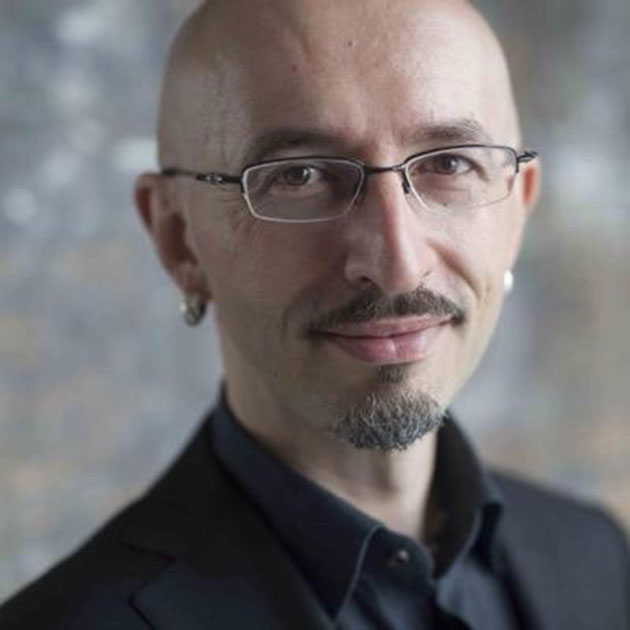
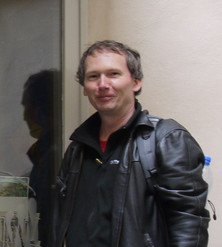
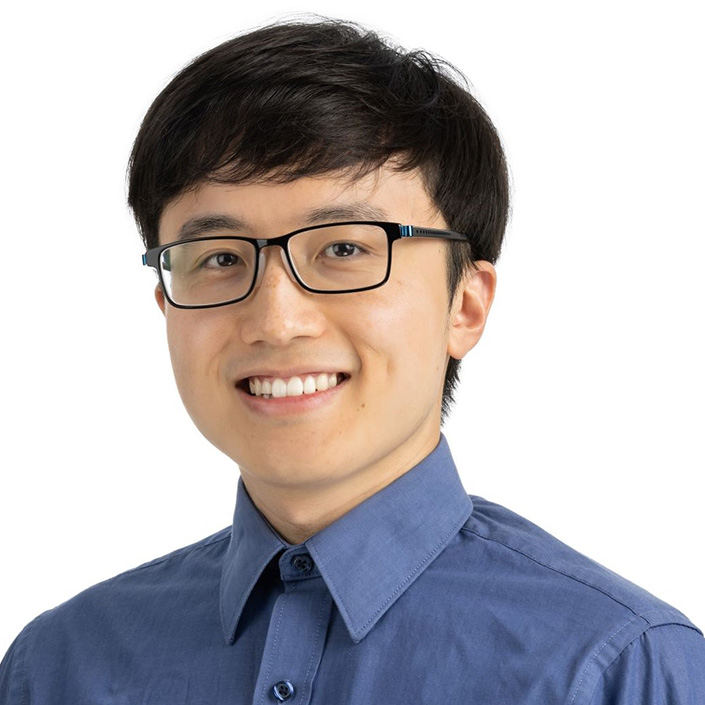
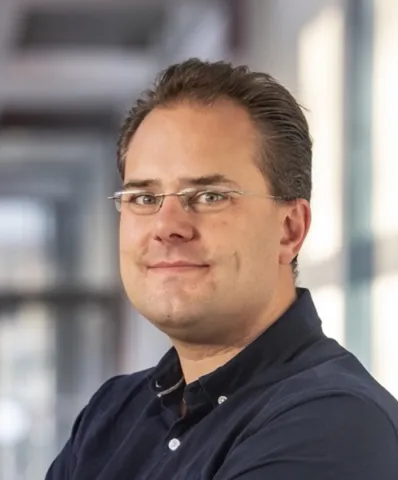
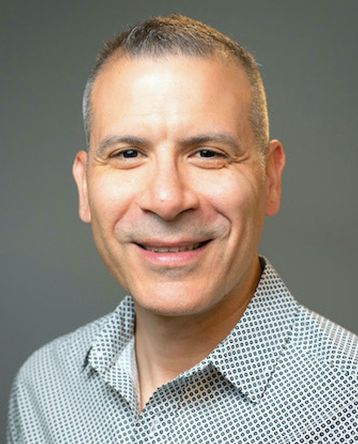
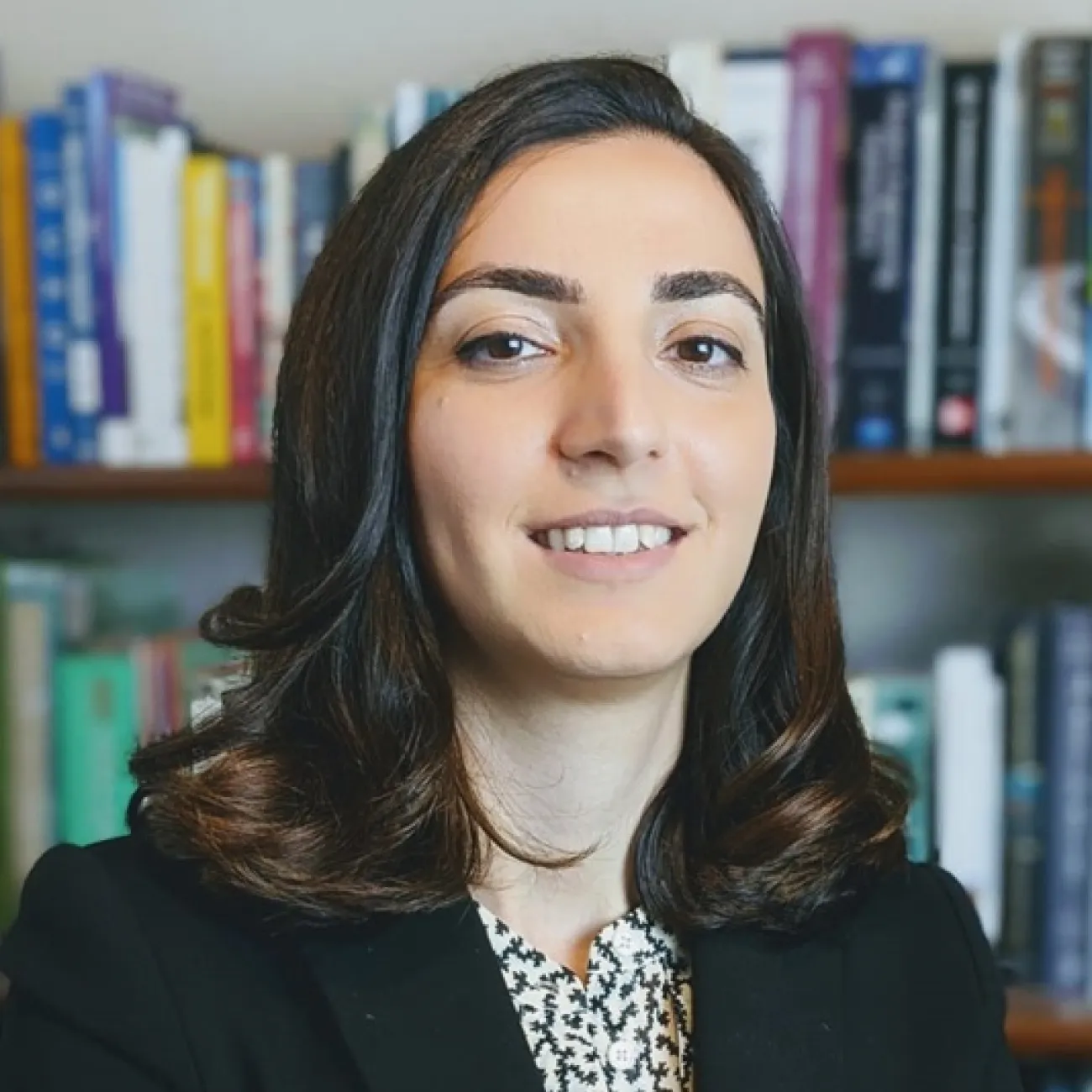
Antonio A. Casilli is a Professor of Sociology at Télécom Paris (Institut Polytechnique de Paris) and a researcher at the Interdisciplinary Institute of Innovation (i3) . He is an associate member of LACI-IIAC (formerly the Edgar Morin Center) at EHESS and serves as a Faculty Fellow at the Nexa Center for Internet and Society (Polytechnic University of Turin) since 2018. Research Focus: Digital labor, platform economy, AI ethics, and the social implications of technology Awards: Prix Étoiles de la SCAM, Prix Meilleur Documentaire de l'Année (Bangkok), selected as Nature Journal Top Science Pick His work analyzes how digital platforms reshape labor dynamics, privacy norms, and social inequalities. Recent studies explore global AI data work, including fieldwork in Latin America, Africa, and Europe. He advocates for ethical frameworks recognizing human labor behind automation. Media Engagement: Regular contributor to France Culture , Le Monde , Wired , and Rue89 . Authored En attendant les robots (2019) and Schiavi del clic (2020), investigating hidden digital labor structures.
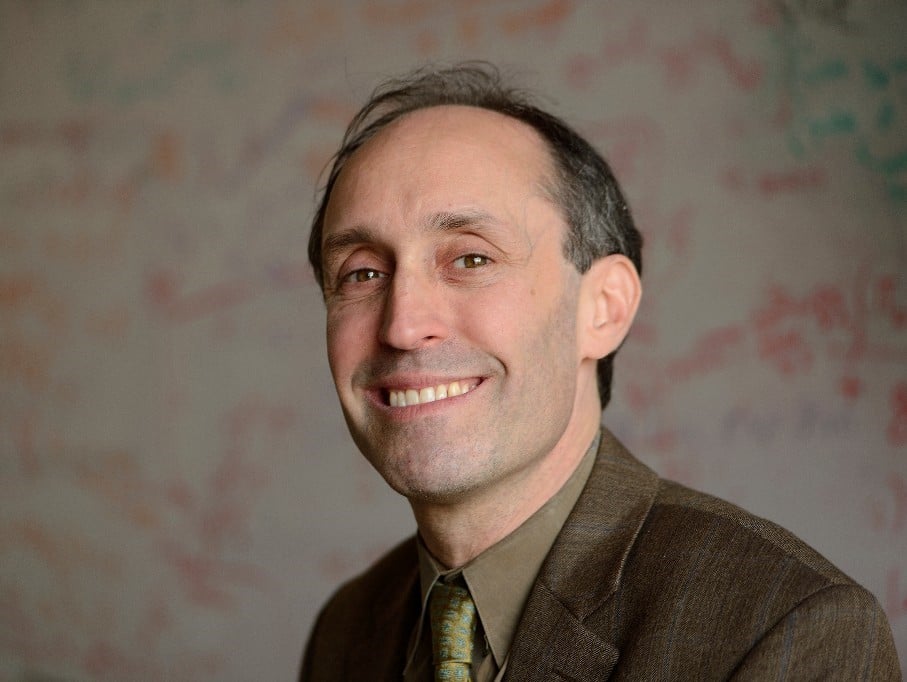
Jason Eisner is a Professor in the Department of Computer Science at Johns Hopkins University's Whiting School of Engineering, with a secondary joint appointment in Cognitive Science. He is affiliated with the Center for Language and Speech Processing (CLSP), the Human Language Technology Center of Excellence, and leads JHU's cross-departmental machine learning group. His research focuses on developing probabilistic modeling, inference, and learning techniques for linguistic structure. Eisner has authored over 100 papers in computational linguistics, particularly in parsing, grammar induction, machine translation, computational phonology, computational morphology, and weighted finite-state methods. He is the lead designer of Dyna, a declarative programming language for AI research that allows concise programs backed by efficiency tricks. Eisner's work centers on novel methods in NLP and machine learning, with emphasis on probabilistic modeling and inference in complex, structured settings. His research program combines computer science with statistics and linguistics to create statistical models that capture linguistic structure and develop efficient algorithms for applying these models to data with minimal supervision or through large pre-trained models. As an ACL Fellow, Eisner has made significant contributions to the field. His recent work (2023-2025) shows a strong focus on large language models, semantic parsing, controlled text generation, model interpretability, and privacy-preserving techniques, continuing his long-standing interest in the intersection of probabilistic modeling and linguistic structure. ACL Fellow He teaches courses including Natural Language Processing (601.465/665), Machine Learning: Linguistic and Sequence Modeling (601.765), Declarative Methods (601.325/425/625), and Selected Topics in Natural Language Processing (601.865). His advising focuses on research students through the Argo research group, with emphasis on fundamental research questions in NLP rather than immediate applied engineering.
Dr. Heather Culbertson is an Assistant Professor in the Department of Computer Science at the University of Southern California, leading the HaRVI (Haptics Robotics and Virtual Interaction) Laboratory. Her research focuses on designing haptic hardware and algorithms to create intuitive human-robot interactions through touch, emphasizing realism in virtual environments and social connectedness. Key areas include mediated touch, wearable haptic systems, and multisensory integration in VR/AR applications. The lab's work spans robotics, human perception modeling, and cross-disciplinary solutions for healthcare and immersive technologies. Research interests revolve around tactile feedback systems, social robotics, and the psychological impact of haptic interfaces. Recent work explores real-time haptic texture rendering, affective communication via touch, and motion platforms for VR. Culbertson's projects often integrate human factors early in design to ensure usability and immersion. Publications highlight advancements in haptics coding standards, drone-human interaction, and emotion regulation systems. Her contributions bridge engineering and cognitive sciences, addressing challenges in wearable tech, surgical training simulations, and assistive robotics. The HaRVI Lab collaborates across disciplines to advance tactile interfaces for virtual reality, social robotics, and medical applications.
Professor Amin Abbosh is a faculty member at the School of Electrical Engineering and Computer Science, University of Queensland. His research focuses on Medical Microwave Imaging and Millimeter-wave Engineering, with contributions to advanced imaging systems, antenna design, and communication technologies. He leads projects in electromagnetic medical sensing, including portable brain scanners and wearable diagnostic systems. His work integrates applied electromagnetics with AI-driven algorithms, addressing challenges in stroke detection, liver health monitoring, and deep vein thrombosis diagnosis. With over 16 patents and collaborations across biomedical and engineering domains, his research bridges clinical needs with cutting-edge electromagnetic techniques. Key projects include the development of low-cost healthcare monitoring systems and reconfigurable antennas for satellite communications. Research interests span medical imaging systems, antenna array design, and signal processing for healthcare applications. His team innovates in areas like phased arrays, dielectric property analysis, and non-invasive diagnostics. Recent advancements include synthetic microwave focusing techniques and self-supervised deep learning models for clutter removal in imaging. Publications highlight contributions in IEEE journals and conferences, emphasizing clinical applications and device prototyping. Collaborations with institutions like the University of Queensland’s medical faculty and industry partners ensure practical implementation of his research.
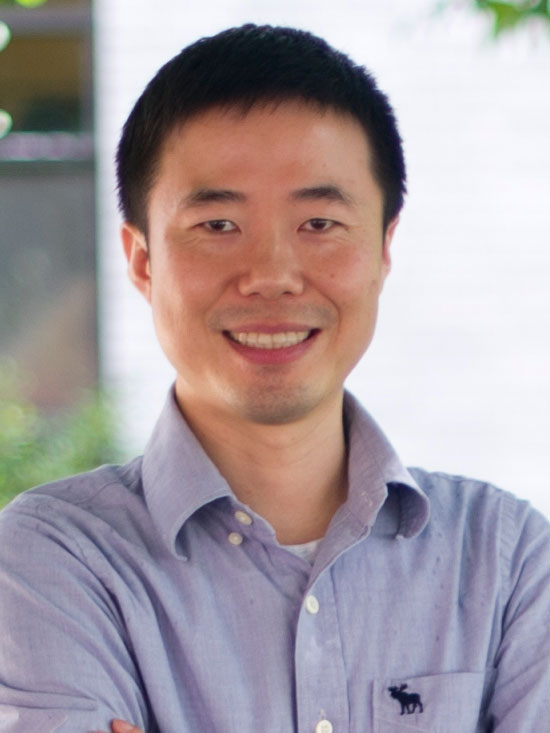
Xianguo Li is a Professor in the Department of Mechanical and Mechatronics Engineering at the University of Waterloo, Canada. He holds prestigious fellowships including Fellow of the Canadian Academy of Engineering (FCAE), Fellow of the Engineering Institute of Canada (FEIC), and Fellow of the Canadian Society for Mechanical Engineering (CSME). His primary research focuses on thermal fluid science, energy systems, and fuel cell technology, with a strong emphasis on green energy solutions. **Education**: 1989: Doctorate in Mechanical Engineering, Northwestern University, USA 1986: Master's in Mechanical Engineering, Northwestern University, USA 1982: Bachelor's in Thermal Energy Engineering, Tianjin University, China **Research Interests**: His work spans fuel cells, spray dynamics, fluid dynamics, heat and mass transfer, power generation, and renewable energy systems. He leads the Fuel Cell and Green Energy Lab, advancing innovations in energy storage, propulsion systems, and sustainable technologies. **Awards**: Outstanding Performance Award (University of Waterloo, 2007) Frank Walk Service Award (2001) Best Paper Award (2003) Recipient of the Simpson Fellowship (1988) **Advising & Grants**: He supervises graduate students and research associates in projects funded by NSERC, Auto 21, CFI, and industry partners. His lab collaborates on fuel cell durability, thermal management, and green energy policy initiatives. **Editorial Roles**: Founding Editor-in-Chief of the International Journal of Green Energy , Field Chief Editor of Frontiers in Thermal Engineering , and serves on dozens of editorial boards. He chairs major conferences like the International Green Energy Conference and the World Fuel Cell Conference series.
Yongmin Liu is a Professor in Mechanical and Industrial Engineering and Electrical & Computer Engineering at Northeastern University, and a member of the Cross-College Magnetics Center. He holds a PhD in Applied Science and Technology from UC Berkeley (2009), with earlier degrees from Nanjing University. His research focuses on nano-optics, metamaterials, plasmonics, and their applications in optical devices and systems. His interdisciplinary work bridges engineering, physics, and AI, with notable contributions to metasurface design and optical neural networks. Education: PhD, Applied Science and Technology, UC Berkeley (2009) M.S. and B.S., Physics, Nanjing University (2003, 2000) Research Interests: Nano-optics, nanoscale materials engineering, metamaterials, plasmonics, and applied physics. His group develops novel optical materials and devices for applications like super-resolution imaging, efficient light harvesting, and biomedical detection. Recent projects include AI-driven photonic materials design and meta-optical neural networks. Key Achievements: Recipient of the Søren Buus Outstanding Research Award (2024) NSF CAREER Award (2017) and ONR Young Investigator Award (2016) Elected SPIE Fellow (2023) and Optica Fellow (2023) Lab & Collaborations: Head of the Yongmin Liu Research Group, collaborating with institutions like Georgia Tech and Purdue University. Recent grants include a $1.5M NSF DMREF grant for AI-driven photonic materials and a $468K NSF grant for meta-optical neural networks.
Elaine M. Huang is an Associate Professor of Human-Computer Interaction at the Department of Informatics, University of Zurich, where she has served since 2010. She also leads the People and Computing Lab, focusing on the dynamic interplay between human practices and technological advancements. Her academic background includes: PhD in Computer Science, Georgia Institute of Technology (2006) Dr. Huang's research centers on human-computer interaction, examining the bidirectional relationship between technology and human practices. She is particularly known for her work on gender equality in technology, challenging assumptions about innate gender differences and investigating how AI systems may perpetuate biases. Her research also spans sustainable interaction design, mental health technologies, and chronic disease management, always emphasizing empirical data over intuition. Analysis of her recent publications (2023-2025) reveals a strong trajectory toward socially impactful HCI, with significant focus on health technologies (diabetes management, mental health), cultural sensitivity in design, and the ethical challenges of AI. Her methodology often involves field studies to understand real-world technology use, countering the industry's reliance on intuition. As head of the People and Computing Lab, Dr. Huang oversees a research group dedicated to designing and evaluating technologies that address complex human needs. The lab's work frequently involves co-design with diverse user communities to ensure relevance and inclusivity in technological solutions.
Lisa L. Wynn is Professor in the School of Social Sciences (Discipline of Anthropology) at Macquarie University in Sydney, Australia. She serves as Associate Editor of American Ethnologist (2022-2027) and previously held leadership positions including President of the Australian Anthropological Society (2020) and membership on the AAS Executive Committee (2018-2021). Wynn earned her PhD in 2003 from Princeton University's Anthropology Department, followed by postdoctoral positions at Princeton's Office of Population Research and Center for Health and Wellbeing. Her research program centers on gender, reproductive health technologies, sexuality, and religion, with continuous fieldwork in Egypt since 1998. More recently, she has expanded her work to examine ethics review bureaucracies, lay understandings of infectious disease, and young adult vaping behaviors in Australia. Her methodological approach combines deep ethnographic engagement with critical analysis of how power structures intersect with medical technologies and bodily experiences, particularly among marginalized communities. Analysis of her recent publications reveals an evolving trajectory that maintains her foundational interest in Middle Eastern contexts while increasingly addressing digital spaces (as seen in studies of online fatwas) and contemporary health crises (including pandemic responses and vaping culture), with consistent attention to bodily autonomy and reproductive justice. Her significant scholarly contributions have been recognized through multiple prestigious awards: Vice Chancellor's Teaching Excellence Award from Macquarie University (2009) Australian Award for Teaching Excellence (2012) OLT National Teaching Fellowship (2012-2014) Leeds Honor Prize from the Society for Urban, National, and Transnational/Global Anthropology (2008) Wynn actively mentors graduate researchers specializing in gender, sexuality, medicine and technology, with particular emphasis on sexual and reproductive health. Her research program has received substantial funding from the Social Science Research Council, Australian Research Council, Office of Learning and Teaching, and Hort Innovation. Notably, she co-led a major international project to develop multilingual sexual and reproductive health resources that have reached millions of users across 208 countries. She also created a free online ethics training program for humanities and social sciences researchers at Macquarie University. Through collaborations with Cambridge Reproductive Health Consultants and other partners, Wynn has successfully translated academic research into accessible public resources, including evidence-based information on medication abortion available in six languages (English, Spanish, French, Arabic, Turkish, and Farsi).
Josef Urban is a leading researcher at the Czech Institute of Informatics, Robotics and Cybernetics (CIIRC) , Czech Technical University in Prague, heading the ERC Consolidator project AI4REASON . Previously, he held positions as a postdoc at Radboud University Nijmegen and assistant professor at Charles University in Prague, where he co-founded the Prague Automated Reasoning Group. Education Ph.D. in Computer Science (2004), Charles University, Prague M.S. in Mathematics (1998), Charles University, Prague B.S. in Economics (1995), Charles University, Prague Research Interests Urban specializes in automated reasoning over large formalized knowledge bases, combining deductive theorem proving and inductive machine learning . His work aims to realize "strong AI" through formalized mathematics, particularly using systems like Mizar and the AI/TP Challenges . He advocates for computer-verifiable mathematics as a foundation for AI progress. Article Trends Urban's publications focus on integrating machine learning with automated theorem proving in systems like ENIGMA and BliStr . Key trends include semantic guidance for ATPs, premise selection in formal libraries, and automated proof compression via concept invention. Scientific Contributions Head of ERC Consolidator project AI4REASON Marie-Curie Fellow at University of Miami Co-founder of Prague Automated Reasoning Group Editor for Formalized Mathematics Advising and Grants Urban has advised numerous PhD and MSc students including Daniel Kuehlwein, Krystof Hoder, and Yutaka Nagashima. He has secured grants like the ERC Consolidator Grant and Marie-Curie Fellowship . Labs and Collaborations Urban leads the AI4REASON team at CIIRC and collaborates with the Foundations Group at Radboud University. He contributes to projects like Mizar TWiki and XML-based API for Mizar , aiming to create a semantic AI ecosystem for formal knowledge.
Kevin C. Zhou is an Assistant Professor in the Department of Biomedical Engineering at the University of Michigan. His research focuses on developing high-performance computational optical imaging systems with unprecedented spatiotemporal throughput, integrating advanced optical instrumentation with machine learning-driven algorithms to analyze big data in biology and medicine. His lab specializes in creating imaging systems capable of capturing high-resolution, high-speed, and high-dimensional datasets. Dr. Zhou holds a Ph.D. in Biomedical Engineering from Duke University (NSF GRFP Fellow) and a B.S. in Biomedical Engineering from Yale University (Barry Goldwater Scholar). Prior to joining U-M, he was a Schmidt Science Fellow and postdoctoral researcher at UC Berkeley. Key research areas include: High-throughput microscopy (gigapixel-scale systems) 3D tomographic imaging Light field and Fourier-based imaging modalities Machine learning for image reconstruction and analysis Biomedical applications in cellular/molecular imaging His recent work has advanced technologies like multi-camera array microscopes (MCAM/MCAS) and Fourier light field mesoscopes, achieving video-rate 3D imaging of freely moving organisms. These innovations enable applications in digital cytopathology, behavioral tracking, and high-content biological studies. Notable awards include the NSF Graduate Research Fellowship and Barry Goldwater Scholarship. His research has been featured in top journals and conferences with a focus on advancing optical imaging hardware and computational pipelines.
Professor Thomas Blumensath is a Professor of Signal and Image Processing at the University of Southampton and a Fellow at the Alan Turing Institute. He is the Academic Lead in Image Processing and Reconstruction at the University's μ-VIS X-ray Imaging Centre and Director of Research at the Institute of Sound and Vibration Research (ISVR). His research focuses on advanced algorithms for solving inverse problems in tomographic imaging, combining machine learning, optimization, and statistical methods. Key areas include X-ray tomography strategies, GPU-accelerated reconstruction, and multimodal imaging applications. Education: B.Sc. (Hons) Music Technology and Audio System Design, University of Derby (2002) PhD in Electronic Engineering (Bayesian Signal Processing), University of London (2006) Research Interests: Professor Blumensath's work spans theoretical and applied signal/image processing, with emphasis on tomographic imaging techniques. His current projects address efficient reconstruction methods, spectral X-ray CT, and applications in manufacturing and plant science. He collaborates with advanced imaging facilities like Diamond Light Source and ISIS neutron imaging beamline. Key Contributions: His research bridges computational methods (e.g., compressed sensing) with practical imaging challenges, including limited-angle tomography and stereo imaging strategies. He leads the National Research Facility for Lab X-ray CT and has developed the TIGRE reconstruction toolbox. Grants & Projects: Active funding includes EPSRC projects on tomographic sensitivity monitoring and CT-based manufacturing inspections. Completed projects cover constrained reconstruction, AM process verification, and industrial CT metrology. Awards: Alan Turing Institute Fellowship Teaching & Leadership: He teaches modules on machine learning, biomedical image processing, and robotics. Leads the BEng Control Engineering program at the Joint Education Institute with Harbin Engineering University. Labs/Teams: Active in the Signal Processing, Audio and Hearing research group (SPAH) and the Institute for Life Sciences. Oversees the μ-VIS X-ray Imaging Centre's research initiatives.
Levent Burak Kara is a Professor in the Department of Mechanical Engineering at Carnegie Mellon University (CMU), with a courtesy appointment in the Robotics Institute. He is a leading researcher in AI-driven computational design, additive manufacturing, and intelligent engineering systems, leading the Visual Design and Engineering Lab (VDEL) at CMU. Education: B.S., Mechanical Engineering, Middle East Technical University (1998) M.S., Mechanical Engineering, Carnegie Mellon University (2000) Ph.D., Mechanical Engineering, Carnegie Mellon University (2005) His research focuses on integrating machine learning, optimization, and geometric modeling to revolutionize engineering design and manufacturing. Key areas include topology optimization, CAD intelligence, digital twins, generative design, bioengineering, and electronic design automation. His work enables automation of traditionally labor-intensive design processes using deep learning and reinforcement learning. His recent publications reveal a strong trend toward physics-informed surrogate modeling, real-time simulation, manufacturability prediction, and AI-driven automation in mechanical, biomedical, and electronic systems. These works frequently appear in top journals such as Journal of Mechanical Design and Journal of Applied Mechanics , and at premier conferences like NeurIPS and DAC. Scientific Awards: National Science Foundation CAREER Award ASME Design Automation Society Young Investigator Award Google AI for Social Good Impact Scholar Kara advises several Ph.D. students and has secured significant funding from federal agencies such as the NSF and the U.S. Army Research Laboratory, as well as collaborations with industrial leaders including Cadence Design Systems and NVIDIA. His research is also supported by CMU’s NextManufacturing Center and the Critical Technology Initiative. He is actively involved in developing intelligent design systems that leverage AI to automate product design, optimize manufacturing processes, and improve medical diagnostics, particularly in oral cancer screening and organ preservation. His lab, VDEL, is a hub for innovation in AI-enabled engineering.
Dr Bahareh Zaghari (MSc, PhD, CEng, FHEA) is a Lecturer in the Electrical Power Engineering group at the University of Southampton's School of Electronics and Computer Science. Her research focuses on electrified aircraft systems, sensors with machine learning applications, electrical power systems, and nonlinear dynamics modeling. Current projects include acoustic sensing for temperature/flow measurement Co-design of electrical machines for aircraft electrification Research activities span hybrid-electric aircraft design (FutPrint50 Horizon project), fully electric aircraft development (EnabEl Innovate UK), and smart sensing systems for aerospace components. Industrial collaborations include KISTLER, iNetic, PALL Aerospace, Safran, ARUP, Embraer, and BAE Systems. Conference coordinator for IEEE Transportation Electrification Council's Electrified Aircraft committee Chair of IEEE/AIAA Electrified Aircraft Technology Symposium (2023) Panel moderator at AIAA Propulsion and Energy (2021) Her work demonstrates innovative applications of acoustic transducers in harsh environments, with contributions to temperature mapping, fault analysis, and energy harvesting systems. She currently supervises PhD student Shikhar Singh.
Dr. Gavin Mount is a researcher at UNSW Canberra , specializing in non-traditional security studies , ethnic conflict , and the sociopolitical implications of emerging technologies . His work bridges theoretical analysis with practical applications in conflict transformation and defense studies. Research Focus: Global politics of ethnic conflict, hybrid peace/war frameworks, and socio-political impacts of drone technology. Teaching: Courses like Ethnic Conflict in World Politics and Law, Force and Legitimacy , with a focus on military education and strategic studies. Publications: Recent work includes contributions to Thinking Swarms (2025) and Hybridity on the Ground in Peacebuilding and Development (2018). Grants: Leads the Curricula Integration of Student Wellbeing Resources project under HERDSA. Key Themes across his research include the intersection of technology and conflict, evolving defense paradigms, and pedagogical innovations in security studies.
Jan Oliver Borchers is a full professor of computer science and head of the Media Computing Group at RWTH Aachen University, where he holds the endowed Chair in Media Informatics and Human-Computer Interaction (Computer Science 10). He established his research group in 2003 and pioneered modern HCI academic research and teaching in Germany, becoming a leading lab in terms of archival publications at CHI, the top international conference in HCI. Before joining RWTH, he held faculty positions at Stanford University and ETH Zurich. His research focuses on Human-Computer Interaction with particular interest in new user interfaces for soft robotics, textile user interfaces, 3D printing and personal fabrication, augmented reality, wearable and tangible computing, interfaces for software development, deceptive patterns, and interactive guides and exhibits. He opened Germany's first Fab Lab in 2009 and has been instrumental in advancing digital fabrication and maker culture in academia. His work bridges theoretical HCI research with practical applications, as evidenced by his consulting for major companies including AirBus, Apple, ARD, Bayer, Children's Museum Boston, Daimler, Handelsblatt, OTIS, Scout24, TEDx, and Deutsche Telekom. His recent publications show a strong focus on deceptive patterns in UI design, textile interfaces, and the intersection of AI with human interaction. The research demonstrates consistent innovation in tactile interaction techniques, with numerous honorable mentions at top conferences like CHI. His lab has produced significant contributions to eyes-free interaction, textile computing, and the ethical implications of dark patterns, particularly regarding children's experiences with deceptive designs. IDC 2025 Best Work in Progress for research on children's assessment of deceptive designs CHI'25 Student Games Competition Winner for The Deceptive Dungeon RWTH-Wissenschaftsnacht 2024 Best Science Slam for Usability: 4 Prinzipien guter User Interfaces Multiple CHI Honorable Mentions spanning from 2008-2021 Best Note and Best Demo awards at ITS and UIST conferences Borchers has served in numerous leadership roles including heading the Computer Science Department's Examination Board (2015-2025), coordinating the department's public relations since 2010, and organizing the weekly Faculty Lunch since 2003. He is an active member of the ACM, SIGCHI, SIGCHI Germany, and GI, and introduced the Interactivity format to the CHI conference in 2005. His PhD thesis, A Pattern Approach to Interaction Design, became the first book to bring design patterns to HCI. The Media Computing Group under his leadership has developed significant expertise in physical computing, textile interfaces, and fabrication technologies, with a strong emphasis on both theoretical contributions and practical applications. His lab continues to push boundaries in interactive technologies while maintaining a strong ethical stance on user experience, particularly regarding deceptive design patterns.