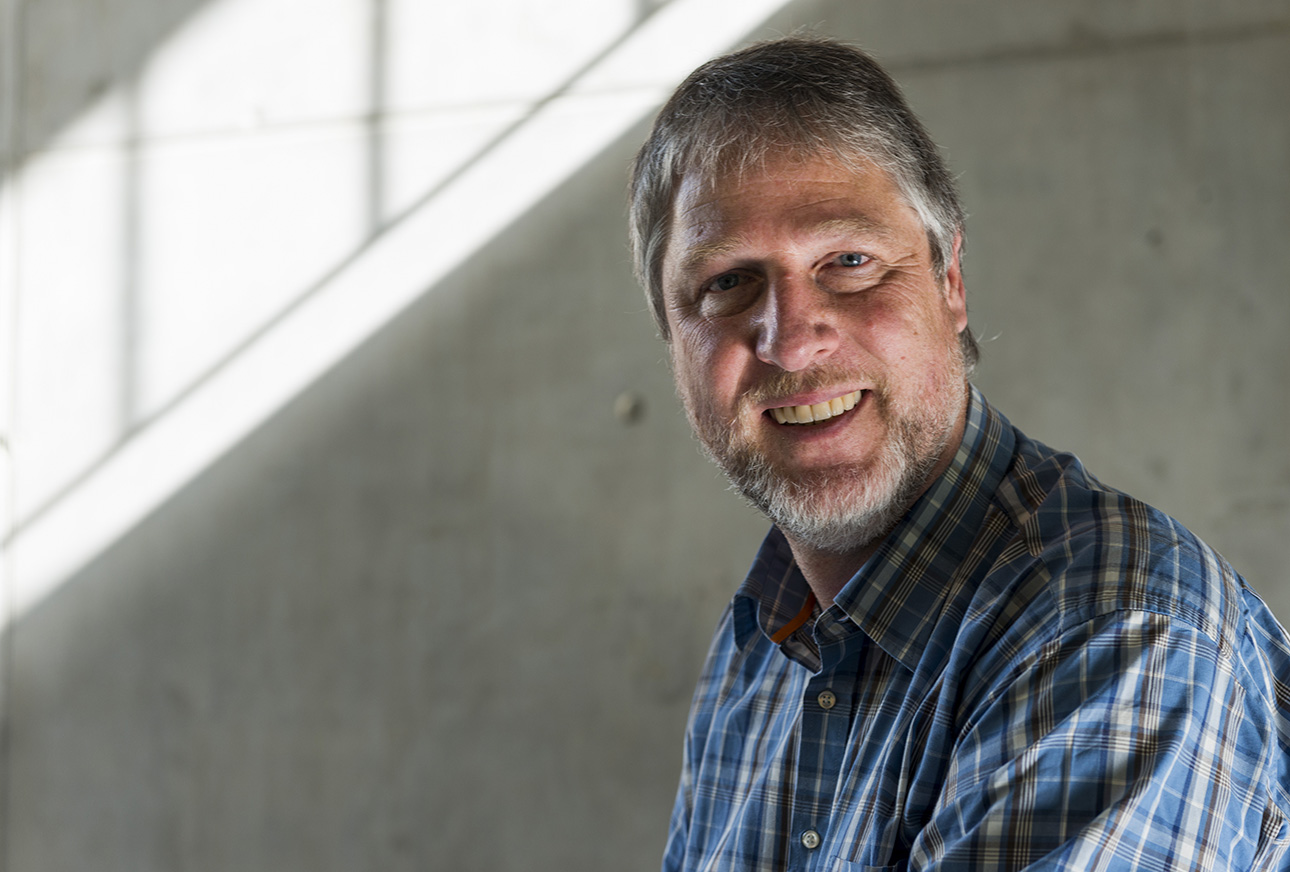
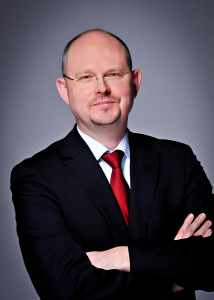
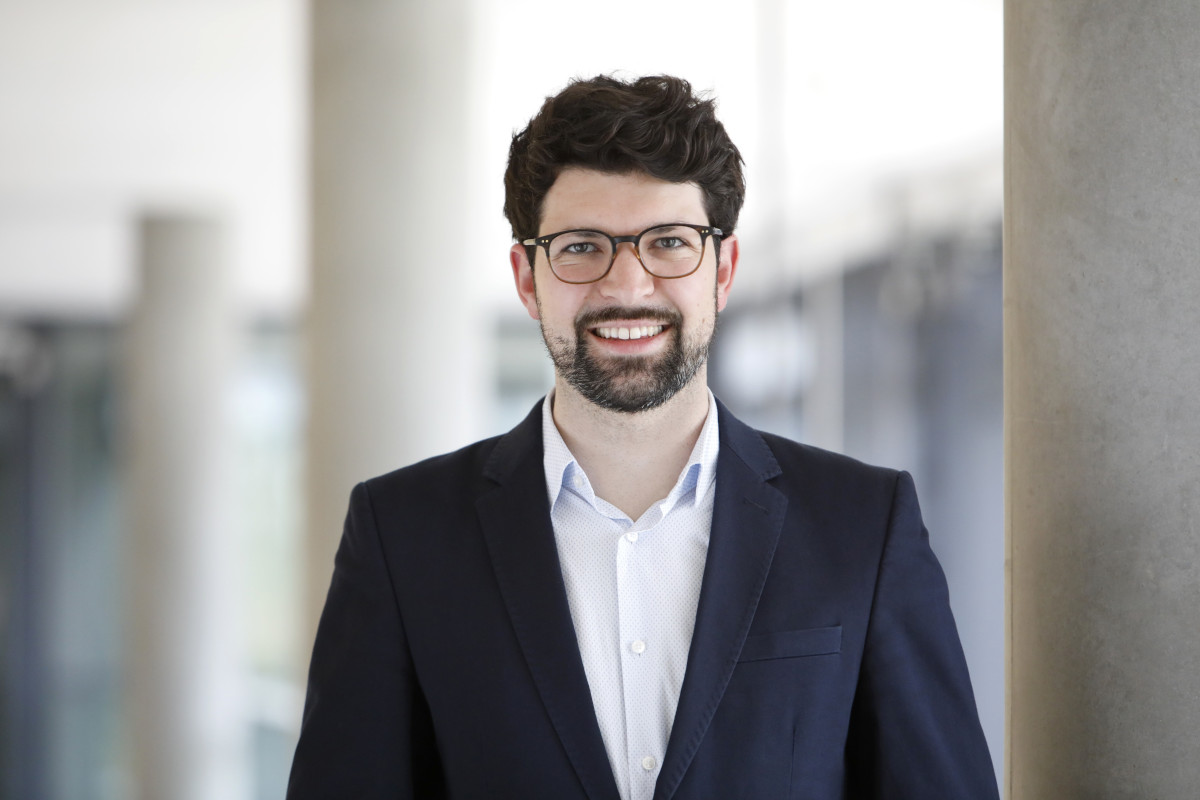
Professor Bernd Möbius is a leading academic in Phonetics and Phonology at the Department of Language Science and Technology, Saarland University. His research bridges phonetic theory with speech technology applications, focusing on text-to-speech systems, prosody modeling, and computational simulations of speech processes. Current research projects: DFG SFB 1102, C1: Information density and phonetic structure predictability DFG SFB 1102, C4: Slavic intercomprehension and surprisal theory (INCOMSLAV) Research Themes: Key areas include text-to-speech synthesis, speech prosody analysis, experimental methods in speech production/perception, information density in phonetics, and cross-linguistic studies of Slavic-Germanic languages. Scientific Contributions: Recent work explores Parkinson-induced dysarthria detection, breath noise acoustics, surprisal-driven speech behaviors, multilingual BERT models for idiomaticity, and perceptual consequences of acoustic adjustments.
Hans Beck serves as Professor of Greek History at the University of Münster (Westfälische Wilhelms-Universität) since 2018, with an additional appointment as Adjunct Professor in the Faculty of Arts at McGill University. His academic career includes previous positions as Professor of Ancient History and Director of Classical Studies at McGill University (2005-2018), Heisenberg Fellow at Goethe-Universität Frankfurt (2004-2005), and Research Assistant at the University of Cologne (1997-2004). Beck earned his academic training through doctoral studies at the Universities of Erlangen, Canterbury, and Cambridge (1989-1996), followed by a fellowship at the Center for Hellenic Studies in Washington, DC (2001-2002). His educational background reflects a strong international foundation in classical studies. His research spans multiple interconnected fields within ancient history, with particular emphasis on the history and culture of ancient Greece, historical geography of Greece, environmental studies of the ancient Greek world, political culture of the Roman Republic, and ancient historiography. Beck's work consistently explores themes of localism, federalism, and political structures across ancient societies, with notable contributions to understanding Greek city-states, regional identities, and comparative political systems. His approach often bridges geographical, historical, and cultural perspectives to examine how ancient communities organized themselves politically and maintained regional identities within larger frameworks. Analyzing his recent publications reveals a sustained focus on local political structures within broader contexts, particularly examining how Greek city-states maintained autonomy while participating in federal leagues. His work increasingly incorporates comparative approaches, connecting Greek political structures with those of Rome and even ancient China, reflecting his editorial work on cross-cultural studies. Beck demonstrates particular expertise in analyzing how physical landscapes shaped political organization and how religious practices reinforced regional identities. Fellow of the Royal Society of Canada (2018) Anneliese Maier Research Award from Alexander von Humboldt Foundation (2014) Heisenberg Fellowship from Deutsche Forschungsgemeinschaft (2004) Doctoral scholarship from German Academic Exchange Service (1995) Doctoral scholarship from Hanns Seidel Foundation (1994) Beck has supervised numerous doctoral students including Jordan Christopher (2022), Chandra Giroux (2021), Wentian Fu (2020), Rebecca Robinson (2017), Alex McAuley (2015), and François Gauthier (2015), covering diverse topics from ancient Qin and Macedon to cult practices in ancient empires. His academic leadership extends to directing research projects B3-49 'Belonging in/to Lakonia' and B3-40 'Localism and Religion in Ancient Greece' within the Excellence Cluster focusing on 'Religious Diversity and Legal-Political Unity.' As head of the project 'Belonging in/to Lakonia' and 'Localism and Religion in Ancient Greece,' Beck leads interdisciplinary research teams examining archaeological and historical evidence from the Sanctuary of Apollo at Amyklai and its surroundings. His work integrates textual analysis with material culture studies, creating comprehensive approaches to understanding ancient regional identities and religious practices. Beck's leadership in these projects demonstrates his commitment to bridging traditional disciplinary boundaries in classical studies.
Prof. Dr. Barbara Mittler is Professor of Sinology at Heidelberg University and founding co-director of the Heidelberg Centre for Transcultural Studies (CATS) and the Cluster of Excellence 'Asia and Europe in a Global Context.' Her research explores Chinese cultural policy, print media, musicology, visual culture, and transcultural studies. Mittler's scholarly contributions include groundbreaking work on Cultural Revolution culture, early Chinese print media (particularly women's magazines), and the transcultural flows of cultural production. Her current projects examine Mao as a global icon and comparative studies of Asian 'fathers of the nation.' Her publication record demonstrates consistent focus on cultural transmission mechanisms, with recent research developing transcultural frameworks for understanding cultural exchange and historical analysis. Publications reflect an interdisciplinary approach combining visual analysis, media studies, and historical methodology. Mittler has received numerous honors including the Fairbank Prize, Heinz-Maier-Leibnitz Prize, and memberships in the Leopoldina and Heidelberg Academy of Sciences. She leads major initiatives like the China-Schul-Akademie developing educational materials about China for German schools.
Dr. Fabian Schulz is a Senior Researcher in Ancient History at the University of Tübingen, where he works in the Department of History within the Faculty of Humanities. He leads a prestigious Junior Research Group under the Emmy Noether Programme of the German Research Foundation (DFG), titled 'Power and Influence: Influencing Emperors between Antiquity and the Middle Ages.' His academic profile also includes association with the Collaborative Research Center (SFB) 923 'Threatened Order - Societies under Stress' and active participation in the 'Tübingen Theosophy' research group. Previously, he contributed to the Heidelberg Academy of Sciences and Humanities project on John Malalas' Chronicle and the University of Tübingen's DFG project 'East and West 400-600 AD.' Dr. Schulz earned his PhD in Classics from Freie Universität Berlin (2006-2010), where he also served as a teaching assistant. During his doctoral studies, he was a Pensionnaire étranger at the École Normale Supérieure Paris. Prior to that, he completed an MA equivalent degree in Classics at Freie Universität Berlin, with time spent as a visiting student at the University of Oxford (1999-2005). His early career included teaching Latin and Greek at a grammar school in Lübeck (2006). His research specializes in power structures and influence mechanisms in ancient societies, with particular focus on how advisors shaped imperial decisions in Late Antiquity. He has made significant contributions to understanding councils of elders in Archaic Greece (especially the Spartan Gerousie), Byzantine chronography (particularly John Malalas' works), and the complex dynamics between Eastern and Western Roman empires during the 5th and 6th centuries. His methodological innovation lies in applying modern sociological models of interpersonal influence to historical analysis of ancient political culture, bridging literary representation with political reality in pre-modern monarchical states. Young researchers award for 'Ratgeber, Experten, Manipulatoren: Einfluss als Machtfaktor und Diskursobjekt in der Antike' As principal investigator of his Emmy Noether project, Dr. Schulz has secured substantial research funding from the German Research Foundation. His collaborative work includes multiple edited volumes on Late Antique history and Byzantine chronography, reflecting his strong international scholarly network. He currently serves as a deputizing member (non-professorial academic staff) on the faculty board of Humanities at the University of Tübingen. His research often intersects with contemporary concerns about power dynamics, political influence, and historical memory, as evidenced by his work on video game representations of ancient history. Dr. Schulz is an active contributor to the online commentary project on John Malalas' chronicle, specifically editing sections of Book XVIII. His work frequently involves detailed textual criticism and analysis of historical sources, with particular attention to how narratives are transmitted and reinterpreted across different cultural contexts. His scholarly approach combines philological precision with broader historical and sociological perspectives.
Prof. Dr. Teresa Sansour is a full Professor of Pedagogy and Didactics in Cases of Intellectual Development Impairments with Special Consideration of Inclusive Educational Processes at the Institute for Special and Rehabilitation Education, Carl von Ossietzky University of Oldenburg. She joined the university in April 2020 and has held leadership roles including Vice Director for Teaching at the Center for Teacher Education (since October 2021) and Deputy Institute Director (since April 2025). Her academic affiliations reflect a deep commitment to inclusive and special education. Her research focuses on educational interactions in the context of intellectual disabilities, inclusive subject didactics, the participation of people with complex disabilities, and the professionalization of educators and prospective teachers. Key research areas include inclusive literacy, art education, teacher motivation, and social integration. She leads significant funded projects such as Literary Texts in Simple Language (LiES) and Lighthouses for Participation , both aimed at enhancing inclusion for people with disabilities. The recent publications of Prof. Sansour span topics such as school absenteeism in autism, self-concept in intellectual disabilities, inclusive art education, and participation models. Her work demonstrates a strong interdisciplinary and applied focus, combining qualitative methods with pedagogical innovation. She frequently publishes in peer-reviewed journals and edited volumes on special education, inclusive didactics, and disability studies. Member, German Society for Educational Research (DGFE), Section Special Education Member, Network for Complex Disabilities e.V. Chair, Advisory Board of the Georg-Leffers-Stiftung Chair, Association for the Promotion of Pedagogical Rehabilitation and Social Integration of People in Risk Situations Board Member, German Interdisciplinary Society for Research Promotion for People with Intellectual Disabilities (DIFGB) Prof. Sansour actively contributes to academic leadership and teacher training. She serves as program coordinator for the Bachelor’s in Special Education and accreditation officer for the Special Education/Social Studies cluster. Her work includes advising on inclusive curricula, fostering research collaborations, and securing external funding for inclusive initiatives. She has not received explicitly mentioned scientific awards in the provided text. She is involved in multiple collaborative research teams and projects focused on inclusion, literacy, and disability rights.
Wolfgang Forster is a Professor of Civil Law, Comparative Legal History and Legal Philosophy at the University of Tübingen, where he has been teaching since 2011. He served as Dean of the Faculty of Law from October 2020 to September 2022. Prior to his appointment at Tübingen, he was Professor of Civil Law and Legal Philosophy at the University of Giessen from 2007 to 2011. He completed his habilitation at LMU Munich in 2005 with a thesis on insolvency law history and earned his doctorate in 2000 with research on Karl Christian Friedrich Krause's legal philosophy. Forster studied law and philosophy at the Ludwig Maximilian University of Munich from 1987 to 1992, supported by the German Academic Scholarship Foundation and the Bavarian Scholarship for Gifted Students. He passed his first state examination in law in 1992 and his second in 1995. Between 1995 and 2000, he served as a research assistant at KU Eichstätt/Ingolstadt before becoming a research assistant at FAU Erlangen from 2000 to 2003 and at LMU Munich from 2003 to 2007. His research focuses on Civil Law, particularly the general part of the law of obligations, contract law, and family law; German and Spanish legal history, especially regarding insolvency law; History of Canon Law; and Legal philosophy and history of legal philosophy, with special emphasis on Karl Christian Friedrich Krause's legal philosophy. His work bridges historical legal scholarship with contemporary legal theory, examining how historical legal concepts inform modern jurisprudence. Forster's approach combines meticulous historical research with philosophical analysis, revealing continuities and transformations in legal thought across centuries. His publications demonstrate a consistent focus on the intersection of legal history, philosophy, and practical application. Forster has published extensively on Krausist legal philosophy, Spanish legal history, insolvency law development, and historical aspects of family law. His work shows particular strength in analyzing how legal concepts migrate across national boundaries and historical periods, with recurrent attention to German-Spanish legal connections. Hermann Conring Prize 2010 (for his habilitation thesis) Max Weber Prize of the Bavarian Academy of Sciences (for his dissertation) Faculty Prize of the Faculty of Law of the LMU Munich (for his dissertation) Forster has received significant research funding, including publishing support from the German Research Foundation for his habilitation thesis. He co-organized the 40th German Legal Historians' Day in 2014 and was a co-applicant for the interdisciplinary research training group 'Ambiguity: Production and Reception' approved by the DFG in 2013. He has also served as a visiting professor at the University of Wisconsin Law School in Madison, USA. His work demonstrates strong institutional support and recognition within the German and international legal academic community.
Bonnie Honig, Nancy Duke Lewis Professor at Brown University, holds joint appointments in Modern Culture and Media and Political Science , with courtesy roles in Religious Studies and Theater and Performance Studies . Her scholarly work intersects democratic theory , feminist critique , and cultural analysis , examining how inherited political narratives shape collective action. Education: PhD (Johns Hopkins, 1989), MSc (London School of Economics, 11981), BA (Concordia University, 1980) Central to her research is a reexamination of classical texts like Sophocles' Antigone and Euripides' Bacchae to develop agonistic democratic models . Her Antigone, Interrupted (2013) challenges heroic readings of Antigone, proposing instead a collective feminist politics rooted in textual counter-interpretations. Public Things: Democracy in Disrepair (2017) argues for shared objects as democratic orientation devices , while Emergency Politics (2009) analyzes crisis responses beyond Schmittian frameworks. The 2021 dual publications A Feminist Theory of Refusal and Shell Shocked: Feminist Criticism After Trump extend these themes through Trump-era analysis and queer theoretical lenses . Scientific Awards: 2023-24 Guggenheim Fellowship 2012 David Easton Prize 2012 Okin-Young Award 2007-08 American Philosophical Society Fellowship 1994 Scripps Prize Affiliated with the American Bar Foundation and Digital Democracy Group at Simon Fraser University, Honig's teaching spans feminist theory , Politics and Film , and advanced seminars on Arendt . Her Shell Shocked analysis of Trump-era disaster patriarchy connects classical feminist frameworks to contemporary political crises.
Bénédicte Savoy (born May 22, 1972 in Paris) is a renowned French art historian and Professor of Modern Art History at the Technical University of Berlin since 2009. Since 2016, she has also held positions at the Collège de France in Paris (2016-2021) and in November 2024 was appointed to the 'Cátedra del Prado' visiting professorship at the Prado Museum in Madrid. She is internationally recognized as a leading expert on cultural property restitution, particularly regarding colonial-era art theft and looted artifacts. Her research focuses on the complex histories of cultural displacement, with particular emphasis on European museums' colonial collections. Savoy has pioneered critical approaches to provenance research and has been instrumental in reshaping global debates about museum ethics and restitution practices. Her work bridges art history, postcolonial studies, and cultural policy, challenging traditional museum narratives and advocating for more transparent and ethical approaches to cultural heritage. Savoy's publications form a cohesive intellectual trajectory examining how cultural property has been transferred, often forcibly, across borders and continents. Her recent work increasingly focuses on African cultural heritage in European collections, with detailed case studies of Cameroon and broader analyses of restitution politics. The themes of historical justice, museum transparency, and decolonization of cultural institutions run consistently through her scholarship. Gottfried Wilhelm Leibniz Prize (2016), Germany's most prestigious research award TIME 100 most influential people in the world (2021) Ritterin der französischen Ehrenlegion (2022) Deutscher Kulturpolitikpreis (2022) Berliner Wissenschaftspreis (2023) Clark Prize for Excellence in Arts Writing (2024) Prix Européen de l'Essai 2025 (2025) As co-author of the groundbreaking 2018 report on African cultural restitution commissioned by French President Emmanuel Macron, Savoy has significantly influenced international policy. Her work has secured major research funding, including collaborative projects with African scholars. She has led influential research teams examining colonial collections, most notably the seven-member team that produced the 'Atlas der Abwesenheit' documenting Cameroonian cultural heritage in Germany. Her advocacy continues to shape museum practices worldwide, pushing institutions toward greater accountability regarding their colonial-era acquisitions.
Prof. Dr. Henning Klöter is Professor of Modern Chinese Languages and Literatures at Humboldt University of Berlin (HU Berlin) and serves as Dean of the Faculty of Culture, Language and Education. He is affiliated with the Institute of Asian and African Studies and the Department of East Asian Studies. He has been a faculty member since 2015 and leads significant research in sociolinguistics, language planning, and Sinophone studies. His educational background includes studies in Sinology, German Studies, and Linguistics at the University of Trier, Capital Normal University (Beijing), Leiden University, and National Taiwan University. He earned his doctorate from Leiden University in 2003 and completed his habilitation at Ruhr University Bochum in 2010. Henning Klöter's research focuses on multilingualism, language planning, the history of Chinese linguistics in Europe—especially missionary and colonial linguistics—historical sociolinguistics, Overseas Chinese communities, and Taiwan Studies, with regional interests spanning the PRC, Hong Kong, Macao, Singapore, the Philippines, and Taiwan. His work often explores the ideological and political dimensions of language standardization and visibility in public space. Since 2023, he has been Chief Editor of the Journal of Asian Pacific Communication. His recent scholarly output reveals a strong trend in historical and sociopolitical aspects of Chinese language use, particularly across Sinophone regions. Themes include language policy divergence between Taiwan and the PRC, linguistic landscape analysis in Taipei, missionary lexicography, and the evolution of Chinese linguistic standards. His publications bridge historical documentation with contemporary sociolinguistic theory, emphasizing pluricentricity and ideological influences on language. Chief Editor, Journal of Asian Pacific Communication (since 2023) Principal Investigator, ChinGram (Erasmus+ project) Principal Investigator, EMHo (DFG Weave project) He has not received any explicitly mentioned scientific awards in the provided texts. Prof. Klöter is actively engaged in major research initiatives and editorial leadership, contributing significantly to the academic understanding of language in Chinese-speaking societies. He is involved in the Mori-Ōgai Memorial and contributes to the academic community through research projects, publications, and institutional leadership. His work often intersects with cultural memory, colonial history, and linguistic identity in East Asia.
Katrin Bromber is a German Researcher at the Centre for Modern Oriental Studies in Berlin, where she has led the research group "Progress and its Discontents: Ideas, Practices, Materiality" since 2014. Her career spans senior research roles at ZMO and academic teaching positions at the University of Vienna. Nationality: German. Language skills: Native German, fluent English/Swahili, moderate Amharic, good reading knowledge in French/Russian, basic Tigrinya. Habilitation (2009–): African Studies, University of Vienna PhD (1993): African Linguistics, University of Leipzig MA (1988): Swahili Studies, University of Leipzig Katrin Bromber's research interrogates intersections of body politics , sports history , Swahili linguistics , and Ethiopian modernity . Her work traces how physical culture, media representation, and colonial/imperial narratives shape national identities across Africa and Asia. Current focus: "Progress" as contested concept in Ethiopian and Gulf urbanism. Key article trends reflect her translocal methodology: 2017 studies on Ethiopian stadiums and fitness culture ; 2014-2013 publications analyzing East African military press , sports branding in the Gulf , and Swahili poetry ; 2007-2000 works on colonial linguistic politics , Indian Ocean slavery , and German colonial Swahili promotion . Recurring sub-fields: body as political text, translocal modernity, media historiography. Scientific Awards: Research Grant of the Berlin City Council (1999-2000): Gendered Slavery study Service to the Scientific Community: Chairwoman, Academic Association for Horn of Africa Studies (2012–) Editorial Advisory Board - Stichproben. Vienna Journal of African Studies (2015–) Editorial Advisory Board - Studies of Department of African Languages and Cultures (2015–) Teaching Experience: Textlinguistics, Mediacommunication, African Linguistics, Swahili (elementary/advanced), Swahili Literature, Swahili in Arabic Script at Leipzig, Humboldt-Berlin, Free Berlin, and Vienna universities Anthropology of the Body at Mekelle University Summer School Field Research: Tanzania (1993-2003): Swahili Poetry, Intellectual History Kenya (2005): Indian Ocean WW2 UAE/Bahrain (2009): Sports and Body Cultures Ethiopia (2009-2015): Sports, Body Politics
Prof. Dr. Sabrina Zajak serves as Head of the Consensus & Conflict Department at the Deutsches Zentrum für Integrations- und Migrationsforschung (DeZIM-Institut) and holds an adjunct professorship at the Faculty of Social Sciences, Ruhr University Bochum. A founding member of the Institute for Protest and Movement Research (ipb), she also serves on the board of Research Committee 47, 'Social Movements and Social Classes,' of the International Sociology Association. Her academic trajectory includes significant positions at Humboldt University Berlin, the Max Planck Institute for the Study of Societies Cologne, and the Social Science Center Berlin (WZB). Zajak's research centers on political sociology with dual emphases on consensus and conflict dynamics in plural societies. Her consensus research examines civil society engagement, refugee assistance networks, alliance formation, and everyday solidarity practices, while her conflict research analyzes protest movements, diversity challenges, and discrimination patterns. She has pioneered studies on transnational civil society alliances, particularly examining how social movements navigate national boundaries and build cross-border solidarity. Her recent publications reveal a decisive shift toward analyzing intersectional dynamics of race, migration, and social movements in European contexts. With significant attention to the Black Lives Matter movement's reception in Germany, her work demonstrates how global racial justice movements are adapted to local contexts. Her research increasingly addresses civil society responses to refugee crises, examining both supportive engagement and exclusionary practices, while also investigating structural barriers to diversity in German federal administration and cultural institutions. As a prolific academic leader, Zajak has served as (co-)editor for special journal issues including Development and Change (2017), Industrial Relations (2018), Social Movement Studies (2021), Competition and Change (2020), Moving the Social (2020), and European Cultural and Political Sociology (2022). Her department currently manages over 20 active research projects spanning discrimination experiences in Saxony, diversity in federal administration, Muslim youth association work, and violence protection in refugee accommodations, demonstrating the breadth and policy relevance of her research agenda.
Prof. Dr. Johanna Rahner serves as Professor of Dogmatics, History of Dogma and Ecumenical Theology at the Catholic Theological Faculty of the Eberhard Karls University of Tübingen since 2014. She also holds the position of Director of the Institute for Ecumenical and Interreligious Research at the same institution. Her research interests span a wide range of theological topics including: Biblical Hermeneutics for Systematic Theology (especially Christology), Ecumenical theology and its ecclesiological problem areas, the relationship between religion, culture, educational processes, politics and society, interaction of contemporary culture with worship and theology of the sacraments, theoretical foundations of dialogue between world religions in a globalized world, relationship between reason and faith, theology and philosophy, theology and natural sciences, patchwork religiosity and subjective religious pluralism, and religiosity of children and adolescents with special consideration of youth and cult literature and pop music. Prof. Rahner's publications demonstrate a consistent focus on contemporary challenges facing the Catholic Church, ecumenical dialogue, and the intersection of theology with modern culture. Her work frequently addresses the Second Vatican Council's implications for contemporary theology, the relationship between science and faith, and the practical application of theological concepts in interreligious contexts. She has made significant contributions to understanding eschatology, ecclesiology, and the practical application of theological concepts in interreligious contexts. Wissenschaftlicher Beirat des Kuratoriums zur Vorbereitung des Reformationsjubiläums 2017 Ökumenischer Arbeitskreis evangelischer und katholischer Theologen Editorial-Board der Ökumenischen Rundschau Wissenschaftlicher Beirat der Europäischen Melanchthonakademie, Bretten Societas oecumenica AG der deutschsprachigen katholischen Dogmatiker und Fundamentaltheologen Europäische Gesellschaft für Katholische Theologie. Deutsche Sektion e.V. AGENDA – Forum katholischer Theologinnen e.V. Prof. Rahner has been involved in several significant research projects including Moralische Urteilsfindung im säkularen Diskurs als Herausforderung für die christlichen Konfessionen, Intergenerationelle LehrerInnen-Ausbildung, Theorie und Praxis des interreligiösen Lernens, Kirche und Bildungsregime in Lateinamerika, Reformationsgedenken und Ökumene, and Grundfragen theologischer Anthropologie in Auseinandersetzung mit aktuellen naturwissenschaftlichen Modellen. She leads the Institute for Ecumenical and Interreligious Research, which serves as a hub for scholarly research on contemporary challenges in interfaith relations and ecumenical theology.
Christian Weigel serves as a Researcher at the Department of Ancient History within the Institute for Historical Science at the University of Bonn, a position he has held continuously since October 2016. His academic career includes prior roles as a lecturer (2014-2016) and research associate in the DFG-Graduiertenkolleg 1878 on pre-modern economic spaces (2013-2016), demonstrating deep institutional integration at Bonn. His educational foundation includes: Magister degree (2012) in Ancient History, Political Science, and Public Law from the University of Bonn Advanced studies (2005-2012) in Ancient History, Political Science, and Public Law Foundational studies (1999-2005) in Medieval/Modern History, Political Science, and Law Weigel's research interrogates Greek family structures through ancient novels while examining economic and social frameworks of antiquity. His focus on demographic patterns, ancient international law, and literary sources reveals innovative methodological approaches to social history. Recent work analyzes how ancient novels function as socioeconomic mirrors, particularly regarding slavery, migration, and gender dynamics in Greco-Roman societies. His publication trajectory (2015-2019) demonstrates consistent exploration of antiquity's socioeconomic textures through diverse lenses—from piracy in ancient fiction to Cold War-era science fiction's classical reception. This body of work establishes connections between ancient economic mentalities and modern cultural productions while maintaining rigorous historical analysis of demographic patterns and legal frameworks. As an active conference participant, Weigel has presented at major venues including the German Historians' Congress and German Sociological Association meetings. His teaching portfolio reveals substantive engagement with students through specialized courses on Homer's society, Roman slavery, Greek federalism, and ancient demographics, often incorporating field components like Adriatic coast excursions.
Hannes Schammann is Professor of Political Science with a focus on migration policy at the University of Hildesheim , where he leads the Migration Policy Research Group since 2018. His work bridges academic research and practical implementation through the Research and Transfer Center for Migration Policy , addressing migration, integration, and refugee policy challenges. In January 2025, he joined the German Council of Experts on Integration and Migration (SVR) as a scientific advisor. Research Focus: Schammann specializes in local authorities' scope for action in refugee-related migration, national migration policy analysis, and educational integration aspects. He co-authored the textbook Migration Policy (2021) and contributes to international journals like Journal of Refugee Studies and Journal of Ethnic and Migration Studies . Key Projects: He leads third-party funded initiatives including Match'In (algorithmic asylum seeker distribution), SOLDISK (solidarity discourses in migration), Country.Home.Future (rural integration), When Mayors Make Migration Policy (municipal EU influence). Expert Engagements: Schammann serves on editorial boards including Zeitschrift für Flucht- und Flüchtlingsforschung , and participates in advisory roles for institutions like the German Federal Ministry for Family Affairs and Robert Bosch Foundation . He also engages in public discourse through media appearances in Deutschlandfunk , ARD , and SWR regarding migration challenges.
Dr. Adrian Meier is a tenure-track Junior Professor for Communication Science at Friedrich-Alexander University Erlangen-Nuremberg (FAU), holding the Chair of Communication Science since February 2024. Previously, he served as Assistant Professor at the University of Amsterdam (2020-2021) and as a Research Associate at Johannes Gutenberg University Mainz (2015-2020), where he completed his doctorate summa cum laude in August 2020, an MA in Communication Science (2013-2015), and a BA in Journalism and Political Science (2010-2013). His research is conducted through the Junior Professorship for Communication Studies, part of the Institute for Labor Market and Socioeconomics (IAS) within FAU's School of Business, Economics and Social Sciences. Meier's research focuses on media usage and effects research, media psychology, and interpersonal communication, with particular emphasis on the consequences of digital communication for well-being, health, and self-regulation at the interface between work and leisure. His work investigates phenomena such as digital stress, procrastination, and digital communication in the home office. Methodologically, he specializes in in-situ surveys, digital behavioral data analysis, and AI-supported literature syntheses, with a strong commitment to theory-driven, media-psychological, and quantitative-empirical approaches. His research employs short-term longitudinal designs including diary studies and experience sampling, systematic literature reviews, and adheres to open science principles with pre-registration. Analysis of Meier's recent publications reveals a consistent focus on digital disconnection and its relationship to well-being, examining how temporary breaks from digital media can improve situational psychological states. His work innovates in measuring digital behavior beyond simple screen time metrics, exploring nuanced aspects of smartphone usage patterns, temporal dimensions in media effects, and the motivational factors behind digital disconnection. He has made significant contributions to understanding the complex relationship between social media use and mental health, particularly in adolescent populations, while challenging simplistic narratives about passive versus active social media use. Dordick Dissertation Award from ICA Communication & Technology Division Dissertation Prize from German Society for Journalism and Communication Studies (DGPuK) Best Paper Award at Annual Conference of the Section for Reception and Effect Research Editorial board member for Media Psychology, Journal of Media Psychology, and Mobile Media & Communication As an active researcher and educator, Meier supervises bachelor's theses and offers a range of courses in communication science. His research has been funded through prestigious grants including an ERC Starting Grant for his project 'Social Well-Being from Hybrid Interactions in Hybrid Work' (HYIHY), which received €1.5 million in funding. His work has established him as a leading voice in understanding the psychological implications of digital communication in contemporary society, particularly at the intersection of work and personal life in the era of hybrid work arrangements.