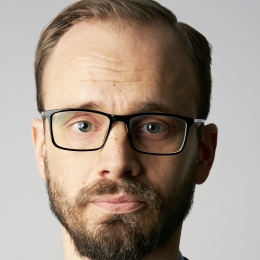
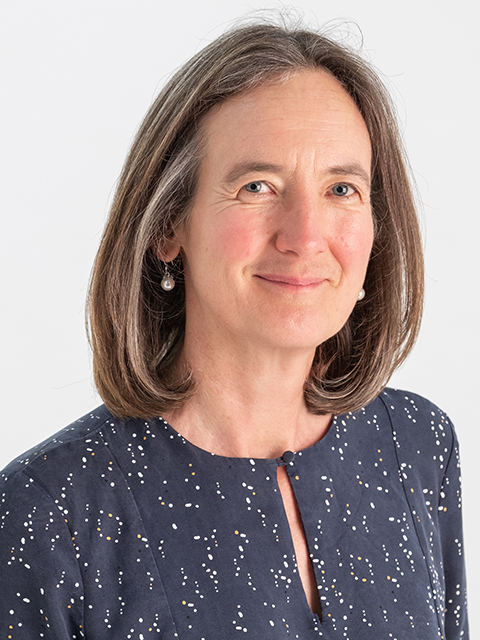
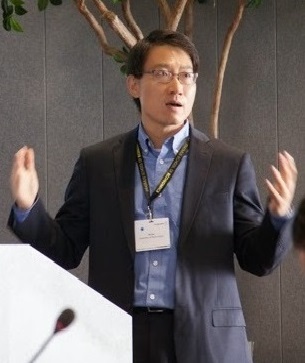
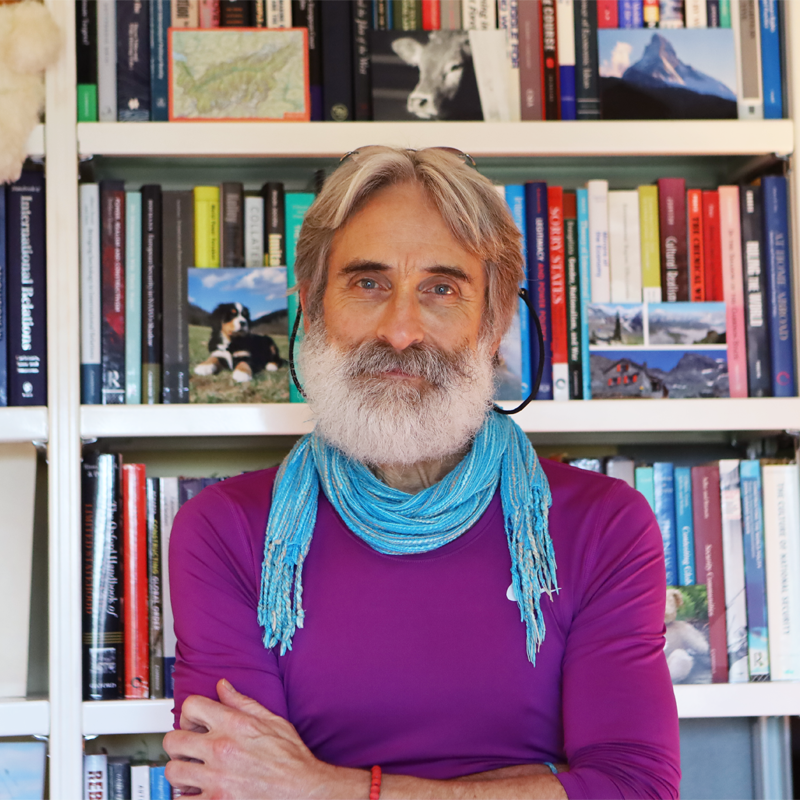
Dr. Corey T. Callaghan is an Assistant Professor in the Department of Wildlife Ecology and Conservation at the University of Florida . Based at the Fort Lauderdale Research and Education Center , his research focuses on global change ecology using big data from citizen science platforms like eBird and iNaturalist, combined with geospatial analyses and macroecological theory . Ph.D. (2019) from UNSW Sydney M.S. (2015) from Florida Atlantic University B.S. + B.S. (2013) from Canisius College His work examines urban ecology , including how species traits influence urban tolerance across birds, amphibians, and butterflies. He develops adaptive sampling frameworks to optimize citizen science data collection while addressing biases. Current projects analyze human-nature interactions through citizen science participation, secondary data in photographs, and machine learning for biodiversity monitoring. He actively contributes to conservation strategies for urban biodiversity and data-driven restoration efforts . Recent publications highlight his expertise in cross-taxa comparisons , continental-scale analyses , and ecosystem service quantification . He leads the Global Ecology Research Group at the University of Florida, emphasizing collaborative science and open-source methodologies .
Azizjon ALIMOV is a Full Professor at IÉSEG School of Management (University of Lille, France), specializing in Corporate Finance, Mergers and Acquisitions, and Law and Finance. He holds a Ph.D. in Finance from the University of Oregon (2007) and an MBA from Central Michigan University (2001). His HDR (Habilitation) in Management Sciences was awarded by the University of Lille in 2023. His research focuses on corporate governance, cross-border M&A dynamics, and the interplay between legal frameworks and financial decision-making. Key themes include intellectual property rights' impact on corporate debt costs, product market competition effects on corporate cash holdings, and government borrowing influences on acquisition strategies. His work frequently examines global contexts, with studies spanning North America, Asia, and Europe. Notable publications include analyses of IPO staging mechanisms (2024), managerial discipline through trade liberalization (2023), and the role of labor protection laws in loan contracting (2015). His recent work emphasizes reproducibility in management science methodology (2023) and cross-border regulatory challenges in M&A. No scientific awards are explicitly listed; however, his extensive publication record reflects sustained academic contributions. He has advised students across institutions including City University of Hong Kong and the Sauder School of Business, though specific advisee names are not documented here. His professional experience includes roles at the University of Arizona (2008–2010), California State University (2007–2008), and as an HSBC Visiting Assistant Professor at the University of British Columbia (2016–2018). He currently leads the Finance Track at IÉSEG, contributing to programs like the Grande École Master’s in Finance and MSc Corporate Finance courses.
Emily Hannum is a Professor of Sociology and Education at the University of Pennsylvania's College of Arts & Sciences, where she also serves as Associate Dean for Social Sciences. She is affiliated with the Population Studies Center, Center for the Study of Contemporary China, Graduate School of Education, and Penn Development Research Initiative. Education: PhD in Sociology from University of Michigan (1998) Research Focus: Poverty and child welfare, gender and ethnic stratification, sociology of education Projects: Gansu Survey of Children and Families, climate-environment-childhood inequalities in LMICs Workshops: Co-organizer of Penn Education and Inequality Workshop Her research explores childhood poverty in China, demographic impacts on education systems, and climate risks affecting children's welfare. She investigates environmental hazards, educational disparities, and family separation effects across China, India, and low/middle-income countries. Recent publications analyze educational expansion in East Asia, climate crisis impacts on child health, and gender disparities in Latin America. She directs longitudinal studies on rural poverty and collaborates on cross-national projects related to environmental and educational equity. Scientific awards include the Stanley I. Sheerr Term Professorship in Social Sciences.
Karl Gustafsson is a Professor at Stockholm University within the Department of Economic History and International Relations. His work bridges security studies , collective memory , and digital research methods in international relations. Current Role: Professor of International Relations, Stockholm University Previous Positions: Post-Doc at Lund University, Researcher at Swedish Institute of International Affairs Visiting Appointments: University of Tokyo, Osaka University, Keio University, Academia Sinica, Nordic Institute of Asian Studies Research Focus: Karl specializes in memory politics , ontological security , and anxiety-driven international dynamics , particularly in Sino-Japanese relations and digital platforms . His studies explore how historical narratives and online memory construction influence state identity and policy. Awards & Grants: Recipient of the Wang Gungwu Prize (2014) and Stockholm University Association’s award (2011). Holds Swedish Research Council and Marianne & Marcus Wallenberg Foundation grants for projects on apologies in international politics and digital memory in East Asia . Publications: His work appears in journals such as International Studies Quarterly , European Journal of International Relations , and Memory Studies , addressing topics like narrative power in East Asia, anxiety’s role in policy change , and digital humanities applications in IR.
Prof. Dr. Claudia Peus is a full Professor of Research and Science Management at the Technical University of Munich (TUM) School of Management , serving since May 2011. She holds executive roles as Founding Director of the TUM Institute for LifeLong Learning (TUM IL3) since December 2019 and Executive Vice President for Talent Management and Diversity since October 2017. Her career spans visiting positions at MIT's Sloan School of Management and Harvard University, alongside her habilitation (2011) and PhD (2005) from LMU Munich. Current affiliations: TUM School of Management, TUM IL3, RWI – Leibniz Institute for Economic Research Research focuses: Leadership development in the digital age, diversity in organizations, ethical leadership, and research organization management Recent research trends analyze digital leadership dynamics, gender-decoded recruitment practices, robotic leadership interfaces, and neurophysiological mechanisms in leadership behavior. Her 2025 work on moral careers and 2024 resource-based absorption theory highlight evolving themes in organizational psychology. Scientific honors include: Highly Cited Research Award, Leadership Quarterly (2016) Emerald Citations of Excellence (2016) Best Teaching Award, TUM School of Management (2014) Academy of Management Symposium Award (2010) Bayerische Landesbank Wissenschaftspreis (2006) Prof. Peus advises organizations on diversity and talent management. She was recognized as one of Germany's Most Inspiring Women (2020) and leads projects like FührMINT, ForGenderCare, and the TUM Neurophysiological Leadership Lab (NeLeLab).
Dr. Soohyun Lee is a Senior Lecturer in Korean and East Asian Political Economy at King's College London, based in the Department of European & International Studies within the School of Politics & Economics. She holds a BSc from Ewha Womans University (South Korea), an MSc from the London School of Economics, and a DPhil from the University of Oxford. Affiliations: European Politics and Society Research Group King’s Korea Initiative Her research focuses on the comparative political economy of welfare states, particularly in East Asia and Europe, with an emphasis on labor market dualization, social policy reforms, and family policies. She has explored how countries address welfare challenges and the conditions for successful welfare state reforms. Her work has been published in leading journals such as World Politics , Comparative Political Studies , and Journal of Contemporary Asia . Dr. Lee teaches courses on the political economy of East Asian development, welfare state models, and capitalism. She supervises PhD students on topics related to welfare states, labor markets, and East Asian political economy. Grants & Projects: Learning to Reform the Welfare State and Labour Market: Korean Labour Market and Social Policy-Making in Comparative Perspective (Korea Foundation, 2020–2022) Welfare Reform and Social Progress in South Korea: Effective Social Policies for a Low-Fertility and Ageing Society (Korea Foundation, 2019–2020) Welfare States in Transition: International Policy Lessons for South Korea (Korea Foundation, 2018–2019) Recent News & Events: Her work on economic insecurity and right-wing populism was highlighted in news outlets (2024). Contributed to discussions on fertility and job security (2023). Presented at the SASE Annual Conference (2022).
Katherine V. Gough is Professor of Human Geography at Lund University, Sweden, with a 30-year research focus on housing/home, work/entrepreneurship, youth/elderly geographies, mobility, urbanisation, and climate change across Africa, Latin America, and Asia-Pacific. She collaborates with Loughborough University's Clear Climate team on extreme heat mitigation in Ghana and leads the 'Trocha de Paz' project for Colombia's 'Total Peace' agenda. Research Themes Extreme Heat in Ghana Peacebuilding in Colombia Rural-Urban Dynamics Her multidisciplinary approach bridges academia, policy, and communities through projects like VEWEC, REFIT, and Paz Alto Cauca. Current work emphasizes: Climate-resilient housing design Post-conflict governance Informal sector innovation Scientific Engagement: British Academy funded VEWEC and REFIT projects Principal Investigator for Trocha de Paz (Colombia) Her collaborative research strengthens stakeholder networks in: West African urban livelihoods Colombian territorial peacebuilding Tropical climate adaptation
Zhi Da is the Howard J. and Geraldine F. Korth Chair in Finance and Professor of Finance at the University of Notre Dame , Mendoza College of Business, Department of Finance. He completed his Ph.D. in Finance at Northwestern University’s Kellogg School of Management (2006), preceded by an M.Sc. in Financial Engineering from the National University of Singapore (2001) and a B.B.A. with First-Class Honors (1999) from the same institution. Holding editorial roles at Journal of Finance , Management Science , Review of Financial Studies and several other top journals, he is a leading voice in empirical finance research. Education Ph.D. in Finance, 2006 – Kellogg School of Management, Northwestern University M.Sc. in Financial Engineering, 2001 – National University of Singapore B.B.A. (1st Class Honors), 1999 – National University of Singapore Research Interests Zhi Da’s scholarship sits at the intersection of asset pricing , behavioral finance , and market microstructure . He investigates how investor attention, institutional trading, liquidity frictions, and information flows jointly determine the cross-section of expected returns. His work delves into retail margin trading, the role of pension-fund flows in exchange-rate dynamics, the informational content of SEC filings, and the efficiency of short-selling mechanisms. By combining large-scale data analytics, textual analysis, and structural modeling, he uncovers novel predictors of returns ranging from presidential approval ratings to real-time attention measures. Recent projects explore fractional trading ’s impact on price efficiency, hedging demand as a driver of intraday momentum, and the hidden effort problem in delegated portfolio management. These themes collectively advance our understanding of limits to arbitrage and the formation of extrapolative beliefs. Publication Landscape Spanning 2025 back to 2009, his 15 most recent articles in Journal of Finance , Review of Financial Studies , Management Science , Journal of Financial Economics , and Journal of Financial and Quantitative Analysis converge on three broad motifs: (1) micro-level trading frictions—liquidity costs, margin requirements, and short-selling constraints; (2) macro-finance linkages—exchange rates, fiscal policy, and global capital flows; and (3) information economics—attention allocation, media analytics, and regulatory disclosures. The collective evidence demonstrates that seemingly small trading or informational frictions aggregate into large, persistent cross-sectional return predictability. Honors and Awards 2017 William F. Sharpe Award for Best Paper, Journal of Financial and Quantitative Analysis Lead-article distinctions in Journal of Finance , Review of Financial Studies , and Management Science Featured coverage in SmartMoney and CNBC Teaching & Mentorship At Notre Dame’s Mendoza College, Professor Da teaches Investments (undergraduate and MBA) and Fixed Income Securities , integrating cutting-edge research insights into the curriculum. While specific advisees are not listed, his extensive co-author network (22+ recurring collaborators) attests to a vibrant mentoring environment. Laboratory & Data Resources He publicly distributes the NAT (Net Arbitrage Trading) dataset, a stock-quarter panel of arbitrage positions used in Chen, Da & Huang (2019). This resource has become a standard tool for researchers studying arbitrage capital movements.
Jeffrey T. Checkel is a Full-time Professor in the Department of Political and Social Sciences at the European University Institute (EUI). He joined EUI in 2020 and previously held positions at Simon Fraser University, the University of Pittsburgh, and the University of Oslo. He earned his PhD in Political Science from MIT and a first degree in Applied Physics from Cornell University. His research focuses on international relations theory, qualitative methods, and identity formation. Key areas include constructivism, international institutions, civil war dynamics, and processual methods. He teaches courses on IR theory, qualitative methods, and philosophies of social science. Checkel's recent work explores 'Institutions at Bay? Regional Integration and Identity,' analyzing how regional organizations shape identity through local and national dynamics. He is Co-Editor-in-Chief of QMMR: Qualitative and Multi-Method Research and President of the APSA Qualitative and Multi-Method Research Organized Section. Education: PhD in Political Science (MIT), B.S. in Applied Physics (Cornell University) Research Interests: Identity formation, process tracing, constructivism, international institutions, civil war, qualitative methodologies. He advises numerous PhD students and post-doctoral fellows, leading working groups on IR theory and qualitative fieldwork. His publications span over 99 works, with a focus on bridging theoretical and methodological divides in social science.
Chad E. Hart is a Professor in the Department of Economics at Iowa State University (ISU), specializing in agricultural economics and international trade policy. His research focuses on WTO agricultural commitments, crop insurance, biofuel policy, and commodity market dynamics. Hart holds a Ph.D. (1999) and B.S. (1991) in economics from ISU and Southwest Missouri State University, respectively. He has served in roles at ISU’s Center for Agricultural and Rural Development (CARD) and the Food and Agricultural Policy Research Institute (FAPRI), examining trade policies and energy-agriculture intersections. Hart has received notable awards, including the CALS Dean’s Citation (2020) and Exemplary Faculty Mentor Award (2016). His work bridges academic research and practical extension, addressing issues like trade disputes, commodity pricing, and agricultural sustainability. Hart’s insights frequently inform USDA outlook reports and policy analyses, with a focus on Iowa’s agricultural economy. Labs/Teams: Active in CARD and FAPRI, contributing to interdisciplinary research on agricultural policy and market dynamics.
Dr. Ly Fie Sugianto is an Associate Professor in the Department of Accounting at Monash Business School, Monash University. Her research focuses on the integration of data analytics, artificial intelligence, and machine learning in accounting and business systems, with applications in the energy sector and organizational behavior. Monash Business School, Monash University Department of Accounting Specialization: Accounting Information Systems, Data Analytics, AI Her research interests span Accounting Information Systems , Agent-Based Simulation , Decision Support Systems , and Technology Adoption . She applies computational methods to study competitive dynamics in deregulated electricity markets and the impact of digital tools on employee well-being and organizational resilience. The recent publications reflect a strong trend in using AI and simulation to analyze complex socio-technical systems, particularly in energy markets and leadership dynamics. Keywords across her work include agent-based modeling , data analytics , servant leadership , and enterprise social media , indicating interdisciplinary research at the intersection of information systems, management, and public policy. Her scientific awards include competitive grants from the ARC (SPIRT/Linkage) , the Australia Indonesia Governance Research Partnership (AIGRP) , and the Sumitomo Foundation . ARC Grant: Dispatch Optimisation in the Australian National Electricity Market Sumitomo Foundation: Technology Use and Employee Well-Being AIGRP: Governance and MSME Resilience during Pandemic Dr. Sugianto has advised research projects and collaborated with industry partners such as Western Power , Ecogen Energy , and AEMO . She is currently accepting PhD students and leads externally funded research initiatives. Her work contributes to UN Sustainable Development Goals related to industry innovation and responsible consumption. She is affiliated with research teams focusing on intelligent decision support systems and digital transformation in business , with active collaborations in Australia and Indonesia.
Ana Marques is a Visiting Professor at Norwich Business School (University of East Anglia), specializing in accounting and quantitative methods. She previously served as head of research at the Nova School of Business and Economics in Lisbon and held visiting roles at the Indian Institute of Management Bangalore. Her academic background includes a PhD in Accounting from the University of Texas at Austin, a Master's in Management from Instituto Superior de Gestão (Portugal), and a 5-year Licenciatura in Management from the same institution. Her research focuses on non-GAAP earnings disclosures, corporate governance, ESG/CSR, and voluntary disclosures. Key funding includes a €80,000 Marie Curie grant and over €120,000 from Portugal's Foundation for Science and Technology. She has published in top journals like Review of Accounting Studies and European Accounting Review . Marques holds editorial roles at European Accounting Review and Accounting in Europe , and serves as Editor-in-Chief of the EAA's Accounting Research Center. She has organized major conferences like JIAR 2023 and the Lisbon Accounting Conference, and contributes to professional bodies such as the American Accounting Association (AAA) and European Accounting Association (EAA). Her work addresses disclosure strategies, sustainability assurance, and regulatory impacts, with recent focus on gender diversity policies and ESG-investment linkages. Research outputs emphasize global accounting practices and regulatory effectiveness across diverse sectors.
Clio Andris is an Associate Professor at Georgia Tech, jointly appointed in the School of City and Regional Planning and the School of Interactive Computing. She directs the Friendly Cities Lab, focusing on mathematical models of social networks applied to urban planning, transportation, and geography. Her work integrates spatial analysis with visualization, emphasizing interdisciplinary collaboration. Education and Career: Andris earned a PhD in Urban Information Systems from MIT (2011), where she was an NDSEG Fellow. She held postdoctoral positions at Singapore-MIT Alliance for Research and Technology and the Santa Fe Institute. Prior to Georgia Tech, she was a faculty member at Penn State’s Department of Geography, affiliated with the GeoVISTA Center. Research Focus: Her research bridges social networks, geovisualization, and urban informatics. Key areas include spatial social network analysis, GIS applications for urban policy, and the impact of digital tools on civic engagement. She has developed innovative visual analytics tools like SNoMaN and ROBIN to democratize spatial data exploration. Awards: She received the NSF CAREER Award (2021) and NDSEG Fellowship (2011). Her lab is affiliated with the Center for Spatial Planning Analytics and Visualization (CSPAV) and the Information Visualization Lab. Labs and Collaborations: The Friendly Cities Lab focuses on socially just urban design through computational methods. Her work addresses issues like food security networks, pandemic impacts on biodiversity, and community mapping for activism. Grants and Outreach: Her NSF-funded projects emphasize public good applications, such as real-time pandemic risk communication and educational tools for migration data. She actively collaborates with non-profits and policymakers to translate research into actionable urban strategies.
Adam Bonica is an Associate Professor in the Department of Political Science at Stanford University . His research integrates data science and politics , focusing on money in politics , campaigns and elections , judicial politics , and political methodology . Research Interests : Data Science, Political Ideology, Campaign Finance, Judicial Polarization, Quantitative Modeling Contact : Encina Hall West, Room 307, Stanford, CA 94305-6044 | Email : bonica@stanford.edu | Phone : (650) 725-7987 His work has been published in leading journals such as the American Journal of Political Science , Political Analysis , Journal of Economic Perspectives , Journal of Law, Economics, and Organization , and JAMA Internal Medicine . Bonica co-authored The Judicial Tug of War , which explores the politicization of the American judiciary. He has developed comprehensive databases like DIME (Database on Ideology, Money in Politics, and Elections) to advance research on political ideology and campaign finance. Recent publications include analyses of ideological persuasion in U.S. elections, judicial reform dynamics, and supervised machine learning applications in political methodology. His research spans topics such as clerk hiring as ideological indicators , professional networks in fundraising , and polarization trends among physicians and legal professionals .
Professor Ana Mijic is a leading academic in water systems integration at Imperial College London's Department of Civil and Environmental Engineering (Faculty of Engineering). Her work focuses on developing systems tools to balance economic growth with sustainable water use, flood management, and water quality under future uncertainties. She leads high-profile projects like the EPSRC VENTURA initiative and the NERC CAMELLIA impact programme, emphasizing adaptive planning and grey/green infrastructure integration in urban systems. Education: BEng (First Class) in Civil Engineering from the University of Belgrade (Serbia), MSc (Distinction) in Hydrology for Environmental Management, and PhD in Earth Science & Engineering from Imperial College London (2013). Previously served as a teaching assistant in Fluid Mechanics and Hydrometry at Belgrade University. Research interests include whole-water system modelling, socio-hydrological interactions, and nature-based solutions for resilient urban water systems. Her work bridges academia and practice through partnerships with regulators like the UK Environment Agency and global initiatives like the IAHS HELPING programme. Awards include the Satish Dhawan Visiting Chair Professorship (2022) and the 2019 Imperial President’s Award for Excellence in Research (as part of her Hydrology team). She co-leads Imperial’s Transition to Zero Pollution (TZP) Urban Ecosystems theme and serves on editorial boards for journals like Water Security . Her contributions span over 50 peer-reviewed articles (2020–2025), focusing on integrated water management frameworks, AI-driven monitoring, and systemic approaches to urban resilience. She advocates for participatory decision-making and policy coherence in water governance.