Gerhard Schwabe is a Professor in the Department of Informatics at the University of Zurich, Faculty of Business, Economics and Informatics. His research spans collaborative technologies, information management, E-government, blockchain applications, and digital health. He leads the Information Management Research Group and contributes to the university's Digital Society Initiative (DSI). Research Focus: Human-AI collaboration, blockchain systems, crisis informatics, persuasive technologies Key Projects: RefuGPT (refugee support chatbots), Scripted Medicine (health worker assistance), PROMISE (AI prompt orchestration) Technical Expertise: Design Science Research, conversational agents, data-driven governance His recent publications emphasize AI integration in collaborative workflows, blockchain applications for data markets, and digital solutions for crisis management. He explores how generative AI impacts freelance development practices and transforms advisory services through automated systems. Contact: schwabe@ifi.uzh.ch
Anna-Lena Sachs is a Senior Lecturer in Predictive Analytics at Lancaster University's Management Science department. Her research bridges inventory management, behavioural operations, and forecasting, with applications in retail, healthcare, automotive, and logistics sectors. She develops quantitative models and leverages industry datasets to solve practical supply chain challenges. Research Interests : Inventory management for spare parts, data-driven decision support systems, multi-echelon optimization, markdown pricing strategies, and human decision behavior in operational contexts. She emphasizes translating academic insights into industry practice through field experiments and lab studies. Scientific Recognition : Dean’s Award for Academic Excellence Fellow of the Higher Education Academy (ATLAS) Research Impact Award for Centre for Marketing Analytics and Forecasting PhD Supervision : Actively mentors students in Operations Research, Management Science, and supply chain analytics. Current PhD candidates include Ritika Arora, Benjamin Lowery, Adam Page, Carlos Rodriguez Calderon, and Joe Rutherford. Collaborative Networks : Affiliated with Lancaster’s STOR-i Centre for Doctoral Training, Centre for Marketing Analytics & Forecasting, and Data Science Institute. She has led projects with Royal Mail, Jaguar Land Rover, and GlaxoSmithKline.
Laura Wareing is a Researcher at the Lancaster Medical School , with over a decade of experience in co-design methodologies and public sector engagement. Her work bridges health equity , participatory design , and community-driven innovation , particularly focusing on underserved populations in the UK's North West region. PhD in Design (Lancaster University) MA in Multidisciplinary Design Innovation (Northumbria University) BA in Industrial Design (Northumbria University) Research interests center on co-design processes that address health inequalities, improve patient involvement in service design, and build capacity for sustainable collaborative frameworks. Her recent projects focus on prehabilitation services for cancer patients and creating equitable opportunities for marginalized youth through place-based approaches. Her peer-reviewed publications highlight co-design applications in healthcare and social innovation, with trends toward patient-centered tools , systems thinking , and equity-focused service design . Key contributions include the Hexagon Tool for idea generation and the Inspirer newspaper co-created with underrepresented youth. Scientific Recognition: Royal Society of Arts first place award for social change design Laura has led knowledge exchange initiatives with organizations including NHS , Scottish Government , and The V&A Museum . She is principle investigator for the PARITY project (2024-2027) and contributed to the AHRC-funded Design Leadership Fellowship (2020). Her work has generated over £130k in funding for local organizations. As a co-founder of the Leapfrog Project and New IDEAS knowledge exchange initiatives, she has developed tactile tools for collaborative ideation and evaluation. Her research group affiliations include the GRACE team at Lancaster Medical School and ImaginationLancaster design lab.
Martha Groom is a Professor of Ecology and Environmental Studies at the University of Washington (Bothell & Seattle campuses). She holds an Adjunct Associate Professor position in the Department of Biology at UW Seattle and serves as Associate Director in Interdisciplinary Arts & Sciences at UW Bothell. PhD in Zoology (Conservation Biology), University of Washington, 1995 M.S. in Zoology (Tropical Conservation), University of Florida, 1989 Dual A.B. in Biology & Public and International Affairs, Princeton University, 1984 Her research integrates conservation biology, habitat fragmentation, and sustainable development, with fieldwork in tropical ecosystems and Pacific Northwest marine environments. She pioneered analyses of biofuel impacts on biodiversity and Puerto Rican avian conservation, while advancing plant population dynamics studies through her work on Clarkia concinna. Her 2008 co-authored paper on biofuel policy remains a landmark publication. Scientific awards include Outstanding Teacher and Faculty Fellowships at NC State and UW, along with National Science Foundation Graduate Fellowship. She co-authored the widely adopted textbook Principles of Conservation Biology (3rd ed.) and leads innovative pedagogical projects like the Wikipedia-based teaching initiative.
Nadia Caruso is an Associate Professor at the Interuniversity Department of Territorial Sciences, Planning and Policies (DIST) at Politecnico di Torino, where she serves as a faculty member and coordinates the Master's Degree in Urban and Territorial Planning. She is also a member of the FULL Interdepartmental Center - Future Urban Legacy Lab and actively participates in multiple doctoral colleges including Architectural and Urban Planning Engineering at Università degli Studi di Roma "La Sapienza" and Urban and Regional Development at Politecnico di Torino. Her research interests span Social Innovation, Housing Policies, Spatial Planning, Urban Regeneration, and Urban Studies, with a focus on the intersection of environmental and social challenges in urban contexts. Dr. Caruso's work emphasizes climate justice, territorial governance, and innovative approaches to urban planning, particularly examining how social innovation interacts with institutional frameworks in urban development processes across Italian regions. Analysis of her recent publications reveals a consistent focus on the challenges and innovations in Italian urban regeneration, with particular attention to Turin's development trajectory. Her work explores the tension between innovative approaches and crisis dynamics in urban contexts, examining temporary housing solutions, climate adaptation strategies, and the implementation of national recovery plans at the local level. A significant thread throughout her research is the examination of social justice dimensions in urban planning and the role of participatory approaches in addressing urban inequalities. INU Urban Planning Literature Award (2013) Stefano Pieracci Degree Award (2009) Dr. Caruso serves as Scientific Manager for multiple research projects including RESISTING (2023-2025), TReE (2023-2025), and URBANISM (2017-2019). She has directed numerous teaching activities across multiple degree programs and has been actively involved in collaborative agreements with public administrations. Her leadership roles include serving as President of AESOP Young Academics (2015-2016) and as a Fellow of the National Institute of Urban Planning. As Director of PLANEXT journal and through her involvement with the Future Urban Legacy Lab, Dr. Caruso contributes to advancing knowledge exchange in urban planning while maintaining strong connections between academic research and practical urban governance challenges.
Arthur Trembanis is a Professor at the School of Marine Science & Policy at the University of Delaware , where he conducts interdisciplinary research in coastal and marine geoscience. His work bridges oceanography, sediment dynamics, and autonomous systems, with a focus on understanding coastal morphodynamics, hydrodynamics, and seafloor mapping. Coastal & Estuarine Morphodynamics Sediment Transport Modeling Autonomous Underwater Vehicles (AUVs) Seafloor Mapping & Geoacoustics Trembanis leads the Coastal Sediments, Hydrodynamics, and Engineering Lab (CSHEL) , which explores the intersection of marine technology and environmental science. His recent publications highlight advancements in AI-driven seafloor mapping, autonomous survey platforms, and coastal response to extreme weather. He is also active in open-source tools for geological feature detection and educational outreach. The 15 most recent papers reflect trends in machine learning for coastal geology (e.g., AI for Carolina Bay detection), autonomous robotics in marine surveys, and storm impact analysis on coastal systems. Key subfields include LiDAR processing, bedform dynamics, and multi-platform data integration for environmental monitoring. Fulbright Fellowship (University of Sydney) SERDP Project MR20-1480 (Munition mobility in estuarine environments) Follow his work via the CSHEL website , Instagram , or YouTube for fieldwork and lab updates.
Viola Tuulia Hakkarainen is a Researcher at the Helsinki Institute of Sustainability Science (HELSUS) and the Natural Resources Institute Finland (Luke) , specializing in interdisciplinary environmental research. She serves as a Supervisor for the Doctoral Programme in Interdisciplinary Environmental Sciences and a Visiting scholar in the Ecosystems and Environment Research Programme at the University of Helsinki. Her research focuses on entanglements between knowledge and action in sustainability science, exploring reflexivity , governance frameworks , and educational transformations . Key thematic areas include urban biodiversity governance , social-ecological systems , and online sustainability education . Recent publications analyze reflexive methodologies (2025), urban biodiversity action spaces (2025), and place-mobility integration in environmental governance (2024). She participates in international collaborations like the RECONNECT project (2023-2026) funded by the European Commission and the Finnish Academy. Her professional activities include organizing the Mistra Sport and Outdoors-RECONNECT workshop (2024) and presenting on value shifts in sustainability education (2023). Contact: viola.hakkarainen@helsinki.fi
Elanah Uretsky serves as Associate Professor of Global Health in the Department of Global Health at the Milken Institute School of Public Health, The George Washington University. Her academic work bridges medical anthropology, global health policy, and critical analyses of China's health systems within global capitalism. Her educational foundation includes: PhD in Anthropology, University of California, Irvine BA in Anthropology, University of California, Santa Cruz Dr. Uretsky's research interrogates how political economy, gender, and migration shape health outcomes in China, employing ethnographic methods to expose contradictions in global health interventions. Her scholarship challenges Western-centric frameworks by centering Chinese perspectives on epidemics, chronic disease, and sexuality, revealing how business culture, state policies, and individual agency interact in health-seeking behaviors. This critical approach has established her as a leading voice in medical anthropology of China. Analysis of her 2018-2023 publications reveals three dominant trajectories: 1) China's pandemic responses (COVID-19/SARS) as sites where science, authoritarian governance, and global capitalism collide; 2) Migration's health impacts through studies of left-behind children and immigrant women's chemical exposures; 3) Gendered political economy examining how elite Chinese men use sexuality as business currency. Her work consistently demonstrates how health outcomes are mediated by power structures rather than individual choices. She actively mentors graduate students in global health research while securing NIH-funded projects on migration and environmental health. Her laboratory collaborations with Chinese institutions focus on community-engaged methodologies that prioritize local knowledge in public health design.
Sally Pusede is an Associate Professor in the Department of Environmental Sciences at the University of Virginia's College of Arts & Sciences, where she directs atmospheric chemistry research and co-leads the Repair Lab. Her work bridges atmospheric science and environmental justice through measurements from ground, aircraft, and satellite platforms in urban and agricultural environments. Dr. Pusede earned her Ph.D. from the University of California Berkeley in 2014. Her educational background established the foundation for her interdisciplinary approach combining chemical measurements with community engagement. As an atmospheric chemist, Pusede investigates reactive nitrogen cycles, greenhouse gas emissions (particularly nitrous oxide), and neighborhood-level air pollution disparities. Her research employs spatial and temporal variability analysis to derive mechanistic insights into urban atmospheric processes, with emphasis on how pollution adversely affects human health and ecosystems. She is co-director of UVA's Repair Lab, which develops community-based solutions to environmental justice issues like coal dust pollution in Hampton Roads and industrial swine facility impacts in North Carolina. Analysis of her 15 most recent publications (2022-2025) reveals three dominant research thrusts: 1) Quantifying air pollution inequality using satellite remote sensing (especially nitrogen dioxide and ammonia), 2) Investigating reactive nitrogen chemistry in urban-agricultural interfaces, and 3) Developing community-driven repair frameworks for environmental justice. Her work consistently demonstrates how neighborhood-level pollution disparities contribute to health outcomes and ozone formation, particularly in communities of color. Dr. Pusede's scientific contributions have been recognized with prestigious awards including: Presidential Early Career Award for Scientists and Engineers (PECASE), Biden Administration, 2024 Future Horizons in Climate Science Turco Lectureship, American Geophysical Union, 2022 National Science Foundation (NSF) CAREER Award, 2021 NASA New Investigator Program Award, 2021 Environmental Sciences Organization Faculty Teaching Award, University of Virginia, 2016 She mentors graduate students through the Pusede Lab while securing major grants from NSF, NASA, and the White House Office of Science and Technology Policy. Her teaching portfolio includes EVSC 4380 (Air Pollution and Environmental Justice), EVSC 4490/7490 (Air Pollution), EVSC 5350 (Atmospheric Chemistry), and EVSC 3300 (Atmosphere and Weather). The Repair Lab operates as an interdisciplinary environmental justice hub where Pusede collaborates with community practitioners, embedding researchers in Virginia communities through its practitioner-in-residence program. This lab focuses on coal dust pollution in Hampton Roads and industrial swine facility impacts in Eastern North Carolina, using satellite data to document environmental injustices while co-developing solutions with affected residents.
Prof. Dr. Johannes Wolf is a Professor of Business Administration (Dual Study Program) at the Hamburg Distance Learning University (since 2012) and previously served as Chancellor of the university (2013–2020). He also held roles as Professor of Logistics Management and (Founding) Dean of the Logistics Management Department at the European University of Applied Sciences (EUFH) in Brühl. His career includes over 30 years of academic and professional experience in logistics, supply chain management, and business systems. Education: Johannes Wolf holds a doctorate in Business Administration from Fernuniversität Hagen (1986) with a thesis on industrial energy use and production planning, following a degree in Business Administration from the University of Cologne. Research interests focus on logistics management, supply chain optimization, ERP system implementation, dual study programs, and educational frameworks for business and logistics disciplines. He has contributed to over 50 publications, including handbooks and peer-reviewed articles on topics like IT systems in logistics, risk management, and competency development. He is a member of the Federal Association of Logistics (BVL) and the German Informatics Society (GI), and has served as an external expert for institutional accreditation reviews by the German Science Council. Key professional roles include management consultancy work (1993–2003) and early career roles in organizational controlling and energy procurement in industry.
Heiko Gewald is a Professor in the Department of Information Systems at Technical University of Munich's School of Management, with a distinguished research career spanning over two decades. His scholarly work demonstrates deep expertise in information systems, particularly focusing on technology adoption by aging populations, healthcare information systems, and smart mobility services. Dr. Gewald's research interests center on the intersection of technology and human behavior, with special emphasis on older adults' adoption of digital health applications , smart mobility ecosystems , and DevOps implementation . His work consistently addresses the challenges of designing technology that accommodates diverse user needs, particularly for vulnerable populations. Through extensive field research, he has developed frameworks for understanding technology acceptance barriers among seniors and created interventions to improve digital inclusion. Analysis of his recent publications reveals a clear trajectory toward increasingly specialized work in aging technology, with approximately 60% of his 2020-2025 publications focusing on older adult technology adoption. His research employs diverse methodologies including qualitative case studies, cross-cultural surveys, and experimental designs, often with international collaborations spanning Germany, Australia, and Thailand. Principal investigator for multiple German research projects on digital health for elderly populations Co-organizer of the annual HICSS minitrack on 'Seniors' Use of Digital Resources' since 2018 Active contributor to the Association for Information Systems (AIS) special interest groups Dr. Gewald has mentored numerous doctoral students who have become active researchers in information systems, with several now holding faculty positions. His research has been supported by German research funding agencies and industry partnerships with healthcare technology companies. He maintains strong collaborative relationships with researchers across Europe and Australia, particularly in the healthcare IT domain.
Dr. Annemarie Horn is an Assistant Professor at Utrecht University's Department of Philosophy and Religious Studies within the School of Liberal Arts. Her work focuses on interdisciplinary education and research, particularly in sustainability education and inter/transdisciplinary competencies. She teaches interdisciplinary methods, coordinates courses in the Liberal Arts and Sciences program, and supervises student theses. Her research explores complex collaborations in large consortia, science policy, and competency development for early-career researchers and students. Research areas include Higher Education Research, Science for Sustainability, and interdisciplinary teaching practices. She has conducted ethnographic studies in projects like WildlifeNL and contributed to the 'Science for Sustainability' master program. Previously, she held roles as Postdoc Researcher at Radboud University and Junior Researcher/Lecturer at VU Amsterdam, developing interdisciplinary community service learning modules and completing her PhD on inter/transdisciplinary learning dynamics. Publications emphasize knowledge integration, transformative learning, and educational tools for fostering interdisciplinary competencies. She actively participates in academic conferences and contributes to policy discussions around inter/transdisciplinary practices in academia.
Peng Wang is a Visiting Professor at the Department of Philosophy of the Sciences within the Faculty of Humanities at Vrije Universiteit Amsterdam. His academic qualifications include a PhD in Language and Emotion from VU University Amsterdam, and advanced studies in Linguistics, Education Research, and Public Health Statistics from Missouri State University, the University of Edinburgh, and the University of Oxford. His research focuses on interdisciplinary topics such as mental health interventions, emotion dynamics in education, neurodiversity advocacy, and healthcare communication. Key areas include transdiagnostic mental health approaches, ecological momentary assessment frameworks, and the integration of AI with neurotechnological research. Recent publications explore innovative methods for mental health monitoring (e.g., trimodal emotion assessment systems), universal school-based interventions for children, and the neuroethical implications of neurodiversity research. His work bridges philosophy of science with applied research in healthcare and education systems. No formal awards are listed, though his research has garnered attention across multiple platforms including Mendeley and Bluesky. Collaborations span global institutions with a focus on child mental health and healthcare professional wellbeing.
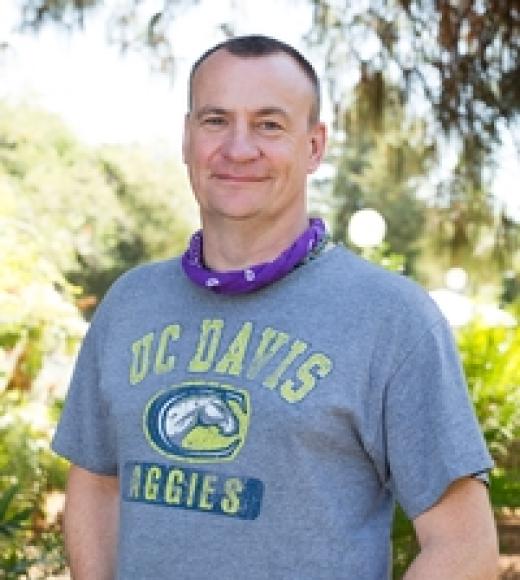
Neil McRoberts is a Professor of Plant Pathology at the University of California, Davis, and Director of the Western Plant Diagnostic Network. His research focuses on plant disease epidemiology, systems modeling, and bio-economic analysis of plant diseases. He investigates strategies for managing invasive pathogens, optimizing disease detection methods, and understanding the socio-economic dimensions of agricultural disease management. McRoberts has contributed extensively to studies on Huanglongbing (citrus greening), grapevine leafroll disease, and spinach downy mildew, emphasizing collective action challenges in plant health provision. His work integrates molecular diagnostics, spore trapping, and behavioral economics to address both technical and institutional barriers in disease management. His research spans multiple scales from molecular diagnostics to global crop health assessments, with a focus on translating scientific insights into actionable policies and practices. McRoberts collaborates with growers, policymakers, and international organizations to develop sustainable solutions for crop disease challenges. Notable contributions include frameworks for optimizing phytosanitary thresholds and evaluating the economic impacts of disease management strategies. His lab (QBELab) emphasizes interdisciplinary approaches combining epidemiology, modeling, and social science perspectives. Key Areas: Disease forecasting, collective action in agriculture, citrus disease management, spore dispersal modeling Affiliations: Western Plant Diagnostic Network, UC Davis Plant Pathology Department Methodologies: Systems modeling, economic analysis, citizen science surveillance McRoberts' recent work highlights the critical role of volunteer networks in early disease detection and the importance of aligning economic incentives with sustainable agricultural practices to combat invasive pathogens effectively.
Professor Joanna Berry is a Professor in the Durham University Business School and Director of Business, Enterprise and Innovation at the Durham Energy Institute (DEI). She holds the role of Associate Dean for External Engagement, fostering industry partnerships and leading public engagement initiatives. Her academic background includes a law degree from Oxford University (1985) and a PhD examining technology's impact on music industry value chains. Professional experience spans law, science, technology, and media sectors. Research focuses on entrepreneurship, renewable energy, innovation ecosystems, digital/creative industries, and women in STEM. She leads the MBA Entrepreneurship Pathway and co-developed the MSc in Energy Engineering Management (launched 2023). Awards include the 2020 Durham Teaching Excellence Award and recognition in the Northern Power Women Power List. She serves on multiple boards, including Acumen Community Buildings and Gifted Minds International School. Key affiliations include: Director, Durham Energy Institute (DEI) Co-Programme Director, MSc Energy Engineering Management Pathway Leader, MBA Entrepreneurship Trustee, Acumen Community Buildings Her work bridges academic research and practical application, emphasizing community development, technology adoption, and gender equity in business. Current projects include energy transition strategies and digital innovation frameworks.