Elena Neiterman is an Adjunct Assistant Professor in the Department of Health, Aging & Society at McMaster University. Her scholarly work bridges public health, migration studies, and gendered healthcare experiences, with a focus on professional integration of internationally educated health workers, maternal health, and aging populations. Research spans 2008–2025 Key themes: healthcare access, work-life interface, One Health models, gender dynamics Recent studies include exploring international students’ healthcare barriers, caregiver role adaptation for dementia spouses, and antimicrobial resistance frameworks in food systems. She publishes extensively in journals like Journal of Occupational Rehabilitation , Canadian Journal on Aging , and Frontiers in Public Health .
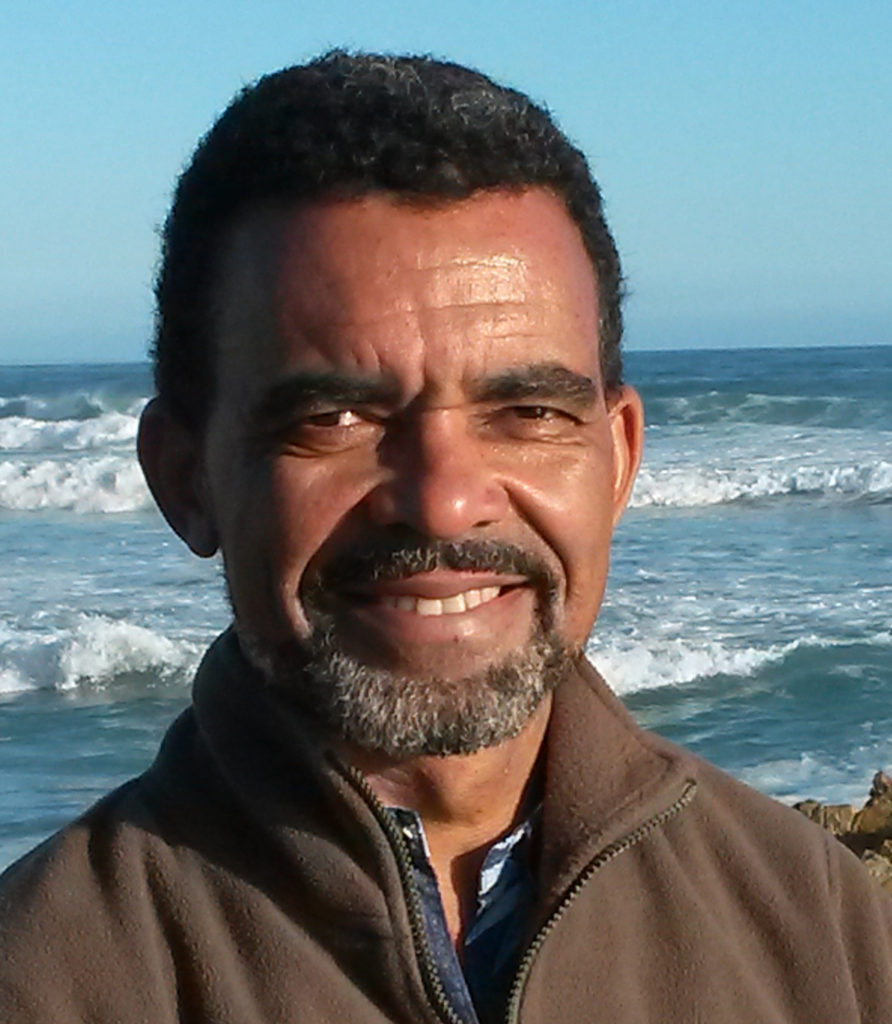
David Obura is a Founding Director of CORDIO East Africa, based in Mombasa, Kenya, and maintains an academic affiliation with the University of Queensland. He is a leading expert in coral reef resilience, particularly regarding climate change impacts, and the biogeography of the Indian Ocean. His work bridges science and action, integrating conservation and development through inclusive blue economy principles aligned with global sustainability goals. Dr. Obura serves in several prestigious expert roles including: Chair of the IUCN Coral Specialist Group Coordinating Lead Author for the IPBES Global Assessment National Geographic Explorer Member of the Earth Commission, Global Commons Alliance/Future Earth Technical Working Group member for the High Level Panel on Ocean Sustainability His research spans multiple scales from local community engagement through regional initiatives like the Northern Mozambique Channel alignment to global policy influence. Dr. Obura's work emphasizes critical connections between marine ecosystem health, human wellbeing, and sustainable development in the Western Indian Ocean region. As a prolific researcher, he has published extensively on coral reef ecology, climate change impacts, and sustainable ocean governance. His recent work focuses on Earth system boundaries, climate tipping points, and integrating biodiversity conservation with climate action through frameworks like the Global Biodiversity Framework. Dr. Obura is recognized for translating scientific knowledge into actionable policy recommendations. His leadership with CORDIO East Africa has been instrumental in building regional capacity, fostering stakeholder engagement, and developing innovative coral reef management approaches across the Western Indian Ocean.
Glenn Daehn is the Mars G. Fontana Professor of Metallurgical Engineering at The Ohio State University , where he has served as faculty since 1988. His work bridges materials science , advanced manufacturing , and STEM education , with leadership roles in initiatives like the Ohio Manufacturing Institute and NSF's HAMMER Center. Ph.D. & M.S., Materials Science & Engineering, Stanford University B.S., Materials Science & Engineering (departmental honors), Northwestern University Professor Daehn specializes in impulse-based manufacturing , focusing on plastic deformation , impact welding , and solid-state joining of dissimilar materials. His research drives innovations in lightweight materials, aerospace manufacturing, and biomedical device fabrication. His publications reveal a strong emphasis on dynamic material processing , robotic manufacturing , and sustainable materials systems . Recent work explores orbital cold welding and AI-enhanced surgical plate bending systems. ASM Marcus A. Grossman Young Author Award (1990) Army Research Office Young Investigator Award (1992) 2022 ASM Gold Medal Award Ranked top 2% of scientists worldwide (2021) Daehn has received multiple Lumley Research Awards and led groundbreaking projects including Metamorphic Manufacturing and Hybrid Autonomous Manufacturing . He maintains active collaborations with industry through initiatives like the Center for Design and Manufacturing Excellence .
Dr David Johnson is an Associate Professor of Entrepreneurship at Durham University Business School, where he serves as Associate Chair for the £9 million Smart & Scale initiative supporting SME innovation in North-East England. He is also a Fellow of the Wolfson Research Institute for Health and Wellbeing and maintains active Visiting Fellow positions at international institutions. Johnson's educational background includes: PhD in Management (Entrepreneurship), University of Edinburgh Business School MSc by Research (Entrepreneurship), University of Edinburgh Business School MBA, Adam Smith Business School, University of Glasgow Master's degree in Science, University of Edinburgh Bachelor's degree in Science, University of Leeds PG Cert in Learning, Teaching, and Assessment Practice His research centers on academic entrepreneurship , life science commercialisation , and university-industry engagement , with particular focus on linguistic approaches and machine learning applications. Johnson examines how institutional practices shape entrepreneurial activities across contexts ranging from regenerative medicine to Freemasonry, emphasizing the built environment's role in ecosystem development. Johnson's publication trajectory reveals evolving methodological sophistication, shifting from early studies on regenerative medicine venturing (2014-2017) toward computational linguistics and machine learning applications (2024-2025). His work consistently bridges theoretical frameworks with practical innovation challenges, spanning entrepreneurial ecosystems, technology transfer, and narrative analysis in resource mobilization. His scientific recognition includes: NASA Innovation and Technology Transfer: Space2Pitch Final Visiting Research Fellow at Interface, Edinburgh Fellow of Wolfson Research Institute for Health and Wellbeing Visiting Research Fellow at Skolkovo Institute Visiting Research Scholar at Wisconsin School of Business Fellow of Higher Education Academy Johnson supervises postgraduate students including Clare Talbot-Jones and Olivia King, supported by over £500,000 in research funding: Science commercialisation activities at university-industry boundary (£390,824) Cardiology-focused point-of-care device development (£38,934) Primary Research Support Fund for Zambian field research (2025) Global Engagement Grant for Dartmouth College knowledge exchange (2024) He actively leads research infrastructure as Co-Director of Durham Enterprise Centre and through his Smart & Scale initiative role, while contributing to interdisciplinary health research via the Wolfson Institute fellowship.
Dr. Nathalia Costa is a Senior Research Fellow at the University of Queensland's cLinical TRials cApability (ULTRA), located within the Centre for Clinical Research in Herston, and affiliated with the Centre for Innovation in Pain and Health Research (CIPHeR). She holds appointments in the School of Health and Rehabilitation Sciences within the Faculty of Health, Medicine and Behavioural Sciences. Her research focuses on theoretically grounded qualitative and mixed methods approaches to understanding low back pain, pain management, and healthcare systems. Costa is particularly known for her groundbreaking work on low back pain flares, which established the first rigorous definition of pain flares through stakeholder engagement with over 70 experts and consumers. Her methodological expertise spans systematic reviews, qualitative methodologies (interviews, ethnography, Delphi studies), embedding qualitative research in clinical trials, and systems-thinking frameworks. Costa's recent publications demonstrate a growing focus on culturally responsive care, healthcare access for migrant populations, and the intersection of legal services with mental health. Her work bridges micro-level patient experiences with macro-level healthcare systems, aiming to make pain care more nuanced, equitable, and evidence-based. She has published over 55 papers spanning musculoskeletal conditions, pain research, health policy, and qualitative methodologies. Her scientific achievements include the 2021 ISSLS Prize for Lumbar Spine Research, recognition from the International Society for the Study of the Lumbar Spine. Her research has influenced international pain frameworks, including adoption by the International Association for the Study of Pain (IASP) in their online Fact Sheet (July 2023). Costa actively supervises multiple PhD students, serves as Associate Editor for Qualitative Health Research and the Journal of Humanities in Rehabilitation, and has taught across disciplines including research methods, musculoskeletal physiotherapy, and health policy. She has secured over AUD$7.5M in research funding, currently leading the FORENSIC trial investigating lumbar fusion surgery effectiveness for persistent severe low back pain.
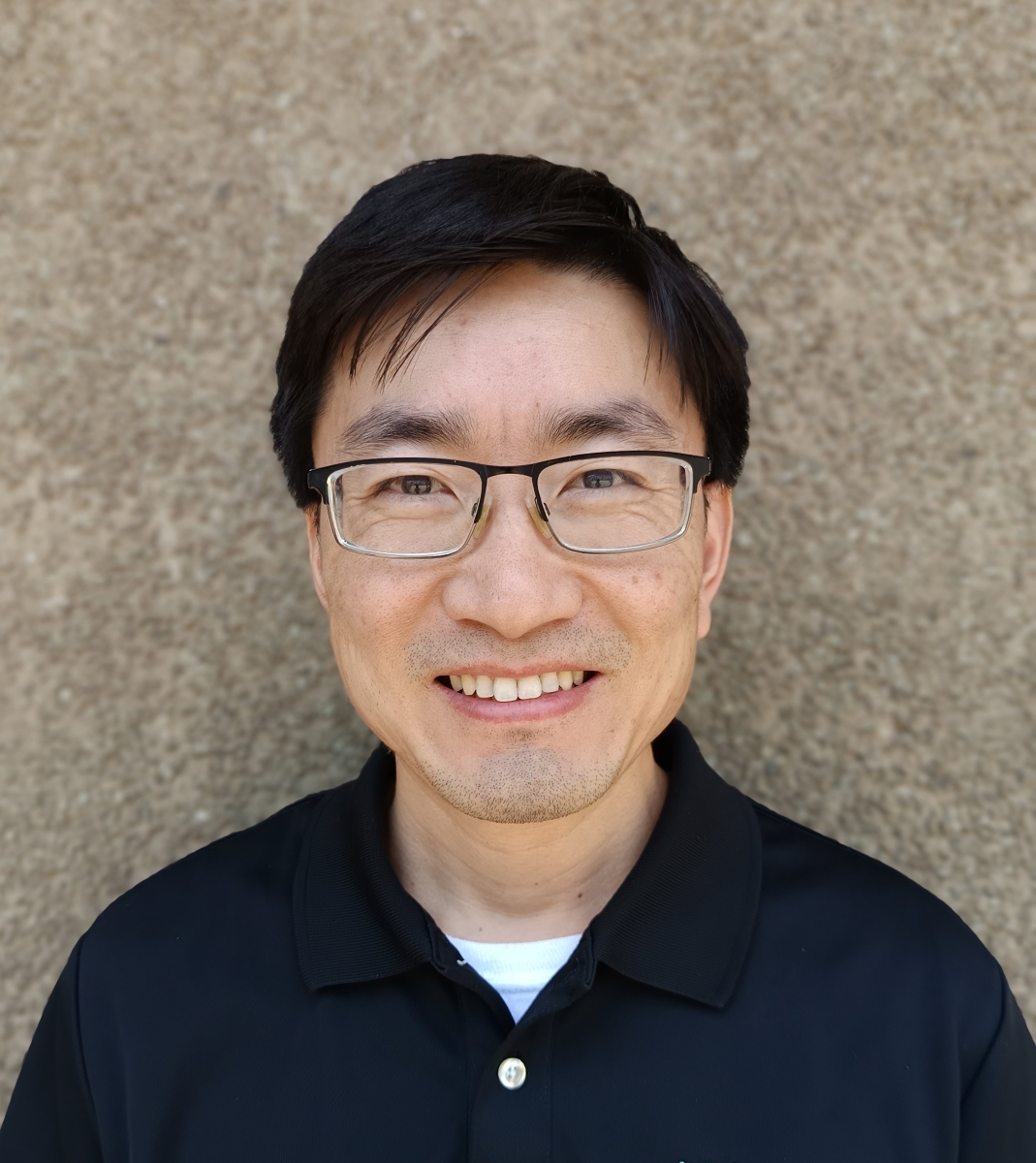
Sheng C. Dai is an Associate Professor and group coordinator in Geosystems Engineering at the Georgia Institute of Technology, holding the Georgia Mining Association Early Career Professorship in the School of Civil and Environmental Engineering with courtesy appointments in Ocean Science and Engineering and the School of Earth and Atmospheric Sciences. Dr. Dai earned his Ph.D. from Georgia Tech in 2013 following ORISE postdoctoral fellowships at the National Energy Technology Laboratory (2013-2015). His educational background includes specialized training in geosystems engineering and energy-related subsurface processes. His research focuses on energy geotechnics and nature-inspired engineering, addressing critical challenges in energy sustainability and environmental protection through studies of geomechanics, granular dynamics, and porous media flow. Key applications include gas hydrate systems for energy recovery, waste-to-fuel conversion, and biomimetic solutions inspired by natural processes like rock-boring clams. Analysis of Dr. Dai's 2023-2025 publications reveals strong interdisciplinary integration of computational modeling (DEM, SPH), machine learning, and experimental techniques across energy geotechnics, granular material flow, and bio-inspired mechanisms. His work bridges petroleum engineering, environmental sustainability, and space exploration contexts. Dr. Dai has received numerous accolades recognizing his research, teaching, and service contributions: 2025: Early Career Researcher Award (USUCGER) 2024: Emerging Leaders Program (EVPR/Georgia Tech) 2023: Interdisciplinary Research Award and Woodruff Academic Leadership Fellows 2022: NSF Game Changer Academies and CREATE-X Faculty Fellowship 2020: NSF CAREER Award 2017: Bill Schutz Teaching Award and NETL Research Spotlight His Subsurface Processes Laboratory secures funding from DOE, NSF, NASA, and DOT for projects including $1M awards for waste-to-fuel conversion and methane clathrate research. Dr. Dai serves as Associate Editor for Journal of Geophysical Research: Solid Earth and leads ISSMGE's TC308 Energy Geotechnics Task Force while advising USGS and NETL programs. The laboratory conducts cutting-edge experimental and computational research on hydrate-bearing sediments, granular biomass flow, and bio-inspired geotechnical solutions, maintaining strong industry partnerships for real-world application of subsurface engineering innovations.
Cindy Kaiying Lin is an ethnographer and information scientist serving as the Stephen Fleming Early Career Assistant Professor in the School of Interactive Computing at Georgia Institute of Technology. Her career spans roles as an assistant professor at Pennsylvania State University's College of Information Sciences and Technology, and postdoctoral fellowships at Cornell Tech's Digital Life Initiative and Cornell Atkinson Centre for Sustainability. PhD from University of Michigan's School of Information Co-author of Technoprecarious (MIT Press, 2020) and Digital Energetics (Minnesota Press, 2023) Published in ACM CHI, Social Text, e-flux, and other venues Her research integrates Artificial Intelligence , Human-Computer Interaction , and Critical Data Studies to analyze climate data practices and environmental governance in Indonesia and the United States. She explores how data infrastructures mediate ecological crises, sociotechnical errors, and post-growth economies. Recent publications reveal trends in environmental data ethics, techno-optimism critique, and sustainable computing. Lin examines energy systems, digital precarity, and repair practices through interdisciplinary lenses spanning computational and humanistic disciplines. Scientific awards include the ProQuest Distinguished Dissertation Award from the University of Michigan. Her work bridges computing with critical theory, evidenced by publications in both ACM venues and humanistic presses.
Michal Krzyzanowski is a Professor of Media and Communication Sciences at Uppsala University, Sweden, where he serves as Deputy Head of the School of Informatics & Media and Director of Research at the Center for Multidisciplinary Research on Racism (CFR). With a career spanning institutions like the University of Liverpool, Örebro University, and Stockholm University, his work focuses on critical discourse studies of media, politics, and social change, particularly examining racism normalization , populist rhetoric , and immigration discourses in digital and traditional media. Key research areas: Critical discourse analysis, political communication, migration policy, EU institutional practices Projects: Swedish Research Council-funded studies on racism normalization (2016-20) and immigration discourses (2020-23) Editorial leadership: Editor-in-Chief of the Journal of Language and Politics for over a decade Recent publications analyze how crisis narratives in media facilitate the normalization of anti-democratic practices , with a focus on far-right populism , racism in online spaces , and EU policy transformations . His methodological innovations combine critical discourse analysis with ethnography and corpus linguistics. Contact: michal.krzyzanowski@im.uu.se | michal.krzyzanowski@cemfor.uu.se
Yafang Cheng is Director of the Aerosol Chemistry Department at the Max Planck Institute for Chemistry since 2024, with concurrent appointments as Guest Professor at Peking University (2023-) and Distinguished Guest Professor at University of Science and Technology of China (2021-). Her research integrates experimental methods , multi-scale modeling , and machine learning to advance understanding of aerosol particle dynamics and their impacts on air quality , public health , and climate change . Ph.D. in Environmental Sciences (Peking University, 2007) B.Sc. in Environmental Sciences (Wuhan University, 2001) Her work focuses on reactive nitrogen chemistry , aerosol acidity , black carbon effects , and planetary boundary layer interactions . She has developed novel instrumentation for aerosol analysis and pioneered machine learning applications in atmospheric science. Recent publications emphasize black carbon mitigation strategies (One Earth 2023), aerosol microdroplet pH (Chem 2023), and SARS-CoV-2 transmission modeling (Science 2021). These studies demonstrate interdisciplinary approaches spanning environmental chemistry , climate physics , and public health policy . Fellow: AAAS (2023), AGU (2022) Joanne Simpson Medal (AGU, 2022) Science Breakthroughs of the Year (Falling Walls, 2021) Highly Cited Researcher (Web of Science, 2021-2022) Minerva Outstanding Female Scientist Award (2014) She has mentored 38 early-career researchers (21 postdocs, 17 PhD students) who have achieved professorships , tenured positions , and international awards . Her institutional leadership includes initiating academic exchange programs between European and Chinese institutions.
Prof. dr. Mirella M.N. Minkman serves as the Vilans Chair in Innovation of Organization and Governance of Integrated Care at Tilburg University's TIAS School for Business and Society. Concurrently, she is CEO of Vilans (National Knowledge Organization for care and support), bridging science, practice, policy, and education through national innovation programs. Her leadership extends to Chair of the National Governance Innovation Advisory Committee (BoZ), Chair of the NVTZ Scientific Advisory Board, Supervisory Board roles at RIBW Brabant and Rivierenland Hospital, and membership in the VGN Committee of Experts. Minkman's research pioneers person-oriented integrated care governance within multi-organizational networks, focusing on leadership, accountability systems, and strategic innovation. She examines how governance modes enable collaborative care models while addressing implementation barriers in healthcare transformation. Her work emphasizes change management frameworks for large-scale system integration, with particular attention to supervision mechanisms and value-based accountability structures across care continua. Analysis of her 15 recent publications (2021-2023) reveals consistent exploration of integrated care governance across Dutch and international contexts. Key thematic clusters include leadership in nursing home care, decision-making dilemmas in service networks, and emerging AI applications in long-term care. Methodologically, her work spans systematic reviews, policy analyses, and implementation studies, predominantly published in the International Journal of Integrated Care and specialized healthcare management outlets. Through Vilans, Minkman directs national knowledge platforms and large-scale implementation programs that connect academic research with practical healthcare innovation. Her international engagement includes board membership with the International Foundation for Integrated Care, editorial roles for the International Journal for Integrated Care, advisory positions with WHO's Integrating the Health and Care Workforce group, and participation in the UK Center for Evidence IMPACT's Critical Friends Group.
Marc Stears serves as a Professor of Political Science and Director of the UCL Policy Lab at University College London. His work bridges political science, cognitive psychology, and public health through interdisciplinary research focused on autism, social inequality, and pandemic policy responses. Current affiliation: University College London Department of Political Science Key research areas: Autism studies, social inequality, crisis governance, and ethical research frameworks Recent research trends highlight his focus on pandemic impacts on marginalized communities, particularly autistic individuals, with publications analyzing: COVID-19's disproportionate mental health effects Ethical challenges in participatory autism research Border policy implications during global crises Remote learning adaptations during lockdowns Health equity considerations Social support systems under stress
Roland Benedikter serves as a Lecturer at the Faculty of Design and Arts, Free University of Bozen-Bolzano and as Co-Head of the Center for Advanced Studies at Eurac Research. He holds the prestigious UNESCO Chair in Interdisciplinary Anticipation and Global-Local Transformation and is an Ordinary Member of the European Academy of Sciences and Arts. His work bridges academic scholarship with practical policy applications across European and global contexts, with particular focus on South Tyrol/Alto Adige as a model region. Benedikter's research interests span futures studies, societal transformation, re-globalization, neuroethics, and the intersection of technology with humanity. He specializes in interdisciplinary anticipation approaches that integrate macro, meso and micro perspectives to address complex global challenges. His expertise encompasses geopolitical analysis, international and local development, public policy, governance, and European Union affairs, with particular attention to the evolving relationship between global frameworks and local implementation. His recent publications reveal a strong emphasis on futures literacy as a critical capability for navigating systemic crises, with particular focus on neurotechnology standards, sustainable development trajectories, and the evolving nature of globalization. Benedikter's work consistently examines how societies can develop anticipatory governance capacities to better manage uncertainty and complexity in an era of rapid technological change. UNESCO Chair in Interdisciplinary Anticipation and Global-Local Transformation Ordinary Member of the European Academy of Sciences and Arts Co-Head of Center for Advanced Studies at Eurac Research Extensive publication record on re-globalization and futures studies Benedikter actively engages with policymakers and practitioners to translate futures research into actionable strategies. His work with the Center for Advanced Studies facilitates interdisciplinary collaboration across scientific disciplines to address complex societal challenges. He frequently contributes to public discourse on the future of European SMEs, digital transformation, and the ethical implications of emerging technologies, emphasizing the need for inclusive and participatory approaches to societal transformation.
Anders Ekström is a Professor of History of Science and Ideas at Uppsala University since 2012 and a Visiting Researcher at the Swedish Collegium for Advanced Study (SCAS). His work bridges modern European and Scandinavian cultural/media history with contemporary debates on knowledge politics, temporality, and publicness. Affiliations: Uppsala University (Professor), University of Oslo (Professor II), Swedish Collegium for Advanced Study (Visiting Researcher), Clare Hall College (Life Member) Ekström's research spans cultural history, media theory, museum studies, and disaster discourse. He leads projects like Gardening the Globe (2022-2025) and The Afterlife of Natural History (2022-2025), funded by Norwegian and Swedish research councils. His recent publications explore themes such as: Temporalization in Anthropocene studies Humanities' role in public knowledge infrastructure Media history and visual culture Disaster narratives and societal coexistence Scientific Awards: Athena of the Year (2011) Royal Academy of Uppsala's Interdisciplinary Prize (2011) Johan Nordström & Sten Lindroth Award (1994)
Betty Tärning is a researcher at the Department of Philosophy, Lund University , specializing in Cognitive Science and Educational Technology . She is affiliated with the eSSENCE: The e-Science Collaboration and contributes to the LU Profile Area: Natural and Artificial Cognition . Her work focuses on digital learning environments, pedagogical agents, and feedback systems. Email: betty.tarning@lucs.lu.se Office: LUX:B467, Helgonavägen 3, Lund Research Interests: Tärning investigates how virtual reality and educational games can enhance learning outcomes, particularly in middle school and early childhood education . Her recent work explores robotic emotional expression and feedback neglect in digital contexts. Article Trends: Recent publications emphasize human-robot interaction , virtual learning environments , and feedback mechanisms in educational games. She integrates cognitive modeling with pedagogical design to address challenges in digital literacy and student engagement . Projects & Collaborations: Active in initiatives like DeSIDE: Designing Sustainable Digital Work and Virtuellt klassrum som forskningsplattform , she collaborates across disciplines, including with Pufendorf IAS and Humanities Lab . Her network includes researchers from Sweden , Europe , and North America .
Paul J. Litton is a Professor and Dean of the University of Missouri School of Law , where he has served since 2006. He holds a JD and PhD from the University of Pennsylvania, earned through its Joint Program in Law and Philosophy, and received the Lynn Lukens Moore Prize in Jurisprudence. BA, University of Pennsylvania ('94) JD, University of Pennsylvania Law School ('99) PhD, University of Pennsylvania ('03) His research focuses on moral philosophy , criminal law theory , and bioethics , particularly the intersection of moral and criminal responsibility. Recent work examines psychopathy, traumatic brain injury, and implications of neuroscience for legal standards. He co-chaired Missouri’s Death Penalty Assessment Team (2010–12), advocating for evidence-based legal reforms. Analysis of Paul Litton’s publications reveals interdisciplinary trends combining criminal law , neuroscience , bioethics , and constitutional theory . Key themes include responsibility thresholds, mental capacity, and the moral-legal divide in medical contexts. Shook Hardy & Bacon Award for Excellence in Research (twice) Gold Chalk Award, University of Missouri Graduate Professional Council Husch Blackwell Distinguished Faculty Award for Teaching Litton teaches Criminal Law , Criminal Procedure , and Bioethics & Law . While no specific lab or team is mentioned, his work bridges legal scholarship with empirical psychology and neuroscience.