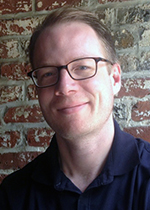
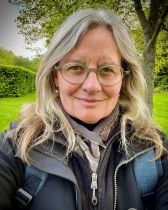
Michael Lucey is the Sidney and Margaret Ancker Chair and Distinguished Professor of French and Comparative Literature at the University of California, Berkeley. His work bridges French literature from the 19th to 21st centuries with social theory, sexuality studies, and linguistic anthropology. He has authored the critically acclaimed What Proust Heard: Novels and the Ethnography of Talk (2022) and Thinking about Sexuality with Novels (forthcoming). As founding director of the Center for the Study of Sexual Culture , he has shaped interdisciplinary research in queer theory and gender studies. Current research focuses on novels as ethnographic tools Specializes in Proust, Balzac, Woolf, and contemporary French fiction Translation work includes Didier Eribon and Édouard Louis His recent articles explore phonetics in narrative, readability frameworks, and sociological implications of literary form. He actively engages with comparative methodologies and critical theory, while his teaching spans British and American literature’s intersections with French modernism. Lucey’s academic leadership includes directing Berkeley’s Center for the Study of Sexual Culture, which supports global discourse through fellowships and conferences. His office hours are held in Dwinelle Hall and via Zoom. Contact: mlucey@berkeley.edu
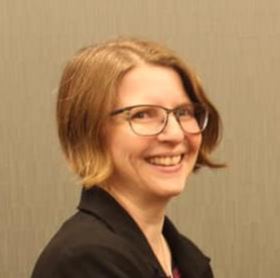
Ryan Heuser is an Assistant Professor in Digital Humanities at the University of Cambridge, specializing in computational approaches to literary and intellectual history, prosody, and artificial intelligence's impact on language. His work bridges data science, machine learning, and literary studies through digital methodologies. Doctoral training in Eighteenth-Century British Literature, Stanford University (2019) Founding member & Associate Research Director, Stanford Literary Lab Junior Research Fellow, King’s College Cambridge (2019-2022) Research interests span computational modeling of semantic revolutions, large-scale literary field analysis, and the intersection of digital methods with historical and intellectual studies. His book Explorations in the Digital History of Ideas (2023) co-edited with Peter de Bolla exemplifies this approach. Recent publications focus on historical semantics, metrical analysis, and digital mapping of emotions in literature, reflecting his interdisciplinary expertise in natural language processing, network theory, and literary data visualization. Currently leads teaching initiatives at Cambridge Digital Humanities and contributes to computational projects exploring textual rhythms and large language models.
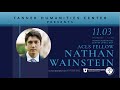
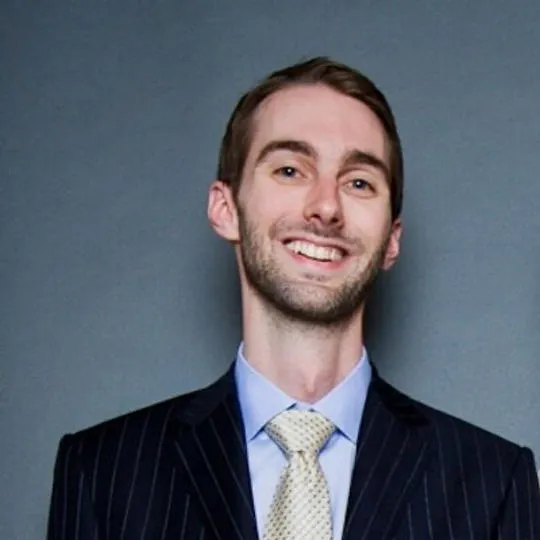
Nathan Wainstein is an Assistant Professor in the English Department at the University of Utah's College of Humanities, where he has been teaching since July 2023. His academic work bridges literary studies with contemporary digital media, particularly focusing on video game aesthetics alongside modernist literature. Wainstein maintains an active scholarly presence through publications, editorial work, and his podcast "Authors Die Twice" co-hosted with Bryan Counter. Wainstein's educational background includes: PhD from Stanford University (2013-2020) BA from Swarthmore College (2007-2011) His research interests span video game aesthetics, modernism, the novel, literary theory, narrative theory, and the intersection of literature and philosophy. Wainstein approaches these fields with a particular focus on paradox, difficulty, and aesthetic experiences that challenge conventional interpretations. His work often examines how seemingly simple literary devices like light descriptions can reveal deeper theoretical tensions within texts. Wainstein's recent publications demonstrate a consistent trajectory exploring the boundaries of literary aesthetics, from his analysis of James Joyce's photomimesis to his examination of narrative glitches in Faulkner's work. His scholarship connects historical literary theory with contemporary concerns, particularly in how he applies these frameworks to video game analysis. The upcoming book "Grant Us Eyes: The Art of Paradox in Bloodborne" exemplifies this interdisciplinary approach, bridging literary criticism with video game studies. Wainstein has held prestigious postdoctoral positions including an ACLS Emerging Voices Fellowship at the University of Utah and a Stanford Humanities and Sciences Dean's Fellowship. As an educator, Wainstein teaches innovative courses that reflect his research interests, including "On Difficulty," "Aesthetics of Violence in Video Games and Literature," "Games with Time," and "Videogame Storytelling." His teaching philosophy appears to emphasize the connections between traditional literary studies and contemporary digital media forms.
Jessica Straley is an Associate Professor in the Department of English at the University of Utah, where she has served since 2005 (Visiting Assistant Professor 2005-2007, Assistant Professor 2007-2016, Associate Professor 2016-present). She holds a PhD in English from Stanford University, an MA in Literature, Culture, and Modernity from Queen Mary and Westfield College, University of London, and a BA in English from Cornell University. Education: PhD, English - Stanford University MA, Literature, Culture, and Modernity - Queen Mary and Westfield College BA, English - Cornell University Her research focuses on intersections between Victorian literature, children's literature, animal studies, disability studies, and ecocriticism. She explores how literary imagination interacts with scientific and moral discourses, particularly in 19th-century contexts. Recent publications analyze feral child narratives, zoo representations, and evolutionary theory in children's texts. Her work bridges historical literary analysis with contemporary critical frameworks like disability rights and environmental ethics. Scientific Awards: Faculty Fellowship Award (University Research Council, 2017) Ramona W. Cannon Award for Teaching Excellence (2016) Tanner Humanities Center Fellowship (2016) University Research Committee Faculty Fellowship (2011) Newberry Library Short-Term Library Research Fellowship (2008) She teaches courses in 19th-Century British Literature, Intellectual Movements, and Honors Thesis/Project supervision. Her external grant (Animal Testing URC, 2017-2018) demonstrates institutional support for her interdisciplinary work.
David Bamman is an Associate Professor in the School of Information at UC Berkeley, specializing in applying Natural Language Processing (NLP) and machine learning to cultural and social science questions. He leads research in born-literary NLP, computational humanities, and cultural analytics, with affiliated roles in EECS, Linguistics, and Computational Precision Health. Bamman holds degrees from Carnegie Mellon (Ph.D., 2015), Boston University (M.A., 2006), and University of Wisconsin-Madison (B.A., 1998). His work is supported by NEH, NSF, and industry grants. Educations: Ph.D. in Computer Science (2015), Carnegie Mellon University M.A. in Applied Linguistics (2006), Boston University B.A. in Classics (1998), University of Wisconsin-Madison Research Interests: NLP for underserved domains (e.g., literature, social media), coreference resolution, cultural analytics, and computational methods for studying literature and culture. Projects include LitBank and BookNLP datasets. Grants & Awards: Hellman Fellow (2019), Amazon Research Award (2017), NSF CAREER Award, and NEH funding. Teaching: Courses include Natural Language Processing (Info 159/259), Computational Humanities (INFO 190), and Applied NLP (INFO 256). His research group explores topics like racial representation in high school literature, Hollywood diversity metrics, and the sociocultural implications of LLMs. Bamman advises multiple PhD students and collaborates on datasets like CMU Book Summaries and 11K Latin Books.
Elaine Francis is a Professor of English and Linguistics at Purdue University's College of Liberal Arts, where she serves as Associate Head of the Department of English and directs the Experimental Linguistics Lab. She holds additional affiliations as an Affiliate Faculty Member in the Department of Linguistics and a Courtesy Faculty Member in the Department of Speech, Language, and Hearing Sciences. Ph.D. in Linguistics, University of Chicago (1999) B.A. in Linguistics, College of William and Mary (1993) MA in Linguistics, University of Chicago (1995) Former Assistant Professor at the University of Hong Kong (1999-2002) Professor Francis's research focuses on syntax and its interfaces with semantics, discourse information structure, and language processing in production and comprehension. She employs experimental methods to investigate syntactic, semantic, discourse-pragmatic, and cognitive factors underlying complex sentence structures. Her primary research areas include word order alternations, filler-gap dependencies, resumptive pronouns, and grammatical acceptability. She examines how various factors contribute to grammatical alternations in language use and explores how processing pressures in production and comprehension contribute to grammatical conventions. Her recent publication record shows consistent output across multiple linguistic subfields, with a strong emphasis on experimental syntax and psycholinguistics. Her 2022 book, Gradient Acceptability and Linguistic Theory , represents a significant contribution to understanding acceptability judgment tasks in relation to syntactic theory. Her work spans theoretical syntax, experimental linguistics, second language acquisition, and cross-linguistic comparison, often bridging the gap between theoretical frameworks and empirical evidence. Regularly teaches short courses at Linguistic Society of America Linguistic Institutes Member of Linguistic Society of America Ethics Committee Editorial board member of Glossa Psycholinguistics Co-editor of Polymorphous Linguistics: Jim McCawley's Legacy (2005) Co-editor of Mismatch: Form-Function Incongruity and the Architecture of Grammar (2003) Professor Francis actively supervises graduate students in linguistics, though she has indicated she will be unable to take on new graduate students for the 2025-2026 academic year. She has received research support for her experimental work, particularly for investigating syntactic phenomena through controlled experiments and corpus analysis. Her collaborative work extends across multiple institutions and disciplines, including collaborations with researchers in computational linguistics, cognitive science, and clinical linguistics. She directs the Experimental Linguistics Lab at Purdue University, which conducts research on syntactic processing using various experimental methodologies. The lab investigates how speakers produce and comprehend complex sentence structures, with particular attention to how grammatical knowledge interacts with processing constraints. Current projects include research on relative clauses, syntactic islands, and acceptability gradient phenomena across multiple languages.
Bülent AKAT is a full-time Lecturer (Dr) at Çankaya University , Faculty of Arts and Sciences, Department of Translation and Interpreting Studies (English), where he has taught since 2007. His career is anchored in literary and cultural translation studies, with a particular focus on English-Turkish translation. Education: Dr Akat earned his Bachelor of Arts (1982–1986) from Boğaziçi University, Faculty of Arts and Sciences, Department of Western Languages and Literatures. He then completed a Master of Arts (1986–1994) at Boğaziçi University’s Institute of Social Sciences in English Language Teaching. Finally, he obtained his PhD (1994–2000) from Hacettepe University’s Institute of Social Sciences in American Culture and Literature. Research Interests: His scholarly work spans translation of children’s literature , idiom translation , subtitling and dubbing , culture-bound elements , and neologism translation . He often employs comparative methodologies, drawing on theorists such as Jan Pedersen, Mona Baker, and Teresa Tomaszkiewicz to evaluate strategies of domestication, foreignization, and receptor-oriented translation. Academic Output: Between 2018 and 2025 Dr Akat (co-)authored nine journal articles, two conference papers, and five books. Recurring themes include the translation of Dr Seuss’s neologisms, idiomatic renderings in TV dubbing, Oscar Wilde’s drama in Turkish, and Can Yücel’s interpretation of The Great Gatsby . His publications appear in leading Turkish and international indexes, notably TR Dizin , Mediterranean Journal of Humanities , and RumeliDE . Teaching & Supervision: Dr Akat has supervised twelve master’s theses at Çankaya University’s Institute of Social Sciences, concentrating on English literature and cultural studies. Representative topics include gender in Virginia Woolf, colonialism in Defoe, existentialism in Fowles, and Gothic elements in Wilde. Labs & Projects: No dedicated laboratory or externally funded projects are listed in the provided data.
Erik Ketzan is a Lecturer in Digital Humanities and Cultural Computation at King's College London. He holds a PhD in English/Digital Humanities from Birkbeck, University of London, and has held postdoctoral roles at the University of Cologne and Trinity College Dublin, where he coordinated the MA in Digital Humanities and Culture. His research focuses on computational literary studies, legal/ethical issues in digital research, and corpus stylistics. He has published widely on topics such as Thomas Pynchon’s computational stylistics, legal frameworks for digital humanities research, and gender bias in historical texts. His work includes developing tools like Coleto for textual variant analysis and co-authoring the book *Thomas Pynchon and the Digital Humanities* (2022). Ketzan actively engages in policy advocacy, advising on copyright and data protection in DH, and has contributed to projects like CLARIN and the Leibniz Institute for the German Language. Education: PhD in English/Digital Humanities, Birkbeck, University of London Postdoctoral Researcher, University of Cologne (EncycNet Project) Postdoctoral Research and Teaching Fellow, Trinity College Dublin Research Interests: Computational approaches to literary analysis, legal challenges in data-driven research, corpus stylistics, and gender studies in historical corpora. Teaching: Courses include Python for the humanities, computational literary studies, and legal issues in digital humanities.
Christopher G. Atkeson is a Professor at the Robotics Institute at Carnegie Mellon University (CMU), where he has been since 2000 after previously holding positions at MIT and Georgia Institute of Technology. His research focuses on fulfilling the science fiction vision of machines achieving human levels of competence in perception, cognition, and action, with particular emphasis on understanding how to get machines to generate and perceive human behavior. Atkeson's work spans two complementary approaches: humanoid robotics and human aware environments. His research interests include nonparametric learning, memory-based learning, reinforcement learning, learning from demonstration, and modeling human behavior. He is particularly known for his work on robot learning of challenging dynamic tasks such as juggling, trajectory-based optimization, and soft robotics (including his contributions to the Baymax character in Disney's Big Hero 6). His recent publications demonstrate a strong focus on tactile sensing (FingerVision), human-in-the-loop optimization for exoskeletons, deep learning for locomotion control, and trajectory-based optimization methods. His work consistently bridges theoretical foundations in machine learning with practical implementations on physical robots. Among his scientific recognitions are an NSF Presidential Young Investigator Award, a Sloan Research Fellowship, and a Teaching Award from the MIT Graduate Student Council. Atkeson has advised numerous students who have gone on to successful careers in academia and industry, including notable researchers like Andrew Moore and Stefan Schaal. His teaching includes courses on dynamic optimization, humanoids, kinematics, dynamics, and control.
Laurie Shannon is the Franklyn Bliss Snyder Professor of English at Northwestern University, with a J.D. from Harvard Law School and a Ph.D. from the University of Chicago. She studies English literature and culture in the long sixteenth century, focusing on the history of ideas in language, stakeholdership, embodiment, and cross-species relations. She serves as convener of The Anne Lister Society and is collaborating with Oxford University Press on a scholarly edition of Anne Lister’s Journal. Education: J.D., Harvard Law School; Ph.D., University of Chicago Shannon’s research explores the political imagination in early modern literature, particularly through friendship (Sovereign Amity: Figures of Friendship in Shakespearean Contexts) and animal studies (The Accommodated Animal: Cosmopolity in Shakespearean Locales). Her current monograph, 'Frailty’s Name: Shakespeare and the Natural History of Human Being,' examines human negative exceptionalism in Renaissance thought and its implications for climate crisis ethics. Her publications span Shakespeare studies, queer theory, environmental humanities, and textual editing. Notable awards include the Elizabeth Dietz Memorial Award, Robert B. Cox Teaching Award, and Dean’s Award for Graduate Mentoring. She has held NEH, ACLS, and Guggenheim fellowships. Scientific Awards: Elizabeth Dietz Memorial Award, Robert B. Cox Distinguished Undergraduate Teaching Award, Dean's Award for Graduate Mentoring, NEH Fellowship, ACLS Fellowship, Guggenheim Fellowship Shannon contributes to the Anne Lister Diary Transcription Project and has served as English Department Chair at Northwestern. Her recent articles focus on Shakespeare’s engagement with natural history, queer cosmology, and animal sovereignty, reflecting her interdisciplinary approach.
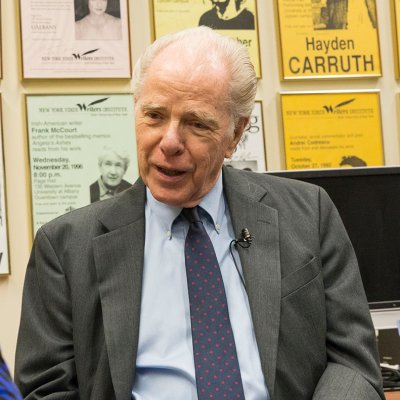
William Kennedy is a Professor in the English Department at the University at Albany, State University of New York. For over 40 years, he has crafted a body of literature centered on Albany, New York, creating what is known as the "Albany Cycle" of novels. His work has established Albany as a significant place in American literature, comparable to Joyce's Dublin and Bellow's Chicago. His educational background includes a BA from Siena College, following attendance at Public School 20 and Christian Brother's Academy. Professor Kennedy's creative work focuses on American fiction, particularly historical and urban narratives rooted in Albany's cultural and political landscape. His writing explores machine politics, family sagas, and the interplay between individual lives and historical events, rendering Albany's "outcasts and machine politicians, lowlifes and swells" with profound humanity. His narratives transform the city into a mythic capital of national memory. His publications consistently draw from Albany's history, with recurring themes of political corruption, redemption, and the resilience of marginalized communities. The "Albany Cycle" demonstrates his mastery in blending local history with universal human struggles across multiple literary forms. William Kennedy's distinguished honors include: John D. and Catherine T. MacArthur Foundation Fellowship Election to the American Academy of Arts and Letters National Endowment for the Arts Fellowship Regents Medal of Excellence from SUNY Governor's Arts Award Commander of the Order of Arts and Letters in France Election to the American Academy of Arts and Sciences As an educator, Kennedy taught creative writing and journalism at the University at Albany from 1974-1982 and Cornell University in 1982-83. His MacArthur Fellowship directly funded the creation of the New York State Writers Institute at Albany, with matching funds from the university and legislative support from Governor Cuomo. He has served on the New York State Council for the Humanities board and the Academy of Motion Picture Arts and Sciences. William Kennedy co-founded the New York State Writers Institute in 1984, which has grown into a major literary hub conducting statewide cultural and educational activities. The Institute remains central to his legacy, fostering literary arts through readings, workshops, and educational programs across New York.
Bunty Avieson is a Senior Lecturer in Journalism and Media at the University of Sydney's Faculty of Arts and Social Sciences. She holds a PhD and MPhil from Macquarie University, specializing in media theory and literary analysis. Her research focuses on Bhutanese media development, Wikipedia's societal impact, and the intersection of journalism with literary practices. PhD Thesis: Media development in Bhutan during its democratic transition MPhil: 'The Poetics of Paranoia' exploring self-construction through Derrida and Nagarjuna Research Interests: Her work spans media policy in Bhutan, Wikipedia's role in knowledge equity, and the ethics of memoir writing. She has published extensively on Bhutan's media evolution and co-edited volumes on memory mediation and trauma narratives. Articles Trends: Recent work examines lifestyle journalism identity, Wikipedia's pandemic-era contributions, and Bhutan's unique digital media strategies. Earlier research explored Bhutan's transition from oral traditions to social media under Gross National Happiness principles. Awards: Vice-Chancellor's PhD Commendation (2013), Ned Kelly Awards for crime fiction (2001-2003) Grants & Projects: Principal Investigator in the Bhutan-Wiki Project (DECRA-funded), co-developed the Australian Colonial Narrative Journalism Database. Received grants for Tamil diaspora storytelling and Bhutan media studies. Professional Roles: Wikimedia Australia Vice President, member of journalism education associations, and former editor of Woman's Day.
National Institute of Oriental Languages and CivilizationsFrance
Georges Kostakiotis is a Senior Lecturer at the National Institute for Oriental Languages and Civilisations (INALCO) in Paris, France, specializing in Modern Greek language and literature. His academic appointment falls under CNU Section 15, covering Arabic, Chinese, Japanese, Hebrew and other languages and literature. He serves as Head of the TEMPO course for Modern Greek and teaches across multiple levels from L1 through L3, including text study, written and oral practice of Greek, Modern Greek thematic courses, specialized Greek text corpora, and technical translation at M1 and M2 levels. Dr. Kostakiotis's research focuses on the intersection of language pedagogy and literary studies. He investigates teaching oral communication from both practical and theoretical perspectives, examining how literary texts function as effective pedagogical tools in foreign language classrooms. His work develops specialized strategies for teaching Greek to Latin-speaking audiences, leveraging linguistic connections while addressing acquisition challenges. Additionally, he explores literary representations of politics and urban worlds, situating Greek literature within broader European and Balkan contexts through the CREE (Centre de Recherches Euro-Méditerranéennes et Euro-asiatiques) research center. Analysis of Dr. Kostakiotis's publication record from 2009-2024 reveals consistent scholarly engagement with Greek literature's relationship to Balkan cultures and historical contexts. His work demonstrates particular interest in how Greek literature addresses themes of foreignness, crisis, and identity through comparative analysis with other Balkan literary traditions. His research spans pedagogical approaches to language teaching, literary analysis of Greek texts, historical examinations of Greek literature, and cultural studies of Greek communities in the Balkans. Dr. Kostakiotis has been instrumental in organizing numerous academic events that bridge language pedagogy and literary scholarship. He has coordinated multiple conferences and study days focused on language teaching methodology, including sessions on oral communication techniques, vocabulary acquisition strategies, and assessment approaches. In the realm of literature and cultural studies, he has organized scholarly gatherings examining Greek-Romanian relations, Phanariote history, women's perspectives in Greek literature, and urban studies with particular attention to cities like Thessaloniki and Alexandria. His collaborative work, including co-edited volumes on Greek-Romanian relations, demonstrates his commitment to fostering academic dialogue across national and disciplinary boundaries.
Monika Gabryś-Sławińska is a Professor at the Department of Polish Literary History , part of the Faculty of Languages, Literatures and Cultures at the University of Maria Curie-Skłodowska (UMCS). Her research spans 19th- and 20th-century Polish literature , focusing on Stefan Żeromski , historical journalism , text editing , voice emission , and museology . MA in Polish Philology (1998, UMCS) PhD in Literary Studies (2007, UMCS) Habilitation in Literary Studies (2016, UMCS) Her research interests include political commentary in historical press , media's role in cultural identity , and sociolinguistic trends . She has edited over 29 academic volumes and authored 5 monographs. Scientific awards: Bronze Cross of Merit KEN Medals (Bronze, Silver) 8 Rector's Awards (UMCS) Lublin Mayor's Medal (2019) She has participated in 5 research grants , organized 35 academic conferences , and contributed extensively to Annales UMCS as a scientific editor.
Prof. Dr. Sebastian Conrad holds the Chair of Modern History at Freie Universität Berlin , specializing in Global History , (Post-)colonial History , and Intellectual History . He joined the faculty in 2010 after teaching at European University Institute in Florence and serving as visiting scholar at institutions including NYU Abu Dhabi and The New School, New York. Director of MA "Global History" (FU Berlin/Humboldt University joint program) Director of Graduate School "Global Intellectual History" Principal Investigator, Cluster of Excellence "Temporal Communities" (2024) Research Interests focus on transnational historical frameworks , globalization of historical narratives , and postcolonial historiography . His latest book Die Königin: Nofretetes globale Karriere (2024) analyzes cultural globalization through Nefertiti's iconography, while his current project explores global history of bodily aesthetics and identity formation since the 19th century. Recent Publications include: 2022: "Empire and Nationalism" (American Historical Review) 2021: "Globalizing the Beautiful Body" (Journal of World History) 2020: "Greek in Their Own Way" (American Historical Review) Scientific Honors : Elected member, Berlin-Brandenburg Academy of Sciences and Humanities (2024) Elected member, Academia Europaea (2024) Finalist, German/NDR non-fiction book awards (2024) for Nefertiti study Academic Leadership includes editorial roles at Geschichte und Gesellschaft , Past & Present , and Globalgeschichte book series (Campus Verlag). His work bridges historical analysis with contemporary debates on memory, identity, and global cultural dynamics.