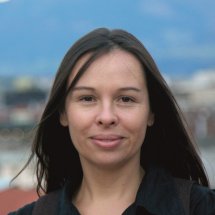
Marianne Nordli Hansen is a Professor at the Department of Sociology and Human Geography , University of Oslo. With a career spanning decades, her research focuses on social stratification , class and inequality , labor market conditions , economic inequality , and elites . She has taught courses like Sociological Theory (SOS4001), Theory Specialization in Sociology (SOS4011), and Inequality: Class, Gender and Ethnicity (SOS4100). Education: MA in Sociology (University of Oslo, 1984), Dr. philos in Sociology (University of Oslo, 1996) Positions: Associate Professor (ISS, UiO, 1996), Professor (ISS, UiO, 1999) Her research explores wealth accumulation , intergenerational mobility , social networks , and educational policy . Key collaborators include Professor Olav Korsnes and Associate Professor Johannes Hjellbrekke at the University of Bergen. Current projects focus on social inequality in Norway , with publications analyzing elite professions, wealth distribution, and class-based educational disparities. She has contributed to significant works on Nordic welfare models and public sector impacts on segregation and equality.
Espen Storli is a Professor at the Department of Modern History and Society, Norwegian University of Science and Technology (NTNU). His work bridges business history, political economy, and resource governance, focusing on international business development in the 20th century. He holds a PhD from NTNU (2010) and has held prestigious positions like the Harvard-Newcomen Fellowship in Business History (2011-2012). His research includes projects such as "The hidden companies of the global economy: the development of international commodity traders, 1945-2015" , funded by the Norwegian Research Council. He co-founded the History and Strategic Raw Materials Initiative , a network examining raw material politics. Research Interests : Business-political intersections Commodity trading history Strategic resource governance State-corporate dynamics Globalization processes Scientific Awards : Harvard-Newcomen Fellow in Business History (2011-2012) Teaching : Courses include environmental history, modern European history, and global political economy of resources. He has contributed to academic outreach through lectures at institutions like Harvard Business School and the World Economic History Congress.
Simen Grung is a Doctoral Research Fellow at the Department of Teacher Education and School Research, Faculty of Educational Sciences, University of Oslo. His work focuses on assessment practices and English language pedagogy. Current projects: EDUCATE (Subject Renewal Evaluation), LANGUAGES (Language Instruction Contexts), NAVIKO-LU (Video-based Teacher Training), VIST (Video Excellence in Teaching) Research Groups: SISCO (Studies of Instruction across Subjects and Competences) His research explores feedback mechanisms in international classroom contexts, formative assessment challenges, and the use of video representations to enhance teacher training programs across Norway, England, and France. Recent publications demonstrate expertise in comparative education studies, language proficiency analysis, and assessment research methodologies. Key themes include cross-cultural pedagogical practices, assessment literacy, and video-based professional development. Active in academic collaborations, he works with researchers like Lisbeth M. Brevik, Eva Thue Vold, and Kirsti Klette on projects examining instructional quality and student experiences in teacher education.
Tatjana Schnell is a Professor of Existential Psychology at MF Norwegian School of Theology, Religion and Society, where she has worked since October 2020. She also holds a fellowship at the Humanistic University Berlin (since 2024). Her professional journey includes academic training in psychology, theology, religious studies, and philosophy across Germany, the UK, and Austria, with a doctorate from the University of Trier (Germany) and habilitation from the University of Innsbruck (Austria), where she founded the Existential Psychology Lab. Education : Psychology, Theology, Religious Studies, and Philosophy from the University of Göttingen, University of London, University of Heidelberg, and University of Cambridge Degree : Doctorate in Psychology (University of Trier, Germany) Habilitation : Psychology (University of Innsbruck, Austria) Tatjana Schnell's research focuses on existential themes including meaning in life, existential health, death attitudes, alienation, and religious/spiritual/secular worldviews. Her work bridges individual psychology with societal and environmental implications, with extensive international collaborations and publications. She has authored key works like "The Psychology of Meaning in Life" (2nd ed., 2025) and "Sinn finden" (2024). Her recent publications examine pandemic psychology, existential resources in gifted adults, workplace spirituality, and meaning-based interventions for chronic pain and cancer rehabilitation. Her research projects include "Making Sense of Volunteering," "Sinnmacher - The Meaning App," and studies on existential resources in palliative care. The Tatjana Schnell website provides further details about her work. Fellow : Humanistic University Berlin (2024) Tatjana Schnell has developed innovative tools like the Sources of Meaning Card Method (SoMeCaM) and Meaning in Work Inventory (ME-Work), with validated versions across multiple cultures. Her work emphasizes the practical application of existential psychology in mental health, organizational behavior, and ecological engagement. She founded the Existential Psychology Lab at the University of Innsbruck and continues to lead impactful research at MF Norwegian School of Theology, Religion and Society.
Molly Maleckar is a Research Professor at the Computational Physiology Department of Simula Research Laboratory , Oslo, Norway. Her work bridges computational modeling, cardiac electrophysiology, and biomedical applications, with a focus on arrhythmia mechanisms, fibrosis modeling, and machine learning integration in cardiac risk prediction. Research Interests include: Computational Cardiology Ion Channel Dynamics Machine Learning in Medicine Excitable Tissue Modeling Cardiac Fibrosis Analysis Biomedical Simulation Scientific Contributions span 15+ publications (2018-2024) addressing atrial fibrillation, calcium handling, and AI-driven ECG analysis. Key collaborative projects involve patient-specific ventricular modeling and educational initiatives like the Simula Summer School in Computational Physiology .
Emilia Andersson-Bakken is an Associate Professor at Oslo Metropolitan University, affiliated with the Faculty of Education and International Studies and the Department of Primary and Secondary Teacher Education. She teaches and supervises student teachers at bachelor’s, master’s, and PhD levels, contributing significantly to initial teacher education. Her academic work is deeply rooted in classroom research, with a focus on critical thinking, creativity, and classroom discourse in primary education. Her research interests include classroom research , initial teacher education , critical thinking , creativity , and classroom discourse . These themes are reflected in her ongoing involvement in key research projects such as KriT (Critical Thinking in Primary Education), Beyond access: improving quality of early years reading instructions in Ethiopia , and Classroom activities for the six-year-olds – 20 years on (Klassprax_20) . These projects emphasize pedagogical innovation, teacher facilitation, and literacy development in early schooling. The trends in her recent publications reveal a strong commitment to advancing critical thinking through children’s literature, dialogic teaching, and teacher-led inquiry. Her work spans both theoretical and practical dimensions, with a recurring emphasis on how teachers can foster student agency and reflective thinking in primary classrooms. She frequently publishes in educational journals and contributes to edited volumes focused on pedagogy and literacy. She has received no explicitly mentioned scientific awards in the provided text. Emilia supervises students at multiple levels and is actively involved in research funding and dissemination efforts through national and international conferences. Her work is supported by collaborative research teams and institutional frameworks at OsloMet. While no specific grants are named, her participation in multi-year, interdisciplinary projects indicates substantial research support and academic leadership. She is part of the research group Classroom Research and contributes to Research and Development Work on the Lower Primary Level With a Focus on Initial Education . These groups focus on observational studies, curriculum evaluation, and teacher development in early education contexts.
Mikaela Vasstrøm (b.1977) is an Associate Professor at the Department of Global Development and Planning, University of Agder. She holds a PhD from the University of Copenhagen and leads significant research projects including the Norwegian Research Council-funded WINDPLAN initiative, which analyzes social acceptance and governance challenges in onshore wind power development across Norway, Scotland, and Denmark. She co-leads work packages in the WINDREG project focusing on procedural justice and knowledge co-production for energy transitions. Her research examines: Just energy transitions and energy democracy Governance challenges in renewable energy deployment Public participation in environmental conflicts Local/regional development implications of energy policies She co-directs UiA's participation in the Empowered Futures research school, developing PhD-level expertise in energy policy frameworks. Publications focus on wind energy governance, policy legitimacy, and spatial planning conflicts, with consistent themes of: Energy justice in policy design Local government capacity in energy transitions Participatory approaches in sustainability planning Research group affiliations include: Energy and Society Urban and Regional Planning (URPLAN)
Ronny Scherer is Center Director and Professor at CEMO (Center for Educational Measurement) and Deputy Director at CREATE (Center for Research on Equality in Education) at the University of Oslo's Faculty of Educational Sciences. His work bridges educational measurement, assessment, and evaluation with a focus on research syntheses and complex sampling surveys. Dr. Scherer's research spans two interconnected domains: substantive areas including digital divides, equity and equality in education, and measurement of complex cognitive skills (such as complex problem solving, adaptability, computational thinking, and executive functioning); and methodological areas focusing on advanced meta-analytic techniques, multilevel structural equation modeling, and spatial analysis of complex survey data. His work frequently utilizes international large-scale assessment data from PISA, ICILS, TIMSS, PIRLS, PIAAC, and TALIS. His publication record demonstrates a clear trajectory toward increasingly sophisticated meta-analytic approaches, with recent work focusing on second-order meta-analyses, AI-assisted screening methods, and advanced techniques for handling complex survey data. His research consistently addresses critical educational challenges related to equity, digital literacy, and measurement of 21st century skills. Dr. Scherer has secured significant research funding for projects including ARISE (Academic resilience in mathematics and science among vulnerable students), DiDiRes (Digital inequalities in education), and ADAPT21 (Educational assessments of the 21st century: Measuring and understanding students' adaptability in complex problem solving situations). Co-director of CREATE (Centre for Research on Equality in Education) since 2023 Professor of Educational Assessment and Measurement at CEMO since 2019 Extensive experience with international large-scale assessments including ICILS, TALIS, and PIAAC As an educator, Dr. Scherer teaches advanced courses in measurement models, multilevel models, meta-analysis, and equity in education. He actively supervises graduate students interested in his research areas and has developed numerous workshops on structural equation modeling and meta-analytic methods for international audiences.
Elin Marie Frivold Kostøl is an Assistant Professor in the Department of Education at the University of Agder. Her research focuses on co-regulation in parent-child and teacher-child interactions, particularly in emotional situations. She examines how social and emotional conditions influence child development and learning, with methodological expertise in qualitative approaches like Stimulated Recall Interviews and video analysis. Key areas include special education, social-emotional learning, and inclusive education. Her work explores pedagogical strategies for emotional support in classrooms and the role of intersubjective understanding in bullying prevention. She is affiliated with the Special Education research group and has contributed to interdisciplinary projects addressing educational assessment and school staffing challenges. Elin’s research highlights teachers’ interpretations of emotional situations, emphasizing co-regulation as a pedagogical tool. She advocates for evidence-based practices to enhance children’s emotional and behavioral regulation in diverse classroom settings.
Grethe Myklebust is a Professor at the Department of Sports Medicine, Norwegian School of Sport Sciences, where she serves as Program Coordinator for the Master in Sports Physiotherapy and teaches courses including Injury Prevention and Clinical Sports Physiotherapy. She holds a PhD (2003) focused on ACL injury prevention in handball and has 20+ years of experience as a physiotherapist for national teams in handball, football, and beach volleyball, including Olympic health teams in Seoul and Sydney. Her research centers on sports injury mechanisms, risk factors, and prevention strategies—particularly for shoulder, knee, and ankle injuries in handball and football. She investigates how to disseminate prevention knowledge to athletes, coaches, and parents, with projects like Prep to be PRO and Safeplay targeting youth athlete development. Her work emphasizes neuromuscular training, injury epidemiology, and implementation science in sports contexts. Analysis of her 15 most recent publications (2021–2025) reveals dominant themes: ACL injury rehabilitation/return-to-sport decisions (6 studies), youth athlete injury prevention (5 studies), sport-specific biomechanical risks (3 studies), and translational research frameworks (1 study). Her cohort studies and RCTs consistently address gender differences, training load effects, and barriers to implementing prevention programs. She leads multiple projects including Injury Prevention in Youth Sports and collaborates with the Oslo Sports Trauma Research Centre (OSTRC), focusing on practical interventions for athlete resilience. As a board member of the Sports Physiotherapy group (FIA) and former IHF Medical Commission member, she bridges clinical practice with academic research.
Festo Kayima is an Associate Professor in Chemistry Didactics at the Department of Teacher Education, Faculty of Social and Educational Sciences, Norwegian University of Science and Technology (NTNU). His research focuses on science teacher education, classroom knowledge, and pedagogical strategies in chemistry. Doctorate in Chemistry Education (2018, University of Bergen) Master’s in Science Education (2020, NTNU) Kayima’s research projects include developing science teacher trainees’ professional knowledge through reflective practice, enhancing scientific literacy, and integrating sustainability into chemistry education. He leads the Erasmus+ project STEMkey (2020–2023), emphasizing graduate attributes and key skills for educators. His recent publications (2025) with Springer explore pedagogical themes like chemical knowledge, outdoor teaching, and technology integration. These works align with broad keywords such as Science Education, Curriculum Development, and Experiential Learning, with subfields spanning digital tools, sustainability, and misconceptions in chemistry. Co-supervised Kristine Fjelldal Sunde’s thesis on teacher questioning in labs He contributes to research groups Naturfaglig Literacy i Skole og Lærerutdanning and ScienceHumanities , bridging interdisciplinary approaches in education. His teaching includes courses like Science as a School Subject (MGLU4211) and Teacher Education: Teaching Chemistry (PPU4626).
Karmenlara Ely Seidman is a Professor and Artistic Director in Acting and Performance at the Norwegian Theatre Academy (NTA), Østfold University College, and a part-time Professor II at the School of Music, UiT The Arctic University of Norway. She holds a Ph.D. in Philosophy (2008) and an M.A. in Performance Studies (2001) from NYU's Tisch School of the Arts. Her research explores interdisciplinary intersections of performance, ethics, and cultural memory, with foci including: Relational aesthetics and embodiment in performance Intergenerational art practices and indigenous/diaspora knowledge systems Transatlantic archives and decolonial methodologies Experimental pedagogy and institutional reimagining Street performance and ritual/game structures Her publications emphasize performative archives, actor training, and ethical frameworks, frequently engaging with themes of cultural memory, embodiment, and institutional critique. Recent works demonstrate a strong focus on decolonial praxis and interdisciplinary collaboration. She leads major funded projects including: Sea Matters (2023–2026): Performance research pedagogy laboratory Spectral Collaborations (2019–2022): Performative entanglement in Nordic Transatlantic Slavery archives Infinite Record (2013–2017): Archive memory and performance She mentors PhD students internationally, serves on evaluation committees across Nordic institutions, and has developed innovative study programs bridging artistic practice and scholarly research.
Tor Helge Aas is a Professor at the Department of Management and Innovation, School of Business and Law, University of Agder, and holds a part-time position as Professor II at Kristiania University College. He is the Director of the Executive MBA program at UiA and actively contributes to research and teaching in innovation management. His affiliations include the Research Centre for Studies of Innovation for Sustainable Transition (RIST) and the ISPIM Scientific Panel. His research interests focus on innovation management , particularly in digital servitization, service innovation, innovation processes, collaboration for innovation, and management control. He examines how organizations in manufacturing and service sectors transition to service-oriented business models through digital platforms and ecosystem collaboration. The recent publications highlight a strong trend in digital servitization , platform-based innovation , and human-technology interaction in Industry 5.0. His work spans business model innovation, legitimacy in smart services, and coopetition in R&D projects, with a consistent focus on organizational transformation and sustainable innovation. Scientific Awards and Recognitions: No explicit awards mentioned in the text. Advising and Grants: He has supervised Master’s and PhD students (implied through academic roles). Actively involved in Horizon 2020 projects: OpenInnoTrain (Work Package Manager) and REDI program. Research funded by EU frameworks, indicating competitive grant acquisition. Labs and Research Teams: Member of RIST – Research Centre for Studies of Innovation for Sustainable Transition . Active in ISPIM (International Society for Professional Innovation Management) Scientific Panel. Collaborates extensively with researchers like Anne-Laure Mention, Katja Maria Hydle, and Karl Joachim Breunig.
Aleksandra Raonic is an Associate Professor at the Norwegian University of Science and Technology (NTNU), affiliated with the Department of Architecture and Technology under the Faculty of Architecture and Design. She previously held an Associate Professorship at Xi'an Jiaotong-Liverpool University (XJTLU) in China from 2014 to 2020, where she led Year 3 architecture programs and collaborated with the University of Liverpool. Raonic is also the founder and principal architect of RAUM, an award-winning architectural studio known for research-driven design projects. Her work spans architectural education, urban design, and innovative residential/commercial projects, with a focus on sustainability and community engagement. Her research emphasizes experimental pedagogy and the integration of design practice with academic teaching. Notable projects include the Stubline Kindergarten (2017 S.ARCH Award) and the Central Greenmarket in Negotin (2019 DANS International Award). Raonic has received over 25 design and teaching awards, including the Jiangsu Province Tutor Award (2018) and the Suzhou Excellent Educator Award (2016). She has supervised numerous student projects recognized at national and international levels. Raonic’s teaching philosophy combines theoretical rigor with hands-on practice, evident in her co-authored publications like Framing Indeterminacy (2019). Her recent exhibitions, including Barnas Katedral (2023) and Work in Progress (2023), highlight her commitment to experimental design and public space innovation. She actively collaborates across institutions, such as the Threads of Innovation project with CEPT University in India (2021). Education Background: Professional journey began with early architectural competitions (e.g., 1998 student award for urban design in Pancevo). Formal training includes studies at the Städelschule in Frankfurt, influencing her experimental design ethos. Awards Overview: Over 25 awards spanning teaching excellence, design competitions, and architectural innovation, including Grand Prix (Leonardo 2005) and multiple jury-selected projects. Grants & Projects: Leads applied research initiatives like NTNU’s Threads of Innovation , focusing on space interventions and cross-cultural academic partnerships. Raonic’s architectural practice and academic roles are deeply intertwined, reflecting her belief in education as a platform for advancing architectural discourse and societal impact.
Elisabeth Anvik is an Associate Professor in the Department of Early Childhood Education at the Faculty of Education and International Studies, Oslo Metropolitan University (OsloMet). She also serves as Head of Studies – Area of Responsibility 4, contributing to academic leadership in teacher education. Her work is deeply rooted in music, cultural heritage, and arts-based pedagogy in early childhood contexts. Position: Associate Professor Institution: Oslo Metropolitan University School: Faculty of Education and International Studies Department: Department of Early Childhood Education Email: elisabeth.anvik@oslomet.no Office: Pilestredet 42, Q4041, Oslo Her research interests center on early childhood education, with a focus on music, immaterial cultural heritage, sustainability, play, aesthetics, and technology. She is actively involved in the research groups BLEST (sustainability, play, aesthetics and technology), KunstForsk (arts-based and artistic research), and Philosophy, Art and Culture. Her work emphasizes cultural diversity in teacher training and the role of music in preserving and renewing traditions within kindergarten settings. The recent publications and dissemination activities reveal a consistent engagement with transformative singing practices, digital tools in music education (e.g., the 'Trall' app), and the integration of artistic research in professional pedagogy. Themes across her work include cultural continuity, pedagogical innovation, and the expressive dimensions of early learning. Elisabeth Anvik is a key contributor to the ongoing research project Vibrant Connections , which investigates how music supports cultural heritage in Norwegian kindergartens and teacher education programs. She collaborates extensively with colleagues such as Liv Anna Hagen, Siri Haukenes, and Nina Engesnes. She has authored scientific publications, a textbook ( RAFFE RIFF. Sanger i sirkel ), and over 130 dissemination works, demonstrating a strong commitment to both academic and public engagement. While no formal scientific awards are listed, her extensive output and project leadership indicate significant recognition in her field. She advises on educational practices, contributes to curriculum development, and leads initiatives that bridge research, artistic practice, and early childhood pedagogy. Her work is supported through institutional research funding and collaborative projects rather than individual grants, as per available data. She is affiliated with multiple research groups: BLEST, KunstForsk, and Philosophy, Art and Culture—each contributing to interdisciplinary and arts-integrated approaches in education.