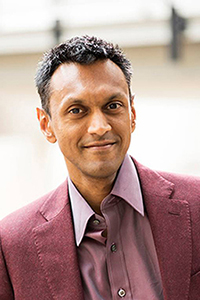
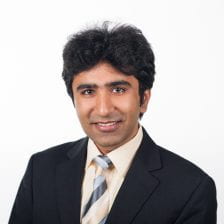
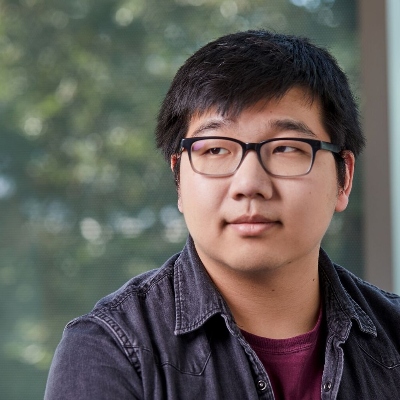
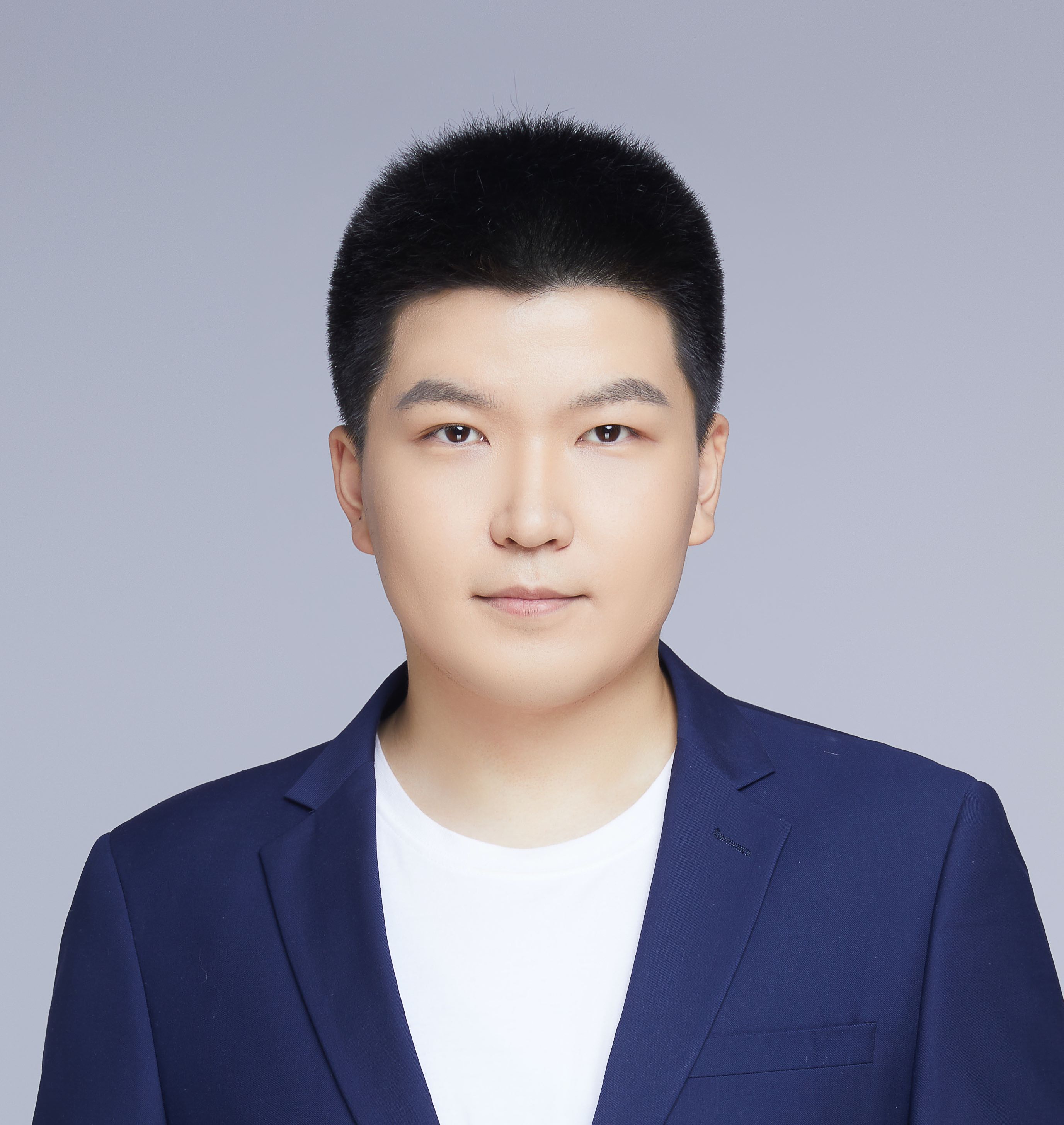
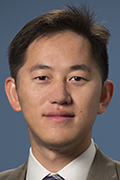
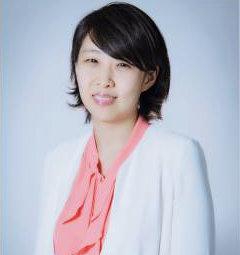
Brandon M. Lucia is the Kavčić-Moura Professor of Electrical and Computer Engineering at Carnegie Mellon University and CEO/co-founder of Efficient Computer Company. He leads the Abstract research group and focuses his work on the intersection of computer architecture, systems, and programming languages. Education: Ph.D. in Computer Science and Engineering, University of Washington (2013) — advised by Luis Ceze Research Focus: Brandon's research is broadly centered on intermittent computing , edge computing , and energy-efficient architectures . Two major thrusts define his current work: Intermittent Computing: Making battery-free, energy-harvesting devices programmable and reliable despite frequent power failures. Applications include medical implants, space systems, and large-scale sensing. Orbital Edge Computing: Designing nanosatellite constellations that perform on-orbit data processing, enabling low-latency, high-resolution sensing in space-constrained environments. Scientific Awards: NSF CAREER Award (2017) IEEE TCCA Young Computer Architect Award (2019) Sloan Foundation Fellowship (2021) ASPLOS 2020 Best Paper Award OOPSLA 2015 Distinguished Paper & Artifact Awards IEEE Micro Top Picks (2016, 2018 Honorable Mention) Advising & Grants: Brandon actively advises a strong cohort of Ph.D. students including Zhuo Cheng, Bradley Denby, Souradip Ghosh, Harsh Desai, Kiwan Maeng, Emily Ruppel, and others. His group is funded by the NSF (CAREER and SHF grants), the Sloan Foundation, and industry partnerships. Labs & Teams: He directs the Abstract research group at CMU ECE, which hosts interdisciplinary projects spanning hardware design, compiler construction, and system software for ultra-low-power and space-borne computing platforms.
Sham Kakade is the Rampell Family Professor of Computer Science and Professor of Statistics at Harvard University, co-director of the Kempner Institute. His research focuses on advancing artificial general intelligence through foundational work in reinforcement learning, large-scale learning systems, and autonomous agent architectures. He earned his PhD in 2003 from the Gatsby Computational Neuroscience Unit at University College London. His work emphasizes scalable optimization algorithms, distributed systems for foundation models, and understanding emergent capabilities in neural architectures. Research interests include full-stack training pipelines for foundation models, mathematical principles of large-scale learning systems, and bridging language models with embodied intelligence. He advises prospective students with backgrounds in applied deep learning or theoretical computer science, offering access to the Kempner Institute's computational resources. He serves on committees for the ACM Prize in Computing and Sloan Research Fellowships, co-organizes the Simons Symposium on Theoretical Machine Learning, and chaired COLT 2011. His lab works at the intersection of theory and practice, addressing challenges in AI's societal impact and technical scalability. Labs/Teams: Co-directs the Kempner Institute, fostering collaborations between AI researchers and social scientists. Active in Harvard's SEAS community.
Tushar Krishna is an Associate Professor in the School of Electrical and Computer Engineering at Georgia Institute of Technology, with a courtesy appointment in the School of Computer Science. He earned his PhD in Electrical Engineering and Computer Science from MIT in 2014, an MSE in Electrical Engineering from Princeton University in 2009, and a B.Tech in Electrical Engineering from IIT Delhi in 2007. His research spans computer architecture, interconnection networks, networks-on-chip (NoC), and AI/ML accelerator systems, with a focus on optimizing data movement in modern computing platforms. His work is funded by NSF, DARPA, IARPA, SRC, Department of Energy, Intel, Google, Meta, Qualcomm, and TSMC. His papers have been cited over 17,000 times, with three receiving IEEE Micro's Top Picks recognition, one earning an honorable mention, and four winning best paper awards. Dr. Krishna leads the Synergy Lab at Georgia Tech and has developed several influential tools including ASTRA-sim for distributed AI/ML training, MAESTRO and SCALE-sim for accelerator design space exploration, and Garnet2.0 for NoC simulation. His recent work focuses on large language model acceleration, distributed training systems, and neuro-symbolic AI architectures. He has received numerous teaching and research awards including induction into the HPCA Hall of Fame (2022), the Class of 1940 Teaching Effectiveness Award (2018), and the Roger P. Webb Outstanding Mid-career Faculty Award (2024). HPCA Hall of Fame Inductee (2022) Roger P. Webb Outstanding Mid-career Faculty Award (2024) Richard M. Bass/Eta Kappa Nu Outstanding Junior Teacher Award (2023) Roger P. Webb Outstanding Junior Faculty Award (2021) Class of 1940 Course Survey Teaching Effectiveness Award (2018) Dr. Krishna currently serves as Associate Director for the Center for Research into Novel Computing Hierarchies (CRNCH) and co-chair of the Chakra Execution Traces and Benchmarks Working Group. He has held the ON Semiconductor (Endowed) Junior Professorship at Georgia Tech (2019-2021) and has been a visiting professor at MIT EECS, Harvard University CS, and a researcher at Intel's VSSAD group.
Jiatao Gu is an Assistant Professor in the Department of Computer and Information Science (CIS) at the University of Pennsylvania, with a part-time role as Staff Research Scientist at Apple (MLR). He holds a Ph.D. in Electrical and Electronic Engineering from the University of Hong Kong (2018) and a B.Eng. in Electronic Engineering from Tsinghua University (2014). His research focuses on generative machine learning and AI agent interaction with the physical world, emphasizing multi-modal systems spanning language, images, videos, and 3D. Key themes include efficient modeling , flexible architecture design , and scalable decision-making frameworks . 2025: ICLR paper on DART framework 2024: TMLR work on GFlowNet alignment 2023: NeurIPS research on diffusion stability 2022: ACL papers on speech translation Recent publications explore diffusion models for text-to-image synthesis, 3D reconstruction, and efficient sampling techniques. His work addresses fundamental challenges in attention mechanisms, entropy collapse, and multi-stage distillation while advancing non-autoregressive translation and vision-language reasoning . Prospective students can apply through his recruitment process at UPenn. Prior affiliations include Meta AI (FAIR Labs) and academic collaborations with institutions like New York University's CILVR Lab.
Celestine Mendler-Dünner is a Principal Investigator at the ELLIS Institute in Tübingen, co-affiliated with the Max Planck Institute for Intelligent Systems and the Tübingen AI Center. She leads the Algorithms and Society research group, focusing on machine learning in social contexts and the role of prediction in digital economies. Her work bridges theoretical machine learning with practical societal impact, developing tools for safe, reliable, and equitable AI ecosystems. Her educational background includes a PhD from ETH Zurich in collaboration with IBM Research, followed by an SNSF postdoctoral fellowship at UC Berkeley hosted by Moritz Hardt. She was previously a group leader at the Max Planck Institute for Intelligent Systems before joining the ELLIS Institute. Mendler-Dünner's research spans several interconnected themes including performative prediction (where predictions change the behavior they aim to predict), algorithmic collective action (how participants can steer AI systems toward common goals), and the role of LLMs in social science research. Her work combines theoretical foundations with practical implementations, addressing challenges in interactive machine learning, optimization in dynamic environments, and context-specific evaluation of AI systems. She particularly examines how algorithmic predictions mediate services and platforms at societal scale, exploring concepts of economic power in digital markets. Her publication record shows a clear evolution from system-aware machine learning algorithms (including foundational work on IBM Snap ML) toward increasingly sociotechnical questions at the intersection of machine learning, economics, and policy. Recent work focuses on measuring performative power in digital economies, evaluating LLMs as risk scores, and developing frameworks for algorithmic collective action in recommender systems and labor markets. Among her notable recognitions are the ETH Medal for her dissertation, the IBM Research Division Award, the Fritz Kutter Award, and the IBM Eminence and Excellence Award. She is an ELLIS Scholar, a fellow of the Elisabeth-Schiemann-Kolleg, and affiliated with several prestigious research programs including the International Max Planck Research School for Intelligent Systems and the Max Planck ETH Center for Learning Systems. ETH Medal (dissertation award) IBM Research Division Award Fritz Kutter Award IBM Eminence and Excellence Award SNSF Early Postdoc Mobility Fellowship Mendler-Dünner actively mentors the next generation of researchers, advising PhD student Patrik Wolf and supervising research interns including Joachim Baumann, Haiqing Zhu, and Anna Badalyan, as well as Master's student Dorothee Sigg. She serves as core faculty for the International Max Planck Research School and associated faculty for the Max Planck ETH Center for Learning Systems. Her group has secured significant research funding through fellowships and institutional support, enabling work on projects like Powermeter (measuring search engine influence) and Snap ML (resource-efficient machine learning library with over 1 million PyPI downloads). She leads the Algorithms and Society research group, which examines machine learning as part of broader sociotechnical ecosystems. The group explores human-population interactions with algorithmic systems and incorporates these insights into learning system fundamentals. Current projects include investigating economic incentives in digital platforms, developing tools for systematic LLM evaluation in social science contexts, and creating frameworks for collective action in algorithmic systems. Mendler-Dünner also co-organizes the Algorithmic Collective Action workshop at NeurIPS 2025, demonstrating her leadership in emerging research directions at the AI-society interface.
Xupeng Miao is a Visiting Assistant Professor in the Department of Computer Science at Purdue University, holding the Kevin C. and Suzanne L. Kahn New Frontiers Assistant Professorship. Previously, he was a Postdoctoral Fellow at Carnegie Mellon University's Catalyst Group under Professors Zhihao Jia and Tianqi Chen. He earned his Ph.D. in Computer Science from Peking University (2022) and a Bachelor’s degree from Northeastern University. His research focuses on machine learning systems, distributed computing, and data management, with notable contributions to systems like Hetu (a distributed deep learning framework) and innovations in large language model (LLM) serving (e.g., SpotServe, SpecInfer). He has received awards including the 2024 WAIC Yunfan Award and an Outstanding Paper Award at ACL 2024. Current projects emphasize efficient systems for generative AI, including optimizing LLM training and inference on heterogeneous hardware, fault-tolerant distributed training, and scalable graph-based machine learning. He teaches CS 59200-MLS: Machine Learning Systems at Purdue and actively mentors students in PhD/MS programs and internships. Key achievements include NVIDIA Academic Awards, IEEE Micro Top Picks recognition, and leadership in international conference roles (e.g., Artifact Evaluation Co-Chair for KDD 2025 and MLSys 2025). His work bridges system design, algorithmic innovation, and hardware-aware optimizations to advance scalable AI infrastructure.
Ana Klimovic is an Assistant Professor at the Department of Computer Science, ETH Zürich, and Deputy Head of the Institute for Computing Platforms. She leads the Efficient Architectures and Systems Lab (EASL) and focuses on optimizing cloud computing performance and resource efficiency. Education: Ph.D. in Electrical Engineering (Stanford University), M.S. in Electrical Engineering (Stanford), B.A.Sc. in Engineering Science (University of Toronto) Previous Roles: Research Scientist at Google Brain Her research spans cloud computing, operating systems, distributed systems, and their intersection with machine learning. Key areas include cloud-native programming models, elastic storage, GPU sharing, and data pipeline optimization. The 2025-2024 articles highlight trends in serverless computing, large language model (LLM) serving, GPU optimization, and data-centric ML systems. Themes include elasticity, resource multiplexing, heterogeneous computing, and infrastructure for AI/ML workloads. Scientific Awards: Microsoft Research PhD Fellowship, Stanford Graduate Fellowship She has led research projects on ephemeral storage, distributed training automation, and cost-efficient ML preprocessing, with grants from Microsoft Research and Stanford.
Alexandre Jacquillat is the Maurice F. Strong Career Development Associate Professor and Associate Professor of Operations Research and Statistics at MIT Sloan School of Management. His research focuses on data-driven decision-making with applications in air traffic management, urban mobility, and decarbonization. He holds a PhD in Engineering and MS degrees from MIT and École Polytechnique. Education PhD in Engineering, MIT MS in Technology and Policy, MIT MS in Applied Mathematics, École Polytechnique Research Interests His work develops scalable optimization models for efficient, equitable, and sustainable operations. Key areas include stochastic optimization, large-scale systems design, and machine learning applications in transportation and public policy. Recent projects explore vertiport planning for urban aerial mobility and prescriptive analytics for pandemic response. Awards Harold W. Kuhn Award (2024) INFORMS Harvey Greenberg Research Award (2023) MIT Jamieson Prize for Excellence in Teaching (2023) Multiple INFORMS Best Paper Awards (2015-2023) Named Leading Academic Data Leader by Chief Data Officer Magazine (2021-2022) Teaching & Grants Teaches courses in optimization (15.093, 15.083) and analytics (15.072). His grants support work in robotic warehousing, air traffic scheduling, and disaster response logistics. Advises on transportation analytics for industry and government. Labs/Teams Leads MIT Sloan's operations research group, collaborating with industry partners like McKinsey & Co. and Booz Allen Hamilton on transportation analytics and optimization projects.
Khuzaima Daudjee is a Professor and David R. Cheriton Faculty Fellow in the Cheriton School of Computer Science at the University of Waterloo. His research focuses on systems-oriented problems at the intersection of systems and data management, particularly building large-scale systems, storage infrastructure in the cloud, and modern hardware applications. He leads projects in distributed database systems, elastic scaling, and resource optimization. His recent work includes Caerus (geo-replicated transactions), Tiresias (predictive storage), and MorphoSys (automatic physical design metamorphosis). Daudjee has chaired major conferences including ICDE 2026 and serves on editorial boards for VLDB, SIGMOD, and IEEE TKDE journals. His awards include ACM Distinguished Scientist and multiple best paper awards. Educational initiatives include developing distributed systems teaching materials and supervising graduate students across database and distributed systems domains. His industry collaborations involve cloud infrastructure optimization and scalable data processing frameworks.
Michele Zorzi is a Professor of Telecommunications at the School of Engineering, University of Padova, Italy, where he has held a faculty position since 2003. He leads the SIGNET (Signal processing and Networking) Research Group, focusing on cutting-edge wireless networking challenges including mmWave communications and underwater networks. His extensive publication record exceeds 600 papers in top-tier journals and conferences, reflecting significant contributions to the field through both theoretical and experimental work. He received his Laurea Degree (1990) and Ph.D. (1994) in Electrical Engineering from the University of Padova. Prior academic appointments include Politecnico di Milano (1993-1996), University of California San Diego (1995-1998), and University of Ferrara (1998-2003), where he progressed from Associate Professor to full Professor. His educational trajectory demonstrates deep roots in Italian academia with international exposure. Professor Zorzi's research spans wireless communications and networking, with current emphases on mmWave networking for vehicular systems, underwater acoustic/optical communications, non-terrestrial networks, and AI-driven networking solutions. His group conducts experimental validations including at-sea trials for underwater systems and testbeds for vehicular networks. Key projects include PRATA for predictive QoS in autonomous driving and IoT-based environmental monitoring of the Venice Lagoon, demonstrating practical applications of theoretical work. Analysis of his 2022-2025 publications reveals strong trends in applying artificial intelligence to networking challenges across diverse environments. There is significant emphasis on vehicular networks (predictive QoS, teleoperated driving), underwater systems (acoustic/optical communications, AUV swarms), and satellite networks (Starlink integration, NTN security). Experimental validation in real-world scenarios like the Venice Lagoon monitoring project and underwater sea trials characterizes his applied research approach. His scientific accolades include: IEEE Fellow (2007) IEEE Communications Society Best Tutorial Paper Award (2008, 2019) Stephen O. Rice Best Paper Award (2018) Multiple best paper awards at IEEE conferences (2005-2020) As principal investigator for numerous European and US research projects plus 20+ industry-funded initiatives, Professor Zorzi has mentored over 35 PhD students and post-docs. Graduates now hold prominent positions at institutions including Stanford, UCSD, CTTC, and Huawei. His SIGNET group maintains active international collaborations and contributes to open-source networking tools via GitHub, demonstrating commitment to community engagement. The SIGNET Research Group, housed within the Department of Information Engineering, operates specialized experimental facilities for mmWave and underwater communications. Current initiatives include AI-based predictive QoS frameworks for vehicular networks, underwater optical communication systems using ultraviolet light, and large-scale IoT deployments for environmental monitoring. The group's GitHub presence indicates strong open-science practices, while recent sea trials confirm hands-on experimental capabilities beyond theoretical work.
Stefano NASINI is an Associate Professor at the University of Lille 3, specializing in Quantitative Methods within the Economics and Mathematics Sciences. He holds a HDR (Habilitation à Diriger des Recherches) from the University of Lille 3 (2021), a Ph.D. in Statistics and Operations Research from the Polytechnic University of Catalonia (2015), and a Master in Statistics (2011). His research focuses on optimization, complex networks, statistical inference, and microeconomic applications. He has held academic positions including a post-doctoral role at IESE Business School (2014–2016) and a visiting researcher role at the University of Lisbon (2014). His work spans scheduling optimization, network analysis, financial contagion modeling, and energy system planning. Key contributions include specialized algorithms for large-scale optimization problems and frameworks for decentralized portfolio management. He is a member of the LEM research group and teaches courses in optimization, econometrics, and social network analysis at the Grande École and MSc levels. Publications highlight interdisciplinary applications, including network-based diffusion models, multi-market financial strategies, and dynamic choice analysis. His research bridges theoretical advancements in operations research with practical challenges in economics, energy, and transportation systems. No scientific awards are explicitly listed in the provided materials. His advising roles and grants are not detailed here, but his extensive publication record reflects active collaboration within academic and applied domains.
Dr. Nanpeng Yu is a Full Professor at the University of California, Riverside , serving as Vice Chair and Graduate Advisor in the Department of Electrical and Computer Engineering . He maintains cooperative faculty affiliations with the Department of Computer Science and Department of Statistics , and directs the Energy, Economics, and Environment Research Center at UCR. Education : B.S. in Electrical Engineering from Tsinghua University (2006), M.S. in Electrical Engineering and Economics, and Ph.D. from Iowa State University (2010) Prior Industry Experience : Senior Power System Planner and Project Manager at Southern California Edison (2011-2014) Dr. Yu’s research bridges smart grid technologies , data-driven optimization , and machine learning for energy systems. Key areas include voltage control , renewable energy integration , transportation electrification , and grid resilience . His recent work focuses on physics-informed graph learning for unit commitment problems and adversarial purification in power system classifiers. The AI-Energy Nexus Laboratory under Dr. Yu has produced impactful publications in Applied Energy , IEEE Transactions on Power Systems , and Transportation Research series, covering topics like heavy-duty EV charging infrastructure and dynamic distribution network reconfiguration . Lab members have won the American-Made Digitizing Utilities Grand Prize ($300,000) from the U.S. DOE. Leadership Roles : Chair, IEEE Power and Energy Society Distribution System Operation and Planning Subcommittee Chair, IEEE Power and Energy Society Working Group on Data-Driven Modeling for Power Distribution Networks Associate Editor, IEEE Transactions on Smart Grid and IEEE Power Engineering Letters Scientific Awards : Regents Faculty Fellowship Regents Faculty Development Award Multiple IEEE Best Paper Awards
Seth Lewis Gilbert is a Professor and Head of the Department of Computer Science at the National University of Singapore (NUS), within the School of Computing . He holds the Dean's Chair Associate Professor title and focuses on algorithms for large-scale distributed systems , emphasizing scalability and fault-tolerance . His work spans wireless networks , contention resolution , dynamic networks , and blockchain protocols . Ph.D. in Computer Science, MIT (2007) M.S. in Computer Science, MIT (2003) B.S. in Electrical Engineering & Mathematics, Yale University (1999) His research explores trusted coordination in systems with untrusted and unreliable participants, addressing challenges like Byzantine agreement , load balancing , and contention resolution . He has pioneered formal frameworks for accountability in distributed protocols and developed novel algorithms for asynchronous task allocation . Recent publications include work on consensus protocols , leader election , and contention resolution , reflecting his focus on dynamic network environments . His research has earned recognition at venues like DISC, ICDCS, and CCS. Scientific Awards & Honors : Young Researcher Award (NUS, 2014) Faculty Teaching Excellence Award (2013/14, 2014/15, 2015/16) School of Computing Teaching Excellence Honour Roll (2016-2021) Best Paper Awards at DISC (2023, 2022), ICDCS (2022), IPDPS (2022) Best Student Paper Award at DISC (2022) He serves on the Steering Committee for DISC as Treasurer and has chaired program committees for DISC, OPODIS, and SPAA. His work bridges foundational algorithmic theory with practical applications in blockchains and dynamic networked systems .
Dr. Euijin (Alley) Choo is an Assistant Professor in the Department of Computer Science at the University of Alberta, specializing in data-driven cybersecurity and big data analytics. Her research focuses on AI-based cybersecurity solutions, anomaly detection in network traffic, and adversarial attacks on federated learning systems. She holds a Ph.D. from North Carolina State University and has held roles at Qatar Computing Research Institute, Korea University, and the University of Missouri-Rolla. Education: Ph.D., Computer Science, North Carolina State University (2015) M.S., Computer Science & Engineering, Korea University (2008) B.S. Dual Degree in Computer Science & Mathematics, Korea University (2006) Research Interests: Security and big data analysis intersections Federated learning security and privacy Anomaly detection in network logs and enterprise systems Malware/phishing detection using graph inference AI-driven threat intelligence aggregation Recent Grants: Mitacs Accelerate Program Grant: Fraud Detection in Financial Graphs ($60,000, 2025) National CyberSecurity Consortium Grant: IntruderInsight ($2M, 2025-2027) NSERC Discovery Grant: Threat Detection Framework ($180,000, 2025-2031) Awards: Best Paper Award at DBSEC 2015 NSERC Early Career Researcher Award (2025) Provost Fellowship (NC State, 2009-2010) Labs/Teams: Leads the Data-driven Network and Cyber Security (DANS) Lab, focusing on federated learning defenses, compromised entity detection, and malicious domain analysis.
Kostas Bekris is a Professor in the Department of Computer Science at Rutgers University, specializing in Robotics and Artificial Intelligence. His research focuses on motion planning, autonomous manipulation, and robot control, with notable contributions to tensegrity robotics, perception-driven systems, and large-scale package handling. He leads a team conducting groundbreaking work in robotics, supported by grants from NSF, NASA, and industry collaborators like ExxonMobil. His group emphasizes interdisciplinary approaches, combining machine learning, topological methods, and differentiable physics modeling to advance robot capabilities in complex environments. Education details are not explicitly stated in the provided texts, but his academic career has included significant mentorship of PhD students and postdoctoral researchers. Key projects involve vision-driven manipulation pipelines, obstacle detection systems (PROBE), and resilient robot designs inspired by biological structures. He has been recognized for his work through prestigious awards including the NASA Early Career Grant and multiple NSF grants, as well as team achievements in robotics competitions like the Amazon Picking Challenge. Research interests span robotics subfields such as: Autonomous manipulation in cluttered environments Learning-based control for dynamic systems Topological data analysis for motion reasoning Tensegrity and soft robotics architectures Sim-to-real transfer in robotic tasks His team's work has produced open-source software tools and datasets, advancing benchmarks in manipulation and perception. Recent articles emphasize scalable solutions for industrial automation and robust navigation strategies in unstructured settings. Scientific achievements include: Development of PROBE for proprioceptive obstacle detection Advances in differentiable physics engines for tensegrity systems NSF-funded projects on robotic rearrangement and modular morphologies Advising contributions span over a decade, with current advisees focusing on topics like non-prehensile manipulation and large-scale storage optimization. Collaborations with industry (e.g., ExxonMobil) and academic partners (Yale University) reflect his commitment to applied robotics research. Labs and teams under his leadership include the Rutgers CS Robotics Group, contributing to projects like the ARIAC challenge platform and packing/industrial automation systems. Future work targets improved robot resilience in disaster scenarios and enhanced human-robot collaboration paradigms.