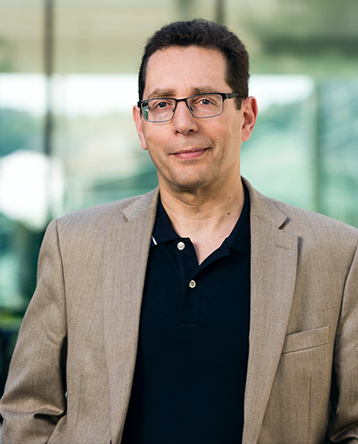
Min Yen Kan is an Associate Professor and Vice Dean of Undergraduate Studies at the National University of Singapore's School of Computing, Department of Computer Science. With a PhD from Columbia University (2002), he leads the Web Information Retrieval / Natural Language Processing Group (WING.NUS) and serves as ACL Ethics Committee co-chair. His research spans Natural Language Processing , Large Language Models , Digital Libraries , and Information Retrieval , with specific focus on scientific discourse analysis, fact verification, and multimodal systems. Current projects include Scholarly Document Information Extraction (TRL 6), Task-Oriented Dialogue Systems (TRL 4), and Recommendation Systems (TRL 5). Recent publications reveal strong trends in LLM limitations (bias, hallucination, evaluation), conversational recommendation systems , and misinformation detection . His work consistently bridges theoretical NLP with real-world applications in digital libraries and scientific communication. Award highlights include: CIKM 2019 Best Paper Award ACL Distinguished Service Awards Vannevar Bush Best Paper Award (JCDL 2012) ACM Distinguished Speaker designation Kan mentors PhD students with placements at Google and USTC, and serves as associate editor for Information Retrieval and survey editor for Journal of AI Research . His lab WING.NUS develops practical tools like SciWING for scientific document processing and FANG for fake news detection. Media engagements include commentary on AI regulations in Southeast Asia and workforce implications in the AI era.
Prof. Dr. Frank Ulbrich is a Lecturer and Programme Director for the BSc Business Administration at the Lucerne School of Business (HSLU). He holds a PhD in Business Administration from the Stockholm School of Economics. His academic career spans roles at universities in Sweden, the UK, Canada, and Switzerland, alongside IT & Management consulting experience. Research focuses on management education, project management, information management, and organizational change. He has published extensively in areas like shared services, digital transformation, and curriculum development. Notable awards include multiple Emerald Literati Awards and a Fellowship from the Higher Education Academy. Education: PhD in Business Administration (Stockholm School of Economics) Affiliations: Institute of Business and Regional Economics at HSLU Teaching Subjects: Academic Methods, Higher Education Management, Project Management, Digital Transformation Recent presentations include discussions on bridging academia-industry gaps, curriculum integration of SDGs, and data-driven learning strategies. His work emphasizes aligning education with labor market needs and advancing evidence-based teaching practices.
Amit Kumar is the Jaswinder and Tarwinder Chadha Chair Professor in the Department of Computer Science and Engineering at IIT Delhi. His research focuses on combinatorial optimization, online algorithms, and algorithmic fairness. He has taught courses such as Approximation Algorithms (COL 754), Design and Analysis of Algorithms (COL 351), and Numerical Analysis (COL 726). His work spans theoretical computer science with applications to clustering, scheduling, and fairness in evaluation processes. Research Interests Kumar's research emphasizes developing efficient algorithms for online and dynamic settings, particularly in constrained optimization and biased evaluation systems. He explores theoretical foundations of clustering, load balancing, and resource allocation, with recent contributions to fair food delivery systems and coreset constructions. Publications His recent work includes advancements in online convex paging (STOC 2025), consensus clustering (SODA 2025), and fairness-aware algorithms (AAAI 2024). Over 70 papers across top venues like STOC, SODA, and ICML reflect his expertise in algorithm design and analysis. Awards Best Paper Award at ISAAC 2023 for 'Clustering What Matters in Constrained Settings' Teaching & Mentorship Kumar instructs graduate and undergraduate courses in algorithms, data structures, and numerical methods. He advises students through these courses and collaborates with researchers on NSF-funded projects related to approximation algorithms and streaming systems.
Kyle Johnson is a Professor and Curriculum Committee Chair in the Department of Linguistics at the University of Massachusetts at Amherst, located in Integrative Learning Center N440. He holds a BA in Psychology from the University of California-Irvine (1981) and a PhD in Linguistics from MIT (1985). His research focuses on formal syntactic theory, particularly the interaction between syntax and prosody/semantics, with attention to real-time sentence processing evidence. He has taught at multiple institutions including UC-Irvine, UCLA, University of Wisconsin-Madison, and McGill University before joining UMass. Current courses include LING 301 (Introduction to Syntax) and LING 601 (Transformational Grammar). His work emphasizes syntactic derivations, linearization, ellipsis phenomena (gapping, stripping), and the empirical adequacy of formal syntactic theories. Selected recent contributions include analyses of Principle B derivation, prosodic spell-out mechanisms, and theta-role theory. He maintains an active publication schedule with over three decades of work in top journals like Linguistic Inquiry and Nordlyd , addressing topics ranging from adjunct islands to multidominant movement theories. His research combines theoretical innovation with experimental plausibility, often challenging traditional assumptions in generative syntax. Teaching responsibilities include both undergraduate and graduate syntax courses, with supplementary materials like Transformational Grammar lecture notes and a comprehensive bib file for researchers. Office hours are scheduled via his online calendar with a preference for in-person meetings.
Christopher R. Berry is the William J. and Alicia Townsend Friedman Professor at the Harris School of Public Policy and the College at the University of Chicago, and Director of the Mansueto Institute for Urban Innovation. He also served as the inaugural director of the Center for Municipal Finance. His research focuses on American politics, metropolitan governance, municipal finance, and intergovernmental fiscal relations. Notably, his book *Imperfect Union* won the APSA Best Book Award in Urban Politics. Key affiliations include the American Academy of Arts and Sciences. His work has been featured in major media outlets like the *New York Times* and *Last Week Tonight with John Oliver*. His research often intersects property tax fairness, urban policy, and the effects of leadership in politics and sports. His awards reflect his scholarly impact, including the APSA Urban Politics award and membership in the American Academy of Arts and Sciences. His research extends to leadership studies, as seen in collaborations analyzing coach effects in professional sports.
Vishal Ahuja is an Associate Professor and Corrigan Research Professor at Southern Methodist University's Cox School of Business, with adjunct faculty status at University of Texas Southwestern Medical Center. He focuses on decision analytic tools for healthcare improvement through operations management. PhD, University of Chicago Booth School of Business MBA, University of Chicago Booth School of Business His research interests span healthcare operations, service optimization, and AI applications in clinical decision-making. He collaborates with the Department of Veterans Affairs, Parkland Hospital, and pediatric institutions to address care quality and delivery efficiency. Recent publications emphasize predictive modeling for chronic disease management, adaptive clinical trial design, and regulatory healthcare policy. Awards include the Dlin/Fischer Clinical Research Award (2021), INFORMS Pierskalla Award (2012), and 2025 AI75 recognition for Dallas-Fort Worth AI leadership. D CEO Excellence in Healthcare Award - Outstanding Healthcare Innovator (2023) NSF Game Changer Academies for Advancing Research Innovation (2022) C. Jackson Grayson Faculty Innovation Award (2022-23) At SMU, he teaches graduate courses in operations, supply chain, and service management, integrating corporate sector experience from chemical and consumer goods industries. His work has been cited by the FDA in safety labeling changes workshops.
Matthew Palm is an Assistant Professor in the Department of City and Regional Planning at the University of North Carolina at Chapel Hill, holding the Cities Pardue Fellowship. His research focuses on transportation equity, shift work commuting challenges, and mobility barriers affecting essential workers in 24-hour economies. He examines how transportation systems impact social participation, healthcare access, and economic opportunities while advocating for equitable planning solutions. Recent work explores post-pandemic transit trends, ride-sharing equity, and the intersection of transportation policy with marginalized communities. Palm collaborates with community organizations to co-create evidence-based solutions for mobility challenges. He currently holds a $1.09 billion grant reflecting North Carolina’s renewed interest in rail infrastructure. His research agenda includes three core areas: 1) analyzing how shift workers’ nighttime commuting affects social exclusion and family care logistics, 2) studying transportation affordability’s role in economic participation, and 3) evaluating transportation infrastructure’s dual potential to improve lives while mitigating negative externalities like pollution. He emphasizes participatory approaches to planning and has published extensively on pandemic-era transit usage shifts, accessibility metrics, and housing-transit linkages.
Anna Grigolon is an Assistant Professor at the University of Twente , Netherlands, affiliated with the Transport Engineering and Management Research Group . Her research focuses on sustainable urban mobility , user-centric transport solutions , and travel behavior analysis using tools like discrete choice modeling , spatial analysis , and social psychology theories . Research Interests : Sustainable Urban Mobility Accessibility Modeling Travel Behavior Discrete Choice and Latent Class Modeling Spatial Analysis and GIS Shared Micromobility and Mobility Hubs Equity in Transport Planning Article Trends : Anna’s recent work (2025–2024) emphasizes mobility justice , 15-minute city transitions, and equity in transport access , particularly for marginalized communities like São Paulo favelas. She integrates digital tools (e.g., serious games, kiosks) and space-time metrics to evaluate mobility solutions. Projects : She currently leads the SmartHubs project and contributes to DREAMS and R-map , focusing on smart, equitable mobility systems in Europe and Saudi Arabia.
Brian D. Taylor is a Professor of Urban Planning and Public Policy at UCLA’s Luskin School of Public Affairs, and a Research Fellow at the Institute of Transportation Studies. His academic roles include Director of the UCLA Institute of Transportation Studies and former leadership of the Lewis Center for Regional Policy Studies. Education: PhD in Urban Planning (UCLA), MCP in City and Regional Planning (UC Berkeley), MS in Civil Engineering (UC Berkeley), and BA in Geography (UCLA). Research focuses on transportation equity, finance, policy, and behavior. Key areas include post-pandemic travel trends, transit ridership decline, transportation pricing, and the socio-political dimensions of urban mobility. Recent work explores falling public transit use, pandemic-induced activity changes, and equity impacts of new mobility systems. Publications highlight studies such as The Drive for Dollars (Oxford Press, 2023), analyzing freeway financing and urban transformation, and influential papers on congestion economics and transit fiscal challenges. Over 50 students advised, many now leading academics and practitioners. Awards include the YPT Excellence in Innovation Award (2021) and recognition as a Top 10 Transportation Thought Leader (2016). Teaching includes courses on transportation economics, land-use integration, and shared mobility policy. Administrative leadership roles span institutes and transportation centers across California.
Harish Ravichandar is an Assistant Professor at the School of Interactive Computing , Georgia Institute of Technology, and a core faculty member of the Institute for Robotics and Intelligent Machines (IRIM) . He leads the Structured Techniques for Algorithmic Robotics (STAR) Lab , focusing on structured computational frameworks and learning algorithms with inductive biases to enhance robot efficiency, reliability, and self-sufficiency in human-robot collaboration and complex applications like dexterous manipulation and multi-agent coordination. His research bridges robot learning , human-robot interaction , and multi-agent systems , emphasizing stable, frugal, and safe skill acquisition from human demonstrations. Key themes include intention inference , trajectory optimization , and heterogeneous team coordination , often leveraging Koopman operators , hypernetworks , and graph-based methods . Scientific recognition includes the NSF CAREER Award , IEEE MRS Best Paper Award , and Georgia Tech’s College of Computing Outstanding Post-Doctoral Research Award . His work also received the ASME DSCC Best Student Paper Award and P&W Institute Graduate Fellowship . Harish’s educational background includes a Ph.D. in Electrical and Computer Engineering from the University of Connecticut (2018) , an M.S. from the University of Florida (2014) , and a B.E. in Instrumentation and Control Engineering from Anna University (2012) . He previously held postdoctoral and research scientist roles at Georgia Tech before his current position.
Jeffrey T. Jensen, M.D., M.P.H., is the Leon Speroff Professor and Vice Chair for Research in the Department of Obstetrics and Gynecology at Oregon Health & Science University (OHSU). He holds joint appointments as Professor of Public Health and Preventive Medicine and serves as a Core Scientist at the Oregon National Primate Research Center (ONPRC). Dr. Jensen completed his medical degree at Emory University, a Master of Public Health at the University of Washington, and residency training at OHSU. Research Focus: Dr. Jensen leads translational and clinical research programs focused on contraceptive innovation. His work emphasizes nonhuman primate models to develop: Novel contraceptive agents targeting oocyte-specific pathways Non-surgical permanent contraception methods Optimized emergency contraception for diverse populations He directs OHSU's Women’s Health Research Unit and the Gates Foundation-funded Oregon Permanent Contraception Research Center (OPERM). Recent Publications: His 15 most recent articles (2023-2025) demonstrate concentrated expertise in: Advanced hormonal contraceptive formulations (IUDs, vaginal rings, oral agents) Weight-adjusted dosing strategies for emergency contraception Biomarker validation for contraceptive efficacy monitoring Real-world assessment of bleeding pattern management Leadership & Collaboration: Dr. Jensen is Principal Investigator of the NICHD Contraception Clinical Trials Network and collaborates with global health organizations (CONRAD, FHI360, Population Council). He serves as Deputy Editor for the journal Contraception and consults for multiple pharmaceutical companies on product development.
Patrick Baylis is an Assistant Professor of Environmental Economics at the Vancouver School of Economics, University of British Columbia. His research focuses on how people respond to environmental threats such as wildfires, air pollution, and extreme temperatures. He employs large datasets, natural language processing, and spatial information in his work, primarily using R/RStudio and Python for data analysis. Dr. Baylis earned his PhD from the University of California Berkeley in 2016 in Agricultural and Resource Economics. Prior to joining UBC, he was a postdoctoral fellow at the Stanford Center on Food Security and the Environment. He also worked as a research assistant at the Energy Institute at Haas and is a proud alumnus of Carleton College. His research interests span environmental economics with a particular focus on climate change impacts, energy economics, and behavioral responses to environmental threats. His work often examines the intersection of climate, health, and economic behavior, using innovative methods like social media data analysis to measure sentiment responses to temperature changes and other environmental factors. Analysis of his publication record reveals a strong focus on using big data approaches to understand human responses to environmental challenges. His work frequently appears in top journals including Nature Climate Change, PNAS, and the Journal of Public Economics. His research spans multiple subfields including wildfire economics, air quality valuation, climate migration, and the behavioral impacts of temperature extremes. Dr. Baylis has received significant media attention for his work, with coverage in major outlets including The New York Times, The Washington Post, The Guardian, and The Atlantic. His research on temperature and suicide rates, as well as climate perception, has been particularly influential in connecting environmental conditions with human behavior and mental health outcomes. He maintains an active research program examining critical environmental challenges, including wildfire risk, air pollution impacts, climate adaptation strategies, and the economic dimensions of climate change. His work combines rigorous economic analysis with innovative data collection and processing methods to provide new insights into how humans respond to environmental threats.
Selin A. Malkoc is the FCOB Distinguished Professor and Professor of Marketing at The Ohio State University's Max M. Fisher College of Business. She also holds a courtesy appointment as Professor of Psychology. Her research focuses on consumer behavior, particularly intertemporal decision making and time perception. Dr. Malkoc received her Ph.D. in marketing from the University of North Carolina, Chapel Hill (2006) and a B.S. from Bilkent University (2000). Prior to joining Ohio State, she was faculty at the Carlson School of Business, University of Minnesota, and the Olin School of Business, Washington University in St. Louis. Her research examines how consumers make decisions with outcomes spread over time and how they perceive time. She investigates why consumers show impatience despite good intentions and proposes mechanisms to help consumers make better decisions. Her work also explores optimal time allocation between work and leisure to maximize happiness, with significant implications for consumer well-being. Dr. Malkoc's research has appeared in top journals including the Journal of Consumer Research, Journal of Marketing Research, and Psychological Science. Her work frequently appears in major media outlets such as the Wall Street Journal, New York Times, BBC, and TIME Magazine. Paul E. Green Award recipient William F. O'Dell Award recipient Citation of Excellence Award winner Associate Editor for International Journal of Research in Marketing Editorial Review Board member for Journal of Consumer Research She teaches undergraduate and graduate courses including BUSML 4998 (Undergraduate Research) and BUSML 8250 (Consumer Behavior). Her research on leisure perception, time management, and intertemporal choice has significantly advanced understanding of consumer decision-making processes.
Brad Knox is a Research Associate Professor in the Department of Computer Science at the University of Texas at Austin . His work bridges machine learning, human-computer interaction, and computational cognitive science, with a focus on developing systems that learn from human feedback. Key research areas: Reinforcement Learning, Human-AI Interaction, Reward Design, Autonomous Systems Notable contributions: TAMER framework for human-guided learning, empirical studies on reward misdesign, and human preference modeling for autonomous agents Research Trends : His recent work (2023-2025) emphasizes reward alignment, safety in autonomous systems, and preference-based learning frameworks. Earlier studies (2012-2020) established foundational methods for integrating human feedback into reinforcement learning architectures and exploring behavioral signatures in decision-making. Scientific Honors : Bert Kay Dissertation Award (2013) Victor Lesser Distinguished Dissertation Award (IFAAMAS, Runner-up, 2013) NSF SBIR Grant (PI, 2016) NSF Graduate Research Fellowship (2008-2011) IEEE Intelligent Systems AI 10 to Watch (2013) Teaching & Leadership : Knox served as Principal Lecturer for MIT's Interactive Machine Learning course (2013) and held organizational roles at major conferences including Reinforcement Learning Conference (Scheduling Chair, 2025) and RLDM workshop (Co-chair, 2022).
Norman Sadeh is a Professor in the School of Computer Science at Carnegie Mellon University (CMU), where he has made significant contributions to cybersecurity, privacy, and AI research. He has co-founded and co-directed several groundbreaking graduate programs at CMU, including the Privacy Engineering Program (2012-present), the Ph.D. Program in Societal Computing (2003-2013), and the MBA track in Technology Strategy and Product Management (2005-2017). Carnegie Mellon University, School of Computer Science Software and Societal Systems Department CyLab Security and Privacy Institute Manufacturing Futures Institute Dr. Sadeh received his Ph.D. in Computer Science at CMU with a major in Artificial Intelligence and a minor in Operations Research. He holds an M.Sc. in computer science from the University of Southern California and a BS/MS degree in electrical engineering and applied physics from the Free University of Brussels (Belgium) as 'Ingénieur Civil Physicien.' Professor Sadeh's research spans cybersecurity, online privacy, Human-AI Interaction, AI governance, mobile computing, the Internet of Things, user-oriented machine learning, and language technologies. He is particularly known for his pioneering work on AI-based privacy enhancing technologies, including privacy assistants, automated privacy compliance tools, and NLP-based privacy solutions. His work has influenced the design of privacy features at major technology companies including Apple, Google, and Facebook/Meta, as well as privacy policies at regulatory agencies like the Federal Trade Commission and the California Office of the Attorney General. Analysis of his recent publications shows a strong focus on practical privacy solutions, particularly in mobile and IoT contexts, with an emphasis on making privacy more usable and understandable for end users. His work bridges technical innovation with policy implications, addressing both the technological and human aspects of privacy protection. 2018 Outstanding Entrepreneur of the Year award from the Pittsburgh Venture Capital Association Test of time award by the AAAI Conference on Web and Social Media (ICWSM) Gartner Group's Magic Quadrant leader in Security Awareness Computer-Based Training for 4 consecutive years Deloitte's Technology Fast 500 recognition for 3 consecutive years Professor Sadeh has advised numerous students, including PhD candidates like Aerin (Shikhun) Zhang, whose dissertation focused on understanding diverse privacy attitudes. His research has been funded through various grants, including NSF SaTC projects, and has resulted in technologies that protect tens of millions of users worldwide. He also founded Wombat Security Technologies, which was acquired by Proofpoint in 2018 and whose technologies are used by over 75% of Fortune 100 companies. Professor Sadeh leads several research initiatives including the Privacy Engineering Program, the Usable Privacy Policy Project, the Personalized Privacy Assistant Project, and CMU's Privacy Infrastructure for the Internet of Things. His Mobile Commerce Lab and E-Supply Chain Management Lab have produced influential research that has been commercialized by major organizations including IBM, Raytheon, Boeing, and the U.S. Army.