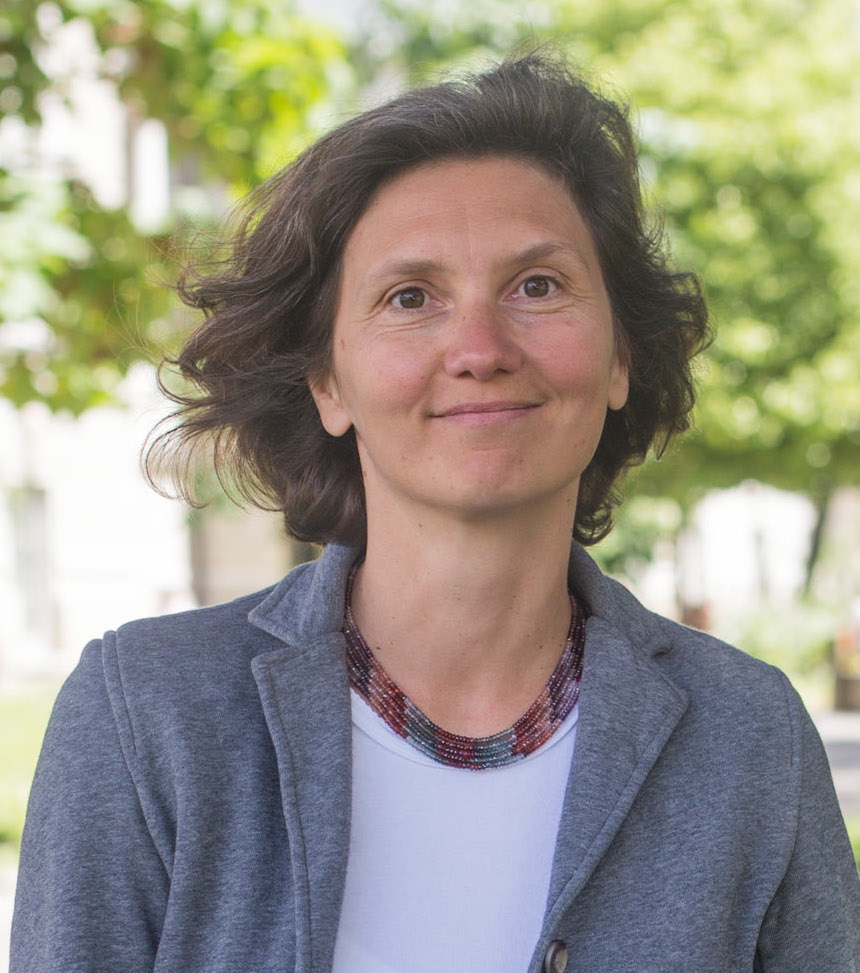
Prof. Dr. Thomas Hofmann is a Full Professor and Head of the Department of Computer Science at ETH Zurich since 2014. He also leads the Institute for Machine Learning. His research focuses on machine learning, deep learning, natural language understanding, and text understanding. Hofmann holds a Ph.D. from the University of Bonn (1997) and has held academic positions at Brown University (1999–2004) and TU Darmstadt. He transitioned to industry as Director of Engineering at Google (2006–2014), leading the Zurich R&D center, before returning to academia. He co-founded Recommind (2000) and 1plusX (Swiss marketing tech company), currently serving as Chief Scientist and board member at 1plusX. Education: Ph.D. in Computer Science, University of Bonn (1997) Postdoctoral Work: MIT (CBCL/AI Lab), UC Berkeley (EECS/ICSI) His research explores advanced machine learning techniques, including diffusion models, generative adversarial networks, and optimization dynamics. Hofmann’s entrepreneurial ventures reflect his focus on applying AI to real-world challenges, such as e-discovery and marketing technology. His work spans theoretical contributions (e.g., neural network training dynamics, continual learning) and applied innovations (e.g., image editing, portrait generation). Hofmann actively bridges academia and industry, influencing both research and commercial AI applications.
Prof. Raffaello D'Andrea is a Full Professor at ETH Zürich's Department of Mechanical and Process Engineering, affiliated with the Institute for Dynamic Systems and Control. His research focuses on bridging digital and physical worlds through robotics, control systems, and autonomous systems. He has pioneered work in aerial robotics, swarm systems, tactile sensing, and soft robotics. His philosophy emphasizes solving 'easy' problems with scalable, robust solutions, prioritizing simplicity and replicability. Key research areas include UAV navigation, distributed control, tactile sensor design, and fault-tolerant systems. He has founded multiple organizations and led roles as CTO/CEO, emphasizing cross-disciplinary innovation. His work has commercial applications in logistics, healthcare, and automation, driven by a belief in technology's role in improving human life. Notable projects include the Cubli robotic cube, aerial vehicle swarms, and optical tactile sensors for robotics. His lab emphasizes collaboration and team leadership, aiming to translate theoretical insights into practical, scalable technologies. Scientific awards: None explicitly listed in the provided texts. Advising and grants: No students listed in the provided texts; grants information not detailed. Labs/Teams: Leads research at ETH Zurich's Institute for Dynamic Systems and Control, collaborating with industry and academic partners globally.
Colin Jones is an Associate Professor at the École Polytechnique Fédérale de Lausanne (EPFL) in the Automatic Control Laboratory, School of Engineering. He earned his BASc and MASc in Electrical Engineering and Mathematics from the University of British Columbia (1994-2002) and a PhD in Control Theory from the University of Cambridge (2002-2005). Prior to EPFL, he was an assistant professor there and a senior researcher at ETH Zürich. Current role: Director of the Robotics, Control, and Intelligent Systems Doctoral Program at EPFL Research focus: Optimization-based and model predictive control (MPC) for renewable energy systems, green energy management, and data-driven control methods His recent work (2023-2025) spans high-speed predictive control , smart grid optimization , and physically consistent neural networks , with applications to buildings, hovercrafts, and power systems. He has secured an ERC Starting Grant for his research on optimal control of building networks. Publications include over 200 papers in journals like Automatica , IEEE Transactions , and Energy and Buildings . Notable article trends include distributed optimization , data privacy in energy systems , and nonlinear MPC for autonomous vehicles . Scientific Awards : ERC Starting Grant for optimal control of building networks Advising : Supervises 10 current PhD students and has advised 19 past PhD students, including Alessandretti Andrea and Diwale Sanket Sanjay. Grants and projects emphasize smart energy systems , predictive demand response , and nonlinear control .
Paolo Ienne is a Professor at the Swiss Federal Institute of Technology in Lausanne (EPFL), where he leads the Processor Architecture Laboratory (LAP) within the School of Computer and Communication Sciences. His research focuses on advancing reconfigurable computing systems through innovative FPGA architectures and high-level synthesis methodologies. His primary research domains include reconfigurable computing, FPGA architecture design, dynamically scheduled dataflow circuits, and hardware acceleration techniques. Recent work emphasizes memory system optimization for FPGAs, formal verification of circuit transformations, and rapid C-to-hardware compilation flows. He has pioneered approaches for handling thousands of outstanding memory misses in FPGA accelerators and developed novel techniques for switch-block exploration without explicit pattern enumeration. Analysis of his 2023-2025 publications reveals a strong trend toward practical FPGA deployment challenges, with increasing focus on HBM integration, virtual memory systems for PCIe-attached devices, and formally verified circuit transformations. His work consistently targets real-world bottlenecks in high-level synthesis toolchains while maintaining theoretical rigor in dataflow architecture design. Professor Ienne's laboratory receives support from the Swiss National Science Foundation and industry partners including Huawei, enabling cutting-edge research in FPGA-based acceleration. His collaborative network spans major semiconductor companies and academic institutions worldwide, with frequent co-authorship on conference proceedings and journal publications in IEEE and ACM venues.
Mirjana Stojilovic is a Researcher at École Polytechnique Fédérale de Lausanne (EPFL) in the School of Computer and Communication Sciences (IC), specifically within the Institute of Computer Engineering (IINFCOM) and the Parallel Systems Architecture Laboratory (PARSA). She also serves as a Lecturer in the SSC - Teaching department at EPFL. Her office is located at INJ 235, Station 14, 1015 Lausanne, Switzerland. Mirjana Stojilović received her Dipl. Ing. and Ph.D. degrees from the School of Electrical Engineering, University of Belgrade, in 2006 and 2013, respectively. Her academic journey includes collaborating with the Processor Architecture Laboratory at EPFL as a Guest Researcher from 2010 to 2013, working at the University of Applied Sciences Western Switzerland as a senior researcher from 2013 to 2016, and joining the Parallel Systems Architecture Lab at EPFL in October 2016. Dr. Stojilovic's research spans field-programmable technology, electronic design automation (EDA), and electrical-level attacks and countermeasures for reconfigurable hardware. Her work bridges the gap between hardware design and security, with a particular focus on vulnerability analysis and protection mechanisms for FPGA-based systems in cloud environments. She has made significant contributions to understanding side-channel attacks, fault injection techniques, and secure multi-tenancy solutions for shared hardware resources. Her extensive publication record reveals a clear research trajectory from traditional FPGA design and EDA topics toward increasingly security-focused investigations. Recent work demonstrates deep expertise in power analysis attacks, hardware trojans, and countermeasures for cloud-based FPGA systems, reflecting the growing importance of hardware security in distributed computing environments. Scientific Awards and Recognitions: Best Paper Award at 2016 International Symposium on Electromagnetic Compatibility (EMC Europe 2016) Young Scientist Award at 33rd International Conference on Lightning Protection (ICLP2016) Young Author Best Paper Award at the 20th Telecommunication Forum in Belgrade (TELFOR 2012) EPFL School of Computer and Communication Sciences (IC) Teaching Award (2015) Nominated for Best Paper Award at the International Conference on Field-Programmable Technology (FPT) (2020) Dr. Stojilovic has advised numerous PhD students including Coulon Louis, Pirayadi Rouzbeh, and Shrivastava Shashwat, along with past EPFL PhD students Glamocanin Ognjen and Mahmoud Dina. She has supervised dozens of semester and diploma projects focusing on hardware security, FPGAs, design automation, side-channel attacks, and cloud computing. Her service to the academic community includes serving on program committees for FPGA, FCCM, FPL, and DATE conferences, reviewing for multiple IEEE and ACM journals, and acting as associate editor for IEEE ESL and ACM TRETS. As a member of the Parallel Systems Architecture Laboratory at EPFL, Dr. Stojilovic leads research projects investigating security aspects of reconfigurable hardware systems. Her team works at the intersection of computer architecture, electronic design automation, and hardware security, with particular emphasis on vulnerabilities and protections for shared FPGA resources in cloud environments.
Prof. Dennis Komm is an Associate Professor at ETH Zurich's Department of Computer Science, leading the group for Algorithms and Didactics. He chairs the Center for Computer Science Education (ABZ) and serves on committees such as the Swiss Maturity Board (Schweizerische Maturitätskommission) and the STEM Commission of the Swiss Academies. Previously, he held roles at RWTH Aachen University (Master's, 2008), ETH Zurich (PhD, 2012), University of Zurich (external lecturer, 2014–2020), and PH Graubünden (including department head and professor of 'Fachdidaktik Informatik'). Education: He completed a Master's in Computer Science at RWTH Aachen (2008), a PhD at ETH Zurich (2012), and studies in Information Technology at Queensland University of Technology (2006). His academic journey includes visiting roles at King's College, Stanford, and Comenius University. He has taught extensively across institutions, emphasizing Python and LOGO-based approaches for beginners. Research focuses on algorithm design, approximation algorithms, reoptimization, and advice complexity in theoretical CS. His work in education explores computational thinking, programming pedagogy (especially for K–12), and interdisciplinary approaches (e.g., robotics in math). Recent trends in his articles highlight advancements in online algorithms, optimization under dynamic conditions, and initiatives to integrate CS into Swiss school curricula sustainably. He actively promotes CS education through platforms like WebTigerPython and collaborates on projects such as CyberQuest and MINTerlink. His outreach includes organizing conferences (e.g., STIU 2025) and workshops on programming and cybersecurity for teachers and students. Despite no listed scientific awards, his contributions to education and theoretical CS are recognized through editorial roles in journals like Informatics in Education and contributions to the TigerJython Group. Grant-related advising includes co-supervising doctoral theses on robotics, USOs, and programming didactics. He advocates for equitable educational opportunities via the Passerelle exam and the Swiss Beaver Competition. His team's work spans teacher training, didactic certifications, and bridging university-school collaborations through initiatives like MINTerlink. Labs and teams: Head of ABZ (ETH's CS education center), collaborator with the Computational Robotics Lab, and part of the TigerJython Group. He also co-organizes the Colloquium on Mathematics, Computer Science, and Education with ETH's Mathematics Department.
Rachid Cherkaoui is a Senior Scientist at École polytechnique fédérale de Lausanne (EPFL), affiliated with the School of Engineering, specifically within the Department of Electrical Engineering. He is actively associated with research units SEL-ENS, EDEY-ENS, and DESL, contributing to the Distributed Electrical Systems Laboratory (DESL). His work focuses on advanced power system optimization, smart grids, and energy market modeling. Ph.D. in Electrical Engineering, EPFL, 1992 M.S. in Electrical Engineering, EPFL, 1983 Dr. Cherkaoui's research interests include electrical power and distribution systems, distributed generation, energy storage, electricity market deregulation, and power system vulnerability mitigation. His work bridges theoretical modeling and real-world applications, particularly in flexibility provision, grid resilience, and market integration of renewable energy. His recent publications (2020–2025) reflect a strong focus on smart grid technologies, energy storage integration, and market mechanisms. Key themes include optimal dispatch of hybrid systems, TSO-DSO coordination, frequency control, and stochastic optimization under uncertainty. His work is frequently published in top-tier journals such as IEEE Transactions on Power Systems and IEEE Transactions on Smart Grid. ABB Swiss Award '83 Senior Member, IEEE Member, CIGRE Task Forces C5-2 IEEE Swiss Chapter Officer since 2005 Dr. Cherkaoui actively supervises doctoral students and collaborates extensively with researchers like Mario Paolone. He has contributed to numerous projects funded by industry, CTI/Innosuisse, and Horizon 2020. His research includes experimental validation and real-time control systems, particularly in hydropower and battery storage applications. He is also involved in national and international energy strategy discussions, including Switzerland's path to carbon neutrality.
Dr. Alessandro Ottaviano is a Researcher affiliated with the Department of Digital Integrated Circuits and Systems at ETH Zürich. His work focuses on advanced computer architecture and embedded systems, particularly in the domains of RISC-V processors, real-time systems, and heterogeneous computing. He contributes to the design of time-predictable virtual memory solutions, mixed-criticality systems, and energy-efficient hardware-software interfaces. Key research areas include modular processor architectures, hardware monitoring for safety-critical applications, and power management in high-performance computing (HPC) systems. His recent projects involve developing controllers for 2.5D systems-in-package and creating open-source networking solutions for mixed-criticality environments. Ottaviano’s work often emphasizes open-source hardware design and scalable system-level approaches to address challenges in autonomous systems and edge computing. He collaborates on advancements in interrupt handling for virtualized systems, peripheral event linking for IoT devices, and FPGA-based thermal emulation for many-core processors. His research bridges theoretical computer architecture principles with practical implementations in embedded and real-time systems.
Christiane Barz is a Professor of Mathematics at the University of Zurich's Institute for Business Administration since 2016. Previously, she held academic roles at the UCLA Anderson School of Management, the Chicago Booth School of Business, and the Technical University (TU) Berlin. Her research focuses on stochastic dynamic systems, Markov decision processes, and their applications in revenue management. She emphasizes making mathematical tools accessible and practical for real-world problem-solving, particularly in optimizing decision-making under uncertainty. Education includes a degree in industrial engineering and a doctorate from the University of Karlsruhe (TH), Germany. Her career path includes postdoctoral research at the University of Chicago's Booth School of Business and roles as an Assistant Professor at UCLA. She combines academic excellence with balancing family life, advocating for gender equity in STEM fields. Her research explores risk-sensitive decision-making frameworks, dynamic pricing models for transportation and healthcare, and optimizing resource allocation in complex systems. Recent work includes applications in FlixBus, air cargo networks, and improving patient admission scheduling in hospitals. Barz's teaching philosophy prioritizes demystifying mathematics for students, encouraging critical engagement rather than fear of complexity. She collaborates with industry partners to apply operations research methods to real-world challenges, emphasizing both theoretical rigor and practical relevance.
Chen Liu is an Assistant Professor in the Department of Computer Science at City University of Hong Kong and the Principal Investigator (PI) of the Machine Learning and Optimization (MLO) group. His research focuses on building reliable machine learning models, particularly studying robustness and privacy properties of deep neural networks from an optimization perspective. University: City University of Hong Kong Academic Rank: Assistant Professor Students: Supervises multiple PhD, MPhil, and postdoctoral researchers. Education: Holds a Ph.D. (2022) and MSc (2017) in Computer Science from École Polytechnique Fédérale de Lausanne (EPFL), and a BSc (2015) in Computer Science from Tsinghua University. Research Interests: Adversarial robustness, privacy-preserving machine learning, optimization algorithms, dataset distillation, generative models, and theoretical analysis of loss landscapes. His work addresses challenges like catastrophic overfitting, architecture overfitting in distilled data, and stable adversarial training methods. Article Trends: Recent publications explore adversarial robustness under l0/l1 norms, gradient inversion for data reconstruction, evolutionary factor searching in finance, and meta-tuning for out-of-domain few-shot learning. These works emphasize optimization techniques to enhance model reliability and generalization. Scientific Awards: Microsoft Research Ph.D. Scholarship Programme (2017–2019) Advising and Grants: Supervises a diverse team of current and former students, with collaborations across institutions like George Mason University and Zhejiang University. Research supported by academic and industry grants. Labs and Teams: Leads the MLO group, which investigates fundamental ML theory and algorithms to improve system reliability. The group's work spans adversarial training, dataset distillation, and generative model optimization.
Onur Mutlu is a Professor of Computer Science at ETH Zurich, affiliated with the Department of Information Technology and Electrical Engineering. He also holds adjunct professorships at Carnegie Mellon University and Bilkent University. His research focuses on computer architecture, systems security, bioinformatics, and energy-efficient computing. He has pioneered work on memory-centric computing paradigms, RowHammer security vulnerabilities, and bio-inspired computing systems. He teaches courses such as Digital Design & Computer Architecture and supervises the SAFARI research group, which explores cutting-edge topics in memory systems, AI accelerators, and genomics. Recent activities include keynote talks at ISCA, HiPEAC, and IEEE conferences, emphasizing emerging hardware-software co-design principles. Key contributions include foundational work on memory reliability, cross-layer system design, and accelerating genomic data analysis. His research has been showcased in over 200 publications and industry collaborations with tech leaders like Intel, Huawei, and Micron.
David Atienza is a Professor in the Department of Electrical Engineering at the School of Engineering, Swiss Federal Institute of Technology in Lausanne (EPFL), renowned for pioneering embedded systems education and research in ultra-low power computing. His innovative teaching methods, including using Nintendo DS consoles and smartphones to teach embedded systems, earned him the 2015 EPFL Teaching Award in Electrical Engineering. His research focuses on Embedded Systems , Edge AI , and Wearable Healthcare , with breakthroughs in energy-efficient hardware-software co-design for biomedical applications. Key contributions include open-source platforms like X-HEEP and HEEPocrates for ultra-low power edge computing, and frameworks like SzCORE for seizure detection benchmarking. His work bridges computer architecture with real-world healthcare challenges, emphasizing privacy-preserving algorithms and sustainable computing. Recent publications (2023-2025) reveal a dominant trend toward biomedical edge AI and sustainable computing , with 70% of articles targeting healthcare wearables (seizure detection, cough monitoring) and 30% addressing energy efficiency in data centers and edge devices. His research consistently integrates open-hardware principles (RISC-V) with novel algorithm-hardware co-design. Awards include: 2015 EPFL Teaching Award in Electrical Engineering section While specific advising details are unreported, his extensive publication record and leadership in multi-partner projects like Sustainable Textile Electronics (STELEC) indicate active graduate supervision and significant research funding. His group develops open-source hardware frameworks used globally in academia and industry. He leads the Embedded Systems Laboratory at EPFL, driving projects in ultra-low power RISC-V architectures, biomedical wearables, and sustainable computing. Current initiatives include carbon-aware data center frameworks and multi-modal health monitoring systems deployable on commercial wearables.
Nicolas Zufferey is a Full Professor of Operations Management at the University of Geneva, Switzerland, where he has served since 2008. He leads research in optimization methods for complex systems, focusing on applications in supply chain management, production planning, inventory control, and transportation logistics. His affiliations include the Research Institute of Management and collaborations with CIRRELT (Transportation & Logistics) and GERAD (Decision Analysis). Education: PhD in Operations Research (EPFL, 2002), MSc/BSc in Mathematics (EPFL) Prior Experience: Postdoc at University of Calgary (2003–2004), Assistant Professor at Université Laval (2004–2007) Research Interests: His work emphasizes developing advanced metaheuristics (e.g., VNS, Tabu Search, PSO) for challenging optimization problems. Key domains include: Multi-objective scheduling with resource constraints Inventory deployment under uncertainty Network design for supply chains and transportation systems Publications: Over 150 peer-reviewed articles across journals like European Journal of Operational Research , Transportation Research , and INFORMS Journal on Computing . Recent work addresses electric vehicle routing, drone integration in delivery systems, and robust decision-making under uncertainty. Collaborations: Engaged with 35+ universities and 27 private companies globally. Active in applying operations research to industrial problems (e.g., Swiss railways, luxury watch production, pharmaceutical networks).
Prof. Dr. Philipp Baumann is a Professor at the University of Bern, affiliated with the Group for Business Analytics, Operations Research and Quantitative Methods. His research focuses on optimization algorithms, clustering techniques, and operations research applications. He has contributed to advancements in constraint-based clustering, fault-tolerant facility location, and fair-capacitated clustering, leveraging mathematical programming and heuristic methods. His work bridges theoretical optimization and practical applications in industries like printing and healthcare. Research interests include combinatorial optimization, algorithm design for machine learning, and large-scale data mining. Notable contributions include the MPFCC algorithm for fair clustering and FT-KMEANS for fault-tolerant systems. His recent publications emphasize scalable solutions for real-world scheduling and resource allocation challenges. No scientific awards are explicitly mentioned. He advises students on thesis guidelines (Bachelor and Master levels) but no specific advisees are listed. His research group collaborates on projects involving mathematical programming in operations and finance, with applications to production scheduling and portfolio optimization.
Laura Pozzi is a Full Professor at the Faculty of Informatics, Università della Svizzera italiana (USI), Switzerland, since 2015. She previously held positions as Associate Professor (2011–2015) and Assistant Professor (2005–2011) at USI. Prior to joining USI, she was a postdoctoral researcher at EPFL's Processor Architecture Laboratory (2001–2005), a research engineer at STMicroelectronics (2000), and an Industrial Visitor at UC Berkeley (2000). Education: MS and PhD in Computer Engineering from Politecnico di Milano, Italy (1996–2000). Her research focuses on the interaction between compiler and architecture design, particularly in embedded systems , with key areas including approximate computing , coarse-grained reconfigurable arrays (CGRAs) , high-level synthesis (HLS) , and fuzz testing . She has led projects on automated design space exploration, compiler optimizations for reconfigurable architectures, and error estimation in approximate circuits. Recent Publications span topics like SAT-based mapping for CGRAs , grammar-based fuzzing of shell interpreters , and approximate logic synthesis , reflecting her interdisciplinary work bridging hardware/software co-design and software verification. Scientific Awards: Credit Swiss Best Teaching Award IEEE DAC Best Paper Award Leadership Roles: Co-Program Chair, IEEE Symposium on Application Specific Processors (SASP) Editorial Board Member, IEEE Design and Test Students: Current: Rodrigo Otoni (Postdoc), Morteza Rezaalipour (PhD), Riccardo Felici (PhD), Cristian Tirelli (PhD) Alumni: Ilaria Scarabottolo (PhD/Postdoc), Lorenzo Ferretti (PhD/Postdoc), Georgios Zacharopoulos (PhD), Giovanni Ansaloni (PhD/Postdoc), Paolo Bonzini (PhD)