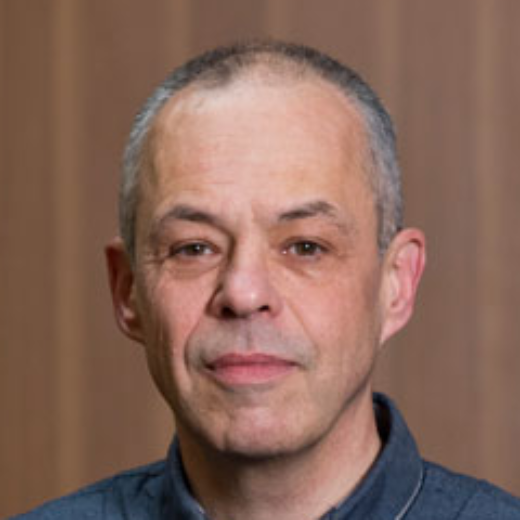
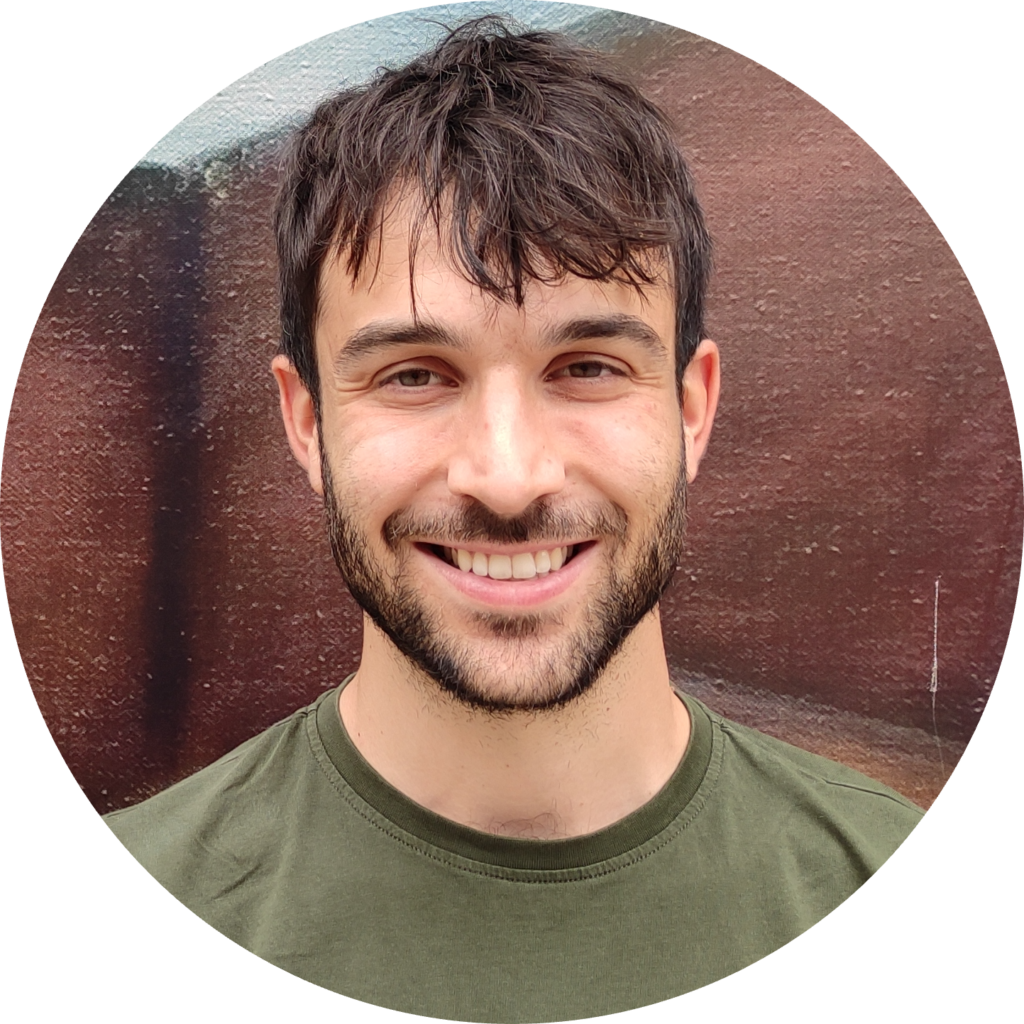
Werner Nutt is a Professor at the Free University of Bozen-Bolzano , Italy, affiliated with the Faculty of Computer Science since 2005. He previously held academic positions as a Reader at Heriot-Watt University (2000-2005), Visiting Professor at Hebrew University of Jerusalem, and Research Scientist at DFKI (1992-2000). Current Role: Professor, Free University of Bozen-Bolzano Past Roles: Reader (Heriot-Watt), Visiting Professor (Hebrew University), Research Scientist (DFKI) Research Interests focus on Data Management , Knowledge Representation , and Intelligent Information Extraction , with emphasis on modeling Construction Processes and ensuring Data Quality . His work bridges Semantic Web technologies with Business Process Management , notably through the COCkPiT project (2017-present) for construction process optimization. Key Contributions include foundational work on Query Completeness in databases, SPARQL Reasoning , and Semantic Diagnostics . He has published extensively in venues like ISWC , BPM , and CIKM , with an h-index of 35 on Google Scholar. His 154+ publications span topics from Probabilistic XML to Construction Process Modeling .
Matthias Pezzutto is an Assistant Professor at the Department of Information Engineering, University of Padova. His research focuses on advanced control systems, networked control systems, and wireless communication for control applications. He explores topics such as distributed estimation, epidemic control, and optimization in cyber-physical systems. His work bridges theoretical advancements with practical implementations, including experiments over Wi-Fi and multirotor robotics. Key areas of interest include: Control systems with communication constraints Epidemic modeling and intervention strategies Real-time wireless control architectures His publications emphasize robust control methodologies, such as self-triggered MPC and adaptive transmission protocols, addressing challenges like packet loss and latency. Recent works explore the integration of edge-cloud continuum for control systems and heterogeneous vehicle mission planning. While no specific awards or grants are listed, his research activities are supported by experimental validations and collaborations in industry and academia.
Antonio Brogi is a Full Professor at the Department of Computer Science, University of Pisa. He leads the Service-Oriented, Cloud and Fog Computing (SOCC) research group and is actively involved in multiple editorial roles, including for Electronics , Heliyon Computer Science , and Journal of Computer Languages . His research focuses on cloud-edge computing, quantum software engineering, and formal methods for distributed systems. He chairs program committees for major conferences like ESOCC, ADAPTIVE, and IEEE ICWS. Research Interests: Service computing, fog computing, quantum software engineering, system coordination, resilience, and sustainability. He has pioneered declarative approaches for managing distributed systems and has contributed to frameworks like ECLYPSE and FREEDA. Teaching: Teaches Cloud Computing (BSc) and Advanced Software Engineering (MSc) at the University of Pisa. Supervises master's and bachelor's theses in related areas. Grants & Projects: Participated in EU-funded initiatives like SeaClouds and national projects DECLware and Through the Fog. Active in industry collaborations for cloud-edge infrastructure optimization.
Paolo Lazzeroni is a Fixed-term tenure-track Assistant Professor in the Department of Energy (DENERG) at Politecnico di Torino, Italy. His academic work spans teaching and research in electrical engineering with a focus on sustainable energy systems. He is actively involved in multiple degree programs, including Mechanical, Civil, Chemical, Aerospace, and Building Engineering, where he teaches courses such as Electrical Systems for Buildings and Fundamentals of Electrical Engineering. He also serves as the main teacher for the PhD course on Machine Learning in Energy Applications. Lazzeroni is a member of the College of Civil and Building Engineering and an invited member of the Colleges of Chemical and Materials Engineering and Mechanical, Aerospace, and Automotive Engineering. PhD: Electrical, Electronics, and Communications Engineering (ongoing supervision) Master’s: Building Engineering, Electrical Engineering Bachelor’s: Mechanical, Civil, Chemical, Aerospace, Energy Engineering His research centers on electrical engineering and energy systems, with key interests in renewable energy communities, smart grids, demand-side management, electric vehicle integration, home energy management systems, and district heating and cooling networks. He applies optimization, modeling, and machine learning techniques to enhance the efficiency and sustainability of integrated energy systems. His recent work emphasizes the economic and environmental impacts of flexible demand, smart charging for EVs, and control strategies leveraging AI. His latest publications, spanning 2021–2025, appear in journals like Energy and Buildings and Journal of Cleaner Production , and conferences such as IEEE ICAIGE and ELECTRIMACS. These works reflect a strong trend toward integrating renewable energy with intelligent control and optimization in residential and community-scale systems. Paolo Lazzeroni leads the Erasmus+ funded project DHC Academy - Green and Digital Skills for Smart District Heating and Cooling Networks (2025–2028), serving as Scientific Director. This project highlights his role in securing competitive grants and advancing training in sustainable energy technologies. He supervises PhD student Gianmarco Lorenti, whose thesis focuses on modeling and optimization of integrated community energy systems. Lazzeroni is actively involved in collaborative teaching initiatives such as Challenge@PoliTo by Firms with industry partners including Enel Grids, Aral, and Edison Next, bridging academia and industry. His lab and research team operate within DENERG, contributing to smart energy solutions through interdisciplinary collaboration.
Paolo Chiabert is a Tenured Associate Professor at the Department of Management and Production Engineering (DIGEP) of the Polytechnic of Turin . He is also a member of the CARS@PoliTO Center focusing on Automotive Research and Sustainable Mobility. His academic career spans multiple international engagements, including teaching roles at the Turin Polytechnic University in Tashkent (2013-2014). Research interests include: Enterprise Resource Planning (ERP) Industry 4.0 and 5.0 technologies Internet of Things (IoT) for smart production Lean Manufacturing methodologies Manufacturing Execution Systems (MES) Product Lifecycle Management (PLM) systems His research projects involve: CAPT'N'SEE (2021) - Additive Manufacturing for luxury industry HOME (2018-2021) - Hierarchical Open Manufacturing Europe FlexAGV (2017) - Flexible AGV systems DISLO-MAN (2016-2019) - Industry 4.0 shopfloor operations Scientific contributions focus on IoT integration , digital twin frameworks , and sustainable manufacturing , with recent works on: AI sustainability across product lifecycles One-of-a-kind production optimization IoT taxonomy for Industry 4.0 education Hybrid machine learning for aeroponic systems Knowledge reuse barriers in product development He supervises PhD students including: Temur Turgunboev - Remote multi-agent collaboration Niccolo' Giovenali - Irregular shape packing algorithms Luigi Panza - Technological innovations for sustainable manufacturing Mansur Asranov - IoT for Smart Production Ahmed Mekki Awouda - Industry 5.0 compliant IoT architectures Active in teaching at all levels, with recent courses in: Lean Manufacturing approaches Industry 4.0 production systems Production management fundamentals Graphical communication and mechanical manufacturing Industrial programming laboratory
Deborah Volpe is a Part-Time Lecturer at the Department of Electronics and Telecommunications (DET), Politecnico di Torino. She actively contributes to teaching in the Master of Science in Microelectronic Systems and Quantum Hardware Design courses since 2022. Her research focuses on quantum computing, optimization algorithms, and FPGA development for quantum-classical hybrid systems. Teaching: Microelectronic Systems (2022–2024), Quantum Hardware Design (2024) Collaborations: Quantum Engineering and FPGA-based quantum emulation Recent publications (2024–2025) highlight applications of quantum optimization in satellite operations and FPGA-based quantum circuit emulation. She supervises doctoral student Christian Conti and participates in interdisciplinary research teams for quantum hardware projects.
Yehia Moustafa Abd Alrahman is a PostDoc researcher at the SysMA research unit of IMT School for Advanced Studies Lucca, where he also participates in the FILIERASICURA project with Cisco. He is preparing to relocate to the University of Leicester to collaborate with Prof. Nir Piterman on the ERC Consolidator Project DSynMA (Distributed Synthesis from Single to Multiple Agents). His academic journey began with a scholarship-funded computer engineering degree at IMT Lucca, followed by a master's scholarship in computer science where he served as a teaching assistant. Abd Alrahman's research focuses on formal methods for developing correct-by-construction software systems with emphasis on predictability, adaptivity, efficiency, reusability, maintainability and modularity. His work particularly addresses challenges in contemporary information systems including embedded systems and service-oriented architectures. Currently, he is investigating formal analysis approaches for securing supply chains in cyber-physical systems. His research spans attribute-based communication, collective adaptive systems, multi-agent systems verification, and reconfigurable distributed systems. His publication record shows a consistent trajectory from foundational work on attribute-based communication (2014-2018) toward increasingly sophisticated verification frameworks for reconfigurable systems (2019-2025). Recent publications demonstrate a clear evolution toward distributed synthesis techniques, model checking for reconfigurable multi-agent systems, and formal frameworks for runtime reconfiguration. His work bridges theoretical computer science with practical applications in secure system design. Abd Alrahman completed his PhD with first honors rating 'excellent' in the Computer, Decisions, and Systems Science track at IMT School for Advanced Studies Lucca. While no formal awards are documented in the provided materials, his consistent publication record in top venues like FORTE, ISoLA, and AAMAS demonstrates recognition within the formal methods community. His collaborations with established researchers like Nir Piterman, Rocco De Nicola, and Michele Loreti indicate strong research networks. As a PostDoc researcher, Abd Alrahman works within the SysMA research unit at IMT Lucca, contributing to the Italian Project FILIERASICURA with Cisco. His upcoming move to Leicester represents a significant career advancement through the ERC Consolidator Project DSynMA, which will expand his research scope into distributed synthesis for multi-agent systems.
Flavio Caresana is an Associate Professor at the Department of Industrial Engineering and Mathematical Sciences (DIISM) within the Faculty of Engineering at Università Politecnica delle Marche (UNIVPM) in Ancona, Italy. His academic work focuses on energy systems with particular emphasis on sustainable technologies and environmental applications. Professor Caresana's research spans multiple areas of energy engineering, with primary focus on heat pump systems , hydrogen storage technologies , renewable energy integration , and energy recovery systems . His work combines theoretical modeling with experimental validation, particularly in the areas of thermal engineering and sustainable energy systems. He has developed methodologies for multi-objective optimization of energy systems, techno-economic analysis of emerging technologies, and dynamic control strategies for energy storage solutions. His recent publications demonstrate a strong trend toward addressing climate change mitigation through technological innovation. Key research themes include the integration of renewable energy sources into building systems, carbon-neutral urban planning, and the development of efficient energy storage solutions. Professor Caresana's work often bridges theoretical engineering principles with practical applications in the energy sector. Professor Caresana maintains an active research profile with numerous publications in international journals and conference proceedings. His work contributes significantly to the fields of thermal engineering, sustainable energy systems, and environmental technology.
Alessandro Biondi serves as Associate Professor of Computer Engineering at the Scuola Superiore Sant'Anna in Pisa, Italy, where he conducts research at the Real-Time Systems (ReTiS) Laboratory. His expertise centers on real-time, safe, and secure cyber-physical systems with critical applications in automotive and railway domains. His academic credentials include: Computer Engineering degree, cum laude , University of Pisa (within excellence program) PhD in Emerging Digital Technologies (Embedded Systems curriculum), cum laude , Scuola Superiore Sant'Anna (2017) Biondi's research spans real-time systems design, operating systems, hypervisors, synchronization protocols, embedded optimization, and formal scheduling analysis. His work bridges theoretical foundations with industrial implementation, emphasizing safety and security for mission-critical infrastructure through rigorous mathematical modeling and practical system development. Recent publications (2023-2025) demonstrate concentrated advancements in real-time scheduling optimization, memory management for safety-critical systems, and adversarial defense mechanisms in vision applications. Key trends include deterministic communication protocols for AUTOSAR, end-to-end latency minimization in distributed systems, and hardware-aware security solutions for heterogeneous SoCs, reflecting strong industry-academia collaboration. His scientific contributions have earned significant recognition: ACM SIGBED Early Career Award (2019) IEEE TCCPS Early Career Award (2023) Six Best Paper Awards Best Journal Paper Award (IEEE Transactions on Industrial Informatics) EDAA Outstanding Dissertation Award (2017) Additional honors: Outstanding Paper Award, Best Presentation Award, Best Paper Nomination Biondi leads industrial research projects for automotive and railway safety-critical systems while participating in European Commission-funded initiatives. He co-founded spin-offs Accelerat (specializing in predictable cyber-physical systems) and Wriggle Solutions (acquired IP for real-time tire monitoring), demonstrating his commitment to translating research into commercial solutions. His editorial service includes Associate Editor roles for IEEE TETC, Journal of Real-Time Systems, and LITES. As a core member of the ReTiS Laboratory, Biondi collaborates within a high-impact research ecosystem focused on advancing real-time computing theory and practice. The lab maintains deep industry partnerships and drives innovation in scheduling algorithms, security protocols, and optimization techniques for next-generation embedded platforms.
Dr. Mihai Teodor Lazarescu is an Associate Professor at the Department of Electronics and Telecommunications (DET), Politecnico di Torino , where he contributes to research and teaching activities. He is also a member of the PolitoBIOMed Lab (Biomedical Engineering Lab) and the Ambient Sensing and Processing research group. Scientific Affiliation: IEEE Member (2019-present) Editorial Roles: Guest Editor for SENSORS, ELECTRONICS, and ACM Transactions on Embedded Computing Systems His research interests focus on hardware acceleration for machine learning algorithms, particularly using FPGAs for data center and embedded applications. He works on high-level synthesis optimization flows, capacitive sensor design for indoor monitoring, and low-power embedded systems . His work intersects Internet of Things , Wireless Sensor Networks , and Machine Learning with applications in human localization, environmental monitoring, and industrial automation. Recent publications demonstrate expertise in neural network optimization , DSP resource sharing , and multi-FPGA allocation . His teaching spans Applied Electronics , Digital Electronic Design , and Embedded Systems Optimization across bachelor's and master's programs in Electronic Engineering and Computer Engineering . Patents: Noise cancellation for single-plate capacitive sensors Capacitive sensor for space change detection Projects: Scientific Manager for Horizon 2020-S2RJU project (2018)
Paolo Giaccone is a Full Professor at the Department of Electronics and Telecommunications (DET) of Politecnico di Torino. He serves as Course Coordinator for the Master's Degree in Communications Engineering and contributes to teaching in the College of Electronic, Telecommunications and Physics Engineering. His research focuses on cloud computing, 5G networks, programmable data planes, WiFi-based crowd monitoring, and network softwarization . His recent publications highlight edge computing, microservice orchestration, and resource optimization in cloud and network systems. Collaborations with researchers like Carla Chiasserini and Holger Karl dominate his work. He has received honors such as the Open badge Learning to Teach (L2T) and served as Associate Editor for IEEE/ACM Transactions on Networking. He advises PhD candidates including Antonio Calagna and Madhura Adeppady, and leads projects like SmartShires and TrialsNet for next-generation networks.
Pietro Catania serves as a Full Professor in the Department of Agricultural, Food and Forestry Sciences at the University of Palermo's Polytechnic School. His office is located in Room No. 135 of the SAAF Department, where he holds regular office hours on Mondays and Wednesdays from 11:00 to 13:00, as well as at the Viticulture and Enology Degree Course Headquarters. Professor Catania has maintained a consistent academic presence since at least 2009, teaching specialized courses in agricultural mechanization with particular expertise in viticulture systems and precision farming technologies. Professor Catania's research spans several critical areas of modern agricultural engineering: Precision Agriculture and Smart Farming Systems Drone and Remote Sensing Applications in Agriculture Viticulture Mechanization and Oenological Plants Agricultural Machinery Design and Ergonomics Sustainable Resource Management in Mediterranean Agriculture Post-harvest Technology and Processing Systems His recent scholarly output demonstrates a clear focus on cutting-edge technological applications in agriculture, particularly the integration of drones, sensors, and AI in vineyard and olive orchard management. Professor Catania's work bridges traditional agricultural practices with modern technological innovations, addressing practical challenges in irrigation management, precision spraying, yield mapping, and sustainable resource use across Sicilian agricultural landscapes. His research methodology often combines field studies with advanced data analytics to develop practical solutions for farmers. Professor Catania maintains an active teaching schedule for the 2025/2026 academic year, instructing courses such as 'Viticulture Mechanisation and Oenological Plants,' 'Mechanics and Agricultural Mechanisation,' 'Use of Drones and Machines for Precision Agriculture,' and 'Green Landscape Systems and Maintenance.' His student evaluations over multiple academic years (2014-2024) consistently reflect strong engagement with students across various agricultural technology programs.
Valeria Cardellini is an Associate Professor in Computer Engineering at the University of Rome Tor Vergata, with a PhD in Computer Science and Automation Engineering (2001). Her research focuses on distributed computing systems, particularly cloud-based and edge-based systems, with emphasis on resource provisioning, self-adaptation, and QoS-driven optimization. She has published over 90 peer-reviewed papers, including award-winning works at IEEE SOSE and ACM DEBS conferences, and has led collaborations in EU projects like EoCoE (2015-2018) and the Cloud for Europe tender (2016-2017). She has organized major events such as UCC 2018 and contributed to workshops like Auto-DaSP. Teaching includes distributed systems, cloud computing, and computer architectures at both undergraduate and graduate levels. Education: PhD in Computer Science and Automation Engineering (2001), University of Rome Tor Vergata Previous academic qualifications not explicitly listed Research Interests: Her work spans geo-distributed systems, serverless computing, edge-cloud continuum optimizations, and reinforcement learning for adaptive systems. Key areas include energy-efficient scheduling, fault-tolerant architectures, and QoS-aware service composition. Recent projects address scalability challenges in data stream processing and cybersecurity for distributed environments. Awards & Recognition: Best Paper Awards at IEEE SOSE 2011, ACM DEBS 2015, and ACM DEBS 2016 Keynote Speaker at IEEE MASCOTS 2016 Grants & Projects: Led EU H2020 projects (EoCoE), contributed to the European Cloud tender, and managed COST Action IC1304 (ACROSS). Current research involves cloud-edge continuum frameworks like Serverledge and FIGARO. Labs & Teams: Active in developing experimental platforms such as MOSES (for self-adaptation testing) and OpenCoarrays (coarray Fortran frameworks). Collaborates with interdisciplinary teams on HPC, distributed systems, and cybersecurity.
Manuel Iori is a Full Professor at the Department of Engineering Sciences and Methods, University of Modena and Reggio Emilia (UNIMORE), Italy. His primary research focuses on operational research, optimization methods, and logistics systems. He specializes in vehicle routing problems, scheduling algorithms, and decision support systems with applications in industrial automation, healthcare, and service industries. Iori is actively involved in teaching advanced optimization courses for engineering students, emphasizing practical applications in data-driven decision-making and simulation. Research Interests: His work addresses complex optimization challenges such as multi-trip vehicle routing with time windows, scheduling under resource constraints, and tool switching in manufacturing systems. He integrates machine learning and metaheuristics to develop innovative solutions for logistics, production planning, and healthcare operations. Collaborations with industry partners (e.g., pharmaceutical distributors, printing companies) ensure practical relevance of his research. Teaching: Iori teaches courses like Optimization Methods for Data-Driven Engineering Processes , Models for Logistics and Production Optimization , and Methods and Algorithms for Optimization in Digital Industries . These courses combine theoretical foundations with hands-on labs using tools like Python, Xpress, and Anylogic. Key Contributions: He developed decision support systems for multi-trip routing in pharmaceutical distribution and supplier selection in facility management. His research on satellite scheduling and attended home delivery systems advances both theoretical and applied domains. As a member of CIRRELT (Canada), he collaborates on logistics optimization projects. Professional Activities: Iori’s work is reflected in over 80 peer-reviewed publications and contributions to conferences. He advises graduate students on optimization challenges and serves as a reviewer for top journals in operations research.
Francesco LOLLI is an Associate Professor at the University of Modena and Reggio Emilia, affiliated with the Department of Engineering Sciences and Methods. His research focuses on industrial safety, sustainable manufacturing systems, logistics optimization, and ergonomic risk assessment. He actively contributes to advancing Industry 5.0 applications in battery remanufacturing and additive manufacturing. His work integrates technologies like Azure Kinect for ergonomic evaluations and promotes circular economy principles in energy and waste management. Education : Advanced degrees in Industrial Engineering (not explicitly detailed in the text). Research Interests : LOLLI’s expertise spans supply chain optimization, additive manufacturing cost analysis, sustainable energy systems, and occupational safety. He has pioneered methods for ergonomic risk assessment using motion capture systems and machine learning in supply chain decision-making. Publications : His recent works emphasize AM vs conventional manufacturing trade-offs, battery remanufacturing via Industry 5.0, and the role of machine learning in logistics. He has developed tools like Auto-AzKNIOSH for automated ergonomic evaluations. Awards : No specific awards mentioned in the provided texts. Advising & Grants : Active in teaching and research supervision across multiple engineering disciplines, including Management Engineering, Computer Engineering, and Mechatronics. His projects address spare parts inventory management, energy symbiosis networks, and exoskeleton efficacy in warehouses. Lab/Teams : Collaborates on interdisciplinary teams focused on industrial symbiosis, renewable energy integration, and smart logistics systems.