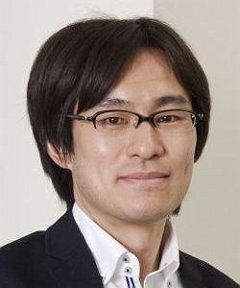
Danny Segev is a Professor at the School of Mathematical Sciences within the Faculty of Exact Sciences at Tel Aviv University . His research focuses on mathematical optimization and computational/analytical revenue management, with specific emphasis on stochastic, dynamic, and combinatorial optimization frameworks, as well as assortment planning, inventory control, dynamic pricing, and resource allocation. His recent publications explore advanced approximation algorithms and adaptivity gaps in continuous-time optimization, revenue management under complex choice models like MNL and Exponomial, and quasi-polynomial time schemes for constrained resource allocation. These works often intersect operations research, computer science, and applied mathematics. His current editorial roles include Associate Editor positions at Operations Research and Management Science , covering optimization and market design areas. He is contactable via email at segevdanny@tauex.tau.ac.il and is based in Schreiber, Room 118.
Prof. Dr. Dirk Reinel serves as Professor at Hof University of Applied Sciences within the Faculty of Interdisciplinary and Innovative Sciences since the 2023/2024 winter semester. He leads the B.Sc. program in Innovative Health Care and acts as StartupLab Ambassador for Innovative Health Care, driving healthcare innovation initiatives. His academic journey includes Computer Science studies at Hof University followed by doctoral research at the University of Bamberg, where he earned his Dr. rer. nat. in 2018 through work on corpus-based lexical resource generation for opinion mining. Reinel's research bridges Health Informatics and Natural Language Processing , with dual specializations in health data management (particularly migraine epidemiology) and sentiment analysis . His publication record reveals two distinct trajectories: clinical studies analyzing migraine patterns relative to school schedules, weekly cycles, and temperature variations; and technical contributions to opinion mining including phrase generation algorithms and domain-specific applications for insurance and social media. His recent work demonstrates increasing focus on healthcare applications, culminating in the 2022 adolescent migraine study, while maintaining foundational NLP contributions from his 2018 dissertation. The integration of clinical research with advanced text analytics represents his distinctive interdisciplinary approach. Co-founding smartlytic GmbH in 2017 enabled practical implementation of his research, notably through the DMKG Kopfschmerzregister (Headache Register) developed with the German Migraine and Headache Society. His current StartupLab role extends this translational focus, mentoring healthcare innovation projects while directing the B.Sc. program in Innovative Health Care.
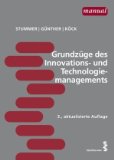
Professor Christian Stummer is a Chair Holder in the Faculty of Economics and Business Administration at Bielefeld University, Germany. His academic career spans over two decades with a consistent focus on innovation and technology management. As an active faculty member, he contributes significantly to the university's research profile, particularly in the area of Economic Implications of Smart Products and Smart Systems through the Institute for Technological Innovation, Market Development and Entrepreneurship (iTIME). Position: Chair Holder in Economics and Business Administration Research Focus: Innovation and Technology Management Key Collaborators: M. Günther, E. Kiesling, W.J. Gutjahr Academic Network: Active contributor to Computational Economics research focus Professor Stummer's research interests center on business administration with a specialized focus on innovation management and technology management. His work bridges theoretical frameworks with practical applications in R&D investment planning and market launch of innovations. His research approach is characterized by an analytical-quantitative methodology that aligns with the faculty's overall research profile. Stummer has made significant contributions to the understanding of multi-criteria decision problems in innovation contexts, particularly through the development of decision support systems that help organizations navigate complex innovation management challenges. His publication record reveals a clear trajectory of research evolution from foundational work in R&D project selection in the late 1990s to sophisticated agent-based simulation approaches for innovation diffusion in recent years. The publications demonstrate a consistent focus on decision support methodologies applied to innovation management problems, with increasing sophistication in modeling approaches over time. His work frequently addresses the challenge of balancing multiple objectives in innovation management decisions, reflecting the complexity of real-world business environments. Most Innovative Paper Award: IEEE EDUCON 2010 for game-based learning in technology management education Best Applied Paper Award: Winter Simulation Conference for agent-based simulation of biofuel market diffusion Nomination: Best Paper Award at ECMS 2010 conference Professor Stummer's research has practical applications across various industry sectors, particularly in technology-intensive industries where innovation management is critical. His work on multi-channel management and disruptive technology strategy provides valuable frameworks for businesses navigating digital transformation. Through his involvement with the Bielefeld Graduate School of Economics and Management (BiGSEM), he contributes to training the next generation of researchers in quantitative economic approaches. His decision support methodologies have potential applications in both public policy contexts (particularly regarding sustainable technology adoption) and private sector innovation management.
Prof. Kurt Rothermel is a faculty member at the University of Stuttgart, specifically affiliated with the Institute for Parallel and Distributed Systems (IPVS) within the Faculty of Computer Science, Electrical Engineering, and Information Technology. His research focuses on distributed systems with particular expertise in time-sensitive networking, networked control systems, and complex event processing. Prof. Rothermel's research interests span multiple areas in distributed computing and networking: Distributed Systems and Networked Control Systems Time-Sensitive Networking and Deterministic Networking Quality of Service (QoS) Management and Optimization Complex Event Processing and Stream Analytics Edge Computing and Real-Time Video Analytics Digital Twin Systems and Proximity-based Services His recent publications (2022-2025) demonstrate a strong focus on time-sensitive networking, with numerous papers addressing scheduling algorithms, conflict graph creation, and latency management for time-triggered communication. There's also significant work on load shedding techniques for resource-constrained environments, particularly for real-time video analytics at the edge. His research increasingly incorporates digital twin systems and explores novel approaches for distributed mobile simulation, as evidenced by his "Persival" framework for handling 3D meshes on AR devices. Prof. Rothermel has made substantial contributions to the field of complex event processing, developing multiple shedding strategies (gspice, hSPICE, pspice) to manage resource constraints while maintaining utility. His work bridges theoretical networking concepts with practical applications in industrial settings, particularly evident in his research on networked control systems and time-sensitive software-defined networks.
Rajendra Akerkar is a Professor and coordinator of the Big Data and Emerging Technologies subgroup at the Western Norway Research Institute. With over 30 years in academia across Asia, Europe, and North America, he specializes in combining theoretical AI research with practical applications for societal benefit. Research Focus: Artificial Intelligence for crisis management (resilient communities, situational awareness) Social cybersecurity (hate speech prevention, misinformation) Urban transport systems optimization Energy analytics through data-driven approaches Semantic technologies and intelligent information systems Scientific Awards: DAAD Exchange Fellowship BOYSCASTS Young Scientist Award Leadership & Publications: Associate Editor for International Journal of Metadata, Semantics and Ontologies and Editor for Web Intelligence . Published 16 monographs, 154 scientific articles, and coordinated international networks like ISO15926 Semantic Web Technologies Network.
Alexander Wolff is a Professor at the Chair of Algorithms and Complexity within the Institute of Computer Science at the University of Würzburg. His work focuses on graph drawing, computational geometry, and algorithmic complexity, with applications in geographic information systems and network visualization. Chair of Algorithms and Complexity, Institute of Computer Science, University of Würzburg (since 2009) Managing Director, Institute of Computer Science (2011–2013, 2015–2017) Editorial roles in journals like JoCG and JGAA Conference leadership in Graph Drawing (GD) and SOFSEM His research explores geometric graph representations, obstacle numbers, and parameterized complexity. Recent publications address level planarity, polyhedral surface adjacency, and metro map visualization. Collaborative projects include algorithmic quality assurance and interactive industrial network visualization. Wolff’s work bridges theoretical graph algorithms with practical applications, such as optimizing public transport schematics and enhancing data accessibility. He has supervised numerous PhD students and co-authored over 100 publications, with editorial and organizational roles in major computational geometry and graph drawing conferences.
Frank Werner is apl. Professor (Adjunct Professor) of Mathematical Optimisation at the Otto von Guericke University Magdeburg, Faculty of Mathematics, Institute for Mathematical Optimization. Since 1989 he has been a permanent member of this institute, leading DFG- and EU-funded projects, supervising international doctoral students and post-doctoral researchers, and serving on the editorial boards of more than a dozen journals. Education 1961–1973: Nordpark-Oberschule, Clara-Zetkin-Oberschule, EOS Geschwister Scholl, Magdeburg (Abitur ‘Ausgezeichnet’) 1975–1980: Diploma in Mathematics, Technische Hochschule Magdeburg (Dipl.-Math., grade ‘Ausgezeichnet’) 1980–1983: Doctoral studies, TH Magdeburg (Dr. rer. nat., Summa cum laude) 1987–1989: Habilitation, TH Magdeburg (Dr. rer. nat. habil.) Research Interests Werner’s work lies at the intersection of applied mathematics, operations research and computer science. He designs exact and heuristic algorithms for NP-hard scheduling and sequencing problems, analyses the stability of solutions under interval data uncertainty, and applies these techniques to real-world domains such as machine scheduling, vehicle routing, train timetabling, supply-chain coordination, and healthcare logistics. Recent activities extend to the use of machine-learning techniques to enhance optimisation algorithms. Scientific Awards & Honours Best Paper Award, International Journal of Production Research Best Paper Award, IISE Transactions NOC Prize 2009, INCOM Symposium Moscow, for work on hierarchical mobile-robot scheduling Supervision, Grants & Service Since 1992 Werner has coordinated numerous DFG and EU projects and acted as principal investigator for international collaborations involving Belarus, Russia, Poland, the USA, Mexico, Iran, Nepal, China and Finland. He has mentored Alexander von Humboldt fellows and long-term visiting scholars, and currently serves as Editor-in-Chief of the MDPI journal Algorithms , Associate Editor for Journal of Scheduling and International Journal of Production Research , and on the editorial or advisory boards of more than ten further journals. Laboratory & Teams He heads the Scheduling & Discrete Optimisation group within the Institute for Mathematical Optimization, maintaining active partnerships with Tribhuvan University (Nepal), Autonomous University of Baja California (Mexico), Belarusian State University, École des Mines de Saint-Étienne (France), University of Alabama in Huntsville (USA), and many others.
Dirk Müller is a Professor of Software Technology/Operating Systems at the Faculty of Computer Science/Mathematics, Dresden University of Applied Sciences (HTW Dresden). He has been in this position since 2016 and is an active member of the Faculty Council since June 2021. He was awarded IEEE Senior Member status in April 2023. His academic journey includes a doctorate in Engineering from the University of Kassel in 2006, habilitation at Chemnitz University of Technology in 2014, and prior research positions at Philipps University of Marburg and Florida State University. 1995-2002: Studies in Medical Informatics at University of Leipzig 2003-2006: Research Assistant/Doctoral Student at University of Kassel 2006-2008: Research Associate at Philipps University of Marburg 2008-2014: Academic Councillor at Chemnitz University of Technology 2014-2016: Private Lecturer at TU Chemnitz 2016-present: Professor at HTW Dresden Professor Müller's research focuses on real-time systems and scheduling, model-driven software development, digitalization in companies and administration, and the concept of information. His work particularly emphasizes Rust language applications in software engineering. He has published extensively on real-time scheduling algorithms, mixed-criticality systems, and embedded systems. His teaching responsibilities include Operating Systems I, Software Engineering I & II, Model-Driven Software Development, and Programming in Rust. His publication record shows a consistent focus on real-time systems, with a clear progression from theoretical scheduling algorithms to practical implementations. His recent work has expanded into public administration digitization and biometric conference systems, while maintaining his core expertise in scheduling theory. The publications demonstrate strong international collaboration, particularly with researchers like Matthias Werner, Alejandro Masrur, and Robert Baumgartl. IEEE Senior Member (2023) Erdős number: max. 4 Strict Erdős number: max. 5 Professor Müller actively supervises student theses, with over a dozen bachelor's and diploma theses completed between 2023-2025. His students work on diverse topics including Rust programming, workflow automation, user experience optimization, and real-time event processing. He serves as a reviewer for multiple prestigious journals including IEEE Transactions on Parallel and Distributed Systems, Real-Time Systems, and The Computer Journal. He also acts as Senior Editor for Computer Science Books at Versita. His laboratory work focuses on practical implementations of real-time systems, often using Raspberry Pi as a platform for traffic analysis and other embedded applications. His research group maintains strong connections with industry, as evidenced by the applied nature of student projects at companies like IntraConnect GmbH.
Argyrios Deligkas is a Senior Lecturer (equivalent to Associate Professor) at the Royal Holloway University of London. He obtained his PhD from the University of Liverpool under the supervision of Rahul Savani and held postdoctoral positions at the University of Liverpool and the Technion (Industrial Engineering and Management department). His research focuses on computational aspects of game theory, optimization, and complexity. Key interests include: Algorithmic Game Theory and Mechanism Design Computational Complexity (PPAD/PPA-hardness) Fixed-parameter algorithms and combinatorial optimization Fair division and resource allocation Equilibrium computation in multi-agent systems Recent publications (2023-2025) demonstrate a strong emphasis on computational hardness in fair division (e.g., PPA-hardness proofs), mechanism design with real-world constraints, and parameterized algorithms for pathfinding/graph problems. Collaborative work with European researchers dominates his output, with frequent appearances at AAAI, IJCAI, and AAMAS. He actively presents at conferences (e.g., ALGA2025, WINE 2024) and collaborates internationally, including visits to universities in Vienna, Prague, Glasgow, and Edinburgh.
Prof. Dr.-Ing. Klaus Kefferpütz serves as Professor at Ingolstadt University of Applied Sciences (THI) since 2022 within Faculty E, specializing in autonomous cooperative systems. He maintains dual research affiliations with the Fraunhofer Application Center 'Connected Mobility and Infrastructure' and AImotion Bavaria AI Mobility Hub Ingolstadt. His research focuses on coordination algorithms for autonomous systems and distributed sensor data fusion , with significant contributions to UAV navigation, swarm robotics, and constrained control systems. Recent work integrates nonlinear control theory with practical mobility applications, emphasizing real-world implementation challenges. Publications from 2020-2022 reveal consistent output in robotics and control engineering venues, demonstrating expertise in solving practical constraints like input saturation and windup phenomena. His patent portfolio indicates translational research impact. Through AImotion Bavaria and Fraunhofer partnerships, Prof. Kefferpütz accesses substantial industry-connected research funding, facilitating student involvement in applied mobility projects. His background bridges academic theory (TU Darmstadt PhD) and industry practice (MBDA flight control engineering). As a core member of THI's AImotion AI Node, he contributes to Bavaria's strategic mobility research initiative, focusing on AI applications for intelligent transportation systems and cooperative vehicle infrastructure.
Prof. Matthias Franke serves as Professor and Head of the Study Program for Automation & Mechatronics at Dresden University of Applied Sciences' Faculty of Electrical Engineering, holding the Professorship for Plant, Product and Building Automation. His research concentrates on control engineering applications with three core pillars: adaptive algorithms for building technology, diagnostic/optimization methods in HVAC systems, and nonlinear control implementations. The work extends significantly into mobile robotics covering localization, sensor perception, and motion control development. Current projects leverage the Automation Technology Laboratory's physical test benches for experimental validation. Prof. Franke actively supervises student theses through structured project areas: Mobile Robotics : Algorithm development for navigation and environmental interaction Building Automation : Efficiency monitoring systems and predictive control implementations Control Engineering Test Benches : Hardware-in-loop validation of novel control strategies Past student projects since 2019 demonstrate strong industry relevance in thermal actuator control, hexapod robotics, and machine learning applications for HVAC systems. His teaching portfolio spans foundational to advanced control courses across multiple engineering disciplines, with upcoming instruction scheduled through Summer 2026.
Dr. Heiner Heiland is a Researcher at the Institute of Sociology, University of Göttingen , working within the Chair of Sociology specializing in the Digitalization of the World of Work led by Prof. Dr. Sarah Nies. His research focuses on critical aspects of digital labor organization and resistance mechanisms. Sociology of work and organization Digitalization of labor processes Corporate public spheres Workplace resistance dynamics Sociological and political theories Mixed-methods research approaches Heiland's work examines the socio-spatial implications of food delivery platforms, algorithmic transparency limits, and worker resistance strategies. His publications analyze platform labor's structural transformations, control mechanisms, and solidarity networks in gig economies. Current research trends highlight: Algorithmic management's impact on labor autonomy Spatial and temporal dimensions of gig work Corporate public sphere revitalization efforts Worker resistance in digital capitalist systems Bottom-up digitalization pathways Power dynamics in platform-mediated labor
Fuyuki Ishikawa is an Associate Professor at the Information Systems Architecture Science Research Division of the National Institute of Informatics (NII) in Tokyo, Japan, where he also serves as Director of the GRACE Center. Additionally, he holds positions as Associate Professor at Sokendai (The Graduate University for Advanced Studies) and Visiting Associate Professor at The University of Electro-Communications. His research program, which he describes as 'Trustworthy & Smart Software Engineering,' focuses on dependability in Cyber-Physical Systems and Machine Learning Systems through techniques of formal methods and automated test generation. He investigates verification, reasoning, optimization, automated test generation, and self-adaptation by utilizing various models for requirements, specifications, and designs. His group promotes international and industry-academia collaborations with members from different organizations. Ishikawa's recent work has increasingly concentrated on quantum program testing, autonomous driving systems verification, and quality assurance frameworks for AI systems. His publications demonstrate significant contributions to software engineering, particularly in applying formal methods to emerging domains like quantum computing and machine learning. His research often bridges theoretical foundations with practical applications in safety-critical contexts, particularly for autonomous systems. Awards for Science and Technology (Research Category) from the Minister of Education, Culture, Sports, Science and Technology (April 2024) IPSJ/IEEE Computer Society Young Researcher Award for 'Research on Intelligence-driven Engineering of Dependable Smart Systems' (March 2020) Multiple Best Paper Awards at conferences including ICFEM 2020, SEKE 2020, ICECCS 2019, and ISSRE 2019 Industry Track Best Artifact Award at ISSTA 2015 Ishikawa actively supervises research projects and interns through the ERATO-MMSD Project and MIRAI-eAI Project. He has served on numerous program committees for major software engineering conferences including ASE, ICSE, and ICST, and has organized workshops on machine learning systems engineering (SIG-MLSE) and quality assurance for AI systems (QA4AI). His laboratory provides two main research directions: generative AI for trustworthy software engineering and testing/trust exploration for AI systems, with specific focus on autonomous driving and deep learning applications.
Dr. Salam Traboulsi is a Researcher at Stuttgart University of Applied Sciences (HFT Stuttgart), affiliated with the Competence Center for Digitalization in Research, Teaching & Economics since 2019. She holds a PhD in Computer Science from the University of Toulouse, France (2008). Her work bridges technology and urban innovation, with a focus on developing scalable solutions for modern cities. Research Focus: Dr. Traboulsi specializes in: Smart City ecosystems integrating IoT and 5G Precision technologies for urban positioning and navigation Data management frameworks for large-scale sensor networks Open-source IoT platforms for building efficiency and environmental monitoring Cloud and grid computing infrastructures Key Projects: She leads/contributes to: iCity 2: UDigiT4iCity – Developing urban digital twins using IoT building data and 5G sensor networks iCity 1 – Foundational research on intelligent urban infrastructure systems Publication Trends: Her recent work (2020-2024) emphasizes 5G-enabled urban solutions, including fleet management optimization, indoor positioning systems, and IoT analytics for smart buildings. Earlier research (2005-2013) focused on distributed computing, storage virtualization, and information retrieval systems, demonstrating consistent expertise in large-scale data infrastructure. Academic Engagement: She serves as a scientific reviewer for journals and conferences and teaches in the surveying study area at HFT Stuttgart.
Benjamin Danzer serves as a Professor at the Faculty of Electrical Engineering, Augsburg University of Applied Sciences, where he actively contributes to academic governance as a Member of the Faculty Council. His institutional role encompasses teaching responsibilities and participation in faculty-level decision-making processes. His research expertise centers on Automation Technology and Computer Science, with emphasis on practical applications in industrial systems and computational engineering. These fields integrate control theory, embedded systems, and software development for real-world engineering solutions: Automation Technology: Focuses on industrial control systems, robotics integration, and process optimization Computer Science: Concentrates on software engineering, algorithm development, and computational methods for engineering applications Professor Danzer teaches within the International Management and Engineering (BEng) program, maintaining office hours in room A 3.14 and direct student consultation via scheduled mentoring sessions through the university's WebUntis platform.