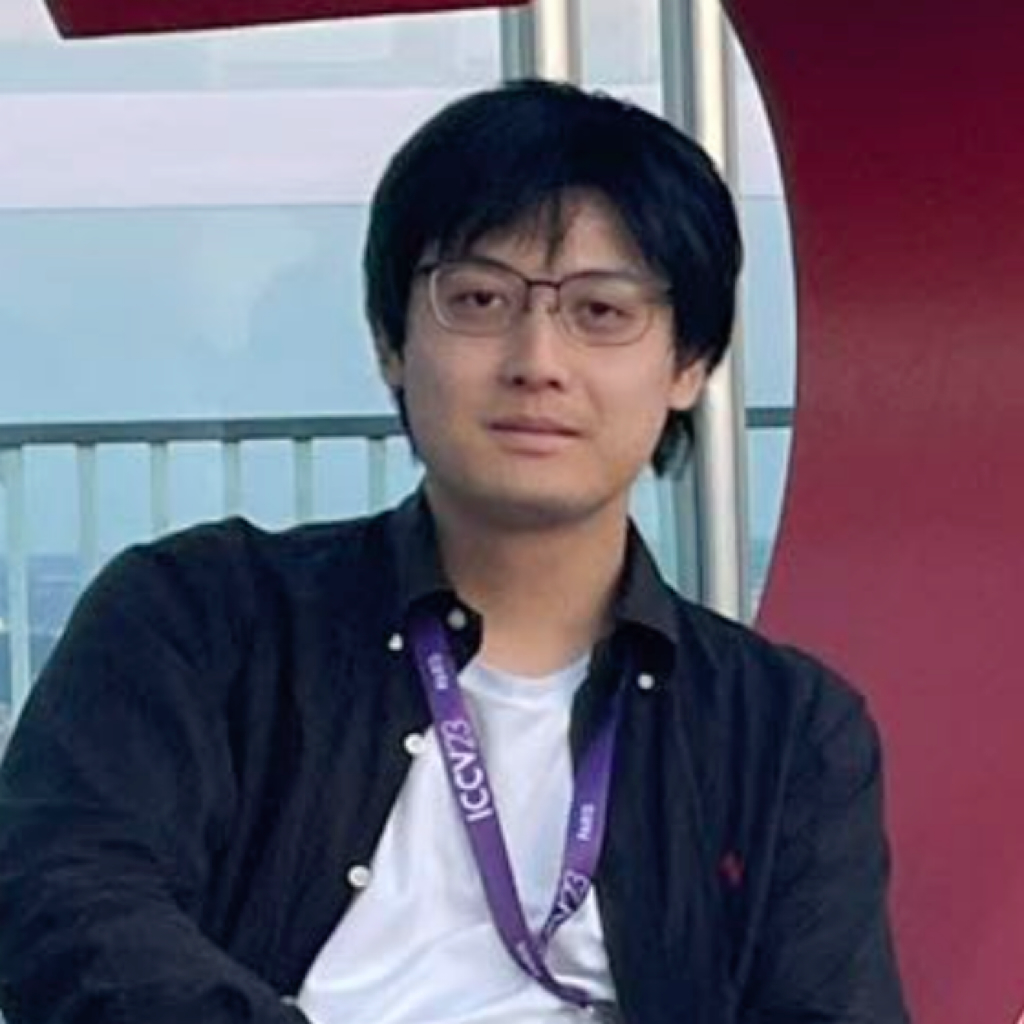
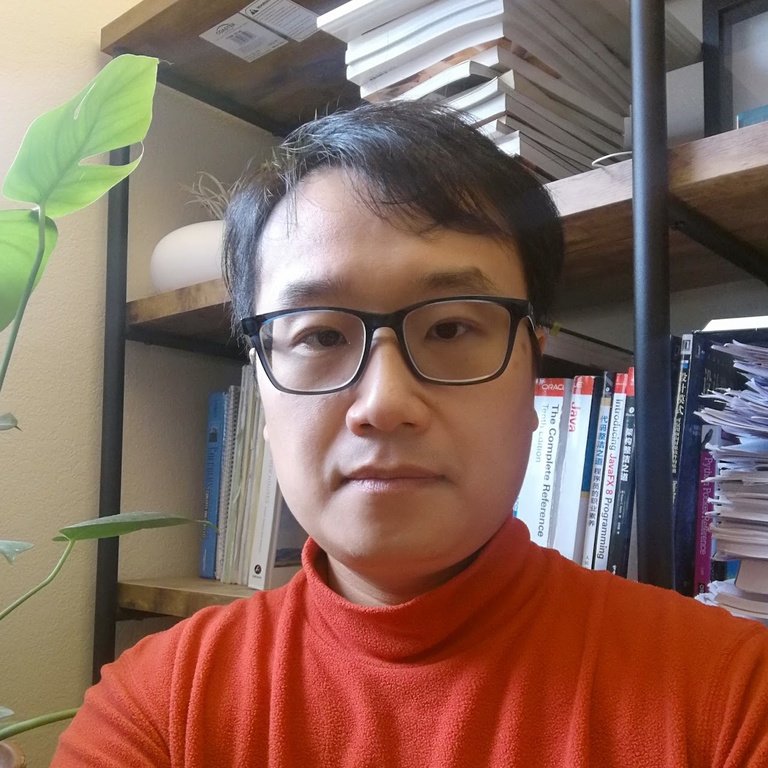
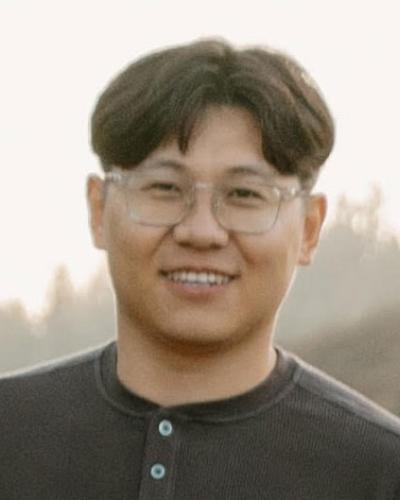
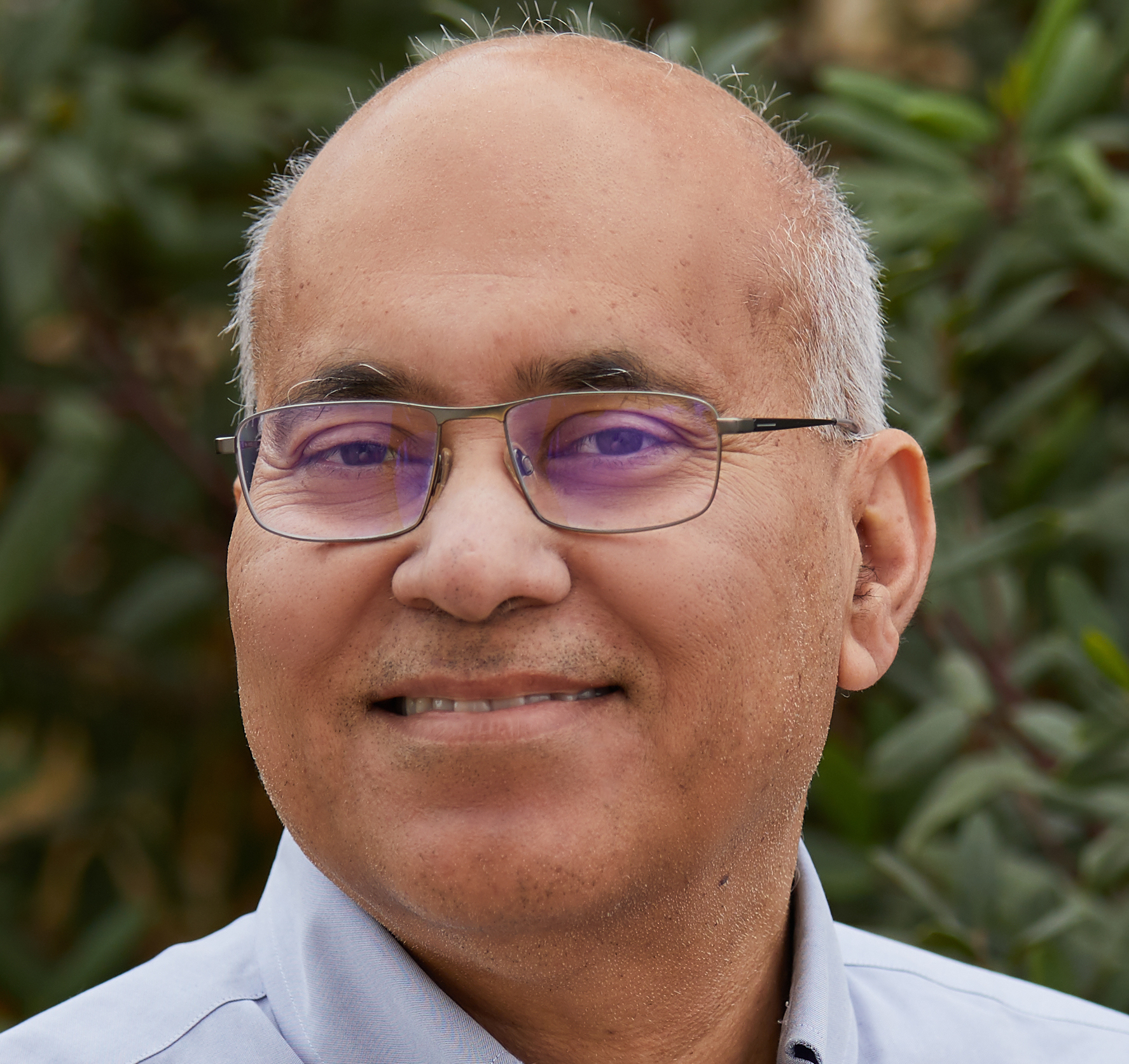
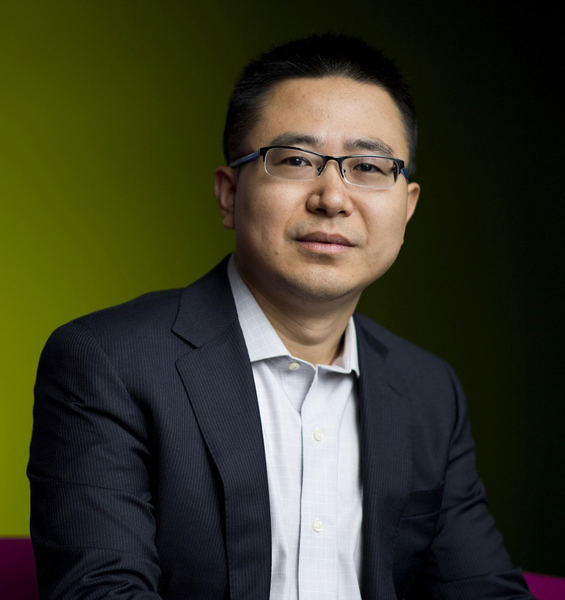
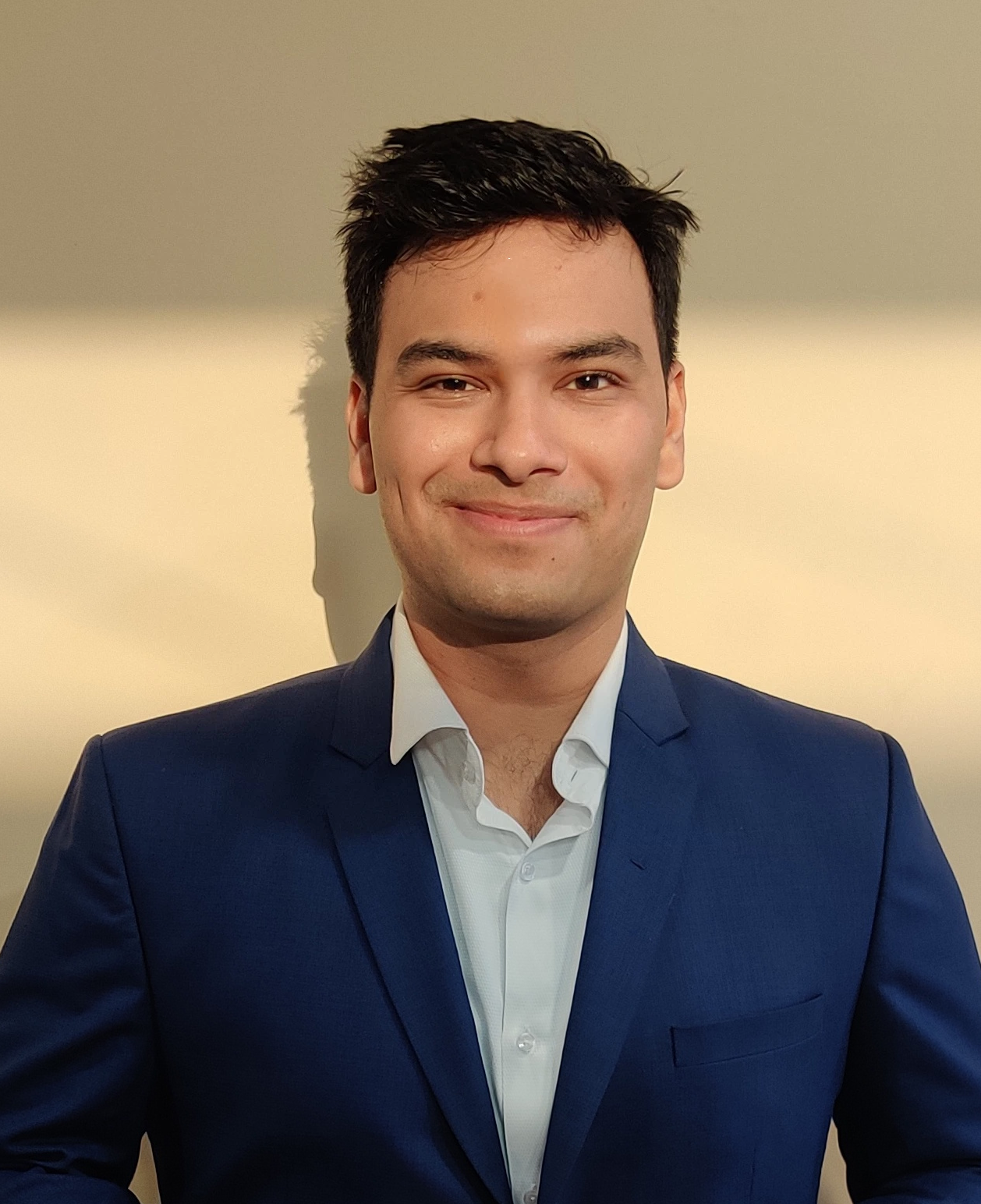
Currently a Research Fellow at Harvard University & MIT , Fangneng Zhan specializes in Neural Rendering and Generative AI . His research focuses on developing evolutive rendering frameworks, 3D-aware generative models, and multimodal synthesis techniques. Previously, he was a postdoctoral researcher at the Max Planck Institute for Informatics under Prof. Christian Theobalt. He earned his Ph.D. in Computer Science & Engineering from Nanyang Technological University, Singapore and a Bachelor's in Communication Engineering from the University of Electronic Science and Technology of China . His work spans 3D reconstruction, robotics applications , and lighting estimation , with significant contributions to SIGGRAPH , NeurIPS , and CVPR conferences. Recent research highlights include evolutive gauge transformations for neural fields, generalizable 3D style transfer via Gaussian splatting, and multimodal synthesis frameworks leveraging pre-trained models like CLIP and Stable Diffusion. He has co-authored Top50 Popular Paper in TPAMI 2023 and organized workshops at CVPR 2024 on generative models. Scientific Awards: Top50 Popular Paper, IEEE Transactions on Pattern Analysis and Machine Intelligence (TPAMI) 2023 Collaborative Network: Mentored students at institutions like Harvard, NTU, and ETH Zurich. His projects include datasets for lighting estimation and real-time scene text detection systems.
Weiran Wang is an Assistant Professor in the Department of Computer Science at the University of Iowa. Previously, he worked as a Staff Research Scientist at Google (2021-2024), Senior Research Scientist at Salesforce Research (2019-2020), and Amazon Alexa (2017-2019). He completed his PhD in 2013 at UC Merced under Miguel A. Carreira-Perpinan and postdoctoral research at Toyota Technological Institute at Chicago (2014-2017) with Karen Livescu and Nathan Srebro. PhD: EECS Department, UC Merced (2013) MS: Computer Science, Chinese Academy of Sciences (2008) BS: Computer Science, Huazhong University of Science and Technology (2005) His research focuses on machine learning algorithms for speech processing , multi-view representation learning , and optimization . Key contributions include advancements in end-to-end speech recognition, stochastic canonical correlation analysis, and deep variational methods for multi-modal data. Notable work includes improving WER metrics for telephony speech and developing GPU/TPU implementations for ASR biasing. The 15 most recent publications span 2024-2018, emphasizing speech recognition (2024 NAACL/Interspeech), multi-view learning (2022 ICLR), self-training (2020 Interspeech), and acoustic modeling (2018). Trends include deep learning, attention mechanisms, and distributed optimization techniques. No scientific awards are explicitly mentioned in the provided texts. Current teaching includes CS4980: Deep Learning (Spring 2025) and CS4420: Artificial Intelligence (Fall 2024).
Dr Andrew Starkey is a Reader in the School of Engineering at the University of Aberdeen, where he also completed his PhD in 2001. He holds an Honours degree in Applied Mathematics from the University of St Andrews. He is actively involved in research and currently accepting PhD students in Engineering. His work bridges academia and industry, with a focus on AI applications in engineering, bioinformatics, and geosciences. University: University of Aberdeen School: School of Engineering Academic Rank: Reader Email: a.starkey@abdn.ac.uk Phone: +44 (0)1224 272801 Dr Starkey's research centers on Explainable AI (XAI) , Green AI , and Autonomous AI , with applications in robotics, econometrics, bioinformatics, seismic data analysis, and virtual reality. He has developed novel methods for feature selection, autonomous learning, and knowledge abstraction from agent-environment interactions. His work emphasizes low computational cost and transparency in AI systems. The most recent publications reflect a strong trend in applying AI to complex real-world problems, including digital rock technology, robotic grasping, real-time event detection, and medical data analysis. His interdisciplinary research combines machine learning with domain-specific knowledge in engineering and life sciences, often resulting in practical, industry-ready solutions. Millennium Product Award John Logie Baird Award for Innovation Enterprise Fellowship from Royal Society of Edinburgh and Scottish Enterprise Dr Starkey has supervised multiple research projects and secured funding from major bodies including EPSRC, BBSRC, and industry partners. His past work on the GRANIT project led to the development of AI-based condition monitoring for ground anchorages, resulting in commercialization through BlueFlow Ltd. He has collaborated with researchers across disciplines, including Dr Alasdair MacKenzie (bioinformatics), Dr Anne Schwab (seismic analysis), and Dr David Hazlerigg (genomics). He leads research in AI-driven engineering solutions and is the CEO of BlueFlow Ltd, a spinout company commercializing AI technologies developed at the University of Aberdeen. His lab focuses on developing autonomous, explainable, and environmentally sustainable AI systems for real-world deployment.
Xin (Eric) Wang is an Assistant Professor in the Computer Science Department at the University of California, Santa Barbara (UCSB) , and serves as Head of Research at Simular AI. His research focuses on Multimodal and Embodied AI Agents , blending methodologies from machine learning, computer vision, natural language processing, and robotics. Education: Ph.D. in Computer Science, UC Santa Barbara B.Eng. in Computer Science, Zhejiang University Research Interests: Natural Language Processing Computer Vision Multimodal AI Embodied AI Trustworthy AI Systems His work emphasizes agents that collaborate with humans in complex environments, addressing ethical design and generalizable reasoning. Awards: Best Paper Awards at CVPR 2019 and ICLR 2025 Google Faculty Research Award, 2022 eBay & Cisco Faculty Awards (2022–2024) Amazon Alexa Prize Awards (multiple years) Advising & Grants: Supervised students Dr. Xuehai He and Dr. Jing Gu. Secured grants from Microsoft, Adobe, eBay, and Snap. Organized workshops on vision-language research and embodied AI. Labs/Teams: Leads the ERIC Lab at UCSB, focusing on multimodal agent systems and ethical AI design.
Vinkle Srivastav is a Research Scientist (Chargé de recherche R&D) at the CAMMA group, a collaborative research team between IHU Strasbourg and the University of Strasbourg, where he focuses on advancing surgical data science through novel computer vision and machine learning approaches. His work bridges the gap between clinical practice and artificial intelligence, developing methods for surgical video analysis, 3D medical imaging, and surgical workflow understanding. Education PhD in Computer Science (2018-2021) from University of Strasbourg, France. Thesis: "Unsupervised Domain Adaptation Approaches for Person Localization in the Operating Rooms." Master of Science in Computer Science (2014-2017) from Indian Institute of Technology, Delhi, India. Thesis: "Computerized evaluation of neurosurgery skills using image processing and computer vision techniques." Bachelor of Technology in Electronics and Communication (2007-2011) from Punjab Technical University, Jalandhar, India. Research Interests Vinkle's research spans surgical data science, with particular focus on multi-modal learning approaches for surgical computer vision. His work addresses fundamental challenges in medical AI including domain adaptation, self-supervised learning, and privacy preservation in clinical environments. He develops methods for 3D medical image analysis, multi-view human pose estimation in operating rooms, and surgical activity recognition. His recent work emphasizes multi-modal pretraining frameworks that leverage both visual and textual information to improve surgical workflow understanding. He also investigates scientific simulation techniques, particularly for therapeutic ultrasound applications, where physics-aware deep learning models can accelerate computational processes while maintaining accuracy. Publication Trends Vinkle's recent publications demonstrate a strong trajectory toward multi-modal surgical AI systems that integrate vision, language, and physics-based modeling. His work increasingly focuses on few-shot and zero-shot adaptation techniques to address the data scarcity problem in surgical AI. The publications reveal a progression from basic pose estimation to holistic surgical scene understanding, incorporating team communication analysis and surgical safety protocols. Scientific Awards IPCAI 2024 Best paper award (co-author) IPCAI 2019 Runner-up award in the bench-to-bedside category (co-author) Joint winner for the best paper award in the machine learning for CAI track, IPCAI 2025 Advising and Grants Vinkle actively mentors multiple PhD students and research interns at various levels, supervising thesis work on topics including large-scale multi-modality learning, holistic surgical scene analysis, and self-supervised video representation learning. He serves as Co-PI on two ITI-HealthTech projects: one focused on multi-modality learning for 3D medical imaging (2023), and another on physics-aware deep-learning approaches for therapeutic ultrasound simulation (2024). Laboratories and Teams Vinkle is a key member of the CAMMA research group at IHU Strasbourg, a collaborative team focused on computer-assisted medical modeling and analytics. He co-organizes the Surgical Data Science Summer School, an interdisciplinary program that brings together clinicians and computer scientists to develop AI-driven solutions with clinical impact. His work involves close collaboration with surgical teams at University Hospitals of Strasbourg and international partners including Johns Hopkins University and Technical University of Munich.
Teresa Cristina de Freitas Gonçalves is an Associate Professor at the Department of Informatics, School of Sciences and Technology, University of Évora, where she has been employed since 1999. She serves as an integrated researcher at the ALGORITMI research centre and is the Director of the VISTA Lab (Video, Image, Speech and text Analysis Lab), the unit of the ALGORITMI research centre at University of Évora. Her leadership roles include Director of the Master programme in Informatics Engineering and deputy Director of both the Master programme in Artificial Intelligence and Data Science and the Doctoral program in Computer Science. She earned her PhD in Computer Science from University of Évora and a MSc degree in Informatics Engineering from New University of Lisbon. Her academic journey at University of Évora has included significant leadership positions including Head of the Computer Science Department (2011-2015), Director of the Bachelor programme in Informatics Engineering (2016-2021), and Deputy Director roles for various undergraduate and graduate programs. Dr. Gonçalves' research focuses on intelligent systems, particularly Machine Learning approaches, with substantial contributions in evolutionary algorithms, information extraction and retrieval, and supervised learning across multiple data modalities including tabular data, text (in both Portuguese and English), and images (medical and satellite). Her work bridges theoretical advances with practical applications in healthcare, remote sensing, and natural language processing. She has successfully supervised 6 doctoral theses, 19 master theses, and 3 postdocs, and currently mentors 5 doctoral and 6 master students from diverse international backgrounds including Bangladesh, Cabo Verde, Nepal, Philippines, India, Sri Lanka, China, Mongolia, and Portugal. Her publication record includes over 100 scientific articles indexed by Scopus with 640 citations and an h-index of 12, demonstrating significant international impact with 56% of her work involving international collaboration. Her recent research shows a strong trend toward applying advanced machine learning techniques to healthcare applications, information retrieval systems, and remote sensing analysis, with particular emphasis on transformer networks, learning-to-rank methodologies, and multimodal data analysis. Dr. Gonçalves has made substantial contributions to the academic community through her service as a reviewer for over 50 articles in prestigious international journals and conferences, and as chair for major international conferences including IDEAL 2023, PROPOR 2020, SKIMA 2017 and 2018, and CLEF 2016. She serves on the board of APRP (Associação Portuguesa de reconhecimento de Padrões) and as a jury member for APRP prizes for best MSc and PhD theses. Her current research portfolio includes coordination of the Horizon Europe MSCA Staff Exchange HarmonicAI project and local coordination of WP6 in the NewSpace Portugal mobilising agenda. She is also actively involved in numerous other international research initiatives including Interreg VI-B Sudoe SenforFire, PRR CANTE, La Caixa INCOME, Erasmus+ KA220-HED REDINEST, Interreg POCTEP TID4AGRO, and ATTRACT DIH projects. Previously, she led the FCT AI in the Public Administration SNS24.Scout.IA project and coordinated the FEDER R&D NIIAA project. As Director of the VISTA Lab, Dr. Gonçalves leads a dynamic research team focused on video, image, speech, and text analysis. The lab serves as the Évora hub of the ALGORITMI research centre and has established strong international collaborations. Under her leadership, the VISTA Lab has developed innovative approaches in medical image analysis, natural language processing for Portuguese, and satellite image classification, with applications spanning healthcare, environmental monitoring, and public administration.
Marco Porta is a Full Professor at the University of Pavia, Department of Electrical, Computer and Biomedical Engineering. He teaches Web and Multimedia Technologies in the Computer Engineering Master's program and Web Design and Technologies in the interdepartmental CIM Bachelor's program. His research focuses on Eye Tracking, Vision-Based Perceptive Interfaces, and Human-Computer Interaction, with recent emphasis on AI applications for human-centered systems. He leads the Computer Vision & Multimedia Lab and chairs teaching councils for CIM and CoD programs. Education: Master's in Electronic Engineering (Polytechnic of Milan) and Ph.D. in Electronic & Computer Engineering (University of Pavia). Professional roles include vice-chair of IEEE's Technical Committee on Factory Automation. Over 118 publications in journals/conferences, with contributions to biometrics, e-learning interfaces, and industrial automation. Research highlights include gaze-based authentication systems, interactive museum interfaces, and ergonomic in-vehicle infotainment evaluations. Current projects explore gaze-driven intelligent tutoring systems and public space interaction frameworks.
Andrey Vladimirovich Savchenko is a prominent researcher and educator in computer vision and artificial intelligence at the National Research University Higher School of Economics (HSE) in Nizhny Novgorod. He holds multiple positions including Professor at the Faculty of Informatics, Mathematics, and Computer Science, Leading Researcher at the Faculty of Computer Science and Institute of Artificial Intelligence and Digital Sciences, and Academic Director of the "Artificial Intelligence and Computer Vision" educational program. His educational background includes: 2016: Doctor of Technical Sciences from Nizhny Novgorod State Technical University 2015: Academic title of Associate Professor 2011: Candidate of Technical Sciences 2008: Specialist degree in Applied Mathematics and Computer Science Savchenko's research focuses on computer vision, pattern recognition, and artificial intelligence, with particular emphasis on facial recognition, emotion analysis, and efficient deep learning algorithms. His work bridges theoretical foundations with practical applications, especially in mobile computing environments where computational resources are limited. He has developed innovative methods for making AI systems more efficient without significant loss in accuracy. His recent publications demonstrate a strong trend toward multimodal analysis, combining visual, audio, and textual data for more robust recognition systems. There's a clear emphasis on making AI systems more efficient, especially for mobile devices, and on developing methods that can work with limited computational resources while maintaining high accuracy. His work spans fundamental research on neural network architectures and practical applications in education, healthcare, and human-computer interaction. Among his notable scientific achievements: Gratitude from the Governor of Nizhny Novgorod region (2022) Multiple gratitude awards from HSE (2021-2022) Best Teacher Award (2018-2019) Leaders of IT Industry Award from NEYMARK IT Campus (2023) Academic Success Bonus at HSE (2011-2013) Savchenko has successfully supervised numerous master's students and currently mentors PhD candidates working on cutting-edge topics like large language models for recommendation systems and document analysis. He has secured significant research funding, including projects with Huawei, Sberbank, and the Russian Science Foundation, totaling millions of rubles. His laboratory focuses on developing efficient algorithms for computer vision and multimodal data analysis. He leads the Laboratory of Theoretical Foundations of Artificial Intelligence Models and has established strong industry partnerships that ensure his research has practical impact. His NVIDIA Deep Learning Institute certification demonstrates his commitment to staying current with the latest AI technologies.
Jitendra Malik is the Arthur J. Chick Professor of Electrical Engineering and Computer Sciences (EECS) at the University of California, Berkeley, with affiliations in Bioengineering, Cognitive Science, and Vision Science groups. He previously served as Chair of the Computer Science Division (2002-2004) and Department Chair of EECS (2004-2006 and 2016-2017). He also worked part-time as Research Director and Site Lead at Facebook AI Research (Meta Inc.) during 2018-2019. Education : B.Tech in Electrical Engineering (IIT Kanpur, 1980), PhD in Computer Science (Stanford, 1985) Current Research : Computer Vision, Robotics, Machine Learning, Computational Modeling of Human Vision, and Biological Image Analysis Making significant contributions to computer vision , robotics , and machine learning , Malik’s work includes foundational algorithms like anisotropic diffusion , normalized cuts , and R-CNN . His recent research focuses on embodied AI agents , dexterous manipulation , 3D scene reconstruction , and vision-language-action models . His publications have received 11 best paper awards , including test-of-time awards like the Longuet-Higgins Prize (3x) and Helmholtz Prize (3x). Malik has mentored over 80 PhD students and postdoctoral fellows , many of whom hold prominent positions at institutions like MIT, Caltech, Google, and Meta. His lab’s work spans computer vision , robot learning , and 3D modeling , with applications in autonomous systems, medical imaging, and computational biology. Scientific Awards Presidential Young Investigator Award (1989) Distinguished Alumnus Award, IIT Kanpur (2008) IEEE PAMI-TC Distinguished Researcher (2013) K.S. Fu Prize, IAPR (2014) ACM-AAAI Allen Newell Award (2016) IJCAI Award for Research Excellence (2018) IEEE Computer Society Pioneer Award (2019) Fellow, IEEE, ACM, AAAS Member, National Academy of Engineering and National Academy of Sciences As a leader in sensorimotor learning and humanoid robotics , Malik has pioneered approaches for vision-based quadcopter control , humanoid locomotion , and visuo-tactile perception , further advancing the field of artificial intelligence and computational vision .
Erchan Aptoula is a Professor of Computer Science at Sabanci University's Faculty of Engineering and Natural Sciences in Istanbul, Türkiye. He is affiliated with the Computer Vision and Pattern Analysis Laboratory (VPALab) and actively conducts research in digital image analysis, computer vision, and deep learning with a focus on remote sensing and (bio)medical data. University: Sabanci University School: Faculty of Engineering and Natural Sciences Academic Rank: Professor Email: erchan.aptoula@sabanciuniv.edu His research interests span domain generalization for remote sensing, explainable AI, medical image analysis, and precision agriculture applications. Recent work includes advancements in open-set domain generalization for hyperspectral classification, pollen classification with novel datasets, and domain adaptation techniques for SAR flood segmentation. Scientific contributions include 15+ recent publications addressing domain generalization, semantic segmentation, and uncertainty quantification in remote sensing and medical imaging. Awards include 2nd place at IEEE SIU'25 student paper awards. Projects involve international collaborations with institutions in Tunisia, Finland, and the UK, focusing on medical image understanding, crowd counting, and Ottoman document analysis.
Krzysztof Czarnecki is a Professor at the University of Waterloo's Department of Electrical and Computer Engineering, with a cross-appointment to the School of Computer Science. He serves as leader of the Waterloo Intelligent Systems Engineering Lab and holds the title of University Research Chair. His research focuses on generative software development, model-driven engineering, and autonomous systems, particularly in automotive cybersecurity and perception safety. Education: Doctorate in Computer Science, Technical University of Ilmenau (1999) Master of Science in Computer Science, Technical University of Ilmenau (1995) Bachelor of Science in Computer Science, California State University (1994) Research Interests: Dr. Czarnecki's work spans generative programming, software product lines, and safety-critical AI for autonomous vehicles. Recent projects address robust perception systems, uncertainty quantification in neural networks, and strategic driving behavior modeling. He co-authored Generative Programming (Addison-Wesley, 2000), a foundational text in the field. Publications Trends: Recent work emphasizes multimodal AI integration (e.g., LEO-MINI), 3D object detection improvements (OV-SCAN), and safety assurance frameworks for autonomous systems. His research bridges theoretical software engineering with applied robotics challenges. Awards: Premier’s Research Excellence Award (2004) British Computing Society’s Upper Canada Award (2008) University Research Chair, University of Waterloo (2023) Teaching & Leadership: Teaches courses like ECE 495 (Autonomous Vehicles) and ECE 651 (Software Engineering Foundations). Oversees WatCAR initiatives and collaborates on industry projects through the NSERC Bank of Nova Scotia Industrial Research Chair (previous). Labs & Teams: Directs the Waterloo Intelligent Systems Engineering Lab, focusing on AI-driven solutions for autonomous systems and safety-critical software. Active in cross-disciplinary collaborations with automotive and robotics partners.
Gaël Richard is a Professor at Télécom Paris specializing in machine learning and audio signal processing. He leads the Hi! Paris center, focusing on AI and data science applications. His research emphasizes hybrid interpretable AI for sound analysis, including projects like Hi-Audio funded by a €2.5M ERC Advanced Grant (2022). Key areas include machine listening, music source separation, and speech processing. Applications span autonomous vehicle acoustics and music technology. Notable contributions include neural audio compression (QINCODEC), diffusion models for music synthesis (Diff-TONE), and source separation techniques (Inverse Drum Machine). Research & Awards Recipient of the 2022 ERC Advanced Grant for the Hi-Audio project exploring hybrid AI models that integrate domain knowledge with neural networks. This approach reduces data requirements and enhances model interpretability. Active in audio-visual scene analysis and weakly-supervised learning systems. Affiliations & Labs Executive Director of Hi! Paris, a multidisciplinary lab advancing AI and data science for societal impact. Collaborates on projects like the HI-AUDIO online platform for distributed music data collection and the MAD-EEG EEG dataset for auditory attention decoding.
Yun Fu is a tenured Professor in the Department of Electrical and Computer Engineering at Northeastern University, with a joint appointment in the Khoury College of Computer Science. He has established himself as a leading researcher in Artificial Intelligence, with over 500 publications in top-tier venues including IEEE/ACM transactions and major AI conferences. His work spans both theoretical foundations and practical applications, with significant impact in computer vision and machine learning. Professor Fu earned his Ph.D. in Electrical and Computer Engineering from the University of Illinois at Urbana-Champaign. His academic career progressed from Assistant Professor at SUNY Buffalo to his current position as tenured Professor at Northeastern University, where he has held appointments since 2012. His educational background includes a Beckman Graduate Fellowship at UIUC (2007-2008). His research focuses on advancing Artificial Intelligence with particular emphasis on Computer Vision, Pattern Recognition, and Machine Learning. His seminal work includes the "Residual Dense Network for Image Super-Resolution" presented at CVPR 2018, which was ranked among the Top 10 Most Influential CVPR papers. His research interests span image processing, anomaly detection, multimodal learning, and trajectory prediction, with applications ranging from healthcare to consumer technology. Analysis of his recent publications reveals a strong trend toward developing efficient and robust AI systems that bridge computer vision with language understanding. His work increasingly focuses on multimodal learning, trajectory prediction for multi-agent systems, anomaly detection in complex environments, and model validation techniques for black-box systems, while maintaining practical applications in real-world scenarios. Professor Fu's extensive recognition includes: Fellow of IEEE (2018), OSA (2019), SPIE (2018), IAPR (2016), AAIA (2021), and AAAI (2025) Member of Academia Europaea (2022) and European Academy of Sciences and Arts (2023) Fellow of National Academy of Inventors (2023) Multiple Young Investigator Awards from NAE, ONR, ARO, IEEE, ACM, and INNS 12 Best Paper Awards from major conferences Industrial Research Awards from Google, Amazon, Samsung, JPMorgan, and others Professor Fu has successfully mentored numerous Ph.D. students who now hold prominent positions in academia and industry at institutions including Amazon, Microsoft, Meta, Adobe, and major universities. His entrepreneurial ventures include founding Giaran (acquired by Shiseido in 2017) and co-founding TVision Insights, demonstrating his commitment to translating research into real-world impact. He has secured significant research funding from both government agencies and industry partners. As the PI and Founding Director of the SmiLe Lab at Northeastern University, Professor Fu leads a dynamic research group focused on advancing the state-of-the-art in AI and Computer Vision. The lab fosters interdisciplinary collaboration across computer science, electrical engineering, and applied mathematics, with ongoing projects in efficient deep learning, multimodal understanding, and practical AI applications.
Rishabh Dabral is a Research Group Leader at the Max Planck Institute for Informatics since August 2024, leading the "3D Visual Intelligence" group. He is also affiliated with the Research Training Group on Neuro-Explicit Models of Language, Vision, and Action at Saarland University. Expertise: 3D computer vision, computer graphics, human-object interaction modeling, and motion synthesis. Leadership: Conducts cutting-edge research on 3D human performance capture and physical plausibility in motion. His research focuses on: 3D human pose estimation under gravity constraints Multi-modal gesture synthesis using neural architectures Quantum auto-encoding for 3D representations Wearable robotics informed by human behavior Temporal dynamics in human-object interaction Recent publications at top venues like SIGGRAPH , CVPR , and ICCV demonstrate his work on: Music-driven motion synthesis Egocentric motion capture systems Reactive two-person interaction models Diffusion-based gesture generation Object-aware motion prediction Wearable robotic limb design
Chengpei Xu is a Research Fellow at the Mine Internet of Things and Indoor Positioning (MIoT & IPIN) Lab, MERE, University of New South Wales, Sydney. His academic journey includes a Bachelor's in System Engineering from NUDT (China), a Master's in Information Technology from UNSW, and a Ph.D. in Computing Sciences and Engineering from University of Technology Sydney (2022). Research Interests : Designing deep learning algorithms for multi-modal scene/document understanding and analysis Developing generative AI for healthcare, eLearning, and human-computer interaction Multi-modal sensor fusion to analyze complex, degraded environments Detection and recognition of arbitrarily shaped scene text Grants & Supervision : CI for Australia’s Economic Accelerator (AEA) grant (2024-2025): $160,000 for "Rock bolt identification based on LiDAR point cloud" Supervising MPhil student Birgul Topal (Middle East Technical University) on "Partially Overlapping Point Cloud Registration Accuracy in Mine Tunnels" Labs & Affiliations : Mine Internet of Things and Indoor Positioning (MIoT & IPIN) Lab Minerals and Energy Resources Engineering (MERE), University of New South Wales