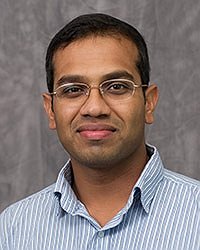
David Bani-Harouni is a researcher at the Chair of Computer Aided Medical Procedures at Technische Universität München (TUM). His work focuses on Medical Informatics , Artificial Intelligence , and Deep Learning , with an emphasis on Clinical Decision Support and Medical Image Analysis . Research Interests : Large Language Models (LLMs), Vision Language Models (VLMs), interpretability in deep learning, multimodal clinical decision support, and medical image analysis. Teaching : He contributes to lectures and practical courses such as Computer Aided Medical Procedures I , Medical Augmented Reality , and Deep Learning for Medical Applications . Publications : His research spans reinforcement learning for clinical decision-making, multimodal operating room datasets, toxin prediction systems (e.g., ToxNet), and graph convolutional networks for intoxication prediction. Contact : david.bani-harouni@tum.de
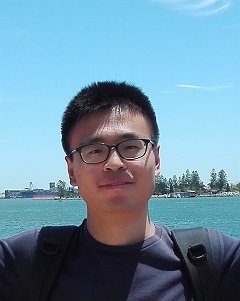
Dr. Jun Li is a Senior Lecturer at the School of Computer Science, Faculty of Engineering and Information Technology, University of Technology Sydney (UTS), Australia. He received his Ph.D. in Computer Science from Queen Mary University of London in 2009 and is affiliated with the Australian Artificial Intelligence Institute (AAII) at UTS. His research spans multiple domains within artificial intelligence, with primary focus on Machine Learning applications in computer vision and 3D geometry. Dr. Li has published extensively in high-impact journals including IEEE Transactions (TPAMI, TIP, TNNSLS) and Pattern Recognition, with recent work expanding into interdisciplinary research in earth science and marine applications. His research output demonstrates consistent productivity with numerous publications each year across diverse AI application areas. Dr. Li's work shows strong thematic progression from foundational computer vision techniques to applied interdisciplinary research. Early work focused on face hallucination and video super-resolution, while more recent publications address environmental applications using Graph Neural Networks for wave prediction and damage classification for disaster response. His research consistently bridges theoretical AI advances with practical real-world applications across healthcare, autonomous systems, and environmental science. AI to assist disaster emergency response (2023-2026) Applying Generative Adversarial Network in Medical Image Analysis (2020-2021) Big Massive Open Online Course (MOOC) Data Retrieval (2017-2020) As an educator, Dr. Li teaches core courses including '31005 Machine Learning' and '32513 Advanced Data Analytics Algorithms' at UTS, and is available for Masters Research and PhD student supervision, contributing to the development of next-generation AI researchers.
Dr. Stavros Nousias is a researcher at the Chair of Computing in Civil and Building Engineering at the Technical University of Munich , focusing on applications of Artificial Intelligence in the Built Environment . His work bridges Knowledge Representation and Reasoning , Geometry Processing , and Machine Learning to advance construction informatics and digital twinning. Research Interests: AI for building evacuation prediction, technical drawing segmentation, BIM optimization, and respiratory disease modeling. Publications: 15+ peer-reviewed articles on topics including graph neural networks for construction simulations, pulmonary airflow analysis, and heritage site monitoring. Supervised Theses: Guided projects on AI-based BIM command prediction and robotized construction simulation . Labs: Active in the BIM-Lab and Robotic Fabrication Lab . Teaching: Co-instructor for courses like Artificial Intelligence in Engineering and Computation in Engineering 1 .
Ville Valtteri Lehtola is an Assistant Professor in the Department of Earth Observation Science, affiliated with the Digital Society Institute. His research bridges geosciences and artificial intelligence, focusing on sensor technologies and autonomous systems. Academic Rank: Assistant Professor Department: Earth Observation Science Key Affiliations: Digital Society Institute Lehtola's work spans several interconnected domains: Artificial Intelligence : Edge AI, deep learning, graph neural networks Geospatial Research : Point cloud analysis, 3D mapping, indoor navigation Autonomous Systems : Sensor fusion, real-time computing, robotic perception Urban Sustainability : Digital twin applications for city planning His recent publications highlight trends in AI-enhanced geospatial analysis and autonomous navigation technologies. Notably, he has contributed to indoor environment mapping using advanced machine learning techniques and explored digital twin implementations for urban sustainability. Lehtola actively participates in academic collaboration, organizing the ISPRS Workshop Indoor 3D in 2019. His research outputs demonstrate consistent engagement with geospatial AI, sensor technologies, and their applications in real-world environments.
Guillaume-Alexandre Bilodeau is a Full Professor in the Department of Computer Engineering and Software Engineering at Polytechnique Montréal. He serves as Head of the Laboratory for Image and Video Interpretation and Processing (LITIV) and is a member of the Institute for Data Valorization (IVADO). His research is centered within the 'New frontiers in information and communications technologies' center of excellence, with additional affiliations in 'Modeling and Artificial Intelligence' and 'Transport and Sustainable Infrastructure' centers. Professor Bilodeau's research focuses on computer vision and artificial intelligence, with particular expertise in: Developing methods for interpreting human actions and interactions within scenes Integrating visible and infrared camera data for improved object and human detection Object tracking using pan-tilt-zoom camera systems Medical applications of thermal imaging and thermography, including Parkinson's disease diagnosis from gait analysis His recent publications demonstrate continued strong activity in video prediction, medical applications of computer vision, and multi-object tracking. Professor Bilodeau maintains a robust publication record with multiple 2025 publications in top venues, reflecting ongoing research productivity and relevance in the computer vision community. Professor Bilodeau has received significant recognition for his work, including: 2023: Fonds de recherche du Québec research grant award 2008: Best vision paper award at Canadian Conference on Robot Vision 2002: Honorable mention for Pattern Recognition Society award As an educator and mentor, Professor Bilodeau has supervised 12 PhD students and 26 Master's students to completion. He teaches courses in multimedia technologies and computer vision. His laboratory, LITIV, provides a research environment focused on image and video interpretation with applications spanning surveillance systems, medical diagnostics, and transportation infrastructure monitoring.
Mayur Naik is the Misra Family Professor in the Department of Computer and Information Science at the University of Pennsylvania's School of Engineering and Applied Science. He holds office in Room 642B, Amy Gutmann Hall and maintains an active research program focused on the intersection of programming languages and artificial intelligence. Before joining UPenn, he was faculty at Georgia Institute of Technology and a researcher at Intel Labs, Berkeley. Naik received his PhD in Computer Science from Stanford University in 2008 under Alex Aiken, a Masters from Purdue University in 2003 under Jens Palsberg, and a Bachelors from BITS Pilani in 1999. He grew up in Goa, India. His primary research interests center around neurosymbolic programming, which combines symbolic reasoning with machine learning to create more accurate, interpretable, and domain-aware AI systems. His group develops language design, learning algorithms, and compiler optimizations in this space, with their most mature effort being the Scallop neurosymbolic programming language and compiler toolchain. He also conducts research in trustworthy AI for healthcare applications and AI-enabled programming tools that improve programmer productivity. Analysis of his recent publications shows a strong trend toward neurosymbolic programming frameworks (Scallop, TorchQL), LLM-assisted program analysis (IRIS), and applications of these techniques to security, healthcare, and computer vision. His work consistently bridges theoretical foundations with practical implementations, often releasing open-source systems. Misra Family Professor (endowed chair, effective July 2024) Multiple distinguished paper awards (PLDI 2019, FSE 2015, PLDI 2014) Test-of-Time Paper Awards (FSE 2013, FSE 2012, EuroSys 2011) His student Elizabeth Dinella won the 2025 ACM SIGSOFT Outstanding Dissertation award Naik has advised numerous PhD students who have gone on to faculty positions at top institutions including Peking University, University of Toronto, Ashoka University, Bryn Mawr College, and Johns Hopkins University. His research is supported by grants from NSF, Google, Amazon, and other industry partners. His lab maintains active collaborations with clinicians and bioinformatics researchers to apply neurosymbolic programming to healthcare problems. His research group, which includes current PhD students and postdocs, develops practical open-source systems and applies them to diverse domains including computer vision, cybersecurity, medicine, and bioinformatics. The group maintains strong industry connections with Google, Microsoft, Amazon, and other tech companies.
Filip Biljecki is an Assistant Professor at the National University of Singapore, jointly appointed in the Department of Architecture (College of Design and Engineering) and the Department of Real Estate (NUS Business School). He founded and leads the NUS Urban Analytics Lab, which serves as a research hub for urban data science and geospatial AI applications. His work bridges architecture, geomatics, and data science to create smarter, more sustainable urban environments. Dr. Biljecki earned his PhD in 3D GIS from Delft University of Technology with highest honors (top 5%) and completed his MSc in Geomatics at the same institution. His educational background in geospatial science forms the foundation for his innovative research in urban analytics. His research focuses on leveraging emerging urban data sources, particularly street view imagery and other visual data, to advance 3D city modeling, urban digital twins, and GeoAI applications. He investigates spatial data quality, crowdsourcing through platforms like OpenStreetMap, and develops methods to assess urban form and human perception of built environments. His work integrates computer vision, machine learning, and geospatial analysis to address pressing urban challenges related to sustainability, comfort, and equity. Analysis of his recent publications reveals a strong trend toward integrating AI with urban analytics, with particular emphasis on using street view imagery to understand urban environments. His work spans from technical aspects of 3D modeling and digital twins to human-centered applications assessing walkability, thermal comfort, and visual perception. A significant portion of his research addresses sustainability challenges through carbon analysis, urban heat island mitigation, and sustainable urban design. Presidential Young Professorship (NUS), 2020 Top 2% scientists worldwide (Stanford University), 2021 Multiple teaching excellence awards (2021-2025) Best paper awards at 3D GeoInfo (2017, 2023) EuroSDR award for best PhD thesis related to GIS in Europe, 2017 Dr. Biljecki actively supervises PhD students and research fellows through his Urban Analytics Lab, with research supported by various grants and collaborations. He serves as Associate Editor for Computers, Environment and Urban Systems and holds editorial positions with several other leading journals in geography and urban studies. His work bridges academia and practice through collaborations with industry and government agencies focused on urban development. As founder of the NUS Urban Analytics Lab, he leads a vibrant research team exploring the intersection of cities and AI. He also chairs the 3D Information Management Domain Working Group at the Open Geospatial Consortium and serves as Chair of WG IV/1 at the International Society for Photogrammetry and Remote Sensing. His leadership extends to the Future Cities Lab Global at the Singapore-ETH Centre where he serves as Principal Investigator.
Dr. Lijing Zhu serves as an Assistant Professor of Data Science within the College of Science and Engineering at the University of Houston-Clear Lake, where she teaches foundational data science courses and conducts research in artificial intelligence. Academic Background Ph.D. in Data Science, Bowling Green State University (August 2025) Research Focus Dr. Zhu's research spans machine learning, graph-based deep learning, continual graph learning, and computer vision. Her work addresses critical challenges in knowledge representation through continual knowledge graph learning, human-object interaction detection, and graph representation learning. She develops innovative algorithms that enhance the robustness and efficiency of deep learning models for complex structured data, with particular emphasis on overcoming catastrophic forgetting in dynamic knowledge graphs. Publication Trends Her active 2024-2025 publication record in venues like ECML PKDD, CIKM, and IEEE Big Data demonstrates a cohesive research trajectory across three interconnected domains: (1) advancing graph neural network robustness against adversarial attacks, (2) developing continual learning frameworks for evolving knowledge graphs, and (3) applying multimodal deep learning to drug discovery and computer vision problems. This cross-cutting work positions her at the intersection of theoretical machine learning and practical applications. Teaching and Mentorship Dr. Zhu teaches DASC 5133 (Introduction to Data Science), DASC 5333 (Database Systems for Data Science), and DASC 5431 (Data Analytics and Machine Learning). As an early-career faculty member building her research program, she offers graduate students opportunities to contribute to high-impact publications while developing expertise in graph-based AI systems and multimodal learning.
Dr. Carlos Francisco Moreno-Garcia is an Associate Professor in Computing at Robert Gordon University (RGU) in Aberdeen, Scotland, UK, affiliated with the School of Computing, Engineering & Technology and the Machine Vision Research Group. His academic journey began with a Bachelor's in Electronic Engineering from Tecnologico de Monterrey, Mexico, followed by a Master's and PhD in Spain at Universitat Rovira i Virgili. Dr. Moreno-Garcia's research spans Pattern Recognition, Computer Vision, Medical Image Analysis, Document Image Analysis, and Systematic Review Automation. His work bridges theoretical AI development with practical applications, particularly in digitizing complex engineering drawings for the Oil & Gas sector, developing medical diagnostic tools for cardiovascular diseases and neonatal pain assessment, and automating systematic literature reviews in healthcare. His recent publications demonstrate strong expertise in attention mechanisms, symbol recognition in technical diagrams, and NLP applications for medical literature analysis. His publication record shows consistent output with 77 documented research outputs, including significant recent contributions in 2024-2025 across high-impact journals and conferences. His work often addresses imbalanced datasets, few-shot learning challenges, and the integration of domain knowledge into AI models. General Chair of BMVC 2023 (elevated to CORE A Conference) Associate Editor of IEEE Transactions on Neural Networks and Learning Systems Co-leader of the Cluster of Machine Learning, AI and Data Science Leader of the Science, Technology and Innovation Pillar and Red Global MX Dr. Moreno-Garcia actively supervises PhD students working on document image analysis, medical applications of AI, and systematic review automation. His research is supported by collaborations with institutions including Universidad Nacional Autonoma de México (UNAM), Jiva.ai, NHS Grampian, and the University of Aberdeen. His lab focuses on real-world applications of computer vision and machine learning, with particular emphasis on healthcare and engineering documentation.
Yao Wan is an Associate Professor at the School of Computer Science and Technology, Huazhong University of Science and Technology (HUST) in Wuhan, China. He leads the ONE Lab, focused on empowering machines to interact with the physical world through unified natural language interfaces (Language + X paradigm). He obtained his Ph.D. from Zhejiang University and has research visiting experience at Chinese University of Hong Kong, University of Technology Sydney, and University of Illinois Chicago. His research bridges Artificial Intelligence and Software Engineering, with core interests in: Natural Language Processing for code intelligence Large Language Model applications Multimodal learning across code, vision, and UI domains Program analysis and code generation Software engineering automation His publications demonstrate strong focus on applying transformer-based models to software engineering challenges, with recent work expanding into multimodal applications. Research spans code model security, GUI generation, data visualization, and compiler understanding, predominantly using deep learning approaches. Awards: IEEE TCSE Distinguished Paper Award for SANER 2025 publication He actively mentors students through the ONE Lab and serves on program committees for top conferences including ASE, ISSTA, and ICSE. He is seeking highly-motivated undergraduate researchers to join his team. The ONE Lab conducts cutting-edge research at the intersection of programming languages and artificial intelligence, with ongoing projects in code intelligence, multimodal learning, and LLM applications for software engineering.