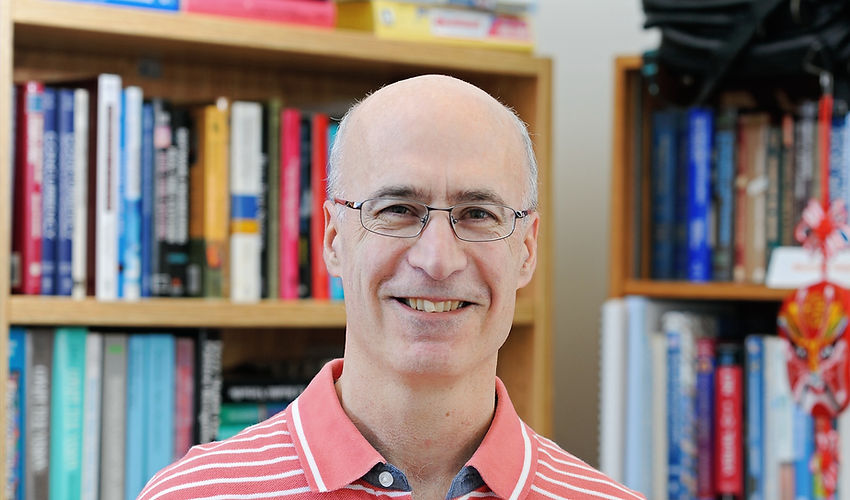
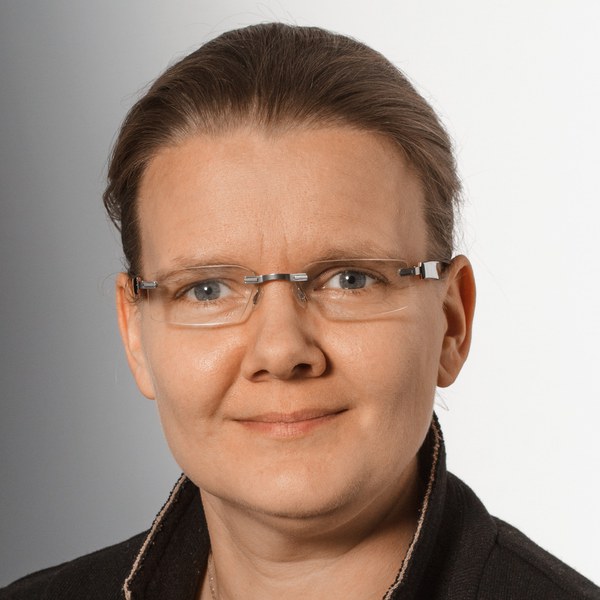
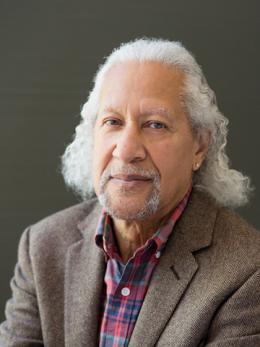
Prof. Dr. Katja Dörschner Boyaci is a Professor at Justus-Liebig-Universität Gießen , Faculty of Psychology and Sports Science, leading the Perception & Active Exploration Group . Her research focuses on understanding how the human brain constructs rich perceptual experiences from sensory input, particularly in the perception of material properties like softness, glossiness, and roughness. Research Interests: Computational and neural mechanisms of material perception Integration of visual and haptic information Expectation-driven modulation of perception Neuroimaging (fMRI, EEG) and psychophysical approaches Virtual reality and computational modeling Her work combines psychophysics , neuroimaging , and computational modeling to explore how humans judge material properties from static and dynamic images, and how prior experiences shape these perceptions. Scientific Contributions: Published extensively on material perception, with recent papers in Nature Human Behaviour , Journal of Neuroscience , and Vision Research . Leads the collaborative B8 project on integrating experience and sensory information in material perception. Collaborations & Funding: Co-leads the B8 project with Prof. Hüseyin Boyaci, funded to investigate neural mechanisms of expectation-based perception. Employs interdisciplinary methods including EEG, fMRI, VR, and behavioral experiments. Laboratory & Team: The Perception & Active Exploration Group at Giessen University studies how humans perceive intrinsic object qualities through active exploration and sensory integration, with implications for product design, computer graphics, and robotics.
Pernille Hemmer is a Professor in the Department of Cognitive Psychology at Rutgers University. She joined the faculty in 2012 after completing a postdoctoral fellowship at Syracuse University and earning her Ph.D. from the University of California, Irvine's Department of Cognitive Science. Her research focuses on memory systems, decision-making in naturalistic environments, and Bayesian models of cognition. She leads the CCM Lab (https://sites.rutgers.edu/ccm-lab/), investigating how prior knowledge integrates with episodic memory and influences cognitive processes. Key research interests include: Episodic and semantic memory integration Optimal use of prior knowledge in cognitive tasks Bayesian analysis of individual differences in rational models Belief systems and agency perception Her work spans experimental psychology, computational modeling, and interdisciplinary approaches. Notable contributions include developing generalized Bayesian models of reconstructive memory and frameworks for understanding belief dynamics. Recent research explores socially cognizant robotics and counterintuitive concepts across domains. Awards: Higher-Level Cognition Modeling Prize (2008) Her National Science Foundation CAREER grant (2015) supports applications of Bayesian inference to memory and decision-making. Current projects examine temporal binding mechanisms and the memorability of supernatural concepts through novel methodological tools.
Professor Yale Cohen is a faculty member in the Department of Otorhinolaryngology at the University of Pennsylvania . His research focuses on auditory processing, particularly how auditory information integrates with cognitive mechanisms. Neural representation of hearing Auditory-visual integration Computational models of sensory-motor integration His laboratory, part of the Hearing Sciences Center , investigates auditory scene analysis, temporal integration, and multisensory categorization through both experimental and computational approaches. Recent publications emphasize neural correlates of auditory streaming, cortical circuit dynamics, and machine learning applications in predicting surgical outcomes.
George Malcolm is an Associate Professor in Psychology at the School of Psychology, University of East Anglia (UEA), where he has been since 2016. His research focuses on visual attention, scene understanding, and developmental aspects of perception. He is a member of the Cognition, Action and Perception and Developmental Science research groups. He is currently accepting PhD students and welcomes research assistants to join his lab. Undergraduate: University of St Andrews Master’s: University of York PhD: University of Edinburgh Dr Malcolm's research centers on how humans convert visual input into meaningful scene categories and use this information to guide eye movements. He investigates differences between adult and child visual processing, particularly in rapid scene categorization and attentional allocation. His work employs eye-tracking, transcranial magnetic stimulation (TMS), virtual reality (VR), and drawing tasks to explore high-level vision and perception. The recent publications highlight a strong trend in understanding how semantic relationships between scenes and objects influence attention, both in adults and young children. There is a growing focus on developmental visual cognition, including studies on infants and children. His work increasingly integrates crossmodal and real-world contexts, emphasizing ecological validity in attentional research. Dr Malcolm has contributed to several collaborative research projects, including an ongoing project titled 'Autism and Biophilia: The impact of natural scenes on anxiety.' He has held administrative roles such as Communications Director and Deputy Research Director, and is actively involved in public engagement through social media. He leads an active research lab and collaborates with institutions such as the University of Essex and Aitrak. His work contributes to broader scientific understanding in cognitive psychology and has implications for neurodevelopmental conditions and human-computer interaction.
Prof. Dr. Gudrun Schwarzer is a leading researcher in developmental psychology at the Justus Liebig University Giessen , heading the Department of Developmental Psychology . Her work bridges perceptual, motor, and cognitive development in infancy and childhood through rigorous experimental paradigms. Key research themes include infant mental rotation, emotional granularity across lifespan, and cross-cultural developmental differences She leads projects A7 (visuospatial-motor development) and C3 (emotion categorization across populations) Current team includes Dr. Bianca Jovanovic, Dr. Daniela Bahn, PhD students Nikol Tsenkova and Tharanirakshita Asokan Her research investigates how early motor experiences shape visual processing, with groundbreaking work on: Object permanence in infants Emotion-face-word priming effects Developmental language disorder cognition Idiopathic clubfoot developmental impacts Publications span Child Development Perspectives , Frontiers in Psychology , and Journal of Experimental Child Psychology . Awards : Heinz Heckhausen Young Scientist Prize (DGPs). Collaborative networks extend to Max Planck Society, University of California, and cross-cultural studies in Cameroon.
Kathleen Volk Miller is a Teaching Professor of English at Drexel University’s Department of English and Philosophy. She serves as co-editor of Painted Bride Quarterly and co-host of its podcast Slush Pile . Her work bridges creative writing, publishing, and pedagogy, with a focus on writing’s therapeutic potential and cognitive benefits. Miller’s research includes neuroplasticity in writing, healing through journaling, and mentoring student-led literary magazines. Her education includes an MA in Creative Writing from Rutgers University (1991). Miller has published widely in major outlets like The New York Times , O, The Oprah Magazine , and Salon , with notable works including the anthology Humor: A Reader for Writers (Oxford UP, 2014) and forthcoming Teaching Writing Through Journaling (Bloomsbury, 2025). Miller’s current projects include curating Bloomsbury’s Teaching Writing series and developing workshops on “Writing and the Brain.” She advises on literary magazine launches and conducts memoir-writing workshops emphasizing mental health and personal growth. Her writing spans parenting essays, cultural commentary, and literary analysis, often addressing contemporary issues like anxiety, digital parenting, and urban family dynamics. Miller’s work consistently explores intersections between creative expression, cognitive science, and societal challenges.
Robert Bergevin is a Full Professor in the Department of Electrical Engineering and Computer Engineering at Laval University's Faculty of Science and Engineering, where he has been employed since 1990 and achieved full professor status in 2001. He is also a member of CeRVIM (Research Center in Robotics, Vision and Machine Intelligence) and actively participates in graduate recruitment. Dr. Bergevin's educational background includes: Ph.D. in Electrical Engineering from McGill University (1985-1990), with thesis titled "Primal Access Recognition of Visual Objects" under Professor Martin D. Levine M.Sc.A. in Biomedical Engineering from École Polytechnique de Montréal (1982-1984), with thesis on "Modeling and numerical simulation of a nuclear magnetic resonance imaging system" under Professor Robert Guardo B.Sc.A. in Electrical Engineering (Communications specialty) from École Polytechnique de Montréal (1978-1982) Professor Bergevin's research spans cognitive computer vision, pattern recognition, and information systems design methodologies. His work is guided by a unique methodology that progresses "from the general to the particular" to achieve "simply communicable and universally applicable understanding." He has been a researcher in cognitive computer vision since 1985, with particular focus on ontology, methodology, and categorization. His research interests include Ontology of Cognitive Digital Vision, Cognitive Digital Vision Development Methodology, Categorization in cognitive digital vision, Analysis and understanding of images and videos, and Understandable artificial intelligence. As a generalist, he is also a proponent of the science of global anticipatory design (R. Buckminster Fuller) and general semantics (Alfred Korzybski). Analysis of Professor Bergevin's recent publications reveals a strong focus on video anomaly detection, carried object detection, and human activity recognition. His work consistently applies cognitive principles to computer vision problems, often developing novel methodologies for segmentation, tracking, and recognition. The research shows progression from foundational work on image analysis to more complex spatio-temporal understanding of video content, with increasing integration of deep learning techniques in recent years while maintaining a focus on interpretable and cognitively-inspired approaches. Among his professional recognitions: Teaching Star, Faculty of Science and Engineering (2019, 2012) Professor Bergevin has supervised numerous graduate students throughout his career, including four PhD candidates and four Master's students in recent years. His current research includes the "Cyber-physical systems and materialized machine intelligence" project funded by Université Laval, École de technologie supérieure, and Fonds de recherche du Québec - Nature and technologies, running from 2019 to 2026. He was also the director of the bachelor's program in computer engineering from 2001 to 2010 and served as Area Editor for the journal Computer Vision and Image Understanding from 2002 to 2017. As a member of CeRVIM (Research Center in Robotics, Vision and Machine Intelligence), Professor Bergevin collaborates with researchers across multiple disciplines to advance the fields of robotics, computer vision, and machine intelligence. His work bridges theoretical foundations with practical applications, particularly in the analysis of human activities and object recognition in complex visual scenes.
Joshua Cohen is the Marta Sutton Weeks Professor of Ethics in Society and Professor of Philosophy and of Law, Emeritus at Stanford University. His work focuses on democratic theory, deliberative democracy, global justice, and the intersection of political institutions with personal liberties. He serves as co-editor of Boston Review and has authored influential books including 'Philosophy, Politics, Democracy' and 'Rousseau: A Free Community of Equals'. Cohen's research examines democratic norms through philosophical frameworks, addressing issues like freedom of expression, religious freedom, political equality, human rights foundations, and labor standards in global supply chains. His investigations span both theoretical constructs and practical implementations of democratic governance. His recent publications demonstrate a strong focus on postcolonial art history, African cultural studies, and decolonial theory. Articles frequently analyze the transnational circulation of African art, cultural policies in post-independence Senegal, and critical examinations of Eurocentric art historical frameworks.
Dr. Susanne Wenzel is a Research Fellow at the Structural and Functional Organisation of the Brain (INM-1) within the Forschungszentrum Jülich GmbH. She serves as the Scientific Coordinator for the Helmholtz AI Local Unit at INM-1 and the Jülich Supercomputing Centre (JSC), fostering collaboration with the Helmholtz-wide AI platform. Additionally, she leads the Helmholtz International BigBrain Analytics and Learning Laboratory (HIBALL), a partnership with McGill University’s Montreal Neurological Institute and the Mila Quebec AI Institute. Her work focuses on advancing AI and high-performance computing for neuroimaging, particularly in developing 3D brain models through interdisciplinary research with CIFAR and MILA. Her research expertise spans artificial intelligence, remote sensing, and image analysis, with a strong emphasis on machine learning applications in environmental science, neuroscience, and urban scene understanding. She coordinates projects that integrate cutting-edge technologies to address complex challenges in climate modeling, neuroimaging, and spatial data analysis. Dr. Wenzel’s contributions include pioneering work in neural networks for ocean eddy tracking, sea level anomaly prediction, and facade image interpretation. Her projects emphasize interdisciplinary collaboration, combining computational methods with domain-specific knowledge across multiple institutions globally. Her current initiatives reinforce the utilization of AI and supercomputing resources to enhance scientific discovery, particularly in neuroscience through HIBALL. This collaboration aims to leverage advanced analytics for detailed brain model development, reflecting her commitment to bridging computational innovation with real-world applications.
Andrea De Cesarei is a Full Professor at the Department of Psychology 'Renzo Canestrari' at the University of Bologna. His research focuses on cognitive processes, emotional perception, and the intersection of artificial intelligence with human behavior. He holds office hours on Fridays 9-11 AM at the Department of Psychology in Bologna, with virtual availability via Teams. His work spans disciplines including cognitive neuroscience, environmental psychology, and AI ethics. Key research interests include: cognitive control mechanisms during scene categorization, emotional responses to natural stimuli, and behavioral drivers behind sustainable choices. He also explores how humans and AI systems process visual information differently, with recent projects involving AI trustworthiness and autonomous planning systems. Recent publications highlight his contributions to understanding neural correlates of emotion (via ERP and EEG studies), the role of spatial frequencies in perception, and motivational factors in pro-environmental behavior. His lab develops tools like the VISTO device for precise exposure time measurement in experiments. Teaching responsibilities include courses on perception and experimental psychology, with active involvement in student disability research methodologies. He maintains an ORCID profile and is accessible via email for scheduling consultations.
Amy Finn is an Associate Professor and Director of the Finn Learning and Neural Development Lab (LAND Lab) at the University of Toronto. Her research investigates how brain and cognitive development shape learning outcomes in children, focusing on memory systems, neural plasticity, and environmental influences. The LAND Lab explores developmental cognitive neuroscience, emphasizing age-related learning patterns, critical periods, and brain-environment interactions. Current research areas include implicit memory development, attentional modulation of learning, socioeconomic impacts on neural systems, and computational models of cognition. Notable publications span topics like attention-memory dynamics, scene perception in children, and socioeconomic status effects on hippocampal development. Collaborations involve institutions such as MIT, Emory University, and international labs. Developmental Cognitive Neuroscience Learning and Memory Systems Neural Plasticity Environmental Influences on Learning
Daniela Bahn is a researcher at the Institute for German Linguistics, Faculty of German Studies and Art History, Philipps University of Marburg. Her work focuses on the interplay between emotional and language development in children, including those with developmental language disorders. She employs behavioral methods, training studies, and eye-tracking in her research. Primary affiliation: Institute for German Linguistics, Philipps University of Marburg Research focus: Emotional-cognitive development, language disorders, and cross-modal perception studies Her research investigates how age, language proficiency, and personality traits influence emotional event processing. Key methodologies include eye tracking and behavioral experiments , with cross-disciplinary applications in neurolinguistics and developmental psychology . Publications span topics like scene grammar analysis in language-impaired children and multimodal emotion categorization . Recent work includes studies on implicit/explicit measures in developmental disorders and auditory-visual emotion priming . She collaborates with Prof. Dr. Constanze Spieß and Prof. Dr. Gerd Schwarzer on projects like C3 Emotionskategorisierung über die Lebensspanne , contributing to the 'Zur Debatte' event series on social discourses.
Rebecca Morris (born 1969 in Honolulu, Hawaii) is a distinguished American painter based in Los Angeles who has spent over three decades exploring abstraction. Currently on the faculty at UCLA's School of the Arts and Architecture, Department of Art, Morris is celebrated for her large-scale paintings and innovative approach to composition, color, and gesture. Her work has been featured in major institutions including the Museum of Contemporary Art Chicago, Institute of Contemporary Art Los Angeles, Whitney Biennial, Hammer Museum, and Bonnefanten Museum in the Netherlands. Morris is dedicated to the exploration of abstraction, working with thin, matte washes of color juxtaposed with shimmering metallic impasto. Her practice involves recurring motifs like fragmented patterns, distorted grids, and her signature 'lobster claw' motif. She often thins oil paint to resemble watercolor, creating patterns that evoke soil samples, bacterial cultures, and aerial landscapes. Morris positions her large canvases face up on the floor and uses custom-built scaffolding to work on pieces significantly larger than her own body. She is particularly known for her reverence of red, having set a personal goal to paint 'the ultimate red painting.' Critical analysis of Morris's work consistently examines her relationship to historical movements like Pattern and Decoration and Supports/Surfaces, while noting her refusal to be categorized within a single movement. Her paintings generate formal tensions between flat surfaces and discrete objects, exploring color theory through both subtle earth tones and vibrant metallics. The 2023-2024 survey exhibition at MCA Chicago highlighted her progression through 27 paintings spanning 21 years, showcasing her evolving visual language. Her significant recognition includes: John Simon Guggenheim Memorial Foundation Fellowship Louis Comfort Tiffany Foundation Award California Community Foundation Fellowship for Visual Art Art Matters Foundation Award Morris's 2023 monograph 'Rebecca Morris: 2001-2022' published by DelMonico Books features essays by Jamillah James, Anthony Elms, Alex Jen, Camila McHugh, and Hamza Walker. Her studio practice involves techniques including erasure, dripping, and spray painting, with the visibility of the artist's hand evident in every gesture. As she stated in her widely circulated 2005 manifesto: 'Abstraction never left, motherfuckers.'
Robert Cook is Professor of Psychology at Tufts University School of Arts and Sciences and Interim Chair of Sociology. His NIH-supported research examines animal cognition, visual perception, discrimination learning, and memory mechanisms across species including pigeons, starlings, and humans. Research investigates the perceptual and cognitive processes underlying object recognition, same-different concept learning, action recognition, temporal information processing, and equivalence class formation. Studies explore how animals form perceptual representations to guide learning and behavior. Recent publications advance understanding of visual and auditory processing, sequential learning dynamics, perceptual grouping, and cross-species cognitive strategies. Work integrates computational modeling with behavioral experiments to characterize cognitive architecture. Teaches courses on cognition origins and comparative psychology. Serves as Dean of the Graduate School of Arts and Sciences and publishes Comparative Cognition & Behavior Reviews. Developed online multimedia resources including Avian Visual Cognition and Animal Spatial Cognition cyberbooks.
Gary Bartz, a legendary jazz saxophonist and 2024 NEA Jazz Master, has been a Professor of Jazz Saxophone at Oberlin Conservatory of Music since 2001. With over 45 solo albums and collaborations with icons like Miles Davis, Art Blakey, and McCoy Tyner, his work bridges avant-garde jazz , hard bop , funk , and African folk music . Education : Bachelor of Music, The Juilliard School Bartz’s research and creative output focuses on informal composition (a term he prefers over improvisation), blending genres to transcend categorization. His NTU Troop (1970s) explored themes of unity and social justice through Langston Hughes-inspired works like I’ve Known Rivers . Later projects, such as Coltrane Rules and collaborations with Maisha , emphasize spiritual jazz and direct-to-disc recording . His teaching philosophy at Oberlin prioritizes active listening to unlock students' musical identity, reflected in courses like Principal Private Study - Jazz Saxophone . Bartz has influenced generations of musicians through his innovative approach. Scientific Awards : 2024 NEA Jazz Master 2015 BNY Mellon Jazz Living Legacy Award 2004 Grammy (Best Jazz Instrumental Album, sideman on McCoy Tyner’s Illuminations ) 1997 Grammy (Best Latin Jazz Performance on Roy Hargrove’s Habana ) Bartz’s work with OYO Recordings (Own Your Own) and cross-generational collaborations exemplify his mission to empower artists to control their creative rights. He remains a vital force in jazz education and performance.