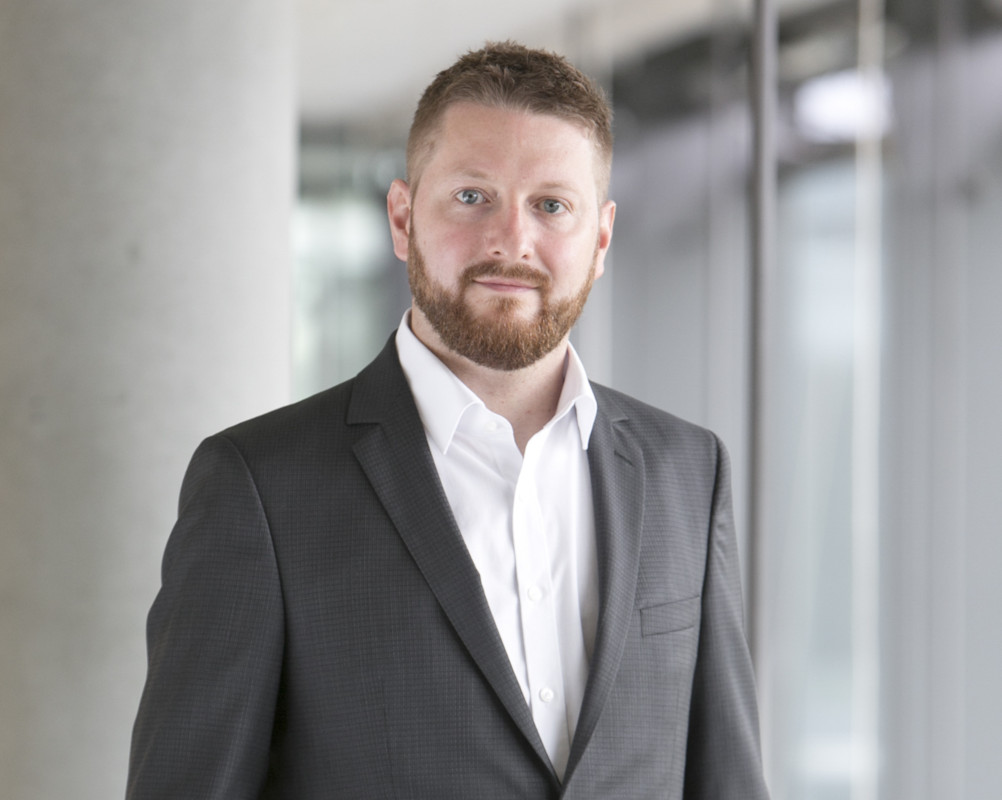
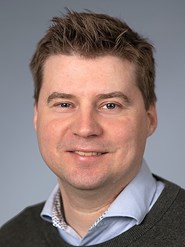
Fabrizio Russo is a postdoctoral Department of Computing researcher at Imperial College London , specializing in AI systems that integrate causal reasoning and computational argumentation frameworks. His work focuses on enhancing decision-making processes through transparent causal discovery techniques and explainable machine learning architectures. PhD in Safe and Trusted AI (2025) from Imperial College London via UKRI CDT Former Head of Data Science at 4most Europe (2014-2020) Co-organizer of Imperial College's Explainable AI Seminars Series (2020-present) His research combines causal inference with argumentation-based reasoning to create contestable AI systems that enable human-machine collaboration in critical decision-making scenarios. Key methodologies include: Constraint-based causal structure learning Shapley value-based feature selection Causal graph injection into neural networks Interactive argumentation frameworks Recent publications demonstrate applications in financial risk assessment (FICO HELOC), socioeconomic modeling (Adult dataset), and housing market predictions (Boston/California datasets). His work emphasizes regulatory compliance and transparency in AI deployments. Scientific contributions include: 2023 AISTATS Top-Reviewer Award Foundational work on causal injection techniques Development of argumentation-based explanation systems As a Graduate Teaching Assistant for Introduction to Machine Learning (2021-2022), he mentored students in algorithmic foundations and supervised implementation of explainable AI systems. His GitHub repositories contain open-source implementations of causal injection frameworks.
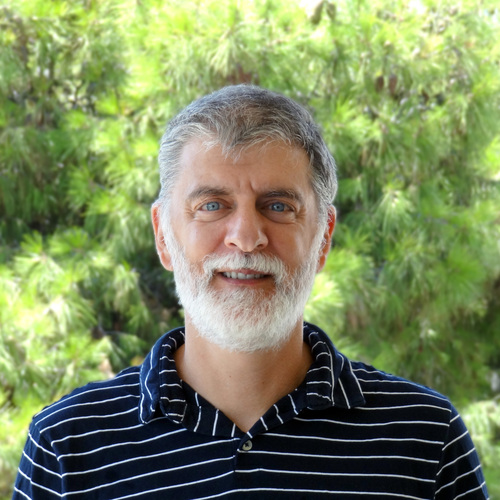
Dr. Geoff Norton is a faculty member at the School of the Environment , University of Queensland. His work focuses on Integrated Pest Management (IPM) , Digital Identification Tools , and Agricultural Sustainability , with a particular emphasis on rice planthoppers, sweetpotato diagnostics, and weed science. He has developed interactive software platforms like Diagnosis and Sweetpotato DiagNotes to enhance crop protection training and decision-making. Research Trends : His publications span Digital tools for pest and species identification Collaborative approaches to rice pest management Scenario-based educational software Weed surveillance systems Labs & Teams : Norton has collaborated with institutions such as Imperial College London, Springer, and the International Society for Horticultural Science. He contributed to the Cooperative Research Centre for Tropical Pest Management and developed tools for tropical plant protection and biosecurity.
Dr. Aneesh Subramanian is an Assistant Professor in the Department of Atmospheric and Oceanic Sciences (ATOC) at the University of Colorado Boulder. He also holds visiting positions at the Center for Western Weather and Water Extremes at Scripps Institution of Oceanography, UC San Diego, and as a visiting scholar in the Predictability of Weather and Climate group at the University of Oxford. Additionally, he serves as an international collaborator with the Geophysical Flows Lab at the Indian Institute of Technology Madras. His educational background includes: Ph.D. in Climate Research from Scripps Institution of Oceanography, UC San Diego (2012) M.Sc. (Engineering) from Indian Institute of Science (2006) B.Tech from Indian Institute of Technology (IIT) Madras (2004) Dr. Subramanian's research focuses on weather and climate predictability, with particular emphasis on subseasonal-to-seasonal forecasting. His work spans tropical climate dynamics, atmospheric river prediction, data assimilation techniques, and the application of machine learning to improve earth system models. He investigates coupled ocean-atmosphere processes, particularly related to the Madden-Julian Oscillation and its teleconnections, and develops stochastic parameterization schemes for climate models. Dr. Subramanian's recent publications demonstrate a strong focus on advancing subseasonal-to-seasonal prediction capabilities, particularly for extreme weather events like atmospheric rivers and marine heatwaves. His work increasingly integrates machine learning techniques with traditional physics-based approaches, reflecting a growing trend in the field toward hybrid modeling frameworks. Much of his recent research examines regional climate phenomena in the Indian Ocean, Pacific, and Arabian Sea regions, with applications to monsoon prediction and understanding climate change impacts. Dr. Subramanian has received several notable awards and honors throughout his career: Best Team in visualization of weather forecasts Award, ECMWF Users Meeting (2017) Best Student Presentation Award, WCRP Open Science Conference (2011) Best Teaching Assistant Award, Scripps Institution of Oceanography (2011) SUNNY Scripps-NCAR Graduate Student Fellowship (2009-2011) NCAR ASP Summer Fellowship (2008, 2012) Dr. Subramanian has secured multiple research grants totaling over $3 million from agencies including NOAA, ONR, NASA, and KAUST. Current projects focus on improving understanding of air-sea interaction processes, marine ecosystem drivers in the California Current System, monsoon intra-seasonal oscillations, and marine heatwaves. He actively mentors undergraduate research assistants, graduate students, and postdoctoral scholars through his Climate Processes and Predictability Group at CU Boulder. Dr. Subramanian leads the Climate Processes and Predictability Group at CU Boulder, which focuses on subseasonal predictability, data assimilation, Atmospheric River dynamics, and tropical-extratropical teleconnections. He is also an active participant in several collaborative research initiatives including the Geophysical Flows Lab at IIT Madras and the Center for Western Weather and Water Extremes at Scripps Institution of Oceanography. His work frequently involves international collaborations with researchers from institutions in the UK, Saudi Arabia, and India.
Aud Solveig Nilsen is an Assistant Professor at UiT The Arctic University of Norway, specializing in risk management and societal security. She teaches courses in Civil Security and Emergency Preparedness at the Harstad campus and contributes to programs in Kirkenes, Tromsø, and international collaborations. Teaches SIK-1507 (Harstad) and SVF-3201 (Master’s level) Supervises bachelor’s and master’s theses Focuses on Arctic-specific risks and international emergency management Her research integrates societal security, emergency preparedness, and scenario-based education, with a particular emphasis on municipal risk governance and climate change challenges. Publications highlight the use of risk analysis tools, collaborative disaster response, and foresight methodologies. Recent articles examine scenario development for Arctic emergencies, international collaboration in disaster management, and the application of risk tools in educational settings. These works span disciplines including public policy, emergency planning, and climate adaptation. She actively participates in international student exercises like Barents Rescue and contributes to pedagogical innovation through simulation-based learning. Her work addresses both theoretical frameworks and practical implementations in societal security.
Scott Hosking is a Senior Research Fellow at British Antarctic Survey (BAS) and The Alan Turing Institute , serving as Mission Director for Environmental Forecasting and Head of the BAS AI Lab. His work bridges AI innovation with critical climate science challenges, particularly in data-sparse polar regions. PhD in Climate Science from University of Cambridge (2005-2009) Established BAS AI Lab (2018) Co-Director of AI4ER Doctoral Training Programme (2019-2023) Research focuses on: AI-powered environmental forecasting systems Digital twin technologies for planetary monitoring Machine learning in climate modeling Sea ice and wildlife population tracking Reproducibility in geoscientific research Recent publications span weather prediction , precipitation downscaling , and extreme event analysis , with articles appearing in Nature , Nature Communications , and Geophysical Research Letters . Key projects include IceNet (Arctic sea ice forecasting) and Aardvark Weather (end-to-end AI weather prediction). Scientific recognition includes: The Laws Prize (BAS, 2017) Designation as AI for Good Exemplar (UK government, 2023) Inclusion in Nature Communications 25 most downloaded Earth science papers (2021) Secured over £25M in research funding as Principal Investigator, including projects with NERC , EPSRC , and ESA . Collaborates with institutions across Cambridge , Lund , and UiT The Arctic University .
Alessandro Fasso is a full professor of Statistics at the School of Engineering, University of Bergamo, Italy, where he has been teaching since 2000. He serves as Editor in Chief of Environmetrics (2019-) and has held various editorial positions for prestigious journals including Stochastic Environmental Research and Risk Analysis and Advances in Statistical Analysis. His international recognition includes serving as President of The International Environmetrics Society (TIES) from 2017-2019 and as a member of the Council of the International Statistical Institute (ISI) from 2013-2017. Professor Fasso's research focuses on statistical methods and applications to environmetrics, air quality, climate variables, and spatio-temporal data analysis. His work spans functional data analysis for atmospheric profiles, multivariate spatio-temporal modeling of air pollution, and statistical approaches for environmental monitoring networks. He has made significant contributions to understanding collocation uncertainty using heteroskedastic functional regression models and studying vertical smoothing mismatch uncertainty when comparing satellite and radiosonde data. His recent publications (2023-2025) demonstrate a strong focus on PM2.5 pollution modeling, particularly examining livestock-related emissions in the Lombardy region using advanced spatio-temporal techniques. His work increasingly integrates functional data analysis, regularization methods, and uncertainty quantification in environmental applications. The articles show a progression from theoretical statistical developments to practical environmental problem-solving with policy implications. President of The International Environmetrics Society (TIES) (2017-2019) Member of the Council of the International Statistical Institute (ISI) (2013-2017) Elected member of the International Statistical Institute (ISI) Founder and previous Coordinator of GRASPA (2013-2015) Member of WG-GRUAN, Working Group on Atmospheric Reference Observations (2013-) Professor Fasso has successfully supervised numerous PhD students including Emilio Porcu, Michela Cameletti, and Francesco Finazzi. His research has been supported by significant grants including EU Horizon 2020: GAIA-CLIM (budget €500,000), Project AQ2009-EN17 (budget €850,000), and PRIN-2006 (budget €260,000). He has served on evaluation committees for the Italian Research Quality Exercise (VQR 2015-2019) and as a referee for international research councils. His international lecturing activities include PhD courses at Peking University and the University of Bolzano-Bozen.
Professor Sven Rady holds the Hausdorff Chair for Mathematical Economics at the University of Bonn, where his research examines decision dynamics and equilibrium processes under uncertainty through economic agent experimentation. His scholarly focus spans Game Theory, Microeconomic Theory, and Strategic Experimentation, investigating learning mechanisms in bandit models, information externalities, and equilibrium dynamics. This work critically analyzes how agents navigate uncertainty in environments ranging from team-based free-riding scenarios to two-sided market platforms, yielding insights for industrial organization and market design. Analysis of his 2009-2019 publications reveals a cohesive research trajectory centered on strategic experimentation in bandit frameworks. Key contributions address free-riding mitigation, undiscounted payoff structures, private information effects, and Poisson bandit applications, consistently employing continuous-time modeling to dissect learning dynamics and equilibrium formation under uncertainty. No scientific awards were documented in the source material. Details regarding student advising, research grants, or laboratory affiliations were not provided in the available text.
Mario Liebensteiner is a Junior Professor (tenure track W3) for Economics with a focus on Energy Markets and Energy System Analysis at Friedrich-Alexander University Erlangen-Nuremberg (FAU). He is affiliated with the Department of Business, Economics, and Social Sciences (FAU WiSo) and contributes to the interdisciplinary research focus on Energy Markets and Energy System Analysis. Liebensteiner is also a member of the expert panel Energy Systems of the Future (ESYS) of the German Academies of Sciences and Humanities, providing expertise on energy transition and market design. Liebensteiner completed his doctorate in economics at Vienna University of Economics and Business (WU Vienna) and earned his diploma in economics from Johannes Kepler University Linz (JKU Linz) and City University of Hong Kong. Prior to his current position, he worked as a postdoctoral and pre-doctoral researcher at Technical University of Kaiserslautern and Vienna University of Economics and Business. His research focuses on the economic analysis of energy markets, environmental policy, and the transition to sustainable energy systems. Liebensteiner examines the interplay between renewable energy integration, carbon pricing mechanisms, electricity market design, and the challenges of sector coupling in the energy transition. His work investigates how market structures and policy instruments affect investment decisions, system flexibility, and emissions reduction in the power sector, with particular emphasis on the German energy context. He employs both theoretical modeling and empirical analysis to address these complex energy economics questions. Analysis of Liebensteiner's recent publications reveals a strong focus on the economic dimensions of the energy transition, particularly examining the interactions between renewable energy integration, carbon pricing, and electricity market design. His work increasingly addresses the challenges of sector coupling, flexibility needs in power systems, and the socio-economic impacts of energy policies. A notable trend is his examination of both theoretical market mechanisms and their practical implementation in the German context, with growing attention to cross-border electricity trade effects and the integration of hydrogen technologies in future energy systems. Member of the expert panel Energy Systems of the Future (ESYS) of the German Academies of Sciences and Humanities Research published in leading energy economics journals including Energy Economics, Applied Energy, and Energy Policy Liebensteiner collaborates with researchers across disciplines through the Energy Campus Nuremberg (EnCN) and participates in strategic partnerships with energy sector companies organized in the Nuremberg Energy Region (Energieregion Nürnberg eV). His research is connected to the DFG Collaborative Research Center on gas networks and markets, suggesting involvement in significant research funding. While specific grants aren't detailed in the provided information, his publication record in high-impact journals indicates successful research funding acquisition. Liebensteiner is part of the Energy Markets and Energy Systems research group at FAU WiSo, which collaborates closely with engineers at the Energy Campus Nuremberg (EnCN). This interdisciplinary team works on the transformation of electricity and gas sectors, sustainable mobility concepts, sector coupling issues, and business models for decentralized smart energy systems. The research group maintains strategic partnerships with numerous energy sector companies through the Nuremberg Energy Region, aiming to implement secure, cost-effective, climate-friendly, and sustainable energy solutions.
Sanjay G. Rao is a Professor in the School of Electrical and Computer Engineering at Purdue University, with a courtesy appointment in Computer Science. He joined Purdue in 2005 and has held positions as Assistant, Associate, and full Professor since then. His research focuses on network synthesis, verification, and Internet video distribution. He has been recognized with the NSF CAREER Award and ACM SIGMETRICS Test of Time Award for his foundational work on End System Multicast. Education: B.Tech in Computer Science and Engineering, Indian Institute of Technology, Madras (1997) M.S. and Ph.D. in Computer Science, Carnegie Mellon University (2000, 2004) Research Interests: His work spans network design and verification, Internet video distribution, and cloud computing. Recent projects include causal reasoning for video streaming, 360° video optimization, and resilient routing algorithms. He leads the Internet Systems Laboratory at Purdue, which develops systems for network performance guarantees and video delivery innovations. Articles Trends: Recent work emphasizes causal inference in video streaming (e.g., Veritas) and perceptual quality for next-generation video (e.g., Dragonfly). Longstanding focus on network synthesis: PCF (2020) and Robust Validation (2017) address resilient design under uncertainty. Early contributions like End System Multicast (2002) pioneered peer-to-peer video streaming. Awards: NSF CAREER Award (2010) ACM SIGMETRICS Test of Time Award (2011) ACM Distinguished Member (2021) Purdue Seed of Success Award (2017) Advising & Grants: Supervised 15+ PhD students, many now in academia and industry (e.g., Meta, Google, AT&T). Secured $4M+ in grants from NSF, industry (Google, Cisco, Amazon), and federal programs. Notable grants include NSF support for video optimization (2022-2025) and network synthesis (2023-2027). Labs & Teams: Internet Systems Laboratory (ISL): Focuses on scalable network solutions and video streaming. Collaborations with industry (e.g., Amazon Prime Video, Meta) on real-world deployment challenges.
Dieter Claeys serves as Associate Professor in the Department of Industrial Systems Engineering at Ghent University's Faculty of Engineering and Architecture. His core affiliations include: Industrial Systems Engineering (ISyE) research group Flanders Make (strategic research center for Flemish manufacturing) Board member for Ghent University in the beta research school for operations management and logistics His research centers on performance analysis and control of manufacturing systems under uncertainty, leveraging: Stochastic Modelling for system unpredictability Optimization techniques for resource allocation Simulation methodologies for scenario testing Reinforcement Learning for adaptive control Applications span condition-based maintenance, inventory management, warehouse operations, and assembly systems to enhance industrial resilience. Publication trends (2010-2024) reveal consistent focus on stochastic optimization in industrial contexts. Key themes include maintenance policy design, spare parts logistics, warehouse flow dynamics, and quality screening systems, frequently employing queueing theory and stochastic bounds to address real-world manufacturing uncertainties. No scientific awards were documented in the source material. Student advising and grant information remain unspecified in the provided text. Claeys actively contributes to the ISyE research group and Flanders Make collaborations, driving projects that advance manufacturing technologies and operational frameworks within Flanders' industrial ecosystem.
Gediminas Urbonas is an Associate Professor and Director of the Art, Culture, and Technology (ACT) program at the Massachusetts Institute of Technology's School of Architecture and Planning. He co-founded Urbonas Studio with Nomeda Urbonas, an interdisciplinary research practice that facilitates exchange among diverse nodes of knowledge production and artistic practice. His educational background includes teaching positions at NTNU (Norwegian University of Science and Technology, 2005-2009), CAFA (Central Academy of Fine Arts, 2018-2022), Vytautas Magnus University, and NABA (Nuova Accademia di Belle Arti in Milan). Urbonas is renowned for his interdisciplinary practice exploring the transformation of civic spaces and collective imaginaries. His research interests span socio-ecological systems, public space, urban ecology, multispecies perspectives, and environmental art. He uses artistic platforms to render public spaces for interaction, engaging social groups and evoking local communities' cultural and political imagination. His major projects include Zooetics (exploring non-human intelligence), Climate Visions, The Swamp School, and the long-running Druzhba Project examining Soviet-era oil infrastructure. His work has evolved toward creating environments that foster multinatural intelligence and address planetary ecological imbalance. Lithuanian National Prize for Culture and Arts (2007) Prize for Best International Artist at the Gwangju Biennale (2006) Prize for the National Pavilion at the Venice Biennale (2007) Silver Medal for Contributions to Liberal Arts Education from Vytautas Magnus University (2024) Urbonas has advised numerous students through MIT's ACT program, with alumni working across diverse artistic and research fields. His work connects artistic practice with ecological concerns, infrastructure studies, and social engagement. He has established international recognition through exhibitions at major biennales including São Paulo, Berlin, Moscow, Venice, and Documenta. His scholarly contributions include co-editing 'Public Space? Lost and Found' (MIT Press, 2017) and the forthcoming 'Swamps and the New Imagination' (2025).
Mahyar Masoudi is Assistant Professor in the Department of Geography at Memorial University of Newfoundland, where he directs the Urban Ecology & Analytics Lab. He holds adjunct appointments at University of Waterloo's School of Planning and is affiliated with Nanyang Technological University's Resilient and Inclusive Cities Lab. His research examines how spatial patterns of urban elements influence environmental performance and human well-being. Education includes: PhD from National University of Singapore (2018), MSc from Universiti Teknologi Malaysia (2012), BSc from University of Guilan (2009), and postdoctoral work at Waterloo and NUS. Research integrates urban ecology , geographic information science , and environmental justice to study urban landscapes as social-ecological-technological systems. Key interests include urban heat mitigation, ecosystem services, and equitable access to environmental benefits using remote sensing, spatial statistics, and machine learning. Publications focus on urban thermal environments, ecosystem service modeling, and landscape pattern analysis. Recent work examines cooling efficiency of green spaces across Asian megacities and develops computational tools like the NCS2020 R package for ecosystem service assessment. No scientific awards documented. Leads the Urban Ecology & Analytics Lab developing geospatial methods to enhance urban sustainability and equity.
Lazaros Filippidis is a Senior Lecturer in Evacuation Modelling at the University of Greenwich's School of Computing and Mathematical Sciences , part of the Faculty of Engineering and Science . He joined the institution in 1996 and is a core member of the Fire Safety Engineering Group . His work focuses on advancing EXODUS evacuation models and understanding human behavior during emergencies. Education: Holds a BSc (Hons) and MSc, though specific institutions are not detailed in the provided text. Research Interests: Specializes in human behavior in emergencies , adaptive decision-making , and large-scale evacuation trials . His projects include EU-funded initiatives such as SAFEGUARD , IN-PREP , and GETAWAY , addressing aviation, maritime, and urban evacuation challenges. He has pioneered methodologies for collecting human performance data and validating evacuation models. Publications & Awards: Authored/co-authored over 100 publications, including influential works on signage effectiveness, ship evacuation, and wildfire response. Recognized with the Jack Bono Engineering Communications Award (2008) and two Hodgson Prizes (1998, 2002) for exceptional contributions to fire safety engineering. Advising & Grants: Led major EU projects involving collaboration with industrial partners, managing tight schedules and delivering impactful outputs. Advised on the Horizon 2020 FIRE-IN project. Organized annual Principles and Practice of Evacuation Modelling courses and developed e-learning platforms for international audiences. Labs & Teams: Integral to the Fire Safety Engineering Group, contributing to software development (e.g., airEXODUS , urbanEXODUS ) and live trial protocols for evacuation scenarios. His work bridges academic research with real-world crisis management strategies.
Rachida Dssouli is a Professor at the Concordia Institute for Information Systems Engineering (Concordia University). Her research focuses on advanced software engineering methodologies, quality assurance systems, and distributed computing frameworks. She specializes in model-based testing, federated learning optimization, and big data quality management. Her work integrates formal verification techniques with modern machine learning approaches to address challenges in edge computing, IoT, and safety-critical systems. Key research areas include: Development of hybrid swarm intelligence algorithms for optimizing large language model deployment in edge-cloud environments Design of reinforcement learning frameworks for robotics motion planning and IoT device scheduling Creation of interpretable machine learning tools for fault detection in software systems Establishment of holistic big data quality frameworks for continuous monitoring and unstructured data analysis Formal verification methods for avionics systems using multi-agent models Her recent work demonstrates trends toward AI-driven solutions for testing methodologies (e.g., SHAP-Driven fault detection) and edge-cloud integration (e.g., MIMO-based computation offloading optimization). The 2025 publications highlight advancements in federated learning and trust-aware IoT scheduling. Earlier works (2018-2020) emphasize foundational contributions to cloud trust models, big data quality metrics, and safety-critical system testing. Her research also addresses emerging technologies for developing countries through frameworks like neurodegenerative disease monitoring systems and mobile application requirements engineering. She has contributed to service-oriented architectures for healthcare systems and cloud-based resource orchestration strategies.
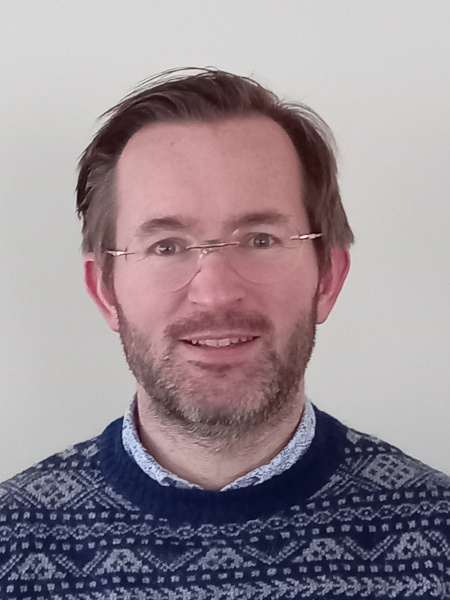
Jonas Westin is an Associate Professor at the Department of Mathematics and Mathematical Statistics and a Research Fellow at the Centre for Regional Science (CERUM) at Umeå University. His research focuses on applying mathematical methods and models to address social science challenges, particularly in transportation, regional development, and environmental policy. He teaches courses in mathematical modeling and project courses for civil engineering students, and is recognized as a university teacher. His research interests include transportation economics, input-output analysis, and operations research, with a focus on optimizing freight networks, evaluating infrastructure policies, and modeling regional accessibility. He has contributed to projects analyzing sustainable aviation, maritime safety, and cross-border infrastructure planning in Northern Europe. Westin collaborates with institutions like Trafikverket (Swedish Transport Administration) and the Nordic countries’ transport networks. His work bridges theoretical mathematical modeling with practical policy analysis, emphasizing the implications of transport policies on regional competitiveness and environmental sustainability. Notable projects include the Botnia-Atlantica corridor analysis and studies on fossil-free regional aviation. Affiliations: Associate Professor, Department of Mathematics and Mathematical Statistics Research Fellow, CERUM (Centre for Regional Science) Key Research Themes: Transportation Network Optimization Regional Economic Impact Analysis Environmental Policy Modeling His recent publications highlight innovative approaches to freight modeling, maritime safety metrics, and cross-border infrastructure coordination. Westin’s interdisciplinary work reflects a commitment to addressing complex societal challenges through rigorous quantitative methods.