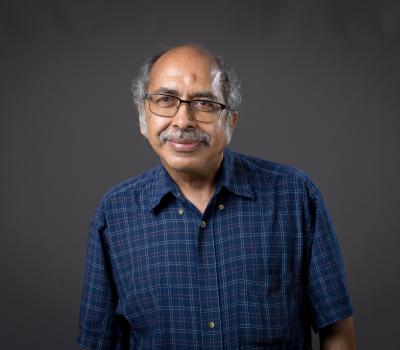
Prasad Tadepalli is a Professor in the School of Electrical Engineering and Computer Science at Oregon State University, serving as the AI Graduate Program Director. He is affiliated with the Collaborative Robotics and Intelligent Systems Institute. His expertise spans artificial intelligence, machine learning, reinforcement learning, and automated planning, with impactful contributions to explainable AI and natural language processing. Tadepalli holds a Ph.D. from Rutgers University and M.Tech/B.Tech degrees from Indian institutions. He has authored over 100 papers, organized international conferences, and received awards such as the AAAI Outstanding Paper Award (2013) and ICAPS Best Student Paper (2009). Education: Ph.D. (Rutgers University, 1990), M.Tech (IIT Madras, 1981), B.Tech (Regional Engineering College, 1979) His research focuses on advancing AI through techniques like relational planning, reinforcement learning, and interpretable models. Recent work includes integrating planning and RL for multiagent systems and developing explainable models via tree ensemble compression. His articles highlight contributions to time-series imputation, adversarial attacks on bandits, and chess rating estimation using CNN-LSTM networks. Awards: AAAI Outstanding Paper Award (2013), ICAPS Best Student Paper (2009) Tadepalli emphasizes independent thinking in students and has advised numerous researchers. His work bridges theoretical AI with practical applications, such as robotics and data-driven decision-making.
Prof. Chao Dong ZHU is a leading researcher in ecology and biodiversity conservation, affiliated with the Chinese Academy of Sciences. He serves as Principal Investigator for multiple projects including MultiTroph (2022-2026), analyzing biodiversity mechanisms across trophic levels. His work focuses on plant-insect interactions, phylogenetic signals in ecological communities, and the impacts of tree diversity on herbivore-parasitoid networks. Key projects include SP09c1 Phylogenetic signals in plant-insect interactions and P4C: Associational effects mediated by parasitoids , examining how tree diversity influences herbivore communities and parasitoid dynamics. He has contributed to large-scale biodiversity experiments in subtropical forests, such as BEF-China, investigating species coexistence and turnover patterns. Education: Not explicitly stated in provided texts Research Themes: Trophic interactions, biodiversity gradients, DNA barcoding applications, spatial ecology Publications emphasize data-driven analyses of herbivore community structure, leveraging phylogenetic and functional trait approaches. His work bridges observational ecology with experimental design, contributing to understanding ecosystem resilience under biodiversity loss scenarios.
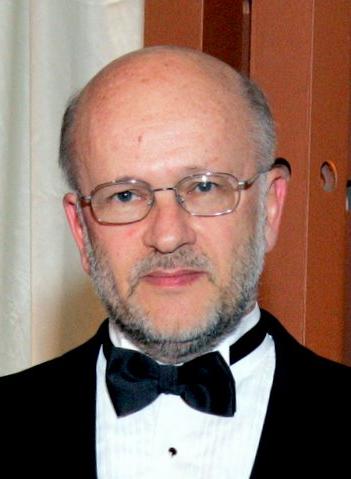
John F. Shortle is a Professor and Chair in the Department of Systems Engineering and Operations Research at George Mason University (GMU), part of the Volgenau School of Engineering. He specializes in applying queueing theory and stochastic processes to aviation safety, air transportation systems, and energy systems. Shortle has led major research initiatives funded by the FAA, NASA, and the Department of Energy, focusing on improving air traffic safety through advanced simulation and risk analysis techniques. Affiliations: Center for Air Transportation Systems Research (CATSR), GMU Education: PhD (UC Berkeley), MS (UC Berkeley), BS (Harvey Mudd College) Research Interests Shortle’s work emphasizes simulation methodologies, queueing theory applications, and stochastic modeling for critical infrastructure systems. Key areas include: Collision risk analysis in air transportation Aviation safety modeling (e.g., wake turbulence, event tree analysis) Energy systems reliability (e.g., blackout analysis) Autonomous systems validation Publications & Awards He co-authored the widely used textbook Fundamentals of Queueing Theory (5th ed., Wiley, 2018) and holds over 100 peer-reviewed publications. Notable awards include the Daniel H. Wagner Prize (2000) and the Military Operations Research Journal Award (2016). Leadership & Service President, INFORMS Simulation Society (2016–2018) Board Member, Winter Simulation Conference (2023–present) Editorial roles: IEEE Transactions on Reliability , Journal of Probability and Statistical Science Teaching Teaches advanced courses in stochastic processes (OR 645), queueing theory (OR 647), and dynamic systems (SYST 320).
Dr. Chandi Witharana is an Assistant Professor in the Department of Natural Resources and the Environment at the University of Connecticut's College of Agriculture, Health, and Natural Resources. Previously, they served as Assistant Professor in Residence (2020-2023), Assistant Research Professor (2018-2020), and Visiting Assistant Professor (2016-2018) at UConn. Their academic journey includes a Postdoctoral Research Fellowship at SUNY Stony Brook (2014-2016) and graduate work at UConn where they earned their PhD in Remote Sensing in 2014. Dr. Witharana teaches courses in high-resolution remote sensing, geospatial analysis, and introductory geomatics. Dr. Witharana's educational background includes: PhD in Remote Sensing, University of Connecticut (2014) MS in GIScience, University of Connecticut (2009) BS in Geology, University of Peradeniya, Sri Lanka (2005) Dr. Witharana's research focuses on methodological developments for analyzing large volumes of multi-modal remote sensing data for environmental, industrial, and agricultural applications, with special emphasis on Arctic Permafrost remote sensing. They harness sub-meter resolution satellite imagery, AI, and high-performance computing resources to map permafrost landforms, monitor thaw disturbances, and assess risks to human-built infrastructure in the Arctic. Their work extends beyond research to include innovative applications of remote sensing in K-12 STEM education through imagery-enabled lesson plans. Dr. Witharana aims to use cutting-edge geospatial technologies as transformative learning instruments to help students understand complex human-environment interactions. The recent publications of Dr. Witharana demonstrate a strong focus on applying advanced AI and remote sensing techniques to Arctic permafrost monitoring and infrastructure risk assessment. Their work increasingly incorporates vision transformers and deep learning models for more accurate detection of permafrost features and unhealthy tree crowns. There's a clear trend toward developing scalable geospatial datasets with standardized approaches, particularly for retrogressive thaw slumps. Many publications address practical applications including power outage risk modeling, forest management for storm resistance, and infrastructure monitoring in changing Arctic landscapes. The research shows growing interdisciplinary collaboration across environmental science, computer science, and engineering domains. Dr. Witharana has secured significant research funding as PI or Co-PI on numerous grants totaling over $14 million, including: NSF's Permafrost Discovery Gateway project ($3,000,000) Google-funded research on tracking Arctic permafrost thaw ($5,000,000) NSF's role of capillaries in the Arctic hydrologic system ($2,000,000) USDA projects on drone imaging for nutrient deficiency detection ($200,000) Eversource Energy projects on tree risk modeling ($275,000) As an educator, Dr. Witharana mentors students through research projects funded by these grants and teaches specialized courses in remote sensing and geospatial analysis. They serve as Director of the Remote Sensing & Geospatial Data Analytics Graduate Program and as a Steering Committee Member for UConn's Data Science Masters Program. Dr. Witharana is also an Editorial Advisory Board Member for the ISPRS Journal of Photogrammetry and Remote Sensing and regularly reviews proposals for NSF and other agencies. Their research group leverages high-performance computing resources including Frontera/NSF and XSEDE allocations for large-scale geospatial analysis. Dr. Witharana leads research teams focused on Arctic permafrost monitoring and geospatial AI applications, collaborating with institutions including University of Alaska-Fairbanks, Woodwell Climate Research Center, and UC Santa Barbara. Their work involves developing advanced workflows for processing satellite imagery and implementing machine learning models for environmental monitoring. The research group actively engages in developing educational applications of remote sensing technology, particularly for K-12 STEM education.
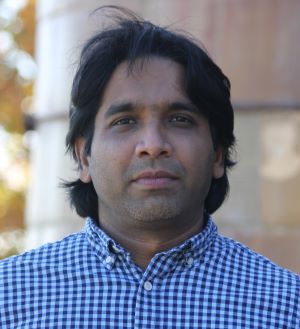
Alexander Shapiro is the A. Russell Chandler III Chair and Professor at the H. Milton Stewart School of Industrial and Systems Engineering , Georgia Institute of Technology. His work bridges optimization and statistics, focusing on stochastic programming, risk analysis, and simulation-based optimization. He has received numerous accolades, including the Khachiyan Prize (2013) , Dantzig Prize (2018) , and John von Neumann Theory Prize (2021) . Education: Ph.D. in Applied Mathematics-Statistics (Ben-Gurion University, 1981), M.Sc. in Mathematics (Moscow University, 1971) His research explores stochastic programming , risk-averse optimization , and multivariate statistical analysis , with recent work on distributionally robust control, Bayesian stochastic methods, and convex multistage optimization. Publications highlight theoretical advancements and computational frameworks for uncertainty modeling. Recent articles focus on asymptotics (2025), duality in MDPs (2023-2024), and statistical inference (2014-2024). These span stochastic control , robustness , and time consistency , reflecting his expertise in bridging probability theory with large-scale optimization. Scientific awards : Khachiyan Prize of INFORMS (2013) Dantzig Prize (2018) John von Neumann Theory Prize (2021) Election to National Academy of Engineering (2020) Dr. Shapiro has served as Area Editor (Optimization) for the Operations Research Journal and Editor-in-Chief of Mathematical Programming, Series A , demonstrating sustained leadership in his field.
Ignacio Rios Uribe is an Assistant Professor at the Naveen Jindal School of Management (University of Texas at Dallas) specializing in Operations Management . He holds a PhD in Operations, Information and Technology (2020) from Stanford University, with additional MA in Economics from Stanford and MS/BS in Operations Research and Industrial Engineering from Universidad de Chile. PhD in Operations, Information and Technology (2020) - Stanford University MA in Economics (2020) - Stanford University MS in Operations Management (2014) - Universidad de Chile BS in Industrial Engineering (2014) - Universidad de Chile His research focuses on Behavioral Operations Management , particularly in matching markets , college admissions systems, and online platform optimization . Current projects examine mechanism design for dating apps, strategic behavior in college applications, team-building incentives, and charity donation systems. He employs mathematical modeling, field experiments, and structural estimation techniques. Recent publications analyze platform design for curated dating markets (M&SOM, 2023), stable matching with contingent priorities (Management Science, 2023), and capacity planning in school choice (Operations Research, 2022). His work combines theoretical analysis with empirical validation using real-world data from Chilean education systems and industry partners. Awards include First Place in Doing Good with Good OR (2018) and BOM Best Working Paper Competition (2023) Published in top journals like Management Science, M&SOM, Operations Research Professional affiliations with INFORMS and Manufacturing & Service Operations Management Society
Dr. Julian Rode is a Senior Researcher and Scientific Advisor at the Helmholtz Centre for Environmental Research – UFZ since 2011, with additional roles as Deputy Head of Department (2018–present) and leader of the working group on Behaviour and Policy Instruments (2022–present). His research focuses on environmental values, behavioral drivers, and financial/policy instruments for biodiversity conservation and sustainable land use. Key Affiliations: UFZ, German Centre for Integrative Biodiversity Research (iDiv), Social Innovation Center (INSEAD) Expertise: Ecological economics, sustainability transformations, environmental policy evaluation Research Interests center on integrating multiple values of nature into policy decisions, motivating conservation behavior, and designing financial mechanisms for sustainable landscapes. His work spans agroforestry incentives in Uganda/Peru, socio-economic impacts of large carnivores in Europe, and climate adaptation through nature-based solutions in cities like Dar es Salaam. Recent Publications highlight interdisciplinary approaches to biodiversity finance, behavioral economics in conservation, and ecosystem service assessments. He contributes to global initiatives like IPBES and TEEB, with fieldwork across Germany, Latin America, and Southeast Asia. His projects often bridge academic research with practical policy frameworks, such as the Behaviour Change Wheel and Ecosystem Service Opportunities methodology. Notable Collaborations: TNC, ICRAF, GIZ, CBD Secretariat, INSEAD Geographic Scope: Germany, Spain, France, Brazil, Peru, Colombia, India, Thailand, Tanzania, Ecuador, Mexico Academic Contributions include coordinating TEEB country studies, developing conservation finance tools, and advising governments on biodiversity strategies. He lectures at institutions like TU Dresden and Kedge Business School, emphasizing transdisciplinary methods and science-practice knowledge exchange.
Prof. Anja Rammig is a Professor at the Technical University of Munich (TUM), holding the Chair of Land Surface-Atmosphere Interactions within the TUM School of Life Sciences. Her research focuses on understanding how terrestrial ecosystems respond to environmental changes such as climate and land-use shifts. She employs integrated model-based and observational approaches to study processes like plant responses to drought, aiming to inform climate change mitigation strategies. Education: B.Sc./M.Sc. in Biology (Friedrich-Alexander University Erlangen-Nuremberg) and Ph.D. in Environmental Sciences (ETH Zurich, 2006). Professional Journey: Postdoctoral roles at the SLF Davos, Lund University, and PIK, before joining TUM as Assistant Professor in 2015 and advancing to full Professor. Her research emphasizes modeling ecosystem dynamics under climate extremes, with particular attention to the Amazon rainforest, European forests, and boreal landscapes. Key themes include CO2 fertilization effects, phosphorus cycling limitations, and the interplay between vegetation and atmospheric processes. She leads interdisciplinary projects like AmazonFACE, a large-scale CO2 enrichment experiment. Publications span topics from drought impacts to model development, with a focus on global carbon cycle projections and ecosystem resilience. Her work bridges ecology, climatology, and policy, contributing to climate-smart forestry strategies and biodiversity conservation frameworks.
Giovanni Leonelli is an Associate Professor at the University of Parma in the Department of Chemical, Life and Environmental Sustainability Sciences . His work integrates geomorphology , climatology , and stable isotope analysis to study climate reconstruction and environmental dynamics in alpine and glacial systems. Focuses on climate change impacts in mountainous regions like the Alps, Northern Apennines, and Chilean Andes Utilizes tree-ring isotopes and GIS analysis for reconstructing environmental shifts Teaches courses on Cartography and GIS , Applied Geomorphology , and Geomorphological Hazards His recent publications emphasize debris flow characterization , glacier retreat effects , and dendrochronological climate proxies . Scientific awards include recognition for his master’s thesis in Natural and Environmental Sciences by the Lombardy Institute (2003).
Holly Munro is a Senior Research Scientist (Forest Biometrics and Ecology) at the National Council for Air and Stream Improvement and serves as an Adjunct Assistant Professor in Forest Biometrics Education at the University of Georgia. She holds a Ph.D. in Forestry and Natural Resources from the University of Georgia, an M.S. in Data Science from the same institution, and a B.S. in Biology from the University of North Georgia. Her research focuses on forest biometrics, disturbance ecology, forest entomology, and the application of machine learning to ecological problems. Notable work includes developing predictive models for bark beetle outbreaks and studying the ecological impacts of invasive pests under climate change scenarios. She has contributed to interdisciplinary projects blending data science with traditional ecological methods. Munro’s publications span high-impact journals such as Forest Ecology and Management and Ecological Informatics , with a thematic focus on pest-behavior analysis, climate adaptation strategies, and forest health monitoring. Her work bridges theoretical ecology with practical management solutions for forest ecosystems. No scientific awards are explicitly listed in the provided text. Her advising and grants information is currently unavailable, though her research collaborations suggest active involvement in funded projects. She is affiliated with the Department of Forest Biometrics Education at UGA and contributes to forest management initiatives through her dual roles in academia and industry.
Curtis C. Daehler is a Professor in the Department of Botany within the School of Life Sciences at the University of Hawai'i at Mānoa. His research focuses on the ecology and evolution of invasive plants, particularly in island ecosystems, with an emphasis on plant-animal-microbe interactions and the processes that drive successful invasions. He leads an active research lab that trains graduate and undergraduate students in botany, ecology, and conservation biology. His research interests include: Ecology and evolution of invasive plants Plant-animal and plant-microbe interactions in invaded communities Transitions from plant introduction to naturalization and invasion Global and regional patterns of biological invasions, especially on islands Population ecology and weed risk assessment Dr. Daehler's recent publications reflect a strong focus on invasion dynamics, climate change impacts, and standardized monitoring protocols. His work often involves large collaborative networks and contributes to global frameworks in invasion science. He has published extensively in top journals such as Journal of Ecology , Biological Invasions , Global Change Biology , and NeoBiota , with recurring themes in island biogeography, fire-adapted grasses, and socioeconomic drivers of plant invasions. Notable scientific contributions include leadership in the Mountain Invasion Research Network (MIREN) and development of risk assessment frameworks for non-native plants in Hawai‘i. His lab actively engages in field research across Pacific islands and collaborates internationally on invasion ecology. Dr. Daehler advises several graduate students in the Botany PhD program, many of whom also specialize in Ecology, Evolution, and Conservation Biology (EECB). His lab supports both Masters and PhD students as well as undergraduate honors thesis researchers. He is involved in significant collaborative research efforts, including multi-institutional studies on elevation gradients, climate change, and conservation planning in mountain and island ecosystems.
Sunwook Kim is an Associate Professor in the Department of Industrial and Systems Engineering at Virginia Tech, part of the College of Engineering. His work focuses on human factors engineering, ergonomics, and occupational biomechanics with a strong emphasis on exoskeleton technology and neurodiverse collaboration. Kim holds a Ph.D. in Industrial & Systems Engineering from Virginia Tech. His research explores how exoskeletons impact physical demands and safety in construction, manufacturing, and healthcare settings. Notable studies include evaluating passive and powered exoskeletons for tasks like lifting, overhead work, and gait assistance, alongside investigating their effects on postural control, muscle activity, and user acceptance. He also examines neurodiverse team dynamics using advanced methodologies like Hidden Markov Models and physiological signal analysis. Kim's work bridges human performance, assistive technology, and workplace safety, with applications in falls prevention, biomechanical monitoring, and ergonomic intervention design. His interdisciplinary approach integrates machine learning, sensor technologies, and biomechanical modeling to address real-world challenges. His recent articles highlight trends in exoskeleton adoption factors, human-robot collaboration, and motor adaptation during exoskeleton use. Ongoing research includes fall monitoring systems using radar sensing and feature-resonated neural networks, reflecting his commitment to advancing both theoretical and applied human factors engineering.
Prof. Estefanía Serral Asensio is an Associate Professor at the Faculty of Economics and Business (FEB) at KU Leuven , with a primary affiliation to the Information Systems Engineering Research Group (LIRIS) in Brussels. She holds a highly international and interdisciplinary academic profile, having previously served as an Assistant Professor at Eindhoven University of Technology (2018), led the Semantic Knowledge Representation and Integration research group at the Technical University of Vienna (2012–2014), and contributed to the ProS Research Center at the Technical University of Valencia (until 2012). PhD in Computer Science (2011) Master in Software Engineering, Formal Methods, and Information Systems (2008) 5-year Bachelor in Computer Science (2006) Her research focuses on Internet of Things (IoT) , Business Process Management , and context-adaptive systems , with methodological expertise in Model-Driven Development , Conceptual Modeling , and ubiquitous systems . Key projects include Novel Process Mining Techniques for Discovering IoT-enhanced Business Processes (2022–2025), Novel Sustainability-Driven IoT Prescriptive Analytics for Improving Irrigation Practices in Fruit Trees (2021–2024), and foundational work on Runtime Evolution of IoT Processes (2018–2020). Her publications span top-tier venues like CAiSE , ER , SOSYM , and Internet of Things Journal . She teaches courses in ICT Strategy and Architecture , ICT Management , and Research Methodologies in Business Information Systems Engineering , contributing to academic programs at KU Leuven.
Deepa Senapathi is a Professor at the University of Reading, specializing in pollination ecology, climate change impacts on biodiversity, and sustainable agroecosystem management. Her research integrates landscape ecology, insect behavior, and conservation biology to address pollinator declines, pest dynamics, and climate adaptation in agricultural systems. Her core research interests include: Pollinator community responses to land-use and climate change Ecological intensification of agriculture through habitat management Phenological shifts in species interactions under warming Pesticide risk assessment for beneficial insects Citizen science approaches to ecological monitoring Publication analysis reveals strong emphasis on multi-scale drivers of biodiversity in farmed landscapes, with recurring themes of: Climate-driven mismatches in plant-pollinator-pest systems Agroecological interventions for pollination enhancement Transdisciplinary methods for pollinator conservation Landscape configuration effects on beneficial insects
Valerio De Biagi is an Associate Professor in the Department of Structural, Geotechnical and Building Engineering (DISEG) at the Polytechnic University of Turin, Italy. He is a member of the Interdepartmental Center SISCON (Safety of Infrastructures and Constructions) and serves as Vice Coordinator of the PhD program in Civil and Environmental Engineering. He also acts as the Partnership Agreement Coordinator with STRADA DEI PARCHI, reflecting his strong engagement with industry and infrastructure safety. Research Interests: Structural robustness and progressive collapse Natural hazards (rockfalls, avalanches, debris flows) Structural health monitoring and damage modeling Reliability and risk assessment of civil infrastructure Mechanics of granular materials (snow) His recent research output shows a strong trend toward probabilistic risk assessment, experimental and numerical modeling of impact events, and the development of resilient structural systems. He frequently applies advanced computational methods, including finite element analysis and generative AI, to simulate extreme loading scenarios and infrastructure response. Scientific Roles: Effective Member, SISCO - Italian Society of Building Science (2019–present) Guest Editor, Applied Sciences (2020–present) Evaluator for Swiss National Science Foundation (MINT 2023, COST 2022) Advising and Grants: He actively supervises multiple PhD students across several cycles and leads numerous funded research projects, including competitive national grants (PRIN), PNRR initiatives, and commercial research contracts with public infrastructure agencies. His projects focus on structural safety assessment, development of monitoring protocols, and risk mitigation strategies for bridges, tunnels, and rockfall-prone areas. Labs and Teams: He leads research teams focused on structural complexity, natural hazard interaction, and granular material mechanics. His work involves experimental campaigns, field surveys, and back-analyses of real-world structural failures.