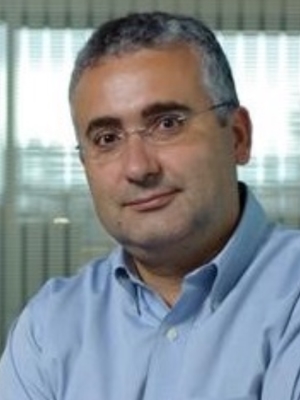
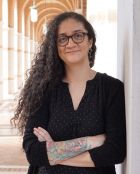
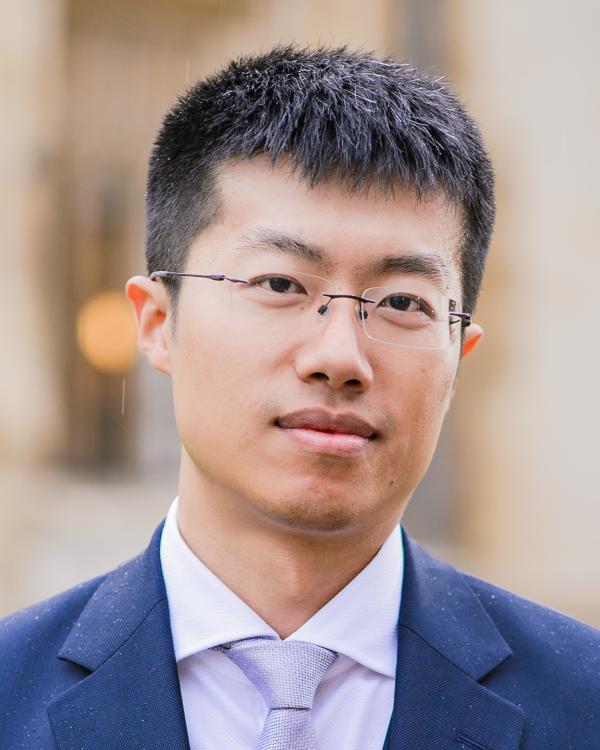
Emilio Frazzoli is a Full Professor at ETH Zurich’s Department of Mechanical and Process Engineering. He leads the Institute for Dynamic Systems and Control and the Center for Sustainable Future Mobility, focusing on autonomous systems, robotics, and socio-technical control frameworks. Current affiliations: ETH Zurich (Dynamic Systems and Control, Sustainable Future Mobility) Research: Autonomous mobility-on-demand, game theory for resource allocation, and safety verification in multi-agent systems His work bridges robotics, control theory, and economics, with projects like the open-source AMoDeus simulation framework for autonomous taxis and karma-based resource allocation systems. Recent publications emphasize trustworthy AI, reproducibility in autonomous vehicle control, and human-robot interaction challenges. Notable projects include nuReality (VR-based pedestrian interaction studies) and CARSI II (context-driven vehicle interfaces).
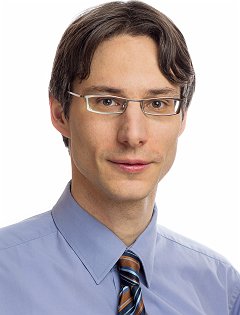
Daniel Varro is a Professor affiliated with McGill University (Faculty of Engineering, School of Computer Science), with strong ties to Budapest University of Technology and Economics and Linköping University. He is a leading researcher in model-driven engineering, cyber-physical systems, and software engineering, actively contributing to top-tier conferences such as MODELS, ICSE, and ASE. His research focuses on model-based systems engineering (MBSE) , automated model generation , model transformations , and constraint-based consistency checking . Recently, his work has expanded into integrating large language models (LLMs) and machine learning into modeling workflows, including model querying, domain modeling, and bug detection. The recent publications reveal a strong trend toward AI-augmented modeling, logic-based solvers (e.g., Refinery), and safety assurance of autonomous systems (e.g., COLREGs compliance). His work bridges formal methods with practical software engineering challenges in industrial and safety-critical domains. Scientific Awards: No specific awards mentioned in the text. Advising and Grants: While no explicit list of students or grants is provided, his mentorship in the Doctoral Symposium and repeated leadership roles suggest active supervision and likely grant funding. He has led projects on automated model generation, model quality, and AI integration in modeling. Labs and Teams: Daniel Varro is associated with research groups focused on model-driven engineering and software evolution, likely leading or co-leading teams working on the VIATRA and Refinery frameworks for model transformation and solving.
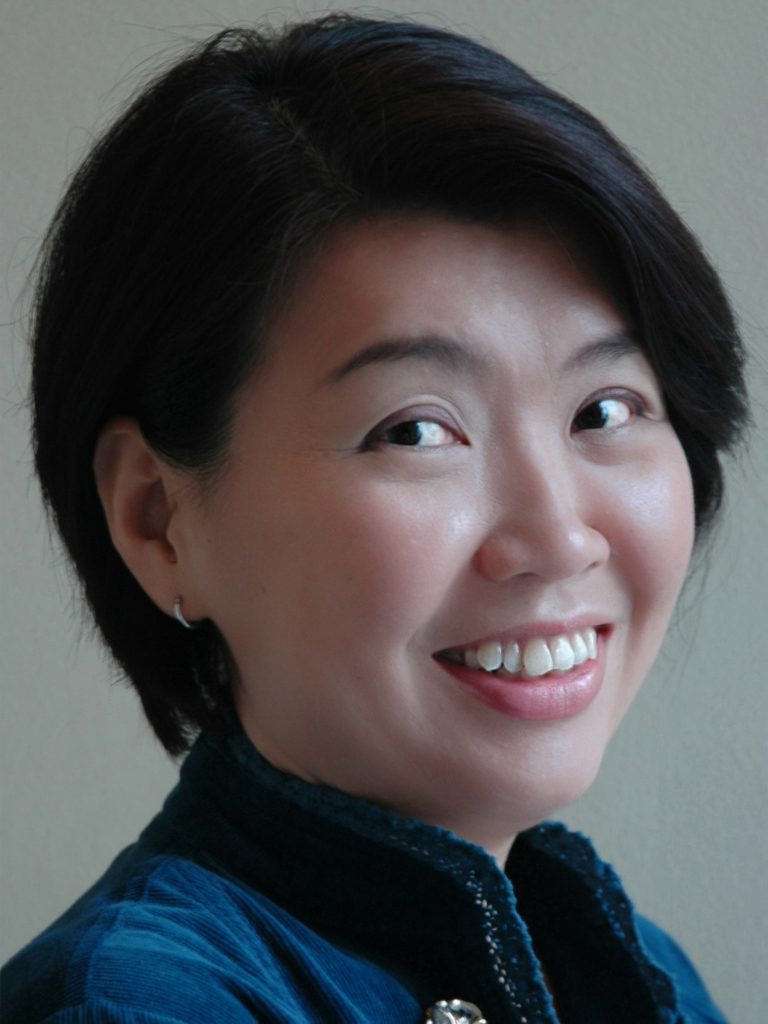
ONG Soh Khim is a Professor in the Department of Mechanical Engineering at the National University of Singapore (NUS) and a member of the NUS Graduate School. She is a Fellow of CIRP (International Academy for Production Engineering), the first Asian and fourth female Fellow globally. Her research focuses on augmented reality (AR) and digital twins in manufacturing, with applications in assistive technology and sustainable design. She has authored/co-edited 6 books, over 300 journal/conference papers, and holds an H-index of 66 (Google Scholar) and 52 (Scopus). She has held leadership roles, including serving as a Nominated Member of the Singapore Parliament (2005–2006) and on multiple NUS governance boards. Her honors include the Singapore Youth Award (2004), M. Eugene Merchant Award (2004), and the 2021 Long Service Medal. She advocates for gender diversity in STEM, leading initiatives like the Girls2Pioneers program. Her current roles include Senior Principal Investigator at NUS Research Institutes in Suzhou and Guangzhou, and Visiting Professorships at Chinese universities.
Prof. Dr. Andrea Stocco is a Professor at the Technische Universität München (TUM), affiliated with the TUM School of Computation, Information and Technology. His research focuses on the intersection of software engineering and deep learning, particularly addressing the robustness and reliability of data-intensive systems. Key areas include autonomous vehicles, web application testing, and automated functional oracles for deep learning systems. He leads initiatives such as the Lehrstuhl für Software und Systems Engineering , collaborating on projects like CrESt and SUPPRA – Algorand Center of Excellence . Research interests encompass monitoring techniques for AI-driven systems, test suite maintainability, and scenario-based testing of cyber-physical systems (CPS). His work emphasizes practical applications, such as improving testing frameworks for evolving web applications and enhancing interoperability in autonomous driving systems (ADS). Recent efforts include leveraging large language models (LLMs) for secure code assessment and benchmarking generative AI for test input generation. No scientific awards are explicitly mentioned in the provided texts. His publications reflect a strong focus on testing methodologies, with over 40 articles since 2013, covering domains like web test automation, dependency-aware testing, and safety-critical failure prediction in autonomous systems. Advising and grants details are not detailed in the current data, but his lab contributes to TUM's broader efforts in software engineering and systems reliability.
Hugo de Boer is a Professor at the Copernicus Institute of Sustainable Development , Faculty of Geosciences, Utrecht University. He serves as scientific lead for the Delta Climate Center in Vlissingen and coordinates MSc programs in Water Science and Management and Water Management for Climate Adaptation . His research explores climate-ecosystem interactions, focusing on plant ecophysiology, ecosystem dynamics, and nature-inclusive climate adaptation in deltas. Research Themes: Future Deltas, Pathways to Sustainability, Integrative Bioinformatics Projects: LEMONTREE, CloudRoots, 'From losers to winners' (ancient plant lineages under elevated CO2) Teaching Expertise: System thinking for sustainability, quantitative statistics, plant ecophysiology Research Trends emphasize interdisciplinary approaches to climate change impacts on ecosystems, with publications spanning plant-cloud processes, CO2 acclimation, and eco-evolutionary optimality models. His work bridges biogeochemistry, land-atmosphere interactions, and sustainable development frameworks. Projects & Collaborations include experimental studies on ancient plant lineages (Equisetum) and integrative field campaigns in Amazon and temperate forests. He contributes to modeling climate-vegetation feedbacks, pesticide emission scenarios, and social-ecological system transitions.
Professor Ruchi Choudhary is a Professor in Architectural Engineering at the University of Cambridge, Department of Engineering, within the School of Technology. She leads the Energy Efficient Cities initiative (EECi), a cross-disciplinary research project focused on strengthening the UK's capacity to address energy demand reduction and environmental impact in cities through research in building and transport technologies, district power systems, and urban planning. Her research interests span urban energy systems, building energy modeling, sustainable cities, geothermal energy systems, and data-driven energy modeling . She has pioneered work in digital twins for energy systems, urban subsurface thermal modeling, and building-integrated agriculture. Her research group develops numerical tools to improve energy efficiency of cities, with particular focus on modeling energy consumption of large building sets at multiple time and spatial resolutions. Analysis of her recent publications reveals a strong trend toward integrating machine learning with physics-based modeling for energy systems, with increasing emphasis on uncertainty quantification, digital twins, and value of information analysis for decision-making. Her work bridges the gap between theoretical modeling and practical urban implementation, with significant focus on city-scale geothermal potential, underground climate change impacts, and energy equity considerations. Professor Choudhary has supervised numerous PhD students who have gone on to prominent positions at institutions including UCL, University of Cambridge, BEIS, Arup, and various international universities. Her research group includes faculty members, research associates, graduate students, and international collaborators from institutions worldwide. Her current research focuses on two parallel investigations: one on using multi-scale multidisciplinary models to address energy use questions in the built environment, and second, on quantifying uncertainties in model outcomes. Current projects include integration of food production in urban environments, analysis of underground transport systems as energy sources, large-scale integration of ground source heat pumps, and distributed energy networks.
Mehrdad Ehsani is a Robert M. Kennedy Endowed Professor of Electrical Engineering at Texas A&M University, leading the Power Electronics and Motor Drives Laboratory. He holds a Ph.D. from the University of Wisconsin-Madison and has over four decades of expertise in power electronics, electric/hybrid vehicles, and energy systems. His research focuses on sustainable energy, advanced power conversion, and vehicle electrification. Educational Background: Ph.D., Electrical Engineering, University of Wisconsin-Madison (1981) M.S., Electrical Engineering, University of Texas at Austin (1974) B.S., Electrical Engineering, University of Texas at Austin (1973) Research Interests: Sustainable power systems, electric/hybrid vehicles, energy storage, power electronics, and aerospace power systems. His work emphasizes practical applications, such as transmotor technology for energy efficiency and grid-interactive buildings. Awards & Recognition: Life Fellow of IEEE SAE Fellow (2005) IEEE Vehicular Technology Society Avant Garde Award (2001) Recipient of multiple Prize Paper Awards (IEEE-IAS) Advising & Grants: Director of Advanced Vehicle Systems Research Program. His lab collaborates with industry on patents, including over 30 granted/pending patents, and advises on sustainable transportation technologies. He has consulted for over 60 companies and government agencies. Labs & Teams: Founder and director of the Power Electronics & Motor Drives Lab, focusing on electric vehicle propulsion, renewable energy integration, and advanced control systems.
Paola Cascante-Bonilla is an Assistant Professor in the Department of Computer Science at Stony Brook University, with expertise in computer vision, natural language processing, and embodied AI. Her research focuses on developing systems for compositional reasoning, common-sense inference, and trustworthy AI using vision-language models, while addressing cultural bias and explainability challenges.
Dr. Li Wan is an Associate Professor in Urban Planning and Development at the Department of Land Economy, University of Cambridge, and a Fellow of Gonville and Caius College. He serves as Director for the MPhil in Planning, Growth and Regeneration and is a co-investigator of the Centre for Smart Infrastructure and Construction. Dr. Wan is also a Trustee of the IJURR Foundation and leads a research group focused on understanding urban land and transport development through applied modeling and data analytics. Dr. Wan holds a BArch, MPhil, and PhD from the University of Cambridge. Prior to joining Land Economy, he worked in Architecture and Engineering Departments, giving him a highly interdisciplinary perspective. His research focuses on spatial economic modeling of urban land use and transport systems, with recent interests including strategic planning at city/regional levels, impact studies of flexible working, micromobility, and electric vehicles. Dr. Wan's research group has produced significant work in city digital twins, as evidenced by his 2023 book Digital Twins for Smart Cities: Conceptualisation, challenges and practices . His publications span urban analytics, transport emissions, spatial equilibrium modeling, and economic geography, demonstrating the interdisciplinary nature of his work. Recent research trends show increasing focus on post-pandemic urban dynamics, digital governance, and sustainable mobility solutions. His research group has secured funding from initiatives like AI@Cam for projects examining how local authorities use AI for urban decision-making. Dr. Wan actively supervises PhD and MPhil students, with his group comprising researchers working on diverse urban topics from land-use efficiency to micromobility impacts. As an educator, Dr. Wan teaches courses including Tripos Paper 10 - The Built Environment, PGR01 - Urban and Environmental Planning, PGR02 - Urban and Housing Policy, PGR05 - Place-based Policy, and RM03 – Spatial Analysis and Modelling. His group has presented at major international conferences including CUPUM and ICML, reflecting his active engagement in the academic community.
Dr. Li Shen is an Associate Professor at the Copernicus Institute of Sustainable Development , Utrecht University since 2015. She holds the Energy & Resources group and has been active in sustainability assessment of materials and energy systems since completing her PhD in 2011. Education: BEng (Mechanical Engineering, cum laude 1999, Shanghai) MSc (Sustainable Development, track Energy and Resources 2006, Utrecht University) PhD (2011, Utrecht University, thesis: Bio-based and Recycled Polymers for Cleaner Production – an Assessment of Plastics and Fibres ) Research Interests: Dr. Shen specializes in Life Cycle Assessment and Technological Sustainability Evaluation of Bio-based Plastics , Plastics Recycling , Waste Management , and Nanomaterials . Her work bridges Environmental Science , Chemical Engineering , and Sustainable Development through rigorous system analysis. Scientific Publications: Leading expert in Circular Economy applications for plastics Developed Ex-ante LCA frameworks for emerging materials Key contributor to PEF Bio-based Bottle sustainability analysis Active in Telescope Energy Systems sustainability Published in Nature Communications , Science of the Total Environment , and Journal of Cleaner Production Teaching: Responsible instructor for Advanced Energy Analysis in the Master Energy Science program. Also teaches Life Cycle Assessment and Sustainable Resources Use in the Global Sustainability Science bachelor program. Supervises numerous master thesis projects from Energy Science (ES), Sustainable Development (SD-EM), and Science for Energy Innovation (SBI) programs.
Mohamed Bouri is a Senior Lecturer and Researcher at École Polytechnique Fédérale de Lausanne (EPFL), where he is affiliated with the School of Engineering (STI) and specifically the Microengineering Department (SCI-STI-MB). He is part of the ReHAssist research group (http://rehassist.epfl.ch), which focuses on rehabilitation robotics and human-robot interaction. His office is located in the MED Building (MED 3 1016) at Station 9, 1015 Lausanne. Dr. Bouri's research spans several key areas in robotics and rehabilitation engineering. His primary focus is on the development and control of exoskeleton systems for mobility assistance and rehabilitation. He has made significant contributions to hip exoskeleton technology, adaptive control strategies, and human-robot interaction paradigms. His work bridges engineering principles with clinical applications, particularly for individuals with mobility impairments and neurological conditions. Additional research interests include sensory substitution techniques, balance control systems, and astronomical instrumentation involving robotic fiber positioners for multi-object spectrographs. Analysis of Dr. Bouri's recent publications reveals a strong emphasis on practical applications of robotics in rehabilitation settings. His work increasingly focuses on user-centered design, adaptive control systems that respond to individual user needs, and ecological validity in testing environments. There's a clear trend toward developing systems that can function effectively in real-world scenarios rather than controlled laboratory settings. His research also shows growing integration of physiological feedback mechanisms and multimodal sensing to enhance human-robot cooperation, with applications spanning from Parkinson's disease rehabilitation to astronomical instrumentation. Dr. Bouri has supervised numerous doctoral students whose theses reflect the breadth of his research interests, including work on lower-limb exoskeletons, robotic control systems, and rehabilitation technologies. His collaborative approach is evident in the extensive list of co-authored publications across multiple institutions and disciplines, demonstrating his ability to bridge engineering with clinical and astronomical applications. Based at EPFL's Microengineering Department, Dr. Bouri leads research activities within the ReHAssist laboratory, which specializes in rehabilitation assistance technologies. The lab focuses on developing innovative robotic solutions for mobility assistance, with particular expertise in exoskeleton design, control algorithms, and human-robot interaction paradigms. His work on projects like TWIICE One has demonstrated real-world impact in assistive technology development.
Dr. Reza Fazeli is a Research Fellow at the Zero-Carbon Energy for the Asia-Pacific Grand Challenge at the Australian National University's School of Engineering. He joined ANU in January 2020, following six years as a Research Analyst and Adjunct Lecturer at the University of Iceland. His research focuses on sustainable energy transitions, decarbonization strategies, and energy policy assessment. Education background: PhD in Sustainable Energy Systems, University of Porto (MIT-Portugal program) MSc in Energy Systems Engineering, Sharif University of Technology BSc in Mechanical Engineering, University of Tehran Dr. Fazeli's research spans energy modeling, system dynamics, and multi-criteria decision analysis. He investigates decarbonization pathways for transportation and energy systems, GIS-based sustainability assessments, and hydrogen economy transitions. His work combines technological and behavioral perspectives to develop sustainable energy solutions. His recent publications focus on hydrogen certification, emission accounting frameworks, and renewable integration challenges. Articles consistently address policy-technical interfaces in energy transitions, with increasing emphasis on international hydrogen trade and certification systems since 2021. Dr. Fazeli leads research on green hydrogen economy assessments and coordinates cross-disciplinary projects at the ANU Energy Change Institute.
Dr Duncan Smith is an Associate Professor in GIS and Visualisation at the Centre for Advanced Spatial Analysis (CASA) at University College London (UCL). He serves as Programme Co-Director for the MSc Urban Spatial Science, focusing on digital visualisation and Geographical Information Systems (GIS) education. His research emphasizes urban sustainability, transport accessibility, and interactive urban visualisation, with a particular interest in global mega-cities like London, Singapore, and São Paulo. Dr Smith holds a PhD from UCL (2011), an MSc from the University of Edinburgh (2005), and a BA (2003). His recent projects include leading the ESRC-funded Driving Urban Transitions project (2024) exploring sustainable travel in small cities and outer metropolitan areas. Previously, he was Co-Investigator on the SIMETRI project (NSFC JPI Urban Europe) analyzing urban sustainability in London, the Randstad, and China's Greater Bay Area. His research interests span urban visualisation techniques, transport equity analysis, and polycentric urban development. Key areas include GIS-driven urban modelling, accessibility metrics, and the intersection of housing policy with sustainable urban form. His interactive visualisations, available on citygeographics.org , showcase innovative approaches to spatial data presentation. Dr Smith's work consistently addresses global sustainability challenges through geospatial methodologies. Recent studies highlight inequalities in transport accessibility and the spatial implications of urban policies. Upcoming projects will further investigate small-city mobility dynamics using multi-national collaborations with Amsterdam and Lisbon researchers.
Chee-Wooi Ten is a tenured Professor in the Department of Electrical and Computer Engineering at Michigan Technological University, where he has served since 2010 and achieved tenure in 2016. He concurrently holds an Affiliated Professor appointment in Applied Computing and directs both the PSERC Site and ICC CPS Center. His institutional roles emphasize cyber-physical security integration within power infrastructure. His educational background includes: PhD in Electrical Engineering from University College Dublin (2009) MSc in Electrical Engineering from Iowa State University (2001) BSc in Electrical Engineering from Iowa State University (1999) Ten's research pioneers cyber-informed security engineering strategies for bulk power systems, focusing on quantifying rare events through system risk models and data science. His work bridges power grid interactions with robotics and transportation systems to advance decarbonization and electrification. Key methodologies include validating cyber-physical security frameworks against steady-state and dynamic grid approaches, with emphasis on attack/defense combinatorics and smart home technologies. This transdisciplinary approach supports the fourth industrial revolution's resilience requirements. His publication trends reveal strong focus on risk-aggregated substation testbeds using generative adversarial networks, cyber insurance models for power systems, and cascading failure analysis from switching attacks. Recent works increasingly integrate machine learning with physics-based modeling to address cybersecurity threats in inverter-based resource integration and distribution emergency operations. Ten has secured over $6.5M in active funding including: $2M DOE grant (MTU portion $105,000) for CyDERMS Center on DERs/Microgrids cybersecurity $704,409 CyManII award for secure digitalization in smart manufacturing $1.05M DOE ARPA-E grant for decarbonized freight transportation modeling NSF CyberCorps Scholarship for Service program ($3.38M) His grants consistently address risk management through data-driven and physics-based modeling, with industry partnerships through PSERC and utility collaborations. As ICC CPS Center Director, he leads research on cyber-physical security testbeds and coordinates the PSERC Summer Transformation School. His team develops validation frameworks for NERC CIP compliance while addressing practical pain points in OT cybersecurity for grid operators.
Arjan F. Kirkels is an Assistant Professor and University Lecturer in the Department of Technology, Innovation & Society within the School of Industrial Engineering and Innovation Sciences at Eindhoven University of Technology (TU/e). His work focuses on sustainability assessments, decision-making in transitions, and interdisciplinary education for sustainable innovation. His research interests include Life Cycle Assessment (LCA), Multi-Criteria Assessment (MCA), sustainability transitions, industrial ecology, and systems engineering. He applies these to emerging technologies such as batteries, hydrogen systems, and heat pumps, with a strong emphasis on integrating stakeholder values and addressing deep uncertainties in sustainability decisions. The recent articles highlight a consistent focus on assessing emerging technologies, particularly in renewable energy and circular economy applications. Trends include prospective LCA, experience curves in solar technology, socio-technical impact assessment, and educational innovations in sustainability. His work bridges technical analysis with social and governance dimensions of sustainability transitions. Best Teacher Award, 1st year Bachelor Sustainable Innovation, for course 0SV20 'Industrial Ecology' (2013) Best Teacher Award, 1st year Bachelor Sustainable Innovation, for course 0SV20 'Industrial Ecology' (2018) Best Teacher Award, 1st year Bachelor Sustainable Innovation, for course 0SV20 'Industrial Ecology' (2020) Educational award nomination, bachelor Sustainable Innovation, course 0SK30 Inter-University Sustainability Challenge (2023) Education Award 2024 - master Innovation Sciences (2025) Arjan F. Kirkels has supervised over 100 thesis students and more than 100 interdisciplinary student groups. He has developed and taught over 20 courses and co-authored 4 textbooks and 7 publications on educational innovation. He is currently supervising four researchers: Huiying Liu, Prapti Maharjan, Rishi Bhatnagar, and Seyed Mousavi. His research is supported by projects such as the EU-funded cVPP (Community-based Virtual Power Plant) and studies on Dutch sustainability transitions. He is actively involved in educational initiatives, including MOOC development and challenge-based learning, and contributes to public discourse through media appearances and workshops on sustainability education and systems thinking.