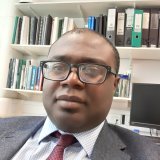
Dr. Sam Adu-Amankwah is a Lecturer in the College of Engineering and Physical Sciences at Aston University , specializing in Civil Engineering . Their research focuses on: Circular economy adoption in construction Low carbon concrete and cementitious materials Recycled cement powder and construction waste management Hydration kinetics and microstructural optimization Durability assessment of critical infrastructure Recent work includes studies on: Carbonation effects in ternary cement systems Alkali-activated slag binders with organic-inorganic hybrids Nano-silica enhancements in supersulfated cement CO2 curing for recycled cement powder Key methodologies involve advanced analytical techniques like Rietveld-PONKCS quantification and microstructural characterization under extreme environments.
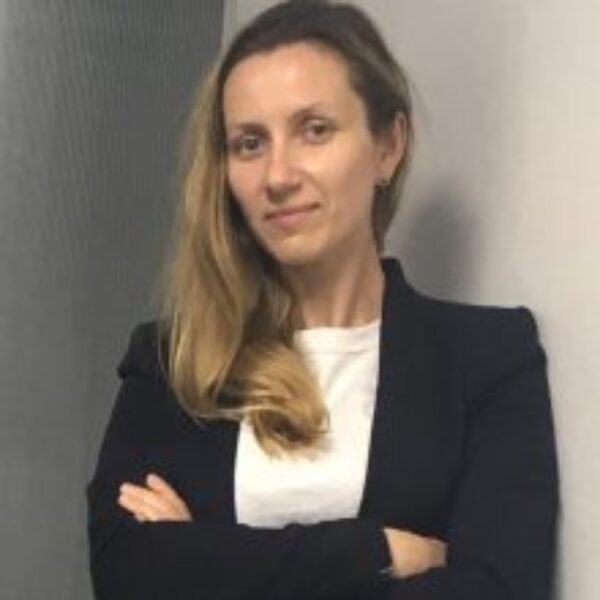
Anastasia Tyurina is a Senior Lecturer and Study Area Coordinator in Visual Communication at Queensland University of Technology, Faculty of Creative Industries, Education & Social Justice, School of Design. With over 15 years of experience in teaching and industry, she bridges design, technology, arts, and science to address complex societal issues. Her work emphasizes immersive, visual-led digital experiences that foster social change, health, and wellbeing. Doctor of Philosophy, Griffith University M.A. Photojournalism, Moscow State University B.Ed. Visual Arts and Technology, Moscow Region State University Anastasia's research lies at the intersection of emerging technologies and creative practice, with a focus on interaction design, scientific imaging, photography, and creative coding. She is particularly interested in how art and science can collaborate to communicate ecological and health-related issues. Her work often employs augmented reality (AR) and immersive storytelling to make complex topics accessible and engaging. Her recent publications (2020–2024) reflect a strong trend in transdisciplinary research, particularly in healthcare innovation and environmental communication. Articles such as those on AR-driven storytelling, water ecology, and participatory redesign in paediatric care demonstrate her commitment to using design as a tool for systemic change. Her work appears in high-impact interdisciplinary venues including Leonardo , SIGGRAPH , and Springer. Anastasia is actively involved in major collaborative projects, including the HEAL Report and design internships at the Queensland Children's Hospital. She contributes to academic discourse through conference proceedings and exhibitions, such as the QUT Alumni Triennial. Her role in editing the ISEA2024 proceedings further underscores her leadership in the digital arts community. Senior Lecturer, QUT School of Design Study Area Coordinator, Visual Communication Contributor to QUT Design Lab Active participant in art-science and healthcare design initiatives Anastasia supervises and mentors students in visual communication and design research, though specific advisee names are not listed. She has not received any explicitly mentioned scientific awards in the provided texts. Her collaborative projects often involve grants and institutional support, particularly from QUT and healthcare partners, though specific grant details are not outlined.
Dr. Samar Raffoul is a Research Fellow at the School of Architecture, Planning and Environmental Policy at University College Dublin (UCD), where she holds a prestigious Marie Skłodowska-Curie Postdoctoral Fellowship. She is actively involved in the Modern Methods of Construction Research Group (MMCRG) and the Centre for Critical Infrastructure Research (CCIR), focusing on innovative and sustainable structural solutions. Her educational background includes a BSc in Civil Engineering from the University of Balamand (2011), an MSc in Structural Engineering from the University of Manchester (2012), and a PhD from the University of Sheffield (2018), where her research explored the use of waste tyre components in FRP-confined concrete. Dr. Raffoul's research interests span modern methods of construction, structural robustness, composite design, constitutive modelling, and sustainable material development. She is particularly passionate about reducing environmental impact through the reuse of recycled materials such as rubber from end-of-life tyres, and optimizing structural systems for greater sustainability and resilience. Her recent publications reveal a strong focus on material behavior under extreme conditions, including fire and accidental loading, as well as computational modeling for industrial processes. Key themes include embodied carbon in construction, cyclic behavior of rubberized concrete, post-fire performance of metal structures, and composite cold-formed steel-timber systems. She employs both experimental and numerical methods to advance structural design practices. Her scientific recognition includes the Marie Skłodowska-Curie Fellowship. Funded projects include the Horizon 2020 'Concatenation' project on modular construction robustness, the FP7 'Anagennisi' project on tyre reuse in concrete, and a UK KTP project on cold-formed steel systems. Dr. Raffoul has advised on industrial design solutions through roles at Fusion Building Systems and Evolusion Innovation. She is a member of the Associate Fellowship of the Higher Education Academy, reflecting her engagement in academic development. While no formal students are listed, her work supports knowledge transfer to industry and broader engineering communities. She is affiliated with key research groups: the Modern Methods of Construction Research Group (MMCRG) and the Centre for Critical Infrastructure Research (CCIR) at UCD, contributing to interdisciplinary efforts in resilient and sustainable infrastructure.
Dr Khui Hung (Claire) Lee is a Researcher at the University of Western Australia's School of Biomedical Sciences and affiliated with the Marshall Centre. She holds a PhD in Public Health from Curtin University and combines expertise in healthcare data analytics, microbiome research, and immunology. Education: PhD in Public Health (2021), Curtin University External Roles: Project Officer (Data) at Department of Health (Western Australia) since 2023; Sessional Academic at Edith Cowan University since 2021 Her research focuses on host-microbe interactions through transcriptomic and microbiome analysis, with applications in infection prevention, antimicrobial resistance, and Helicobacter pylori studies. She also conducts systematic reviews and meta-analyses in complementary therapies like acupuncture. Recent publications highlight her work in H. pylori biofilm analysis , acupuncture efficacy for depression , and primary dysmenorrhea treatments . Her methodology spans bioinformatics, microscopy techniques, and evidence-based policy development. Collaborations include Department of Health (Western Australia) and Edith Cowan University engagements, with technical expertise in Scanning Electron Microscopy, Transmission Electron Microscopy, and Confocal Microscopy.
Jyrki Romu is a Specialist in the Department of Energy and Mechanical Engineering. His research focuses on materials science, particularly the corrosion behavior and metallurgical properties of stainless steels and nickel-based alloys. He earned a Doctoral Degree in Engineering and Technology from Helsinki University of Technology, along with a Licentiate Degree and Master's Degree from the same institution. Research Interests: Corrosion mechanisms, alloying effects, weld metal analysis, and high-temperature oxidation resistance. Key Contributions: Studied crevice corrosion in sulfuric acid environments, hydrogen embrittlement in ferritic steels, and metallurgical responses in hybrid welding processes. Activities: Served as a reviewer for scientific journals like Materials Letters and presented at conferences including the Joint Nordic Conference in Powder Technology.
Hamid Godini is an Associate Professor in the Department of Energy and Mechanical Engineering, specializing in Energy Conversion and Systems. His research focuses on catalytic processes involving methane conversion and advanced material characterization techniques. Key Research Areas: Methane Chemistry, Catalyst Surface Engineering, Ethylene Production Optimization Methodologies: Scanning Electron Microscopy, X-Ray Diffraction, Focused Ion Beam Analysis Recent work includes groundbreaking studies on Mn-Na-W-Ox/SiO2 catalysts for oxidative coupling of methane, published in Inorganics (2025). Collaborations span international institutions with emphasis on sustainable energy solutions. Grants & Awards: No specific awards listed, but active in high-impact peer-reviewed research. Labs/Teams: Part of energy conversion research groups with focus on industrial catalysis applications.
Nicolae Tomozeiu is an Assistant Professor at Eindhoven University of Technology, specializing in Applied Physics and Science Education. His research focuses on fluid dynamics in porous media, nanoparticle transport, and advanced imaging techniques. Institution: Eindhoven University of Technology Department: Applied Physics and Science Education Academic Rank: Assistant Professor His research explores: Nanoparticle behavior during capillary action Ultra-fast MRI for transport process visualization Surface tension effects in fibrous filters Penetration depth dynamics in porous materials Colloidal system characterization Multiphase flow in paper-based media He utilizes techniques like Nuclear Magnetic Resonance (NMR) and Scanning Electron Microscopy (SEM) to study these phenomena, with applications in filtration systems, material science, and fluid transport optimization.
Dr. Işınay Ebru Yüzay is a Lecturer in the Department of Genetic and Biomedical Engineering at İzmir University of Economics. She holds a Ph.D. in Polymer Science and Packaging Technology from Michigan State University (2010), following a master's (2004) and bachelor's (1993) in Chemical Engineering from Ege University and Michigan State University, respectively. Roles: ERASMUS Coordinator for Food Engineering, Member of International Student Evaluation Commission, and Internship Committee. Research Focus: Biodegradable polymers, food packaging materials, and polymer nanocomposites. Her work emphasizes sustainable materials and environmental applications, supported by grants from NSF, NASA, USDA, and others. She has authored/co-authored multiple patents, including composites for contaminant removal and PLA-zeolite materials. Awarded twice the NSF Scholars Award (2010, 2014), she also serves as a reviewer for over 20 SCI-indexed journals and evaluates EU H2020 projects. Her recent projects include antimicrobial food packaging via nanoscale modification and ocean-degradable plastics.
Wilhelm Auwärter is a Professor and Principal Investigator at the Catalysis Research Center (CRC) of Technical University of Munich. His research focuses on molecular nanoscience at interfaces, including single-molecule processes, supramolecular architectures, and hybrid materials engineering. Utilizing surface-catalyzed reactions and advanced microscopy techniques like bond-resolved scanning probe microscopy, his work emphasizes applications in catalysis and sensing. Key research areas include on-surface synthesis of porphyrins, layered heterostructures, and graphene functionalization. He leads a team contributing to both fundamental surface chemistry and applied nanotechnology through collaborations in the Munich Catalysis Alliance. Publications highlight advancements in cycloaddition reactions, porphyrin intercalation systems, and boron nitride patterning. His work is supported by the CRC's infrastructure, including specialized laboratories for materials analysis and nanoscale characterization.
Dr. Isra Ezad is a Lecturer in the School of Earth and Oceans at The University of Western Australia, a position she has held since 2024. Prior to this, she was a postdoctoral fellow at Macquarie University in Sydney. Her academic background includes a PhD from University College London (2019) and an MSci in Geosciences from Royal Holloway University of London (2015). Her educational qualifications are: PhD in The grain growth kinetics of spinel in the mantle, University College London (2019) MSci in Geosciences, Royal Holloway University of London (2015) Dr. Ezad is an experimental igneous petrologist specializing in the composition and melting behavior of the Earth's mantle. Her research focuses on the role of volatile elements in the deep Earth and their influence on the mobility of base and precious metals during mantle melting. She applies these findings to magmatic sulfide deposits to understand ore genesis from diverse mantle components. Key areas include mantle geochemistry, experimental petrology, and the study of volatiles. Analysis of her recent publications (2025) reveals a strong emphasis on experimental studies of mantle minerals and processes. Her work often involves high-pressure experiments to simulate mantle conditions, with particular attention to perovskites, hydrous minerals, and sulfide systems. The research spans topics such as diamond inclusions, mantle metasomatism, and the formation of ore deposits, contributing significantly to our understanding of deep Earth processes. Dr. Ezad has an active research profile with 24 publications to date, including articles in high-impact journals such as Nature . Her work has been cited 188 times and she has an h-index of 8 (Scopus).
Christopher John Baddeley is a Professor and Head of School in the School of Chemistry at the University of St Andrews. His research focuses on surface chemistry and heterogeneous catalysis, with expertise in scanning tunneling microscopy (STM), surface vibrational spectroscopy, and corrosion inhibition mechanisms. He leads the EaSTCHEM research group and has contributed to the development of enantioselective catalysts and bimetallic surface characterization using medium energy ion scattering (MEIS). Education: B.A. (Hons) in Natural Sciences (Chemistry), University of Cambridge Ph.D. in Chemistry, University of Cambridge Research Interests: Surface reaction mechanisms, chiral molecule adsorption, bimetallic nanoparticle catalysis, corrosion inhibitor design, and in situ liquid-solid interface studies. His work bridges fundamental surface science with industrial applications in catalysis and nanotechnology. Recent Research Trends: Articles emphasize corrosion layer analysis on copper alloys, organic monolayer formation on metal surfaces, and catalytic hydrogenation processes. Key themes include nanoparticle thermal stability, graphene functionalization, and surface-confined reaction pathways. Awards: CR Burch Prize, British Vacuum Council (1999) Advising & Grants: Supervised 5 students and led EPSRC-funded projects on corrosion inhibition, gold catalysis, and surface analysis techniques. Collaborates internationally on bimetallic catalyst design and electrochemical systems. Labs & Teams: Active in EaSTCHEM, a collaborative research center at St Andrews focusing on advanced chemical methodologies.
Michael J. Gordon is the Warren G. and Katherine S. Schlinger Professor and Chair of Chemical Engineering at the University of California, Santa Barbara (UCSB). His research focuses on nanoscale materials synthesis, scanning probe microscopy (SPM), and energy-related applications, including photocatalysis, plasma-based synthesis, and bio-inspired photonics. He leads the Gordon Group, collaborating with interdisciplinary teams to advance materials science and engineering. Education: PhD in Chemical Engineering (Caltech), MS in Applied Physics (Caltech), MS and BS in Chemical Engineering (Colorado School of Mines). Research Interests : Gordon’s work spans nanomaterials, catalysis, biomolecular systems, and energy technologies. Key areas include protein assembly mechanisms (e.g., reflectin), plasma-driven carbon-neutral energy solutions, and optoelectronic devices. His lab develops novel materials characterization methods, such as tip-enhanced Raman spectroscopy and high-pressure plasma reactors. Publications : Over 150 peer-reviewed articles in top journals like Advanced Materials , ACS Catalysis , and Science . Recent work emphasizes photocatalytic hydrogen production, bio-inspired photonics, and protein-electrochemistry interfaces. Awards : Elected Fellow of the American Vacuum Society, David and Lucile Packard Fellowship, NSF Early Career Award, and multiple teaching accolades. He holds the Inaugural Founder’s Chair in Chemical Engineering at UCSB. Grants & Teams : Principal investigator on grants from NSF, DoE, and industry partnerships. Collaborates with the Solid State Lighting & Energy Electronics Center (SSLEEC) and Institute for Collaborative Biotechnologies (ICB). Labs & Facilities : Active in UCSB’s Nanofabrication Facility, CNSI Confocal Raman Facility, and MRL TEMPO Lab. His group designs custom instruments for nanoscale characterization and plasma synthesis.
Dr Luke Wilkinson is a Lecturer in Chemistry and Biology with expertise in molecular electronics and coordination chemistry. His research focuses on synthesizing inorganic/organometallic compounds for molecular electronics applications, particularly thermoelectric materials leveraging the Seebeck effect. Education: PhD in Chemistry from the University of Sheffield (2011–2015) MChem/MSc in Chemistry from the University of East Anglia (2011) Research Interests: Synthesis of thermoelectric materials C-H activation of arenes and biphenylenes Electron transfer studies in coordination complexes Metallo-ligand interactions Notable Awards: Leverhulme Early Career Research Fellowship (University of York, 2019–2023) Recent Research Trends: His publications emphasize thermoelectric materials, molecular electronics, and the structural optimization of compounds like anthracene derivatives and porphyrin ligands. Work spans experimental synthesis, computational modeling (e.g., quantum interference effects), and applications in high-performance energy systems.
Charles M. Schroeder is a James Economy Professor in Materials Science & Engineering and a Professor in Chemical & Biomolecular Engineering at the University of Illinois at Urbana-Champaign. He holds affiliations in Chemistry, Bioengineering, and the Beckman Institute. His research focuses on single-molecule studies of polymers, proteins, and soft materials to understand microscopic-to-macroscopic property transitions. Education: B.S. in Chemical Engineering, Carnegie Mellon University (1999) M.S. and Ph.D. in Chemical Engineering, Stanford University (2001, 2004) Postdoctoral Fellowships: Harvard University (2004–2007), UC Berkeley (2007–2008) Research Interests: Single-molecule techniques for polymer dynamics, biophysics of soft materials, optoelectronic materials design, and colloidal systems. His work bridges biology, engineering, and physics to advance molecular-level understanding and applications in energy storage, biomaterials, and data storage. Recent Achievements: Developed the Stokes Trap for particle manipulation Advances in DNA-based data storage systems Studies on charge transport in conjugated peptides Grants & Awards: Camille Dreyfus Teacher-Scholar Award (2013) NSF CAREER Award (2013) Packard Fellowship in Science & Engineering (2011) Fellow of American Physical Society (2023) Labs & Collaborations: Beckman Institute’s Molecular Design & Engineering Group, AI for Materials (AIM) Group, and interdisciplinary teams in synthetic biology and computational molecular science.
Pau Gorostiza Langa is an ICREA Research Professor at the Institute for Bioengineering of Catalonia (IBEC), specializing in photoswitchable ligands for neuronal proteins and charge transport in redox systems using electrochemical scanning tunneling microscopy (EC-STM/AFM). He earned his PhD in semiconductor electrochemistry from the University of Barcelona, with postdoctoral experience at CNRS-Université Pierre et Marie Curie (France) and UC Berkeley (USA). His research integrates neuroscience, biophysics, and photopharmacology to develop light-regulated molecular tools. Universidad de Barcelona (PhD in Physics) IBEC (Group Leader) His work focuses on optogenetic and photopharmacological strategies , including two-photon and three-photon stimulation , to manipulate neurotransmission and cellular activity. Key applications include neural inhibition, synaptic modulation, and photoswitchable drug design . Publications span redox proteins, photosynthetic complexes, and GABA/glycine receptor control . Grants and awards include the Human Frontier Science Program (HFSP) Career Development Award , two European Research Council (ERC) grants , and coordination of the European Innovation Council (EIC) Pathfinder Open grant . His team has developed 9 patents (5 licensed) and published over 140 papers. Supervised 15 PhD students and 14 postdoctoral fellows , with 6 PhDs ongoing. Leads the Nanoprobes and Nanoswitches research group at IBEC, collaborating across disciplines in bioengineering, molecular neuroscience, and synthetic chemistry .