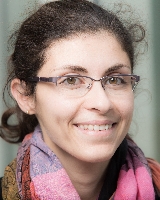
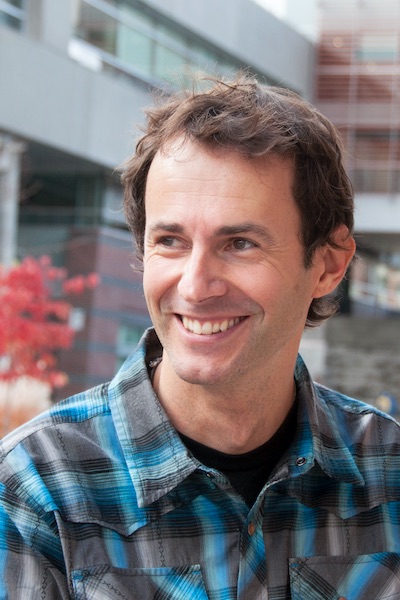
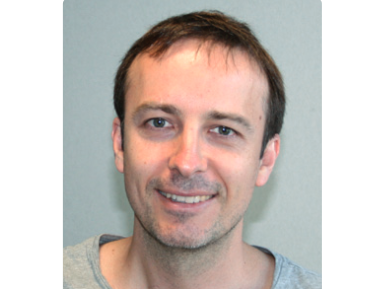
Narayanaswamy Balakrishnan is a Professor in the Department of Mathematics and Statistics at McMaster University, Canada. His research focuses on probabilistic and statistical models with applications in science, engineering, and medicine. Key areas include reliability analysis, statistical inference, high-dimensional data analysis, and actuarial science. He has authored/co-authored over 60 books and numerous research papers, contributing significantly to fields like order statistics, censored data analysis, and survival analysis. Notable works include Hybrid Censoring: Models, Methods and Applications (2023) and A First Course in Order Statistics (2008). His research has been recognized with prestigious honors, including election to the Royal Society of Canada in 2023. Dr. Balakrishnan mentors graduate students in statistics and has collaborated widely, with contributions to statistical methodologies in engineering, medical studies, and industrial problems. His work bridges theoretical developments with practical applications, emphasizing robust statistical techniques and innovative data analysis approaches.
James E. Aguirre is an Associate Professor in the Department of Physics and Astronomy at the University of Pennsylvania. His research focuses on understanding galaxy formation, cosmology, and large-scale structure through advanced instrumentation and observational techniques. He leads projects such as HERA (Hydrogen Epoch of Reionization Array) and TIM (Terahertz Intensity Mapper), dedicated to studying the early universe and distant star-forming galaxies. Aguirre’s work involves cutting-edge millimeter-wave and radio instrumentation design, including Z-Spec, PAPER, and MUSTANG. He has contributed to significant discoveries, such as detecting massive water reservoirs around quasars and determining distances to gravitationally lensed galaxies. Supported by NSF grants, his research bridges observational astronomy with cosmological theory. Education: Ph.D. in Astrophysics (thesis work on TopHat balloon-borne telescope). Teaching: ASTR011 Introduction to Astrophysics I. Current Projects: HERA, TIM, Simons Observatory, and PAPER. Grants: NSF Grant No. 0807990 and others. His research group collaborates on instrumentation like the Bolocam Galactic Plane Survey and explores techniques for mitigating calibration errors and improving signal analysis in radio interferometry. Aguirre’s efforts advance both observational methods and our understanding of cosmic evolution from the epoch of reionization to present-day galaxy formation.
Raghavendra Ramachandra is a Professor at the Department of Information Security and Communication Technology (IIK) , within the Faculty of Information Technology and Electrical Engineering at the Norwegian University of Science and Technology (NTNU) in Gjøvik. His research focuses on biometric systems, particularly in face, fingerprint, and finger vein recognition, with emphasis on presentation attack detection, morphing attack detection, and deep learning applications. Current research projects include: SALT (2022-2026) : Developing privacy-preserving facial biometric authentication systems. OffPAD (2022-2025) : Creating cryptographic tools and presentation attack detection for fingerprint biometrics. SWAN (2015-2020) : Developing biometric countermeasures against presentation attacks. His recent publications demonstrate technical expertise in: Face morphing attack detection using vision transformers and point cloud networks Image fusion techniques for multispectral biometrics GAN-based synthetic data generation for security evaluation Explainable AI approaches for biometric verification Professor Ramachandra also supervises PhD and Master’s students, and has extensive experience in leading national and EU research initiatives.
Brenda Ogle is a Professor in the Department of Biomedical Engineering at the University of Minnesota's College of Science and Engineering. She leads the System Regeneration Lab, where her research focuses on cardiac tissue engineering, stem cell differentiation, and advanced 3D bioprinting technologies. Her work bridges multiple disciplines including stem cell biology, extracellular matrix science, and engineering principles to develop novel approaches for cardiovascular regeneration. Dr. Ogle's research interests primarily center on understanding the mechanisms that govern stem cell fate, particularly in the context of the cardiovascular system. Her lab is pioneering 3D bioprinting for cardiac tissue engineering, creating complex model systems that go beyond simple geometric shapes. Key areas of investigation include the role of extracellular matrix proteins in guiding stem cell differentiation, the development of novel tools for analyzing stem cell behavior, and the delivery of stem cells or associated progeny to the body. Her work has led to breakthroughs in creating patch-like structures with micron-scale features that support cardiac cell organization and can be adhered to failing hearts. Dr. Ogle's research has resulted in significant scientific contributions, including the development of unique bioink formulations coupled with multiphoton-based 3D printing to create chambered heart structures based on digital templates. These engineered tissues can sustain flow profiles and exhibit pressure-volume dynamics characteristic of the native heart, making them valuable for studying cardiac disease progression and testing drug efficacy. Her work has received recognition including an NIH R01 award for Epicardial Regulation of Myocardial Function and being named a BMES Fellow. NIH R01 Awarded, Epicardial Regulation of Myocardial Function BMES Fellow (2021) Dr. Ogle mentors a diverse team of researchers including postdoctoral associates, graduate students, and undergraduate researchers. Her lab has produced numerous PhD graduates who have gone on to successful careers in academia and industry. Current research projects in her lab include heart organoid formation using hiPSC-derived cardiomyocytes, investigation of hypertrophic cardiomyopathy mechanisms, cardiomyocyte maturation studies, and development of ECM-based bioinks for cardiac constructs. The lab is also working on creating integrated platforms for high-throughput cardiac organoid production and developing models to study the impact of radiation exposure on cardiac function.
Jorge Camba is an Associate Professor at the School of Engineering Technology and holds a courtesy appointment in the Department of Computer Graphics Technology at Purdue University . He also serves as a Senior Research Scientist (by courtesy) in the Department of Industrial Engineering at the University of Naples Federico II , Italy. PhD in Systems and Engineering Management (Universidad Politécnica de Valencia, Spain) MSc in Digital Media (East Tennessee State University) MSc in Computer Science (Universidad de Vigo, Spain) His research explores intelligent CAD systems , digital manufacturing , and mixed reality environments , focusing on model quality assurance , design intent communication , and collaborative design tools . Recent work investigates spatial cognition in CAD education , geometric variability analysis , and annotation-driven knowledge management . Key trends in his publications include parametric modeling strategies , 3D annotation systems , and XR applications in design evaluation. Awards include the Purdue Faculty Scholar (2021) and I3B Fellow (2021). He has presented at conferences on topics like Industry 4.0 , space habitat design , and digital product quality .
David Hyten, Jr. serves as the Haskins Professor of Plant Genetics within the Department of Agronomy & Horticulture at the University of Nebraska-Lincoln, where he leads research advancing soybean genomics and breeding methodologies for global food security. Education: Ph.D., University of Maryland, 2005 M.S., University of Tennessee, 2002 B.A., Southern Illinois University, 1999 Research Focus: Dr. Hyten's program integrates high-throughput genotyping with quantitative genetics to dissect complex traits including disease resistance (cyst nematode, stem borer), seed composition (protein/oil), and yield stability. His work pioneers genomic selection pipelines and recombination hotspot analysis to accelerate breeding cycles, with emphasis on translating genomic discoveries into practical cultivar development through marker-assisted selection and predictive modeling. Publication Trends: Recent outputs (2021-2025) reveal evolving emphasis from foundational genomics (recombination mapping, QTL identification) toward applied breeding solutions, including cost-effective DNA extraction methods, pedigree-based imputation techniques, and community strategic planning for soybean genomics. His work increasingly addresses genotype-environment interactions and stability of key traits across diverse production systems.
Dan Petersen is a Professor of Mathematics at Stockholm University, specializing in the intersection of algebraic geometry and algebraic topology with a focus on moduli spaces. His research explores topics such as cohomology theories, homological stability, and geometric structures. He has advised PhD students including Erik Lindell, Louis Hainaut, Josefien Kuijper, and Oliver Lindström. His work frequently intersects with geometric topology, number theory, and representation theory, as seen in his recent publications on handlebody groups, Mumford conjectures, and configuration spaces. Collaborations with postdocs such as Johan Alm, Marcel Rubió, and Sylvain Douteau highlight his involvement in advanced research networks. His contributions to algebraic structures and topological methods have advanced understanding in both pure and applied mathematics contexts.
Professor Shitij Kapur is Vice-Chancellor & President of King's College London, rejoining in 2021 after serving as Dean and Assistant Vice Chancellor (Health) at the University of Melbourne. At King's, he previously held leadership roles including Executive Dean of the Institute of Psychiatry, Psychology & Neuroscience and Dean of the Institute of Psychiatry. He earned his medical degree from All India Institute of Medical Sciences (1988), completed psychiatric residency at University of Pittsburgh, and holds a PhD in Neuroscience from University of Toronto. His research focuses on psychosis mechanisms and antipsychotic treatments, leading international consortia like NEWMEDS involving 19 EU institutions. Research integrates neuroimaging, genetics, and clinical trials to understand dopamine-glutamate interactions in psychosis. Recent work emphasizes neurochemical biomarkers, treatment resistance mechanisms, and optimizing clinical trial methodologies for psychiatric disorders. Awards include: Distinguished Fellow, American Psychiatric Association Fellow, Academy of Medical Sciences (UK) Honorary Doctorate, University of Copenhagen Fellow, King's College London
Dr. Yu (Chelsea) Jin is an Assistant Professor in the Department of Industrial Engineering at the University at Buffalo, specializing in quality inspection, predictive modeling, and data analytics for advanced manufacturing systems. She holds a PhD in Industrial Engineering from the University of Arkansas, an ME from the University of Michigan, and dual BS degrees in Network Engineering and Finance from Jinan University. Her research focuses on integrating machine learning and physics-based models to optimize manufacturing processes, such as additive manufacturing, PCB assembly, and pharmaceutical distribution systems. She has developed frameworks like ReflowNet for reflow oven optimization and physics-informed neural networks for thermal profile prediction. Her work emphasizes both theoretical advancements and practical applications in smart manufacturing and healthcare logistics. Dr. Jin's recent publications highlight contributions to generative AI for knowledge retrieval, AGV system optimization, and multi-source transfer learning for pandemic modeling. She actively collaborates with industry partners to bridge academic research and real-world manufacturing challenges.
Associate Professor Christopher Wensrich is a faculty member in the School of Engineering at the University of Newcastle, Australia, specializing in Mechanical Engineering. He has a strong background in applied mechanics from both computational and experimental perspectives, with significant expertise in granular mechanics, neutron diffraction strain measurement, and Bragg-edge transmission strain tomography. Education: PhD, University of Newcastle Bachelor of Mathematics, University of Newcastle Bachelor of Engineering, University of Newcastle Professor Wensrich's research focuses on several interconnected areas within mechanical engineering and materials science. His primary expertise lies in granular mechanics, spanning from micromechanics and homogenization of granular systems to analytical modeling of granular dynamics (particularly the silo quaking problem) and computational modeling using the Discrete Element Method (DEM). He is also a pioneer in applying neutron diffraction strain scanning techniques to granular systems. In the broader field of applied mechanics, he has made significant contributions to neutron diffraction-based strain measurement, including breakthroughs in Bragg-edge Transmission Strain Tomography, where he demonstrated the world's first practical application outside of simple axisymmetric systems. His publication record demonstrates a consistent focus on developing and applying advanced techniques for strain measurement and reconstruction in granular and composite materials. His recent work has centered on tomographic reconstruction methods using neutron diffraction, with particular emphasis on Bragg-edge techniques for 2D and 3D strain field reconstruction. His research bridges theoretical mathematics, computational methods, and experimental validation, creating a robust framework for non-destructive stress measurement in complex materials. Professional Recognition: President of the Australian Neutron Beam User Group (ANBUG) since December 2022 Member of the ACNS Program Advisory Team at ANSTO (Australian Nuclear Science and Technology Organisation) since March 2019 Visiting Fellow at Clare Hall College, Cambridge University (January-June 2023) Visiting Researcher at Isaac Newton Institute for Mathematical Sciences (January-June 2023) Professor Wensrich has secured substantial research funding, with a total of $5,478,793 across 42 grants. His funding portfolio includes projects from the Australian Research Council (ARC), ANSTO, and international partners like Oakridge National Laboratory and Japan Proton Accelerator Research Complex. He has successfully supervised 11 PhD and Masters students to completion, with research topics spanning granular mechanics, conveyor systems, and neutron strain tomography. His current research involves collaborations with institutions worldwide, focusing on advanced strain measurement techniques and their application to complex material systems.
Valentina KRACHMALNICOFF is a CNRS Research Scientist at Institut Langevin, affiliated with ESPCI Paris and PSL University. She joined the institute in 2012 after completing her postdoctoral fellowship there in 2010. Her research focuses on experimental nanophotonics, particularly studying near-field interactions between fluorescent nano-emitters and nanostructured plasmonic or dielectric materials. Dr. KRACHMALNICOFF obtained her PhD from University Paris-Sud in 2009 with a thesis on quantum atom optics experiments supervised by Alain Aspect and Charles Westbrook. Her research interests span experimental nanophotonics with plasmonic and dielectric media, near-field optical microscopy with fluorescent nanoprobes, quantum optics applications, and the study of electromagnetic local density of states. She has developed expertise in fluorescence intensity and decay rate measurements of nano-objects grafted on scanning probe microscope tips, as well as nano-manipulation techniques. Her work bridges fundamental physics with potential applications in quantum technologies, biosensing, and thermal management at the nanoscale. She frequently employs super-resolution imaging techniques to overcome diffraction limits in optical measurements. Analysis of Dr. KRACHMALNICOFF's recent publications reveals a strong methodological evolution toward increasingly sophisticated combinations of experimental techniques with theoretical modeling. Her work consistently focuses on probing light-matter interactions at the nanoscale, with growing integration of biophysical approaches. The publications demonstrate expertise in thermal radiation at nanoscale distances, plasmonic and dielectric nanostructures, and super-resolution fluorescence lifetime imaging. Her research shows a trajectory from fundamental near-field optics toward applications in quantum information and biosensing. Dr. KRACHMALNICOFF has received notable scientific recognition: 2017: CNRS Bronze Medal for her pioneering work in nanophotonics 2007: L'Oréal France - UNESCO "For Women in Science" Prize Dr. KRACHMALNICOFF actively mentors doctoral students and postdoctoral researchers. Current advisees include Guillaume Blanquer and Dorian Bouchet (PhD candidates) and Vivien Loo (postdoctoral researcher). Former students include Da Cao and Etienne Castanié. Her research is supported by CNRS funding and collaborative grants with other institutions, evident from her extensive co-authorship network spanning theoretical physicists, materials scientists, and optical engineers. Dr. KRACHMALNICOFF leads an experimental research team at Institut Langevin specializing in nanophotonics. Her laboratory features advanced near-field optical microscopy capabilities, fluorescence lifetime imaging systems, and nano-manipulation setups. The team collaborates closely with other researchers at Institut Langevin, including Yannick De Wilde (CNRS Research Director) and Ignacio Izeddin (Associate Professor at ESPCI), forming a cohesive research group focused on light-matter interactions at the nanoscale.
Andrew Jirasek is a Professor at the Irving K. Barber Faculty of Science , University of British Columbia Okanagan , and serves as the Associate Dean for Graduate and Postdoctoral Training . He leads the Analytics in Medical Sciences (AiMS) Institute with a focus on Medical Physics and Radiation Oncology Physics , particularly utilizing Raman spectroscopy and 3D radiation dosimetry for cancer treatment verification. PhD from University of British Columbia His research involves developing polymer gel dosimeters for 3D radiation dose verification in complex therapies like volumetric modulated arc therapy (VMAT) , collaborating across physics, oncology, and engineering . He also investigates optical technologies to monitor biological responses during radiotherapy using Raman spectroscopy with machine learning for data analysis. Recent publications highlight advancements in 3D gel dosimetry , Raman spectroscopy for metabolic profiling , and iterative image reconstruction algorithms . His work spans dosimeter technology development , radiation therapy quality assurance , and clinical applicability studies for novel treatment verification methods.
Associate Professor Pierre Lafaye de Micheaux is a statistician based at the School of Mathematics and Statistics, University of New South Wales , where he has worked since 2020. He previously held academic roles at Université Paul Valéry (2020, Associate Professor), ENSAI (2015–2017, Professor), Université de Montréal (2011–2016, Associate Professor), and Grenoble Alps University (2003–present, Assistant Professor). His research spans theoretical and applied statistics , focusing on complex random vectors , neuroimaging genetics , and data science for IoT . Education: PhD in Statistics (2003, Université de Montréal & Montpellier) MSc in Biostatistics (1998, Montpellier) BSc in Mathematics and Physics (1996, Montpellier) MSc in Cognitive Neuroscience (2007, Grenoble Institute of Technology) Research interests include: Dependence Measures : Leveraging complex analysis for big data dependence testing under 3V's (Volume, Variety, Velocity). Neuroimaging Genetics : Developing statistical tools for fMRI/EEG/DTI phenotyping of genetic variation with institutions like CHeBA and INSERM. IoT Data Science : Creating Raspberry Pi-based statistical computing tools for real-time sensor data streams. Complex-Valued Inference : Building a unified framework for complex random vectors in neuroimaging and nuclear engineering. Recent publications demonstrate expertise in circular data analysis , nonparametric testing , and central limit theorem counterexamples , with applications in medical imaging and finance. He has supervised numerous PhD, MSc, and honors students on topics ranging from deep learning to stochastic processes. Scientific achievements include: Université de Montréal Provost Honor List (2003) Editor of the Journal of Statistical Software (2017–present) Co-leader of three research groups: Dependence Measures , Neuroimaging Genetics , and Data Science & IoT He has secured grants from UNSW Research Infrastructure Scheme and NSERC , with industry collaborations including BNP Paribas (credit risk) and Olea Medical (stroke treatment analytics). Current teaching includes Statistical Inference (ZZSC5905) and Data Science (DATA3001) at UNSW.
Violetta Lonati is an Assistant Professor at the University of Milan 's Department of Computer Science since 2005. Her research spans Formal Languages and Automata (operator precedence languages, Wang automata, tiling systems) and Computer Science Education . She co-authored over 15 publications in theoretical computer science and education, focusing on 2D language recognition, logic characterization of automata, and pattern statistics in stochastic models. Education : PhD in Computer Science (2005) and Laurea in Mathematics (2001) from University of Milan Research Groups : ALaDDIn Lab for Didactics and Dissemination of Informatics, Bebras International Initiative Her work on Wang automata established their equivalence to tiling systems while introducing deterministic variants. In education, she designed workshops for schools and contributed to Italy's national computing curriculum proposal (2019). She held leadership roles at ACM ITiCSE (WG5 leader 2022), served as Associate Program Chair (2019-2022), and reviewed for top venues like ICER and SIGCSE TS. She received Google CS[4]HS and Informatics Europe awards for her educational contributions. Key Publications (2017-2001): Input-driven locally parsable languages (TCS 2017) Operator precedence logic characterization (SICOMP 2015) Snake-deterministic tiling systems (MFCS 2009) Graph fibrations and PageRank (RAIRO 2006) Pattern statistics in rational models (STACS 2005) Scientific awards include Google CS[4]HS (2011, 2017, 2019) and the Informatics Europe Best Practices in Education (2016). As part of ALaDDIn, she developed teacher training programs and graduate courses on computing education. Her teaching experience covers Algorithms & Data Structures (2013-2023), Computer Science Teaching (2014-2023), and courses for Biotechnology and Geological Sciences programs (2005-2007).
Dong Xie is an Assistant Professor in the field of Computer Science and Engineering , with a focus on database systems and privacy-preserving computation. His work spans indexing techniques, oblivious RAM, and high-throughput data processing. Key Research Areas: Encrypted databases, access pattern privacy, dynamic data structures, spatial analytics. Collaborations: Active in database optimization and security, with external partnerships reflected in recent publications. Over the past decade, Dong Xie has contributed to advancements in oblivious query processing , index dynamization , and spatial data management . His research addresses challenges in secure data access , concurrent updates , and storage efficiency , particularly for cloud and distributed environments. Recent publications highlight his work on low-latency transaction scheduling (2025), dynamic sampling indexes (2023), and SSD-based storage optimization (2022). His articles explore intersections of privacy , performance , and scalability .