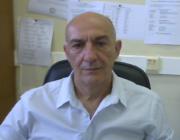
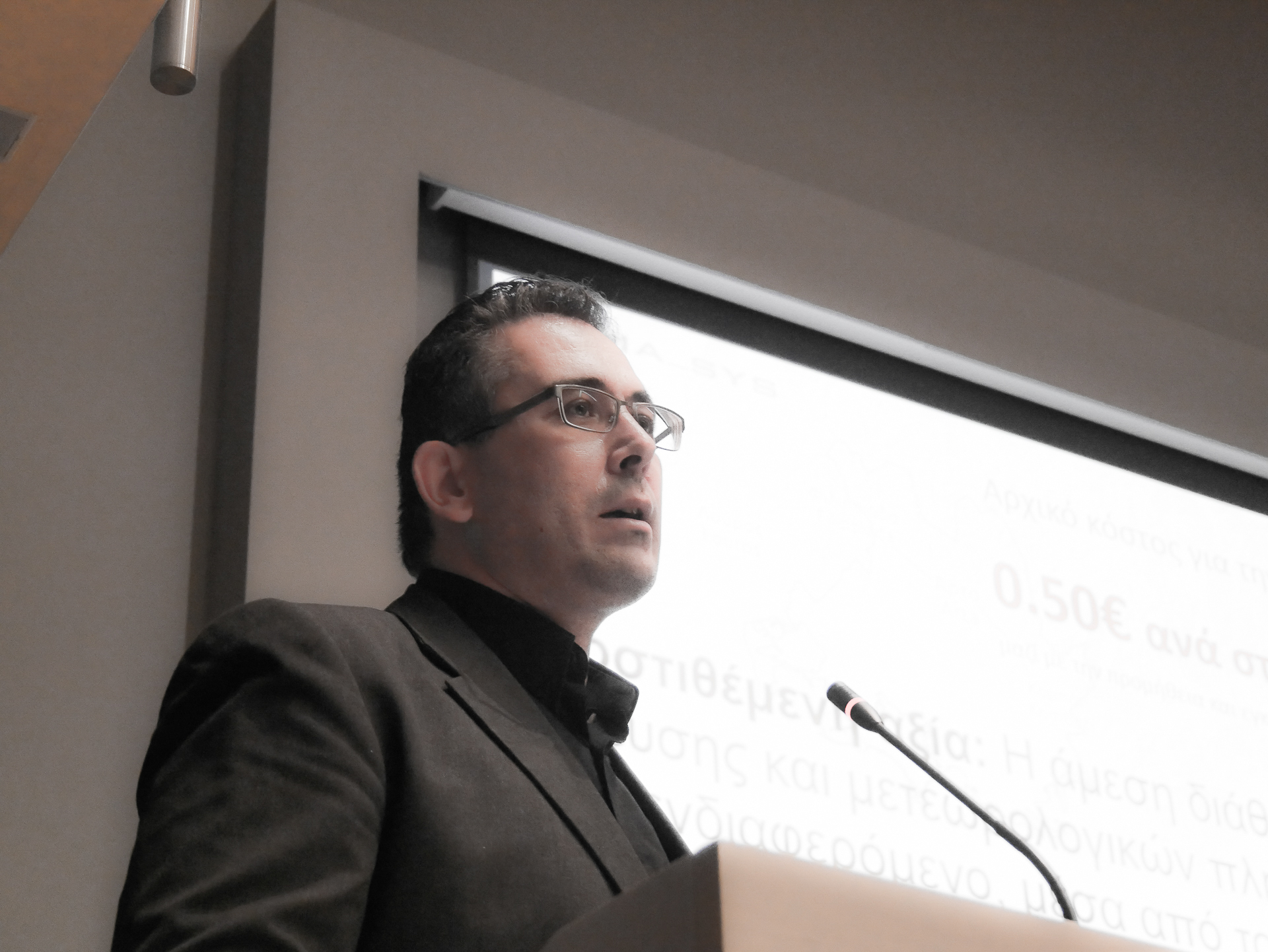
Efthimios S. Skordas is an Associate Professor of Experimental Solid State Physics at the Department of Physics, National and Kapodistrian University of Athens. Born in Lefkada, Greece in 1960, he holds a Mathematics degree (1984) from the University of Crete and a Doctorate (1992) from Uppsala University, Sweden. His research focuses on seismicity analysis through the lens of natural time analysis, complex systems, and non-extensive statistical mechanics. University of Crete (1984, Mathematics) Uppsala University (1992, Doctorate) His work demonstrates deep expertise in earthquake prediction, detection of pre-seismic anomalies through geoelectric/magnetic field variations, and entropy dynamics under time reversal. Recent publications highlight applications of natural time analysis to diverse domains including cardiovascular health monitoring. He has authored over 120 peer-reviewed publications and two monographs, with an h-index of 32. Skordas' research bridges geophysics with interdisciplinary applications, showing particular emphasis on entropy fluctuations, order parameter analysis, and multi-scale seismicity patterns. His laboratory contributes to understanding the physical interconnection of seismic electric signals with earthquake dynamics.
Dionissios T. Hristopulos is a Professor and Head of the Geostatistics Laboratory at the School of Mineral Resources Engineering, Technical University of Crete, Greece. His research spans geostatistics, spatial random fields, environmental modeling, stochastic hydrology, and porous media mechanics. He has developed innovative Spartan Spatial Random Field (SSRF) models rooted in statistical physics, enabling efficient spatial interpolation and simulation. PhD in Physics, Princeton University (1991) MA in Physics, Princeton University (1988) Diploma in Electrical Engineering, National Technical University of Athens (1985) Hristopulos' research interests focus on the development and application of geostatistical methods in mineral resources, environmental monitoring, petroleum reservoirs, and GIS. He investigates spatial anisotropy, groundwater dynamics, earthquake return times, and the mechanical properties of heterogeneous materials. His work bridges statistical physics and geostatistics, particularly through SSRF models and renormalization group methods for upscaling transport properties in porous media. The most recent publications highlight his focus on geometric anisotropy detection in environmental data, non-parametric estimation methods, and applications of Spartan random fields in environmental time series and spatial data interpolation. His work increasingly integrates machine learning concepts with geostatistical modeling, especially for automatic mapping and ecological monitoring using remote sensing. Marie Curie success story (European Commission, 2010) for SPATSTAT project Hristopulos has secured research funding from national and EU programs, including the Marie Curie Transfer of Knowledge (SPATSTAT) and the INTAMAP STREP project. He has mentored several Master’s and PhD students, including Manos Varouchakis (PhD candidate on groundwater monitoring) and Manolis Petrakis (Master’s on anisotropy characterization). He collaborates with researchers in the US, France, Slovakia, and the UK. He serves on the editorial board of Stochastic Environmental Research and Risk Assessment and has contributed software tools for anisotropy detection in MATLAB and R. His research group, the Geostatistics Laboratory at TUC, focuses on machine learning and geostatistics, developing computational tools for environmental data analysis, spatial interpolation, and simulation. The lab emphasizes practical applications in hydrology, ecology, and mineral resources, supported by strong theoretical foundations in statistical physics and stochastic modeling.
Nikolaos Malamos serves as an Associate Professor at the Agricultural University of Athens within the School of Environment and Agricultural Engineering, specifically in the Department of Natural Resources Development & Agricultural Engineering. His academic foundation includes graduation from the Agricultural University of Athens, postgraduate studies at the National Technical University of Athens' School of Civil Engineering, and a PhD in Agricultural Sciences. His research spans critical domains of agricultural hydrology with particular emphasis on: Soil-water-plant-atmosphere relationships and water movement in soil Mathematical simulation of water resources systems Hydroinformatics and spatial analysis methodologies Irrigation engineering and drainage systems Climate-hydrology interactions including evapotranspiration modeling His recent publication trajectory reveals intensifying focus on climate-resilient water management, stochastic rainfall frameworks, and water-energy-food nexus applications, particularly within Mediterranean agricultural contexts. Scientific recognition includes his role as Associate Editor for the Hydrological Sciences Journal, the official publication of the International Association of Hydrological Sciences (IAHS). Associate Editor, Hydrological Sciences Journal (IAHS) Professor Malamos actively leads research projects addressing irrigation optimization, hydrological modeling, and water resource sustainability. His work integrates field studies with computational approaches, frequently collaborating on national infrastructure initiatives like Greece's OpenHy.net water monitoring system. Current projects emphasize climate adaptation strategies for Greek agriculture, particularly in vineyards and greenhouse systems. He directs research activities within the Agricultural Hydraulics Laboratory, focusing on practical applications of hydrological theory to agricultural water management challenges across diverse Greek landscapes.
Georgios Kargas serves as a Professor in the Department of Water Resources Management within the School of Environment and Agricultural Engineering at the Agricultural University of Athens (AUA). His academic profile centers on advanced irrigation engineering, soil physics, and hydrodynamics of porous media, with particular expertise in drainage system design, soil salinity assessment, and sensor-based soil moisture monitoring. His research interests focus on hydrodynamic characteristics of porous media , precision irrigation systems , and soil-water-electrical conductivity relationships . Current work emphasizes developing novel infiltration equations for furrow irrigation, validating low-cost sensor platforms for soil monitoring, and creating EU-wide soil salinity mapping frameworks using machine learning. His experimental approach bridges laboratory measurements with field applications, particularly in Mediterranean agricultural contexts. Analysis of his 15 most recent publications (2023-2025) reveals dominant trends in sensor technology validation (TEROS/WET sensors), advanced infiltration modeling consistent with Philip theory, and large-scale soil salinity mapping using EU databases. Key subfields include subsurface drainage equation development, LoRa-based monitoring systems, and electrical conductivity compensation methods for dielectric sensors. Professional contributions include editorial review work for Sensors (2021), Water (2016), and Sustainability (2017) journals, though no specific scientific awards are documented in available sources. Teaching responsibilities encompass core undergraduate and postgraduate courses including Hydrodynamic Characteristics of Porous Media , Special Topics in Soil Physics , and Irrigation-Drainage Systems Design , with consistent focus on Water Resources Management specialization. His instructional approach integrates theoretical principles with practical system design applications across 8th-9th semester curricula.
Professor Efstratios Gallopoulos is a faculty member at the Department of Computer Engineering & Informatics , University of Patras, where he holds the Division of Computer Software . He currently serves as Deputy Department Chair and Director of the High Performance Information Systems Laboratory (HPCLab) . His academic career spans multiple institutions including the University of Illinois at Urbana-Champaign, University of California Santa Barbara, and collaborations with INRIA Rennes and NASA Goddard Space Flight Center. Education : B.Sc. in Mathematics (First Class Honours) from Imperial College London (1979) Ph.D. in Computer Science from University of Illinois at Urbana-Champaign (1985) Research Focus : His work centers on Large-scale Scientific Computing with emphasis on Computational Linear Algebra , Parallel/Distributed Processing , and Data Mining . Recent publications highlight innovations in Randomized Numerical Linear Algebra , Heterogeneous Cluster Scheduling , and GPU-Accelerated Inversion Techniques . Article Trends : His research bridges High-Performance Computing with Data Science , focusing on scalable algorithms for Matrix Computations , Recommender Systems , and Biomarker Analysis . The work spans theoretical advancements (e.g., Givens Rotations ) and practical implementations (e.g., pylspack library). Scientific Awards : NASA Group Achievement Award for Massively Parallel Processor (MPP) development ACM SIGWEB Hypertext Ted Nelson Newcomer Award (2012) Advising and Grants : He has advised numerous research projects funded by European Research Council , Hellenic Foundation for Research and Innovation (HFRI) , and international bodies like the US National Science Foundation. Notably, he co-organized the 2015 Gene Golub SIAM Summer School and served as Chair of the SIAM Gene Golub Summer School Committee (2020-24). Labs and Teams : He leads the High Performance Information Systems Laboratory (HPCLab) and co-directs the interdisciplinary graduate program Data Driven Computing and Decision Making . His teams have contributed to the Cedar vector multiprocessor project at UIUC and Text-to-Matrix Generator (TMG) tools for data mining.
Efstratiadis Andreas serves as an Assistant Professor in the Department of Water Resources and Environmental Engineering at the School of Civil Engineering, National Technical University of Athens (NTUA), based at the Laboratory of Hydrology and Water Resources Development. His research spans water resources systems, hydropower infrastructure, and the water-energy nexus, with emphasis on stochastic modeling and uncertainty quantification. His primary research interests include stochastic hydrology, flood risk assessment, multipurpose reservoir optimization, and renewable energy integration. He investigates cascading infrastructure failures, spatial reliability in solar PV systems, and climate-energy market uncertainties, often employing advanced simulation-optimization frameworks to address complex water-energy challenges under environmental variability. Recent publications (2023–2025) reveal a strong focus on hydropower dam safety, flood control infrastructure design, and the operational trade-offs in multipurpose reservoirs. His work increasingly integrates Earth Observation data for hydrologic modeling and examines socio-technical dimensions of the water-energy nexus, reflecting a shift toward interdisciplinary systems analysis. Dr. Efstratiadis contributes to NTUA's Laboratory of Hydrology and Water Resources Development, which develops decision support systems like Hydronomeas 2020 and national monitoring infrastructure (OpenHi.net) for Greek surface waters. His lab emphasizes computational tools for water resources management under climate uncertainty.
Lika Konstadia is an Associate Professor in the Department of Biology at the University of Crete. She obtained her Ph.D. in 1996 from the University of Tennessee. Her research focuses on Mathematical Biology, particularly applying Dynamic Energy Budget (DEB) theory to study organismal growth, reproduction, and environmental interactions. She has contributed to modeling fish physiology (e.g., European sea bass), phytoplankton dynamics, and climate change impacts on marine ecosystems. Her academic roles include teaching Biomathematics, Biostatistics, and Mathematical Biology courses. She leads the AmP project, comparing species through DEB parameters. Her work spans topics like thermal tolerance in farmed fish, dissolved organic matter release by phytoplankton, and energy allocation strategies in animals. Her lab is located in the Biology building at the University of Crete.
George Manis is an Associate Professor in the Department of Computer Science and Engineering at the School of Engineering, University of Ioannina, Greece. He is a member of the IPAN lab and serves as a Guest Editor for a special issue on 'Entropy in Biomedical Engineering' in the journal Entropy . His research bridges biomedical engineering and computational systems, with a strong focus on entropy-based methods and machine learning for physiological signal analysis. PhD in Computer Science, National Technical University of Athens (1993–1997) MSc in Advanced Methods in Computer Science, Queen Mary, University of London (1992–1993) Diploma in Electrical and Computer Engineering, National Technical University of Athens (1987–1992) His primary research interests include Biomedical Engineering , Entropy Analysis (especially Bubble Entropy), Fast Computation Algorithms , Biomedical Data Classification , Heart Rate Analysis , and Computing Systems with emphasis on parallelization. He teaches postgraduate courses in data analysis and biomedical data processing, and undergraduate courses in compilers. The analysis of his recent publications reveals a consistent trend in developing computationally efficient and robust methods for entropy estimation and classification in biomedical contexts. His work on Bubble Entropy eliminates the need for scale parameters and enhances stability, while his improvements to Random Forests and Support Vector Machines target enhanced diagnostic accuracy in diseases like Alzheimer’s and heart conditions. In computing systems, he has pioneered compiler technologies for parallelizing recursive functions and optimizing runtime scheduling. No scientific awards are explicitly mentioned in the provided text. George Manis has advised or collaborated with several researchers, including Evanthia Tripoliti, Dimitrios Fotiadis, Petros Arsenos, Argyro Kampouraki, and others, indicating active supervision and research leadership. He is currently involved in funded projects such as Palimpsest , an interactive museum system, and Homore , a smart monitoring system for elderly individuals. These projects reflect his interest in applying advanced computing to real-world biomedical and societal challenges. He is affiliated with the IPAN lab and contributes to the development of innovative algorithms for entropy computation and parallel processing. His work on the C2μTC/SL compiler and Ariadne system demonstrates deep expertise in compiler design for specialized architectures like the SVP processor.
Dr. Evangelos H. Papakitsos serves as a Lecturer in the Department of Industrial Design and Production Engineering at the University of West Attica. A physicist by training (National & Kapodistrian University of Athens, 1987), he holds advanced degrees in Information Systems (University of Liverpool, 1992) and Informatics (National & Kapodistrian University of Athens, 2000), with postdoctoral specialization in Semantic Lexical Databases. His academic journey spans four higher education institutions since 1993, including National Technical University of Athens and National & Kapodistrian University of Athens. His research spans interdisciplinary domains at the intersection of technology and humanities, with primary focus on Natural Language Processing , Digital Humanities , and Systems Science . Key research thrusts include computational linguistics for ancient scripts (particularly Linear A and Indus Valley), energy harvesting systems, environmental physics applications, and robotics for defense and environmental monitoring. His recent publications (2021-2025) demonstrate strong activity in nanotechnology applications for water purification, unmanned vehicle systems, and computational approaches to linguistic decipherment. Dr. Papakitsos has developed significant expertise in bridging engineering disciplines with humanities through his work on: Machine-readable dictionaries for ancient scripts Energy harvesting applications in civil infrastructure Computational analysis of historical linguistics Environmental monitoring robotics His laboratory work centers on Electronic Automation, Telematics and Cyberphysical Systems, reflecting his systems-oriented approach to complex interdisciplinary problems. Teaching responsibilities include undergraduate courses in General Physics, Optimization Methods, and Fluid Mechanics, plus postgraduate instruction in Automation Information Systems, Energy Management, and Unmanned Systems within the "Unmanned Autonomous and Remotely Piloted Systems" program. His educational background in career counseling informs interdisciplinary approaches to curriculum development, particularly evident in his work on the systemic evaluation of tourism marketing strategies during the pandemic.
Athanasios H. Rakitzis is an Associate Professor at the Department of Statistics and Actuarial Science of the University of Piraeus. He has held academic positions at multiple institutions including the University of the Aegean and the University of Cyprus, and conducted postdoctoral research at the University of Nantes, France, as a Marie Curie Fellow. His educational background includes a Bachelor's degree in Mathematics from the National and Kapodistrian University of Athens (1998-2002), a Postgraduate Diploma in Applied Statistics from the University of Piraeus (2002-2004), and a PhD in Statistics from the University of Piraeus (2004-2008) with a thesis on "Statistical Quality Control and Theory of Flows and Formations". Rakitzis specializes in Statistical Quality Control and Processes, with particular expertise in statistical flow and sweep functions. His research has resulted in over 50 publications in international journals, collective volumes, and conference proceedings, with more than 450 citations. He has served as a reviewer for 27 international scientific journals. His recent research focuses on control charts for monitoring various statistical processes including zero-inflated models, BINARCH processes, and exponential distributions. His work spans both theoretical developments in statistical process control and practical applications in fields like healthcare. Marie Curie Fellow (2013-2015) Dr. Rakitzis teaches courses in Reliability Theory, Data Science, Statistics (Estimation), and Statistical Quality Control. He has also contributed to postgraduate programs at the Hellenic Open University. He is actively involved in research collaborations and has contributed to the advancement of statistical process control methodologies through innovative chart designs and monitoring techniques.
Dimitris Fotakis is Professor of Computer Science at the National Technical University of Athens (NTUA) and Collaborating Senior Researcher at the Archimedes Unit/ATHENA RC. His research in theoretical computer science focuses on algorithmic game theory, approximation algorithms, and facility location problems. He leads research projects including BALSAM (Beyond Worst-Case Analysis in Approximation Algorithms) funded by HFRI. With publications in ICALP, NeurIPS, and STOC, his work develops efficient algorithms for optimization under uncertainty. Fotakis serves on program committees of major conferences including ICALP and SAGT.
Roles and Affiliation: Nikolaos Bekiaris-Liberis is an Associate Professor in the Department of Electrical & Computer Engineering at the Technical University of Crete (TUC). He holds a PhD in Aerospace Engineering from the University of California, San Diego (2013) and has held positions including Marie Skłodowska-Curie Fellow, Assistant Professor, and Adjunct Professor at TUC. Education: PhD in Aerospace Engineering, UC San Diego (2013) MS in Aerospace Engineering, UC San Diego (2010) Bachelor of Science in Electrical and Computer Engineering, National Technical University of Athens (2007) Research Interests: His work focuses on theoretical and applied control systems, including distributed parameter systems, delay systems, nonlinear control, and switched systems. Applications span traffic flow control, automated vehicles, biological transport systems, and automotive catalysts. He emphasizes translating PDE-based models into practical control solutions for real-world systems. Notable Achievements: Recipient of the European Research Council (ERC) 2022 Consolidator Grant for the C-NORA project. 2019 IEEE ITS Outstanding Research Paper Award for contributions to traffic control. Marie Skłodowska-Curie Individual Fellowship (2017) and Chancellor's Dissertation Medal (2014). Advising & Grants: Supervises PhD and Master’s students in control systems and traffic dynamics. Leads the ERC-funded C-NORA project and previously directed the PADECOT (Marie Curie) initiative. His team includes postdocs and undergraduate researchers focusing on traffic flow modeling, epidemics transport, and PDE-based control. Professional Contributions: Editor for IEEE Transactions on Intelligent Transportation Systems and Automatica. Organized workshops on traffic flow control and PDE techniques at major conferences like CDC and ECC. Active in industry partnerships, including collaborations with Ford Motor Company on catalytic converter control.
Iliopoulos Georgios is a Professor and Department Chair at the Department of Statistics and Actuarial Science, School of Finance and Statistics, University of Piraeus. He has held this position since 2015, following his progression from Assistant Professor (2003-2010) to Associate Professor (2010-2015) at the same institution. Education: 1993: B.A. in Mathematics, Department of Mathematics, University of Patras 1999: PhD in Statistics, Department of Mathematics, University of Patras Iliopoulos specializes in statistical theory and methodology, with particular expertise in Markov chain Monte Carlo methods, Statistical Decision Theory, and Scale parameter estimation. His research focuses on accurate inference under censorship and constrained inference arrangement, addressing fundamental challenges in statistical analysis of complex data structures. His work bridges theoretical statistics with practical applications in reliability analysis and survival analysis. His publication record shows consistent contributions to exact statistical inference methods, particularly for censored data and complex distributions like Laplace and Gamma. His research demonstrates expertise in both parametric and semiparametric approaches, with significant work on variance reduction techniques in computational statistics and solutions to the label switching problem in Bayesian mixture models. Iliopoulos teaches undergraduate courses including Linear Algebra, Statistics II: Hypothesis Testing, and Special Topics in Statistics (Bayesian Statistics), as well as the postgraduate course Computational Statistical Techniques for the Master of Science in Applied Statistics.
Kostas Tassis serves as Professor in the Department of Physics at the University of Crete, Greece, having joined in 2012 as Assistant Professor, promoted to Associate Professor in 2018, and to full Professor in 2023. He leads the PASIPHAE project (Polar-Areas Stellar-Imaging in Polarization High-Accuracy Experiment), an ERC Consolidator Grant awarded in 2018, and maintains active affiliations with Skinakas Observatory and the Institute of Theoretical and Computational Physics. His academic background includes: BSc in Physics from the University of Thessaloniki (1999) PhD in Theoretical Astrophysics from the University of Illinois at Urbana Champaign (2005) His research centers on star formation processes, interstellar medium physics, and magnetohydrodynamic simulations, with particular emphasis on cosmic magnetic fields and their role in astrophysical systems. He employs both theoretical modeling and observational polarimetry to investigate phenomena ranging from molecular cloud dynamics to cosmological-scale magnetic field effects. Analysis of his recent publications reveals dominant focus on LiteBIRD mission simulations, interstellar dust polarization, and magnetic field strength estimation techniques. Key thematic clusters include cosmic microwave background polarization analysis, blazar variability studies, and computational approaches to non-ideal magnetohydrodynamics in star-forming regions, demonstrating strong integration of observational data with theoretical modeling. Notable recognitions include: ERC Consolidator Grant for PASIPHAE project (2018) His research program involves extensive international collaboration, particularly through the PASIPHAE survey and LiteBIRD mission consortia. Current work emphasizes polarimetric instrumentation development and large-scale cosmic magnetometry, with significant contributions to understanding magnetic field roles in galaxy evolution and star formation processes. He maintains active involvement with multiple University of Crete research units including the Crete Center for Theoretical Physics (CCTP) and Skinakas Observatory, where observational components of his PASIPHAE work are conducted.
Professor Georgios Iliopoulos is a distinguished academic serving as Professor and Department Chair of the Department of Statistics and Actuarial Science at the University of Piraeus. With an extensive academic career spanning over two decades, Professor Iliopoulos has established himself as a leading expert in statistical theory and methodology. His leadership as Department Chair demonstrates his significant contribution to the academic community and his commitment to advancing statistical education and research. Professor Iliopoulos completed his educational journey at the University of Patras, earning his B.A. in Mathematics in 1993 followed by a PhD in Statistics in 1999. His academic career progressed through various institutions before he settled at the University of Piraeus, where he has held positions from Assistant Professor (2003-2010) to Associate Professor (2010-2015) and ultimately to Professor (2015-present). Professor Iliopoulos's research focuses on several key areas of statistical theory, with particular emphasis on Markov chain Monte Carlo methods, Statistical Decision Theory, Scale parameter estimation, Accurate inference under censorship, and Constrained inference arrangement. His work bridges theoretical statistics with practical applications, demonstrating how sophisticated statistical methods can solve real-world problems across various domains. His research has consistently addressed challenging theoretical questions while maintaining relevance to practical statistical challenges faced by researchers and practitioners. Analysis of Professor Iliopoulos's publication record reveals a strong focus on theoretical statistics with applications in reliability analysis, Bayesian inference, and censoring methodologies. His work demonstrates a consistent pattern of advancing statistical theory while maintaining practical relevance, particularly in the areas of parameter estimation, confidence interval construction, and inference with censored data. The interdisciplinary nature of his research is evident in publications spanning journals in statistics, biostatistics, and computational statistics. Professor Iliopoulos is actively involved in teaching both undergraduate and postgraduate courses. At the undergraduate level, he teaches Linear Algebra, Statistics II: Hypothesis Testing, and Special Topics in Statistics (Bayesian Statistics). For postgraduate students, he offers Computational Statistical Techniques as part of the Master of Science in Applied Statistics program. His teaching reflects his research expertise, providing students with both theoretical foundations and practical applications of advanced statistical methods.