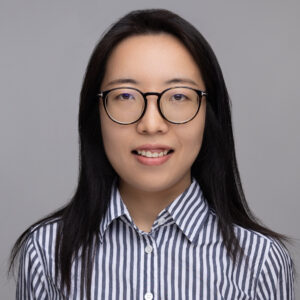
Tian Li is an Assistant Professor of Computer Science at the University of Chicago. She holds a Ph.D. in Computer Science from Carnegie Mellon University and undergraduate degrees in Computer Science and Economics from Peking University. Her research focuses on distributed optimization, federated learning, and trustworthy machine learning, emphasizing algorithm design that addresses accuracy, scalability, and privacy concerns in practical systems. Key areas of expertise include federated learning systems, privacy-preserving technologies, and scalable distributed algorithms. She has contributed to foundational work on tilted empirical risk minimization and decentralized knowledge propagation. Notable achievements include winning the Best Paper Award at the ICLR Workshop on Secure Machine Learning Systems and First Place in the U.S. Privacy-Enhancing Technologies Pandemic Challenge (2023). Her academic trajectory includes recognition as a Rising Star in Machine Learning/Data Science and participation in prestigious workshops like the EECS Rising Stars Program. Her work bridges theoretical advancements with practical applications, aiming to enhance both the robustness and accessibility of machine learning systems.
Gene Tsudik is a Distinguished Professor of Computer Science at the University of California, Irvine (UCI), with a career spanning over two decades. He obtained his Ph.D. in Computer Science from the University of Southern California (USC) in 1991, focusing on access control in the Internet. His research spans multiple areas including computer and network security, applied cryptography, and digital privacy, with a recent emphasis on database privacy, genomic privacy, and usable security. His notable contributions include the Inter-Domain Policy Routing (IDPR) protocol, KryptoKnight for network security, and Tree-Based Group Key Agreement protocols. He has over 210 publications and 8 patents. From 2002 to 2007, he served as Associate Dean of Research and Graduate Studies at UCI's School of Information and Computer Sciences and currently directs the UCI Secure Computing and Networking Center (SCONCE). Research Keywords : Cybersecurity, Cryptography, Privacy, Network Security, Digital Signatures, Genomic Data Protection. Scientific Awards : IEEE Fellow (2012), ACM Fellow (2014), AAAS Fellow (2016), Fulbright Senior Scholar (2007), and IFIP Fellow (2020). Professor Tsudik has supervised 18 PhD students and held visiting positions at universities across Europe and Asia. His recent publications focus on secure hardware attestation, biometric authentication, and social media data privacy.
Jiliang Tang is an MSU Foundation Professor in the Department of Computer Science and Engineering at Michigan State University (MSU), part of the College of Engineering. He holds a PhD from Arizona State University (2015) and previously worked as a research scientist at Yahoo Research. His research focuses on graph machine learning, trustworthy AI, and applications in education and biology. He has received numerous awards, including the 2022 AI's 10 to Watch, IAPR J.K. Aggarwal Award, and NSF CAREER Award. Education: PhD in Computer Science, Arizona State University, 2015 (Advisor: Huan Liu) Research Interests: Graph Neural Networks (GNNs) and Deep Learning on Graphs Trustworthy AI: Safety, Robustness, and Fairness AI+X Applications: Education Technology and Biological Data Analysis His work bridges theoretical advancements and practical applications, with contributions to graph representation learning, privacy in generative models, and educational AI systems. Awards & Recognition: Over 8 best paper awards (or runner-ups) Rock Star Award from Association of Chinese Scholars in Computing Extensive media coverage for innovations in AI education and biology Grants & Projects: NSF CAREER Award (2019) for research on signed networks Co-PI on a $1.7M grant for 5G research Leadership in projects like DSE Lab and Data Science initiatives Labs & Teams: Directs the Data Science and Engineering (DSE) Lab at MSU, focusing on advancing AI for real-world challenges. The lab collaborates with industry leaders and publishes widely in top conferences (e.g., KDD, SIGIR, ACL).
Ian Miers serves as an Assistant Professor in the Department of Computer Science at the University of Maryland, holding a joint appointment with the University of Maryland Institute for Advanced Computer Studies (UMIACS) and serving as a core faculty member of the Maryland Cybersecurity Center (MC2). His academic home resides within the Department of Computer Science, though the overarching college/school structure is not explicitly stated in available materials. His research program centers on applied cryptography with a context-driven methodology: starting from real-world security challenges to develop deployable cryptographic protocols. Key focus areas include blockchain privacy (notably Zerocoin/Zerocash), zero-knowledge proofs, anonymous credentials, and secure messaging systems. Miers emphasizes practical implementations that address subtle security requirements in production environments, bridging theoretical cryptography with tangible system security. Analysis of his 15 most recent publications reveals dominant trends in zero-knowledge proof scalability (zkSNARKs), privacy-preserving infrastructure for blockchains, and cryptographic solutions for content moderation in encrypted messaging. His work consistently targets deployable systems, with increasing focus on balancing privacy guarantees with accountability requirements in real-world applications. Miers actively recruits PhD students for hands-on research in his small lab, emphasizing direct collaboration on applied security and blockchain problems. As a founding scientist of Aleo, Bolt Labs, and Zcash, he translates academic research into commercial products, with his work receiving coverage from major media outlets including The Washington Post, The New York Times, and Wired.
Prof. Bryan Ford leads the Decentralized/Distributed Systems (DEDIS) lab at EPFL. He focuses on secure decentralized systems, including blockchain technology, privacy, and systems security. He earned his Ph.D. from MIT and held faculty positions at Yale University and EPFL. His work spans distributed consensus protocols, peer-to-peer networking, and privacy-preserving systems. Key projects include QuePaxa (timeout-free consensus), UIA (global connectivity for mobile devices), and MedCo (secure healthcare data sharing). He advises numerous PhD students and contributes to open-source projects like Bitcoin collective signing and privacy networks like Riffle. Education: Ph.D., MIT; Postdoctoral work at Yale Research interests include blockchain scalability, consensus algorithms, and cryptographic privacy. His lab develops systems like TRIP for coercion-resistant voting and F3B to mitigate blockchain front-running. His work on NAT traversal and peer-to-peer protocols (e.g., STUN/ICE) remains foundational in network architecture. He emphasizes practical, auditable security solutions such as CertiKOS and atomic cross-chain transactions (Atom). Notable contributions: CoSi (collective signing), OmniLedger (sharded blockchain), and privacy-preserving protocols like PURBs (Protected Unsealable Recursive Boxes). His lab collaborates with Swiss Post to audit e-voting systems and designs democratic cryptocurrencies like PoPCoin.
Roya Ensafi is the Morris Wellman Associate Professor in the Department of Computer Science & Engineering at the University of Michigan. She is the Founder and Director of the Censored Planet Lab, which focuses on Internet censorship measurement and digital equity. Her research lies at the intersection of networking, security, and privacy, with a strong emphasis on detecting censorship, surveillance, and digital inequity through scalable systems. Positions: Associate Professor (University of Michigan), Lab Director (Censored Planet) Recent Awards: Sloan Research Fellowship, NSF CAREER (2023), IRTF Applied Networking Research Prize (2016, 2022, 2023), USENIX Security Internet Defense Prize (2022) Her work develops systems like Censored Planet for global censorship monitoring, VPNalyzer for evaluating commercial VPN security, and Splintering Net for studying regionalized Internet access. By combining remote measurement techniques with user studies, her research addresses both technical and policy dimensions of digital freedom. Key methodologies include TLS handshake analysis, cross-layer latency metrics, and large-scale network probing. The Censored Planet project operates a global censorship detection network covering 221 countries, while VPNalyzer received the Consumer Reports Digital Lab fellowship. Collaborations include Google Jigsaw for data visualization systems used by over 100 organizations. Her 2024 work on digital discrimination in sanctioned states extends earlier groundbreaking research on Kazakhstan's HTTPS interception (2019) and Russia's Twitter throttling (2021). Scientific Awards: 2024: Distinguished Paper Awards at USENIX Security Symposium 2023: NSF CAREER Award 2022: IRTF Applied Networking Research Prize, USENIX Security Internet Defense Prize, First Prize in Internet Defense Prize, CSAW '22 Applied Research Competition First Place 2021: Recognized as Highest Scoring Short Paper at ACM IMC 2015: IRTF Applied Networking Research Prize 2022: Finalist for ACUM Outstanding Advisor Award Her lab trains both current and alumni PhD/Master's students including Ram Sundara Raman, Diwen Xue, Reethika Ramesh (now at Palo Alto Networks), and Victor Ongkowijaya (PhD at Princeton). She teaches EECS 388 Introduction to Security at the University of Michigan, covering software and network security principles. Her work has been featured in The Economist, New York Times, and BBC for analyzing global censorship trends.
Peter Druschel is a Professor and founding Director of the Max Planck Institute for Software Systems (MPI-SWS) in Saarbrücken, Germany. He holds adjunct professorships at Saarland University and the University of Maryland. His research focuses on distributed systems, operating systems, and privacy-preserving technologies. He earned his Ph.D. from the University of Arizona in 1994 and has held roles at Rice University since 1994, including Professor of Computer Science (2002–2005). Education: Ph.D. in Computer Science, University of Arizona (1994) Research Interests: Distributed systems, operating systems, network security, accountable computing, and privacy technologies. Current projects include privacy compliance in data systems (Thoth), secure communication (EbN), and privacy-aware image capture (I-Pic). Awards: SIGOPS Mark Weiser Award (2008) NSF CAREER Award (1995) Member of Academia Europaea and German Academy of Sciences Leopoldina Grants & Leadership: Leads the ERC Synergy Project imPACT, chairs the Max Planck Society’s Chemistry, Physics, and Technology Section, and collaborates with institutions like Cornell and Google. Advises on policy issues related to technology and privacy. Labs/Teams: Distributed Systems Group at MPI-SWS, collaborations with Microsoft Research and MIT. Current team includes students and postdocs working on privacy, security, and distributed systems.
Paola Cascante-Bonilla is an Assistant Professor in the Department of Computer Science at Stony Brook University, with expertise in computer vision, natural language processing, and embodied AI. Her research focuses on developing systems for compositional reasoning, common-sense inference, and trustworthy AI using vision-language models, while addressing cultural bias and explainability challenges.
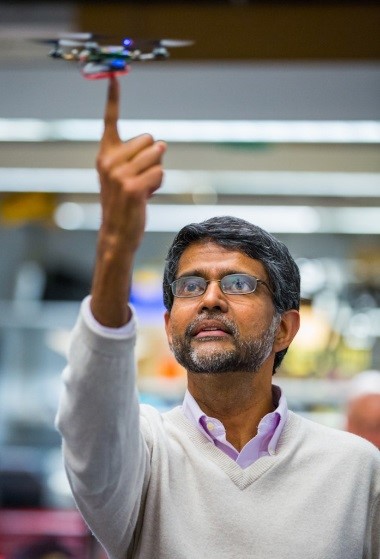
Vijay Kumar is the Nemirovsky Family Dean of Penn Engineering at the University of Pennsylvania, with faculty appointments in the Departments of Mechanical Engineering, Computer and Information Science, and Electrical and Systems Engineering. He is a leading figure in robotics and computer architecture research. Research Interests include robotics, particularly multi-robot systems and micro aerial vehicles (MAVs), as well as computer architecture innovations for machine learning, GPU acceleration, and datacenter efficiency. His work spans theoretical foundations and practical applications in autonomous systems and hardware optimization. Scientific Awards include: 1991 NSF Presidential Young Investigator Award 1996 Lindback Award for Distinguished Teaching 2012 ASME Mechanisms and Robotics Award 2014 Engelberger Robotics Award 2017 IEEE George Saridis Leadership Award Multiple best paper awards at DARS, ICRA, and RSS conferences Editorial Leadership includes serving as Editor of the ASME Journal of Mechanisms and Robotics and Advisory Board Member of AAAS Science Robotics Journal . His GRASP Lab team developed foundational frameworks for micro UAV testbeds and swarm robotics.
Anil Madhavapeddy serves as Professor of Planetary Computing at the University of Cambridge's Department of Computer Science and Technology and directs the Cambridge Centre for Carbon Credits (4C). A Fellow of Pembroke College, he integrates systems research with environmental conservation through the Computer Laboratory's Environment and Energy Group. His career spans industry leadership (NetApp, Citrix, Intel), academic appointments (Cambridge, Imperial, UCLA), and entrepreneurial ventures (XenSource, Unikernel Systems, Docker). Madhavapeddy earned his PhD at Cambridge's Computer Laboratory in 2006. His research bridges computational systems and planetary-scale environmental challenges, with deep expertise in open-source development (OCaml, Xen, Docker, OpenBSD) and technology strategy advising for organizations including Zededa, Tezos Foundation, and Tarides. His work centers on environmental computing and climate informatics, leveraging distributed systems and functional programming to develop sensing infrastructure for conservation. Recent projects focus on carbon credit systems, AI-driven biodiversity monitoring, and sustainable computing architectures that minimize ecological footprints while maximizing analytical capability. Analysis of his 2025 publications reveals a concentrated effort on AI-integrated conservation tools, privacy-preserving carbon accounting, and energy-efficient computing. Key themes include spatial networking for ecological data, LLM-enhanced evidence retrieval in conservation science, and novel metrics for extinction risk assessment—demonstrating computational innovation applied to urgent planetary boundaries. No scientific awards were documented in the source material. Madhavapeddy advises multiple technology firms on strategic development while leading the Cambridge Centre for Carbon Credits, though specific grant funding details remain unreported. He actively contributes to the Environment and Energy Group at Cambridge's Computer Laboratory and directs the interdisciplinary Cambridge Centre for Carbon Credits (4C). His open-source leadership spans critical infrastructure projects including OCaml, Xen, and Docker, fostering collaborative development communities that underpin modern cloud and container technologies.
Ningning Hou is a Lecturer in Computing (IoT/Networking) at Macquarie University's School of Computing. They are affiliated with the Future Communications Research Centre and Data Horizons Research Centre. Previously, they served as a Postdoctoral Fellow at The Hong Kong Polytechnic University (PolyU) and earned their PhD in Computer Science from PolyU in 2021, followed by a B.Eng. in Telecommunication Engineering from Beijing University of Posts and Telecommunications (2017). Research Interests: Low Power Wide Area Networks (LPWANs) Internet-of-Things (IoT) Wireless Sensing and Networking Wireless Security Recent research focuses on enhancing LoRa communication through innovations like full-duplex gateways (FDLoRa) and scalable logical channels (XGate), addressing challenges in network scalability, signal interference, and security threats. Their work spans topics such as data aggregation efficiency, antenna diversity, and covert channel mitigation. Advising: Actively seeking self-motivated PhD students and researchers for projects in LPWANs, edge computing, and wireless security. Labs/Teams: Involved with Future Communications Research Centre and Data Horizons Research Centre.
Catherine Tucker is the Sloan Distinguished Professor of Management and Professor of Marketing at the MIT Sloan School of Management. She serves as the faculty director of the EMBA program and has chaired the MIT Sloan PhD Program. Her research focuses on the intersection of technology, marketing, and public policy, with expertise in digital privacy, online advertising, and blockchain applications. She co-founded the MIT Cryptoeconomics Lab and has testified before Congress on digital privacy issues. Tucker holds a PhD in Economics from Stanford University and a BA from the University of Oxford. Education: PhD in Economics, Stanford University Bachelor of Arts, University of Oxford Research Interests: Algorithmic bias and fairness Privacy regulation and consumer data Blockchain technology applications Healthcare technology and digital health Marketing strategy in digital ecosystems Awards: NSF CAREER Award (2010s) William F. O’Dell Award (Long-term Impact in Marketing) Garfield Economic Impact Award (2020) Editorial Roles: Senior editor at Marketing Science , former co-editor at Quantitative Marketing and Economics , and associate editor roles at Management Science and Journal of Marketing Research . Labs & Initiatives: Co-director of the NBER Digital Economics and AI program, and co-founder of the MIT Cryptoeconomics Lab studying blockchain applications.
Ulrik Schroeder is a Universitätsprofessor (Full Professor) at RWTH Aachen University, leading the Chair of Learning Technologies within the Faculty of Computer Science. His research focuses on the intersection of educational technology, learning analytics, and immersive technologies with particular emphasis on practical implementations in higher education settings. Professor Schroeder's research spans multiple interconnected domains in educational technology. His primary interests include Learning Analytics implementation (particularly using xAPI standards), Virtual Reality applications for education, Open Educational Resources development and conversion, and gamification approaches for programming education. He has developed several notable tools including convOERter for OER conversion, WebWriter for creating explorable explanations, and various xAPI-based learning analytics infrastructures. His work consistently bridges theoretical frameworks with practical educational applications, often focusing on computer science education contexts. Analysis of his recent publications reveals a strong trend toward integrating Learning Analytics with immersive technologies, particularly Virtual Reality environments. His research demonstrates a systematic approach to educational technology development, with emphasis on scalability, interoperability through standards like xAPI, and practical implementation in real educational settings. The work increasingly focuses on personalized learning paths, quality assurance for educational resources, and privacy-conscious data collection. Co-editor of 21. Fachtagung Bildungstechnologien (DELFI) (2023) Co-editor of Hochschuldidaktik der Informatik HDI 2018 Co-editor of DeLFI 2018 conference proceedings Professor Schroeder has supervised numerous doctoral and postdoctoral researchers who frequently appear as co-authors on his publications, indicating an active research group. His projects often involve interdisciplinary collaborations across computer science, education, and psychology. Current major initiatives include the AIStudyBuddy project for study path analysis and the development of VR classroom simulations for teacher training. His research group, the Learning Technologies Innovation Lab, develops open research tools that support various aspects of educational technology research and implementation.
Teemu Roos is a Professor at the Department of Computer Science , University of Helsinki , and a Principal Investigator for the Complex Systems Computation Group under the Helsinki Institute for Information Technology. He serves as a Supervisor for the Doctoral Programme in Computer Science and leads multiple research initiatives, including Distributed AI in Supercomputing , AI & Kids , and Generation AI . Dr. Roos also holds a Docent title in Computer Science. His research spans Artificial Intelligence , Machine Learning , and Data Science , with a focus on AI education , graph neural networks , Bayesian modeling , and health informatics . He has pioneered tools like Elements of AI , a free online course now translated into 22 EU languages, and explores the ethical implications of AI-generated content in authorship and inventorship. The 15 most recent publications highlight applications in environmental forecasting (e.g., Mediterranean Sea via graph-based deep learning), healthcare (e.g., skin cancer detection with transfer learning), and social media analysis (e.g., explainable AI platforms for K-12 education). Methodologically, his work advances clustering algorithms , dimensionality reduction , and approximate nearest neighbor search . Scientific Awards: Cor Baayen Award (2009) Nokia Foundation Recognition Award (2019) Best Paper Honorable Mention Award (2013) ICT Influencer of the Year 2019 (Vuoden TiVi-vaikuttaja 2019) World Summit AI's Top-50 Innovators in 2020 Dr. Roos has supervised 2 doctoral students and contributed to 163 academic activities , including invited talks at MIT, University of Cambridge, and the Finnish Institute in Rome. He has secured funding from the Academy of Finland and the Strategic Research Council, focusing on projects like Fast AI-assisted Space Environment Prediction and Urban Exerciser .
Golnoosh Farnadi is an Assistant Professor at McGill University's School of Computer Science and an Adjunct Professor at the University of Montréal. She serves as a Visiting Faculty Researcher at Google, a Core Academic Member at MILA (Quebec Institute for Learning Algorithms), and holds a prestigious Canada CIFAR AI Chair. Farnadi co-directs McGill's Collaborative for AI & Society (McCAIS) and founded the EQUAL Lab (EQuity & EQuality Using AI and Learning algorithms), which focuses on advancing algorithmic fairness and responsible AI. Her educational background includes a Ph.D. in Computer Science from KU Leuven and Ghent University (2017), with postdoctoral research at the University of Montreal/MILA (2018-2020) and the University of California, Santa Cruz (2017-2018). During her doctoral studies, she was a visiting scholar at UCLA, University of Washington, Tsinghua University, and Microsoft Research. Dr. Farnadi's research centers on developing mathematical tools and algorithms for fairness-aware machine learning systems. Her work addresses bias and discrimination in AI decision-making across critical domains including healthcare, criminal justice, financial services, and social media. She has pioneered approaches to ensure fairness in deep learning models, particularly in sequential decision-making under uncertainty. Her research bridges theoretical foundations with practical applications, examining how AI systems can be designed to promote equity while maintaining performance. Analysis of her recent publications reveals a strong focus on practical implementations of fairness mechanisms across diverse AI applications. Her work spans technical domains from generative models and large language models to recommender systems and healthcare optimization. A unifying theme is the development of mathematically rigorous frameworks that balance performance with fairness considerations, with increasing attention to cultural diversity in multilingual AI systems and privacy-preserving fairness approaches. Google Scholar Award (2021) Facebook Research Award (2021) Rising Stars in AI Ethics (2021) Google Award for Inclusion Research (2023) WAI Responsible AI Leader of the Year Finalist (2023) 100 Brilliant Women in AI Ethics (2023) Canada CIFAR AI Chair Dr. Farnadi advises numerous doctoral and master's students across McGill University, University of Montréal, and MILA, with research focusing on fairness, privacy, and responsible AI. Her EQUAL Lab brings together researchers from computer science, social sciences, and policy domains to address systemic challenges in AI ethics. She has secured significant research funding from Google and other major organizations to support her work on fairness-aware AI systems, with applications spanning healthcare, social media safety, and public policy. The EQUAL Lab serves as a hub for interdisciplinary research on algorithmic fairness, bringing together computer scientists, social scientists, and policy experts. The lab's work spans theoretical foundations of fairness metrics, practical implementations in real-world systems, and policy recommendations for responsible AI deployment. Current projects include developing frameworks for fair kidney exchange programs, mitigating cultural stereotypes in multilingual language models, and creating privacy-preserving approaches for detecting online harms while protecting user data.