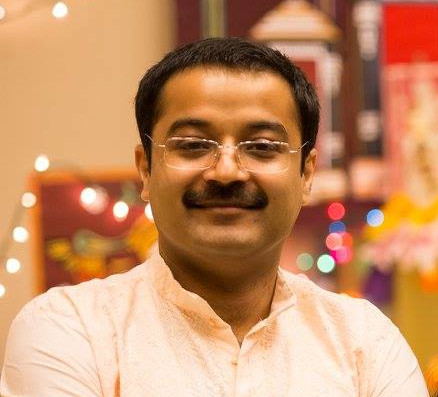
Manuel Alejandro Pajuelo González is a researcher at the Universitat Politècnica de Catalunya (UPC), affiliated with the Department of Computer Architecture and the School of Computer Science. His research focuses on Performance measurement Operating systems Virtualization Thread assignment in multithreaded processors Recent publications show strong trends in RISC-V architectures, cybersecurity, and performance optimization. Key themes include Hardware virtualization Intrusion detection frameworks Statistical thread assignment approaches Spin-lock overhead analysis Scientific awards include BDigital Global Congress 15ª Edició Computación de Altas Prestaciones VI HiPEAC Paper Award He participated in multiple competitive R&D projects, including the DRAC project focused on RISC-V accelerators for next-generation computing.
Sam Westrick is an Assistant Professor in the Courant Institute of Mathematical Sciences at New York University . Previously, he was a postdoctoral researcher at Carnegie Mellon University , where he also earned his PhD in 2022 . Research Focus : Provably efficient implementations of high-level parallel programming languages, with key contributions in parallel garbage collection , automatic granularity control , and functional language design Teaching : Currently teaching CSCI-GA.3033-121: Programming Parallel Algorithms at NYU; was a TA for CMU courses 15-210 and 15-122 His work includes the development of MaPLe (MPL) , an open-source parallel functional language with performance comparable to C/C++. Notable awards include the SIGPLAN Reynolds Doctoral Dissertation Award (2023) and best/distinguished paper recognitions at QCE'24, POPL'24, and others. Selected Publications explore topics like quantum circuit simulation , cache coherence specialization , and separation logic for disentanglement . Active in conference service as ML Family Workshop chair and PLDI/SPAA committee member. Mentoring : Advises PhD students, master's and undergraduate researchers at NYU and CMU Collaborators : Umut Acar, Guy Blelloch, Stephanie Balzer, and 20+ others
Dr. hab. Beata Bylina is a Professor at the Faculty of Mathematics, Physics and Computer Science , Maria Curie-Skłodowska University (UMCS) , affiliated with the Department of Information Systems Software . She specializes in high-performance computing, numerical methods, and energy-efficient parallel programming. ORCID ID : 0000-0002-1327-9747 Contact : beata.bylina@umcs.pl / beata.bylina@mail.umcs.pl Office : Room D-522 (Institute of Computer Science) or Room B-2, Akademicka Street 9, Lublin Consultations : Wednesdays 10:00–12:00 (in-person or remote via Microsoft Teams) Her research focuses on: Parallelization and vectorization techniques for multicore architectures Energy consumption optimization in numerical algorithms Matrix factorization methods (WZ, LU, QR) for CPU/GPU hybrid systems Markov chain modeling for network performance analysis Compiler optimization impact on performance and energy metrics Recent publication trends show emphasis on: Time-energy correlations in multithreaded algorithms OpenMP/OpenACC for hybrid CPU-GPU implementations Efficient sparse matrix storage schemes for GPUs Impact of hardware-specific optimizations (Xeon Phi, frequency scaling) Comparative studies of parallelization strategies
Swarnendu Biswas is an Assistant Professor in the Department of Computer Science and Engineering at the Indian Institute of Technology Kanpur. He teaches courses including Programming for Performance (CS 610), Analysis of Concurrent Programs (CS 636), and Compiler Design (CS 335), demonstrating his expertise across multiple areas of computer systems. His research interests center on Programming Languages, Compilers, Runtime Systems, and Parallel Software Systems. He leads the PROSPAR (Programming Languages and PARallel Systems) research group, which focuses on developing techniques to build efficient and correct parallel software through program analysis, compiler optimizations, and runtime systems. His recent publications reveal a strong trend in addressing fundamental challenges in parallel computing, with work spanning cache coherence, false sharing detection, data race analysis for GPUs, verification of neural networks, and thermal-aware management of heterogeneous systems. His research bridges theory and practice with significant contributions to both hardware and software aspects of parallel systems. His scientific achievements have been recognized through multiple prestigious awards: Google India Research Award 2021 Google Explore CSR 2022 Research Grant from Intel Corporation SERB Start-up Research Grant 2019 Google Cloud Platform Research Credits (2019, 2020) IITK Initiation Grant 2019 As an advisor, he mentors several PhD and MTech students working on cutting-edge research in parallel systems. His PROSPAR group has secured significant funding from industry and government sources, supporting innovative research in programming languages and parallel systems. The group actively collaborates with industry partners including Google and Intel, addressing real-world challenges in parallel computing. He leads the PROSPAR research group at IIT Kanpur, which brings together faculty, PhD students, and MTech researchers to tackle challenging problems at the intersection of programming languages, compilers, and parallel systems. The group maintains strong industry connections and focuses on practical solutions that can be deployed in real systems.
Anil Madhavapeddy is the Professor of Planetary Computing at the University of Cambridge Computer Laboratory, where he co-leads the Energy & Environment Group and is a member of the Systems Research Group. He is also a Fellow at Pembroke College where he serves as Director of Studies in Computer Science. Madhavapeddy completed his PhD from the University of Cambridge in 2003 and his BEng in Information Systems Engineering from Imperial College in 1999. He holds a JM Keynes Fellowship since 2022 for his work combining computer science with economics, and serves on the management committee of the Cambridge Conservation Initiative where he co-directs 4C (Cambridge Centre for Carbon Credits) and the Centre for Earth Observation. His research spans computer systems and programming languages with a strong focus on applying these technologies to global conservation, biodiversity, and climate change challenges. He leads the OCaml Labs group and has made significant contributions to open-source projects including OCaml, Docker, Xen, and OpenBSD. His work often bridges computer science with environmental science, developing computational approaches to address planetary-scale challenges. Madhavapeddy's recent publications demonstrate a clear trajectory toward integrating programming language research with environmental monitoring and conservation. His work spans from foundational programming language techniques to applied geospatial computing systems, with increasing emphasis on biodiversity measurement, carbon credit systems, and planetary-scale environmental monitoring. JM Keynes Fellowship (2022-present) As an educator, Madhavapeddy teaches undergraduate courses including Foundations of Computer Science, Software & Security Engineering, and Cloud Computing. He mentors MPhil and PhD students and co-founded the award-winning book 'Real World OCaml' (2nd Edition, 2022). He has co-founded several companies including Unikernel Systems, High Energy Magic, Segfault, and Tarides to translate research into real-world impact. Madhavapeddy leads the OCaml Labs group at Cambridge and works closely with the Energy & Environment Group, collaborating with colleagues from Plant Sciences, Zoology, Economics, and NGOs including UNEP-WCMC and the IUCN. His current efforts are primarily focused on conservation technology through partnerships with organizations like Canopy PACT.
Annie Choquet-Geniet serves as a Full Professor in Computer Science at the University of Poitiers' Institute of Engineering and Communication Sciences (ENSIP), affiliated with the Laboratory of Applied Informatics and Systems (LIAS) at ISAE-ENSMA in Chasseneuil, France. Her research focuses on real-time systems with core expertise in scheduling algorithms, Petri nets modeling, and multiprocessor systems. Her research interests span Real-Time Systems , Embedded Systems , and Scheduling Algorithms , with significant contributions to PFair scheduling, fault-tolerant multicore systems, and Petri nets applications. Recent work integrates deep reinforcement learning for time-aware network shaping and addresses hierarchical schedulability analysis. Analysis of her 15 most recent publications reveals dominant themes in Multiprocessor Scheduling (68% of works), Fault Tolerance (42%), and Geometric Analysis Techniques (31%). Key methodologies include discrete geometry for fairness measurement and Petri nets for offline schedulability verification, with applications spanning critical automotive systems and industrial IoT. Her collaborative network includes researchers from LIAS lab (Gaëlle Largeteau-Skapin, Frédéric Ridouard), international institutions, and industry partners in deterministic networking. Current projects focus on IEEE 802.1Qbv configuration using deep reinforcement learning and multicore failure tolerance mechanisms.