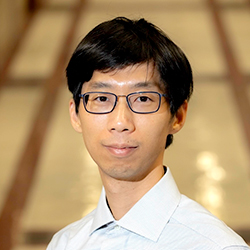
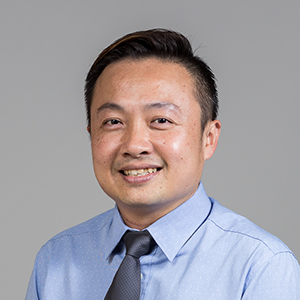
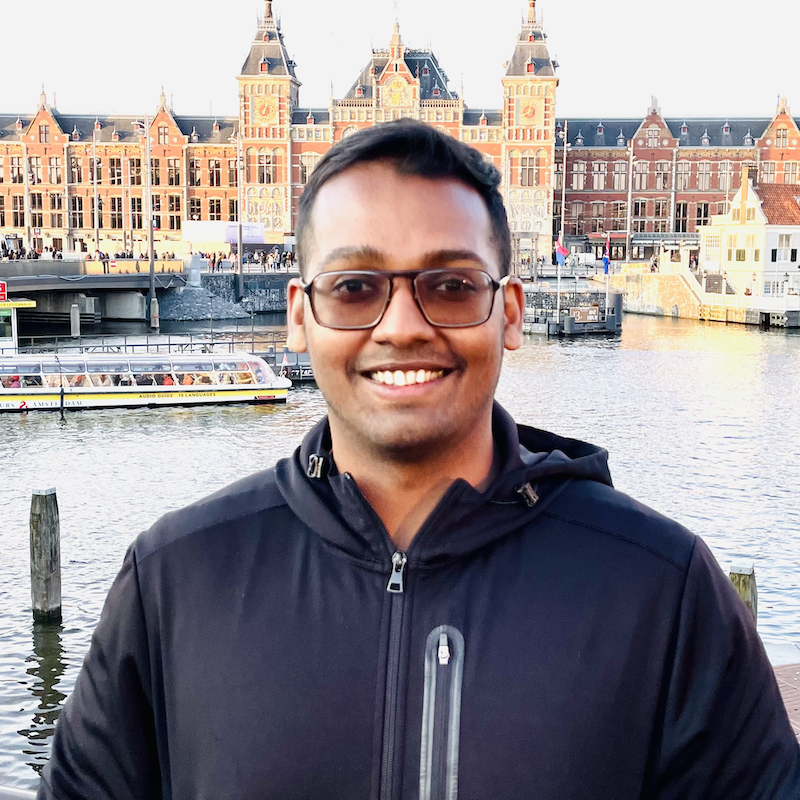
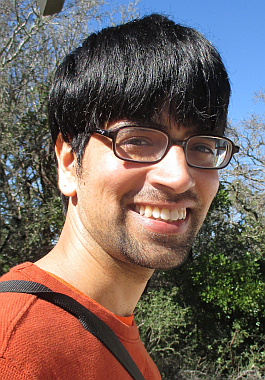
Drew Cameron is an Assistant Professor of Public Health (Health Policy) at the Yale School of Public Health, affiliated with the Department of Health Policy and Management and the Center for Methods in Implementation and Prevention Science (CMIPS). His research focuses on health economics, evaluating health and development programs in resource-poor and low- to middle-income country contexts. Education: PhD in Health Policy, University of California, Berkeley MA in International Development, American University School of International Service BA in International Political Economy, University of Puget Sound His work examines targeted subsidies, behavioral 'nudges,' and cost-effectiveness methods addressing healthcare access constraints. Key areas include child growth, water sanitation, HIV/AIDS, carceral health, and rural development. Recent publications highlight implementation strategies for HIV-hypertension integration, pandemic preparedness, and cost analysis frameworks. Notable Research Trends: 2025-2024: U.S. HIV workforce strengthening, Ugandan HIV-hypertension costs, and Alaska vaccine behavior analyses 2023-2019: Water delivery experiments in India, VMMC cost modeling, TB treatment economics, and HIV intervention cost repositories 2018-2014: Urban land titling impacts, healthcare quality policy in Brazil, and structural violence in pharmaceutical triage
Kristian J. Hammond is the Bill and Cathy Osborn Professor of Computer Science at Northwestern University's McCormick School of Engineering. He directs both the Master of Science in Artificial Intelligence Program and the Center for Advancing Safety of Machine Intelligence (CASMI). His research focuses on artificial intelligence, natural language generation, narrative generation, conversational interfaces, and ethical AI applications across domains like law, education, and journalism. Hammond co-founded Narrative Science, leveraging AI for automated journalism from data. Education: PhD, MS, and BA in Philosophy (all from Yale University). His work spans technical innovation and societal impact, with notable contributions to AI transparency, bias mitigation, and machine learning ethics. Hammond has authored influential articles on AI governance, conversational systems, and the future of work in an automated economy. His leadership roles emphasize interdisciplinary collaboration between computer science, business, and humanities. Research highlights include developing AI systems that enhance human capabilities, exploring ethical frameworks for machine intelligence, and advancing AI safety through initiatives like CASMI. He frequently engages in public discourse via TEDx talks and commentaries on AI's societal implications, emphasizing the need for human-centered technology design.
Guo Ping is an Associate Professor of Mechanical Engineering at Northwestern University, leading the Advanced Intelligent Manufacturing Laboratory (AIM). His research focuses on precision manufacturing, intelligent metrology via deep learning, and advanced manufacturing applications. He holds a Ph.D. from Northwestern University and a B.S. in Automotive Engineering from Tsinghua University. Education: Ph.D. in Mechanical Engineering, Northwestern University, Evanston, IL B.S. in Automotive Engineering, Tsinghua University, Beijing, China Research Interests: Dr. Guo’s work emphasizes innovations in precision engineering, including ductile-regime machining, smart metrology systems, and robotics-driven manufacturing. Key areas include structural coloration, additive manufacturing, and human-robot collaboration in industrial settings. His lab explores cutting-edge techniques like ultrasonic vibration machining and machine learning for defect detection and process optimization. Publications Trends: Recent work spans AI-driven quality control (e.g., photometric stereo networks), robotic swarm patterning, and wearable fatigue monitoring systems. His research bridges machine learning, robotics, and traditional manufacturing to address scalability and precision challenges. Awards: F.W. Taylor Medal (CIRP, 2023) ASME Kornel F. Ehman Manufacturing Medal (2021) SME Outstanding Young Manufacturing Engineer Award (2020) Professional Service: Associate Editor of the Journal of Manufacturing Processes (2017–present). Active in organizing conferences and reviewing for top journals. Labs & Teams: Directs the AIM Lab, which integrates robotics, AI, and advanced materials to solve problems in precision fabrication and smart manufacturing. Current projects include structural coloration for anti-counterfeiting and fatigue prediction in industrial workers.
Scott Thompson is a Professor in the Department of Electrical & Computer Engineering at the University of Florida. He holds academic appointments within the College of Engineering and specializes in solid-state electronics, nanotechnology, and semiconductor device fabrication. His research focuses on advancing transistor technologies to extend Moore’s Law, including strained silicon innovations and low-power device designs. Thompson earned his BSEE (1987), MS (1988), and PhD (1992) in Electrical Engineering from the University of Florida. His industrial contributions include roles at Intel Corporation and leadership at SuVolta, recognized with the TiE 50 Top Startup Award (2014) and Semi Award North America (2008). He is an IEEE Fellow (2006) and Intel Fellow (2003). His research portfolio includes over 50 patents and publications on topics like deeply depleted channel transistors, CMOS process optimization, and strain-engineered semiconductor materials. Key themes in his work involve improving transistor performance, reducing power consumption, and advancing fabrication techniques for nanoscale electronics. Key Awards: IEEE Fellow, Intel Fellow, TiE 50 Startup Award Key Contributions: Strained silicon transistors, SuVolta startup innovations, CMOS process advancements
Trevor Brown is an Associate Professor in the Computer Science department at the University of Waterloo, affiliated with the Cheriton School of Computer Science. He leads the Multicore Lab and specializes in concurrent data structures, non-blocking algorithms, and memory management. His research bridges theory and systems, focusing on practical implementations of lock-free trees, transactional memory, and techniques for non-uniform memory architectures. Education includes a PhD in Computer Science from the University of Toronto and a B.Sc. in Computer Science and Mathematics from York University. Research interests center on concurrent systems, with recent work exploring hardware-accelerated indexing, memory reclamation techniques, and performance anomalies in microbenchmarks. His publications demonstrate consistent innovation in parallel computing, with articles frequently appearing at top conferences like PPoPP, SPAA, and DISC. Sustainable energy research includes optimizing hybrid power systems and battery storage solutions. Awards include multiple best paper/artifact recognitions at SPAA and PPoPP, teaching excellence honors, and nominations for the Governor General’s Gold Medal. Extensive advising includes 13+ graduate students and PDFs, with research grants exceeding $965K from NSERC, Huawei, and CFI. He directs the Multicore Lab, developing open-source tools like SetBench for rigorous performance benchmarking.
Syed Shamsil Arefin is a Researcher in the School of Environmental Sciences at the University of East Anglia. He holds a PhD from UEA, focusing on large-scale coastal ecosystem restoration and its protective benefits. He is affiliated with the Tyndall Centre for Climate Change Research, Centre for Ocean and Atmospheric Sciences, and Geosciences. Education: M.Sc in Coastal Engineering (Delft University of Technology and University of Southampton, 2017) and B.Sc in Civil Engineering (Ahsanullah University of Science and Technology, 2012). His research investigates how coastal wetlands like mangroves and marshes reduce wave and surge impacts, particularly in hybrid systems combining natural ecosystems with artificial defenses. His work aims to model protective benefits for scalable climate adaptation assessments globally. Current projects include REST-COAST, a European initiative evaluating wetland restoration's role in disaster risk reduction and biodiversity enhancement. No specific grants or awards are listed, but his research emphasizes low-carbon climate adaptation solutions. He collaborates with interdisciplinary teams in coastal engineering and environmental science, contributing to both theoretical and applied aspects of coastal resilience.
Dr. Hai Phan is an Associate Professor in Data Science at New Jersey Institute of Technology's Ying Wu College of Computing. He holds a Ph.D. in Computer Science and Engineering from CNRS, University Montpellier 2 (2013), an M.S. from Konkuk University (2010), and a B.S. from HCM City University of Technology (2008). His research explores privacy-preserving machine learning and computational health analytics: Federated learning systems and optimization Privacy-enhancing technologies (differential privacy) Health informatics and social media analysis Cybersecurity defenses and adversarial learning Fair and ethical AI systems Dr. Phan's publications demonstrate strong emphasis on federated learning architectures with privacy guarantees, defenses against emerging security threats, and analysis of health-related behaviors through social media. Recent work focuses on IoT applications, large language model security, and mobile federated learning ecosystems. His research integrates techniques from distributed systems, cryptography, and machine learning. No scientific awards are mentioned in available sources. Information regarding student advising, research grants, or laboratory affiliations is not provided in available documentation.
Huazhen Fang is an Associate Professor in the Department of Mechanical Engineering at the University of Kansas School of Engineering, where he joined in 2014. He leads the Information & Smart Systems Laboratory (ISSL) and holds a courtesy appointment in the Department of Electrical Engineering & Computer Science. His research focuses on enabling intelligence for complex systems through information-driven approaches. Dr. Fang received his Ph.D. in Mechanical Engineering from the University of California, San Diego in 2014, following an M.Sc. from the University of Saskatchewan and a B.Sc. in Computer Science & Technology from Northwestern Polytechnic University in China. He was a Visiting Faculty Fellow at Mitsubishi Electric Research Laboratories in 2022. His research interests span Systems and Control, Advanced Battery Management, Energy Storage Systems, and Robotics, with particular focus on system modeling, estimation, control design, machine learning and numerical optimization. Dr. Fang's work has significant applications in energy management, cooperative robotics, and environmental observing systems. His research has been supported by the National Science Foundation, Department of Energy, Army Research Laboratory, and Mitsubishi Electric Research Laboratories. His extensive publication record shows a clear trend toward increasingly sophisticated integration of physics-based modeling with machine learning approaches, particularly in battery management systems and autonomous vehicle control. Recent work demonstrates a growing emphasis on Bayesian inference methods, distributed control architectures, and safety-critical applications of intelligent control systems. Faculty Early Career Award from National Science Foundation (2019) University Scholarly Achievement Award (2024) Miller Professional Development Award (2022) Miller Faculty Scholar Award (2018, 2019, 2023) Wesley G. Cramer Outstanding Mechanical Engineering Faculty Award (2016) Big XII Faculty Fellowship (2015) IEEE Transactions on Transportation Electrification Prize Paper Award (2024) Dr. Fang has successfully mentored numerous graduate students through the Information & Smart Systems Laboratory, with many receiving awards for their research. His research has attracted significant funding from prestigious organizations including the National Science Foundation, Department of Energy, Army Research Laboratory, and Mitsubishi Electric Research Laboratories. He currently serves as an Associate Editor for multiple prestigious journals including Information Sciences, IEEE Transactions on Industrial Electronics, and IEEE Control Systems Letters. The Information & Smart Systems Laboratory (ISSL) under Dr. Fang's leadership has established itself as a center for cutting-edge research in information-driven smart systems. The lab focuses on pushing the frontiers of information extraction, analysis and exploitation for dynamic systems to deal with system complexity and enable system intelligence. The lab actively collaborates with industry partners and local communities, emphasizing research that serves societal needs.
Dr. Majid Azadi is an Assistant Professor of Business Analytics at Aston Business School, Aston University. He holds a PhD in Business Analytics and Operations Management from the University of Technology Sydney (2021) and was a postdoctoral fellow at Deakin University. His research focuses on Business Analytics, Operations Management, Resilient Supply Chains, and Information Systems. He has published over 60 papers in top-tier journals like European Journal of Operational Research and Transportation Research Part E. His work emphasizes sustainability, digital technologies, and operational efficiency. He is currently accepting PhD students. Education: PhD in Business Analytics and Operations Management, University of Technology Sydney (2021) Awarded multiple research awards (specifics not listed) Research interests include data-driven decision-making, supply chain resilience, and cloud computing sustainability. Collaborations span global institutions, focusing on operational research methodologies like Data Envelopment Analysis. His recent articles explore green gas emissions, humanitarian logistics, and Industry 4.0 applications.
Bryan Kian Hsiang Low serves as Associate Professor in the Department of Computer Science at the National University of Singapore's School of Computing, while simultaneously holding leadership positions as Director of AI Research at AI Singapore and Deputy Director of the NUS AI Institute. His academic journey includes a B.Sc. (2001) and M.Sc. (2002) in Computer Science from NUS, followed by a Ph.D. in Electrical & Computer Engineering from Carnegie Mellon University (2009). His research spans probabilistic machine learning, multi-agent systems, and trustworthy AI, with particular focus on Bayesian optimization , federated learning , and data-efficient methodologies . The Low Lab develops frameworks for collaborative AI, automated machine learning, and AI applications in scientific domains through the Group of Learning and Optimization Working in AI (GLOW.AI), which maintains a multi-disciplinary approach bridging computer science, mathematics, and engineering disciplines. Analysis of his recent publications reveals a consistent emphasis on data valuation , privacy-preserving collaborative learning , and robust optimization techniques , with increasing integration of large language models into his research framework. His work demonstrates strong theoretical foundations coupled with practical applications in computational sustainability and robotics. Andrew P. Sage Best Transactions Paper Award (2006) NUS Overseas Graduate Scholarship (2004-2009) Faculty Teaching Excellence Award (2017-2018) IEEE RAS Distinguished Lecturer (2019) World Economic Forum Global Future Councils Fellow (2016-2018) Dr. Low actively mentors PhD students including Rachael Sim, Quoc Phong Nguyen, and Zhongxiang Dai, while leading major initiatives like the AI Phenome Platform for plant breeding optimization. His research group GLOW.AI operates at the intersection of theory and practice, with strong industry engagement through AI Singapore. Current projects focus on scalable AI systems for scientific discovery and developing frameworks for equitable collaborative machine learning with robust privacy guarantees.
Tathagata Srimani is an Assistant Professor in the Department of Electrical and Computer Engineering at Carnegie Mellon University (CMU), affiliated with the College of Engineering. He previously served as a Postdoctoral Scholar in Electrical Engineering at Stanford University. His academic journey includes a Ph.D. and S.M. in EECS from MIT (2022 and 2018 respectively) and a B.Tech. in E&ECE from IIT Kharagpur (2016). Research Focus: Srimani’s work centers on nanoelectronics and transformative NanoSystems. Key areas include: Carbon nanotube field-effect transistors (CNFETs) and their monolithic 3D integration with silicon Ultra-dense 3D integration of logic and memory to address the 'memory wall' in AI/ML Technology-architecture co-design frameworks for energy-efficient computing Key Achievements: Developed first silicon fab-compatible CNFET processes (TNANO ’18, Nature ’19) Enabled CNFET RISC-V microprocessor and monolithic 3D integration with Analog Devices/SkyWater Recipient of MIT Presidential Fellowship (2016) and Morris Joseph Levin Award (2018) Teaching & Outreach: Teaches semiconductor devices and hardware design, including hands-on 'Hacker Fab' courses. Leads the NEXUS Research Group exploring heterogeneous nanomaterials (e.g., magnetic and oxide semiconductors) and thermal/power management in 3D systems. Future Directions: Expanding into probabilistic computing hardware, co-design frameworks for application-specific systems, and scaling 3D NanoSystem technologies for industrial adoption.
Jay Pujara is a Research Associate Professor in the Department of Computer Science at the University of Southern California (USC), affiliated with the Viterbi School of Engineering and the Information Sciences Institute (ISI). He directs the Center on Knowledge Graphs and leads research in artificial intelligence, specializing in knowledge graph construction, scalable machine learning, and probabilistic models. Education : PhD in Computer Science (University of Maryland, 2016), MS and BS in Computer Science from Carnegie Mellon University (2005 and 2004), with minors in Robotics, Mathematical Sciences, and Logic & Computation. Research Interests : His work focuses on probabilistic models for dynamic data, knowledge graph construction, entity resolution, and applications in NLP and social network analysis. He emphasizes scalable algorithms and real-world impact in domains like finance, climate science, and healthcare. Awards : Includes the SWSA Ten-Year Award (2023), Best Paper Awards at IUI 2019 and ISWC 2013, and grants totaling over $9M from DARPA, NSF, and industry partners. Grants & Mentorship : Principal Investigator on projects like "Artificial Domain-Understanding and Collaborative Agency" (DARPA) and "Explainable and Robust AI Agents" (NSF). Mentored over 50 students in PhD, MS, and undergraduate programs, focusing on knowledge graphs, NLP, and machine learning. Labs & Teams : Leads ISI’s Knowledge Graph and Neurosymbolic AI teams, coordinating the Open Knowledge Network (OKN) and tools like KGTK. Active in academic service, including roles on PhD admissions committees and ISI’s Space Management Committee.
Zeljko Pantic is an Associate Professor in the Department of Electrical and Computer Engineering at North Carolina State University. He holds a Ph.D. from NC State (2013) and B.S./M.S. degrees from the University of Belgrade (1998/2007). Before joining NC State in 2019, he served as an Assistant Professor and Associate Director of the Electric Vehicle and Roadway Research Facility at Utah State University. He is actively involved in editorial roles for IEEE Transactions on Transportation Electrification and serves on the IEEE IAS Transportation Systems Committee. Education: Ph.D., Electrical Engineering, North Carolina State University (2013) M.S., Electrical Engineering, University of Belgrade (2007) B.S., Electrical Engineering, University of Belgrade (1998) Research: Dr. Pantic specializes in electrified transportation systems, wireless power transfer (WPT), power converter design, and DC microgrid technologies. His work addresses challenges in EV charging infrastructure, magnetic circuit optimization, and energy conversion principles for transportation electrification. Recent projects include autonomous wireless charging systems for UAVs, marine DC microgrids, and road-embedded DWPT solutions. Awards & Recognition: 2019 IEEE JESTPE Second Prize Paper Award 2017 Outstanding Teacher of the Year (USU) 2012 NC State Mentored Teaching Assistantship Award Advisees & Grants: While specific student names are not listed, Dr. Pantic has advised graduate students on projects spanning WPT systems, EV infrastructure, and battery management. His work has been supported by grants focusing on dynamic charging, magnetic materials, and autonomous observatory nodes. Labs & Facilities: He leads research at NC State's Electric Vehicle and Roadway facility, focusing on roadway-integrated wireless charging and high-power WPT systems. Collaborations include ocean observatory development and autonomous system integration.
Eric Masanet is a Professor and Mellichamp Chair in Sustainability Science for Emerging Technologies at the University of California, Santa Barbara (UCSB), holding a courtesy appointment in the Department of Mechanical Engineering. He leads the Bren School's Industrial Sustainability Analysis Laboratory, focusing on decarbonizing industrial and IT sectors while advancing equity and sustainability. His research spans energy system analysis, climate mitigation, and sustainable manufacturing. Education: Ph.D. in Mechanical Engineering from UC Berkeley, with M.S. and B.S. degrees from Northwestern University and the University of Wisconsin-Madison, respectively. Research interests include data center sustainability, industrial decarbonization, and the intersection of technology and climate policy. He has contributed to the IPCC's Sixth Assessment Report, advised the U.S. White House, and serves on the DOE's Industrial Technology Innovation Advisory Committee. Notable achievements include authoring the U.S. Data Center Energy Usage Report and leading the Resources, Conservation, and Recycling journal as former Editor-in-Chief. His work bridges academia with policy, influencing international energy and climate strategies. Advising and grants: Supervises PhD students (e.g., Jaxon Stuhr) and postdocs (Antoine Merlo, Jason Ye) in decarbonization research. Collaborates with Lawrence Berkeley National Laboratory and international organizations like the IEA. Labs/Teams: Directs the Industrial Sustainability Analysis Laboratory, advancing models for low-carbon industrial and IT systems.
Professor Gareth Roberts is a Professor in the Department of Statistics at the University of Warwick. His research focuses on Computational Statistics, particularly MCMC methods, stochastic processes, Bayesian inference, statistical privacy, and applications in infectious disease modeling and sports analytics. He leads the OCEAN project with Eric Moulines, Michael Jordan, and Christian Robert, and teaches the ST923 lecture course on advanced statistical methods. His research interests include developing efficient sampling algorithms (e.g., MCMC, PDMP), statistical methodology for missing data, and privacy-preserving statistical techniques. Recent work emphasizes high-dimensional Bayesian models, quasi-stationary Monte Carlo, and scalability of computational methods. Publications span innovations in MCMC theory, applications to epidemiology, and sports probability modeling. His work on the Zig-Zag process and stereographic MCMC demonstrates contributions to PDMP-based sampling. Collaborations include interdisciplinary projects on bacterial transmission dynamics and statistical methods for big data. He actively participates in academic leadership, including organizing courses and contributing to the statistical community through projects like OCEAN. Contact: Gareth.O.Roberts@warwick.ac.uk .