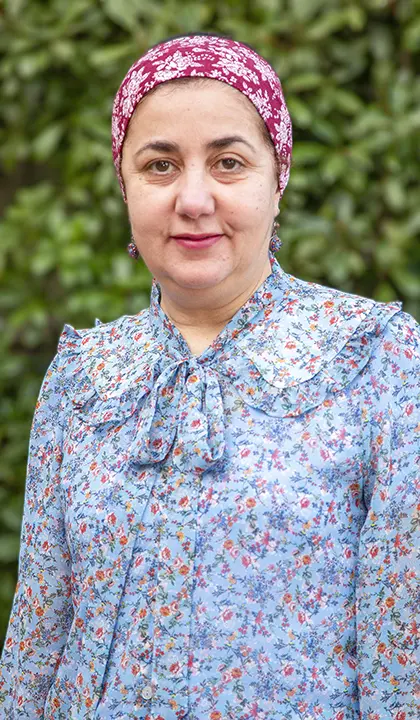
Henrik Bulskov is an Associate Professor in the Department of People and Technology (Programming, Logic and Intelligent Systems) at Roskilde University. He holds an MSc and PhD. His work focuses on natural logic systems, database querying, and ontology-based information retrieval. He has contributed to projects such as SEAFACTS (digital maritime history platform) and NorDigHealth (regional digital health solutions). Education: MSc and PhD (specific disciplines not explicitly stated) Research interests include formal logic systems integration with databases, machine learning applications in bioinformatics, and semantic summarization through ontologies. Recent work explores query optimization in natural logic knowledge bases and disparity analysis in neural networks. His publications highlight advancements in computational logic for knowledge management and biomedical text analysis. Bulskov has participated in international conferences and contributed to media discussions on big data applications. Advising: No explicit student advisees listed Grants: Principal/Co-investigator in multiple projects including SIABO (2007–2012) and Duuoo Analysis (2021) Labs/Teams: Involved in interdisciplinary teams focusing on bioinformatics, health tech, and digital humanities through collaborative projects.
Aleksandar Dimov Dimov is an Associate Professor at the Department of Software Technologies, Faculty of Mathematics and Informatics (FMI), University of Sofia. He specializes in software reliability engineering, neuro-fuzzy systems, and cloud computing architectures. His research focuses on optimizing software systems through adaptive methodologies and addressing challenges in distributed computing environments. His work spans over two decades, with contributions to neuro-fuzzy optimization for manufacturing, machine learning applications in healthcare, and architectural patterns for scalable systems. Key areas include improving software reliability models, cloud storage performance, and privacy-preserving software design. He has published extensively on topics like microservices, service-oriented architectures, and educational technology. Dr. Dimov's publications reflect a strong emphasis on practical solutions for real-world challenges in software engineering and data systems. His research bridges theoretical models with applied implementations, particularly in domains requiring high precision and adaptability.
Benjamin Hilprecht is a researcher at the Technical University of Darmstadt, specializing in database systems and machine learning integration. His work focuses on data-efficient learned database components, neural approaches for query optimization, and security in generative models. Notable contributions include the DiffML framework for end-to-end differentiable ML pipelines and SPARE, a neural model for relational databases. He holds a PhD in Computer Science from TU Darmstadt (2022) and has collaborated extensively with Prof. Carsten Binnig on projects such as ReStore and DeepDB. His research interests span learned index structures, zero-shot learning in databases, and adversarial attacks on generative models.
Keriann Marie Backus is an Associate Professor in the Department of Biological Chemistry at the University of California Los Angeles (UCLA) School of Medicine. Her research program focuses on developing and applying chemoproteomic approaches to understand protein function, particularly through cysteine profiling and covalent ligand discovery. Dr. Backus leads an active research laboratory that bridges chemical biology, proteomics, and systems biology to address fundamental questions in protein biochemistry and disease mechanisms. Dr. Backus's research interests center on chemoproteomics, with particular emphasis on cysteine reactivity profiling, protein interactome mapping, and covalent ligand discovery. Her laboratory develops innovative chemical and proteomic methodologies to characterize the cysteinome—the complete set of reactive cysteines in the proteome—and to understand how cysteine modifications impact protein function in health and disease. Her work spans fundamental protein biochemistry, chemical probe development, and translational applications in areas including inflammation, cancer, and infectious disease. The lab employs cutting-edge mass spectrometry, chemical biology, and bioinformatics approaches to map protein modifications, interactions, and functions at systems-level resolution. Her publication record demonstrates significant contributions to chemoproteomics methodology development and biological applications. Recent work has focused on creating scalable sample preparation techniques (CySP3-96), organelle-specific cysteine capture methods, cholesterol interactome mapping, and cysteine databases (CysDB). Her research bridges basic chemical biology with translational applications, including tuberculosis imaging and understanding vascular inflammation mechanisms. Dr. Backus has received significant research funding, including an NIH DP2 New Innovator Award (GM146246) for 'A systems-level approach to decipher the protein interactome' and an NIH F32 postdoctoral fellowship (GM108208) for 'Fragment-Based Ligand Discovery in Proteomes.' These awards reflect recognition of her innovative approaches to chemical proteomics and protein interaction mapping. Dr. Backus actively mentors graduate students and postdoctoral researchers in her laboratory, with numerous trainees appearing as first or co-first authors on high-impact publications. Her research program maintains strong collaborations across UCLA and with other institutions, particularly with researchers in the Cravatt laboratory (where she completed her postdoctoral training) and with clinical researchers applying chemoproteomic approaches to disease mechanisms. The Backus laboratory functions as an interdisciplinary research hub at the intersection of chemical biology and proteomics. It combines expertise in organic synthesis, mass spectrometry, computational biology, and cell biology to develop and apply chemoproteomic technologies. The lab maintains strong connections with the broader UCLA research community, particularly through the Graduate Program in Bioscience and collaborations with clinical departments studying inflammation, cancer, and infectious diseases.
Human Esmaeili is a Lecturer in Games Development at Staffordshire University's School of Digital, Technology and Innovation. With expertise in 3D modeling, photogrammetry, and virtual reality, his research focuses on digital heritage preservation, sustainable design, and immersive storytelling through VR applications. PhD in Creative Multimedia (Multimedia University, Malaysia) BSc in Chemical Engineering (Tehran Azad University, Iran) His work bridges engineering and creative multimedia, emphasizing: Cultural heritage digitization via scanning/modeling techniques VR applications for environmental awareness and education Collaborations with the Jeffrey Sachs Center on Sustainable Development Development of immersive virtual museums and serious games Recent research explores VR user experience in digital heritage contexts, including: 2019 VR recycling game at UN event in Malaysia Exhibitions at Digital Heritage 2018 International Congress Grants awarded (2017-2021): MYR25,000 for immersive VR cultural heritage projects MYR10,000 for household waste management technology MYR5,000 for VR behavioral studies Teaching includes: 3D modeling foundations Real-time game development Digital reconstruction techniques
Fraser Brown is a Courtesy Professor in the Department of Electrical and Computer Engineering at Carnegie Mellon University, affiliated with the College of Engineering. His research focuses on the intersection of systems, programming languages, and security, with particular emphasis on verified compilers, cryptographic applications, and finding vulnerabilities in real systems. He holds a position at the university's Pittsburgh campus located at 5000 Forbes Avenue. His research interests include compiler optimization verification, cryptographic protocol compilation, and secure execution environments. Notable projects involve verified components of browser JIT compilers and compilation infrastructure for cryptographic use cases. He has contributed to frameworks like WaVe (verifiably secure WebAssembly runtime) and Icarus (trustworthy JIT compilers). Recent publications (2021–2025) explore topics such as zero-knowledge proof compilers, secure MPC protocols, and microarchitectural vulnerability mitigation. His work frequently combines formal verification techniques with practical system implementations to enhance software and hardware security. Fraser has collaborated on grants like the SaTC-funded project on verified secure sandboxed systems. While no formal advisees are listed, his research contributions reflect collaborative efforts in academic and industrial contexts. His work is disseminated through venues like programming language and security workshops (e.g., PLAS 2023) and peer-reviewed journals/conferences.
Dr. Qing Wang is an Associate Professor at the Australian National University (ANU) since 2012, leading the Graph Research Lab and the Database Group within the School of Computing. Her research focuses on graph machine learning, data management, and algorithms for dynamic networks. With over a decade of industry experience in data analysis and management, she holds a PhD in Computer Science (Summa Cum Laude) from Christian-Albrechts-University Kiel, Germany. Education: PhD (Dr.rer.nat.) in Computer Science, Christian-Albrechts-University Kiel, Germany (2010) Master of Information Systems (First Class Honours), Massey University, New Zealand (2009) Master of Economics, Jinan University, China Bachelor of Engineering, South China University of Technology, China Research Interests: Dr. Wang explores cutting-edge techniques in graph machine learning, scalable algorithms for large-scale data, and knowledge tracing. Her work bridges theoretical foundations with practical applications, such as improving graph neural networks' expressivity and optimizing distance queries on dynamic road networks. She actively contributes to the development of tools for data integration and privacy-preserving analytics. Grants & Awards: ARC Discovery Project (2021–2023): 'Deep Learning for Graph Isomorphism' ARC Discovery Project (2016–2018): 'Creating the Social Genome' ANU Dean’s Award for Teaching Excellence (2015) Fellow of the Higher Education Academy (2015) Labs & Teams: She leads the Graph Research Lab , focusing on advancing graph algorithms and their applications in real-world systems. Her team collaborates on projects involving dynamic data integration, privacy-preserving techniques, and educational data analytics.
Dr. Annabel Latham is a Senior Lecturer in Computer Science at Manchester Metropolitan University within the Faculty of Science and Engineering’s Computing and Mathematics department. She holds a PhD in Artificial Intelligence, an MSc in Computing, a Postgraduate Certificate in Academic Practice, a CIM Diploma in Marketing, and a BSc(Hons) in Computation. As a Fellow of the Higher Education Academy (FHEA) and Senior Member of IEEE (SMIEEE), she contributes extensively to AI research and education. PhD in Artificial Intelligence MSc in Computing PGC Academic Practice CIM Diploma in Marketing BSc(Hons) Computation FHEA (2015) SMIEEE (2018) Research Interests include Artificial Intelligence in Education , Ethics of AI , and Computational Intelligence . She specializes in conversational agents, intelligent tutoring systems, and public trust in AI. Her work addresses fairness, accountability, and accessibility in AI-driven education, leveraging technologies like large language models and fuzzy logic. Research Outputs span 15 years, with a focus on explainable AI, educational applications of conversational agents, and ethical frameworks. Recent work (2024-2025) explores postdigital citizen science, trustworthy AI implementation, and XAI usability for non-specialists. 2023 IEEE Region 8 Outstanding Women in Engineering Volunteer Award 2019 IEEE Region 8 Outstanding Women in Engineering Affinity Group of the Year 2018 Outstanding Peer Reviewer, Elsevier: Computers & Education Senior Member IEEE (2018) FHEA (2015) Teaching and Supervision includes undergraduate Databases, postgraduate units in Information Systems and AI Ethics. She supervises MSc and PhD students in areas like explainability-aware machine learning, data responsibility, and AI trustworthiness. Her grants involve collaborations with international funding bodies such as NAFOSTED (Vietnam) and Croatia’s National Council for Science. Labs and Groups include the Computational Intelligence Lab, Machine Intelligence research group, and the Data and AI Ethics research group, where she co-leads initiatives on ethical AI in education.
Jens Mache is a Full Professor of Computer Science at Lewis & Clark College, where he has held roles including Chair of the Mathematical Sciences Department (2013–2016). He earned a Vordiplom from the University of Karlsruhe (1992), an M.S. from Southern Oregon University (1994), and a Ph.D. from the University of Oregon (1999). His research focuses on parallel/distributed systems, cybersecurity, cloud computing, and high-performance computing. Supported by NSF, W. M. Keck, and John S. Rogers Program grants, he has collaborated with Intel, Sandia National Laboratories, and German institutions. Mache has received the Guanajuato Award and a Konrad-Adenauer-Stiftung scholarship. He is a proponent of hands-on cybersecurity education, leading initiatives like EDURange and LIBRE-ary. His work emphasizes student success through machine learning, log analysis, and scalable frameworks. Research Interests: Parallel and Distributed Systems Cybersecurity (including cloud, network security, and pedagogy) High-Performance Computing Educational Technology and Assessment Grants & Collaborations: NSF-funded research on cybersecurity education and parallel computing W. M. Keck Foundation support for interdisciplinary projects Industry partnerships with Intel and Sandia National Labs Awards: Guanajuato Award (Southern Oregon University) Konrad-Adenauer-Stiftung Scholarship Projects: EDURange: Cybersecurity competition platform LIBRE-ary: Open-source digital archiving system
Dr.-Ing. Julia Othlinghaus-Wulhorst is a Researcher in the Department of Databases and Information Systems at the University of Würzburg, Faculty of Computer Science and Mathematics. She specializes in databases, data engineering, and Big Data. Her work focuses on query processing, data quality, and cloud resource optimization in distributed systems. Education: Diplom-Informatikerin (FH) (FH Diploma in Computer Science). Research Interests: Databases and Information Systems, Big Data, Data Management, Data Engineering, Data Science, Data Quality. She explores scalable database systems, data quality frameworks, and cloud-based resource allocation. Recent Work Trends: Her recent articles address large-scale distributed databases, data quality in Big Data environments, and cloud resource optimization. These reflect a focus on improving system efficiency and data reliability in modern computing landscapes. Awards: Best Paper Award at ICDE 2023 Best Paper Award at ICDE 2022 Outstanding Reviewer Award at ICDE 2022 Advising & Grants: Advises PhD students in data systems and participates in DFG-funded research projects. Active in collaborative initiatives on database optimization and Big Data analytics. Labs & Teams: Member of the Information Systems Lab and Big Data Analytics Group at the University of Würzburg.
Bernardo Cuenca Grau is a Professor of Computer Science at the University of Oxford and a Tutorial Fellow at Keble College. His research focuses on artificial intelligence, particularly knowledge representation and reasoning, knowledge graphs, computational logic, and semantic technologies. He leads the Information Systems Group and has contributed to high-impact software tools like LogMap, MORe, and PAGOdA. His work bridges theoretical foundations with practical applications, including industry collaborations through his co-founded startup Oxford Semantic Technologies, acquired by Samsung in 2024. He has received prestigious awards such as the Royal Society University Research Fellowship (2009-2017) and the 2025 Vice-Chancellor Award for Innovation. Affiliations: University of Oxford Department of Computer Science, Keble College Professional Roles: Tutorial Fellow, Co-founder of Oxford Semantic Technologies Research interests span declarative data analysis, graph neural networks, temporal reasoning, and ontology-based systems. His recent work explores connections between graph neural networks and logic programming (e.g., Datalog). He advises PhD students on topics like knowledge graph completion and explainable AI models. Key publications include foundational work on limit Datalog, ontology-based data access, and neural network stability. His work on LogMap (ontology matching) earned the Semantic Web Science 10-Year Award (2021). He actively participates in conferences like IJCAI and AAAI, serving as General Chair for the 2020 Description Logics workshop. Awards: Vice-Chancellor Award (2025), Distinguished Paper Award (IJCAI 2017), Royal Society Fellowship (2009-2017) Grants/Funding: Royal Society Fellowship, VC Innovation Award, MPLS Commercial Impact Award Cuenca Grau co-develops tools like SemFacet (faceted search system) and MeTeoR (temporal Datalog reasoner). His research group emphasizes interdisciplinary collaboration, addressing challenges in scalable reasoning, privacy in knowledge graphs, and industrial ontology management.
Fairouz Medjahed is a Professor at Saint Louis University-Madrid, affiliated with the Department of Mathematics and Computer Science and the Department of Engineering Education. She previously served as Director of the Information Technology Department from 2002 to 2021. Her research focuses on social network analysis, game theory applications, competitive influence diffusion, data mining, and machine learning algorithms. She holds a Ph.D. from Université des Sciences et Technologies USTHB in Algiers and studied at Université Claude Bernard I in Lyon, France. Her academic career includes roles as an associate researcher in data mining (Universidad Politécnica de Madrid) and knowledge-based systems development (ICTP Trieste, CERIST Algiers). Her research interests span competitive strategies in social networks, fake news diffusion modeling, and machine learning for database mining. She has contributed to e-learning strategies, UNIX system optimization, and expert systems for welding defect analysis. Her publications address hybrid influence diffusion models, centrality-based network strategies, and the application of machine learning in parallel data mining. She has also explored educational testing methodologies and collaborative international degree programs in computer information systems.
Małgorzata Plechawska-Wójcik is an Assistant Professor at the Lublin University of Technology, affiliated with the Faculty of Electrical Engineering and Computer Science and the Department of Computer Science. Her research focuses on bioinformatics, software engineering, GUI usability, and interdisciplinary applications of machine learning in healthcare and neurology. She leads or contributes to projects such as the T1DCoach diabetes management application and the Integrated Development Programme of the university. Her work spans comparative analyses of programming frameworks, database systems, and game engines, emphasizing performance optimization and usability. Education details are not explicitly listed, but her academic role indicates advanced qualifications in engineering and computer science. Current projects include collaborations with ANMC, Moodle, and Eduroam initiatives, alongside research into schizophrenia detection via retinal measures and EEG analysis. Research interests include: Bioinformatics : Leveraging machine learning for medical diagnosis (e.g., schizophrenia detection via optical coherence tomography and neural networks). Software Engineering : Comparative studies of frameworks (React.js, Solid.js), scripting languages (JavaScript, Kotlin), and database mapping tools (NuGet). Human-Computer Interaction : Evaluating GUI usability in e-commerce, streaming services, and serious games for education and healthcare. Publications highlight trends in: Machine learning applications in neuroscience and healthcare. Performance benchmarking of web, mobile, and game development tools. Comparative analyses of frameworks and architectures (e.g., Spring vs Laravel, Godot scripting languages). Notably, she has been honored with the Merit Medal for the City of Lublin alongside colleagues from the Computer Science Department. Her advising and grant involvement include project management tools, serious games for first aid training, and environmental monitoring systems using Arduino platforms. Key labs and initiatives include collaborations with the Katedra Informatyki (Computer Science Department) on projects like LubGame Conference and the Moodle integration for educational tools. Her work bridges theoretical computer science with practical applications in healthcare, education, and industry.
Dr. Moawia Eldow is a Clinical Associate Professor in the Department of Computer Science and Engineering at the University of North Texas. His research spans artificial intelligence, machine learning, and computer vision, with applications in healthcare, security, and education. His recent work includes COVID-19 detection algorithms and facial recognition systems. His publications demonstrate a consistent focus on neural networks, pattern recognition, and human-computer interaction. Recent articles explore AI diagnostics, educational technology, and cybersecurity, reflecting interdisciplinary collaboration with healthcare and linguistics domains. Dr. Eldow maintains an extensive publication record with contributions to IEEE, Springer, and ACM venues. His lab investigates adaptive algorithms for real-world challenges including medical diagnostics and network optimization.
Asif Baba is a Clinical Associate Professor in the Department of Computer Science and Engineering at the University of North Texas. His research focuses on cybersecurity, Internet of Things (IoT), and blockchain technology, with a particular emphasis on secure data transmission, phishing detection, and industrial networking. Research Keywords: Computer Science, Cybersecurity, IoT, Blockchain, Wireless Sensor Networks Email: Asif.Baba@unt.edu Dr. Baba’s recent publications highlight advancements in IoT security, including secure medical data transmission frameworks and fuzzy logic-based phishing detection systems. He has also contributed to blockchain applications in access control, accounting, and education records verification, alongside innovations in industrial IoT networking and RFID data cleansing. His work spans fog computing, drone simulation, and sensor localization, reflecting a multidisciplinary approach to solving real-world challenges through technology.