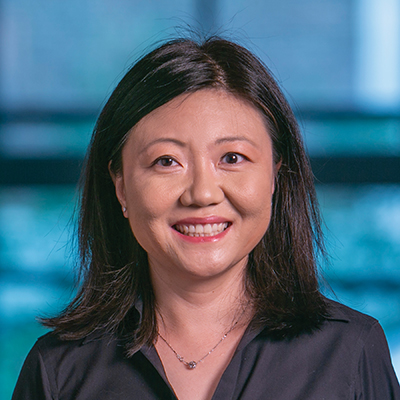
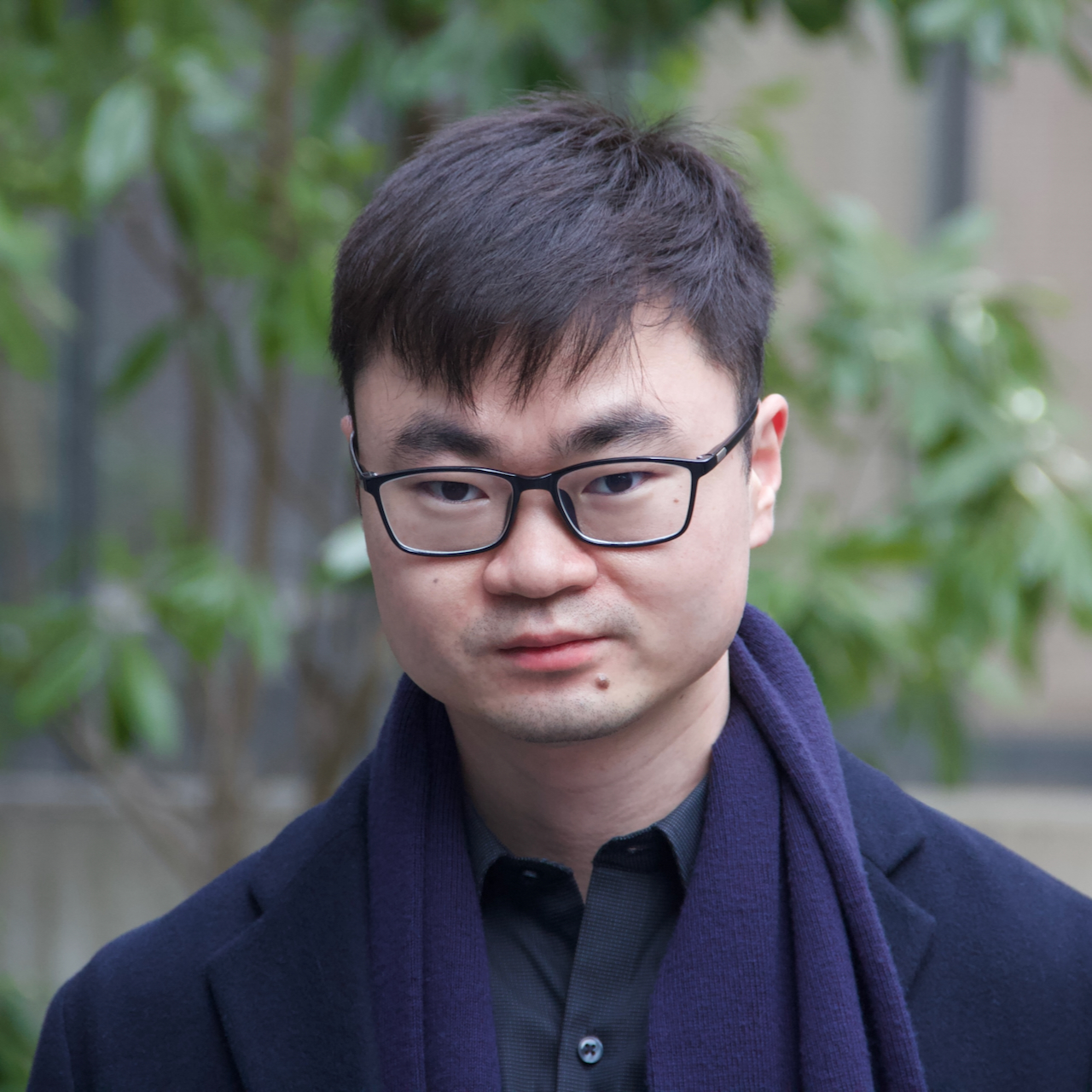
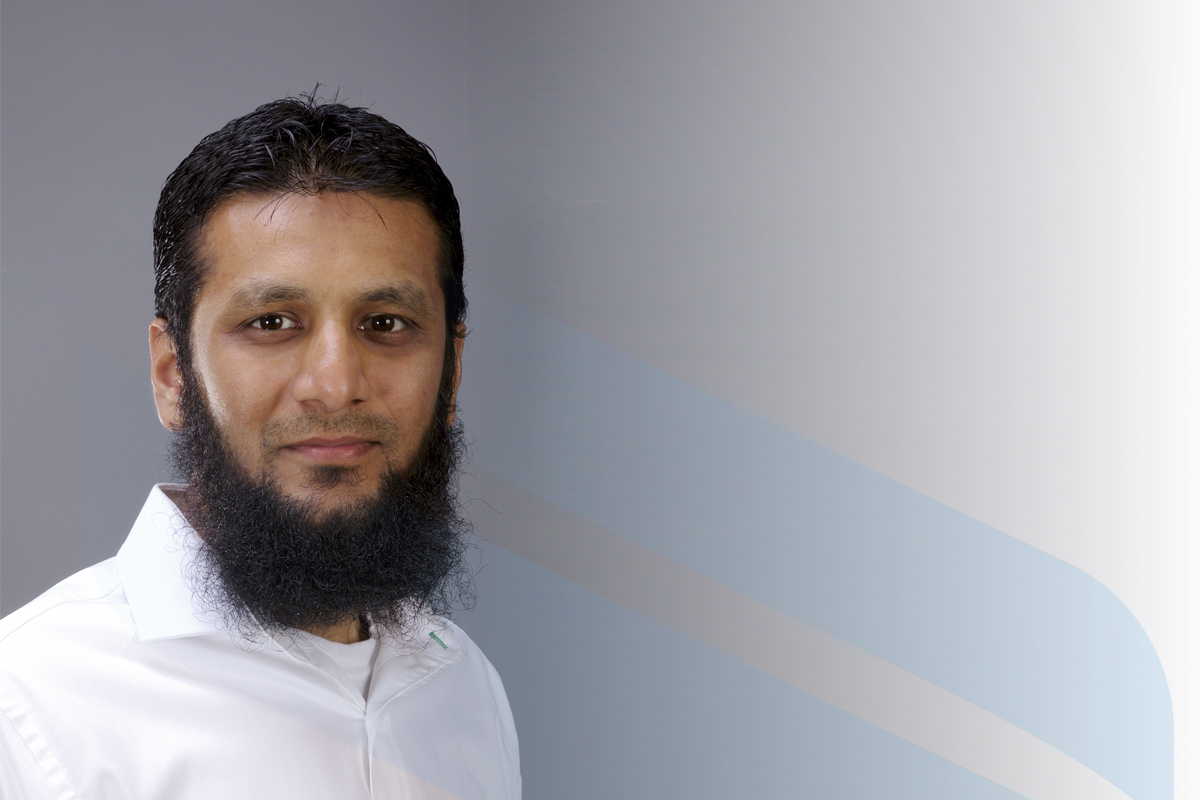
Yan Huang is an Associate Professor in the Department of Computer Science at Indiana University Bloomington, focusing on security and cryptography. His work bridges theoretical foundations with practical systems, emphasizing cryptographic protocols with strong security guarantees for generic computation. University: Indiana University Bloomington School: College of Arts and Sciences Department: Computer Science Academic Rank: Associate Professor His research combines theoretical computer science , program analysis , artificial intelligence , and software engineering to address real-world security problems. Key areas include secure computation , zero-knowledge proofs , and privacy-preserving technologies . Recent publications, such as Phecda (SP'25) and Dubhe (USENIX Security'23), highlight advancements in post-quantum cryptography , AES verification , and privacy-preserving deep packet inspection , reflecting his focus on scalable and practical cryptographic solutions. He has advised notable students including Changchang Ding (PhD, Computer Science) and Ruiyu Zhu (PhD, now at Facebook), and served on program committees for top conferences like ACM CCS and CRYPTO .
Jignesh M. Patel is a Professor in the Computer Science Department at Carnegie Mellon University , focusing on Data Management , System Efficiency (e.g., Scalable Data Platforms), and Human Efficiency (e.g., LLM-Based Query Interfaces). His work bridges Database Systems , Machine Learning , and Human-Computer Interaction . Co-founder of four startups: Paradise (1997), Locomatix (2007), Quickstep (2015), and DataChat (2017). Member of SIGMOD 2025 (AE) , CIDR 2024 (Co-Chair) , and other program committees. Research Interests include efficient data analysis algorithms , LLM-based data interaction , and systems security . His group develops platforms combining scalability and user productivity . Scientific Awards include Best Paper Awards at SIGMOD and VLDB, and Fellowships from AAAS, ACM, and IEEE. He also received Teaching Awards at CMU. Professional Activities feature co-founding startups , serving on program committees , and teaching courses like Database Systems and Advanced Database Systems at CMU.
Jee Choi is an Assistant Professor in the Department of Computer and Information Science within the College of Arts and Sciences at the University of Oregon. His research focuses on developing high-performance algorithms for big data analytics, particularly in tensor decomposition and parallel computing systems. Education: PhD in Electrical and Computer Engineering, Georgia Institute of Technology, 2015 MS in Electrical and Computer Engineering, Georgia Institute of Technology, 2004 BS in Electrical and Computer Engineering, Georgia Institute of Technology, 2000 Research Interests: Dr. Choi specializes in High Performance Computing with expertise in parallel algorithm design, performance modeling, and energy efficiency. His work targets Tensor Decomposition & Data Mining for big data, developing scalable solutions for sparse and dense tensor computations. He advocates leveraging HPC systems to transform massive datasets into societal benefits through efficient data mining techniques. Publication Trends: Choi's recent publications (2021-2025) demonstrate consistent innovation in tensor decomposition methodologies, with increasing focus on adaptive storage (Alto), streaming data factorization, and energy-aware autotuning. His work spans GPU clusters, distributed systems, and emerging architectures, maintaining strong connections to real-world big data challenges while advancing theoretical algorithm design. Professional Background: After completing his PhD under Richard Vuduc at Georgia Tech (notable for SpMV GPU autotuning and Energy Roofline Model), Choi conducted DoD-funded research on tensor decomposition at IBM Watson Research Center (2015-2018) before joining the University of Oregon faculty.
Matteo Maffei is a Full Professor at TU Wien, leading the Security and Privacy group. He joined in 2017 after 11 years at Saarland University's CISPA. He holds a Ph.D. in Computer Science from Ca’ Foscari University of Venice (2006). He coordinates the TU Wien Cybersecurity Center, the SecInt Doctoral School, and the FWF Special Research Program SPyCoDe. His research focuses on formal methods for security and privacy, blockchain technologies, and web security. Roles: Full Professor, Coordinator of TU Wien Cybersecurity Center, Module Head of Christian Doppler Lab for Blockchain Technologies (CDL-BOT), Board Member of Vienna Cybersecurity and Privacy Research Cluster (ViSP). His work emphasizes formal verification of cryptographic protocols, smart contracts, and decentralized systems. Key achievements include ERC Advanced (2024) and Consolidator (2018) Grants, and leadership roles in conferences like IEEE Computer Security Foundations Symposium (CSF). Research Interests: Formal methods, smart contracts, blockchain scalability, web security, privacy-preserving protocols, and decentralized systems. His recent projects include optimizing Lightning Network channels, secure multi-hop payments, and AI-driven robustness verification. Publications: Over 200 publications in top venues like CCS, IEEE S&P, and CRYPTO. Recent work includes advancements in blockchain interoperability (e.g., Alba bridges), light client protocols (Blink), and neural network verification techniques. Grants & Awards: ERC Advanced Grant (2024), ERC Consolidator Grant (2018), DFG Emmy Noether Fellowship (2009). Led projects funded by EU Horizon, FWF, and industry partners like ABC Research GmbH. Advising & Labs: Supervised over 20 PhD/Master theses. Active in the Christian Doppler Lab for Blockchain Technologies and the SPyCoDe SFB. Collaborates with institutions like SBA Research and Stanford University.
Scott Kerlin is a Senior Lecturer in the Department of Electrical Engineering and Computer Science at Oregon State University's College of Engineering. He holds an M.S. and B.S. in Computer Science from the University of North Dakota. Prior to academia, he worked at the Mayo Clinic on medical software systems and IBM as a build master for enterprise products. His career spans roles including network administrator, lab manager, and Undergraduate Director at UND. Dr. Kerlin's research focuses on bridging industry experience with academic curriculum, particularly in computer science education, project-based learning, and cybersecurity. He emphasizes practical applications of theoretical concepts, such as integrating 3D printing and scanning technologies with security systems for small satellites. His work also explores student efficacy in AI courses and scalable software project management methodologies. He has taught at multiple institutions, including the University of Minnesota and Augsburg University, and held roles at Michigan Tech as Senior Security Engineer. His 2024 Engineering+ Outstanding Teaching Award highlights his commitment to pedagogical innovation. Current projects include in-space 3D printing, solar energy systems, and cryptographic solutions for satellite communications. Key areas of contribution include: 3D printing/Scanning: Material characterization, key replication, and aerospace applications Cybersecurity: Intrusion detection, satellite communications security, and chaotic cryptosystems Educational Innovation: Active learning frameworks, PBL implementation, and student performance modeling His interdisciplinary approach connects computer science fundamentals with real-world engineering challenges, emphasizing sustainability and industry relevance in curricula.
Dr. Michael Baym is an Associate Professor of Biomedical Informatics at Harvard Medical School with affiliate appointments in Microbiology and the Laboratory of Systems Pharmacology, and as an Associate Member of the Broad Institute. He leads the Baym Lab, which studies microbial evolutionary genomics and antibiotic resistance through a hybrid of experimental, computational, and theoretical approaches. His research focuses on: Antibiotic Resistance Evolution and practical interventions Mobile Genetic Elements (plasmids, phages, transposons) Computational Genomic Algorithms for big data analysis Synthetic Biology tools and technologies Key recent publications explore phage discovery systems , phylogenetic compression of microbial genomes, and RNA-guided gene drives in plasmids. His work is supported by multiple NIH/NIGMS and NSF grants including a MIRA award. Scientific honors include: Packard Fellowship (2018) Pew Biomedical Scholarship (2020) Sloan Research Fellowship (2020) A. Clifford Barger Excellence in Mentoring Award (2021) SSQBio Mentorship Award (2022) The lab actively trains PhD students and postdoctoral fellows with alumni occupying academic and industry positions globally. Current team members include researchers from interdisciplinary backgrounds working at the intersection of experiment, computation, and theory .
Xiaohui Yu is a Professor and Graduate Program Director in the School of Information Technology at York University. He holds a BSc from Nanjing University, an MPhil from the Chinese University of Hong Kong, and a PhD from the University of Toronto. His research focuses on the intersection of data management and machine learning, including ML-based database systems, large-scale machine learning, and spatio-temporal data analysis in contexts like intelligent transportation systems and social networks. Supported by grants from NSERC and industry partners, his work has been published in top venues such as SIGMOD, VLDB, and TKDE. He serves as an Associate Editor for journals like IEEE TKDE and ACM TKDD, and actively participates in conference program committees. Education: BSc (Nanjing University), MPhil (Chinese University of Hong Kong), PhD (University of Toronto). Research Interests: Big data management, database systems, machine learning, spatio-temporal data analytics, and video query processing. Recent articles emphasize ML-driven database components, efficient video query optimization, and scalable algorithms for large-scale data. His work addresses challenges in query processing, indexing, and real-time systems. Service: Serves on editorial boards (e.g., Information Systems), and chairs/workshops (e.g., Symposium on Data Markets). Active in program committees for SIGMOD, ICDE, and other leading conferences. Advising & Grants: Directs graduate programs and leads research groups. Collaborates with industry on data marketplaces and AI model integration. No specific student names listed, but actively recruits PhD/Master’s candidates.
Professor Jun Zhang is a leading academic in cybersecurity at Swinburne University, Australia, where he directs the Cybersecurity Lab. He has been honored as Australia's top cybersecurity researcher and instrumental in establishing Swinburne as a globally recognized cybersecurity research institution. His work includes high-impact papers and multi-million-dollar R&D projects, culminating in awards like the 2021 'Top Cybersecurity Research Institution' accolade. As course director of the Bachelor of Cyber Security, he pioneered an industry-driven teaching model with Deloitte and CSIRO, significantly boosting course enrollment. His collaborations extend to Adobe's Curriculum Innovation Program and the Australian P-TECH initiative, promoting STEM education and cybersecurity awareness. He supervises doctoral candidates and leads grants focused on AI-driven cybersecurity, smart home security, and blockchain-based edge computing. His research spans vulnerability detection, GAN forensics, IoT security, and privacy preservation in OSNs. Research interests include cybersecurity fundamentals, data science applications, and distributed systems. Notable achievements include the PTFix framework for Java vulnerabilities, the IoTFuzz smart home testing system, and CTI mining methodologies. Awards reflect his mid-career research excellence and industry partnerships. His grants with CSIRO and defense organizations emphasize real-world impact, addressing challenges from malware detection to adversarial machine learning. The Cybersecurity Lab and collaborative projects like Artchain demonstrate his commitment to bridging academia and industry. Professional activities include supervising over 20 HDR students and securing grants totaling millions. His work on blockchain-based edge storage (CSEdge) and SDCCP congestion control highlights innovation in networking. Future directions include advancing AI for design collaboration with CSIRO and enhancing privacy in smart energy technologies. His contributions span technical, educational, and community outreach domains, positioning him as a pivotal figure in cybersecurity's evolution.
Dr. Kanchana Thilakarathna is a Senior Lecturer in Distributed Computing at the University of Sydney's School of Computer Science, and a member of the Centre for Distributed and High Performance Computing. They hold a PhD from the University of New South Wales (UNSW) and a B.Sc. Eng (Hons) from the University of Moratuwa, Sri Lanka. Prior to academia, they worked as a Research Scientist at CSIRO/Data61 and had industry experience as a Mobile Radio Network Engineer. Research Interests : Dr. Thilakarathna focuses on cybersecurity, privacy in mobile and IoT systems, mixed reality privacy, and distributed computing platforms. Their work emphasizes user-centric solutions like the Yalut social media app, which enables decentralized data sharing. Key themes include privacy-preserving techniques, edge computing, and secure federated learning frameworks. Recent Work : Recent articles (2023–2025) explore machine unlearning for large language models, federated learning security, and IoT network slicing using P4 programmability. Their work on synthetic video traffic generation (VideoTrain++) and drone detection (DronePrint) demonstrates cross-disciplinary innovation. Awards : Malcolm Chaikin Prize (2015), Meta Research Awards (2020/2022), and Heidelberg Laureate Fellowship (2019). Grants : ARC Research Hub for Future Digital Manufacturing (2024), NSW Defence Innovation Network Projects (2024/2021), and Facebook Research Awards (2022/2020). Students : Advising 4 current PhD students on topics like wireless trust establishment and machine unlearning. Labs/Teams : Part of the Centre for Distributed and High Performance Computing and Sydney Nano Institute.
Aaron J. Elmore is an Associate Professor in the Department of Computer Science and the College of the University of Chicago. His research focuses on cloud computing, databases, and distributed systems, with an emphasis on resource-efficient database execution and collaborative analytics. PhD in Computer Science from University of California, Santa Barbara MS in Computer Science from University of Chicago Research interests include: Elastic databases and multitenancy (Database-as-a-Service) Resource-efficient systems (CrocodileDB, DenseStore, EdgeTSD) Database versioning (Datahub, Decible, OrpheusDB) Data discovery (DataSwamp, Relic) Recent publications highlight advancements in cloud-native query execution, dynamic compression frameworks, and time-series anomaly detection. His work often bridges systems design with practical data science applications. Scientific awards include: NSF CAREER Award (2021) Multiple Google and Intel research grants ACM SIGMOD Best Demo Honorable Mention Aaron has advised multiple PhD students including Jun Hyuk Chang and Riki Otaki, with former advisees now at institutions like MIT, Harvard, and UC Berkeley. He leads the ChiDATA research group and collaborates with Systems Group and CERES Center.
Umakishore Ramachandran is a Professor in the School of Computer Science within the College of Computing at Georgia Institute of Technology. His research spans edge computing, distributed systems, and real-time video analytics, with significant contributions to fog computing infrastructure, mobile systems, and sensor networks. Over a prolific 38-year career, he has authored 142 publications with major contributions in 2022-2025. His research interests focus on bridging the gap between cloud and edge computing, with pioneering work in video analytics systems like EVA and MicroEdge. He investigates resource optimization for latency-sensitive applications, developing novel approaches for load shedding, data management, and container runtime efficiency at the network edge. His work addresses fundamental challenges in distributed camera networks, autonomous vehicle systems, and real-time stream processing. Ramachandran's recent publications reveal a strong emphasis on practical edge computing solutions, with 75% of his 2021-2025 work focusing on video analytics and infrastructure optimization. His research shows increasing collaboration with industry partners while maintaining academic rigor, with publications appearing in top venues like SIGMOD, Middleware, and DEBS. The work consistently addresses real-world constraints of resource-constrained edge environments. Ramachandran has mentored numerous researchers who have become principal investigators on edge computing projects, with notable collaborators including Harshit Gupta, Enrique Saurez, and Zhuangdi Xu appearing as first authors on multiple papers. His work has received significant grant support for projects related to mobile fog computing and distributed video analytics. He leads research in the Edge Computing Laboratory at Georgia Tech, focusing on the development of practical frameworks for real-world deployment of edge infrastructure. Current projects include eCAV for connected autonomous vehicles and MicroEdge for multi-tenant camera processing systems.
Mohammad Mohammadi Amiri serves as an Assistant Professor in the Department of Computer Science at Rensselaer Polytechnic Institute (RPI), appointed in Fall 2023. His research focuses on advancing artificial intelligence through strategic data utilization, with emphasis on large language models, data valuation, federated learning, and deep learning. Previously, he held postdoctoral appointments at Princeton University and MIT Media Lab, building on his strong educational foundation from Imperial College London, University of Tehran, and Iran University of Science and Technology. Education: Ph.D. in Electrical and Electronic Engineering, Imperial College London (2019) - Best Ph.D. Thesis Award recipient M.Sc. in Electrical and Computer Engineering, University of Tehran (2014) - Ranked 1st among all M.Sc. students B.Sc. in Electrical Engineering, Iran University of Science and Technology (2011) - Ranked 1st among all B.Sc. students Dr. Amiri's research centers on optimizing artificial intelligence systems through innovative data strategies. His work addresses critical challenges in large language models including efficiency, memory usage, alignment, and reasoning capabilities. In data valuation, he develops principled methods to quantify data worth for fair trading platforms. His federated learning research tackles privacy concerns, heterogeneous data distribution, and communication overhead in decentralized environments. The deep learning component explores theoretical foundations to improve model interpretability and robustness. Analysis of his recent publications reveals a strong focus on making AI systems more efficient and accessible, with particular emphasis on large language model optimization, federated learning advancements, and data valuation frameworks. His work bridges theoretical foundations with practical applications in wireless communications and distributed computing environments. Scientific Awards: IEEE Communications Society Young Author Best Paper Award (2022) Best PhD Thesis Award from IEEE Information Theory Chapter of UK and Ireland (2019) Eryl Cadwallader Davies Prize for Outstanding PhD Thesis (2019) EEE Departmental Scholarship at Imperial College London (2015-2019) Ranked 1st among M.Sc. students at University of Tehran (2014) Ranked 1st among B.Sc. students at Iran University of Science and Technology (2011) Dr. Amiri actively mentors graduate students, currently supervising five Ph.D. candidates and one M.Sc. student working on efficient LLM fine-tuning, inference, and storage. His research has attracted significant attention, evidenced by numerous keynote invitations at prestigious institutions including Bell Labs, MIT, King's College London, and various IEEE conferences. He serves on program committees for major conferences including IEEE Globecom and ICC, demonstrating his growing influence in the academic community. His research group operates at the intersection of machine learning and wireless communications, developing innovative solutions for resource-constrained environments while addressing fundamental theoretical challenges in AI systems. Current projects focus on making advanced AI more scalable and accessible through efficiency improvements in model training and inference.
Dr. Jing Li is an Associate Professor and Eduardo D. Glandt Faculty Fellow at the University of Pennsylvania , holding dual appointments in the Electrical and Systems Engineering and Computer and Information Science departments. As co-director of the CyberSavvy nationwide security research center and director of the Penn Computational Intelligence Lab (PennCIL) , she pioneers innovations in non-von Neumann computing paradigms. Her research spans post-CMOS technologies, in-memory computing, and hardware-software co-design for security and AI applications. PhD in Computer Engineering, Purdue University (2009) BSc in Electrical Engineering, Shanghai Jiaotong University (2004) Research Focus: Dr. Li's work addresses fundamental challenges in computer systems across the stack. Key areas include: In-Memory Computing: Liquid Silicon architecture combining RRAM with silicon CMOS through monolithic 3D integration Security Engineering: Transforming computer security from "Art" to formal "Engineering" discipline within CyberSavvy Virtualization: Cloud FPGA abstraction layers decoupling compilation from runtime resource management Graph Analytics: Degree-aware optimization techniques for massive-scale graph processing Deep Learning Systems: Roofline model extensions for FPGA-based CNN acceleration Scientific Impact: Awarded DARPA Young Faculty Award , NSF CAREER Award , and IBM CEO Milestone Award , her team has achieved world records in energy-efficient computing (ENIAD supercomputer). With 46 U.S. patents and over 80 publications, she leads ecosystem development for emerging computing architectures through initiatives like the open-source MEG simulation platform . Community Leadership: Dr. Li serves on program committees for flagship conferences ( ISCA , FPGA Symposium ), chairs the International Memory Workshop , and contributes to the MLsys conference's inaugural committee. She actively mentors through multiple PhD openings and industry collaborations.
Qizhen Zhang is a Professor in the Department of Computer Science at the University of Toronto's Faculty of Arts and Science. Specializing in hyperscale data processing systems, Zhang leads research at the intersection of cloud computing, distributed systems, and data center networking. Recent work focuses on network-centric designs for efficient large-scale data processing, including pioneering contributions to disaggregated data center architectures. Research interests center on hyperscale data processing , network-aware system design , and disaggregated infrastructure . Current projects investigate DPU-accelerated systems (dpBento, DPDPU), memory disaggregation (Cowbird, Redy), and blockchain scalability (FlexChain). Zhang's approach systematically integrates network characteristics into distributed system optimization, addressing challenges in trillion-item workloads through novel shuffle layers (TeShu) and compute pushdown mechanisms (TELEPORT). Zhang advises multiple graduate students working on satellite networking (SaTE), federated learning, and DPU-optimized storage (DDS). Professional service includes program committees for SIGMOD, VLDB, NSDI, and EuroSys (2023-2026), plus journal reviews for ACM TODS and IEEE/ACM Transactions on Networking. Industrial collaborations with Microsoft Research have yielded production-oriented systems like Redy and CompuCache. Key contributions include MimicNet for scalable network simulation (SIGCOMM 2021), GraphRex for network-aware graph processing (SIGMOD 2019), and foundational work on disaggregated data centers (CIDR 2020, VLDB 2020). Teaching responsibilities encompass graduate courses CSC2235 (Cloud-native Data Management) and undergraduate CSCC43 (Databases) at the University of Toronto.
Noman Mohammed is an Associate Professor of Computer Science at the University of Manitoba’s Faculty of Science, leading the Data Security & Privacy (DSP) laboratory. He specializes in privacy-preserving techniques for data sharing, addressing challenges in healthcare, genomic, and financial data. In 2020, he received the Terry G. Falconer Memorial Rh Institute Foundation Emerging Researcher Award for his contributions to bridging privacy and data utility gaps. His research focuses on balancing data accessibility and individual privacy through technical solutions like federated learning, differential privacy, and secure genomic data processing. He emphasizes integrating policy guidelines with advanced technologies to mitigate privacy risks from interconnected data sources. Notable achievements include developing toolkits for data anonymization and federated learning frameworks, as well as advancing methods to secure cloud-based data storage and analysis. His work aligns with societal needs for robust privacy mechanisms in an era of expanding personal data collection. Future objectives involve addressing privacy challenges in emerging technologies, such as heterogeneous data integration and scalable systems for personal data management. Despite his research focus, he notably avoids social media platforms.