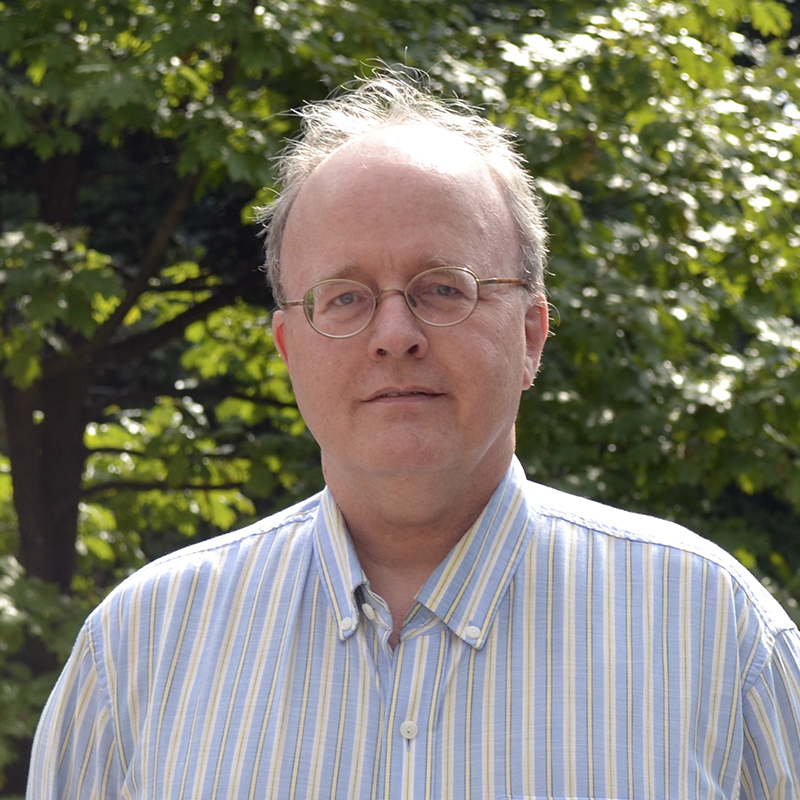
Emma Tegling is a Senior Lecturer (Associate Professor) at the Department of Automatic Control, Faculty of Engineering (LTH), Lund University, Sweden. She joined the department in January 2021 and holds a prestigious WASP (Wallenberg AI, Autonomous Systems and Software Program) professorship. Her research focuses on the analysis and control of large-scale networked systems, with applications in distributed electric power networks and socio-epidemiological networks. She is actively involved in multiple research projects, supervises several PhD students, and contributes to major academic events in control theory. Education: Ph.D. in Electrical Engineering, KTH Royal Institute of Technology (2019) M.Sc. in Engineering Physics, KTH Royal Institute of Technology (2013) B.Sc. in Engineering Physics, KTH Royal Institute of Technology (2011) Emma Tegling's research centers on the fundamental limitations of distributed control, particularly in large-scale and non-normal network systems. Her work addresses critical challenges in vehicular formations, power grids, and social networks. She develops scalable control designs, consensus protocols, and optimal control strategies for complex networked environments. Her recent publications highlight breakthroughs in string stability, transient performance, and distributed optimization. The trend in her articles shows a strong focus on mathematical control theory, network dynamics, and real-world applications in socio-technical systems. Scientific Awards: WASP professorship (Wallenberg AI, Autonomous Systems and Software Program) Emma Tegling leads and co-leads several significant research grants, including WASP NEST: Learning in Networks and Dynamics of Complex Socio-Technological Network Systems. She actively supervises PhD students such as Jonas Hansson and David Ohlin, whose work has led to novel consensus protocols and optimal control formulations. Her academic leadership extends to organizing the European Control Conference and co-organizing interdisciplinary workshops on power and democracy in modern societies. She is also involved in public engagement and academic service through supervision and project coordination. Emma Tegling is a key member of the Department of Automatic Control at Lund University, contributing to research teams focused on networked systems, control theory, and AI integration. She collaborates extensively within ELLIIT (the Linköping-Lund initiative on IT and mobile communication) and participates in cross-disciplinary labs working on AI, digitalization, and natural/artificial cognition. Her work is aligned with UN Sustainable Development Goals related to sustainable energy and resilient infrastructure.