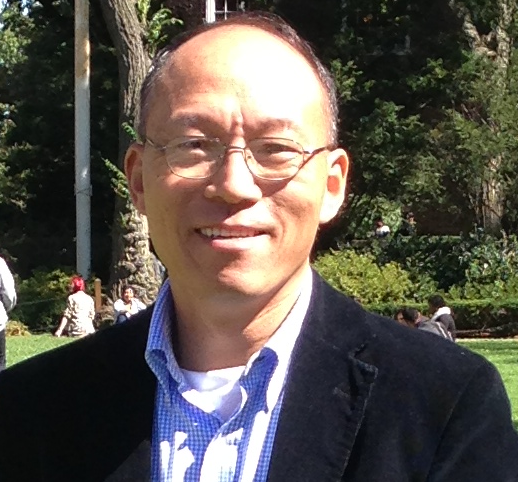
Yong Gao is a Professor of Computer Science, Data Science, and Mathematics at the University of British Columbia (UBC) Okanagan, affiliated with the Irving K. Barber Faculty of Science. He holds a PhD from the University of Alberta and leads research in algorithmic and computational problems in artificial intelligence, network science, and computational biology. His work emphasizes graph theory, probabilistic methods, and applications in social media and biological systems. Educational Background : PhD in Computer Science, University of Alberta Research Interests : Algorithmic foundations of AI and network science Graph-based methods for computational biology and social media analysis Probabilistic modeling of complex systems Awards & Grants : Recipient of multiple NSERC Discovery Grants (2006–2019) UBC Okanagan Startup Grant (2005–2008) Senior Member, Association for the Advancement of AI (AAAI) Professional Roles : Member, Centre for Optimization, Convex Analysis and Nonsmooth Analysis Graduate student supervisor Teaching : Courses in algorithm design, artificial intelligence, discrete mathematics, and network science.
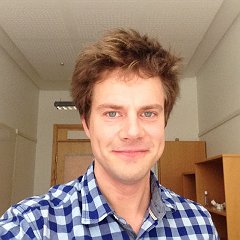
Friedrich Slivovsky is a researcher at the Institute of Logic and Computation within the Faculty of Informatics at Technische Universität Wien (Vienna University of Technology). His work focuses on theoretical and practical aspects of computational logic, with particular expertise in Quantified Boolean Formulas (QBFs), Propositional Model Counting (#SAT), and Knowledge Compilation. His research interests span the theoretical foundations and practical applications of computational logic. Slivovsky investigates the complexity of logical reasoning problems, develops efficient algorithms for solving them, and creates practical tools that implement these theoretical advances. His work bridges the gap between theoretical computer science and practical applications in areas like hardware verification, artificial intelligence, and electronic design automation. Analysis of his publication trends reveals a consistent focus on QBF solving techniques, with increasing emphasis on circuit minimization, proof complexity, and practical solver engineering. His recent work (2023-2024) shows a strong focus on circuit minimization techniques, combining QBF and SAT approaches to solve complex optimization problems in hardware design. Earlier work (2019-2021) emphasized dependency schemes, certification methods, and theoretical foundations of QBF solving. Slivovsky leads several significant software projects that have become important tools in the computational logic community: Qute : A dependency learning QBF solver with GitHub repository showing active development (latest commit December 2024) Unique : A preprocessor for (D)QBF that computes unique Skolem and Herbrand functions Pedant : A certifying DQBF solver These projects demonstrate his commitment to translating theoretical advances into practical tools that benefit the broader research community.
Alexey Ignatiev is an Associate Professor in the Optimisation research group at Monash University's Faculty of Information Technology. Previously, he was a postdoctoral researcher and researcher at the University of Lisbon's Faculty of Sciences, focusing on SAT/SMT-based decision procedures. He holds a Ph.D. from the Matrosov Institute for System Dynamics and Control Theory (Russian Academy of Sciences), where his thesis explored parallel CDCL-BDD integration. His research emphasizes formal methods in AI, including explainable AI (XAI), SAT-based reasoning, and optimization for applications like software upgradability, model-based diagnosis, and fault localization. His work spans over 100 publications, with notable contributions to MaxSAT solving (RC2 solver), neuro-symbolic frameworks (NEUSIS), and rigorous explanations for machine learning models. He has collaborated extensively with institutions like the University of Lisbon and Monash University, contributing to advancements in formal verification and interpretable machine learning.
Thomas Eiter is a Professor at TU Wien's Institute of Logic and Computation. His research focuses on declarative programming paradigms, knowledge representation, and artificial intelligence. He leads projects in neurosymbolic systems, answer set programming (ASP), and stream reasoning, with applications in visual question answering, scheduling optimization, and semantic scene generation. Eiter has contributed to foundational work in ASP semantics, computational complexity, and hybrid reasoning frameworks. His work bridges logical formalisms with practical AI challenges, emphasizing explainability and scalability. Projects like ALASPO and neurosymbolic integration showcase his focus on advancing both theoretical and applied aspects of AI. Projects: HumanE AI Network, WASP, REWERSE Research Themes: Neurosymbolic AI, Answer Set Programming, Stream Reasoning Notable achievements include pioneering work on semiring-based reasoning frameworks and developing efficient ASP solvers like Alpha. His contributions span over 471 publications, emphasizing interdisciplinary applications in computer vision, robotics, and automated planning.
Christoph Haase is an Associate Professor at the Department of Computer Science, University of Oxford, and a Fellow of St Catherine’s College. His research focuses on developing rigorous mathematical methods for algorithmic verification, automated reasoning, automata theory, and logic in computer science. University of Oxford, UK (Current) University College London, UK (Former) ENS Paris-Saclay, France (Former) Microsoft Research Cambridge, UK (Former) His work includes fundamental contributions to decision procedures for arithmetic theories, particularly in Presburger and Büchi arithmetic, and applications to verification of software and hardware systems. He leads the ARiAT project, funded by an ERC Starting Grant (2020–2025), aiming to advance quantifier elimination and complexity bounds for arithmetic theories. Key publication trends include verification , automata theory , arithmetic logic , computational complexity , and automated reasoning . Collaborations span institutions like University of Paris, UCL, and Microsoft Research. Scientific Awards : ERC Starting Grant (2019) EPSRC Doctoral Prize (during DPhil studies) He has supervised PhD and MEng projects on topics such as SAT solving, linear arithmetic, and matrix semigroups, often co-supervising with researchers like Stefan Kiefer and James Worrell. Teaching includes Logic and Proof at Oxford and Operating Systems at ENS Paris-Saclay.
Neng-Fa Zhou is a Professor of Computer and Information Science at Brooklyn College and the Graduate Center of the City University of New York (CUNY). He holds a BS from Nanjing University (1984), and MS and PhD from Kyushu University (1988, 1991). Before joining CUNY, he served as an Associate Professor at Kyushu Institute of Technology (1991-1999) and held visiting positions at Yale, Alberta, Tokyo Tech, and Melbourne. Specializes in programming languages, constraint logic programming, and compiler design Developed Picat and B-Prolog languages with constraint-based graphics libraries Contributed to SAT encodings, multi-agent pathfinding, and declarative programming Scientific Awards: Most Practical Paper Award at PADL 2017 Award in ASP Solver Competition for BPSolver (2011)
Marek Adamek is a researcher affiliated with the Institute of Computer Science at the Faculty of Electronics and Information Technology, Warsaw University of Technology. His institutional email is M.Adamek@ii.pw.edu.pl, and he maintains an external academic profile in the university repository. His research focuses on formal methods in software engineering, particularly temporal logic applications for code analysis. Key interests include: Line-of-code metrics and verification Kripke structure modeling Parallel programming constraints SAT solving for temporal logic (LTL) Software validation through formal methods His bibliometric profile shows 3 publications with a Scopus h-index of 1, total SNIP of 0.846, and CiteScore of 1.33. The Polish Ministry of Science awards him a cumulative score of 50 based on his research output. Awards and metrics: Scopus h-index: 1 (including autocitations) Total SNIP: 0.846 Total CiteScore: 1.33 Ministry Score: 50 He completed his PhD in 2019 with research centered on temporal logic applications in software engineering. His work bridges theoretical computer science and practical code analysis, particularly in parallel programming environments.
Lakhdar Sais is a Professor of Computer Science at the Centre de Recherche en Informatique de Lens (CRIL), CNRS UMR 8188, at Université d'Artois, Faculty of Jean Perrin Sciences in Lens, France. His research focuses on search and representation problems in Artificial Intelligence, including propositional satisfiability, quantified boolean formulas, constraint programming, knowledge representation and reasoning, data mining, and AI applications in Social and Human Sciences. He has supervised numerous PhD students throughout his career, with recent students including David ING (2021-present) working on migration data knowledge extraction, and previously Ikram NEKKACHE (2021), Sofiane TOUATI (2021), and Kahina BOUCHAMA (2020). His research has been recognized with multiple awards including best paper awards at SAT'11 and ICTAI'2009, and first place in the International SAT 2009 competition. His current research projects include the ANR project HYCI (2023-2026) on Hyper-places, Crises, Migrations and Inequalities, Project ERA (2022-2025) on producing new knowledge in juvenile justice and mental health, and ANR project POSTCRYPTUM (2021-2023) on algebraic cryptanalysis for post-quantum cryptography. He has also edited the Handbook of Parallel Constraint Reasoning (Springer, 2018). Scientific Awards: Best paper award at SAT'11 for 'On freezing and reactivating learnt clauses' Best paper award at ICTAI'2009 for 'Learning for Subsumption' ManySAT - First rank at International SAT 2009 competition (Parallel Track) LySAT - Two bronze medals at International SAT 2009 competition (Sequential Track) ManySAT - First rank at SAT Race 2008 competition Professor Sais has taught numerous courses including Artificial Intelligence, Constraint Programming, Knowledge Representation and Reasoning, Expert Systems, Complexity Theory, Advanced Data Structures, Algorithmics, and Functional Programming. He has served as leader of the inference and decision process research group at CRIL (2002-2013) and as Delegate Director of the CRIL laboratory (2013-2018).
Eric Reiner serves as an Adjunct Professor of Finance and Faculty Director of the Master of Financial Engineering program at UCLA Anderson School of Management. His unique academic profile bridges finance and formal methods, combining financial engineering expertise with advanced computational verification techniques. Dr. Reiner's research spans two distinct domains: traditional finance and formal methods in computer science. His work in formal methods focuses on satisfiability modulo theories (SMT), bit-precise reasoning, and model checking, with publications appearing in leading formal methods venues. This unusual interdisciplinary approach suggests innovative applications of verification techniques to financial systems, potentially addressing challenges in algorithmic trading verification, risk model validation, and financial protocol security. Analysis of his recent publications (2022-2024) reveals a strong focus on improving SMT solver capabilities, particularly for bit-vector reasoning and user extensibility. His work shows progression from theoretical foundations toward practical industrial applications, with increasing attention to proof generation, solver performance optimization, and machine learning techniques for algorithm selection. The consistent publication record in formal methods venues indicates deep technical expertise that complements his finance role. As Faculty Director of the Master of Financial Engineering program, Dr. Reiner oversees curriculum development that likely integrates both traditional finance knowledge and cutting-edge computational verification methods. This distinctive combination prepares students to develop and validate complex financial algorithms with mathematical rigor, addressing growing industry needs for verified financial technologies.
Magnus O. Myreen is a Professor in the Department of Computer Science and Engineering at Chalmers University of Technology, Sweden. He has been with Chalmers since 2014, becoming a tenured Associate Professor in 2015 and being promoted to full Professor in June 2023. Myreen has an extensive record of service to the programming languages and formal methods communities, including serving on program committees for major conferences like PLDI, POPL, ICFP, and CPP, and chairing the steering committee for the ITP conference series since November 2023. Myreen received his academic training at prestigious institutions: B.A. in Computer Science at the University of Oxford, tutored by Dr. Jeff Sanders Ph.D. on program verification in 2009 at the University of Cambridge, supervised by Prof. Mike Gordon Myreen's research focuses on program verification, interactive theorem proving, and compiler verification. He is best known for his work on the CakeML project, which is an ML-style language with a formal semantics and a growing ecosystem of proofs and tools that support construction of verified applications. As he states on his website, "My most recent work has focused on CakeML, which is an ML-style language with a formal semantics and a growing ecosystem of proofs and tools that support construction of verified applications. As far as I know, the CakeML compiler is the first verified compiler to have been bootstrapped." His research spans several key areas: Decompilation into logic — verification of machine code Proof-producing synthesis from logic Verified Lisp and ML runtimes Connecting things up: verified stacks Myreen's publication record shows a strong focus on verified compilation and theorem proving, particularly through the CakeML ecosystem. His work consistently bridges the gap between theoretical foundations and practical implementation, with numerous papers on verified compilers, program verification, and theorem proving. A significant trend in his recent work (2021-2024) has been extending CakeML's capabilities to handle more complex language features, improve performance, and verify increasingly sophisticated compilation techniques including bootstrapping and dynamic computation. Myreen has received several prestigious awards and recognitions: Winner of the BCS Distinguished Dissertation Competition 2010 for his PhD work Royal Society Research Fellow (UK) since 2012 ACM SIGPLAN Most Influential POPL Paper Award for the 2014 CakeML paper Amazon Research Award for his proposal "Compiling Dafny to CakeML" Myreen has advised several PhD students to completion, including Alejandro Gomez (Sep 2017 – Jun 2023), Oskar Abrahamsson (Aug 2017 – Dec 2022), and Andreas Loow (Sept 2016 – Sep 2021). He also collaborated with postdocs including Hira Syeda, Thomas Sewell, and Johannes Aman Pohjola. His research has been supported by various funding sources, though specific grants aren't detailed in the provided text. Notably, he received an Amazon Research Award for his work on compiling Dafny to CakeML, and his CakeML project has clearly attracted significant attention in the programming languages and formal methods communities. Myreen leads research on the CakeML project, which has grown into a substantial ecosystem for verified compilation. The project involves a team of researchers working on various aspects including compiler verification, program synthesis, and theorem proving. Myreen also collaborates with researchers at other institutions, as evidenced by his visits to EPFL (meeting Viktor Kuncak, Martin Odersky, and James Larus) and NUS (visiting Ilya Sergey's group). In October 2023, he began a ten-month sabbatical at Cambridge UK, where he worked part-time for Arm Ltd., indicating ongoing industrial collaboration.
Rui SA SHIBASAKI is a Lecturer at the University of Picardie Jules Verne (UPJV), France, affiliated with research unit UR 4290. Her work bridges optimization theory and industrial applications, with a growing focus on sustainable manufacturing and robust decision-making under uncertainty. She maintains active collaborations across France, Brazil, and the USA. Her research spans optimization , artificial intelligence , and operations research , specializing in constraint programming applications for assembly line balancing, network design, and energy efficiency. Recent work innovates by applying MaxSAT solvers to combinatorial problems and developing robustness metrics for production systems. Analysis of her 13 publications (2020-2025) reveals three dominant trends: (1) Energy-aware manufacturing optimization (40% of recent work), (2) Advanced decomposition techniques for network problems (30%), and (3) Diversified solution approaches for satisfiability (20%). Her research increasingly addresses sustainability through energy peak minimization in production systems. Dr. Shibasaki actively supervises graduate students and collaborates internationally with researchers from Federal University of Minas Gerais (Brazil), CNRS (France), and IBM Research (USA). Her work is supported by competitive grants enabling participation in major conferences like ROADEF and IEEE ICTAI. As part of UPJV's UR 4290 research unit, she contributes to optimization and cryptography initiatives. While no formal lab name is specified, her work centers on developing practical AI-driven optimization tools for industrial challenges, particularly in manufacturing and logistics.