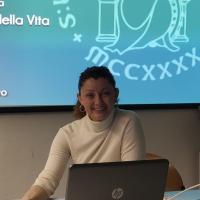
Giuseppina Guagnano is an Associate Professor at the Department of Methods and Models for Economy, Territory, and Finance at the University of Rome "La Sapienza". Her research focuses on measurement error models, two-step models, social capital, and tax evasion. Research Interests: Measurement error models, Two-step models, Social capital, Tax evasion Recent Publication Trends (2019–2025): 8/15 articles address undeclared work, tax evasion, and measurement error. 5/15 focus on social capital's impact on demographics and policy. 3/15 analyze social theater projects through quantitative surveys. Teaching: Leads courses in Statistics and Statistical Models for Business, with detailed grading policies and office hours (Tuesday 11:00–13:00). Provides extensive course materials on e-learning platforms, including R code, datasets, and lecture slides.
Claudia Landi is an Associate Professor at the Department of Life Sciences, University of Siena. She currently teaches PROTEOMICS and TRANSLATIONAL BIOLOGY courses in the second-cycle degree (Laurea Magistrale) program in Biology for the 2025/2026 academic year. Her office hours are scheduled via email consultation. Research Focus: Dr. Landi's work spans proteomics, molecular biology, and translational research with applications in: Respiratory diseases (asthma, IPF, lung cancer) Reproductive biology (sperm/ovarian function, infertility biomarkers) Proteomic methodology development Multi-omics integration in extracellular vesicles Publication Trends: Her recent articles (2021-2025) demonstrate strong emphasis on: Clinical proteomics for biomarker discovery in pulmonary and reproductive disorders Mechanistic studies of fibrosis and cancer resistance pathways Innovative sample preparation and analytical techniques Translational applications of extracellular vesicle research Collaborative Work: Research involves extensive national/international collaborations as evidenced by multi-author publications across European research institutions.
Annalisa Falace is an Associate Professor at the University of Trieste within the Department of Life Sciences (DSV) . She specializes in Environmental and Applied Botany (BIO/03) with focus on marine macroalgae, coastal habitat ecology, and restoration of Cystoseira stands. PhD in Environmental Biomonitoring (University of Trieste) Specialization courses: Algology Laboratory (Trieste), Roscoff Biological Station (France), Pierre and Marie Curie University (Paris VI), ARAGO Laboratory (Banyuls-sur-Mer) Her research emphasizes interdisciplinary approaches combining taxonomic , physiological , and ecological studies. Key projects include: Biodiversity monitoring through macroalgal indicators (Water Framework Directive) Eco-physiological responses to herbicides, temperature stress, and osmotic stress Innovative restoration methodologies for marine forests Coralligenous habitat analysis and rhodolith bed conservation Current leadership roles include Scientific Manager for: LIFE21-NAT-IT-REEForest (active) Posidonia monitoring projects (active) iNEST Interconnected North-East Innovation Ecosystem (active) She mentors researchers and students through involvement in doctoral committees and supervises lab members including Dr. Sara Kaleb and Dr. Annalisa Caragnano. Her work contributes to: Marine Strategy Framework Directive compliance Horizon 2020 environmental protection measures Adriatic Sea conservation initiatives
Sabrina Pacor is an Associate Professor in Applied Biology (BIO/13) at the University of Trieste , where she teaches Pharmacology in the Pharmacy LM and STB BSc programs. With over 30 years of research experience in experimental oncology and host defense peptides, she has made significant contributions to studying antimicrobial peptides (AMPs) and their interactions with bacterial membranes. Her research focuses on: Direct antimicrobial activity of AMPs against Gram-positive and Gram-negative bacteria Indirect immunomodulatory effects of host defense peptides Development of drug delivery systems using nanomaterials (carbon nanotubes, gold nanoparticles) Mechanistic studies of ruthenium-based antimetastatic drugs She leads extensive cytofluorimetry research using flow cytometry platforms, particularly for evaluating: Cytotoxicity (necrosis/apoptosis, proliferation index) Modulation of host biological responses (chemotaxis, phagocytosis, ROS production) Peptide-bacterial membrane interactions through fluorescent labeling Her recent work demonstrates trends in: Proline-rich antimicrobial peptides against ESKAPE pathogens Hybrid antibiotic design (peptide-aminoglycoside conjugates) Structure-activity relationships in membranolytic peptides Evolutionary insights into defensin and cathelicidin families Prof. Pacor has co-authored over 100 peer-reviewed publications and actively mentors students, having supervised: 70 experimental/thesis reviews for Pharmacy/CTF Master's students 20 Bachelor's degree theses
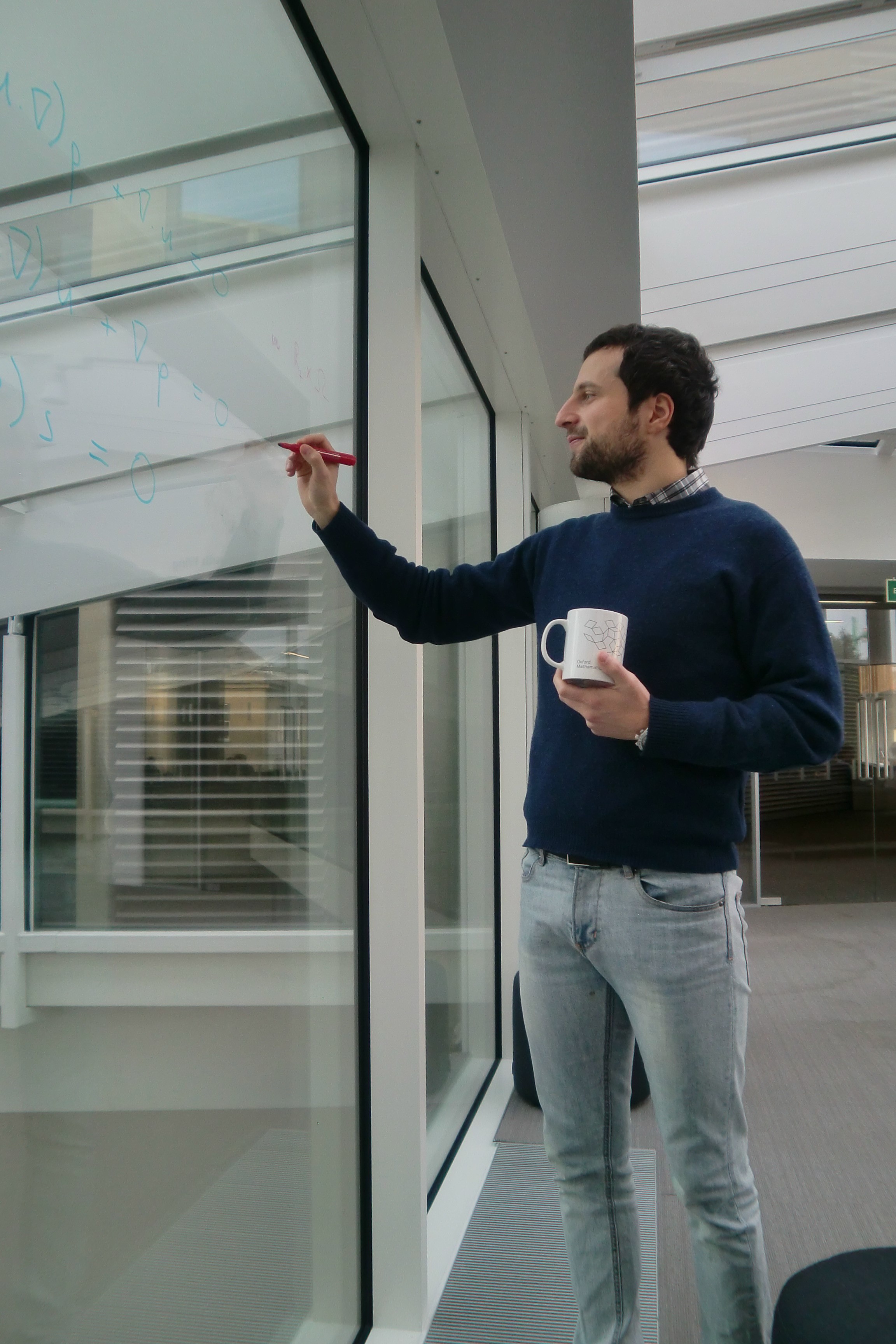
Giovanni Alberti is a Full Professor in Mathematical Analysis at the Department of Mathematics (DIMA) of the University of Genoa. He earned his D.Phil. at the University of Oxford and completed postdoctoral positions at École Normale Supérieure (Paris) and ETH Zurich. His research focuses on partial differential equations, applied harmonic analysis, inverse problems, and machine learning. University of Genoa MaLGa Center (Machine Learning Genoa) Mathematical Institute, Oxford Maths Department, ETH Zurich His work bridges mathematical analysis with computational methods, particularly in inverse problems , compressed sensing , and machine learning . He has developed algorithms for real-time geotechnical predictions, sparse optimization for scatterer localization, and continuous generative models. Recent publications emphasize physics-data-driven integration and low-dimensional manifolds. He received the Gioacchino Iapichino Prize (2017), Eurasian Association on Inverse Problems Young Scientist Award (2018), and an ERC Starting Grant (2021). He serves on editorial boards for journals including Inverse Problems and SIAM Journal on Imaging Sciences.
Nereo Kalebic is a Research Group Leader at the Centre for Neurogenomics, focusing on molecular and cell biological mechanisms underlying human neocortex development, its implications for neurodevelopmental disorders, and brain cancers. He holds a BSc in Molecular Biology from the University of Zagreb (2007) and a PhD from the European Molecular Biology Laboratory (EMBL) and the University of Heidelberg (2012). His postdoctoral research (2013-2019) at the Max Planck Institute explored neocortex development and evolution. Research interests include neural stem cell biology, glioblastoma stem cell mechanisms, and evolutionary aspects of cortical expansion. His group employs CRISPR/Cas9, advanced live imaging, and cerebral organoids to study these topics. Key projects involve identifying therapeutic targets in glioblastoma and understanding how developmental pathways contribute to neurodevelopmental disorders like Down syndrome. Publications highlight breakthroughs in mechanisms driving tumor growth, neurogenesis differences between humans and Neanderthals, and serotonin receptor roles in progenitor proliferation. The group also develops innovative imaging techniques, such as SOLIST for nanoscale tissue analysis. Advising includes mentoring PhD students (Carlotta Barelli, Ilaria Bertani, Emanuele Capra, Nikola Cokorac, Stefania Faletti) and postdoctoral researchers. Collaborative projects utilize ferret models and human primary samples to bridge basic research and clinical applications. Future work aims to dissect cancer-cell proliferation parallels with neural development and uncover evolutionary mechanisms shaping human cognitive abilities through neocortex expansion.
Elena ARGIRIADIS is an Adjunct Professor at the Department of Environmental Sciences, Informatics and Statistics (DAIS) at Ca' Foscari University of Venice. Her research focuses on environmental chemistry, geochemistry, and paleoenvironmental analysis, with a particular emphasis on biomarkers and their applications in reconstructing historical human-environment interactions and climate change. She has contributed to studies on fecal biomarkers in archaeological and geological contexts, paleofire activity through speleothems, and geochemical reconstructions of ancient ecosystems. Elena's teaching activities include laboratory courses in Analytical Chemistry for Environmental Sciences students, emphasizing practical skills in environmental chemistry techniques. Her work integrates multidisciplinary approaches to address questions in climate science, archaeological chemistry, and ecological dynamics. Her recent publications explore topics such as herbivore impacts in Yellowstone National Park, Bronze Age soil horizons in Italy, and tropical Australian stalagmites as paleofire proxies. She collaborates internationally on projects like the Easter Island geochemical record and New Zealand's prehistoric fire history. Despite her extensive contributions, no specific scientific awards are explicitly listed in the provided materials.
Prof. Stefano Accoroni is an Associate Professor at the Department of Life and Environmental Sciences (Università Politecnica delle Marche, UNIVPM), affiliated with the Sciences faculty. His research focuses on marine ecology, phytoplankton dynamics, and harmful algal blooms (HABs), particularly in the Adriatic Sea. He leads studies on species like Ostreopsis cf. ovata and Pseudo-nitzschia, investigating their ecological impacts, toxin production, and responses to environmental changes. His work integrates molecular techniques (e.g., metabarcoding) with traditional microscopy to assess biodiversity and ecological shifts. Recent projects emphasize climate change effects on marine ecosystems, including ocean warming, marine heatwaves, and long-term phytoplankton biomass trends. Accoroni collaborates on interdisciplinary initiatives like the M3-HABs project, addressing HAB monitoring, modeling, and mitigation across Mediterranean regions. His contributions include toxin analysis in shellfish, subcellular effects of toxins on marine organisms, and methodological advancements in HAB sampling.
Nicola Gatti is an Associate Professor in Computer Science and Artificial Intelligence at the Department of Electronics, Information and Bioengineering, Politecnico di Milano. He serves as Co-director of the Observatory Artificial Intelligence of Politecnico di Milano and holds board positions at the Italian National Laboratory of Artificial Intelligence and Intelligent Systems (CINI AIIS) and the Italian Association for Artificial Intelligence (AIxIA). His research spans the intersection of Computer Science, Microeconomics, Optimization, and Machine Learning, with specific focus on Algorithmic Game Theory, Mechanism Design, and Online Learning. He has made significant contributions to areas including negotiation, security games, equilibrium computation, sponsored search auctions, online advertising, election manipulation, and regret minimization in economic problems. Gatti's recent publications demonstrate strong trends in applying game-theoretic and learning approaches to practical problems in advertising, contract design, and constrained decision making. His work frequently appears in top AI venues including AAAI, AAMAS, NeurIPS, and ICML, reflecting his standing as one of the most prolific AI researchers in Italy. He has received notable recognition including being awarded as the best Italian young researcher on Artificial Intelligence in 2011 by AIxIA. His research is supported through competitive projects like PRIN2017 Algadimar and industrial collaborations with companies including lastminute.com, DoveVivo, MMM group, AdsHotel, Analisi e Valore, and the Italian Navy. In addition to his research, Gatti is actively involved in education, teaching courses on Systems Informatics, Economic and Computation, Data Intelligence Application, and specialized industry courses on Online Machine Learning and Algorithmic Game Theory for companies including lastminute.com, Niuma, and Ferrari GES Scuderia F1. Since 2018, he has chaired the Honours Programme in Scientific Research in Information Technology at Politecnico di Milano.
Daniela Marella is a Professor at the Department of Social and Economic Sciences, Sapienza University of Rome. She teaches Statistics and holds office hours on Tuesdays from 10:00 AM to 12:00 PM. Her email address is daniela.marella@uniroma1.it . Teaching: Statistics (Sociology, Economics, Development Studies) Research: Statistical matching, Bayesian networks, survey sampling, uncertainty quantification Publications: 15+ articles on non-probability sampling, measurement error, and interrater agreement Her research focuses on statistical matching methodologies, Bayesian network applications in survey data, and handling selection bias in non-probability samples. She explores measurement error modeling, empirical likelihood approaches, and resampling techniques for complex survey designs. Recent publications emphasize uncertainty analysis in statistical matching, graphical models for data integration, and Bayesian structural learning. Key areas include non-ignorable sampling, ordinal categorical data agreement, and pseudo-population resampling frameworks.
Antonio Cosma is a faculty member at the Department of Business Sciences, University of Bergamo. He holds a Doctorate in Economics and a Master’s in Financial Economics from Université catholique de Louvain. His research focuses on microeconometrics, financial econometrics, and semi/non-parametric statistical methods. Doctorate: Economics, Université catholique de Louvain Master’s: Financial Economics, Université catholique de Louvain His work analyzes conditional moment restrictions, tail dependence in global markets, and wavelet-based estimation techniques. Publications appear in journals like Journal of Financial and Quantitative Analysis and Bernoulli , with a focus on computational finance and statistical modeling for economic data. Recent articles investigate stochastic volatility in American options, stratification effects in econometric inference, and diversification risks in hedge fund markets. He teaches Elementi di Matematica and Strumenti per la Misurazione del Rischio at the University of Bergamo.
Raffaele Argiento is a Full Professor of Statistics at the Department of Economics, University of Bergamo since September 2021. His academic career focuses on advanced statistical methodologies with applications across various domains including environmental science, public health, and data analysis. His research is prominently featured in high-impact statistical journals and conference proceedings. Argiento's research interests center around Bayesian statistical methods, particularly in functional data analysis, nonparametric Bayesian modeling, and clustering techniques. His work demonstrates expertise in developing innovative statistical approaches for complex data structures, including spatio-temporal data, categorical variables, and high-dimensional datasets. His research has significant applications in environmental monitoring (particularly air pollution analysis), public health (obesity rate modeling), and seismic monitoring through crowdsourced data. His methodological contributions include advancements in mixture models, partition models, and computational algorithms for statistical inference. His recent publication record shows a strong trend toward developing computationally efficient Bayesian methods for real-world applications. The research spans from theoretical developments in nonparametric Bayesian statistics to practical implementations for environmental monitoring, health data analysis, and functional data processing. His work demonstrates a consistent focus on bridging theoretical statistical advancements with practical applications across multiple scientific domains. Professor Argiento teaches several advanced statistical courses at the University of Bergamo, including Applied Statistical Modelling , Probability and Statistics , and Statistical Models for both undergraduate and graduate programs in Economics and Data Analysis. His teaching reflects his research expertise, emphasizing modern statistical methodologies and computational approaches.
Gaia BERTARELLI is an Assistant Professor (Tenure-Track) in Social Statistics at the Department of Economics, Ca' Foscari University of Venice. She holds a PhD in Statistics from the University of Milan-Bicocca (2015), with earlier degrees in Mathematics (Bachelor) and Biostatistics (Master). Her research focuses on small area estimation (SAE), robust statistics, latent variable models, and multidimensional poverty measurement, with applications in health systems, gender inequality, and sustainable well-being. She collaborates with institutions like ISTAT (Italian National Institute of Statistics), FAO, and Save the Children ONLUS, and has been involved in EU-funded projects since 2018. Education: Bachelor's in Mathematics, University of Milan-Bicocca Master's in Biostatistics and Experimental Statistics, University of Milan-Bicocca PhD in Statistics, University of Milan-Bicocca (2015) Research Interests: Her work integrates statistical methodology with real-world challenges, emphasizing poverty measurement, health systems analysis, and gender inequality. She develops SAE models to assess multidimensional poverty and policy effectiveness, particularly in official statistics. Her recent projects include measuring educational poverty, analyzing healthcare disparities in aging populations, and evaluating digital health interventions. Editorial Roles: Associate Editor, Statistical Methods & Applications (2024–) Editor of 'Book and Software' section, The Survey Statistician (2024–) Professional Activities: Member of the S2G group (SIS) on Methodologies for Sample Surveys (2024–2025) Past coordinator of y-SIS (Young Italian Statisticians) and YSE (Young Statisticians Europe) Labs/Teams: She contributes to the Research Institute for Social Innovation at Ca' Foscari, focusing on interdisciplinary social science research.
Stefano Materazzi is an Associate Professor at the Department of Chemistry, Sapienza University of Rome. His research focuses on analytical chemistry, forensic chemistry, and biomedical applications. He specializes in developing innovative analytical methodologies using techniques like MicroNIR spectroscopy, thermoanalytical methods (TGA/EGA), and chemometrics. Key areas include drug delivery systems, environmental analysis, and diagnostic tools for hemoglobinopathies. His work emphasizes green analytical chemistry and portable sensing technologies. Education: Not explicitly stated in texts, inferred via professional roles. Affiliations: Sapienza University of Rome (Department of Chemistry). Research interests span microencapsulation strategies for probiotics, PFAS detection in waste, olive maturation sensing, and forensic applications of thermal analysis. Recent studies include early detection of sickle cell anemia and thalassemia using TGA/chemometrics. He collaborates on projects like 'Development of innovative analytical methodologies for hemoglobinopathies screening in the Lazio Region.' Publications highlight advancements in portable analytical platforms (e.g., MicroNIR) for on-site testing of drugs, food quality, and environmental samples. His work bridges fundamental chemistry with practical applications in health, environment, and industry. Grants/Projects: Development of innovative analytical methodologies for hemoglobinopathies screening in the Lazio Region. A nutraceutical approach for superior quality milk. Labs/Teams: Involved in multidisciplinary teams focusing on analytical chemistry, nanotechnology, and biomedical applications at Sapienza University.
Nicolò Bellarmino is a Researcher at the Department of Control and Computer Science (DAUIN), Politecnico di Torino, where he also serves as an External Lecturer and Teaching Assistant. His work is centered on machine learning applications in electronic design automation, particularly in microcontroller performance screening and reliability assessment of deep learning hardware. His research interests include machine learning for embedded systems, feature selection, neural network testing, and reliability engineering. He employs techniques such as evolutionary algorithms, transfer learning, and fault injection to develop efficient and robust methodologies for semiconductor testing and DNN accelerator validation. The recent publications highlight a strong focus on data-efficient and automated approaches for performance prediction and reliability assessment, leveraging foundation models, unsupervised learning, and hierarchical modeling. These works span journals and top-tier conferences in computer-aided design, electronics, and machine learning. He has no listed scientific awards in the provided text. Bellarmino actively contributes to teaching in the Computer Engineering and Aerospace Engineering programs, collaborating on courses such as Systems Programming, System and Device Programming, and Future of Work. He is a member of the CAD - Electronic CAD & Reliability Group (DAUIN), contributing to cutting-edge research in EDA and hardware reliability. No grants or advising roles are mentioned.