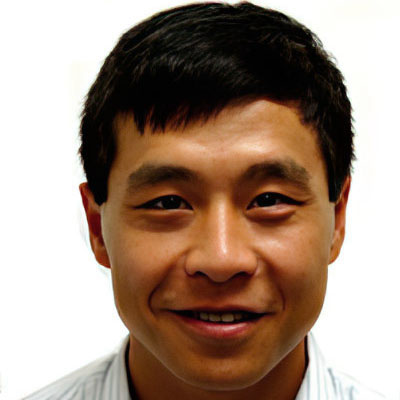
Zhiyi Chi is a Professor in the Department of Statistics at the University of Connecticut (Storrs Campus). His research focuses on stochastic processes with large jumps, random sampling techniques, stochastic optimization, and large-scale hypothesis testing. He holds an office in AUST 336 and can be reached at zhiyi.chi@uconn.edu. Key contributions include works published in Journal of Theoretical Probability (2018) and Annals of Applied Probability (2016), addressing topics such as multivariate renewal theorems and eigenvalue properties of Markov matrices. His scholarship bridges theoretical foundations and applied methodologies in probability and statistics.
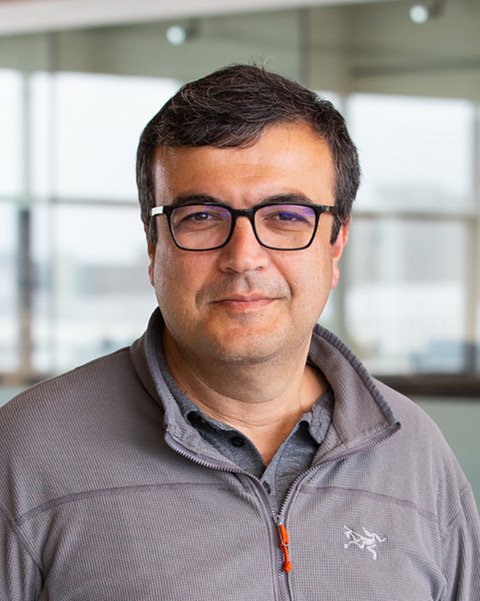
Ozgur Yilmaz is a Professor in the Department of Mathematics at the University of British Columbia (UBC). He is the Director of the Pacific Institute for the Mathematical Sciences (PIMS) and has held roles such as Interim Deputy Director at PIMS and Deputy Director at the Banff International Research Station (BIRS). His research focuses on applied harmonic analysis, signal processing, compressed sensing, and seismic signal processing. Education: PhD in Applied and Computational Mathematics from Princeton University (2001), B.Sc. in Mathematics and Electrical Engineering from Boğaziçi University (1997). Research Interests: Mathematical problems in analog-to-digital conversion, blind source separation, sparse approximations, compressed sensing, and their applications in seismic exploration. He has contributed to advancements in sigma-delta quantization, low-rank matrix recovery, and compressed sensing algorithms. Funding: Recipient of NSERC Discovery Grants, UBC Data Science Institute grants, and leadership in collaborative research groups (CRGs) on high-dimensional data analysis and applied harmonic analysis. His work bridges theoretical mathematics with practical applications in signal processing and AI-driven medical imaging. Students and Postdocs: Supervised numerous PhD and MSc students in areas like compressed sensing, seismic data reconstruction, and machine learning. Current advisees include Aaron Berk and Xiaowei Li. Former students hold positions at academic institutions and tech companies. Labs and Collaborations: Affiliated with UBC’s Data Science Institute (DSI), Centre for Artificial Intelligence Decision-making and Action (CAIDA), and the Institute of Applied Mathematics (IAM). Collaborates on projects integrating AI with scientific discovery, such as retinal biomarker identification using deep learning.
Marcel Böhme is a faculty member at the Max Planck Institute for Security and Privacy (MPI-SP) , leading the Software Security research group. His work focuses on foundational advancements in fuzzing , statistical program analysis, and scalable vulnerability discovery. Education: PhD from National University of Singapore (NUS) Research interests span: Statistical and causal frameworks for software testing Efficiency/Scalability of automated testing Fundamental limits of vulnerability detection Practical fuzzing technology (e.g., Entropic in LibFuzzer) Recent publications highlight trends in: Machine learning for security analysis Privacy-preserving statistical methods Future-proof security frameworks Protocol fuzzing with large language models Scientific accolades include: ERC Consolidator Grant (2024) NUS Outstanding Young Alumni Award (2022) ARC DECRA (2019) Multiple ACM Distinguished Paper Awards He serves as: Spokesperson for Research Group Leaders at Max Planck Society Guest Editor-in-Chief for ACM TOSEM PC Chair for ASE'25 and ISSTA'26
John Wright is an Assistant Professor in the Department of Electrical Engineering and Computer Sciences at the University of California, Berkeley. His research centers on theoretical computer science with a focus on quantum computing, specifically quantum state learning, quantum complexity theory, property testing, and approximation algorithms. He is affiliated with the Simons Institute for the Theory of Computing. Education includes a Ph.D. in Computer Science from Carnegie Mellon University (2016), advised by Ryan O'Donnell, and a B.Sc. in Computer Science from the University of Texas at Austin. Research interests span quantum complexity, interactive proofs (e.g., MIP* = RE), quantum algorithms, and foundational aspects of quantum computation. His work bridges computer science, physics, and mathematics, with emphasis on understanding computational limits through quantum paradigms. Publications primarily explore quantum complexity, algorithms, and verification, with recent trends including quantum cryptography, tomography, and hardness proofs. Articles frequently involve collaborations with researchers like Thomas Vidick, Henry Yuen, and Ryan O'Donnell. Awards include the IEEE CS TCPAMI Young Researcher Award (2015). Teaching covers graduate and undergraduate courses such as CS 170 (Efficient Algorithms and Intractable Problems) and CS 294 (Quantum Complexity Theory). He advises students in quantum computing research and collaborates extensively across institutions. Labs/teams include the Quantum Computing group at UC Berkeley, with ties to the Simons Institute. Research support is managed by Amy Frithsen.
Jun Yang is a Tenure Track Assistant Professor at the Department of Mathematical Sciences, University of Copenhagen. His research spans computational statistics and machine learning, with a focus on high-dimensional inference, time series analysis, and Monte Carlo methods. Current Position: Tenure Track Assistant Professor, University of Copenhagen (2023–present) Previous Role: Florence Nightingale Bicentennial Fellow, University of Oxford (2020–2023) Education: Ph.D. in Statistics, University of Toronto (2020), advised by Daniel M. Roy and Jeffrey S. Rosenthal Research Interests: Jun’s work addresses the intersection of computational statistics and machine learning, including: - High-dimensional Markov chain Monte Carlo (MCMC) algorithms - Bayesian variable selection in complex models - Spectral inference for nonlinear time series - Quantitative bounds and complexity analysis for MCMC Publications: His publications highlight advancements in high-dimensional sampling, time series analysis, and algorithm design. Key contributions include: - Dimension-free mixing results for Bayesian variable selection - Stereographic projection techniques for MCMC - State-domain change point detection in nonlinear regression Awards: Florence Nightingale Bicentennial Fellow, University of Oxford (2020–2023) Collaborations: Jun collaborates with researchers like K. Łatuszyński, G.O. Roberts, and J.S. Rosenthal, advancing statistical theory and applications in econometrics, machine learning, and stochastic processes.
Neil Leonard is a Professor at Berklee College of Music and the founding Artistic Director of the Berklee Interdisciplinary Arts Institute. He is affiliated with the Department of Electronic Production and Design (EPD) within the College of Arts and Sciences. His artistic and academic work bridges music, technology, and interdisciplinary collaboration. Ph.D. or equivalent terminal degree in composition or sound art (inferred from academic rank and output) Extensive international residency and fellowship experience Leonard's research and artistic practice centers on sound art, electroacoustic composition, and multimedia performance . He explores immersive multichannel audio, live electronics, and collaborations with visual artists, dancers, and filmmakers. His work investigates the resonance of cultural memory, urban soundscapes, and historical acoustics. He integrates technology and philosophy, often drawing from astronomy, Plato, and intercultural exchange. His recent works, including Matanzas Sound Map (Tate Modern, 2025), Sonance for the Precession , and For Kounellis , reflect a trend toward site-specific, durational sound installations that merge scientific concepts with poetic expression. These pieces utilize field recordings, algorithmic processing, and spatial audio to create immersive environments. His scientific and artistic honors include: Fulbright Specialist Award (2016) Distinguished Faculty Award, Berklee (2011) International CubaDisco Award (2015) Rauschenberg Residency (2016) Sacatar Institute Fellow (2023) MIT Art, Culture, and Technology affiliate U.S. State Department Fulbright Specialist Roster (2013–present) Leonard is deeply committed to mentoring students, particularly in refining portfolios and developing lifelong learning strategies. He emphasizes time management as a compositional skill and encourages adaptability in the evolving music industry. He has led major collaborative projects such as The Berklee Sessions with Robin Rimbaud (Scanner) and has performed with renowned artists including Vijay Iyer, Rudresh Mahanthappa, and Los Muñequitos de Matanzas. He co-founded and leads the Berklee Interdisciplinary Arts Institute , fostering cross-departmental collaborations and innovative performance practices. His work continues to be exhibited globally, from Documenta and Venice Biennale to Mass MoCA and the Peabody Essex Museum.
Daniel Roy is a Full Professor at the University of Toronto, holding cross-appointments in the Department of Statistical Sciences, Computer Science, Electrical and Computer Engineering, and the Department of Computer and Mathematical Sciences at UTSC. He is also a Canada CIFAR AI Chair and Research Director at the Vector Institute, reflecting his leadership in AI and machine learning research. His educational background includes a PhD, MEng, and BSc in Computer Science from MIT, where his doctoral work earned the MIT EECS Sprowls Award. Prior to joining Toronto, he was a Newton International Fellow at the Royal Society and a Research Fellow at Emmanuel College, University of Cambridge. His research centers on foundational principles in machine learning, statistics, and probabilistic reasoning. Key interests include statistical learning theory, Bayesian nonparametrics, probabilistic programming, and information-theoretic generalization. His work bridges theoretical computer science, mathematical logic, and applied probability. His recent publications, appearing in ICML, NeurIPS, COLT, and JMLR, reflect a strong focus on theoretical advances in generalization, online learning, and stochastic optimization. Themes include minimax rates, conditional mutual information, and the role of data in PAC-Bayes bounds. His group has made foundational contributions to probabilistic programming, including work on Church and the computability of conditional probability. NSERC Discovery Accelerator Supplement Ontario Early Researcher Award Google Faculty Research Award Newton International Fellowship MIT EECS Sprowls Award Daniel Roy advises numerous PhD students and postdoctoral researchers, many of whom have gone on to prestigious positions in academia and industry. His group actively collaborates with leading researchers in machine learning and statistics. He is also an Action Editor for the Journal of Machine Learning Research and Transactions of Machine Learning Research, underscoring his role in shaping the field. He leads a vibrant research group focused on theoretical machine learning and probabilistic modeling, and maintains active collaborations with institutions such as MIT, Cambridge, and the Vector Institute. He is also the founder and maintainer of the probabilistic-programming.org wiki, a key resource in the community.
Marek Petrik is an Associate Professor in the Department of Computer Science at the University of New Hampshire, where he is also a member of the artificial intelligence research group. Prior to joining UNH, he was a Research Staff Member at IBM’s T. J. Watson Research Center. He received his Ph.D. in Computer Science from the University of Massachusetts Amherst in 2010 under the supervision of Shlomo Zilberstein. In 2022–2023, he was a visiting faculty researcher at Google Research. Education: Ph.D. in Computer Science, University of Massachusetts Amherst, 2010 His research focuses on robust, data-driven decision making , particularly in reinforcement learning with limited data, risk aversion, and Bayesian models of uncertainty. His work spans theoretical advances in robust Markov decision processes (MDPs), policy optimization, and imitation learning, with applications in natural resource management, agriculture, renewable energy, and space systems. Recent publications emphasize provable robustness, percentile optimization, and safe offline reinforcement learning. His recent work (2023–2025) demonstrates strong trends in risk-averse reinforcement learning , robust policy gradients , offline learning under uncertainty , and Bayesian approaches to decision-making . He frequently publishes in top venues such as NeurIPS, ICML, UAI, AAAI, and journals like JMLR and Mathematics of Operations Research. Scientific Awards: Best Student Paper Award, Uncertainty in Artificial Intelligence (UAI), 2015 Marek Petrik has advised numerous students and collaborators, particularly in the areas of robust RL and safe decision-making. His research has been supported by academic and industry collaborations, including IBM and Google. He is not currently accepting new PhD students. He is actively involved in developing methods for controlling invasive species , pest monitoring , and optimizing environmental systems . Labs and Research Groups: Artificial Intelligence Research Group, University of New Hampshire Former member: Mathematical Sciences Department, IBM T. J. Watson Research Center Visiting researcher: Google Research, 2022–2023
Zhengyuan Zhou is an Assistant Professor in the Department of Technology, Operations, and Statistics at the Leonard N. Stern School of Business, New York University. He is also associated faculty at the Department of Computer Science and Engineering, Tandon School of Engineering, and affiliated with the NYU Center for Data Science. He joined NYU Stern in 2020 after serving as an IBM Goldstine Research Fellow and a Visiting Scholar at NYU Stern during 2019–2020. Education: Ph.D., Electrical Engineering, Stanford University, 2019 Master’s in Computer Science, Stanford University Master’s in Statistics, Stanford University Master’s in Economics, Stanford University B.A., Mathematics, UC Berkeley B.S., Electrical Engineering and Computer Sciences, UC Berkeley His research centers on the intersection of machine learning, stochastic optimization, control theory, and game theory, with a focus on data-driven decision-making. He develops algorithms for reinforcement learning, contextual bandits, and policy learning under uncertainty, with applications in inventory control, revenue management, and auction bidding. His work emphasizes sample efficiency, computational tractability, and robustness. The recent publications reflect a strong trend in distributionally robust learning , offline reinforcement learning , and multi-agent systems , particularly in settings with delayed feedback, adversarial environments, and adaptive data collection. His articles span top journals in operations research, machine learning, and control theory. Scientific Awards and Honors: IBM Goldstine Fellowship (2019–2020) INFORMS Nicholson Award Finalist (2017, 2018) NSF and ONR grants (multiple, 2021–2027) NYU Research Catalyst Prize (2023) Horizon Robotics, Bain, and JP Morgan faculty awards (2021) CRA Outstanding Undergraduate Researcher (2013) Zhou advises PhD students in operations management and has served on dissertation committees at Georgia Tech and Tsinghua University. He has received over $1.8 million in research funding from NSF, ONR, and industry partners. He is actively involved in editorial roles as Associate Editor for Management Science , Operations Research , and Mathematics of Operations Research , and as Area Chair for NeurIPS, ICML, and ICLR. He also mentors high school students through logic and cryptography programs at Stanford’s Pre-Collegiate Summer Institute.
Lionel Truquet is a Lecturer-Researcher in Statistics and Director of Research at ENSAI (École Nationale de la Statistique et de l'Analyse de l'Information). His research focuses on advanced statistical methodologies, including time series analysis, Markov chains, and ecological data modeling. He has contributed to multivariate autoregressive binary models, compact space time series models, and nonstationary count processes. Research Interests: His work emphasizes statistical theory applied to dependent data, with a strong focus on ecological applications. Key areas include ergodic properties of Markov chains, mixing properties of time series, and modeling presence-absence data. His methods address challenges in high-dimensional and nonstationary environments. Publications: Recent work includes influential contributions such as the TJALLING C. KOOPMANS ECONOMETRIC THEORY PRIZE-winning paper on iterations of dependent random maps. His publications span top journals like Bernoulli, the Annals of Applied Probability, and the Journal of Time Series Analysis, reflecting his expertise in both theoretical and applied statistics. Teaching: He teaches advanced courses such as Asymptotic Statistics and Dependence at the M2 level, reflecting his commitment to training future statisticians in cutting-edge methodologies.
Rocio Lilen Segura is an Assistant Professor in the Department of Civil, Environmental and Sustainable Engineering at Santa Clara University's School of Engineering. She holds a Ph.D. in Civil Engineering from Sherbrooke University (2019) and a B.Sc. in Civil Engineering from Del Comahue National University (2013). Dr. Segura specializes in infrastructure resilience against extreme events and climate change, focusing on probabilistic risk assessment of critical infrastructure systems like dams and levees. Her work bridges civil engineering with machine learning and climate justice, integrating built, natural, and social systems to address environmental challenges. 2023 Severo Ochoa Mobility Programme grant 2019-2022 MITACS Accelerate industrial postdoc scholarship 2019 Léonard de Vinci medal and Scholarship Her research spans seismic risk reduction, surrogate modeling, and uncertainty quantification in dam engineering, with over 10 publications in journals like Advances in Civil Engineering and Water Journal. She previously collaborated with Hydro-Quebec during her postdoctoral research.
Ahmed Bin Zaman serves as an Assistant Professor in the Department of Computer Science at George Mason University, where his research bridges computational methods with biological discovery. His academic profile emphasizes innovative approaches to protein structure prediction and optimization challenges. His educational foundation includes: PhD in Computer Science, George Mason University (2021) Master of Science in Computer Science, George Mason University (2020) Zaman's research program centers on computational biology, with specialized expertise in evolutionary computation and artificial intelligence applied to protein conformation analysis. He develops stochastic optimization frameworks to enhance protein structure prediction accuracy, focusing on conformational space mapping and decoy ensemble generation. His methodology integrates evolutionary algorithms with multi-objective optimization to navigate complex molecular landscapes, contributing significantly to template-free protein structure determination. His publication trajectory from 2017-2022 reveals distinct research phases: initial work in cybersecurity threat detection evolved into a concentrated focus on computational structural biology. Thirteen protein-related publications demonstrate consistent innovation in conformational sampling techniques, while maintaining methodological rigor through evolutionary computation and machine learning integration. Key contributions include conformation space mapping frameworks and adaptive stochastic optimization systems that address decoy diversity challenges. Professional development shows progression from industry experience at Technext Limited (as team leader/researcher) and lecturing at Metropolitan University to his current academic role. His teaching philosophy emphasizes cultivating independent problem-solving capabilities in students through cognitive tool development.
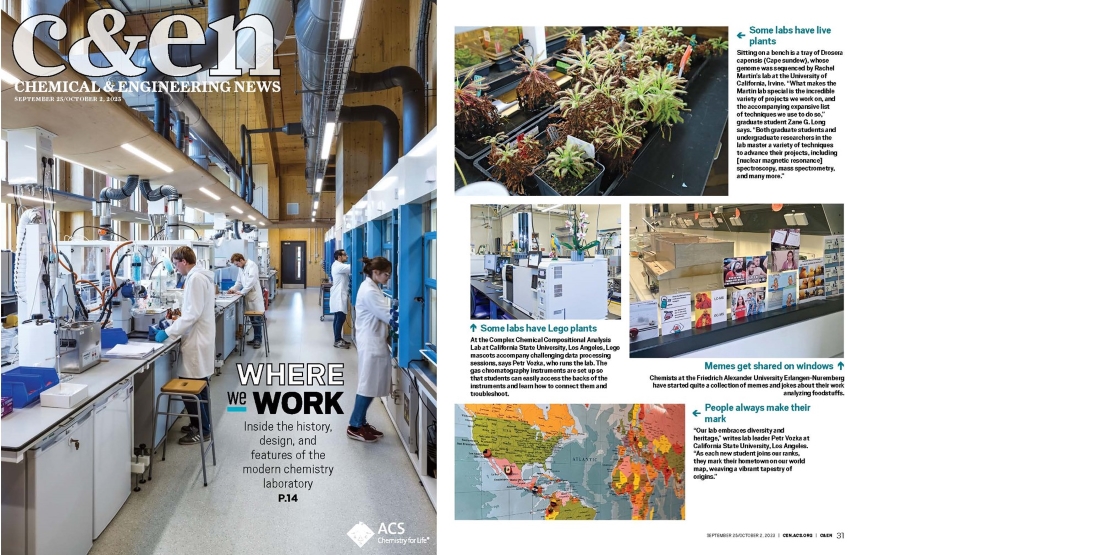
Dr. Petr Vozka is an Assistant Professor in the Department of Chemistry and Biochemistry at California State University, Los Angeles, where he leads the Complex Chemical Composition Analysis Lab (C³AL). His research focuses on the characterization of complex chemical mixtures using state-of-the-art techniques, including two-dimensional gas chromatography and high-resolution mass spectrometry, with applications in environmental science, plastic waste conversion, and forensic analysis. Dr. Vozka's research interests span multiple critical areas including the analysis of complex chemical mixtures, microplastics in the environment, conversion of plastic waste into alternative fuels, environmental impact of oil spills, and forensic fingerprint analysis. His work on microplastics has gained significant attention, with media coverage highlighting his findings that microplastics can penetrate blood vessels and have been found in the brain. His research on the Huntington Beach oil spill investigated the long-term effects of oil contamination on beaches used for recreation. Dr. Vozka has organized significant academic events including the Multidimensional GC: From Petroleum to Beyond symposium at ACS Fall 2025 and serves on the organizing committee for the Multidimensional Chromatography Workshop (MDCW). His laboratory, C³AL, is equipped with advanced instrumentation including GC-TOFMS, GC×GC-FID, and GC×GC-TOFMS systems, supported by partnerships with LECO Corporation and Anton Paar. Recipient of LECO Corporation's Pegasus® BT GC-MS instrument through a competitive selection process Principal Investigator for research funded by Naval Air Warfare Center Aircraft Division Collaborator with researchers from Purdue University, UCT Prague, Delft University of Technology, and California State Polytechnic University Dr. Vozka actively mentors undergraduate and graduate students, with numerous students receiving research awards including CSU COAST Undergraduate Student Research Grants, NSF REU placements, and Dean's List honors. His students regularly present research at national conferences including ACS meetings and the Multidimensional Chromatography Workshop. The C³AL lab provides hands-on experience with cutting-edge analytical instrumentation, preparing students for careers in analytical chemistry and related fields. As part of the LECO-C³AL Facility partnership, Dr. Vozka's lab serves as a training ground for students in comprehensive two-dimensional gas chromatography and mass spectrometry techniques. The facility aims to enhance knowledge and expand opportunities for students while equipping them with skills necessary to excel in graduate programs and analytical positions in industry and the military.
Young-Hee Lee is a Ph.D. candidate and Lecturer at the Technical University of Munich (TUM), affiliated with the TUM School of Engineering and Design and the Institute for Communications and Navigation. Her research focuses on proteomics, with emphasis on protein citrullination dynamics, phosphoproteomics in cancer diagnostics, and advanced mass spectrometry techniques. Her recent work includes the development of high-throughput proteomic workflows for ischemic stroke biomarker discovery and the application of deep learning to enhance citrullination identification. She contributes to methodological innovations in peptide extraction and single-cell proteomics sensitivity. Lee is part of the Chair of Communication and Navigation led by Prof. Christoph Günther, located at Theresienstraße 90, Munich. Her research bridges computational biology and biochemical analysis, with applications in cancer, neuroscience, and viral proteomics.
Dr. George O'Mahony serves as Head of Department of Computer Science at Munster Technological University (MTU) and is a CONNECT Associate Investigator with Research Ireland. He leads Ireland's Cyber Range infrastructure development and acts as WorldSkills Ireland Expert for Cybersecurity Skill 54, driving national cybersecurity initiatives through academia-industry collaboration. Education: B.E. in Electrical and Electronic Engineering, University College Cork (UCC) Ph.D. in Electrical and Electronic Engineering, University College Cork (UCC), 2021 His research pioneers cyber resilience frameworks for OT/IoT systems, zero-trust architectures, and machine learning applications in anomaly detection. He develops low-complexity security solutions for resource-constrained edge devices, with emphasis on wireless sensor networks, GPS applications, and penetration testing methodologies. His work bridges theoretical innovation with practical infrastructure implementation. Recent publications reveal accelerating focus on quantum-resistant cryptography, MQTT-ZT secure brokers, and unified cyber resilience models. His scholarly output consistently addresses interference detection in wireless networks while expanding into satellite communications security and AI-driven network customization, reflecting strategic adaptation to emerging cyber threats. Research Leadership: CONNECT: Associate Investigator advancing cyber security research NCF Cyber Shock: Co-Principal Investigator Cyber Explore: Principal Investigator at MTU Cyber Range: National infrastructure lead (mobile/cloud) Horizon Telemetry: Core research team member As STEM advocate and Cyber Futures Academy contributor, O'Mahony shapes cybersecurity education through WorldSkills Ireland engagement and industry-focused cyber range deployments that serve academic, governmental, and commercial sectors.