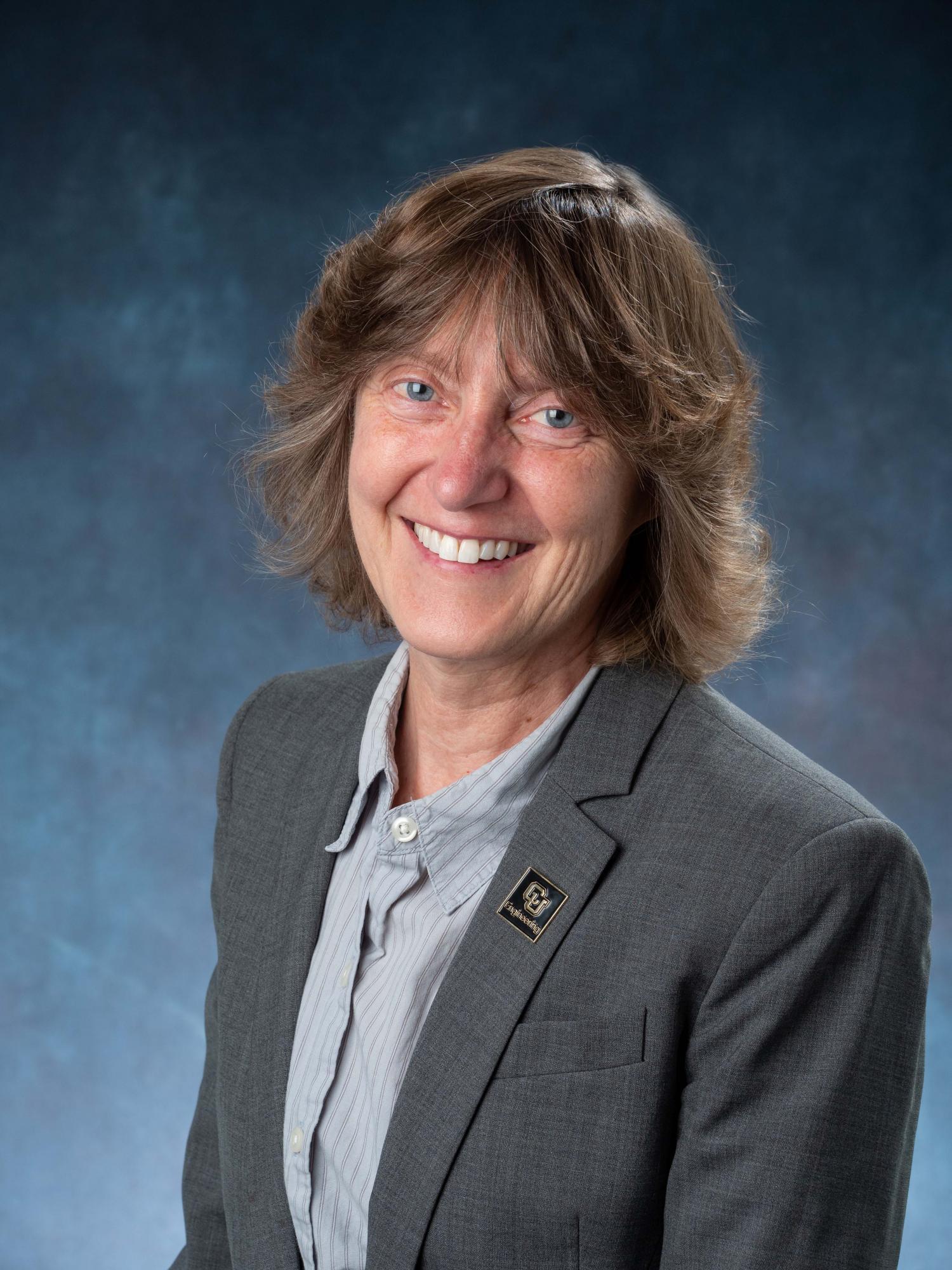
Dr. Hope Michelsen is an Associate Professor in the Department of Mechanical Engineering at the University of Colorado Boulder, specializing in Thermo Fluid Sciences and Air Quality. Her research focuses on carbonaceous particle formation mechanisms, combustion diagnostics, and their environmental impacts. She leads efforts in developing laser/X-ray-based diagnostic tools for studying soot evolution in flames and atmospheric systems. Research Interests include soot inception/growth, black carbon climate effects, and particle synthesis control. She has pioneered studies on resonance-stabilized radicals' role in soot formation and developed novel sampling techniques like jet-entrainment methods. Her work bridges fundamental combustion science with practical applications in air quality and climate mitigation. Awards: Fellow, American Physical Society Fellow, The Optical Society Alameda County Women’s Hall of Fame Inductee Lab facilities include advanced diagnostics at ECME 1B68/ECNW 180. Research collaborations involve multi-scale modeling of emissions and atmospheric transport. Current projects address wildfire soot dynamics and Arctic methane monitoring through inverse modeling techniques.
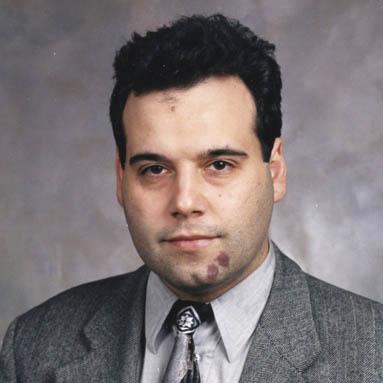
Berk Sunar is a Professor of Electrical & Computer Engineering and the founder of the Vernam Applied Cryptography and Cybersecurity Laboratory at Worcester Polytechnic Institute (WPI). He joined WPI in 2000 after holding postdoctoral and research roles at Oregon State University (OSU) and Trust Inc. His work focuses on applied cryptography, microarchitectural security, AI security, post-quantum cryptography, and homomorphic encryption. Sunar received his BSc from Middle East Technical University (1995) and PhD from Oregon State University (1998). Research interests include vulnerabilities in hardware (e.g., Rowhammer, TPM-FAIL), side-channel attacks, and cryptographic implementations. Notable contributions include discovering flaws in Intel CPUs and TPM chips affecting billions of devices, as well as developing defenses like cuHE (GPU-accelerated homomorphic encryption). Publications highlight breakthroughs in transient execution attacks (e.g., LVI, RIDL), post-quantum signature schemes (Dilithium), and cloud security (Firecracker VMM vulnerabilities). Awards include NSF CAREER (2002) and IBM Pat Goldberg Best Paper (2007). Advised over 30 graduate students, many of whom hold senior roles in academia and industry. Current research addresses AI security, quantum-resistant algorithms, and automated attack detection via machine learning. The Vernam Lab remains a hub for cybersecurity innovation.
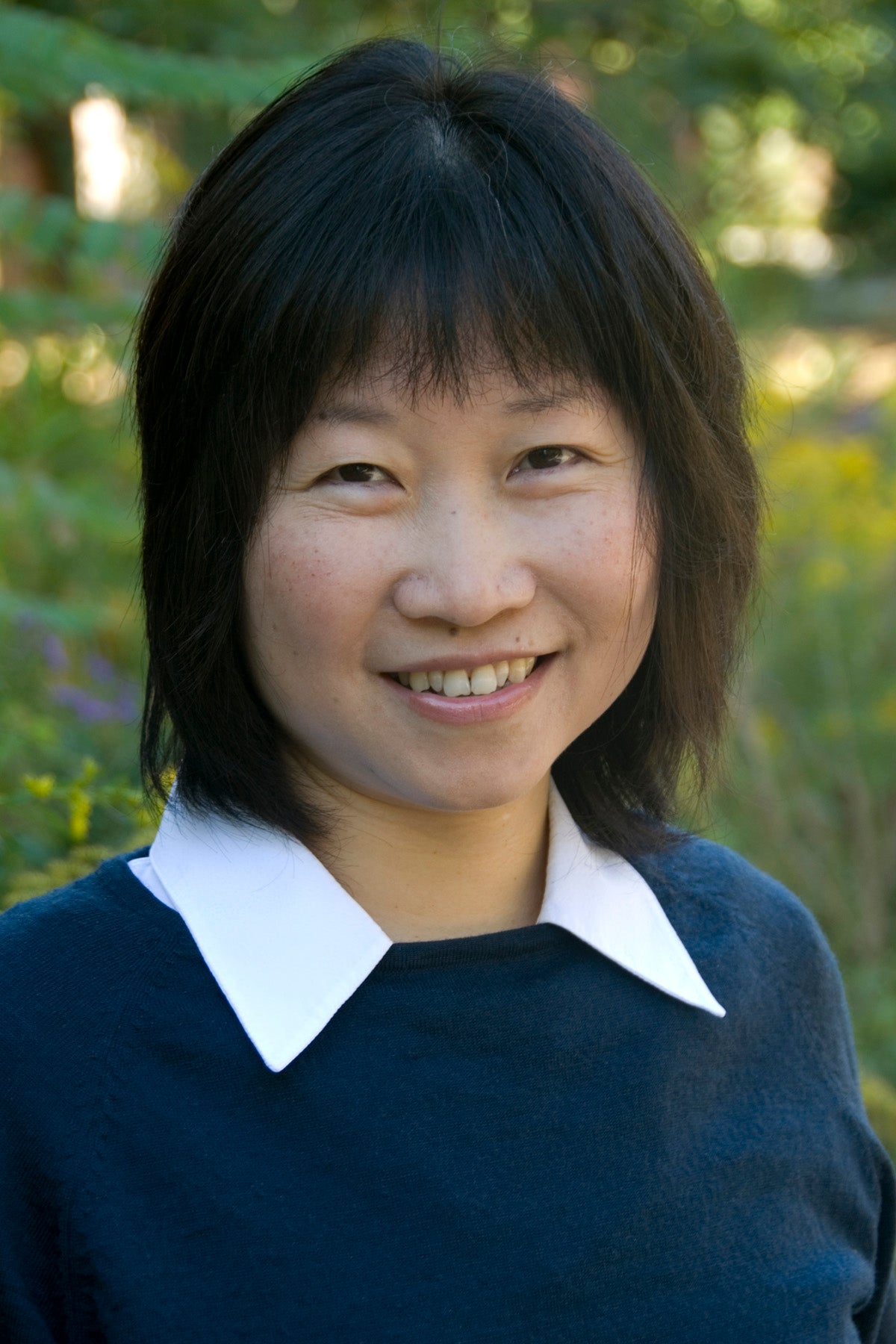
Jane Law is an Associate Professor at the University of Waterloo, located in EV3 3251. She holds a Ph.D. in Geodesy and Geomatics Engineering from the University of New Brunswick (2000), a University Teaching Diploma from the same institution (1999), an M.Sc. in Land Information Systems from Hong Kong Polytechnic University (1994), and a B.Sc. in Survey and Mapping Sciences from North East London Polytechnic (1985). Her research integrates spatial analysis with public health and criminology, employing Bayesian methodologies to examine neighborhood effects on health outcomes and crime patterns. Law's research focuses on geographic information systems, Bayesian spatial modeling, spatial epidemiology, environmental criminology, and health-oriented urban planning. She explores how built environments influence community health outcomes and crime distribution using advanced statistical geospatial techniques. Her publications demonstrate consistent focus on Bayesian spatial modeling applications in public health and crime analysis, with recent work emphasizing mental health spatial patterns, nutrition environments, and temporal crime trends. Research consistently integrates GIS with statistical innovation for policy-relevant insights. Law has supervised 43 Master's and 5 PhD students to completion and currently advises 2 Master's and 1 PhD candidate. She secured a long-term research grant as Principal Investigator for 'Advancing spatial analysis methodologies using a Bayesian approach' (2009-2022).
Prof. Dr.-Ing. David E. Rival is a full Professor at the Institute of Fluid Mechanics within the Faculty of Mechanical Engineering at Technische Universität Braunschweig. His research spans interdisciplinary domains at the intersection of experimental fluid dynamics, data assimilation, network science, and bio-inspiration, with applications in renewable energy systems and bio-mimetic engineering. Former Associate Professor at Queen’s University, Canada Doctoral work on dragonfly flight aerodynamics at TU Darmstadt Alexander von Humboldt research fellowship recipient (2020) Postdoctoral associate at MIT studying shape morphing in nature Research chair at University of Calgary on atmospheric sensing His work focuses on unsteady flow phenomena, bio-inspired design, and advanced measurement techniques. Key projects include: Co-chairing NATO AVT task group on flow separation International collaborations with AFOSR, NATO, and ONR Development of cost-effective flow-tracking sensors for natural environments Investigations into shear-thinning suspension dynamics and vortex ring behavior Recent publications demonstrate a strong emphasis on: Large-scale particle tracking with natural light and UAVs Machine learning for sparse data reconstruction in fluid flows Soft coastal protection methods and ecohydraulics Advanced sensing techniques for atmospheric and industrial applications Scientific Awards: 2020: Alexander von Humboldt Research Fellowship Notable research achievements include textbook authorship on Biological and Bio-Inspired Fluid Dynamics (Springer) and media features in The Nature of Things (David Suzuki) and Discovery Channel’s Daily Planet .
Susann Rohwedder is a Senior Economist at RAND and Professor of Economics at the RAND School of Public Policy. She is a leading scholar in the economics of aging, focusing on health economics, retirement, financial security, and survey methodology. Her research aims to improve the well-being of older populations through rigorous empirical analysis using large-scale longitudinal datasets such as the Health and Retirement Study (HRS) and the RAND American Life Panel. Ph.D. in Economics, University College London Master's in Economics, University of Warwick Master's in Economics, Sorbonne (University of Paris) Her research spans several key areas: Health Economics , particularly dementia, long-term care, and out-of-pocket medical expenditures; Life-Cycle Economics , including retirement spending, adequacy of retirement resources, and old-age poverty; Demography , with focus on life expectancy and differential survival; and Survey Research Methodology , especially measurement error and elicitation of subjective expectations. She has made significant contributions to understanding the retirement-consumption puzzle, cognitive aging, and financial decision-making in later life. The 15 most recent publications reflect a strong focus on cognitive health, retirement spending, life satisfaction, and health inequalities in aging populations. Her work frequently employs advanced econometric techniques and large representative datasets to produce policy-relevant insights. Trends include early detection of dementia, longitudinal analysis of life satisfaction, forecasting mortality inequalities, and evaluating the financial impacts of health shocks. Her scientific leadership includes: Research Fellow, Network for Studies on Pensions, Aging, and Retirement (NETSPAR), Netherlands Director for Strategic Planning, Michigan Disability and Retirement Research Center Associate Editor, Journal of the Economics of Ageing Member, Board of Directors, Western Economic Association International Rohwedder has advised on major national and international studies and has published in top journals such as the American Economic Review , Demography , and Journal of Health Economics . She leads data initiatives like the RAND HRS Longitudinal File and the Singapore Life Panel, demonstrating her commitment to high-quality data infrastructure. Her work bridges academic research and public policy, with implications for Social Security, pension reform, and long-term care financing. She is actively involved in research teams and collaborative projects across the U.S. and internationally, including studies on financial security over the lifespan and cross-national comparisons of retirement systems. Future work is likely to expand on cognitive screening, health equity in aging, and the economic impacts of demographic change.
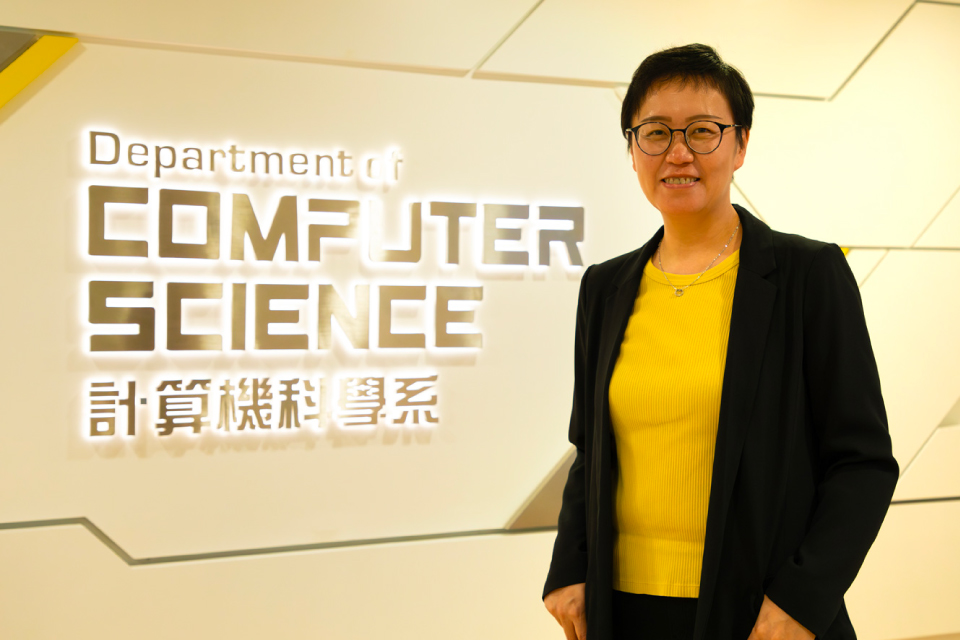
Professor Li Chen is a full Professor and Associate Head (Research) in the Department of Computer Science at Hong Kong Baptist University (HKBU), with an affiliate appointment at the Academy of Wellness and Human Development. She leads the Positive Intelligence Lab , focusing on intelligent technologies for human well-being. Her research spans conversational AI, explainable AI, recommender systems, and human-computer interaction. Education: PhD in Computer Science, Swiss Federal Institute of Technology in Lausanne (EPFL), Switzerland (Nominee for Best PhD Thesis Award) Master in Computer Software and Theory, Peking University, China Bachelor in Computer Science, Peking University, China Her research interests revolve around personalized conversational and explainable AI, with applications in entertainment, education, e-commerce, and mental well-being. She has published over 150 papers in top venues including ACM TOIS, IJHCS, CHI, SIGIR, AAAI, RecSys, and UMAP . Her work has been recognized with awards such as the RecSys Best Student Paper Award (2024), CHI Honourable Mention (2022), and multiple best paper awards at UMAP and UMUAI. The most recent publications reflect a strong trend toward fair, explainable, and user-centric recommender systems , with increasing integration of large language models , mental health applications , and conversational agents . Her research emphasizes user feedback, negative sampling techniques, and evaluation frameworks grounded in real user behavior. Scientific Awards & Recognition: President’s Award for Outstanding Performance in Teaching (Individual), HKBU (2024/25) President’s Award for Outstanding Performance in Research Supervision (2022/23) World’s Top 2% Most-Cited Scientists, Stanford University (2021–2024) ACM Senior Member (2015) RecSys’24 Best Student Paper Award CHI’22 Honourable Mention Award UMAP’20 Best Student Paper Award UMUAI 2018 Best Paper Award THE Awards Asia 2021 Excellence and Innovation in the Arts (Co-I) Professor Chen is actively involved in mentoring PhD and Master’s students such as Wanling Cai and Yuhan Zhao, who have co-authored award-winning papers. She has secured research funding through grants like the HKBU IRCMS Project. Her editorial leadership includes serving as Co-Editor-in-Chief of ACM Transactions on Recommender Systems (TORS) , Associate Editor for ACM TiiS , and Editorial Board Member for UMUAI . She has chaired major conferences including ACM RecSys’23 (General Co-Chair), RecSys’20 (Program Co-Chair), and UMAP’18 (Program Co-Chair). She leads the Positive Intelligence Lab , which conducts interdisciplinary research on AI for well-being. The lab has developed datasets like the Intent Annotation of Recommendation Dialogue (IARD) and focuses on user-centric AI design, mental health chatbots, and personalized recommendation interfaces.
Yan Zhang is a scientific leader at Meshcapade and a guest lecturer at ETH Zurich's Computer Vision and Learning Group (VLG). He previously served as a postdoctoral researcher at ETH Zurich (2020-2023) and research intern at Max Planck Institute for Intelligent Systems (2018-2020). His research focuses on generative human foundation models, human motion and behavior synthesis, 3D human perception, and applications in AR/VR, embodied AI, and interactive avatars. He has pioneered methods for scene-conditioned motion generation, contact-aware reconstruction, and egocentric interaction modeling. His recent publications (2025-2020) span Real-time motor models for avatars (PRIMAL, ICCV'25) Diffusion architectures for motion (RoHM, CVPR'24) Scene-population algorithms (Odysseus, CVPR'22) Physics-aware reconstruction (EgoHMR, ICCV'23) Whole-body grasping models (SAGA, ECCV'22) Multi-modal datasets (EgoBody, ECCV'22) Scientific recognition includes the Qualcomm Innovative Fellowship Europe 2023 . He organized workshops at CVPR'25, ECCV'24, and ECCV'22, and served on senior program committees (AAAI'26) and area chairs (CVPR'25). As co-supervisor, he mentored student projects on diffusion-based hand motion capture, 3D pose estimation, body-scene interaction, and mixed reality navigation at ETH Zurich (2020-2023). His work bridges computer vision, machine learning, and computer graphics to advance human-centric AI systems.
Robert J. Trapp serves as Director of the School of Earth, Society, and Environment and Head of Climate, Meteorology and Atmospheric Sciences at the University of Illinois, while also holding a Professorship at the National Center for Supercomputing Applications (NCSA). His leadership spans both academic and research domains within atmospheric sciences. Trapp's research focuses on severe convective storms, tornado dynamics, and radar meteorology with significant contributions to understanding bow echoes, tornadic vortex signatures, and the impacts of climate change on severe weather. His work integrates advanced numerical modeling with observational data from field campaigns like BAMEX and VORTEX, utilizing Doppler radar systems including WSR-88D and Doppler On Wheels (DOW). His publication record demonstrates consistent research output from 1995-2007, with recent work emphasizing telescoping model approaches for evaluating severe convective storms under future climate scenarios. Key methodological contributions include objective analysis techniques for weather radar data and multi-platform observational strategies for severe thunderstorms. Trapp maintains active research collaboration through the National Center for Supercomputing Applications, leveraging computational resources for atmospheric modeling. His work bridges fundamental atmospheric dynamics with practical severe weather forecasting applications. Professional service includes leadership roles as Director and Department Head, indicating significant administrative responsibilities alongside research activities. His scholarly contributions appear primarily in conference proceedings and peer-reviewed journals focused on meteorology and atmospheric science.
Haipeng Luo is an Associate Professor at the Thomas Lord Department of Computer Science, University of Southern California, holding the IBM Early Career Chair. He previously worked as a Postdoctoral Researcher at Microsoft Research, NYC, and has held visiting roles at Google and Amazon. His research focuses on developing practical machine learning algorithms with strong theoretical guarantees, particularly in online learning, bandit problems, reinforcement learning, and game theory. PhD in Computer Science, Princeton University (2011–2016) BSc in Computer Science, Peking University (2007–2011) His work spans adversarial and stochastic environments, addressing challenges in reinforcement learning, game dynamics, calibration, and omniprediction. Recent publications highlight advancements in regret minimization, game equilibrium computation, and robust optimization frameworks. Key contributions include algorithms for zero-sum games, bandit problems with feedback graphs, and theoretical analyses of convergence properties in multi-agent systems. Scientific accolades include Best Paper Awards at COLT 2021, COLT 2018, NeurIPS 2015, and ICML 2015. He has received prestigious grants such as the NSF CAREER Award (2020), Google Faculty Research Award (2020), and NSF CRII Award (2018). His students have secured academic and industry positions, and he actively teaches graduate courses in machine learning and online optimization.
Lori Graham-Brady is a Professor in the Department of Civil and Systems Engineering at Johns Hopkins University's Whiting School of Engineering. She serves as Vice Dean for Faculty and directs the Center on AI for Materials in Extreme Environments (CAIMEE), while also holding secondary appointments in Mechanical Engineering and Materials Science and Engineering. Her research focuses on stochastic mechanics, multiscale modeling, and machine learning applications for understanding material variability under extreme conditions. Research areas include probabilistic mechanics, AI-driven materials design, and fragmentation modeling. Leadership roles: Director of CAIMEE, former Director of Center for Materials in Extreme Dynamic Environments, founding Director of HT-MAX, and founding Associate Director of HEMI (2012-2024). Education: PhD in Civil Engineering and Operations Research from Princeton University. Her recent work emphasizes AI for multiscale mechanics, error propagation in material characterization, and digital microstructure generation. Publications highlight stochastic modeling of ceramics, composites, and metals under impact and high-strain-rate loading. Scientific awards include the Presidential Early Career Award, Huber Civil Engineering Research Prize, and Fellowships in ASCE EMI and USACM. She led NSF IGERT programs and serves as Associate Editor for the ASCE Journal of Engineering Mechanics.
Dr. Stevan Rudinac is a Researcher at the University of Amsterdam's Faculty of Economics and Business , Section Business Analytics . His work focuses on interactive learning systems and multimodal data analysis, particularly in urban contexts and multimedia modeling. Education: PhD in Multimedia and Information Retrieval from Delft University of Technology (2013). Research Interests: Stevan specializes in multimedia modeling , hypergraph learning , and interactive video search . He develops frameworks for scalable analysis of social networks, urban imagery, and large multimodal datasets, bridging machine learning with practical applications in city planning and financial social media. Recent Trends: His 2024-2025 publications highlight large language model optimization , diffusion model evaluation , and dynamic graph embedding for meme stocks. Collaborative projects include the CASTLE 2024 dataset and Exquisitor , a system for 100 million image exploration. Labs & Teams: He contributes to the Business Analytics group at UvA, collaborating with Prof. Marcel Worring and Dr. Björn Þór Jónsson. He co-organized the UrbanMM'21 workshop and participates in ACM Multimedia and MMM conferences.
Oleg Lashinin is an active researcher in the field of Recommender Systems , with a focus on Machine Learning , Temporal Modeling , and User Behavior Analysis . He has contributed to 15 recent publications spanning 2021–2025, including conference papers at ECIR, SIGIR, RecSys, and workshops like KaRS@RecSys and ORSUM@RecSys. His work explores advanced techniques such as Self-Attention Models , Time-Aware Item Weighting , and Cost-Constrained Recommendations . Key research trends in his publications include Deep Learning for sequential recommendation tasks, Crowdsourcing for explanation evaluation, and Temporal Dynamics in user behavior. Notable projects include the GPT3RecBot Telegram chatbot and the RecBaselines2023 dataset for benchmarking recommender systems.
Brian Weeks is an Associate Professor in the School for Environment and Sustainability at the University of Michigan, where he joined as an Assistant Professor in 2019. His research focuses on understanding how species and communities respond to human-induced environmental changes, with particular emphasis on avian systems. Weeks leads an active research group that integrates museum specimen-based work, genomics, and field studies to investigate biodiversity responses to global change. Weeks' research interests span evolutionary ecology, climate change biology, and biodiversity conservation. His work primarily examines how bird species and communities have responded to environmental change through morphological adaptations. He combines museum-, field-, and lab-based approaches to study evolutionary processes across multiple scales, from macroevolutionary patterns in the Solomon Islands to contemporary changes in North American migratory birds. His lab has developed innovative methods like Skelevision for high-throughput measurement of functional traits from museum skeletal specimens. His publication record shows a strong focus on climate-driven morphological changes in birds, with recent work demonstrating how warming temperatures drive size reductions while simultaneously increasing wing length. His research has revealed that smaller-bodied species change at faster rates, and that migration timing shifts are decoupled from morphological changes. Weeks' lab also investigates biodiversity-ecosystem functioning relationships and extinction risk prediction. Packard Fellowship in Science and Engineering (2022) Ecological Society of America's George Mercer Award (2022) Katma Award, American Ornithological Society ISI Highly Cited paper (2021) Weeks advises multiple PhD and Master's students, and his lab collaborates extensively with researchers across institutions. His work has received significant media attention, with coverage in Science, The Wall Street Journal, The Washington Post, BBC News, and numerous international outlets. His research on birds shrinking due to climate change achieved an Altmetric score higher than 99.98% of papers tracked, reflecting its substantial scientific and public impact.
Samuel McDermott is an Associate Teaching Professor at the Department of Chemical Engineering and Biotechnology , University of Cambridge. He serves as the Sensor CDT Programme Manager , focusing on interdisciplinary research in healthcare, biotechnology, and open-source hardware. His research spans machine learning applications in medical imaging , laboratory automation , and web-of-things (WoT) integration for scientific equipment. Recent work emphasizes federated learning in healthcare, blood cell morphology classification, and low-cost diagnostic tools. Key article trends include: deep diffusion models for malaria detection , open-source microscopy platforms like OpenFlexure, and AI-driven clinical data generalization . His projects often combine 3D-printed hardware and IoT-enabled laboratory systems .
Christophe Andrieu is a Professor in Statistics within the School of Mathematics at the University of Bristol. His research bridges theoretical probability, computational statistics, and applied mathematics, with significant contributions to Markov Chain Monte Carlo methodologies and Bayesian inference frameworks. He maintains active collaborations across engineering and data science domains. His educational background includes: M.A. from List.Natnl.Scis.App.Lyon Additional M.A. (institution unspecified) Ph.D. from Paris Andrieu's research focuses on Markov Chain Monte Carlo theory , where he develops convergence guarantees and efficiency bounds for complex samplers. His work extends to non-reversible MCMC algorithms , piecewise deterministic processes , and gradient-free optimization techniques. Recent publications demonstrate innovative approaches to state-space models and numerical integration, often addressing high-dimensional statistical challenges through stochastic approximation methods. His fingerprint reveals deep specialization in Markov chain convergence analysis and computational Bayesian statistics. His 15 most recent publications (2021-2025) exhibit consistent focus on theoretical foundations of Monte Carlo methods, particularly convergence analysis of Markov chains and novel sampler designs. Key trends include the application of weak Poincaré inequalities to pseudo-marginal MCMC, development of self-organizing state-space models, and exploration of hypocoercivity in piecewise deterministic processes. The work spans both theoretical advancements and practical implementations for engineering and statistical applications. Andrieu has secured significant research funding including: COmputational Statistical INference for Engineering and Security (COSINES) (2018-2023) New Approaches to Data Science (2018-2023) He has supervised 5 research students and maintains active collaborations in computational statistics and machine learning. His network shows strong connections with probability theory and engineering research groups.