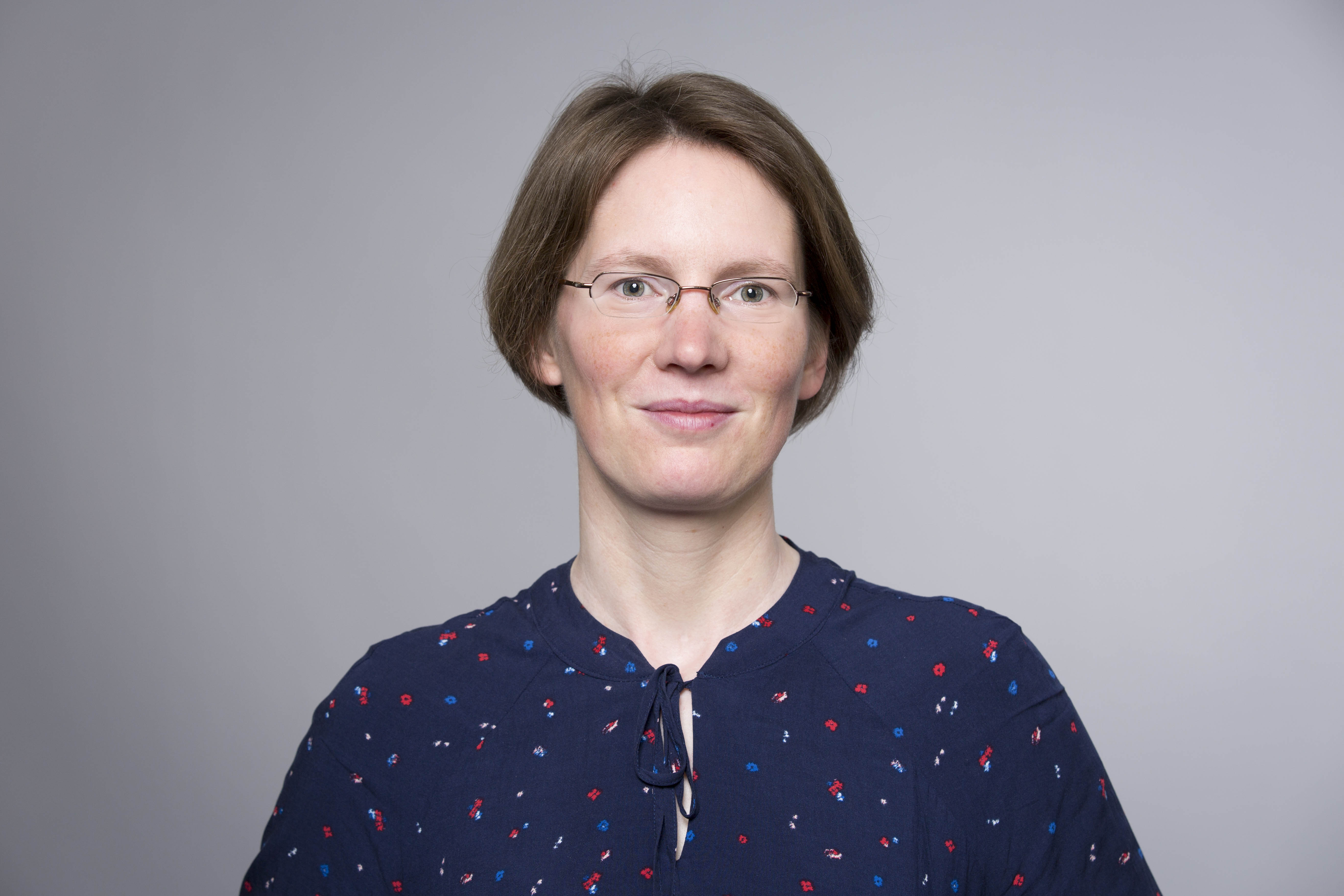
Prof. Dr.-Ing. Tobias Leopold is a faculty member at Hochschule Esslingen , serving as Associate Dean for Mobility and Technology , Head of Lab Service , and Academic Director of Automotive Engineering (Bachelor's Program) . His research focuses on Reliability Engineering , Design of Experiments , and Service Engineering . Research Trends : His recent publications emphasize Reliability Demonstration Testing , Uncertainty Quantification , and Robust Design Optimization in automotive systems. Teaching : He lectures on Technical Mechanics , Vehicle Technology , and Reliability Engineering at both Bachelor's and Master's levels. Contact : Email Tobias.Leopold@hs-esslingen.de
Odile Sauzet is an Adjunct Professor at Universität Bielefeld , affiliated with the Faculty of Health Sciences and the Working Group 3 Epidemiology & International Public Health . She also holds positions in the Faculty of Economics (Chair of Statistics and Data Analysis) and the Faculty of Business Administration and Economics (Department of Empirical Methods).
Prof. Dr. Uwe Hassler is a Professor of Statistics and Econometric Methods at Goethe University Frankfurt, affiliated with the Department of Economic Policy and Quantitative Methods within the Faculty of Economics and Business Economics. His research focuses on time series analysis, econometric methodology, long memory processes, and unit root testing. He holds an office at RuW 3.214 on Theodor-W.-Adorno-Platz 4 in Frankfurt. Key research interests include statistical inference, hypothesis testing pitfalls, and applications in financial econometrics. Recent work addresses self-normalizing tests, spurious correlations in random walks, and historical mathematical problems like the Basel conjecture. His contributions span theoretical advancements and practical methodologies in time series analysis. Publications emphasize rigorous testing frameworks, addressing issues like sample size determination, significance testing pitfalls, and long memory properties in economic data. Notable collaborations include work on inflation dynamics and cointegration analysis. No academic awards or grants are explicitly listed in provided texts. His team includes researchers like Tanja Zahn and lecturers such as Balázs Cserna, contributing to the Hassler research group.
Professor Malka Gorfine Orgad is a distinguished faculty member in the Department of Statistics and Operations Research at the School of Mathematical Sciences, Tel Aviv University. She has held the position of Professor since 2016, following her promotion from Associate Professor (2014-2016). Additionally, she maintains a long-standing affiliation as an Affiliate Investigator at the Division of Public Health Sciences, Fred Hutchinson Cancer Research Center in Seattle since 2003. Prof. Gorfine Orgad earned her MA (1994) and PhD (1999) in Statistics from the Hebrew University of Jerusalem under the supervision of Professors Banjamin Yakir and David Zucker. Her academic journey includes previous appointments as Associate Professor at Harvard School of Public Health (2011-2012) and at the Technion - Israel Institute of Technology (2010-2014), where she served as Senior Lecturer prior to that. Her research focuses on survival data analysis, non-parametric statistics, biostatistics, and machine learning. Specifically, she investigates inference based on Survival Deep Learning, natural experiment methods for causal inference, and various challenges of causal inference with survival outcomes. She has developed several innovative methodologies for survival analysis, particularly in the areas of competing risks, semi-competing risks, and illness-death models. Analysis of her recent publications reveals a strong emphasis on practical applications of survival analysis methodology to real-world health problems, particularly related to cancer and infectious diseases like COVID-19. Her work frequently bridges theoretical statistical development with practical implementation through software packages, demonstrating her commitment to making advanced methods accessible to applied researchers. Associate Editor of JASA Applications and Case Studies (2022 - present) Associate Editor of EJS (2022 - present) Associate Editor of Scandinavian Journal of Statistics (2021 - 2024) Co-Editor of Biometrics (2017 - 2019) Associate Editor of Biometrics (2009 - 2016) Member of Editorial Board of Lifetime Data Analysis (2013 - 2016) Prof. Gorfine Orgad actively mentors students at all levels, currently supervising one postdoc, two PhD students, and four MSc students, with numerous former students who have completed their degrees under her guidance. She serves as co-chair of the STRATOS TG8 (Survival Analysis Topic Group), which provides guidance on survival analysis methods for observational studies. She has also developed multiple software packages including PyMSM, PyDTS, frailty-LTRC, HHG, and others that implement her methodological contributions for the broader research community.
Jun.-Prof. Dr. Carolin Herrmann is an Assistant Professor of Biostatistics at the Department of Mathematical Optimization, Mathematical Institute of Heinrich Heine University Düsseldorf. She holds a PhD in Health Data Sciences from Charité University Medicine Berlin and has extensive experience in academic and industry settings. Previously, she led the 'Clinical Trials' research group at Charité's Institute of Biometry and Clinical Epidemiology and held an interim professorship in biostatistics. Her work bridges methodological development and practical application, focusing on clinical trial design, sample size planning, and statistical modeling. Education: B.Sc./M.Sc. in Mathematics from Bielefeld University and University of Bergen, followed by a PhD in Health Data Sciences at Charité (2022). She also worked in Denmark's pharmaceutical industry on large clinical trials. Her research integrates statistical theory with real-world challenges, addressing topics like adaptive trial designs, time-to-event analysis, and statistical literacy in education. She emphasizes interdisciplinary collaboration between statistics, mathematics, and life sciences. Teaching and Didactics: Her work extends to improving statistical education through innovative methods, including catalogs of learning objectives and active learning strategies. She advocates for clearer communication of statistical concepts to enhance understanding in medical and health sciences curricula. Awards: No awards explicitly mentioned in the source text. Research Group: Her team develops cutting-edge statistical methods for clinical trials, focusing on sample size optimization, adaptive designs, and model selection. They also engage in applied research for pharmaceutical industries and academic collaborations.
Jan Beyersmann is a Professor of Biostatistics at the University of Ulm. He holds a PhD from the University of Freiburg (2005) and habilitation from the Medical Faculty of Freiburg (2012). His research focuses on survival analysis, competing risks, and multistate models with applications in clinical and epidemiological studies. He has authored the influential book Competing Risks and Multistate Models with R (2011) and serves on editorial boards for prominent journals like Biometrics and Statistics in Medicine . Current affiliations include the Institute of Statistics at Ulm University, where he teaches and advises students in mathematical biometry. His recent work addresses methodological challenges in clinical trials, including event-driven trial design and multistate modeling of complex endpoints. Notable contributions include analyzing disability progression in multiple sclerosis (2022) and mortality关联 with joint replacement outcomes (2020). He has also led German Research Foundation projects on competing risks in transplant registries and adverse pregnancy outcomes. Core awards: Gustav-Adolf-Lienert-Award (2017) Grants: DFG grants BE 4500/1-1, BE 4500/3-1, BE 4500/4-1
Prof. Günther Sebastian is a Professor at the Technical University of Munich (TUM), affiliated with the TUM School of Natural Sciences and the Department of Physical Chemistry / Catalysis. His research focuses on surface chemistry and heterogeneous catalysis, employing advanced microscopy and spectroscopic techniques such as scanning tunneling microscopy (STM), photoelectron spectromicroscopy (PEEM), and low-energy electron microscopy (LEEM). His work emphasizes model systems to study catalytic reactions under high-pressure conditions. Education: Bachelor's/Master's in Physics, Ludwig Maximilian University of Munich (LMU Munich), completed 1990 Doctorate in Scanning Tunneling Microscopy, University of Ulm, 1995 Postdoctoral research at ELETTRA Synchrotron in Trieste, followed by a Marie Curie Fellowship there Completed habilitation at Leibniz University Hannover in 2003 Research Interests: Prof. Sebastian's research integrates theoretical and experimental approaches to study catalytic processes at interfaces. Key areas include graphene growth mechanisms on metal substrates, high-pressure catalytic reactions, and the development of advanced imaging techniques for in situ analysis of surface reactions. His work bridges surface science and materials chemistry, with applications in energy storage and catalytic systems. Awards: DFG Habilitation Scholarship (2000-2001) Marie Curie Fellowship (1998-1999) Grants & Collaborations: His research has been supported through grants focusing on surface chemistry and catalysis. Collaborations include work with synchrotron facilities and materials science groups to advance in situ spectroscopic techniques. Labs & Teams: He leads a research group at TUM investigating catalytic interfaces and graphene-based systems, emphasizing interdisciplinary approaches combining physics, chemistry, and engineering.
Marcus Ricker is Professor of Structural Concrete in the Department of Architecture and Civil Engineering at TU Dortmund University. His research focuses on structural reliability, sustainable concrete technologies, and natural fiber-reinforced composites. Current investigations examine time-dependent degradation in FRP-reinforced concrete, reliability-based calibration of safety factors, and climate-neutral design strategies for concrete structures. Dr. Ricker holds a doctorate from RWTH Aachen University (2009) and brings extensive industry experience from roles at Halfen GmbH and engineering consultancies. His work advances textilereinforced concrete using flax fibers and develops probabilistic methods for structural safety assessments. Recent publications include code applications for slab systems, material-saving design methodologies, and life-cycle optimization of concrete structures.
Prof. Johannes T. Margraf is a Professor and Chair of Physical Chemistry V: Theory and Machine Learning at the University of Bayreuth. His research group specializes in applying machine learning to chemical phenomena, including predicting properties of molecules and materials, understanding complex reaction networks, and developing data-efficient models that incorporate physical principles like size-extensivity and accurate descriptions of long-range interactions. The group also focuses on electronic structure theory, particularly bridging wavefunction and density functional methods. Margraf's research interests center on machine learning applications in chemistry and materials science, including non-local machine learning-based density functional theory, chemical reaction network analysis, and the development of physics-informed ML models. His work aims to achieve accurate chemical simulations at unprecedented scales for materials discovery and optimization. Analysis of recent publications shows a strong focus on machine learning potentials for materials simulation, density functional theory advancements, catalytic reaction networks, and computational spectroscopy. His research consistently integrates machine learning with fundamental physics principles to solve challenging problems in computational chemistry and materials science. Margraf leads a research team including postdoctoral researchers (Dr. Maciej Baradyn, Dr. Hyunwook Jung, Dr. Karlo Sovi´c) and PhD students (Nils Gönnheimer, David Greten, Konstantin Jakob, Sachin Rangaswamy, Robert Strothmann, Martin Vondrák). The group actively organizes scientific workshops and collaborates with institutions like the Fritz Haber Institute in Berlin.
Prof. Dr. Stefan Ufer leads the Department of Mathematics Education at Ludwig-Maximilian University of Munich (LMU). His research focuses on mathematical reasoning, proof understanding, and teacher professional development across secondary and university settings. Affiliation : Chair of Mathematics Education, LMU Key Collaborations : TUM School of Education, University of Hamburg, Nord University Norway His work explores digital media integration in teaching , simulation-based learning environments, and cognitive-emotional factors in mathematical learning . Recent projects include: The SFB-Transregio 419 SHARP on simulation-based competence development DFG-funded CRiME project on conditional reasoning ViPro study on visualizations in percentage calculation Scientific contributions span 15 years of empirical research on topics like Bayesian reasoning, proof construction, and teacher task-based planning. His advising has supported doctoral candidates in the international REASON program.
Prof. Manuel Spitschan is a Max Planck Research Group Leader at the Max Planck Institute for Biological Cybernetics in Tübingen, Germany. Previously, he held a University Research Lecturer position at the University of Oxford (2020-2021) and a Sir Henry Wellcome Fellowship (2017-2020). His research focuses on light’s impact on human circadian rhythms, visual/non-visual physiology, and real-world applications of light exposure science. Education: B.A. (Hons) from University of St Andrews (2012) PhD in Neuroscience from University of Pennsylvania (2016) Postdoctoral Fellowship at Stanford University (2016-2017) Research Interests: Spitschan investigates light’s effects on circadian systems, retinal mechanisms underlying non-visual responses, and translational applications of light dosimetry. His work bridges basic science and clinical applications, with a focus on wearable light measurement technologies, sleep health, and chronotherapeutic interventions. Awards & Affiliations: Sir Henry Wellcome Fellowship (2017-2020) University Research Lecturer title (2020) Member of CIE TC 1-98, OSA Color Technical Group, and Daylight Academy Grants & Labs: Leads the Sensory and Circadian Neuroscience research group, developing open-source tools like luox and LightLogR . His lab focuses on advancing light measurement standards and understanding individual variability in light responses.
Amra Pepić is a Research Fellow at the University of Hamburg's Faculty of Medicine, affiliated with the Institute of Medical Biometry and Epidemiology and the Center for Experimental Medicine. She specializes in medical biometry and epidemiology, with expertise in clinical trial design, statistical methodology, and healthcare research. Her research focuses on optimizing clinical trial methods, evaluating diagnostic biomarkers, and advancing mental and physical health interventions. Notable areas include stepped care models for mental disorders, biomarker utilization in critical care, and integrated care approaches for complex conditions. Pepić has contributed to over 15 peer-reviewed articles in high-impact journals, with recent work emphasizing adaptive trial designs, telehealth innovations for transgender populations, and cardiac co-morbidities in stroke patients. Her interdisciplinary approach bridges statistical rigor with clinical applicability, addressing both methodological and patient-centered challenges in healthcare. She is a member of the Deutsche Gesellschaft für Medizinische Informatik, Biometrie und Epidemiologie (GMDS) and actively collaborates with international teams. Her current projects involve seamless diagnostic trials and e-health interventions, reflecting a commitment to advancing evidence-based healthcare practices.
Prof. Dr. Antonia Zapf is a Professor at the Department of Medical Biometry and Epidemiology within the School of Medicine at the University of Hamburg. Her research focuses on advanced statistical methodologies for diagnostic studies, sample size calculation, and meta-analyses in clinical and epidemiological contexts. Her primary research interests include Statistical Methods for Diagnostic Studies , Sample Size Calculation , and Meta-analysis . She has developed innovative approaches for handling missing data in diagnostic accuracy studies, created seamless designs for diagnostic test evaluation, and contributed to frameworks for diagnostic development during infectious disease outbreaks. Her work bridges biostatistics with practical clinical applications across cardiology, oncology, mental health, and rare diseases. Prof. Zapf leads multiple major research projects including EpiAdaptDiag (adaptive designs for diagnostic studies), ClusterDiag (evaluation of diagnostic tests with clustered data), and FlexDiag (flexible designs for diagnostic studies). Her publications demonstrate consistent contributions to methodological advancements in clinical epidemiology and biostatistics. Her research collaborations span multiple clinical domains with significant work in cardiovascular research (EAST-AFNET 4, NOAH-AFNET 6), mental health (COMET Study, i2TransHealth), and rare diseases (CARE-FAM-NET). She serves as principal investigator for numerous DFG-funded projects and international clinical trials.