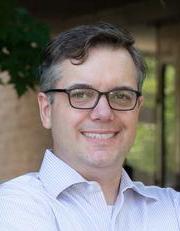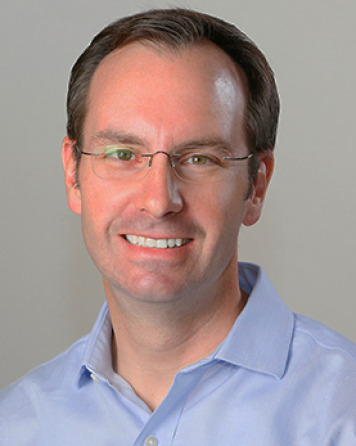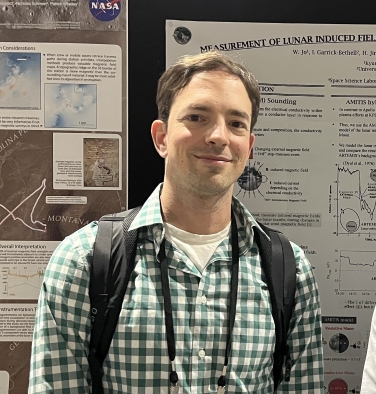
Ian Garrick-Bethell is a Professor of Planetary Sciences at the University of California, Santa Cruz (2020–present), previously serving as Associate Professor (2016–2020) and Assistant Professor (2010–2016). He is also a Visiting International Scholar at Kyung Hee University , South Korea (2011–2021). His academic training includes a Ph.D. in Planetary Sciences (2009) and M.S. in Aeronautics and Astronautics (2004) from MIT , and a B.A. in Physics (2002) from Wesleyan University . Research Interests: Ian’s work focuses on the early geologic, thermal, and magnetic evolution of the Moon , combining lunar geophysics , planetary magnetism , and space weathering studies. He pioneered low-cost mission concepts like NanoSWARM , which uses Cubesats for high-altitude magnetic field measurements. His research group investigates lunar magnetic anomalies , Swirl structures , and impact crater dynamics through modeling , paleomagnetic analysis , and remote sensing . Publication Trends: His recent work (2024–2020) explores lunar magnetism (Paleomagnetosphere, Swirls), impact crater demagnetization , and space weathering effects . Earlier studies (2019–2007) address lunar shape anomalies , sample return mechanisms , and core dynamo persistence . Physics publications (2006–2003) examine ion trap dynamics and quantum stability . Scientific Awards: 2015 AGU Ronald Greeley Early Career Award 2014 Sloan Fellowship in Physics 2012 Hellman Fellowship 2004 MIT Presidential Fellowship 2002 Phi Beta Kappa Advising: Mentors current graduate students Pranvera Hyseni (M.S.), Jacob Abrahams (Ph.D., co-advised with Francis Nimmo), Megan Kelley (Ph.D.), and Rachell Maxwell (Ph.D.). Former advisees include Michael Nayak (Ph.D., now at AFRL), Doug Hemingway (Ph.D., Miller Fellow at UC Berkeley), and Viranga Perera (M.S., now Ph.D. student at ASU). Labs & Collaborations: Leads a paleomagnetism laboratory at UCSC, collaborating with MIT and the University of Hawaii . His group investigates lunar samples (e.g., Apollo samples, Troctolite 76535) to unravel lunar magnetic history and impact processes .