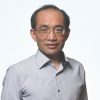
Samuel McDermott is an Associate Teaching Professor at the Department of Chemical Engineering and Biotechnology , University of Cambridge. He serves as the Sensor CDT Programme Manager , focusing on interdisciplinary research in healthcare, biotechnology, and open-source hardware. His research spans machine learning applications in medical imaging , laboratory automation , and web-of-things (WoT) integration for scientific equipment. Recent work emphasizes federated learning in healthcare, blood cell morphology classification, and low-cost diagnostic tools. Key article trends include: deep diffusion models for malaria detection , open-source microscopy platforms like OpenFlexure, and AI-driven clinical data generalization . His projects often combine 3D-printed hardware and IoT-enabled laboratory systems .
Apl. Prof. Dr. Felix von Stetten is an Associate Professor and Senior Scientist at the Laboratory for MEMS Applications within the Department of Microsystems Engineering (IMTEK) at the University of Freiburg. He also serves as an Executive Board Member at the Hahn-Schickard Institute of Microanalysis Systems. His work bridges academia and industry, focusing on lab-on-a-chip technologies, microfluidics, and energy harvesting for biomedical applications. Education: Studied Agricultural Sciences and Biotechnology at the Technical University of Munich, earned a PhD in Microbiology there. Post-2004, he joined IMTEK’s MEMS Applications Lab, later co-founding Hahn-Schickard’s Lab-on-a-Chip division in 2008, which became an independent institute in 2016 under his leadership. Research Interests: His work centers on miniaturized diagnostic systems (e.g., Lab-on-a-Disk platforms), energy harvesting for medical implants, and microfluidic applications. Key innovations include centrifugal microfluidic systems, smartphone-integrated diagnostic tools, and glucose fuel cell technologies. Publications: Over 1200 citations highlight contributions to microfluidic unit operations, digital PCR, and field-deployable diagnostics. Recent work emphasizes automation in pathogen detection and flexible lab-on-foil platforms. Awards: Not explicitly listed in provided texts. However, his leadership roles and impactful research suggest significant recognition in microsystems engineering. Advising/Grants: Leads major projects like BrainLinks–BrainTools and contributes to initiatives such as FRIAS and PlanOS. Manages interdisciplinary teams and collaborates with industry partners like Endress+Hauser and TwistDx. Labs/Teams: Oversees the Hahn-Schickard Institute for Microanalysis Systems and collaborates with IMTEK’s Application Development group. Active in spin-off ventures such as SpinDiag GmbH.
Surajit Chaudhuri is a Researcher at Microsoft , with a career spanning decades in database systems and data management . He has received the prestigious SIGMOD Edgar F. Codd Innovations Award (2011) for his contributions to query optimization , index tuning , and data lakes . Research Interests : His work focuses on database tuning , approximate query processing , fuzzy similarity joins , automated data transformations , and machine learning integration for scalable data systems. Recent Publications : In 2025, his research includes Auto-Test for unsupervised error detection in tables, Esc for budget-aware index tuning, and MMTU for multi-task table understanding benchmarks. Earlier works in 2024–2023 address spreadsheet formula recommendation , low-overhead index filtering , and time-series pattern recognition . Scientific Impact : He has co-authored influential papers in SIGMOD , VLDB , and IEEE Transactions , shaping practices in cloud databases , query optimization , and self-service BI . His collaborations span institutions like Microsoft, MIT, and ETH Zurich.
Timothy Grant is an Assistant Professor of Biochemistry at the University of Wisconsin–Madison and an Investigator at the Morgridge Institute for Research , embedded within the John W. and Jeanne M. Rowe Center for Research in Virology . His laboratory, the Grant Lab , focuses on pushing the limits of cryo-electron microscopy (cryo-EM) to visualize ever-smaller and more dynamic biological macromolecules. Education & Academic Home: Faculty appointment: Assistant Professor, Department of Biochemistry, UW–Madison College of Agricultural and Life Sciences. Concurrent appointment: Morgridge Institute Investigator, Rowe Center for Research in Virology. Research Interests: The Grant group develops computational and experimental methods that extend cryo-EM into two major frontiers: size —capturing structures of very small proteins previously invisible to cryo-EM—and motion —resolving conformational changes of molecular machines in real time. These advances are integrated into the open-source software package cisTEM , which provides a user-friendly workflow for single-particle image processing. Publication Trends: Across the 15 most recent papers (2021-2025), Grant’s work spans method-centric algorithmic innovation, high-resolution structural studies of bacterial DNA replication-restart machinery, and integrative technologies that couple native mass spectrometry with cryo-EM. A clear trajectory emerges from tool development toward application in virology and antibiotic-target validation. Scientific Awards: None explicitly mentioned in the provided text. Students & Research Team: Grant currently mentors six graduate students (Colin Hemme, Gan Li, Heidy Elkhaligy, Peter Ducos, Roma Broadberry, Shashwat Shastri) and several postdoctoral researchers and staff, including Alex Duckworth, Raison Dsouza, and Tim Wagner. Laboratory & Collaborations: The Grant Lab is physically located within UW–Madison’s Biochemistry Building and leverages the Center for High-Throughput Computing shared between UW–Madison and Morgridge to perform large-scale cryo-EM data processing.
Bo Chen is an Associate Professor in the Department of Physics at the University of Central Florida (UCF), part of the College of Sciences. He earned his PhD in Physics from Northwestern University in 2007 and held research positions at the NIH before joining UCF in 2011. His research focuses on structural characterization of biomacromolecular assemblies using NMR, TEM, and computational modeling, particularly HIV capsid proteins and antimicrobial peptides. Education: PhD in Physics, Northwestern University (2007). Research Interests: Solid-state NMR techniques, self-assembly mechanisms of viral capsids, nano particle catalysis, and antimicrobial peptide dynamics. His lab develops novel coarse-grain models and integrates experimental and computational approaches to study biomolecular systems. Awards: 2012 UCF Inhouse Award, 2013 AFOSR Young Investigator Award, 2016 COS Dean’s Rising Star Award, and 2020 Mid-Career Refreshment Award. Labs/Teams: Leads the Bo Chen NMR Lab at UCF, focusing on interdisciplinary approaches to structural biology and biophysics. Current students include Tyrone Thames (PhD), with notable alumni like Xin Qiao and Jaekyun Jeon.
Magnus Nord is an Associate Professor in the Department of Physics, Faculty of Natural Sciences at Norwegian University of Science and Technology (NTNU). His research focuses on advanced electron microscopy techniques and computational tools for materials characterization. Research Interests : Scanning Transmission Electron Microscopy (4D-STEM), Open Source Scientific Software Development (Python), Big Data Processing, Magnetic/Electric Field Imaging, Structural Characterization using Higher Order Laue Zones. Publications span cutting-edge applications in functional materials, nanomagnets, and perovskite thin films, with emphasis on machine learning and precession-enhanced imaging. Key keywords include Materials Science , Electron Microscopy , and Computational Imaging . Software Development : Lead developer of Atomap and pyxem , contributing to HyperSpy and merlin_interface for electron microscopy data analysis. Current Research Funding : InCoMa (Research Council of Norway) IMPRESS (Horizon EU Program)
Paul Yager is a Professor in the Department of Bioengineering at the University of Washington, with adjunct appointments in Chemistry, Global Health, and Oral Biology. He leads pioneering research in microfluidics and biosensors, focusing on point-of-care diagnostics for global health. His work emphasizes low-cost, portable systems for resource-limited settings. Education: A.B. in Biochemistry from Princeton University (1975), Ph.D. in Chemistry from the University of Oregon (1980). Early career included roles as a Research Chemist at the Naval Research Laboratory (1982–1987) and Resident Research Associate (1980–1982). Research Interests: Development of microfluidic devices, paper-based assays, and novel biosensors for rapid disease detection. Key areas include influenza diagnostics, malaria biomarker detection, and nucleic acid amplification technologies. His innovations aim to democratize healthcare through accessible diagnostic tools. Recent Article Trends: Focus on paper-based systems, portable energy solutions (e.g., hydrogen fuel cells), and automation of multistep assays. Research bridges bioengineering, nanotechnology, and global health equity. Awards: Fellow of National Academy of Inventors (2018), Seattle Magazine’s Top Doctors (2012), UW Research Award (2015). Grants/Patents: Over 40 patents (e.g., microfluidic devices, lipid-based sensors) and extensive NIH/NSF funding. Key patents include microband electrode arrays and diffusion-based chemical sensors. Labs/Teams: Yager Research Laboratory, Center for Applied Microtechnology, and collaborations with global health institutions.
Dr. Peng Li is an Associate Professor in the C. Eugene Bennett Department of Chemistry at West Virginia University since 2016. His research focuses on acoustic wave-based microfluidic technologies for cell manipulation, separation, and biomedical applications. Key achievements include developing the standing surface acoustic wave (SSAW) platform for cell co-culture, high-throughput sorting, and acoustic separation of circulating tumor cells. Dr. Li's work bridges engineering and biology, with applications in diagnostics and nanomedicine. Research interests span acoustic tweezers , lab-on-a-chip systems , and vibrating sharp-edge spray ionization (VSSI) . His group has pioneered compact digital sensing platforms and received notable awards, including the 2022 RCM Beynon Prize and NSF Career Grant (2022). Collaborations span institutions like the National Science Foundation and NIH, with funding for projects like VSSI technology development. Key Awards: 2022 RCM Beynon Prize 2021 Eli Lilly Young Investigator Award NIH R01 Grant (2019) Labs/Teams: The Li Group specializes in acoustofluidics and microfluidic biosensors. Publications highlight advancements in acoustic cell sorting, nanoparticle manipulation, and mass spectrometry integration, with high-impact journals like PNAS and Lab on a Chip . Current efforts focus on portable diagnostic systems and next-generation microfluidic platforms.
Jose Manuel Herrero Martinez is a Professor in the Department of Analytical Chemistry at the Universitat de València's Faculty of Chemistry. His research focuses on advanced analytical methodologies, including capillary electrophoresis, mass spectrometry, and sustainable sample preparation techniques. Education: PhD in Analytical Chemistry from Universitat de València (2004), thesis on capillary electrophoresis for environmental/industrial quality control. His research spans green analytical chemistry , aptamer-based extraction , metal-organic frameworks (MOFs) , and miniaturized paper-based devices . Recent work emphasizes 3D printing applications, eco-friendly solvents, and innovative sorbent materials for drug/environmental contaminant analysis. Key trends in his publications include solid-phase microextraction advancements , allergen detection in food , and AI integration in scientific research . Collaborative projects highlight cross-disciplinary approaches with materials science and environmental toxicology. As a supervisor, he has mentored researchers like M. Vergara-Barberán and H. Martínez-Pérez-Cejuela, with a focus on translating theoretical concepts into practical analytical tools.
Murat Monkul is a Professor in the Department of Civil Engineering at Yeditepe University's Faculty of Engineering. With expertise in geotechnical engineering and soil mechanics, his research focuses on liquefaction behavior of sands and silty soils, seismic stability, and sustainable soil utilization. PhD, MS, and BS degrees in Civil Engineering Specializes in cyclic/monotonic loading effects on soils Developed automated testing systems for soil stability Investigates lunar soil simulants for space applications His recent work explores microplastic contamination effects on soils, advanced liquefaction criteria using CPT data, and innovative soil stabilization methods. Notable projects include EU-funded research on silt characteristics and USD40,000 FHWA corrosion study.
Malika Datta is a Research Fellow in Neuroscience at Yale School of Medicine, Yale University. Her work focuses on advanced neuroimaging techniques and molecular mechanisms in neuroscience. She holds appointments in the Neuroscience department and contributes to interdisciplinary research in biomedical engineering and pharmacology. Her research interests include light-sheet microscopy innovation for large-scale biological imaging, dopaminergic system analysis under drug exposure, and genome editing via focused ultrasound. She has published extensively on topics such as Norrin-mediated astroglia-neuron interactions and optogenetic systems development. Recent publications highlight her contributions to scalable microscopy technologies and brain mapping methodologies. Her work bridges engineering and basic neuroscience, with applications in drug impact studies and neurotechnology. No scientific awards are explicitly mentioned in the provided information.
Tza-Huei (Jeff) Wang is a Professor in the Department of Mechanical Engineering and holds a secondary appointment in Biomedical Engineering at Johns Hopkins University . He is also affiliated with the Sidney Kimmel Comprehensive Cancer Center and the Institute for NanoBioTechnology , driving translational research in molecular diagnostics. Doctorate in Mechanical Engineering, UCLA (2002) Wang's research focuses on micro- and nano-biotechnologies for molecular analysis and biomedical applications. His work encompasses quantum dot-FRET nanosensors for cancer biomarkers, droplet magnetofluidics for infectious disease diagnostics, and single-molecule spectroscopy platforms like CICS. These technologies address critical needs in early cancer detection , antimicrobial resistance testing , and HIV viral load self-testing . Recent publications highlight advancements in digital PCR , CRISPR-assisted diagnostics , and high-throughput antimicrobial combination screening (e.g., RoboDrop platform). His team's work on HYPER-Melt enables ultrasensitive DNA methylation analysis at 0.00005% detection thresholds. Scientific Recognition NSF CAREER Award CRS Jorge Heller Award JALA Ten Award Cohen Translational Engineering Award Fellow, AIMBE, ASME, IEEE, and RSC Wang's laboratory trains future leaders in engineering and biomedical sciences, with alumni securing faculty positions at institutions like UCSD, Penn State, and Aarhus University. His innovations have resulted in 36 patents , including 14 U.S. patents, and secured $1.5M+ IMAT R33 and $2.2M NCI R01 grants for cancer screening technologies.
Nathan Sherer is a Professor in the Department of Medical Microbiology and Immunology at the University of Wisconsin–Madison, with affiliations in the Bacteriology Department and the UW Carbone Cancer Center. His research integrates live-cell imaging and biochemical approaches to study virus-host interactions, focusing on HIV-1, Hepatitis B virus (HBV), and Human Papillomavirus (HPV). Institution: University of Wisconsin–Madison School: School of Medicine and Public Health Department: Department of Medical Microbiology and Immunology Additional Affiliation: UW Carbone Cancer Center Nathan Sherer earned his BA in Biology from Grinnell College in 1997, followed by a PhD in Microbiology from Yale University in 2006. He completed postdoctoral training at King’s College London before establishing his independent research program at UW-Madison. Dr. Sherer's research centers on the molecular virology of retroviruses, particularly HIV-1. His lab investigates how viral particles assemble and spread through host cells, with a focus on the post-transcriptional journey of HIV-1 genomic RNAs (gRNAs) from the nucleus to the plasma membrane. They utilize cutting-edge live-cell fluorescence microscopy, genetic manipulations, and biochemical assays to dissect virus-host interactions. Key areas include viral RNA transport, ribosomal frameshifting, virological synapse formation, and the role of host proteins in viral replication. The lab has expanded its scope to include HBV and HPV, exploring mechanisms of genome packaging, capsid trafficking, and viral oncogenesis. The recent publications highlight a strong emphasis on imaging technologies, RNA biology, and host factor identification. Articles span super-resolution microscopy development, single-cell analysis of viral gene expression, and proteomic mapping of viral RNA interactomes. Collectively, the work reveals sophisticated strategies viruses use to hijack cellular machinery, offering insights for novel antiviral therapies. Dr. Sherer mentors a dynamic team of graduate students and postdoctoral researchers from programs such as Molecular and Cellular Pharmacology, Cancer Biology, and Cellular and Molecular Biology. His alumni have pursued successful careers in academia, biotechnology, and pharmaceutical research. While no specific scientific awards are listed, his consistent high-impact publications reflect significant contributions to virology. The lab also benefits from collaborative grants and institutional support, enabling advanced imaging and proteomic studies. Dr. Sherer leads an active research laboratory with ongoing projects in HIV-1, HBV, and HPV virology. The team employs a multidisciplinary approach, combining molecular biology, imaging, and biochemistry to understand viral replication mechanisms. Lab members include senior scientists, postdocs, and graduate students working on various aspects of viral assembly, RNA regulation, and host interactions.
Dominik Kopczynski is a researcher affiliated with the Department of Analytical Chemistry at the Faculty of Chemistry. His work focuses on lipidomics, mass spectrometry, and the development of bioinformatics tools for lipid structure analysis and experimental standardization. He has contributed to initiatives like the lipidomics reporting checklist and Goslin nomenclature system. Active in organizing academic events such as the de.NBI Spring School for lipidomics bioinformatics and Keystone Symposia on lipid biology, he collaborates extensively with international researchers. Research Interests: Lipid metabolism, mass spectrometry-based analytical methods, lipid nomenclature standardization, proteomics, and computational tools for omics data analysis. His work bridges biochemical experimentation with bioinformatics to enhance reproducibility and interdisciplinary collaboration in lipidomics research. Activities: Organized 36 academic events including conferences, schools, and poster sessions. Notable contributions include co-organizing the 2025 de.NBI Spring School and contributing to the Keystone Symposia on lipid cellular function and disease. Engaged in both presenting research and fostering collaborative research networks. Labs/Teams: Collaborates within the Department of Analytical Chemistry and participates in international lipidomics consortia. His work often involves cross-disciplinary teams focused on integrating biochemical and computational approaches. Grants/Advising: While specific grants are not detailed, his extensive publication record and collaborative activities suggest involvement in funded projects related to lipidomics infrastructure development and analytical method standardization.
Prof. Dr. Karsten Niehaus serves as Head of the Proteome and Metabolome Research Group at the Center for Biotechnology (CeBiTec) and Faculty of Biology, University of Bielefeld. His research focuses on proteomics and metabolomics applications in plant-microbe interactions, bacterial stress responses, and disease model systems. His laboratory employs advanced mass spectrometry imaging and cell phenotyping technologies to investigate molecular responses in crops like sugar beet and grapevines under abiotic stress conditions, as well as in cancer models where differentiation therapy impacts tumor malignancy. The group also explores microbial biotechnology through Xanthomonas campestris studies on xanthan production and stress adaptation. Selected publications highlight innovations in 3D microfluidics for biomarker detection and bioinformatics platforms like MetHoS for metabolomics data analysis. His work appears in journals covering Frontiers in Plant Science , Scientific Reports , and Journal of Experimental Botany . Contact: kniehaus@cebitec.uni-bielefeld.de | Office: UHG W7-117