Markku Varjosalo is a Research Director at the Institute of Biotechnology, University of Helsinki, and a supervisor in the Doctoral Programmes in Biomedicine, Drug Research, and Integrative Life Science. His research focuses on biochemistry, molecular biology, and proteomics, with particular emphasis on gene fusions in cancer, immune response mechanisms, and protein interaction networks. Current projects include funding from Sigrid Jusélius Foundation (2025-2026) and Finnish Science Society (2025-2026) Active in Biocenter Finland infrastructure projects (2024-2025, 2024-2028) His recent publications highlight interdisciplinary work in proteomics, disease mechanisms, and systems biology approaches. He participates in organizing academic events like iCAN retreat 2024 and contributes to research infrastructure coordination through Instruct-ERIC. Funded by major Finnish research councils and foundations, his work spans cancer biology, cardiovascular genetics, and immunology.
Jay Grate serves as a Lab Fellow and Chemist in the Materials Sciences division at Pacific Northwest National Laboratory (PNNL), a U.S. Department of Energy national laboratory operated by Battelle. With over three decades of research experience, he has established himself as a leading expert in chemical sensing technologies and analytical methodologies. His work bridges fundamental science with practical applications in national security, environmental monitoring, and industrial processes. Dr. Grate received his educational foundation with a BA in Chemistry (summa cum laude) from Rollins College in 1978, followed by an MS in 1980 and PhD in Chemistry from the University of California, San Diego in 1983. His academic training provided the foundation for his subsequent groundbreaking work in analytical chemistry and materials science. His research interests focus on the development of chemically selective materials, chemical microsensors, and analytical fluidics systems. Dr. Grate's work integrates chemical sciences, material sciences, and measurement sciences to create innovative microanalytical principles, methods, and systems. He has made significant contributions to chemical vapor sensing, biological toxin and pathogen detection, radionuclide sensing, and the application of nanostructured materials in analytical chemistry and catalysis. His research spans from basic scientific investigations to prototype detector development for real-world applications. Analysis of his publication record reveals a consistent trajectory of innovation in sensor development and analytical methodologies. His work demonstrates expertise across multiple domains including polymer chemistry for sensing applications, radiochemical analysis techniques, microfluidic systems, and advanced chemometric methods for data interpretation. The interdisciplinary nature of his research connects materials science with analytical chemistry, environmental science, and national security applications. R&D 100 Award (2004) for work in developing rationally designed polymers for chemical threat detection ACS Northwest Regional Industrial Innovation Award (2007) Battelle Distinguished Inventor recognition (2009) Dr. Grate has authored or co-authored over 100 peer-reviewed journal articles and more than a dozen book chapters, demonstrating significant scholarly impact. He holds 17 patents, several of which have been commercially licensed, indicating the practical value of his research. His work has been featured in prominent scientific journals and has appeared on the covers of Analytical Chemistry, Chemical Reviews, and Polymer News, reflecting the significance of his contributions to the field. His research has received coverage in major scientific news outlets including Chemical and Engineering News, Science, and Physics Today.
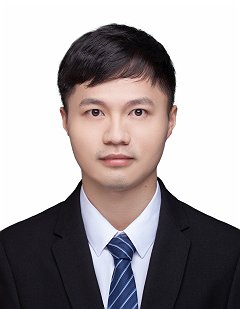
Xiao Yu is a Research Fellow (Assistant Research Professor) at the State Key Laboratory of Blockchain and Data Security, Zhejiang University, Hangzhou, China. Previously, they were a Postdoctoral Researcher at Huawei under Prof. Xin Xia. They hold dual PhD degrees: from Wuhan University's School of Computer Science (December 2020) supervised by Prof. Jin Liu, and from City University of Hong Kong's Department of Computer Science (March 2021) supervised by Prof. Qing Li and Prof. Jacky Wai Keung. Research focuses on three interconnected domains: LLMs Data Governance and Evaluation addressing hallucination phenomena and task-specific LLM evaluation in software engineering; Intelligent Software Engineering leveraging deep learning for code generation, annotation, and maintenance; and Software Security and Reliability investigating vulnerability detection, log anomaly identification, and security bug classification. Their work bridges theoretical advancements with industrial applications, particularly in blockchain and data security contexts. Recent publications demonstrate strong trends in realistic LLM evaluation (RealisticCodeBench), vulnerability detection using semi-supervised learning, and industrial anomaly detection. Key thematic areas include effort-aware defect prediction, code smell detection, and the practical application of large language models in software engineering tasks, with increasing emphasis on data quality and privacy considerations. Xiao Yu actively contributes to the academic community through extensive service roles including journal reviewing for ACM Transactions on Software Engineering and Methodology, IEEE Transactions on Dependable and Secure Computing, and serving on program committees for major conferences like APSEC 2025 and ASE 2025. They have supervised numerous graduate students as evidenced by authorship patterns in publications. Based at Zhejiang University's State Key Laboratory of Blockchain and Data Security, their research operates at the intersection of academic rigor and industrial relevance, with strong collaborations spanning multiple institutions including Huawei, Wuhan University, and City University of Hong Kong.