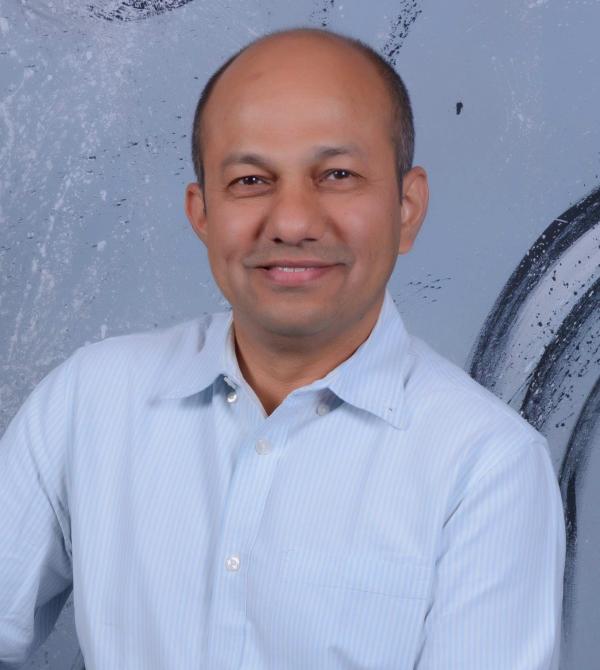
Ilias El Makrini is a postdoctoral researcher at Vrije Universiteit Brussel (VUB), affiliated with both the Federated Labs AI and Robotics and the Applied Mechanics department within the Faculty of Engineering. His research spans multiple interdisciplinary domains focused on human-robot interaction, ergonomics, and industrial automation. His primary research interests include Robotics (100%), Ergonomics (60%), Robot Mathematics (30%), Industrial plants (28%), Manipulators (28%), Sliding mode control (19%), Industry applications (17%), and Reinforcement learning (16%). His work centers on developing sustainable human-centered robotics systems that optimize operator well-being while maintaining production efficiency. Recent publications reveal a strong focus on practical applications of robotics in industrial settings, human-robot collaboration safety systems, operator well-being assessment using specialized sensors, and rehabilitation technologies. His research demonstrates a clear trajectory toward creating more intuitive, safe, and efficient human-robot collaborative environments, particularly in manufacturing contexts. El Makrini actively participates in multiple funded research projects including Brubotics (sustainable human-centered robotics), Wellficiency (operator well-being optimization), AUTOCRAFT, XRtwin_SBO, and ILSF 2024 (Ergonomics 2.0 with exoskeletons). He has co-authored 41 research outputs and contributed to 3 datasets, with a notable h-index of 12 and 638 citations. His collaborative work includes organizing events like the I Love Science Festival (2024) and the Opening of Flanders Make AugmentX lab (2024), demonstrating active engagement in both academic and public outreach activities within the robotics community.
Dr Carol Irizarry serves as Associate Professor in the College of Education, Psychology and Social Work at Flinders University, holding key responsibilities as Chair of the School International Engagement Committee and Discipline Coordinator of Distance Education. Her academic credentials include: Ph.D. from Rutgers University, New Brunswick, New Jersey M.S. from Columbia University, New York, New York B.A. from William Smith College, Geneva, New York Professor Irizarry's research program centers on bereavement, trauma, and refugee support systems, with innovative exploration of human-animal interactions in therapeutic contexts. Her work bridges clinical practice with social justice advocacy, particularly through group work methodologies and culturally safe interventions for vulnerable populations including unaccompanied humanitarian minors and elderly communities. International student support remains a cornerstone of her academic commitment. Recent publications demonstrate an evolving trajectory from foundational group work studies toward contemporary intersections of technology and aging, kinship care systems, and trauma-informed social justice frameworks. Her scholarly output consistently addresses systemic inequities while developing practical intervention models. Her distinguished recognition includes: Citation for Outstanding Contributions to Student Learning (2010) Life Membership from Anglicare SA (2006) Arthur Cys Medal for Service to Seniors (1996) Equal Opportunity Award from Flinders University (1995) Inaugural Vice-Chancellor's Award for Excellence in Teaching (1993) Professor Irizarry pioneered the Adelaide Loss & Grief Centre (2000), a landmark Anglicare SA-Flinders partnership, and sustained a 12-year refugee children's summer program. Her grant portfolio demonstrates consistent success in developing community-academic partnerships focused on migration support and trauma recovery, while her teaching innovations include the 2018 launch of Loss, Grief and Trauma Counselling with human-animal interaction components. She maintains active leadership in STTARS Adelaide's Executive, Anglicare SA's life membership, and previously served on Tabor College Adelaide's Academic Board (2007-2017), with international conference contributions spanning photovoice methodology, global social work agendas, and culturally safe refugee care models.
Cyrena Hunt-Madden is a Lecturer in Speech Pathology at Charles Sturt University's School of Allied Health, Exercise and Sports Sciences. A Certified Practicing Speech Pathologist, she delivers clinical services across hospitals, community health centres, Aboriginal health centres, schools, and preschools with expertise in child speech, language, and communication. Her academic qualifications include: Master of Public Health, University of New South Wales (2023) Master of Speech Language Pathology, University of Sydney (2012) Bachelor of Arts in Psychology (2009) Her research bridges public health and speech pathology to advance health equity and social justice. She investigates systemic barriers to healthcare access for Aboriginal and Torres Strait Islander children and LGBTIQ+ families, emphasizing culturally safe co-designed models of care. Her work actively promotes inclusion in clinical practice and policy development through community partnerships. Recent publications demonstrate consistent focus on equity-driven speech pathology. Studies analyze urban Aboriginal children's access to services, stigma in healthcare for LGBTIQ+ families, and telepractice education innovations. These works collectively advocate for dismantling systemic barriers through culturally responsive frameworks and interdisciplinary collaboration. Her professional recognition includes: Highly Commended, Charles Sturt Excellence Awards: Social Responsibility (2023) Cyrena mentors Master of Speech Pathology students in paediatric language assessment, clinical reasoning, and cultural safety. She developed virtual work-integrated learning experiences to enhance telepractice competence. Her NSW Health project on LGBTIQ+ family experiences in maternity services directly informs curriculum development and clinical practice improvements through evidence-based recommendations. She actively collaborates with the Children's Voices Centre and maintains research networks focused on Aboriginal health innovation and speech pathology service transformation.
Katie McGhee is an Associate Professor in the Department of Biology at Sewanee: The University of the South, where she has been teaching and conducting research since Fall 2015. She previously held postdoctoral positions at the University of Cambridge (2013-2015) and the University of Illinois (2009-2015). Her research focuses on behavioral ecology, particularly how early environmental experiences shape behavioral variation in fish species. McGhee earned her PhD from Florida State University under advisor Dr. Joseph Travis, following an MSc also at Florida State University with Dr. Don Levitan. Her academic journey has taken her from large research universities to a small liberal arts college setting, where she has adapted her teaching and research approaches to maximize undergraduate involvement. Dr. McGhee's research centers on how parental and early-life experiences affect behavioral development in fish. Using primarily the mangrove rivulus (Kryptolebias marmoratus), a self-fertilizing hermaphroditic fish, she investigates transgenerational effects of stress, predator exposure, and social interactions on offspring behavior. Her work explores how these early experiences influence risk assessment, exploration, mate choice, and other behavioral traits across generations. She approaches these questions from both ecological and evolutionary perspectives, examining how behavioral plasticity might serve as an adaptive response to environmental challenges. Analysis of McGhee's recent publications reveals a consistent focus on transgenerational effects of environmental stressors on fish behavior. Her work spans multiple model systems including mangrove rivulus, threespine stickleback, and mosquitofish, with particular attention to how parental experiences with predation risk shape offspring behavior. A notable trend is her increasing use of genetically controlled systems to isolate environmental effects, as well as her growing emphasis on the interaction between genetic background and early environmental experiences. Highlighted in a New Faculty Profile by the Society for the Study of Evolution Associate Editor for Proceedings of the Royal Society (Biological Sciences) Editor for Animal Behaviour (until 2024) Multiple papers featured as highlighted articles by journal editors Research featured in Nature Dr. McGhee is deeply committed to undergraduate research mentorship. She has guided numerous students through independent projects, many of which have resulted in publications where students are first authors. Her mentoring philosophy emphasizes building student confidence while providing constructive guidance, recognizing the importance of creating a safe space for students to learn through experimentation and occasional failure. She has successfully adapted her research program to thrive in a small liberal arts college environment without graduate students, focusing on projects that can be accomplished with undergraduate researchers. The McGhee lab operates within Sewanee's unique environment - a small liberal arts college with fewer than 1,800 undergraduate students situated on the Cumberland Plateau in Tennessee, surrounded by over 10,000 acres of university-owned wilderness. This setting provides rich opportunities for both field and laboratory research, with easy access to diverse aquatic habitats where many of her study species are found. Her lab has produced research on topics including parental effects on offspring behavior, risk assessment in fish, mate choice, and chemical communication, with particular emphasis on the mangrove rivulus system.
Siddharth Srivastava is an Associate Professor in the School of Computing and Augmented Intelligence at Arizona State University. His research focuses on developing principled, safe, and reliable AI systems that can learn generalizable knowledge for planning and accomplishing complex user-desired tasks under uncertainty. His educational background includes: PhD in Computer Science from the University of Massachusetts Amherst, working with Shlomo Zilberstein and Neil Immerman MS in Mathematics from the Indian Institute of Technology (IIT), Kanpur Dr. Srivastava's research interests span Artificial Intelligence, Robotics, AI Safety, and AI Assessment. He develops algorithms for generalizable planning and learning, with a focus on transfer learning, sequential decision making, and reinforcement learning. His work addresses the challenge of creating AI systems that can reliably (and safely) learn, generalize, and transfer knowledge to solve new tasks not encountered during training. His notable scientific awards include: NSF CAREER award Top 5% Faculty Award from the Fulton Schools of Engineering at ASU Best Paper Award at the International Conference on Automated Planning and Scheduling (ICAPS) Outstanding Dissertation award from UMass Amherst Best Final Year Thesis award from IIT Kanpur National Board of Higher Mathematics Scholarship Dr. Srivastava has advised several PhD students, including Pulkit Verma and Naman Shah (who recently defended their dissertations) and Rushang Karia. He leads the AAIR (Autonomous, Adaptive, and Intelligent Robotics) Lab at ASU, which focuses on developing principles and algorithms for reliable AI systems. The lab has organized workshops such as the GenPlan Workshop at NeurIPS and has been involved in significant events like the AAAI UR-RAD Symposium. His research has received press coverage from the BBC, Motherboard, AAAS Eureka Alert, NBC News, and IEEE Spectrum.
Ties Mulders is a Researcher in the Department of Radiology & Nuclear Medicine at Erasmus University Medical Center (Erasmus MC), specializing in advanced imaging techniques with a focus on PET-CT applications in cardiac and thoracic pathologies. His work bridges nuclear medicine, radiology, and clinical cardiology to improve diagnostic accuracy for complex conditions. His core research spans: Cardiac PET-CT Imaging : Investigating FDG-PET/CT variations in prosthetic heart valves and post-sternotomy complications to differentiate infection from inflammation Lung Cancer Diagnostics : Validating AI-driven CAD systems for lung nodule characterization and optimizing radiation-safe follow-up protocols for pulmonary carcinoids Thoracic Lesion Management : Leading international Delphi initiatives to standardize diagnostics for mediastinal cystic lesions through multidisciplinary consensus Analysis of his 2023-2025 publications reveals a strong trend toward clinical translation of imaging biomarkers, particularly in reducing false positives in cardiac prostheses evaluation and minimizing radiation exposure in lung cancer surveillance. His work consistently integrates quantitative imaging with real-world clinical decision-making across nuclear medicine and radiology domains. No scientific awards were documented in the provided profile. While student mentoring details are absent, his collaborative research involves extensive cross-institutional partnerships with cardiologists, thoracic surgeons, and oncology teams. Current projects include the DETECTION initiative for mediastinal lesions and validation studies for AI-based nodule detection systems, though specific grant information isn't disclosed. Dr. Mulders operates within Erasmus MC's Radiology & Nuclear Medicine department, contributing to multidisciplinary teams focused on cardiac imaging innovation and thoracic oncology diagnostics through active participation in prospective cohort studies and international consensus projects.
Cristiana Rossignolo is an Associate Professor at the Polytechnic University of Turin , affiliated with the Interuniversity Department of Territorial Sciences, Planning and Policies (DIST) . Her work focuses on urban regeneration , post-metropolitan cities , and inclusive urban policies , with particular emphasis on European urban systems and urban networks . She contributes to the Geography sector (GEOG-01/A) within the Historical, Philosophical, Pedagogical, and Psychological Sciences Area (0011) . Research Networks : European Urban Research Association (2002–present) Collaborations : Scientific Manager for the 2022–2025 agreement between DIST and DCPS, University of Turin Her scientific work integrates urban geography , social inclusion , and sustainable development (aligned with SDG 11 ). Recent projects include Urban Co-Production and Inclusive Planning (2023–2025) and Wide Angle. Dream Spaces for Safe Coexistence (2021–2022). She has published extensively in urban regeneration , social inclusion , and participatory planning , with a focus on the Aurora district in Turin . Dr. Rossignolo has served as Program Chair for major conferences (e.g., EURA 2022) and Associate Editor of Urban Research & Practice since 2008. Her teaching spans courses in Urban and Territorial Geography and Transnational Programmes Design for the Master's in Urban and Regional Development (14 cycles from 2014/15 to 2024/25).
Dr. Tarendra Lakhankar is an Adjunct Professor in the Department of Civil Engineering at the City College of New York (CUNY) and a Research Scientist at NOAA-CESSRST. His research focuses on remote sensing applications for environmental monitoring, urban hydrology, and climate science. He has led major field campaigns including the NYC-Urban HydroMet Testbed, installing 21 weather stations across NYC, and the CREST-SAFE snow study in Maine. His work integrates satellite data with ground measurements to improve weather forecasting and disaster preparedness. Notable achievements include receipt of the 2024 Outstanding Adjunct Faculty Award and 2022 S.T.A.R. Award for educational leadership. He pioneered initiatives like the HIRES program, fostering STEM education through GIS and remote sensing workshops. His research spans snow hydrology, soil moisture dynamics, and urban climate resilience, with publications in top-tier journals. Dr. Lakhankar also leads international collaborations, including climate change studies in Nepal and biodiversity conservation projects in Himalayan regions. His teaching portfolio includes courses on geospatial technologies, environmental systems, and data science. He actively mentors students through research projects and advises NOAA-funded initiatives. Dr. Lakhankar’s outreach efforts include community-based weather station networks and post-disaster relief work in Nepal, demonstrating commitment to applied environmental science and global impact.
Ben Glocker is a Professor in Machine Learning for Imaging at Imperial College London's Department of Computing within the Faculty of Engineering. He holds the Kheiron Medical / RAEng Research Chair in Safe Deployment of Medical Imaging AI. His research focuses on advancing AI-driven medical imaging technologies to improve disease detection and diagnosis, emphasizing ethical and reliable deployment. Glocker co-leads the Biomedical Image Analysis Group and leads the HeartFlow-Imperial Research Team, while serving as Knowledge Transfer Lead for the EPSRC Causality in Healthcare AI Hub. His academic positions include Reader (2019–2022), Senior Lecturer (2017–2019), and Lecturer (2013–2017) at Imperial College London, preceded by postdoctoral research at Microsoft Research (2010–2013). His research spans clinical sciences, artificial intelligence, oncology, and healthcare policy. Research Interests : - Safe and ethical AI in medical imaging - Representation learning and causal inference - Bias mitigation and fairness in healthcare algorithms - Semantic imaging for disease detection (e.g., breast cancer, cardiovascular disease) - AI policy and regulation in healthcare Grants & Projects : Funding for MALIBO, MALIMAR, and Next Generation Machine Intelligence in Medical Imaging EPSRC CHAI Hub: Causality in Healthcare AI QuantifyTBI: Traumatic Brain Injury lesion quantification Collaborations with HeartFlow and Kheiron Medical Labs/Teams : Biomedical Image Analysis Group HeartFlow-Imperial Research Team CHAI Hub leadership
Boris Karanov is a post-doctoral research member at the Signal Processing Systems Group within the Department of Electrical Engineering at Eindhoven University of Technology since October 2020. His research focuses on applying deep learning techniques to digital signal processing in optical fibre communications. His academic background includes a Ph.D. in Electrical Engineering from University College London (awarded December 2020), where his research focused on developing new coding and detection methods for communication over the nonlinear dispersive optical fibre channel using deep learning. He also holds joint M.Sc. degrees in Photonic Networks Engineering from Aston University, Osaka University, and Technical University of Berlin (2016), and a B.Sc. in Telecommunication Engineering from Technical University of Sofia (2014). Dr. Karanov's research interests span optical fiber communications, digital signal processing, deep learning applications in communications, nonlinear fiber effects, and transceiver design. His work bridges theoretical communication principles with practical AI-driven solutions for next-generation communication systems. His recent publications demonstrate a strong trend toward applying neural networks and deep learning techniques to solve challenging problems in optical communications, radar signal processing, and speech enhancement. The research shows increasing focus on robustness of AI solutions under real-world constraints and imperfect channel conditions. Nokia 'Most innovative AI solution' award (2018) for pioneering work in machine learning applications to communication systems 'Best paper award' from IEEE/OSA Journal of Lightwave Technology (2021) Lombardi prize from Electronic and Electrical Engineering department at UCL (2021) for the most impactful thesis Dr. Karanov is actively involved in multiple research projects including RAISE SPS (Robust AI for Safe radar signal processing), RAIDAR (AI for RaDAR), and ICONIC (Increasing the Capacity of Optical Nonlinear Interfering Channels), collaborating with institutions across Europe. His work in the Signal Processing Systems Group at Eindhoven University of Technology continues to push the boundaries of applying AI to communication challenges.
Nadia Behizadeh is a Professor of Adolescent Literacy in the Department of Middle and Secondary Education at Georgia State University’s College of Education & Human Development. Her work focuses on equitable literacy practices, critical pedagogy, and social justice in urban schools. She holds a Ph.D. in Educational Studies from Emory University (2012), complemented by teaching credentials from California State University (2005) and a B.A. in English from the University of Georgia (2002). Behizadeh’s research explores writing instruction, large-scale assessments, and teacher preparation. Her interdisciplinary approach addresses systemic barriers to literacy access through projects like the Preparing, Supporting and Retaining Elementary Mathematics Specialists initiative. She chairs the English Language Arts Teacher Educators (ELATE) and co-leads the English Education Summer Conference . Her publications emphasize authentic writing practices and critical consciousness development. Key articles include analyses of sociopolitical discourses in schools and the impact of policy on educator autonomy. Behizadeh has secured grants from the Spencer Foundation and U.S. Department of Education, supporting projects on equity-centered pedagogy and curriculum design. Behizadeh advises doctoral students in Language and Literacy and Teaching & Teacher Education. She coordinates the M.Ed. in Literacy Education and teaches courses on literacy methods and research theory. Professional affiliations include the National Council of Teachers of English and the Scholars Strategy Network.
Ellen Margareth Benestad Moi is a Senior Lecturer at the University of Agder (UiA), affiliated with the Department of Health and Nursing Sciences within the Faculty of Health and Sport Sciences. She holds a Master's degree in Health Informatics from Aalborg University (2003) and has over three decades of clinical experience as an intensive care nurse. Her research focuses on patient safety, interprofessional teamwork, communication tools like ISBAR, and nursing education. Notable work includes studies on pandemic impacts on nursing students and healthcare workers, and systematic reviews on team leader communication in ad hoc healthcare teams. She is a core member of the Q-safe research group. Moi teaches courses in specialized nursing, including simulation-based training and AHLR certification. She supervises master's theses and oversees clinical supervisors in the Advanced Specialised Nursing program. Her teaching spans intensive care nursing topics like respiratory management, patient safety, and non-technical skills. Moi has co-authored over 20 peer-reviewed articles and contributed to policy discussions on healthcare education and simulation training. She collaborates with Sørlandet Hospital on facilitator training programs for medical simulation instructors.
Francisco Girbal Eiras is a PhD in Engineering Science (AIMS CDT) from the University of Oxford , with a focus on optimization and robust machine learning. He currently works as an ML Research Scientist at Dynamo AI since 2024, leading agentic red-team evaluations for LLMs. Prior roles include Research Scientist at FiveAI (2018–2020), where he developed motion planning algorithms and contributed to robust deep learning research. Education highlights : BSc in Electrical and Computer Engineering from Técnico Lisboa (18/20, Top 2%) MSc in Computer Science from University of Oxford (Distinction) PhD in Engineering Science (AIMS) from University of Oxford (2020–2024, funded by FiveAI) Research interests center on optimization , robust machine learning , and neural network verification . His work bridges autonomous driving and formal verification , with applications to physics-informed neural networks and LLM safety . Key contributions include: Advancing zero-shot referring segmentation (state-of-the-art results at FiveAI, 2023) Extending randomized smoothing to anisotropic certificates (FiveAI, 2021) Developing correct-by-construction driver assistance systems (University of Oxford, 2017–2018) Scientific recognition : Outstanding Paper Award at ICML 2023 Workshop on Formal Verification of Machine Learning Academic Excellence Awards at Técnico Lisboa (2013–2016) Swiss-European Mobility Programme Scholarship during EPFL exchange (2016–2017) Technical expertise spans motion planning , constrained optimization , LLM evaluation pipelines , and formal verification of neural networks . He collaborates with research groups like the Oval Group and Torr Vision Group at Oxford.
Yik Lung Pang is a researcher at the School of Electronic Engineering and Computer Science, Queen Mary University of London, based in the Peter Landin building (Room CS 440). His work bridges robotics, computer vision, and machine learning to advance human-robot collaboration in real-world environments. His research specializes in human-robot interaction with a focus on handover behaviors, 3D scene reconstruction, and object pose estimation. Key contributions include: Developing LaVA-Man for visual action representation learning in robot manipulation Creating stereo-based hand-object reconstruction systems for safe human-to-robot handovers Pioneering incremental 6D pose estimation techniques for dynamic object tracking Integrating audio-visual modalities to enhance object classification in collaborative tasks His methodology consistently emphasizes safety, adaptability to unseen environments, and real-time performance. From 2021-2025, Pang's publication trajectory reveals an escalating focus on multimodal perception (combining vision, audio, and depth data) and robustness in unstructured settings. His work addresses critical gaps in human-robot teaming, particularly for domestic and industrial applications involving unknown containers and complex handovers. No scientific awards, student supervision, or laboratory affiliations were documented in the provided sources.
Floris den Hengst serves as a Research Associate at the Faculty of Science , Free University Amsterdam , with affiliations to the Artificial Intelligence Research Group , Network Institute , and Computational Intelligence domain. His work bridges theoretical AI research with practical applications in healthcare, dialogue systems, and interpretable machine learning.