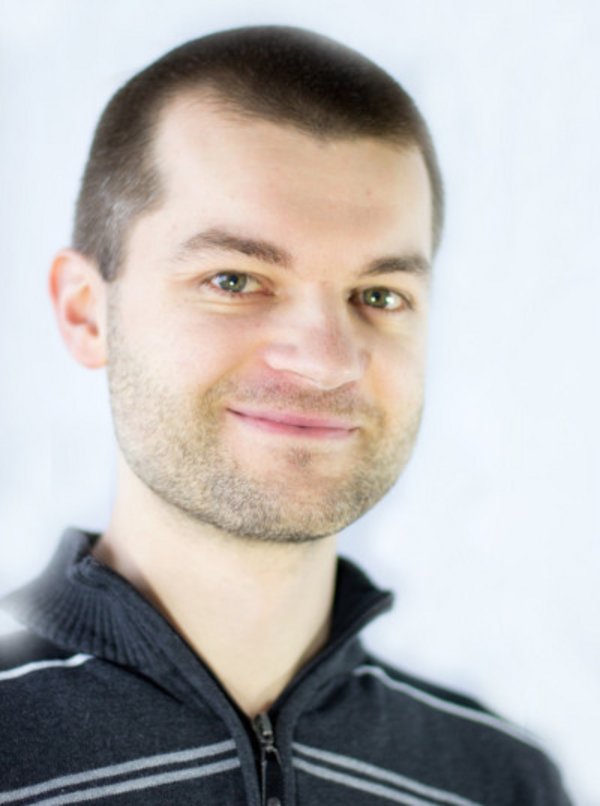
Thomas J. Naughton is a researcher affiliated with the University of Reading and Oak Ridge National Laboratory. He specializes in High Performance Computing (HPC), focusing on fault tolerance, quantum computing integration, and distributed systems. Research Interests: His work bridges HPC and quantum computing, develops fault-tolerant systems, and explores computational models through optical computing. Recent Publications: His 2026-2024 papers address quantum-HPC convergence software stacks, virtualization performance, and fault injection frameworks. Educational Contributions: He co-developed Bebras-inspired computational thinking resources for K-12 education, emphasizing task-based learning.
Dr. Michael Kallweit serves as a Lehrkraft für besondere Aufgaben (Lecturer for Special Tasks) at the Faculty of Mathematics , Ruhr University Bochum. His work focuses on innovations in digital higher education, particularly in mathematics didactics . He leads the Rolka Group team and contributes to the Floer Center of Geometry . His research emphasizes digital mathematics tasks (e.g., STACK platform), AI integration in teaching, and collaborative projects like the DOMAIN database for math assignments. Key projects include: STACK.nrw : Collaborative task database for STACK exercises Computational Thinking makes sense of Mathematics (Erasmus+) DiAM:INT : Digital tasks for STEM fields (OERContent.nrw) He holds a 2017 Fellowship for Innovations in Digital Higher Education for the DOMAIN project , which created an open platform for sharing digital math assignments. His teaching includes supporting first-year students and developing RUBChecks for diagnostic testing. He also leads initiatives like MathePlus to prevent study dropouts through structured support. Notable contributions include: Adaptive learning systems using AI and STACK Open educational resources (OER) for stochastic and engineering mathematics International collaborations via Erasmus+ projects His work bridges educational technology and mathematics pedagogy , emphasizing practical applications in university and school settings.
Dr. Siân Brooke serves as an Assistant Professor and MacGillavry Fellow at the Digital Interactions Lab (DIL), University of Amsterdam. Her interdisciplinary work bridges data science and critical social research to investigate gender and intersectional equality in technology interactions, with a focus on ethical AI and human-centered computing systems. Her research centers on gender dynamics in technology , inclusive platform design , and systemic bias mitigation in digital environments. Brooke employs mixed-methods approaches combining large-scale data analysis of platforms like GitHub and Stack Overflow with ethnographic studies and controlled experiments. Key themes include how programming styles reflect gender differences without impacting quality, how online labor markets perpetuate discrimination through design choices, and how internet memes reinforce toxic masculinity in physical tech spaces like hackathons. Analysis of her recent publications reveals consistent focus on exposing and redesigning discriminatory mechanisms in technology. Her 2024 work demonstrates how platform interventions (community composition, identity flairs) can reduce hiring discrimination in online labor markets, while her GitHub study proves gendered programming styles exist but don't correlate with code quality. A unifying thread across all work is the development of concrete design solutions for more equitable technology ecosystems. Dr. Brooke's recognition includes: NWO Veni Grant (€320,000) for "Human-Centered Code: Building Accessible IDEs for Neurodiverse Women in Computing Education" Leverhulme Early Career Fellowship examining gender in collaborative computing environments She actively mentors through hiring a PhD candidate for her NWO project (closing November 2024) and serves on the Open Tech Fund Advisory Council guiding global internet freedom initiatives. Her commitment to research transparency led to implementing Open Science Badges as Associated Editor for Data and Ethics, recognizing reproducible practices in scholarly work. Brooke leads the Digital Interaction Lab's research on technology equity, including the "Mock-Freelancer.com" experimental platform testing anti-discrimination interventions in online labor markets. Her lab collaborates across disciplines to develop accessible computing environments and policy recommendations for inclusive technology design, with recent work featured in LSE Research explaining gender disparities in programming.
Lina Gong is an Associate Professor at the School of Computer Science and Technology, Nanjing University of Aeronautics and Astronautics, China. She holds a Ph.D. in Computer Software and Theory from China University of Mining and Technology (2020) and completed a research visit at Queen's University's Software Analysis and Intelligence Lab (SAIL) under Prof. Ahmed Hassan (2019-2020). Her research focuses on leveraging machine learning to extract insights from software repositories, with emphasis on: ML-enabled defect prediction techniques Code pre-trained models for vulnerability detection Identifier normalization and issue classification Empirical studies of software quality attributes Her recent publications (2023-2025) demonstrate strong trends in applying transformer architectures to code analysis, with increasing focus on supply chain security and cross-platform UI translation. Key venues include IEEE TSE, ACM TOSEM, and ASE. Scientific recognition includes: National Natural Science Foundation of China (2022-2025) Natural Science Foundation of Jiangsu Province (2022-2025) Key National Laboratory Foundation (2022-2023) Excellent Ph.D. Student Award (CUMT) She actively mentors graduate students (14 advisees: 1 doctoral, 13 master's) and serves on program committees for ASE, APSEC, and SANER. Her research is supported by multiple competitive grants focusing on ML applications in software engineering.
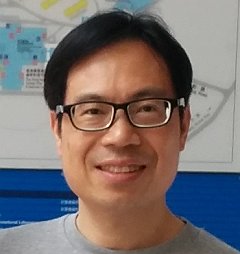
Shing-Chi Cheung is a Professor of Computer Science and Engineering at the Hong Kong University of Science and Technology (HKUST), School of Engineering. He founded the CASTLE research group and co-founded the International Workshop on Automation of Software Testing (AST) in 2006. His leadership includes serving as General Chair of FSE 2014 and chairing multiple APSEC conferences. His research focuses on software quality enhancement through program analysis, testing, debugging, and AI techniques, targeting Android apps, open-source software, deep learning systems, smart contracts, and spreadsheets. Current projects include metamorphic testing frameworks, binary analysis tools, and vulnerability detection systems for emerging technologies. His publication portfolio demonstrates consistent contributions to software engineering since 2016, with recent work emphasizing AI-integrated testing methodologies, smart contract security, and deep learning system reliability. Key trends show increasing focus on cross-language analysis, data visualization quality, and compiler-level verification for modern software stacks. Distinguished Member of the ACM Fellow of the British Computer Society Editorial board member: Science of Computer Programming (SCP), Journal of Computer Science and Technology (JCST) Former editorial board member: IEEE Transactions on Software Engineering (2006-2009), Information and Software Technology (2012-2015) Four patents in China and the United States Cheung actively mentors through the CASTLE research group and serves on program committees for major conferences including ICSE, ESEC/FSE, and ISSTA. His work bridges academic research with practical applications through industry collaborations and tool development. He has contributed to numerous workshops and symposia as steering committee member and program chair.
Zhiyuan Wan is an Associate Professor in the College of Computer Science and Technology at Zhejiang University, China. His academic career spans multiple prestigious institutions across North America and Asia, with a focus on advancing software engineering practices through empirical research and tool development. Dr. Wan's educational background includes: Ph.D. in Computer Science from Zhejiang University (2014) His postdoctoral journey featured positions at: University of British Columbia, Canada (2019-2020) Singapore Management University (2018) Zhejiang University (2016-2020) Lehigh University, United States (2014-2015) Dr. Wan's research program centers on empirical software engineering with particular expertise in blockchain technologies and software security. His work bridges theoretical insights with practical tool development, focusing on: Smart contract security and vulnerabilities in cryptocurrency ecosystems Code search and recommendation systems for developer productivity Empirical studies of developer practices and challenges Impact of machine learning on software development workflows His approach combines rigorous empirical methods with practical tool building to address real-world challenges faced by software practitioners. Analysis of Dr. Wan's recent publications reveals a strategic evolution toward blockchain security research, beginning around 2020 with studies on smart contract security and expanding to cover NFT ecosystems, Solana blockchain transactions, and cross-chain vulnerabilities. His work consistently applies empirical methods to uncover practical insights while developing tools that directly address identified challenges in software development. Dr. Wan actively contributes to the software engineering community through service on program committees for major conferences including ASE, ICSE, ESEC/FSE, and ISSTA. His academic leadership extends to mentoring relationships with students and collaborators across international institutions, though specific advisees are not documented in the provided materials.
John Grundy is a Professor of Software Engineering and Senior Deputy Dean at Monash University's Faculty of Information Technology in Melbourne, Australia. He is also an Australian Laureate Fellow (2020-2026) and leads the "Human-centric Software Engineering" (HumaniSE) research lab. With over 32 years of academic experience, Professor Grundy has held numerous leadership positions including Pro Vice-Chancellor at Deakin University and Dean roles at Swinburne University and the University of Auckland. BSc(Hons), MSc, PhD and DSc degrees in Computer Science from the University of Auckland IEEE Fellow, Fellow of Automated Software Engineering, Fellow of Engineers Australia Lero Parnas Fellow (2023) Recipient of the ACM SIGSOFT Distinguished Service Award (2023) and Dean's Award for Graduate Research Student Supervision (2024) Professor Grundy's research focuses on making "Software Engineering more like traditional Engineering disciplines" through human-centric visual modeling approaches. His primary research areas include model-driven engineering, software architecture, visual languages, software security engineering, and human factors in software development. He specifically investigates how personality, emotions, gender, age, and disability impact software usage, requirements engineering, design, and testing. His current projects include the Visual Wiki platform for knowledge engineering, Marama meta-tools, and Software Process and Product Improvement initiatives. His research has significant implications for accessibility, usability, and the alignment of software applications with diverse user needs. Professor Grundy has published extensively in top software engineering venues and has supervised numerous PhD students throughout his career. IEEE Technical Council on Software Engineering Distinguished Education Award (2014) ACM SIGSOFT Distinguished Service Award (2023) CORE Distinguished Service Award (2023) Lero Parnas Fellow (2023) Dean's Award for Graduate Research Student Supervision (2024) Professor Grundy has supervised numerous PhD students and has received funding for various research projects, most notably his 5-year Australian Laureate Fellowship (2020-2026) focused on human-centric software engineering. His HumaniSE research lab brings together interdisciplinary teams to address challenges in making software systems more responsive to human needs and contexts. His lab focuses on developing new conceptual foundations and modeling techniques that incorporate human factors throughout the software development lifecycle, with applications in smart homes, digital health, and smart city solutions.
Alexander Serebrenik is a full professor of social software engineering at the Eindhoven University of Technology in the Netherlands, working within the Department of Mathematics and Computer Science. His academic profile spans decades of interdisciplinary research bridging computer science and social sciences. Professor Serebrenik's research focuses on facilitating software evolution through understanding social aspects of development. His work integrates computer science methods (socio-technical coordination theory, natural language processing, machine learning) with organizational psychology principles. A consistent theme across his publications is empiricism - addressing software engineering challenges through observation and experimentation while balancing social and technical perspectives. His recent work increasingly emphasizes diversity, equity, and inclusion in software engineering, culminating in his 2024 book "Equity, Diversity, and Inclusion in Software Engineering: Best Practices and Insights" (APress). His publication record reveals evolving interests from socio-technical coordination to human factors, community dynamics in open source, and now DEI-focused research. Distinguished Paper Award at ICSE 2023 Distinguished Paper Award at MSR 2023 Distinguished Reviewer Award at FSE 2020 Senior member of IEEE Member of ACM As an academic leader, Professor Serebrenik has mentored PhD students including Tukaram Muske, and actively participates in doctoral symposia. His service includes roles as Diversity and Inclusion Co-Chair at multiple conferences and extensive program committee participation across the software engineering conference landscape. His research group at TU/e maintains an active program studying the social dimensions of software engineering through empirical investigations, contributing significantly to understanding how human factors influence development processes and outcomes.