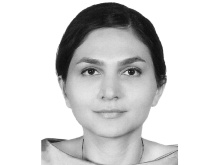
Sahar Abolhasani is a doctoral researcher at the Institute of Engineering Geodesy within the Faculty of Aerospace Engineering and Geodesy at the University of Stuttgart . Her work focuses on integrating computational design and robotics for advanced construction processes, particularly in the context of biomimetic structures and timber building automation. Role: Research Associate Cluster: Cluster of Excellence IntCDC Location: Geschwister-Scholl-Str. 24D, Stuttgart, Germany Contact: +49 711 685 4065 Her research explores the application of AI and sensor technologies (e.g., SLAM, point cloud analysis) to optimize real-time geodetic measurements and improve automation in construction workflows. Projects include the development of robotic systems for assembling high-payload timber components and integrating BIM models with feedback control mechanisms. Recent publications highlight advancements in point cloud datasets for biomimetic shell construction, SLAM-based geodetic measurement optimization, and semi-automated timber assembly processes. These works emphasize error compensation strategies, BIM-robotics integration, and the potential of mobile manipulators in construction.
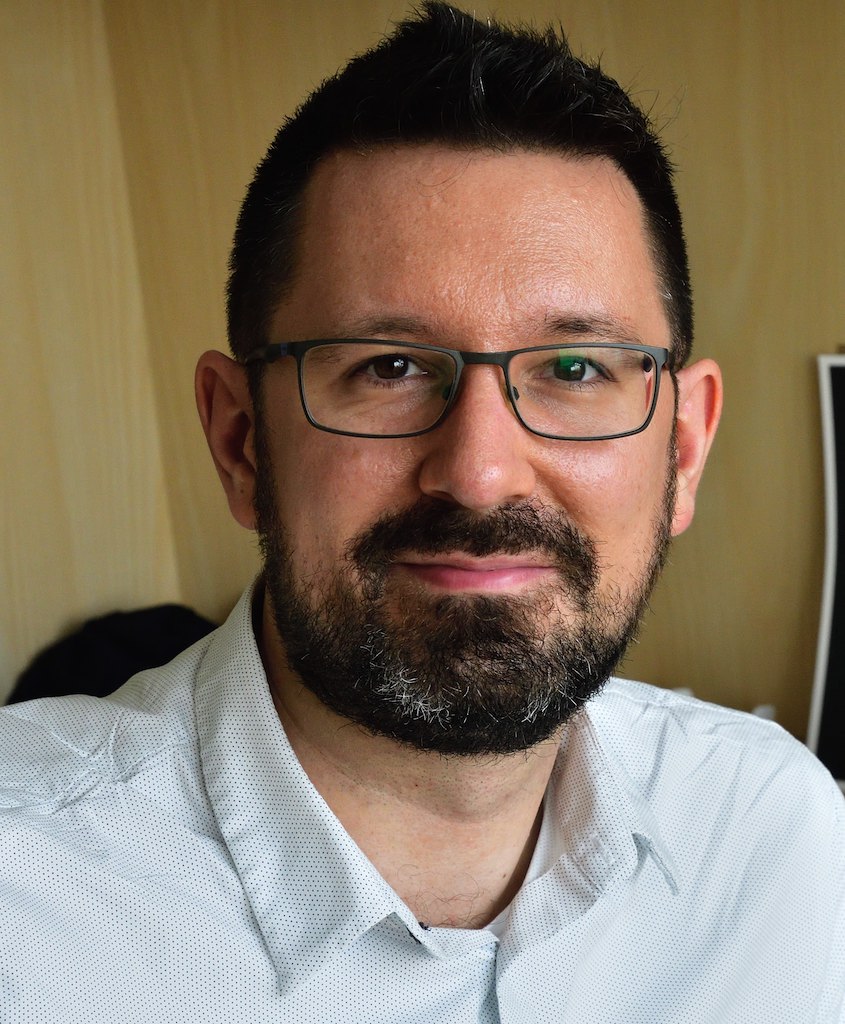
Robin Dietrich is a Researcher at the Department of Informatics 6 - Chair of Robotics, Artificial Intelligence and Real-time Systems at the Technical University of Munich . His work bridges computational neuroscience and robotics, focusing on translating neural mechanisms from mammalian brains into algorithms for mobile robot navigation. B.Sc. and M.Sc. in Computer Science Research on hippocampal temporal dynamics for neuromorphic SLAM Specializes in spiking neural networks for navigation and radar processing Research Interests : Robin's research explores the intersection of robotics, artificial intelligence, and computational neuroscience . His work specifically investigates spiking neural networks, FMCW radar data processing, and neuromorphic algorithms for autonomous systems. Recent projects focus on uncertainty quantification, evolutionary optimization, and multi-robot exploration using biologically inspired models. Publication Trends : Robin's publications (2019-2025) demonstrate a consistent focus on neuromorphic computing for robotic perception , with increasing specialization in spiking neural networks for radar processing and biologically inspired navigation algorithms . Key collaborations include contributions to multi-robot exploration metrics and hardware acceleration frameworks. Teaching Contributions : Robin has taught Digital Signal Processing and Real-Time Systems lectures since 2019, co-led seminars on Bio-inspired Data Processing , and supervised practical courses on Intelligent Mobile Robots using ROS.
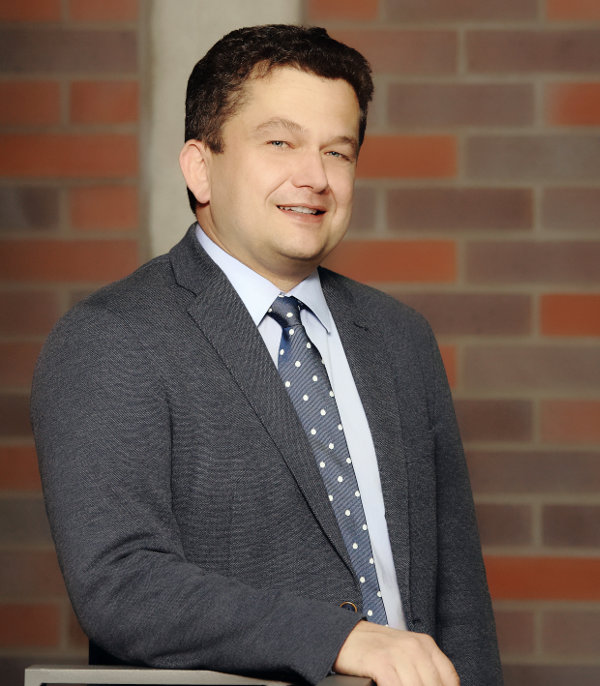
Wolfram Burgard is a Professor of Computer Science at the University of Freiburg (Germany) and Vice President for Automated Driving Technology at the Toyota Research Institute in Los Altos, USA. He leads the Autonomous Intelligent Systems research lab and has authored over 350 publications in robotics and artificial intelligence, including two seminal books: "Principles of Robot Motion – Theory, Algorithms, and Implementations" and "Probabilistic Robotics". Research focuses on robust and adaptive probabilistic techniques for robot navigation, control, localization, SLAM, and path-planning. Key affiliations: University of Freiburg, Toyota Research Institute, and Freiburg Institute for Advanced Studies (FRIAS). Scientific Recognition Fellowships: EurAI, AAAI, IEEE Academic memberships: German Academy of Sciences Leopoldina, Heidelberg Academy of Sciences and Humanities His work has significantly advanced autonomous systems and probabilistic robotics, shaping modern approaches to mobile robot state estimation and exploration.
Torsten Sattler is a Senior Researcher at the Czech Institute of Informatics, Robotics and Cybernetics (CIIRC) at the Czech Technical University in Prague (CTU), where he heads the Spatial Intelligence group. Previously, he was a tenured Associate Professor at Chalmers University of Technology in Sweden and spent five years as a PostDoc and Senior Researcher at ETH Zurich in Switzerland. He received his PhD from RWTH Aachen University in Germany. His research focuses on the intersection of 3D computer vision and machine learning, with specific interests in image-based localization, 3D mapping and reconstruction, neural scene representations, and applications in robotics and AR/VR. He aims to make localization and mapping algorithms more robust by incorporating higher-level scene understanding. Dr. Sattler has published extensively at top computer vision conferences including CVPR, ICCV, and ECCV, with recent papers focusing on robust visual localization in changing environments, neural scene representations, and 3D reconstruction. His work has direct applications in autonomous systems and augmented reality. Best Paper Candidate at CVPR 2021 Best Paper Award at Photogrammetric Image Analysis 2019 Multiple Outstanding Reviewer Awards from 2015-2021 Ranked among top-10 computer scientists in Czech Republic by Research.com He currently supervises five PhD students and has served in various leadership roles including program chair for ECCV 2024, general chair for 3DV 2022, and area chair for multiple major conferences. His lab benefits from connections to the RICAIP Centre, one of the largest EU projects in AI and Industry 4.0, providing access to state-of-the-art infrastructure and industrial collaborations.
Prof. Dr.-Ing. Andreas Wenzel is a Professor at Schmalkalden University of Applied Sciences in the Faculty of Electrical Engineering, specializing in Embedded Systems. His office is located in Building M, Room 0401, and he can be reached at +49 3683 688 5113. With a distinguished research career spanning over two decades, Prof. Wenzel has established himself as a leading expert in embedded diagnostic systems with applications across multiple domains including biomedical engineering, industrial automation, and assistive technologies. Prof. Wenzel's primary research interests focus on the development and application of embedded diagnostic systems, with particular emphasis on neural networks for pattern recognition, fuzzy logic systems for classification problems, and real-time monitoring solutions. His work bridges theoretical machine learning approaches with practical engineering applications, resulting in innovative solutions for quality control in manufacturing processes, medical diagnostics, and mobility assistance technologies. He has made significant contributions to EEG data analysis for sleep stage and anesthesia depth monitoring, as well as developing smart systems for injection molding quality assessment and advanced mobility solutions for elderly individuals. Analysis of Prof. Wenzel's publication record reveals a consistent research trajectory focused on applying computational intelligence to solve practical engineering problems. His work demonstrates exceptional versatility across domains while maintaining a cohesive research theme centered on embedded diagnostic systems. From 2012-2016, his research output shows increasing focus on real-time embedded solutions with industrial applications, particularly in manufacturing quality control and assistive technologies, while continuing his foundational work in biomedical signal processing. The interdisciplinary nature of his research is evident in collaborations with medical professionals, industrial partners, and robotics specialists. Prof. Wenzel leads the Embedded Diagnostic Systems Research Group at Schmalkalden University of Applied Sciences, which maintains strong industry partnerships, particularly in plastics manufacturing and medical technology sectors. His team develops practical embedded solutions that address real-world challenges in production quality monitoring, medical diagnostics, and mobility assistance. The research group's work is characterized by its practical orientation, with many projects resulting in deployable systems rather than purely theoretical contributions. Prof. Wenzel's strategic focus on applied research ensures that his work has direct industrial relevance and practical impact.
Prof. Reiner Marchthaler is a Professor at Esslingen University of Applied Sciences within the Faculty of Computer Science and Information Technology. He serves as Deputy Director of the Institute for Intelligent Systems (IIS), Scientific Director of the Green IT 2026 Conference, and Liaison Lecturer for the Friedrich Ebert Foundation. His academic leadership spans autonomous systems research and educational initiatives in embedded technologies. His research centers on Embedded Systems and Sensor Data Fusion, with pioneering work on Kalman filters for autonomous systems. He maintains the authoritative resource kalman-filter.de and has developed real-time capable SLAM algorithms, camera-based reference systems, and parking space detection frameworks. His expertise extends to entropy-based safety evaluation in autonomous driving and semantic segmentation using mixed real/synthetic data. Analysis of his 2020-2025 publications reveals dominant trends in autonomous driving systems, emphasizing real-time sensor fusion, deep learning for perception, and safety validation. Key subfields include adaptive Kalman filtering (ROSE-Filter), landmark-based navigation, neural network training with synthetic data, and maximum entropy safety frameworks. His work bridges theoretical innovation with automotive applications, particularly in model vehicle testing environments. Prof. Marchthaler leads research at the Institute for Intelligent Systems, directing the Green IT 2026 initiative and advising the Friedrich Ebert Foundation. His team develops ROS-based validation environments for autonomous algorithms and maintains the Kalman filter knowledge portal. Current projects focus on connected traffic systems using conventional infrastructure landmarks and entropy-optimized safety protocols for production vehicles.