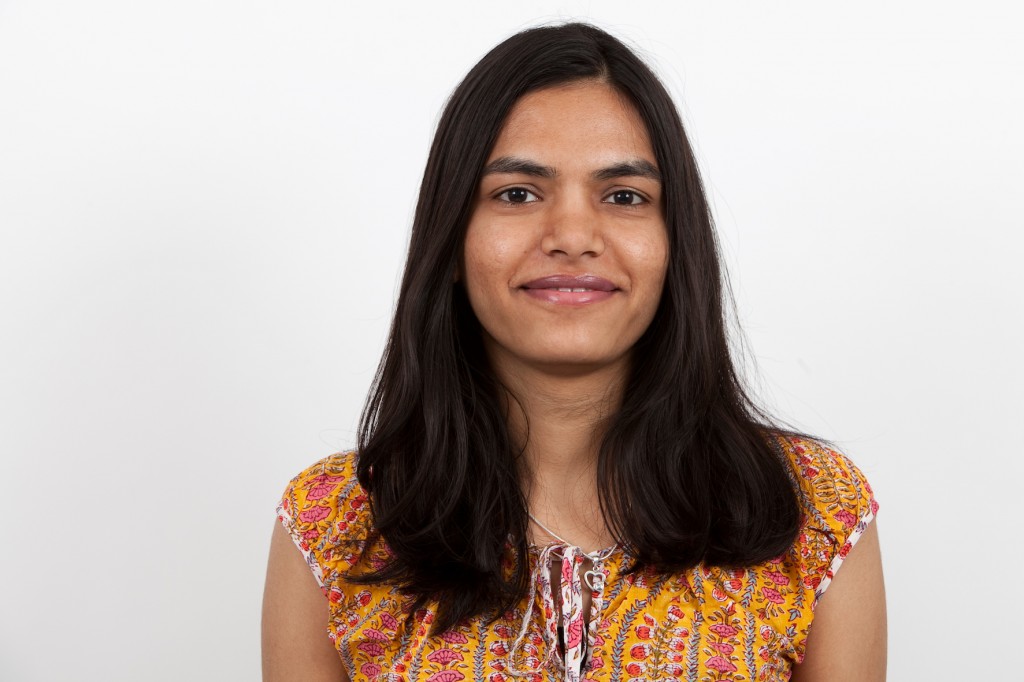
Neha Lodha is a researcher in the Institut für Logic and Computation at TU Wien. Her work focuses on algorithms, complexity theory, and SAT/SMT solving techniques. She has contributed to graph encodings for combinatorial optimization problems and parameterized complexity analysis. Key research areas include SAT-based approaches for graph decomposition (branchwidth, treewidth), SMT methods for fractional hypertree width, and algorithm engineering for constraint satisfaction problems. Her work bridges theoretical foundations with practical algorithmic implementations. Notably, she received the 2016 SAT Conference Best Student Paper Award for her work on SAT encodings of branchwidth. This research was later expanded into a 2019 ACM Transactions publication. Her publications span conferences like IJCAI, CP, and SAT, with a focus on advancing the theoretical and practical aspects of computational logic and algorithm design.
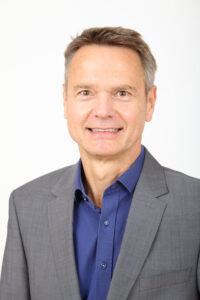
Uwe Egly is an Associate Professor at the Department of Knowledge-Based Systems, Faculty of Informatics, Technische Universität Wien (TU Wien). His research focuses on automated reasoning, proof theory, knowledge representation, and computational logic, with a strong emphasis on quantified Boolean formulas (QBFs), argumentation frameworks, and applications of AI in engineering. He leads projects funded by the Austrian Science Fund (FWF) and the Vienna Science and Technology Fund (WWTF), including the Boolean project (2011–2019) and FAME (2011–2014). Egly is known for developing QBF solvers like DepQBF and contributing to SAT-solving techniques. He teaches courses such as Abstract Argumentation , Formal Methods in Computer Science , and Quantum Computing . His research interests span proof complexity, satisfiability checking, and AI-driven algorithms for path planning. He has advised numerous students on theses involving quantum algorithms, QBF solver optimizations, and argumentation frameworks. Egly’s work bridges theoretical computer science with practical applications, including contributions to deformation monitoring systems and circuit synthesis using SAT-based methods. He is involved in international workshops and conferences, such as SAT, FMCAD, and Dagstuhl Seminars, and has edited proceedings for events like SAT 2014 . His collaborations include projects on scenario-based testing of UML diagrams and semantics-aware model versioning. Egly’s interdisciplinary approach integrates logic, artificial intelligence, and computational methods to solve complex theoretical and applied problems.
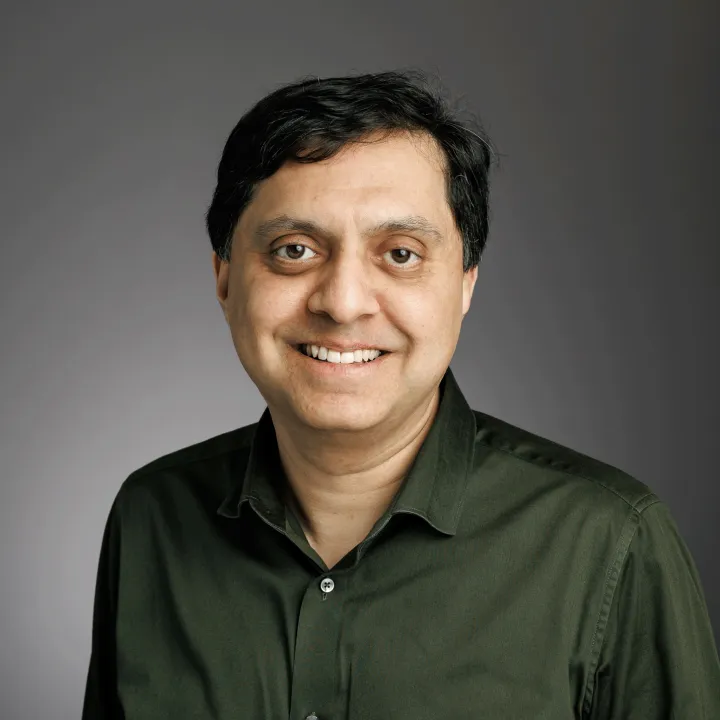
Laura Kovacs is a Full Professor and Head of the Institute of Logic and Computation at TU Wien. She leads the Research Unit 'Formal Methods in Systems Engineering' and focuses on software verification, automated reasoning, and computational logic. Her roles include coordinating the 'Logic and Computation' research areas and promoting women in informatics. Affiliations: TU Wien, Vienna Science and Technology Fund (WWTF), European Commission projects (e.g., ARTIST, LEARN) Education: Masters (MSc) and doctorate in computer science. Research Interests: Laura's work centers on formal methods, theorem proving, and automated reasoning applied to program analysis and cybersecurity. She develops tools like POLAR and CheckMate for probabilistic loop analysis and game-theoretic security. Her research bridges symbolic computation and logic, addressing challenges in software verification and probabilistic systems. Grants & Projects: Includes European Commission-funded initiatives (e.g., Automated Reasoning with Theories and Induction for Software Technologies), WWTF grants (e.g., Semantic and Cryptographic Foundations), and industry partnerships (e.g., Amazon Research Awards). Notable projects include LEARN (2025–2026) and QuAT (2024–2025). Labs/Teams: Leads the Logic and Computation Institute and collaborates with international teams on projects like FORSMART and SFB SPyCoDe.
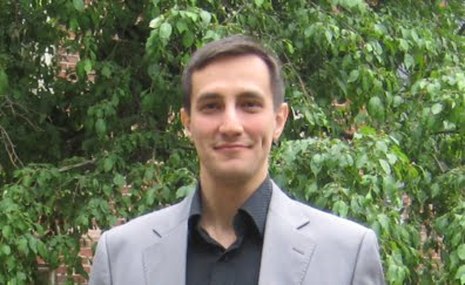
Stefan Szeider is a full professor and chair of the Algorithms and Complexity Group at the Faculty of Informatics, Technische Universität Wien (TU Wien). He also serves as a visiting scientist at UC Berkeley's Simons Institute for the Theory of Computing. His academic journey includes positions at the University of Durham (UK) and the University of Toronto (Canada), and he earned his Mathematics PhD from the University of Vienna in 2001. Dr. Szeider's research focuses on designing efficient algorithms for problems in Artificial Intelligence, automated reasoning, and combinatorial optimization. He leads several initiatives, including the Vienna Center for Logic and Algorithms (VCLA), and has secured funding from the ERC, EPSRC, FWF, and others. His Erdős number is 2, reflecting his collaborative network in mathematics and computer science. Key achievements include the first ERC Starting Grant awarded to an Austrian computer scientist (2009), and awards such as the Highlighted Paper Award at SAT 2023 and Best Paper at CP 2020. He advises numerous PhD students and postdocs, fostering the next generation of researchers in algorithms and complexity. Notable contributions extend beyond academia to public outreach, including initiatives like the 'Algorithms Think Differently' educational program and the 'Algorithms in 60 Seconds' video competition. His work bridges theoretical foundations and practical applications, influencing both academic and real-world computational challenges.
Leroy Nicholas Chew is a PostDoc Researcher and FWF Projektassistent at the Vienna University of Technology (TU Wien). He is affiliated with the Department of Algorithms and Complexity within the Faculty of Informatics. His roles include contributing to research projects such as QBFPC (2022–2025), Overcoming Intractability in the Knowledge Compilation Map, and REVEAL-AI (2020–2024). These projects reflect his focus on advancing theoretical computer science and automated reasoning methodologies. While specific educational details are not explicitly provided in the text, Leroy Nicholas Chew holds a PhD, as indicated by his role listing. His current position suggests a strong background in computer science and theoretical foundations, consistent with his research activities. His research interests span several key areas in theoretical computer science, including proof complexity, quantified Boolean formulas (QBF), automated reasoning, and knowledge compilation. He explores the hardness of computational problems in logical frameworks, such as analyzing resolution and CDCL proof systems, developing optimal dual proof systems for answer set programming (ASP), and investigating model counting techniques. His work often bridges foundational theory with practical applications in formal verification and algorithm design. Recent publications (2024) highlight advancements in circuits and proofs, model counting, and ASP-QRAT proof systems. Earlier work (2016–2022) addressed QBF resolution calculi, dependency schemes, and certification challenges. These trends underscore his specialization in formal methods and computational logic. No scientific awards are explicitly mentioned in the provided text. In addition to his research, Chew is involved in multiple funded projects. These include the FWF-supported QBFPC (2022–2025), which examines QBF proofs and certificates, and the REVEAL-AI project (2020–2024), focusing on overcoming intractability in knowledge compilation. While specific grant details beyond project funding are not mentioned, his participation underscores his role in collaborative, grant-funded research initiatives. No formal advisees are listed. Chew is part of the Algorithms and Complexity department at TU Wien, collaborating on projects that emphasize proof systems, formal verification, and algorithmic foundations. His work integrates theoretical insights with practical computational methods.
Michele Collevati is a PreDoc Researcher at TU Wien's Faculty of Informatics, affiliated with the Institute of Logic and Computation. He teaches courses such as 'Introduction to Knowledge-based Systems' and 'Introduction to Artificial Intelligence.' His research focuses on neurosymbolic AI, SAT solving, and GPU parallelism. He contributes to the LCS project (2017–2025). His work bridges symbolic AI with neural networks and computational optimization. Education: Not explicitly stated in provided texts. Research interests include neurosymbolic integration, knowledge representation, and parallel computing for AI. His 2024 work on slice discovery via neurosymbolic AI exemplifies his focus on hybrid systems. Earlier work explored GPU-based optimizations for SAT solvers, reflecting an interest in computational efficiency. No scientific awards are mentioned. No advised students listed. Labs/Teams: Likely involved with the Institute of Logic and Computation's research groups, though specific lab names are not provided.
Robin Coutelier is a PreDoc Researcher at the Department of Formal Methods in Systems Engineering (E192-04) at Technische Universität Wien. Their research focuses on SAT solving, logical reasoning, and formal methods in systems engineering. Projects: DK - Logic (2014–2023), ForSmart (2023–2027), SFB SPyCoDe (2023–2026) Robin’s work explores the intersection of automated deduction, constraint satisfaction, and theoretical computer science. They have contributed to SAT-based subsumption resolution, chronological backtracking algorithms, and formal verification techniques. Recent research trends include advancements in SAT solving for first-order logic, lazy reimplication strategies, and term ordering diagrams. Collaborations with researchers like A. Biere and L. Kovacs highlight interdisciplinary efforts in formal systems. Robin’s publications demonstrate expertise in algorithm design, formal verification, and logical reasoning. Their projects emphasize practical applications of theoretical computer science to real-world systems engineering challenges.
Daniela Kaufmann is a PostDoc Researcher at the Department of Formal Methods in Systems Engineering , part of the School of Informatics at Vienna University of Technology. Her work focuses on combining SAT solving and computer algebra for formal verification of arithmetic circuits. Research Interests: Daniela specializes in Formal verification of arithmetic circuits Algebraic reasoning SAT/SMT solving Grammar inference Automated reasoning Finite field arithmetic verification Recent Article Trends: Her publications emphasize hybrid approaches merging SAT techniques with computer algebra for circuit verification, finite field arithmetic reasoning in SMT solvers, and fuzzing-based grammar inference. She has contributed to tools like AMulet2 and PolySAT, addressing scalability challenges in multiplier verification. Projects: Daniela is a key researcher in the CalgSAT (2024-2027) ARTIST (2021-2026) SFB SPyCoDe (2023-2026) projects funded by the Austrian Science Fund (FWF).
Markus Kirchweger is a PreDoc Researcher at the Department of Algorithms and Complexity, Faculty of Informatics, Technische Universität Wien. His work spans Satisfiability (SAT) solving, graph theory, and combinatorial optimization, with a focus on symmetry breaking and SAT modulo theories. Research Interests: Developing SAT-based frameworks for graph generation and enumeration Dynamic symmetry breaking in combinatorial problem encodings Integrating user propagators into CDCL solvers Applying SAT techniques to conjectures like Erdős-Faber-Lovász and Rota’s Basis Co-certificate learning and shortest common supersequence optimization Projects: INCR (2021–2024), REVEAL-AI (2020–2024), SLIM (2019–2024), ASK-SAT (2024–2027).
Dr. Arthur Gontier serves as a Research Associate within the School of Computing Science at the University of Glasgow, where he conducts specialized research at the intersection of cryptography and constraint programming. His academic profile centers on advancing formal methods for security-critical systems through rigorous algorithmic development. Research interests span Cryptography (symmetric ciphers, cryptanalysis), Constraint Programming (explanation generation, decomposition methods), and Formal Verification techniques. Recent work demonstrates deep engagement with Feistel network optimization, Trivium stream cipher analysis, and conflict-driven search methodologies, reflecting a consistent focus on mathematical foundations of secure computation. Publication trends from 2020-2022 reveal concentrated contributions to top-tier cryptography venues (INDOCRYPT, SAC) and constraint programming workshops. His research exhibits growing sophistication in post-quantum cryptographic techniques and trustworthy AI verification, with increasing emphasis on practical implementation challenges alongside theoretical advances. Collaborative patterns indicate active engagement with European research networks, particularly in cryptographic analysis. While specific grant details aren't public, the publication frequency suggests sustained research activity within Glasgow's security research ecosystem. Prospective collaborators would find opportunities in formal methods for security protocol verification and constraint-based AI validation systems.
Cristian Ene is a Researcher at Grenoble Alpes University and a member of the VERIMAG Laboratory. He holds a PhD in Computer Science (2001) from Grenoble Alpes University. His primary roles include teaching and conducting research in formal verification of cryptographic protocols, computer security, and distributed systems. He is actively involved in developing automated tools for cryptographic protocol analysis, such as contributions to the Tamarin Prover framework. Research Interests : His work focuses on formal methods for verifying cryptographic systems, including model counting, security protocol analysis, and decidability in process calculi. He explores topics such as information flow control, fault-injection countermeasures, and automated theorem proving for asymmetric encryption. Publications : His recent work spans formal verification techniques, optimization in Max#SAT solving (e.g., BaxMC), and cryptographic protocol analysis. Earlier contributions include foundational studies on process decomposition in π-calculus and formal security models in the random oracle framework. Teaching : He teaches courses on cryptographic engineering, formal verification of security protocols, programming languages, and compiler design. Course materials include slides, assignments, and practical exercises using tools like Tamarin Prover. Labs & Teams : He is affiliated with the VERIMAG Laboratory, which specializes in formal methods and embedded systems research. His work integrates theoretical foundations with practical applications in secure system design and automated verification.
Natasha Sharygina is a Full Professor of Informatics at the University of Lugano (USI) in Switzerland. She leads the USI Formal Verification and Security group, focusing on improving software and hardware verification through formal methods like model checking and SAT/SMT techniques. Her research emphasizes applying these methods to computer security, electronic design, and program analysis. Education: PhD in Informatics from The University of Texas at Austin (2002). Research Interests: Her work spans formal verification, model checking, SMT-based solvers, and security analysis. She develops theoretical frameworks and practical tools for verifying large-scale systems, with applications in safety-critical and distributed computing environments. Funding & Awards: Her research has been supported by grants from the Swiss National Science Foundation, EU STReP/COST projects, Hasler Foundation, and TASSO Career Award. She has been recognized with the ACM Recognition of Service Award and CMU Technical Excellence Awards. Grants & Projects: Key initiatives include 'Beyond Symbolic Model Checking through Deep Modelling' (2019–2023), EU-funded 'Rich-Model Toolkit', and Swiss TASSO Career Award (2005–2010). She has led efforts in parallel SMT solving and runtime verification. Labs & Teams: Director of the USI Formal Verification and Security Lab, which develops tools like Golem (CHC solver) and OpenSMT (SMT solver). Collaborates globally on projects like SAFARI and FunFrog for program verification.
Rajit Manohar is the John C. Malone Professor of Electrical & Computer Engineering at Yale University, with appointments in Applied & Computational Mathematics and Computer Science. He is a core member of the interdisciplinary Computer Systems Lab (CSL), which bridges ECE and CS departments. His research focuses on asynchronous VLSI design, neuromorphic computing, and hardware-software co-design. Education: Manohar holds a B.S., M.S., and Ph.D. from the California Institute of Technology. His academic career spans over two decades, with notable contributions to asynchronous circuit theory and neuromorphic engineering. Research Interests: Manohar's work emphasizes energy-efficient asynchronous architectures, concurrency control, and biologically inspired computing. He explores topics like formal methods for circuit verification, cognitive systems, and dynamic sensor networks. His lab develops tools like Fluid (asynchronous synthesis) and Neurobench (neuromorphic benchmarking). Publications: Recent work includes advancements in asynchronous logic synthesis (Maelstrom), neuromorphic frameworks (Neurobench), and scalable brain-computer interfaces (SCALO). His research often intersects NSF-funded projects in energy-aware computing and neuromorphic systems. Awards: Inaugural Misha Mahowald Prize (2025), MIT TR35 (2000s), IBM Goldberg Award (2023) Grants & Labs: Manohar leads NSF-supported initiatives in carbon-aware networking and neuromorphic hardware. The Computer Systems Lab collaborates across disciplines to advance sustainable computing and neuro-inspired architectures.
Selçuk Köse is a Full Professor in the Department of Electrical and Computer Engineering at the University of Rochester. Previously, he held positions at the University of South Florida as an Assistant Professor (2012-2018) and Associate Professor (2018-2019). He earned his B.Sc. from Bilkent University (2006), M.S. and Ph.D. from the University of Rochester (2008 and 2012, respectively). His research focuses on hardware security (side-channel attacks, fault injection, PUFs), on-chip power delivery, cryogenic electronics, graphene nanoribbon transistors, and nature-inspired computing (e.g., Ising machines). He has received prestigious awards including the NSF CAREER Award (2014) and Cisco Research Awards (2015–2017). His recent work emphasizes security in quantum computing interfaces, power delivery networks, and covert channel mitigation. Research funding comes from NSF, DARPA, DoE, and industry partners. He serves as an associate editor for IEEE and Springer journals.
Tom Holvoet is a Full Professor at the Department of Computer Science , KU Leuven , affiliated with the Faculty of Engineering Science and the research groups Distributed and Secure Software (DistriNet) and Leuven.AI . Research focuses on decentralized systems , multi-agent systems , and autonomic computing . Currently supervising PhD and master's projects on blockchain vulnerabilities , autonomous decision-making , and embedded systems resilience . Teaching courses: Software Design , Programming Principles , and Distributed Systems . His work involves collaborations with international institutions and grants from the FWO (Fonds Wetenschappelijk Onderzoek) .