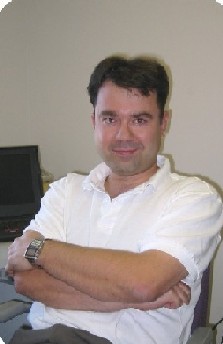
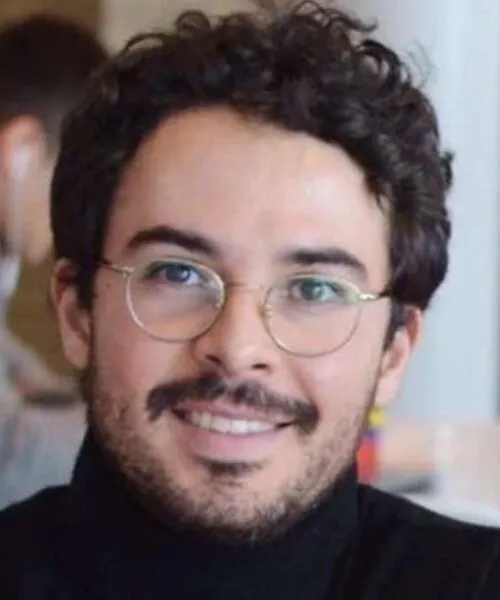
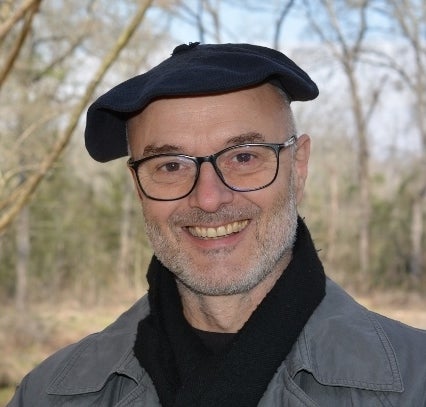
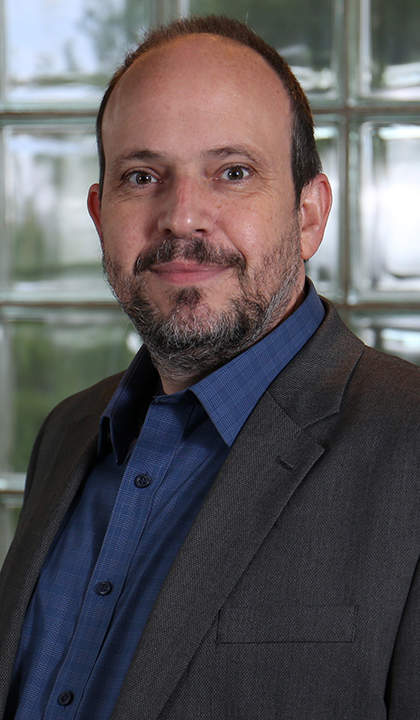
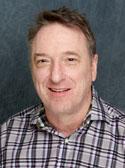
Pierre Duchesne is a Full Professor in the Department of Mathematics and Statistics at the University of Montreal . He serves as Professor-responsibility for the M.Sc. and Ph.D. in Statistics programs (2000-2004). His research focuses on applied statistics with emphasis on: Time Series Analysis (univariate and multivariate models, serial correlation testing, portmanteau statistics) Sampling Theory (robust estimation methods, calibration estimators) Multivariate Analysis (ARCH effects, vector autoregressive models, causality testing) Applications in Econometrics and Financial Econometrics His work combines theoretical development with practical implementation through: Wavelet-based diagnostic methods Simulation studies for model validation Software development (S-PLUS/SAS) for statistical analysis Collaboration with organizations like Statistics Canada and Canadian Journal of Statistics He has served as Associate Editor for journals including Computational Statistics & Data Analysis (CSDA) and Canadian Journal of Statistics (CJS/RCS) .
Roberto Giacobazzi is a Professor at the University of Arizona specializing in theoretical computer science with a focus on abstract interpretation, program analysis, and verification. His research bridges theoretical foundations with practical applications in software security and verification systems. Dr. Giacobazzi received his Ph.D. from the University of Pisa in Italy in 1993, establishing a long-standing academic career focused on the theoretical underpinnings of program analysis. His educational background forms the foundation for his contributions to abstract interpretation theory. His primary research interests center around abstract interpretation, a theoretical framework for approximating program semantics. This work spans theory of computation , programming languages , program analysis and verification , and logic in computer science . Giacobazzi has made significant contributions to understanding completeness and precision in abstract interpretation, with applications extending to code obfuscation, security analysis, and more recently, AI fairness in legal contexts. His work demonstrates how theoretical computer science concepts can address practical software engineering challenges. An analysis of his recent publications (2022-2025) reveals a consistent research trajectory with increasing sophistication in abstract interpretation theory. His work shows a growing emphasis on completeness properties, precision limitations, and security applications. Notably, his 2024 publication on "Fairness of AI Systems in the Legal Context" indicates an expansion of his theoretical expertise into AI ethics and regulatory compliance, demonstrating the versatility of abstract interpretation frameworks. Dr. Giacobazzi has contributed extensively to major conferences in programming languages and verification, including SAS (Static Analysis Symposium), POPL (Principles of Programming Languages), and VMCAI (Verification, Model Checking, and Abstract Interpretation). His publications reflect deep theoretical insights while maintaining relevance to practical software analysis challenges. His research has significant implications for software security, particularly in code obfuscation techniques based on abstract interpretation. The systematic approach to measuring incompleteness in abstract interpretations has provided new frameworks for understanding and improving program analysis tools. His work continues to influence both academic research and practical applications in program verification and security.
Dr. Carlos Aguiar serves as Assistant Professor in the Industrial Design Program at the University of Illinois Urbana-Champaign's School of Art and Design, with affiliate status in Informatics at the School of Information Sciences. He directs the Design, Technology, and Society Lab, where he investigates human-artifact interactions through critical design frameworks and cyber-physical systems development. His academic foundation includes a Ph.D. in Design & Human Behavior from Cornell University (2021) with minors in Science and Technology Studies and Information Science, an M.S. in Design Computing from the University of Washington (2017), and a Bachelor's in Architecture & Urbanism from Brazil's Universidade Estácio de Sá (2012). Aguiar's research integrates Science and Technology Studies, Design Philosophy, and Critical Theory to develop technologies that foster social change while examining material culture's societal implications. His dual-focus methodology simultaneously creates tangible artifacts that enhance human-agent-material relations and analyzes how emerging technologies shape societal structures through empirical investigation and critical reflection. This approach prioritizes inclusivity in future-making processes and examines emergent behaviors in technological appropriation. His publication trajectory (2016-2024) reveals consistent advancement in human-computer interaction, particularly in assistive technologies for rehabilitation and autism support, social interaction design in public spaces, and architectural robotics for community building. Key thematic developments include the evolution from single-user wearable devices (Erglove, GripAid) to community-scale cyber-physical systems (communIT, transFORM), with recent work expanding into eco-consciousness and restorative environments through socially interactive robotics. No scientific awards were documented in the provided source materials As lab director, Aguiar cultivates interdisciplinary collaboration between design, informatics, and engineering disciplines. His grant activities focus on developing cyber-physical artifacts that transform underused public spaces into community engagement hubs while addressing societal challenges through human-centered technological innovation. The Design, Technology, and Society Lab functions as an experimental platform where theoretical frameworks from STS and critical design directly inform the creation of responsive environments, objects, and spaces that actively shape social interactions and cultural practices.
Roberto Bertolusso is a Senior Pfeiffer Lecturer in the Department of Statistics at Rice University. He has held this position since 2013, focusing on teaching probability, statistics, and data science courses. His research integrates computational and systems biology approaches to study cancer mechanisms. Bertolusso earned his Ph.D. and M.S. in Statistics from Rice University and holds a graduate degree in Industrial Engineering from Universidad de Buenos Aires. His academic background includes significant contributions to cancer biostatistics and systems biology, highlighted by his participation in the AACR Methods in Cancer Biostatistics Workshop (2015) and a CPRIT-funded training program (2013–14). His publications span epidemiological modeling, orthopedic outcomes, and computational cancer research, reflecting interdisciplinary expertise. Education: Ph.D. & M.A. in Statistics, Rice University Graduate Level in Industrial Engineering, Universidad de Buenos Aires Teaching Focus: Probability theory, regression analysis, SAS programming, and data science methodologies. Research interests emphasize systems biology applications in cancer, stochastic modeling of biological systems, and computational methods for medical data analysis. His work bridges statistical theory with clinical and biomedical challenges, as seen in studies on viral infection dynamics and tumor growth modeling. Recent publications reflect both his cancer research and collaborative work in orthopedic surgery outcomes, showcasing a commitment to interdisciplinary problem-solving. Awards include recognition for methodological contributions to cancer clinical trial design and biostatistical training initiatives.
Michael Elliott is an Associate Professor and Department Chair in the Department of Epidemiology and Biostatistics at the College for Public Health and Social Justice, Saint Louis University. He holds a Ph.D. in Public Health and an M.S. in Preventative Medicine from Ohio State University. His research focuses on diabetes management, air pollution's impact on diabetes, maternal and child health, and the built environment's influence on health outcomes. He employs biostatistical modeling, GIS, and public health informatics to study health behaviors, obesity prevention, vaccination uptake, and syndromic surveillance. His work is supported by major funding bodies including the National Cancer Institute, American Cancer Society, and NIDDK. The two most recent publications highlight his work on preventing inpatient hypoglycemia using real-time informatics and predictive modeling, reflecting a strong emphasis on data-driven clinical interventions and patient safety. His expertise spans statistical computing (particularly SAS), study design, and large-scale community health data analysis. Professional Affiliations: American Public Health Association (APHA) American Diabetes Association (ADA) Dr. Elliott teaches courses such as Applied Data Management, Principles of Biostatistics, Statistical Programming (SAS), Public Health Capstone, and Biosecurity and Disaster Preparedness Capstone. He has extensive experience mentoring students and leading research teams, though specific advisees are not listed. He is actively involved in community research using GIS to assess how physical environments affect diabetes risk and treatment outcomes. His work integrates interdisciplinary approaches across epidemiology, biostatistics, environmental health, and behavioral science to improve population health outcomes.
Lloyd Kevin Sy is an Assistant Professor of English at Yale University, where he joined the faculty in 2022. He is affiliated with the Research in Text and Media (RITM) group and the Environmental Humanities program, reflecting his interdisciplinary engagement with literature, media, and ecological thought. His research focuses on American literature of the long nineteenth century, with specializations in Native American literatures, environmental humanities, American literary realism, and film. He explores how Indigenous writers respond to the ecological and economic transformations brought by settler colonialism, particularly through deforestation and labor history. His recent publications span leading journals such as American Quarterly , PMLA , ELH , and Early American Literature . These works collectively examine Indigenous epistemologies, literary form, and the intersections of ecology, identity, and resistance. His scholarship reveals a consistent trajectory of reinterpreting American literary history through Indigenous worldviews and environmental critique. His academic honors include being a Jefferson Fellow and Bradley Fellow during his doctoral studies at the University of Virginia. Jefferson Fellow Bradley Fellow He advises emerging scholars in American and Native literatures and is currently developing his first book, The Shape of Forest to Come , which investigates the relationship between deforestation, settler capitalism, and Native literary expression. He also contributes to interdisciplinary initiatives at Yale, particularly in environmental humanities and media studies.
Gregg Velatini is an Assistant Professor of Mathematics at the University of North Georgia. He has been affiliated with the university for over 15 years, transitioning from a 14-year career as an electromagnetics and radio frequency circuit design specialist at companies like Scientific Atlanta (Cisco) and Broadcom Corporation. His research focuses on integrating Singapore Mathematics Curriculum into elementary schools, data science, statistics, and educational research. He holds an M.S. in Electrical Engineering from Georgia Institute of Technology (1991) and a B.S. in Electrical Engineering from University of Illinois Urbana-Champaign (1988). Research/Special Interests: Electrical Engineering Data Science and Statistics R and SAS Programming Mathematical Education Research Notable Projects: Lead researcher in Singapore Math curriculum implementation across Hall County elementary schools (2010) Advised undergraduate trebuchet design project in 2018 Professional Activities: No specific grants or lab affiliations mentioned in text. Active in curriculum development initiatives and maintains academic interests bridging engineering and mathematics education.
Professor Joanna Howe is a distinguished academic at the University of Adelaide, serving as Professor of Law within the Adelaide Law School, part of the Faculty of Arts, Business, Law and Economics. She is an internationally recognized expert on the legal regulation of temporary labour migration and also researches laws impacting children, including abortion and surrogacy. Her work bridges academic scholarship with practical policy impact, regularly informing government decisions on migration programs. Professor Howe holds a Doctorate of Philosophy in Law from the University of Oxford, where she studied as a Rhodes Scholar. Her academic credentials reflect her exceptional scholarship and commitment to legal research. Professor Howe's primary research focus centers on temporary labour migration regulation, with particular expertise in how migration status affects worker vulnerability in sectors like horticulture and care work. Her research examines the intersection of migration law, labor rights, and workplace protections, with a special focus on international students, seasonal workers, and care workers. She investigates how legal frameworks create conditions that can lead to exploitation while also identifying pathways for more equitable systems. Her scholarly output reveals consistent themes across migration pathways, labor market segmentation, and worker protections. Professor Howe's research demonstrates how temporary migration programs intersect with agricultural labor needs, student work rights, and care worker mobility. Her work consistently highlights regulatory gaps that create vulnerable worker populations while offering evidence-based solutions for more sustainable labor migration systems. Professor Howe has received significant recognition for her contributions to legal scholarship and policy: SA InDaily 40 under 40 Award University of Adelaide's Women's Research Excellence Award Rhodes Scholarship Professor Howe actively supervises Masters and PhD students and leads multiple significant research grants. She is project leader on an ARC Linkage Grant examining undocumented migrant work on farms for the horticulture industry (HIA, VG15025, $231,207, 2016) and another for the Fair Work Ombudsman on international students in the Australian workplace (FWO, $58,960, 2016). She is also a chief investigator on an ARC Discovery Project investigating unpaid work experience and internships in Australia (DP150104516, $207,200, 2015-2018), a Commonwealth National Research Grant examining refugee women in the workplace ($311,000), and collaborates on international research projects including one from the Canadian Social Sciences and Humanities Research Council. Professor Howe's policy impact extends beyond academia through her appointments to government advisory bodies, including serving on an expert panel to review the Australian Migration Program (2022), membership on the Ministerial Advisory Council on Skilled Migration (2021), and representation on an ILO working group on temporary labour migration (2019). Her recommendations have been adopted by successive federal governments, demonstrating the practical value of her research for shaping national migration policy.
Sara Sáez-Fajardo is an Assistant Teaching Professor and Director of the Spanish Language Program at Rutgers University. She holds a PhD in Hispanic Linguistics (2023) from the University of Illinois at Urbana-Champaign, specializing in Second Language Acquisition and Teacher Education (SLATE), and a Master's in Teaching Spanish as a Foreign Language (2017) from the Universidad de Salamanca. Teaching Experience: Coordinated Spanish language/linguistics courses at UIUC (2018–2023) and taught at Brown University (2017–2018). Assessment Expertise: Developed DELE/SIELE proficiency tests and created bilingual proficiency assessments for Illinois public school interpreters. Her research focuses on equitable teaching practices for heritage and second language learners, multilingual learning strategies, and leveraging technology in language education. She currently explores task-based pedagogy and computer-assisted language learning methodologies. Office: AB-5167 | Office Hours: Mon/Wed 12:30–1:30 PM or by appointment.
Lisa Miracchi Titus is an Assistant Professor of Philosophy at the University of Denver, previously serving as an Associate Professor with tenure at the University of Pennsylvania. She is an IEEE Tech Ethics Ambassador and member of the IEEE SA Working Group on the Ethics of LAWS. Her research focuses on the nature of intelligence, AI ethics, and the integration of ethical considerations into AI development. She holds a Ph.D. in Philosophy (with a Cognitive Science certificate) from Rutgers University and an AB in Philosophy from Harvard. Her work bridges philosophy, cognitive science, robotics, and ethics, addressing questions about intelligent systems, agency, and ethical AI applications. She received an NEH grant for her book project on effective and ethical intelligence research, emphasizing feminist and social justice perspectives. Education: Ph.D. in Philosophy (Rutgers, 2014), A.B. in Philosophy (Harvard, 2009). Previous positions include Bersoff Assistant Professor at NYU and tenure-track roles at Penn. She is committed to academic diversity, having led wellness initiatives for graduate students and participated in LGBTQ+ advocacy. Her research also explores the ethical implications of AI’s feminization and the future of human-AI collaboration. Research Interests: Philosophy of AI, ethics of robotics, embodied cognition, and feminist approaches to technology. She advocates for interdisciplinary collaboration to ensure AI systems align with ethical, social, and cognitive science principles. Her current projects include the integration of ethical frameworks into AI design and the societal impacts of AI labor. Awards and Fellowships: National Endowment for the Humanities Grant (2022), NEH Fellowship (2021). Her work appears in journals like Journal of Philosophy , Philosophical Studies , and Frontiers in Neurorobotics . Labs and Collaborations: Affiliated with the GRASP Lab (Robotics) and MindCORE (Cognitive Science) at Penn, and now contributes to Denver’s interdisciplinary initiatives. She balances academic rigor with personal advocacy for mental health, wellness programs, and LGBTQ+ inclusion in academia.
Mark Halsey is a Professor and Research Section Head for Criminology and Criminal Justice in the College of Business, Government and Law at Flinders University. He joined Flinders in 2000, with an interim period teaching at the University of Melbourne (2005-2007). As Joint Chief Editor of the Australian and New Zealand Journal of Criminology , he shapes scholarly discourse in the field. His research focuses on youth justice, incarceration cycles, and Aboriginal social exclusion, supported by five successive Australian Research Council grants. Education: PhD, University of Melbourne MCrim, University of Melbourne BA(Hons), University of Adelaide Research Focus: Halsey investigates youth offending trajectories, desistance mechanisms, and systemic barriers to rehabilitation. His landmark longitudinal study (2004-2013) on young male offenders produced the award-winning book Young Offenders: Crime, Prison and Struggles for Desistance . Current projects examine Aboriginal imprisonment and illicit firearms markets, emphasizing community-centered solutions. Publication Trends: Recent articles analyze desistance theory, correctional reform, and Indigenous justice, reflecting sustained engagement with rehabilitation frameworks and policy impacts. Methodologically, his work prioritizes qualitative depth, biographical narratives, and socio-material analysis of crime. Awards: Christine M Alder Book Prize (2017) ANZSOC David Biles Award (2024) Flinders CBGL Research Group Award (2020) Teaching commendations (Melbourne, 2005-2006) Chancellor's PhD Prize (Melbourne, 2003) Leadership & Grants: Halsey directs major ARC-funded initiatives, including Reducing Aboriginal Imprisonment (2017-2021) and Understanding Gun Violence (2015-2017). He mentors PhD candidates exploring prison art, motor-vehicle culpability, and drug-use ethics. His consultancy work informs state policies on graffiti management, therapeutic justice, and prisoner reintegration. Professional Engagement: Serves on editorial boards for Routledge's International Series on Desistance and the International Journal for Crime and Justice . Regularly advises government agencies including SA Department for Correctional Services and Attorney-General’s Department.
Carolina Sá Carvalho is an Associate Professor in the Department of Spanish and Portuguese at the University of Toronto's Faculty of Arts & Science, where she specializes in modern and contemporary Hispanic literatures and cultures, with a focus on Brazil and Latin America. Her research intersects photography, film, media, environmental humanities, and critical theory. Education: PhD, Princeton University MA, Princeton University MA, Universidade Federal do Rio de Janeiro BA, Universidade Federal do Rio de Janeiro Her research centers on the aesthetics and politics of visual culture in Latin America, particularly how photography has documented violence and modernization in the Amazon and beyond. She explores how images are framed, circulated, and interpreted within capitalist and colonial contexts. Her work also extends into environmental humanities, infrastructure, and multispecies relations, as seen in her current project on mosquitoes and contagion in 20th and 21st-century Brazil. She teaches courses on Luso-Afro-Brazilian arts, film, literature, and cultures, including graduate seminars on Latin American visual culture and the politics of dwelling and contagion. The article Traces of the Unseen (2023) exemplifies her interdisciplinary approach, combining formal image analysis with cultural theory to examine photography’s role in shaping public understanding of modernization and violence. Her work spans literary studies, visual culture, and critical theory, emphasizing coloniality, extractivism, and the politics of representation. Scientific Awards: She has advised graduate students and taught advanced seminars, contributing significantly to Latin American cultural studies. Though specific grants are not listed, her monograph publication and ongoing research suggest sustained scholarly support. She previously served on the faculty at the University of North Carolina at Chapel Hill before joining the University of Toronto. Her research is conducted within the broader academic ecosystem of the Department of Spanish and Portuguese, where she contributes to interdisciplinary programs in Latin American studies, visual culture, and environmental humanities.
Owen Davies is a Lecturer at Flinders University and a full-time staff specialist consultant geriatrician at Flinders Medical Centre and the Repatriation General Hospital. He is affiliated with the Southern Adelaide Local Health Network's Division of Rehabilitation, Aged Care, and Palliative Care. Born in Cardiff, Wales, he migrated to Australia in 1974, completing his medical degree at the University of Adelaide (MB BS, 1992) and achieving FRACP certification in 2003. His clinical responsibilities include managing in-patient, out-patient, and community-based geriatric care. He focuses on translating innovative approaches to interdisciplinary care for older adults, particularly in care transitions post-hospital discharge, orthogeriatrics, and cognitive impairment. Teaching roles include mentoring medical students, trainees, and allied health staff at Flinders University, covering geriatric medicine, stroke management, and frailty in both undergraduate and graduate programs. Professional memberships include the Royal Australasian College of Physicians (Fellow), Australian and New Zealand Society for Geriatric Medicine (past SA Secretary and President), and involvement in national committees addressing clinical issues in geriatric medicine. He also contributes to stroke-related organizations and the Fragility Fracture Network. His work emphasizes clinical governance, education, and research in aging care, with a focus on improving outcomes through interdisciplinary collaboration and evidence-based practices.
Nuno Santos is an Associate Professor in the Department of Computer Science and Engineering at Instituto Superior Técnico (IST), University of Lisbon, and a senior researcher at INESC-ID Lisbon, where he leads the SysSec team within the Distributed, Parallel and Secure Systems (DPSS) group. He is an active member of the international security community, serving as Program Vice Co-Chair for USENIX Security 2025 and on program committees for top venues such as IEEE S&P, CCS, and USENIX Security. Education: Ph.D. in Computer Science, 2013 – Max Planck Institute for Software Systems (MPI-SWS) & Saarland University Research internships at Microsoft Research Redmond (2010), Vrije Universiteit Amsterdam (2018), and Technical University of Munich (2024) Research Interests Nuno Santos’s research centers on the security and privacy of computer and networked systems, with particular emphasis on trusted execution environments, secure systems design, and the intersection of machine learning with security. His group investigates vulnerabilities and defenses in widely deployed platforms, including TrustZone, JavaScript runtimes, and cloud infrastructures. Additional themes include censorship-resistant communication, privacy-preserving analytics, and automated exploit generation. Recent Publication Trends Over the past five years, his work has increasingly targeted emerging threat models in confidential computing (AMD SEV-SNP, Intel TDX), large-language-model integration into web applications, and automated security analysis of JavaScript ecosystems. These publications consistently appear in the most selective venues (PLDI, SIGMETRICS, ICSE, NDSS, S&P, USENIX Security), evidencing strong empirical evaluation and real-world impact. Awards & Honors IST Outstanding Teaching Award (2019/2020) ISOC.PT Best Portuguese Internet Research Award (2024) Prémio Científico Universidade de Lisboa / Caixa Geral de Depósitos (2024) Multiple IST Teaching Excellence Awards Advising & Service Nuno Santos has supervised numerous MSc and PhD students whose theses span secure systems, network privacy, and trustworthy computing. Recent defenses include Bernardo Ribeiro, Cristi Savin, Hugo Mantinhas, João Aragonez, João Sá, and Tomás Tavares. He actively participates in doctoral committees and mentors junior researchers within the DPSS group. Labs, Teams & Collaborations He leads the SysSec team inside the Distributed, Parallel and Secure Systems (DPSS) group at INESC-ID Lisbon. The team maintains strong collaborative ties with MPI-SWS, VUSec at VU Amsterdam, the Systems Research Group at TU Munich, and multiple industry partners including Microsoft Research.
Professor Simon Ringer is the Pro-Vice-Chancellor (Research Infrastructure) at The University of Sydney and a Professor of Materials Science and Engineering in the School of Aerospace, Mechanical & Mechatronic Engineering. He is also an academic member of the Australian Centre for Microscopy & Microanalysis and a member of The Net Zero Institute. With an international career spanning Sweden, Japan, the USA, and Australia, Professor Ringer has established himself as a leading researcher in atomic-scale materials design. His research focuses on how atomic clusters create materials with remarkable properties for applications in semiconductors, photovoltaics, catalysis, and lightweight metal alloys. Professor Ringer's work particularly addresses 'property conflicts' in materials engineering, such as balancing strength and ductility or superconductivity and magnetism. His research group has achieved significant breakthroughs in atomic-level characterization, advanced steels development, computer memory technologies, and nanoelectronics, with publications in high-impact journals including Nature Materials, Physical Review Letters, and Advanced Materials. Professor Ringer leads the University's Core Research Facilities program, overseeing strategic planning and implementation of high-end research infrastructure initiatives. His leadership extends to national research infrastructure strategy engagement, positioning the University of Sydney as a leader in Australia's research facilities landscape. Current research projects in his group focus on atomic-scale materials design, functionalized photovoltaic surfaces, additive manufacturing, and new frontiers in microscopy techniques. Professor Ringer has published over 100 papers, authored two significant books ( Atomic-Scale Analytical Tomography in 2022 and Atom Probe Microscopy in 2012), and holds patents in steel and nanomaterial design. His research has practical implications for reducing CO2 emissions through lightweighting technologies and advancing computer memory capacity. He currently supervises several research students including Kirk CHEN, Jeffrey LU, and Samia RAZZAQ, and actively recruits for Honours, Master's, PhD, and postdoctoral positions. Former team members have gone on to work at prestigious institutions worldwide including Texas A&M University, University of Oxford, Max Planck Institute, and various multinational corporations. Professor Ringer's research team utilizes advanced tools including atom probe microscopy, transmission electron microscopy, density functional theory, and computational modeling techniques to gain insights into materials behavior at the atomic scale. His qualifications include BAppSc from Uni SA, PhD from UNSW, and numerous professional designations including CMatP, FIEAust CPEng APEC Engineer IntPE(Aus), FRSN, and FTSE.