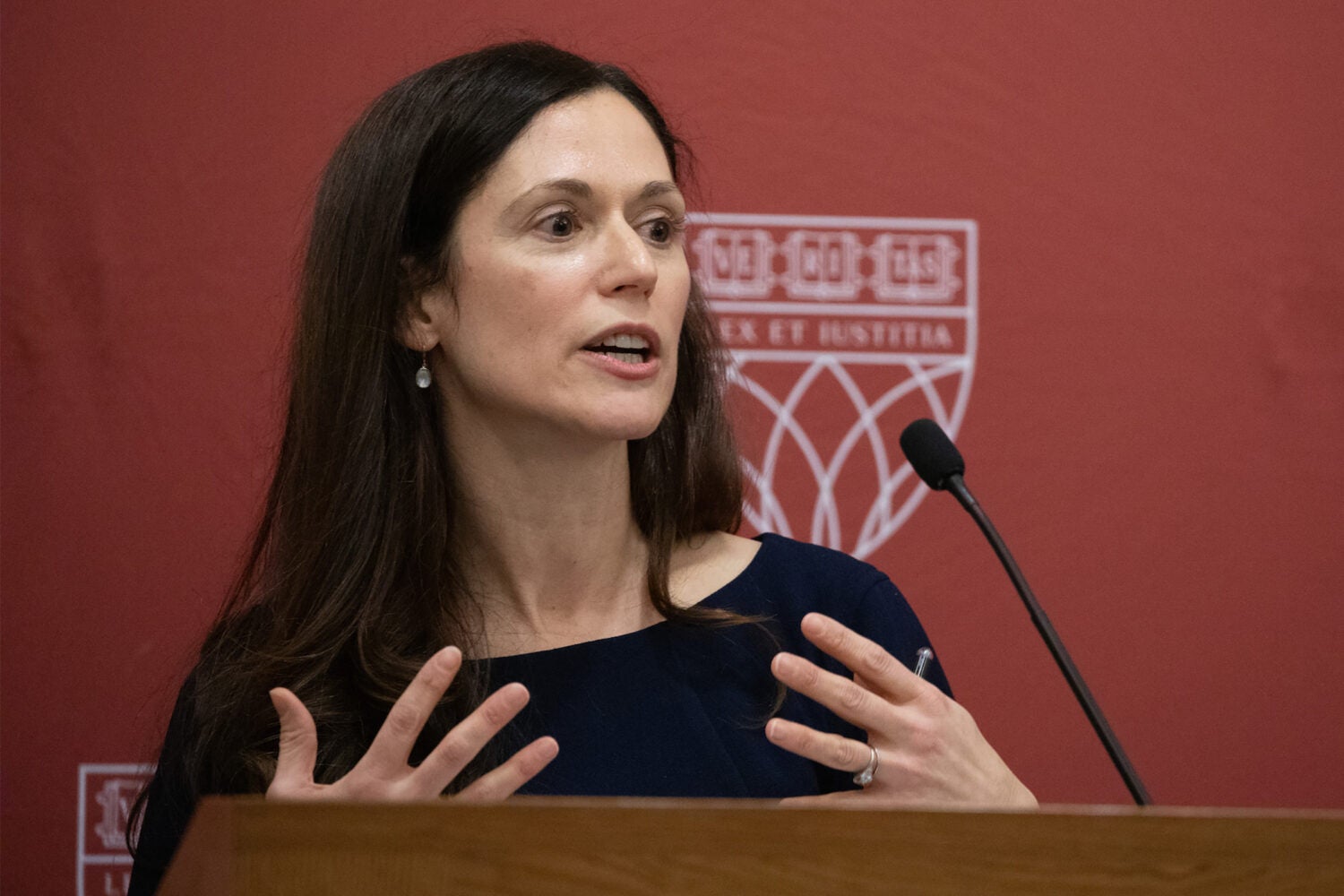
Dr. Faith Majekolagbe is an Assistant Professor at the University of Alberta's Faculty of Law in Canada. Her research focuses on the intersection of intellectual property (IP) law, technology law, and their impacts on access to knowledge, innovation, human development, and the UN Sustainable Development Goals (SDGs). She has advised governments and international organizations on IP-related policies and development matters. Notably, she was a 2022/2023 Fellow at the Berkman Klein Center for Internet and Society at Harvard University. Her work includes participations in events such as '7 Fellows Predict the Future' (May 2023) and discussions on copyright, text mining, and AI training (April 2023), alongside experts like Michael Geist and Ruth Okediji. Her research emphasizes how IP laws and systems shape technological advancement and equitable human development, aligning with global sustainability frameworks. While no specific articles are listed, her scholarship bridges legal frameworks, innovation policy, and societal impact. Awards include her Harvard fellowship, reflecting recognition of her contributions to internet and society studies.
Wojciech Matusik is a Professor of Electrical Engineering and Computer Science at MIT's Computer Science and Artificial Intelligence Laboratory (CSAIL). He leads the Computational Design and Fabrication Group and is a member of the Computer Graphics Group. His research spans computer graphics, robotics, and AI-driven manufacturing, with a focus on computational design, tactile sensing, and material science. Matusik holds a PhD in Computer Science from MIT (2003), an MS from MIT (2001), and a BS from UC Berkeley (1997). His work includes groundbreaking projects like differentiable cloth simulation (DiffCloth), AI-enhanced molecular design, and tactile sensing gloves. He has received prestigious awards such as the MIT TR35 (2004), DARPA Young Faculty Award (2012), and Ruth and Joel Spira Teaching Award (2014). Matusik teaches courses on computer graphics, machine learning, and computational fabrication at MIT. Key research themes include: Robotics: Robotic assembly, tactile interaction, and soft robotics Graphics: 3D holography, procedural material generation Manufacturing: Additive fabrication, topology optimization His recent articles explore AI-driven molecular synthesis, holographic displays, and tactile-enabled VR systems. Matusik collaborates on open-source tools like the WiReSens tactile platform and Simit language for sparse systems.
Ruth Mostern is Associate Professor of History at the University of Pittsburgh and Director of the Institute for Spatial History Innovation (ISHI). She is Vice-President and President-Elect (2025-2026) of the World History Association and leads the award-winning World Historical Gazetteer project. Education Ph.D. in History, University of California, Berkeley, 2003 Research Interests Mostern is an interdisciplinary historian specializing in world, Chinese, environmental, and spatial history. She investigates long-term human–environment interactions at continental and millennial scales, focusing on how societies organize space, resources, and risk. Her work integrates GIS, digital gazetteers, and environmental science to reconstruct historical geographies of empire, water management, and ecological change. Current projects include: Place: A Global History – a study of itineraries, gazetteers, and databases as technologies of spatial knowledge. The Medieval Climate Anomaly and the Global Medieval Era – cultural adaptations to climate change c. 950-1250 CE. Research Trends Her recent publications span digital environmental humanities, historical GIS, Song-dynasty political economy, and pre-industrial Asian political ecology. A dominant theme is the coupling of state power with environmental transformation, exemplified by her 2021 book The Yellow River: A Natural and Unnatural History (Yale), winner of the 2023 Joseph Levenson Prize. Awards & Honors Joseph Levenson Prize, Association for Asian Studies, 2023 NEH Digital Humanities Advancement Grant, 2023-2025 Digital Humanities Awards 2021 – Best DH Tool (World Historical Gazetteer) Fudan University Fellowship for Studies of Chinese Civilization, 2019 NEH Humanities Connections Implementation Grant, 2018-2020 Chiang Ching-kuo Foundation Summer Institute Grant, 2015-2016 NSF Collaborative Research Grant, 2013-2015 ACLS Digital Innovation Fellowship, 2011-2012 Advising & Grants Mostern welcomes graduate students interested in environmental, global, Asian, or digital history. She has directed multiple externally funded projects, including the NSF-funded Center for Historical Information and Analysis and NEH-supported initiatives on water in Central Asia and global historical gazetteers. Labs & Teams She directs the Institute for Spatial History Innovation (ISHI) at the University of Pittsburgh, a hub for interdisciplinary research integrating spatial technologies with historical inquiry. ISHI hosts the World Historical Gazetteer , providing open tools and datasets that link knowledge about historical places across world regions.
Professor Ruth Holliday holds the position of Professor of Gender and Culture at the University of Leeds since 2006, where she has also served as Director of Studies for the Centre for Interdisciplinary Gender Studies, Director of Research and Innovation, and Director of Recruitment and Admissions for the School of Sociology and Social Policy. Previously, she worked at Staffordshire University and Birmingham City University, and served as a Visiting Professor at the University of Technology Sydney (UTS). Her research expertise spans cultural sociology, body studies, material culture, medical tourism, and gender relations, with a focus on low fertility and East Asian cultural contexts. Her academic qualifications include a PhD in Sociology and a BA in Electronics and Management Science. She has contributed to over 50 articles and 7 books, including the award-winning Beautyscapes (2019), which explored global cosmetic surgery tourism and won the Foundation for the Sociology of Health and Illness Book Prize in 2020. Her work on kitsch aesthetics and visual methodologies has also been influential, particularly in understanding class, gender, and race through taste politics. Ruth’s current research projects include studying low fertility cultures’ impacts on gender identities and a project on the cultural meaning of the penis in gender construction. She teaches modules such as Theorizing Gender and Contested Bodies at the MA level, emphasizing critical approaches to gender and embodiment. Key Projects: ESRC-funded 'Building Capacity in Visual Research' and collaborative work on medical tourism in East Asia and Europe. Awards: 2020 Foundation for the Sociology of Health and Illness Book Prize. Supervision: Active in mentoring PhD students researching the body, intimacy, and low fertility in China and Korea. Her interdisciplinary approach bridges sociology, cultural studies, and visual methodologies, with a commitment to ethnographic fieldwork and global comparative analysis.
Professor Ruth Cameron FREng is affiliated with the University of Cambridge, serving as a Professor of Materials Science in the Department of Materials Science & Metallurgy. She co-directs the Cambridge Centre for Medical Materials alongside Professor Serena Best, focusing on therapeutic materials that interact with the body. Her research spans medical materials and biomaterials , emphasizing ice templating for creating 3D environments to control tissue growth. These environments are applied in cardiac, dental, and orthopedic repair, cancer research, and blood cell production. She also investigates biodegradable polymers , composites , and drug delivery systems , exploring relationships between material processing, morphology, and degradation. Collaborators: Cedric Ghevaert, Sanjay Sinha, Andrew McCaskie Core Research Disciplines: Materials for Tissue Repair, Composite and Nanocomposite Materials, Polymers and Macromolecular Materials
Malini Guha is an Associate Professor of Film Studies at Carleton University , cross-appointed to the Institute for Studies in Art and Culture and affiliated with Migration and Diaspora Studies . She holds the Ruth and Mark Phillips Professorship (2025-2027), focusing on geographical thinking across disciplines. Education: B.A. (University of Toronto), M.A. (York University), PhD (University of Warwick) Research Interests : Guha's work spans cinema and the city , diasporic/postcolonial cinema , public projection art , and ciné-geography . Recent projects include SSHRC-funded research on traction, flight, and becoming in moving images. Selected Publications : Author of From Empire to the World: Migrant London and Paris in the Cinema (2015) and co-editor of London as Screen Gateway (2023). Her articles appear in Feminist Media Histories , Routledge Companion to Media and the City , and Canadian Journal of Film Studies . Scientific Awards : Ruth and Mark Phillips Professorship (2025-2027) FASS Mid-Career Research Grant (2021) SSHRC Insight Development Grant (2023-2025) Collaborative Work : Co-organized Carleton’s Racialized and Indigenous Faculty Alliance (2022-2024), co-taught interdisciplinary course on Race and Representation in the Arts (2023), and collaborates with artist Neven Lochhead on projects like Something Happened (2024).
Jeremy Schipper is a Professor at the University of Toronto with a cross-appointment in the Department for the Study of Religion. His research focuses on the Hebrew Bible/Old Testament, particularly examining themes of disability and race within biblical texts. Education PhD, Princeton Theological Seminary MDiv, Princeton Theological Seminary BA, Azusa Pacific University Research Interests Dr. Schipper's work bridges biblical studies and contemporary social issues, including: Hebrew Bible exegesis Disability representation in ancient scripture Racial interpretations of biblical narratives Intersectional analysis of religious texts Scientific Awards Guggenheim Fellowship for biblical scholarship
Laura Solt, Ph.D. is an Associate Professor in the Department of Immunology and Microbiology at the Herbert Wertheim UF Scripps Institute for Biomedical Innovation & Technology in Jupiter, Florida. She also serves as Associate Dean of the Skaggs Graduate School of Chemical and Biological Sciences. Dr. Solt began her independent research career at Scripps Florida in 2013 and has established herself as a leading researcher in nuclear receptor biology within the immune system. Her research focuses on understanding the biologically relevant roles of nuclear receptors, particularly RORα and REV-ERBs, in the immune system with emphasis on TH17 cell development and autoimmune disease. Her lab employs a multidisciplinary approach combining molecular biology, genetic techniques, and chemical biology coupled with mouse models of autoimmunity and chronic inflammation. Dr. Solt's laboratory has made significant contributions to understanding how nuclear receptors regulate immune cell function, particularly in TH17-mediated inflammation. Her work has demonstrated roles for RORα and REV-ERBs in TH17 cell development and has developed synthetic ligands to these receptors for potential therapeutic applications in autoimmune diseases. Her extensive publication record shows a clear trajectory of research focused on nuclear receptor signaling in immunity, with recent work expanding into applications for cancer immunotherapy, neuroimmunology, and metabolic aspects of immune cell function. Her articles demonstrate expertise in both basic nuclear receptor mechanisms and translational applications. Ruth L. Kirschstein National Research Service Awards (2010-2013) Dr. Solt actively mentors graduate students including Adrianna Wilson (recipient of NIDDK F31 and Scheller Graduate Student Fellowship) and Sarah Mosure (recipient of NIH NRSA F31 award and Wendy Havran award). Her laboratory receives substantial funding from multiple NIH institutes (NIDDK, NCI, NIAID, NIGMS) as well as the Crohn's & Colitis Foundation. Current research directions include investigating the roles of NR2F6 in TH17 cells, exploring RORα function in CD8 T cells, and developing novel nuclear receptor modulators for therapeutic applications.
Sarah Woolf-King is an Assistant Adjunct Professor in the Department of Medicine at the University of California, San Francisco (UCSF), School of Medicine. She is a licensed clinical psychologist (CA PSY28178) whose research bridges psychology and health, with a strong focus on substance use, HIV, and mental health in families affected by congenital heart defects. Her educational background includes a B.S. in Psychology from Arizona State University (2002), an M.S./Ph.D. in Clinical Psychology from Syracuse University (2010), an M.P.H. in Epidemiology from UC Berkeley (2011), a clinical internship in Behavioral Medicine at VA Palo Alto (2010), and a T32 Postdoctoral Fellowship at UCSF’s Center for AIDS Prevention Studies (2013). Dr. Woolf-King’s research centers on two primary areas: (1) the impact of alcohol use on HIV treatment and prevention, particularly among HIV-positive men who have sex with men (MSM) and in East African populations, and (2) the mental health needs of parents of children with critical congenital heart defects (CHD). Her work employs diverse methodologies, including daily data collection, qualitative interviews, randomized trials, and biomarker validation (e.g., PEth). She aims to develop integrated behavioral interventions to improve health outcomes for individuals and families coping with chronic illness. Her recent publications (2023–2025) reflect a consistent focus on alcohol use in the context of HIV, with studies on counseling interventions, digital screening, remote biomarker collection, and behavioral mechanisms. There is also growing attention to mental health in vulnerable populations, including college students and parents of children with genetic or cardiac conditions. Her work is increasingly interdisciplinary, combining psychology, epidemiology, public health, and global health. Scientific Awards: Hellman Fellow, Hellman Fellows Fund (2015–2017) Mentored Research Scientist Development Award (K01), NIH/NIAAA (2013–2018) Loan Repayment Program in Clinical Research, NIH/NIAAA (2011–2016) Ruth L. Kirschstein National Research Service Award (F31), NIH/NIAAA (2008–2010) Mentored Scientist Award in HIV/AIDS, UCSF CFAR (2012–2014) Dr. Woolf-King has served as Principal Investigator on NIH-funded projects, including an R34 grant for a brief ACT intervention for HIV-positive hazardous drinkers and a K01 grant on alcohol and sexual risk behavior. She collaborates extensively with researchers at UCSF and in East Africa, particularly Uganda. While her adjunct title suggests a part-time or non-tenure-track role, she maintains an active research program with significant grant support and a robust publication record. There is no indication of retirement or former staff status.
Ruth Etzioni is an Affiliate Professor in the Biostatistics Program and Public Health Sciences Division at the Fred Hutchinson Cancer Center. She leads the Etzioni Lab, focusing on cancer screening, early detection, and overdiagnosis analysis. Her work integrates statistical modeling, epidemiology, and clinical research to address critical questions in prostate and breast cancer control. Dr. Etzioni holds the Rosalie & Harold Rea Brown Endowed Chair and has received a $7.4M NIH Outstanding Investigator Award. Education: PhD in Statistics (Carnegie Mellon University, 1990), MS in Statistics (Carnegie Mellon, 1987), BS in Mathematics (University of Cape Town, South Africa). Research interests emphasize biomarkers, clinical trials, and epidemiological methods. She leads the Biostatistics Core for the Pacific Northwest Prostate Cancer SPORE and participates in the Cancer Intervention and Surveillance Modeling Network (CISNET). Her lab develops models to evaluate screening policies, quantify overdiagnosis, and inform healthcare disparities reduction strategies. Key achievements include groundbreaking work on prostate cancer screening's harm-benefit tradeoffs and contributions to multi-cancer early detection (MCED) frameworks. Recent studies address racial disparities in prostate cancer outcomes, metastasis trends, and the clinical utility of novel diagnostics like PSMA PET imaging. Awards include the Brown Endowed Chair (2020), NCI OIA Award (2023), and recognition for advancing cancer data science. Her lab collaborates with institutions globally and mentors students in biostatistics and translational data science.
Ruth Keogh is a Professor of Biostatistics and Epidemiology at the London School of Hygiene & Tropical Medicine (LSHTM), affiliated with the Medical Statistics Department within the Faculty of Epidemiology and Population Health. She is Co-Director of the Centre for Data and Statistical Science for Health (DASH) and serves as Departmental Research Degrees Coordinator. Her academic career has spanned roles from Lecturer (2012–2015) to Associate Professor (2015–2019) before attaining her current rank in 2019. Keogh holds advanced degrees including a DPhil in Medical Statistics/Epidemiology (University of Oxford, 2007), MSc in Applied Statistics (Oxford, 2003), and BSc in Mathematics and Statistics (University of Edinburgh, 2002). Her research focuses on causal inference, clinical trial emulation using real-world data, and applications in cystic fibrosis, infectious diseases, and public health. She leads projects on lung function trajectories, vaccine efficacy, and healthcare policy analysis. Her work integrates biostatistical methods with epidemiological studies, emphasizing rigorous analysis of observational data to inform clinical decisions. Notable areas include evaluating antibiotic treatments for cystic fibrosis patients, assessing diagnostic test accuracy for dengue and leptospirosis, and modeling vaccine effectiveness during the COVID-19 pandemic. She teaches courses in survival analysis, electronic health records, and health data science at LSHTM. Keogh has held leadership roles in the International Biometric Society and the STRATOS Initiative, and she has delivered keynote addresses at international conferences on trial emulation and biostatistical methods. Her contributions bridge methodological innovation and practical health challenges, with over 190 publications and active engagement in global health research networks.
Wendy W Wolford is the Robert A. and Ruth E. Polson Professor of Global Development at Cornell University, affiliated with the College of Agriculture and Life Sciences. She also serves as Vice Provost for International Affairs, overseeing global partnerships including the Global Hubs and Grand Challenges initiatives. Her research focuses on land governance, social movements, and agrarian societies, with extensive fieldwork in Brazil, Ecuador, and Mozambique. Key projects include analyses of the Brazilian MST landless movement and colonial legacies in Mozambican agriculture. Wolford earned her PhD from UC Berkeley (2001) and has authored/co-edited seminal works like This Land is Ours Now (2010) and The Social Lives of Land (2024). She has held prestigious fellowships, including a Fulbright (2016–17), and her work addresses critical issues like global land grabbing, participatory democracy, and environmental justice. Teaching spans undergraduate and graduate levels, emphasizing critical analysis in development theory and political ecology. Recognition includes awards for internationalizing curricula and advancing global development research. Her outreach includes curricula development on Brazilian rural development and multimedia case studies on sustainable food systems. Current research explores the Plantationocene framework and Mozambique’s agrarian histories.
Wolfgang Porod is a Professor of Electrical Engineering and holder of the Frank M. Freimann Chair at the University of Notre Dame. He is also a Hans Fischer Senior Fellow at the TUM Institute for Advanced Study (TUM-IAS) since 2009, affiliated with the Nanoimprint and Nanotransfer Focus Group led by Paolo Lugli. His research focuses on nanoelectronics and quantum devices, notably co-inventing the Quantum-Dot Cellular Automata (QCA) framework, a molecular-scale information processing paradigm. Porod earned his Diplom (M.S.) and Ph.D. from the University of Graz, Austria, and held postdoctoral roles at Colorado State and Arizona State Universities before joining Notre Dame in 1986. He directs Notre Dame’s Center for Nano Science and Technology, advancing interdisciplinary nanotechnology research. His academic accolades include Fellowships from the AAAS (2005) and IEEE (2001), and teaching awards such as the Kaneb Teaching Award (2005) and the Ruth and Joel Spira Award (2000). Porod’s work bridges quantum physics and engineering, with applications in low-power computing, spintronics, and nanoscale device fabrication. At TUM-IAS, he collaborates on nanoimprint lithography and nanotransfer technologies, advancing scalable nanomanufacturing methods.
Daphna Renan is the Peter B. Munroe and Mary J. Munroe Professor of Law at Harvard Law School. Her work focuses on the U.S. presidency and the design of American democracy from the perspective of administrative and structural constitutional law. She has published extensively in leading law journals including the Columbia Law Review, Harvard Law Review, Stanford Law Review, Virginia Law Review, and Yale Law Journal. Renan received her B.A. in East Asian Studies from Yale College in 2000, summa cum laude. She earned an M.A. in International and Comparative Legal Studies from the University of London's School of Oriental and African Studies in 2001, and her J.D. from Yale Law School in 2004, where she served as an articles editor of the Yale Law Journal. Professor Renan's research centers on constitutional theory, particularly the relationship between judicial supremacy and democratic governance. She argues for 'a more political constitutionalism' that would distribute constitutional authority beyond the Supreme Court to democratically elected bodies. Her work explores presidential powers, the separation of powers, and how constitutional meaning is developed through political contestation rather than judicial finality. She contends that constitutional rights are 'only as secure as our politics can make them,' emphasizing the role of Congress and the executive in shaping constitutional interpretation. Renan's publications reveal a consistent focus on the provisional nature of constitutional order and the role of political institutions in constituting constitutional meaning. Her scholarship spans from historical analyses of political abolitionism's constitutional theories to contemporary critiques of judicial supremacy. A recurring theme is how unwritten norms and practices shape constitutional governance, particularly regarding presidential power. Her recent work with Nikolas Bowie examines the historical roots of judicial supremacy and advocates for congressional reclamation of constitutional authority. Professor Renan has held significant government positions, having served from 2009-2012 in the U.S. Department of Justice as a Counsel to the Deputy Attorney General and then as an Attorney Advisor in the Office of Legal Counsel. She also served on President-Elect Obama's Justice Department transition team. Prior to her government service, she clerked for Justice Ruth Bader Ginsburg of the U.S. Supreme Court and Judge Harry T. Edwards of the U.S. Court of Appeals for the District of Columbia Circuit.
Elias Jarlebring is a Professor in Numerical Linear Algebra at the Department of Mathematics, KTH Royal Institute of Technology, Stockholm. He has held the position of Full Professor since 2021, following his tenure as Associate Professor (2013-2021) and Dahlquist Research Fellow (2011-2013). His research focuses on numerical analysis, numerical linear algebra, matrix computations, and scientific computing. Jarlebring develops linear algebra algorithms to solve problems from various fields including systems and control, acoustics, electromagnetics, data science, quantum mechanics, and quantum chemistry. He is a core developer of NEP-PACK, a scientific computing software package for nonlinear eigenproblems. His recent publications demonstrate significant contributions to computational methods for nonlinear eigenvalue problems, matrix functions, and parameterized linear systems. The research shows a clear trajectory toward increasingly complex applications in quantum computing, data science, and wave propagation problems. Project grant, Swedish research council (2019) Ruth och Nils-Erik Stenbäcks foundation, junior grant (2019) Göran Gustafsson Prize for junior researchers (2014) Project grant for junior researchers, Swedish research council (2014-2018) Professor Jarlebring has supervised numerous PhD students including Vilhelm Peterson Lithell, Gustaf Lorentzon, Siobhán Correnty, Parikshit Upadhyaya, Emil Ringh, Antti Koskela, and Giampaolo Mele. He has received multiple research grants from the Swedish Research Council and serves as editor for BIT Numerical Mathematics, Linear and Multilinear Algebra, NACO Numerical Algebra Control and Optimization, and CALCOLO. He is actively involved in the numerical linear algebra community as a member of ILAS (International Linear Algebra Society), GAMM Activity Group on Numerical Linear Algebra, and the Nordic Numerical Linear Algebra Association. He also contributes to open source projects, particularly in the Julia programming language ecosystem.