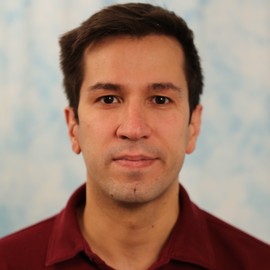
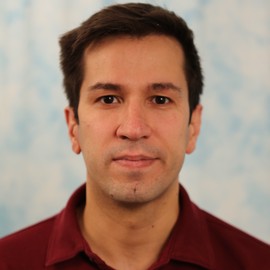
Santiago Torres-Arias is an Assistant Professor at Purdue University, affiliated with the Elmore Family School of Electrical and Computer Engineering . His research spans computer systems security , software supply chain security , and applied cryptography . Campus: West Lafayette, Indianapolis Office: BHEE 324B Contact: santiagotorres@purdue.edu , +1 765-496-6610 Research Interests: Computer systems security Software supply chain security Distributed systems security Applied cryptography Password storage mechanisms Publication Trends: His recent work focuses on software supply chain security , including code signing , provenance mechanisms , and IoT vulnerabilities . Key projects address Sigstore , DevSecOps , and zero-trust dependencies . Scientific Awards: Advising & Grants: No student details provided No grant information listed
Corina Pasareanu is an ACM Fellow and IEEE ASE Fellow serving as a Principal Scientist at Carnegie Mellon University's CyLab Security and Privacy Institute and Technical Professional Leader for Data Science at NASA Ames Research Center through KBR. Her work bridges formal methods, software verification, and artificial intelligence to ensure the safety and security of complex systems, particularly autonomous systems and machine learning applications. Dr. Pasareanu received her academic training at: Ph.D. in Computer Science, Kansas State University (2001) M.S. in Computer Science, University Politehcnica of Bucharest (1995) B.S. in Computer Science, University Politehcnica of Bucharest (1994) Her research focuses on developing formal verification techniques that can provide mathematical guarantees about the behavior of complex software systems. She specializes in applying model checking, symbolic execution, and compositional verification methods to challenges in autonomy, security, and AI safety. Her recent work addresses the verification of systems incorporating machine learning components, particularly neural networks used in safety-critical applications like autonomous vehicles. She investigates how to ensure these systems behave correctly even when their perception components have uncertainties or are subject to adversarial attacks. Analysis of her recent publications shows a strong trend toward verifying AI and machine learning systems, particularly focusing on neural networks in autonomous systems. Her work increasingly addresses the challenges of Large Language Models, examining both their vulnerabilities to attacks and methods to defend against them. She also continues to advance traditional software verification techniques while adapting them to modern programming languages and paradigms. Dr. Pasareanu has received numerous prestigious awards recognizing her contributions to the field: ACM Fellow IEEE ASE Fellow ETAPS Test of Time Award (2021) ASE Most Influential Paper Award (2018) ESEC/FSE Test of Time Award (2018) ISSTA Retrospective Impact Paper Award (2018) ACM Impact Paper Award (2010) ICSE 2010 Most Influential Paper Award (2010) As an advisor, Dr. Pasareanu mentors several PhD students and postdoctoral researchers, often in collaboration with other faculty members at CMU. Her students focus on cutting-edge research at the intersection of formal methods and AI safety. Her research is supported by substantial funding from diverse sources including NSF, DARPA, NASA, AWS, and industry partnerships. She leads multiple projects focused on AI security, formal verification of neural networks, and software analysis techniques. Dr. Pasareanu also plays a significant role in the broader research community, serving as Program/General Chair for major conferences including ICSE 2025, and as an associate editor for IEEE TSE and STTT. Dr. Pasareanu leads research teams working on projects like "Trinity: Neurosymbolic Learning and Reasoning" (DARPA) and "HUGS: Human-Guided Software Testing and Analysis" (NSF). Her work often involves interdisciplinary collaboration between computer scientists, formal methods experts, and domain specialists to address complex safety challenges in autonomous systems.
Ruben Martins is an Assistant Professor at Carnegie Mellon University's School of Computer Science and serves as the program director of the Master of Science in Computer Science (MSCS) . His research focuses on the intersection of constraint programming, program synthesis, analysis, and verification, with recent work aiming to make formal methods tools more accessible through automated reasoning. Ruben earned his Ph.D. with honors from the Technical University of Lisbon, Portugal (2013) , followed by postdoctoral research at the University of Oxford (2014-2015) and UT Austin (2015-2017) . Research Interests : Ruben's work bridges constraint programming and program synthesis , with applications in software verification , optimization , and automated reasoning . He has developed award-winning tools like Open-WBO , a modular MaxSAT solver that has won gold medals in international competitions. His publications span top-tier venues such as POPL , PLDI , FSE , SAT , and CP , often addressing real-world challenges from program analysis to network security. Scientific Awards include: Distinguished Paper Award at PLDI 2018 Distinguished Paper Award at FSE 2021 Distinguished Paper Award at SAT 2022 Gold medals for Open-WBO in MaxSAT competitions Teaching & Advising : Ruben mentors Ph.D., Master’s, and undergraduate students in research projects related to program synthesis, formal methods, and constraint solving. He teaches courses such as Bug Catching: Automated Program Verification and Advanced Topics in Logic: Automated Reasoning and Satisfiability , emphasizing hands-on experience with tools like Why3. His advising spans topics from AI-driven program repair to network protocol verification , fostering collaboration across disciplines.
Meng Xu is an Assistant Professor in the Cheriton School of Computer Science at the University of Waterloo, Canada. He is affiliated with the Cryptography, Security, and Privacy (CrySP) group and the Cybersecurity and Privacy Institute (CPI). His research focuses on system and software security, emphasizing secure-by-design languages (e.g., Rust, Move), automated program analysis, and runtime defense techniques. Education : Ph.D., Computer Science (2020), Georgia Institute of Technology B.Eng. and B.Business (First Class Honors), Nanyang Technological University (2014) Research Interests : Secure-by-design languages Automated security analysis (fuzzing, symbolic execution) Runtime defense mechanisms (moving target defense, secure hardware) Key Awards : EAPLS Best Paper Award (2022) USENIX Security Distinguished Paper Award (2018) Grants & Funding : BlackBerry Research Grant (CAD $200,000) Amazon Research Award (USD $60,000) NSERC Discovery Grant (CAD $170,000) Labs & Collaborations : CrySP (Cryptography, Security, and Privacy Group) Cybersecurity and Privacy Institute (CPI)
Michael Sammler is an Assistant Professor leading the Programming Languages and Verification Group at the Institute of Science and Technology Austria (ISTA). He holds a PhD from the Max Planck Institute for Software Systems (MPI-SWS) and was a postdoctoral researcher at ETH Zürich. His research focuses on formal verification of low-level systems code, combining foundational proofs with automation. Key projects include RefinedC (C verification), Islaris (assembly code verification), and DimSum (multi-language interoperability). Education: PhD at MPI-SWS/Saarland Informatics Campus, postdoc at ETH Zürich. Research interests emphasize tool development for safety-critical systems, including Rust verification (RefinedRust), OCaml/C interoperability (Melocoton), and decentralized multi-language semantics (DimSum). Awards: Runner-Up for Informatics Europe 2024 Best Dissertation Award, Dr. Eduard Martin Prize, Distinguished Paper Awards at PLDI/POPL/USENIX, and Google PhD Fellowship. Labs/Teams: Programming Languages and Verification Group at ISTA, collaborations with MPI-SWS and international researchers. His work bridges foundational theory with practical tools for industry-relevant verification challenges.
Jeff Huang is an Associate Professor in the Department of Computer Science & Engineering at Texas A&M University, affiliated with the College of Engineering. His research focuses on software engineering, programming languages, concurrency, and runtime verification, with notable contributions to static analysis, race detection, and vulnerability mitigation in concurrent systems. Education: Postdoc, Computer Science, University of Illinois at Urbana-Champaign (2013-2014) Ph.D., Computer Science, Hong Kong University of Science and Technology (2012) B.E., Electrical Engineering, National University of Defense Technology, China (2008) Research Interests: Huang's work bridges theoretical foundations and practical applications in concurrency debugging, static analysis tools, and cybersecurity for smart contracts. He emphasizes scalable solutions for pointer analysis, race detection, and vulnerability detection in distributed systems and blockchain technologies. Recent Trends in Publications: His recent work explores AI-driven program execution (e.g., SGLang), blockchain security (e.g., Smart Contract analysis), and dynamic/static analysis techniques for memory safety. These studies underscore advancements in automated tools for securing concurrent and distributed systems. Awards: 2023 ACM SIGSOFT Distinguished Paper Award 2019 DARPA Young Faculty Award 2016 NSF CAREER Award 2013 ACM SIGSOFT Outstanding Doctoral Dissertation Award Advising & Grants: Huang has advised PhD students including Bozhen Liu and Peiming Liu, who have contributed to OpenMP race detection and pointer analysis tools. His grants include NSF awards for pointer analysis as a service and DARPA funding for young faculty research. Labs & Teams: He leads the O2 Lab, focused on concurrency verification and cybersecurity, collaborating with industry partners like Coderrect Inc. and DOE on scalable static analysis frameworks.
David I. August is a Professor at Princeton University specializing in programming languages and compiler systems. His research bridges theoretical compiler techniques with practical systems implementation, focusing on memory safety, speculative execution, and compiler optimization. His primary research interests include Compiler Design , Rust Programming Language safety mechanisms , and LLVM infrastructure extensions . His work emphasizes practical implementations that enhance both performance and security in modern programming systems. Recent publications demonstrate consistent contributions to memory profiling frameworks (PROMPT), Rust safety enhancements, and speculative dependence analysis. His research shows strong focus on making low-level systems programming safer without sacrificing performance. August serves regularly on program committees for major conferences including PLDI and CGO, indicating his standing in the programming languages research community. He has mentored students in compiler construction and programming language design, with research projects often involving practical implementations integrated into production-quality compiler frameworks.
Jingling Xue is a Scientia Professor at the School of Computer Science and Engineering at the University of New South Wales (UNSW) in Sydney, Australia. As an IEEE Fellow of the Computer Society, he leads the Programming Languages and Compilers research group, focusing on practical applications of compiler optimization and program analysis techniques. His work bridges theoretical foundations with real-world software systems, particularly in developing open-source tools for large-scale program analysis. Professor Xue received his B.Eng and M.Eng degrees from Tsinghua University in 1984 and 1987, respectively, followed by a PhD from the University of Edinburgh in 1992. His academic journey has established him as a leading figure in programming languages and compiler technology. Xue's research spans programming languages, compiler technology, and program analysis with emphasis on practical relevance. His current projects include compiler techniques for improving parallelism and locality, pointer/alias analysis for million-line-scale programs, and static/dynamic analysis for detecting bugs and security vulnerabilities in real-world applications like web browsers and Android apps. His group actively develops open-source tools to support scientific replicability and reproducibility in these areas. His recent publications demonstrate a strong focus on applying program analysis techniques to modern challenges including AI compilers, homomorphic encryption, security vulnerability detection, and graph processing systems. The work shows evolution from traditional compiler optimization to addressing emerging domains like privacy-preserving computation and deep learning systems while maintaining rigorous theoretical foundations. Scientific Awards: Best Paper Award at CGO'13 Best Paper Award at CGO'16 Distinguished Paper Award at ECOOP'16 Distinguished Paper Award at ICSE'18 Distinguished Paper Award at ISSTA'19 Distinguished Paper Award at ASE'19 Distinguished Artifact Award at ISSTA'23 Best Artifact Award at FSE'23 Distinguished Paper Award at ASE'23 Test-of-Time Award at CGO'21 Professor Xue has successfully supervised 30 PhD students to completion, many of whom now work as professors or researchers in academia and industry. He has served as Program Chair for major conferences including LCTES'13, CC'18, CGO'20, and General Chair for LCTES'20. His group currently focuses on memory safety in Rust, smart contract analysis, AI compilers, compilation for privacy-preserving computation, and adversarial attacks in deep learning. The Programming Languages and Compilers group maintains strong connections with industry partners, translating theoretical advances into practical tools for real-world software development challenges. Their work on pointer analysis, memory safety, and compiler optimizations continues to influence both academic research and industrial practice.
Shaohua Li is an Assistant Professor at The Chinese University of Hong Kong (CUHK), specializing in the correctness and security of critical software systems with emphasis on compilers. His research spans Software Engineering , Programming Languages , and Security , focusing on innovative compiler testing methodologies. Key areas include leveraging large language models for test generation, optimizing fuzzing techniques through prefix-guided execution, and decoupling sanitization mechanisms to reduce overhead in vulnerability detection. His work addresses fundamental challenges in ensuring reliability of systems programming infrastructure. Recent publications demonstrate a cohesive trajectory toward practical compiler validation: from empirical rustc bug analysis to SAND's low-overhead sanitization framework. The research consistently bridges theoretical formal methods with real-world implementation challenges in security-critical systems, showing particular strength in adapting AI techniques for traditional software testing problems.
Patrick Lam is an Associate Professor in the Department of Electrical and Computer Engineering at the University of Waterloo, with a cross-appointment to the Cheriton School of Computer Science. His research focuses on applications of programming languages and static analysis to software engineering challenges, emphasizing verifiable software specifications and program understanding. Dr. Lam has held significant grants from NSERC and is recognized for his impactful work, including the First Decade High Impact Paper award for his Soot framework. Education: Doctorate in Computer Science, Massachusetts Institute of Technology, 2007 Master's in Computer Science, McGill University, 2000 Bachelor's in Joint Honours Mathematics and Computer Science, McGill University, 1999 Research Interests: His primary areas include static program analysis, verifiable software specifications, and compiler design, with a focus on linking high-level software designs to low-level implementations. He explores techniques like lightweight specifications and domain-specific languages to enhance software reliability and efficiency. Recent work also addresses empirical studies of programming practices and security through modularization. Publications: Dr. Lam's recent publications span advancements in static analysis tools (e.g., WasmWalker for WebAssembly), formal verification of code generated by AI tools like GitHub Copilot, and empirical studies on C++ immutability usage. His work bridges theoretical programming language research with practical software engineering applications, emphasizing tools for developer productivity and code reliability. Awards and Recognition: First Decade High Impact Paper recognition for "Soot – A Java Optimization Framework" (2010) Teaching and Grants: He has taught courses such as CS 447, ECE 453, and ECE 459 on software testing and performance programming. Active in grant-funded research, he secured NSERC Engage Grant (2013) and an ongoing NSERC Discovery Grant (2013–2018). Lam has also advised graduate students and contributed to the Software Engineering Program at Waterloo as its Director (2016–2019). Labs and Teams: His research group explores topics in program analysis and software engineering, with collaborations on projects like abstract debugging tools (GobPie) and static analysis frameworks (Soot). He maintains an open-source repository on GitHub, contributing to educational materials and research tools.
Emmanuel Baccelli is a Professor for "Open and Secure IoT Ecosystem" at Freie Universität Berlin since September 2019, holding a joint position with Inria and the Einstein Center Digital Future (ECDF). He is also a scientific researcher at Inria since 2007 and co-founder/coordinator of the RIOT open source operating system for IoT devices since 2013. His research focuses on the intersection of low-power protocols, deeply embedded open source software, and security in the Internet of Things (IoT) ecosystem. Baccelli emphasizes the critical trade-off between energy efficiency and security in IoT systems, advocating for privacy-by-design principles and open specifications. His work addresses how users can maintain control over their systems and data in an increasingly connected world. Baccelli's publications demonstrate a clear progression toward secure, efficient IoT systems with recent work focusing on secure firmware updates, TinyML deployment, and privacy-preserving protocols. His research spans from foundational networking protocols to practical implementations for constrained devices, with a consistent emphasis on open source solutions and security-by-design. Baccelli completed his PhD in 2006 at École Polytechnique in Paris on "Routing and Mobility in Large Packet-Based Networks" and received his habilitation from Université Pierre et Marie Curie in 2012. He previously served as a Guest Professor at Freie Universität Berlin in 2013-2014 with a DAAD Grant. His professional activities include significant contributions to IETF standards, particularly RFCs related to routing protocols for low-power networks. Baccelli's research has practical applications across multiple domains including healthcare, smart agriculture, and industrial IoT systems, where security and energy efficiency are paramount concerns.
Prof. Wolfgang Ecker is a Professor at the Technical University of Munich (TUM), affiliated with the Chair of Design Automation within the TUM School of Computation, Information and Technology . His research focuses on Electronic Design Automation (EDA), RISC-V processor architectures, and hardware-software co-design. He leads projects advancing EDA tools for embedded systems, neural network acceleration, and formal verification methodologies. Ecker's work bridges machine learning techniques with traditional EDA challenges, addressing topics like energy-efficient AI inference and automated documentation generation. His contributions span compiler optimization, FPGA implementations, and fault analysis in digital systems. Recent research highlights include contributions to the TRISTAN project for RISC-V ecosystem development, model-driven architecture frameworks, and AI-driven timing analysis. He actively collaborates on open-source EDA tools and explores Rust-based embedded systems development. Ecker’s lab emphasizes practical applications in edge computing and automotive microcontroller safety, with a strong emphasis on interdisciplinary collaboration across TUM’s CIT School. His publications (15 most recent listed) reflect a focus on EDA tool innovation, processor design, and leveraging machine learning for hardware optimization. While no specific awards are mentioned, his involvement in ERC-funded projects and leadership in international collaborations underscores his academic impact.
Kinan Dak Albab is an Assistant Professor at the Faculty of Computing and Data Sciences (CDS) at Boston University, where he joined in summer 2024. His research spans systems, cryptography, and programming languages, focusing on building practical tools for data privacy and compliance-by-construction. He has developed influential systems such as Sesame, K9db, and DP-PIR, which have been published in top venues like SOSP, OSDI, and USENIX Security. PhD in Computer Science, Brown University MS in Computer Science, Boston University (2020) BS in Computer Science, American University of Beirut (2015) Kinan's research centers on data privacy , secure computation , and systems security . He designs tools that allow developers to build applications that are privacy-compliant by construction. His work leverages systems design, cryptographic protocols, and language-level enforcement to reduce developer burden while ensuring strong privacy guarantees. He is particularly interested in GDPR compliance, private information retrieval, and usability of secure systems. His publications span high-impact areas including end-to-end privacy enforcement (Sesame), database systems with built-in privacy (K9db), and efficient private information retrieval (DP-PIR). These works combine systems performance with strong theoretical foundations, enabling real-world deployment in domains like wage gap analysis and public policy. Presidential Award for Excellence in Teaching, Brown University (2025) Teaching Excellence Award, Boston University (2020) Vivli and Microsoft datatheon Outstanding Graduate Submission (2019) Hariri Institute Graduate Fellow (2017–2020) Mark Sawaya Excellence Award, AUB (2015) 1st Place, ACM Lebanese Collegiate Programming Contest (2015) Kinan has advised and collaborated on real-world secure computation deployments, including a project with the Boston Women's Workforce Council and the Greater Boston Chamber of Commerce to measure wage gaps across over 100 companies. His work contributed to the formation of the startup nthparty and has been cited in the White House’s National Strategy on Privacy-Preserving Data Sharing, the UN Handbook on Privacy-Preserving Computation, and the European Commission’s report on Technological Enablers for Privacy. He is the lead developer of the JIFF framework for secure multi-party computation on the web and has created tools like Carousels for resource estimation in secure programs. He leads the ETOS group and is affiliated with multiparty.org , an initiative focused on advancing privacy-preserving technologies through open-source tools and real-world applications.
Georgios Portokalidis is an Associate Research Professor at IMDEA Software Institute and Visiting Research Professor at Stevens Institute of Technology. He leads research in software systems security with focus on binary analysis, software hardening, and operating system security. His research develops practical defenses against software vulnerabilities through techniques like binary debloating, system call filtering, and hardware-assisted security. Current projects explore Rust language security, processor-assisted protection mechanisms, and vulnerability mitigation through code reduction. Publication trends show evolution from foundational binary analysis to applied security hardening, with recent emphasis on Rust security, hardware-assisted defenses, and real-world system protection. Work demonstrates consistent focus on practical, deployable security solutions. He has supervised numerous PhD students and postdocs, currently mentoring researchers at IMDEA. His group investigates binary analysis, software debloating, and system hardening techniques. Major grants include DARPA YFA (2021-2023) and ONR funding (2017-2022) supporting adaptive binary debloating research. Leads the systems security research group at IMDEA Software Institute, collaborating with international partners. Maintains active research partnerships and regularly contributes to top security conferences as program committee member.
Ruben Martins is an Assistant Research Professor and Master’s Program Director at the School of Computer Science, Carnegie Mellon University. He holds a Ph.D. from the Technical University of Lisbon, followed by postdoctoral research at the University of Oxford and UT Austin. His work focuses on constraint programming, program synthesis, and formal verification, with applications in improving programmer productivity and automating data science tasks. Education: Ph.D. in Computer Science, Technical University of Lisbon (2013) Postdoctoral Researcher, University of Oxford (2014-2015) Postdoctoral Researcher, UT Austin (2015-2017) Ruben's research bridges constraint programming with program synthesis, aiming to automate tasks such as vulnerability detection, code repair, and SQL synthesis. He developed Open-WBO , a MaxSAT solver that won multiple gold medals and is used in real-world optimization scenarios like seating arrangements for events. His work integrates large language models (LLMs) with traditional methods to enhance software analysis and debugging. Awards: Distinguished Paper Award at PLDI 2018 Gold Medal in MaxSAT Competitions for Open-WBO Advising & Grants: Ruben advises Master’s students and directs courses such as 15639, 15604, and others. His research has been supported by grants focusing on program synthesis and cybersecurity. Labs/Teams: Leads development of Open-WBO and contributes to projects like Crabtree (Rust API testing) and Pryde (evasion attack analysis).